AI Breakthrough Revolutionizes Automated Audio-Visual Media Creation

Chief Executive Officer
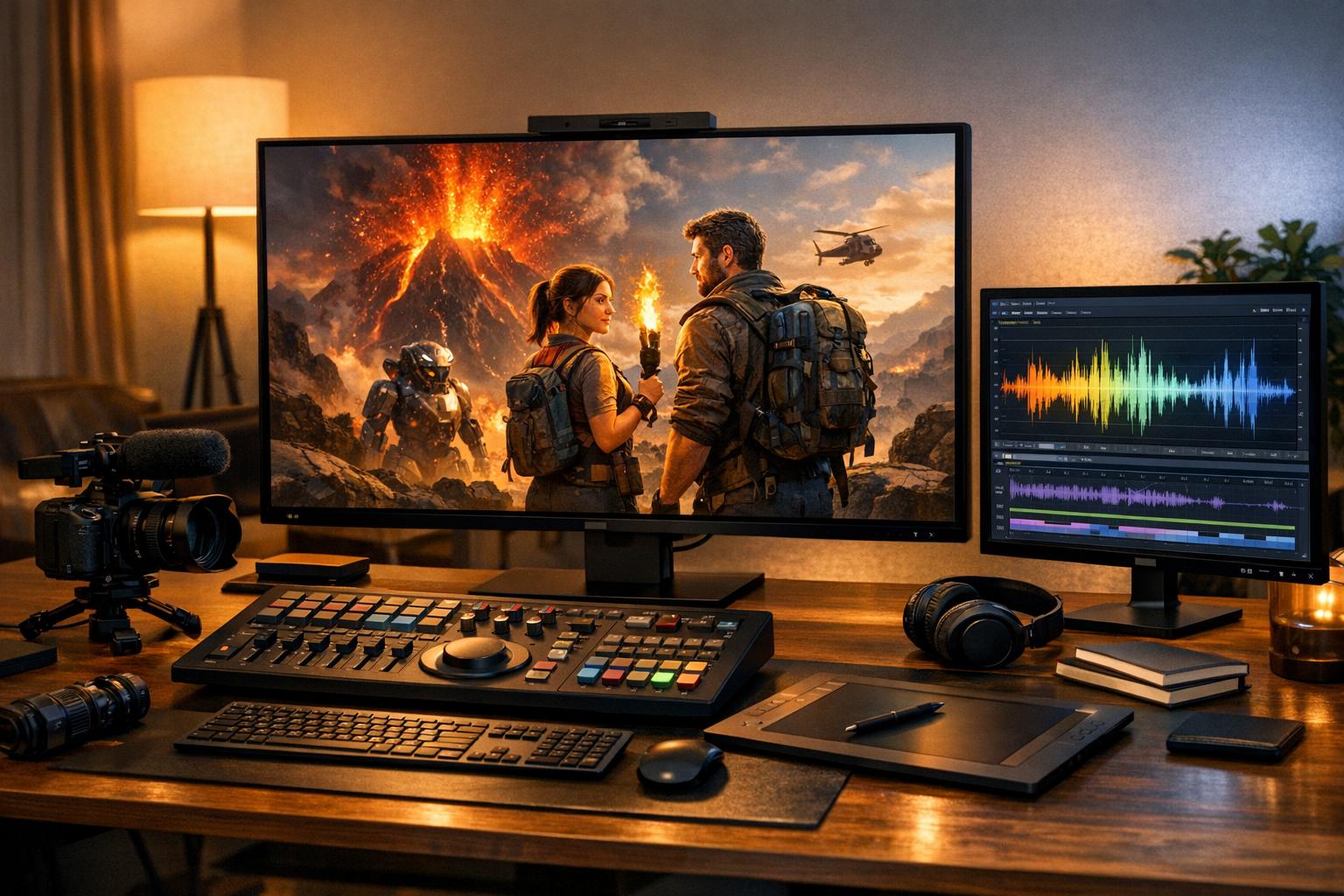
Recent advancements in artificial intelligence are transforming the landscape of media production, enabling the creation of highly realistic audio-visual experiences with unprecedented speed and cost savings. According to @ai_darpa, these cutting-edge AI technologies are capable of generating immersive videos with synchronized audio, as showcased in a demonstration shared on December 29, 2025. This breakthrough is reshaping industries such as digital marketing, entertainment, and virtual training by reducing the time-to-market for high-quality media assets.
Groundbreaking AI Innovations in Media
Artificial intelligence has evolved rapidly in recent years, merging technology and creativity to deliver professional-grade multimedia content. OpenAI's announcement in February 2024 introduced "Sora", an AI model capable of generating realistic videos from text prompts. This innovation allows users to transform simple descriptions into dynamic video scenes that include accurate physics and emotional expressions. Tools like these extend the capabilities of earlier generative AI systems, such as DALL-E, which focused solely on static images.
The global market for AI in media and entertainment reflects this technological evolution. Valued at approximately $10.4 billion in 2022, the market is projected to reach $99.48 billion by 2030, according to Grand View Research. This growth is fueled by streaming platforms, content creators, and businesses adopting AI tools to streamline production workflows and cut costs.
sbb-itb-ae35a94
Industry Applications and Ethical Challenges
AI's influence extends beyond video generation. In music, for example, Google's MusicLM, introduced in January 2023, can create coherent compositions from textual descriptions. Similarly, Adobe integrated AI into Premiere Pro in 2023, enabling automated editing and effects. These tools democratize access to high-quality production capabilities, allowing independent creators and small studios to compete with major players.
Despite these advancements, ethical concerns persist. AI-generated content raises questions about originality and copyright. In March 2023, the U.S. Copyright Office clarified that works created solely by AI are not eligible for copyright protection. To address such challenges, companies are adopting best practices like bias audits and human oversight, as outlined in IBM's updated AI ethics guidelines.
Market Opportunities and Technological Foundations
Businesses are seizing opportunities presented by AI-generated content, with the AI software market expected to grow from $64 billion in 2022 to $251 billion by 2027, according to a 2023 report by MarketsandMarkets. Companies such as Netflix have already harnessed AI to improve viewer engagement, achieving a 15% increase in engagement since implementing recommendation algorithms.
From a technical perspective, modern AI models rely on advanced architectures such as transformers and diffusion processes, trained on vast datasets exceeding petabytes in size. OpenAI's GPT-4, released in March 2023, features multimodal capabilities, enabling the seamless integration of text and images to enhance video production. However, challenges such as high computational costs and content hallucinations still require robust infrastructure and refinement. Providers like AWS have addressed these needs with cloud-based services, reporting a 37% year-over-year revenue growth in their AI/ML segment in early 2024.
Looking Ahead
The integration of AI into media creation is a transformative force, with Gartner predicting that by 2027, 70% of enterprises will use generative AI for content creation, a significant rise from just 10% in 2023. Although these advancements may disrupt traditional job markets, they are also expected to generate demand for new roles in AI oversight and implementation, as highlighted by LinkedIn's report of a 74% increase in AI-related job postings since 2022.
Regulatory frameworks are evolving in tandem with these innovations. The EU's AI Act, passed in March 2024, mandates transparency for generative models and places restrictions on high-risk AI systems. These policies aim to ensure ethical and responsible use of AI while fostering innovation.
The future of automated audio-visual media creation lies in hybrid workflows that combine human creativity with AI efficiency. By addressing challenges such as bias and intellectual property, businesses and creators can harness the full potential of these revolutionary tools to drive innovation across industries.



Streamline your workflow, achieve more

Lorem ipsum dolor sit amet, consectetur adipiscing elit. Maecenas ac velit pellentesque, feugiat justo sed, aliquet felis.



Lorem ipsum dolor sit amet, consectetur adipiscing elit. Maecenas ac velit pellentesque, feugiat justo sed, aliquet felis.