5 Best Practices For Producing A Corporate Awards Ceremony

Chief Executive Officer
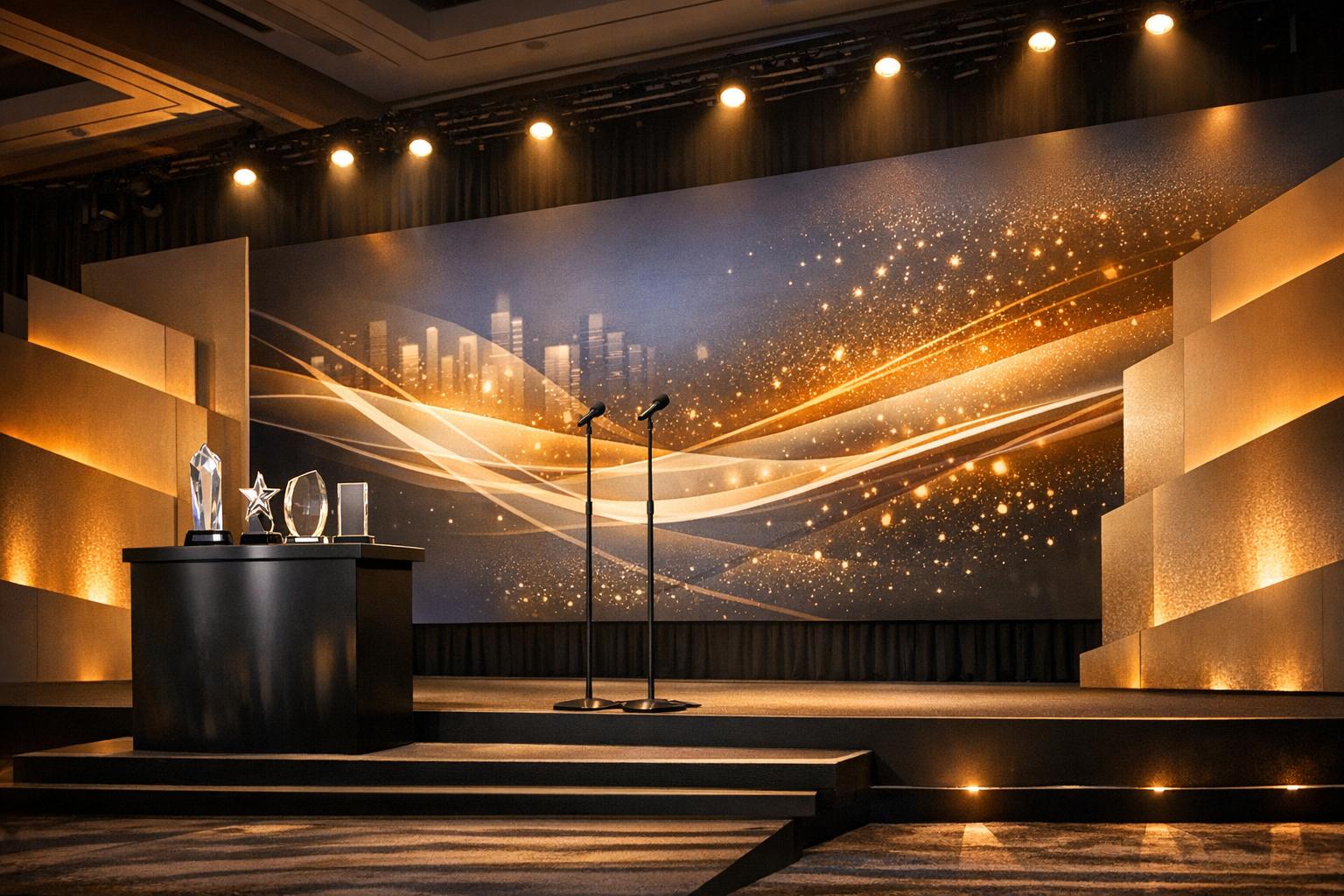
A corporate awards ceremony is more than handing out trophies - it's a chance to recognize achievements, boost morale, and reinforce company values. But how do you ensure the event is both professional and memorable? Here are five key practices:
- Stage Design & Layout: Plan clear stage paths, seating arrangements, and photo zones to maintain flow and engagement.
- Timing & Pace: Keep the ceremony concise (90–120 minutes), limit speeches, and use entertainment to maintain energy.
- Audiovisuals & Graphics: Use LED screens, quality lighting, and pre-edited audio for a polished experience.
- Rehearsals & Roles: Schedule full run-throughs and assign clear responsibilities to your team.
- Execution: Manage real-time coordination and ensure smooth transitions on the big day.
These steps help create a smooth, engaging event that celebrates achievements while keeping your audience connected and involved.
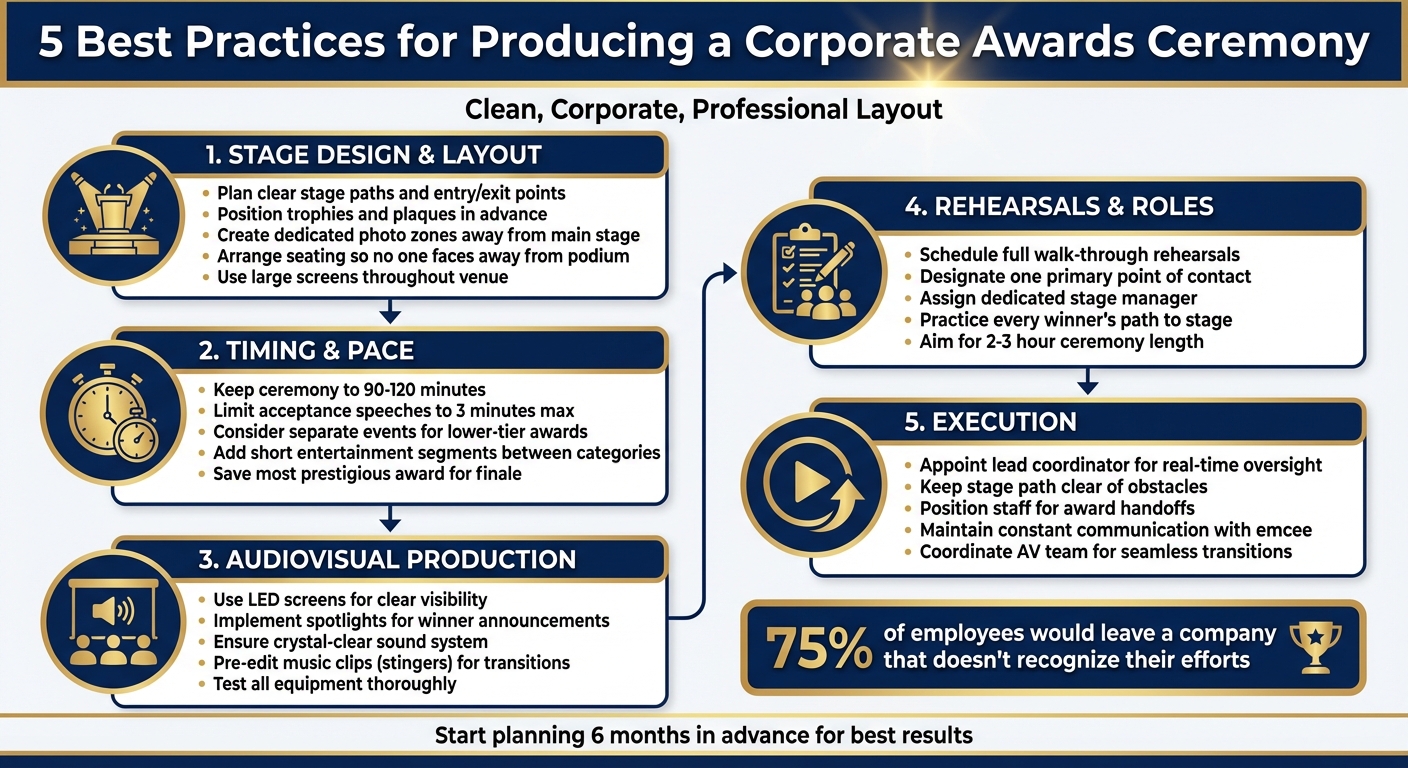
5 Best Practices for Corporate Awards Ceremony Production
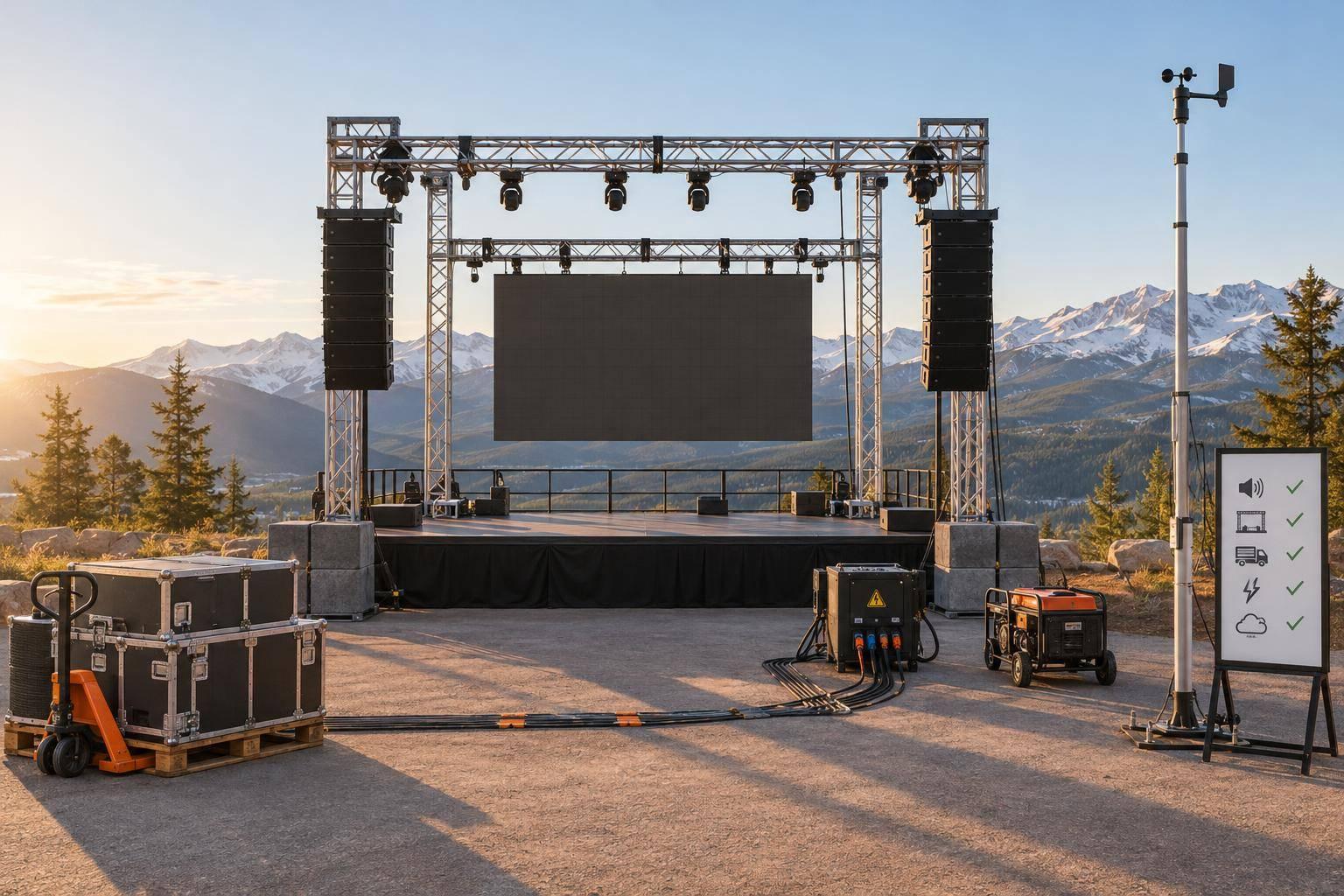
Setup For Awards Show - Event production for private and corporate , road shows and conferences.
1. Plan Your Stage Design and Physical Layout
Creating a thoughtful stage design and layout is key to ensuring your ceremony runs smoothly and keeps the audience engaged.
Event Flow and Organization
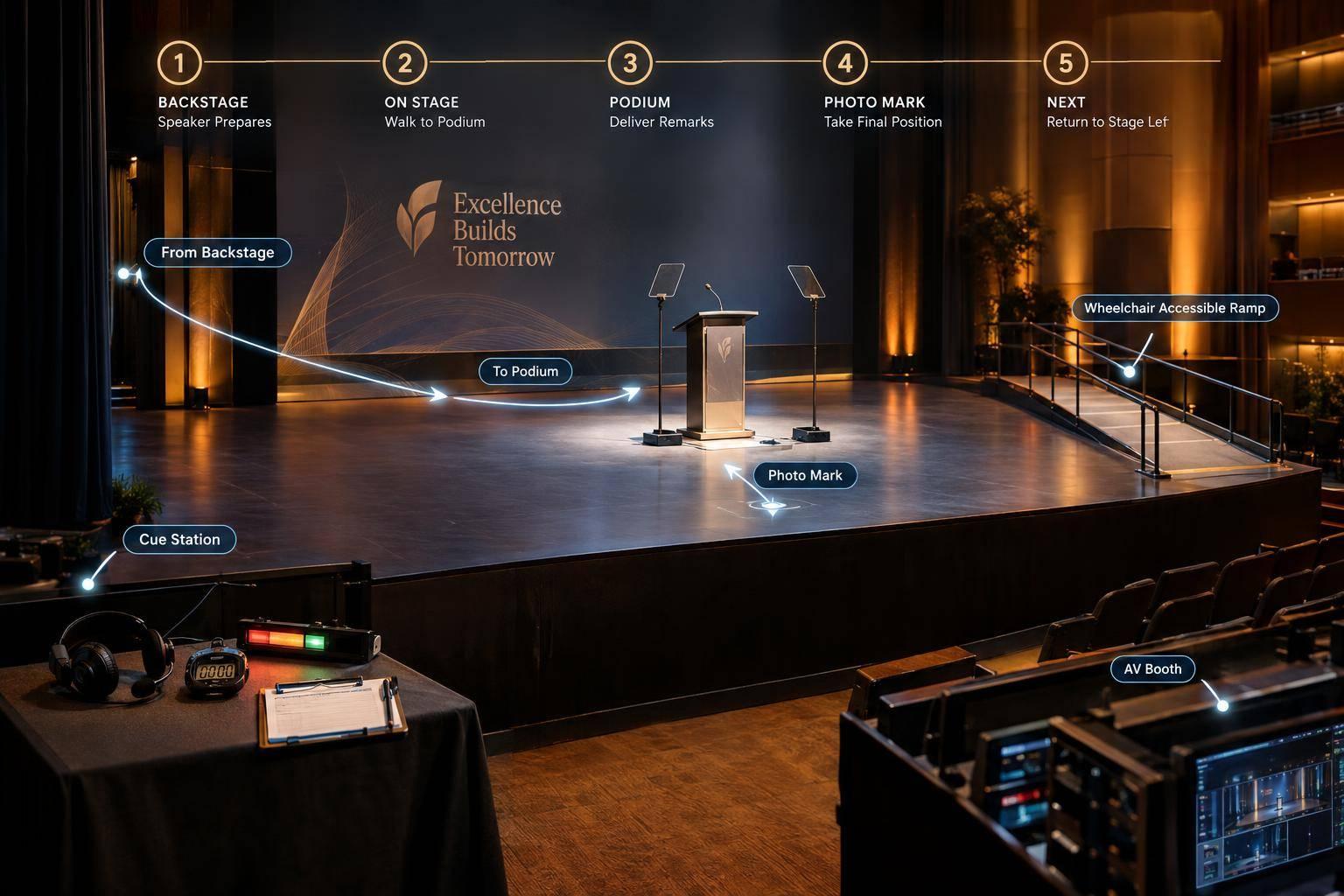
Start by mapping out a clear and direct path from the seating area to the stage. Make sure there are defined entry and exit points - like stage left and stage right - and have trophies and plaques pre-positioned to avoid awkward pauses or delays during transitions.
"A talk-through is not a walk-through. When you arrive at rehearsal, you must actively walk through each step of the awards show to eliminate any dead air." - Jeff Civillico, Professional Emcee
Consider setting up a dedicated photo zone with an attractive backdrop away from the main stage. This allows winners to take photos without disrupting the program. These simple adjustments not only keep the event moving but also help maintain the audience's attention, which ties directly into seating and engagement strategies.
Audience Engagement
Seating arrangements play a big role in audience experience. Position tables so no one has their back to the podium, and seat award recipients close to the stage to minimize delays. Use large screens throughout the venue to ensure everyone has a clear view of the ceremony.
For example, in June 2025, the University of Birmingham's Marketing Team hosted the Campus Services Awards 2025 in The Great Hall. They added a red carpet outside the Aston Webb building and incorporated the university's gold, black, and white branding into every detail. This attention to layout and aesthetics earned the event a 96% approval rating from attendees.
Technical Precision
A polished stage setup requires technical attention to detail. Keep the stage clutter-free by avoiding distracting colors, excessive signage, or over-the-top decorations that might draw focus away from the honorees. Hide all AV cables to prevent trip hazards and maintain a clean, professional appearance. Use lighting to highlight winners without overpowering the space. Some organizations even take it a step further by designing layouts that align with the event's branding, creating a cohesive and memorable experience.
2. Control Timing and Pace
Event Flow and Organization
Timing is the backbone of any well-executed awards ceremony. For instance, presenting 80 awards at four minutes each adds up to a whopping 320 minutes - far beyond the recommended 90–120 minutes for an engaging event.
To streamline the process, consider separating award tiers. Host a smaller luncheon for lower-tier awards and reserve the main ceremony for the top honors. Keep acceptance speeches for these top awards to three minutes max, and save the most prestigious award for the finale to keep the audience engaged until the very end.
A great example comes from June 2025, when the University of Birmingham's Campus Services Awards committee used timed segments to maintain a dynamic and efficient ceremony. This approach not only kept the event on track but also allowed for well-timed interludes that added energy and variety.
Audience Engagement
To keep the energy high and the audience involved, add short entertainment segments between award categories. These breaks can refresh the room without stealing focus from the winners. For example, the University of Birmingham brought in a live spinning wheel projected on-screen during intervals. This interactive element awarded prizes like a golfing weekend, creating a sense of fun and anticipation that kept guests engaged throughout the transitions.
Technical Precision
Technical preparation is key to a smooth event. Pre-edit music clips - or "stingers" - for each award transition to avoid awkward pauses or dead air. If you’re presenting 92 awards, you’ll need 92 stingers, each paired with matching graphics. During rehearsals, practice each winner's path from their seat to the stage, timing the transitions precisely. This allows your AV team to fine-tune the stingers to the exact length needed for seamless execution.
3. Set Up Audiovisual Production and Graphics
Technical Precision
Once the event's flow is polished, it's time to focus on delivering a flawless audiovisual experience. This part of the setup is crucial for ensuring the ceremony runs smoothly. Use LED screens or custom-designed backdrops to clearly display award categories, winners, and live feeds. Make sure these screens are large enough and positioned thoughtfully so even guests seated in the back can enjoy an unobstructed view.
Lighting plays a huge role in setting the mood. Use spotlights for dramatic winner announcements, ambient lighting to maintain a sophisticated atmosphere, and bold, dynamic colors to heighten excitement during key moments. Combine this with a top-notch sound system - reliable microphones and crystal-clear audio are essential to ensure every word is heard without distortion or interruptions.
Audience Engagement
Visuals and graphics are your secret weapon for keeping the audience engaged. Adding features like live polling or real-time digital voting for categories such as "People's Choice" awards can transform spectators into active participants. This creates a sense of suspense and involvement that's hard to resist. For ceremonies featuring 92 awards, you'll need 92 individual graphics and matching stingers ready to go. Make sure these are tested thoroughly during rehearsals to avoid any technical hiccups.
Logistical Coordination
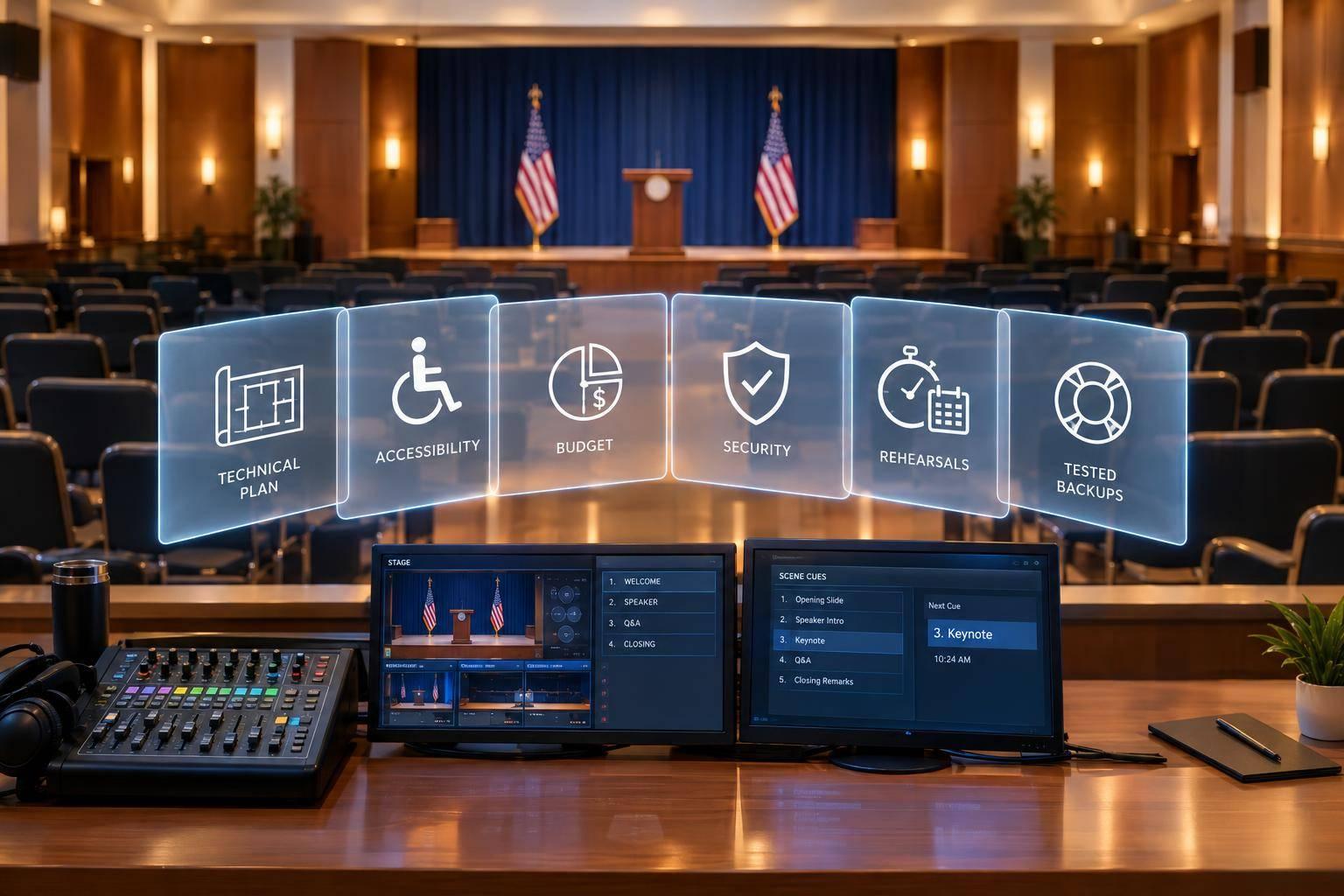
A well-organized master script is your roadmap to success. This script should include every technical cue - lighting changes, sound effects, and graphic transitions. Test every piece of equipment, from projectors to streaming platforms and staging setups, to ensure a production that meets broadcast-level standards.
sbb-itb-ae35a94
4. Schedule Rehearsals and Assign On-Site Roles
Event Flow and Organization
Rehearsals are essential for ironing out the details of your ceremony. They allow you to walk through every step, from the winner’s walk to the stage to deciding whether presenters enter from stage left or right. You’ll also figure out exactly where everyone should stand during each presentation. These run-throughs are critical for identifying and resolving potential issues before the big day.
Pay attention to physical obstacles, like stray wires, extra chairs, or awkward stage setups, that could create delays. Rehearsals are also a great opportunity to tweak the AV and stage design, building on earlier setup efforts. To keep your audience engaged, aim for a ceremony length of two to three hours, as most experts agree this is the sweet spot for maintaining attention without overwhelming your guests.
Logistical Coordination
Once the flow is rehearsed, it’s time to refine the roles and responsibilities of your team to ensure everything runs smoothly. Start by designating one primary point of contact to oversee the entire event. This person could be an internal staff member, a creative director, or an event producer, but they must have a complete understanding of the agenda and their responsibilities. Acting as the "captain" of the event, they’ll coordinate with the emcee, verify the schedule, and make quick decisions to adjust pacing if things start to fall behind.
You’ll also want a dedicated stage manager to handle everything happening on and around the stage. They’ll assist presenters, manage transitions between awards, and ensure the stage area operates seamlessly. Meanwhile, your event coordinator should act as the go-to person for vendors and venue staff, ready to tackle technical problems or emergencies as they arise.
To keep the energy high and the audience engaged, consider hiring a professional emcee to co-host alongside your CEO. This allows your executive to focus on the awards themselves while the emcee takes charge of crowd interaction and keeps the ceremony moving at a lively pace.
5. Manage On-Stage and Off-Stage Execution
After all the planning and rehearsals, the real test lies in how well everything comes together on the big day. Smooth execution is key to turning your strategy into a memorable and seamless ceremony.
Event Flow and Organization
On the day of the event, appoint a lead coordinator to oversee the flow in real-time. This person should stay in constant communication with the emcee and backstage crew to adjust pacing as needed. If things start to run behind schedule, the host can be discreetly signaled to pick up the pace.
Make sure the path to the stage is clear of any obstacles like wires, extra chairs, or misplaced equipment. A clean and direct route ensures winners can make their way to the stage quickly and without unnecessary delays. This helps avoid awkward pauses or "dead air" moments that can break the ceremony's rhythm.
Technical Precision
Your AV team plays a critical role in keeping the ceremony smooth and engaging. They should be ready to cue pre-edited audio clips (stingers) and display winner name graphics the moment a winner is announced. Timing is everything to maintain the momentum.
Leverage screens and lighting strategically so every guest can follow along with the ceremony, no matter where they're seated.
"A talk‑through is not a walk‑through. When you arrive at rehearsal, you must actively walk through each step of the awards show to eliminate any dead air that could negatively impact your format." - Jeff Civillico, Professional Emcee
Logistical Coordination
Position winner photo areas in a way that doesn’t interfere with stage transitions. This keeps the flow intact and avoids unnecessary bottlenecks.
Assign specific staff members to handle award handoffs. They should know exactly where the trophies are located and how they’ll be delivered to the winners. These small but important details ensure everything runs like clockwork. By aligning all roles and logistics, you bring together every piece of prior preparation to deliver a polished and professional awards ceremony.
Conclusion
Organizing a corporate awards ceremony takes more than just booking a venue and sending out invitations - it’s about crafting an experience that truly celebrates your team’s achievements. This means putting thought into planning, technical details, and seamless execution. From stage design to audiovisuals, rehearsals, and live coordination, every piece needs to come together to create an event that reflects your company’s values and honors its people.
Here’s something to think about: 75% of employees would leave a company that doesn’t recognize their efforts. That statistic alone highlights why these ceremonies aren’t just “nice to have” - they’re essential for boosting morale and retaining talent. A well-planned event isn’t just a celebration; it’s a powerful way to show your team how much they matter.
As Jeff Civillico, a professional emcee, puts it:
"An awards show is a pivotal moment during any conference, workshop, or summit to show your most valued employees just how much they mean to your company." - Jeff Civillico
Start planning at least six months in advance. Lock in your venue, confirm vendors, and schedule rehearsals early to avoid last-minute hiccups. Keep the ceremony concise - two to three hours is the sweet spot to honor your team without losing your audience’s attention. Every detail you refine, every potential issue you smooth out, strengthens your message of appreciation.
Feeling overwhelmed? You’re not alone, and you don’t have to do it all yourself. Professional event production services, like Corporate Optics, can handle everything - from audiovisuals to stage design to on-site coordination. They’ll manage the logistics, so you can focus on what matters most: celebrating your team and their hard-earned success. With their expertise, you can ensure the night goes off without a hitch, leaving a lasting impression on everyone in the room.
FAQs
What are the best ways to keep an awards ceremony running smoothly?
To keep your awards ceremony running smoothly, begin with a clear and detailed timeline that breaks down every part of the event. Designate a specific event coordinator to manage the schedule and address any unexpected changes on the fly. Schedule rehearsals to perfect transitions and ensure that speakers, performers, and other participants are confident in their roles. Collaborate closely with your AV and stage teams to identify and resolve any technical issues ahead of time. Staying organized and prepared will help you deliver a seamless, professional event that leaves a lasting impression on your audience.
How can you keep the audience engaged during a corporate awards ceremony?
To keep your audience interested, try including entertainment segments like live performances or captivating speakers to add variety to the program. Use eye-catching visuals and graphics on screens to emphasize key moments and hold their attention. Add some interactive elements, such as live polls or trivia, to encourage active participation. You can also take advantage of technology - like live streaming or augmented reality - to create a more engaging and immersive experience for both on-site and remote attendees.
Why is technical precision essential for a successful corporate awards ceremony?
Technical precision is key to pulling off a smooth and professional corporate awards ceremony. Everything from perfect audiovisual setups to well-timed transitions plays a part in creating an event that feels polished and enhances the overall experience for everyone attending.
When you prioritize technical accuracy, you minimize the risk of disruptions, uphold the event's credibility, and leave a strong, positive impression on your audience. This attention to detail not only reflects professionalism but also underscores the significance of the occasion.
Related Blog Posts



Streamline your workflow, achieve more

Lorem ipsum dolor sit amet, consectetur adipiscing elit. Maecenas ac velit pellentesque, feugiat justo sed, aliquet felis.



Lorem ipsum dolor sit amet, consectetur adipiscing elit. Maecenas ac velit pellentesque, feugiat justo sed, aliquet felis.