CME Group Experiences Technical Outage on Black Friday, Impacting Financial Markets

Chief Executive Officer
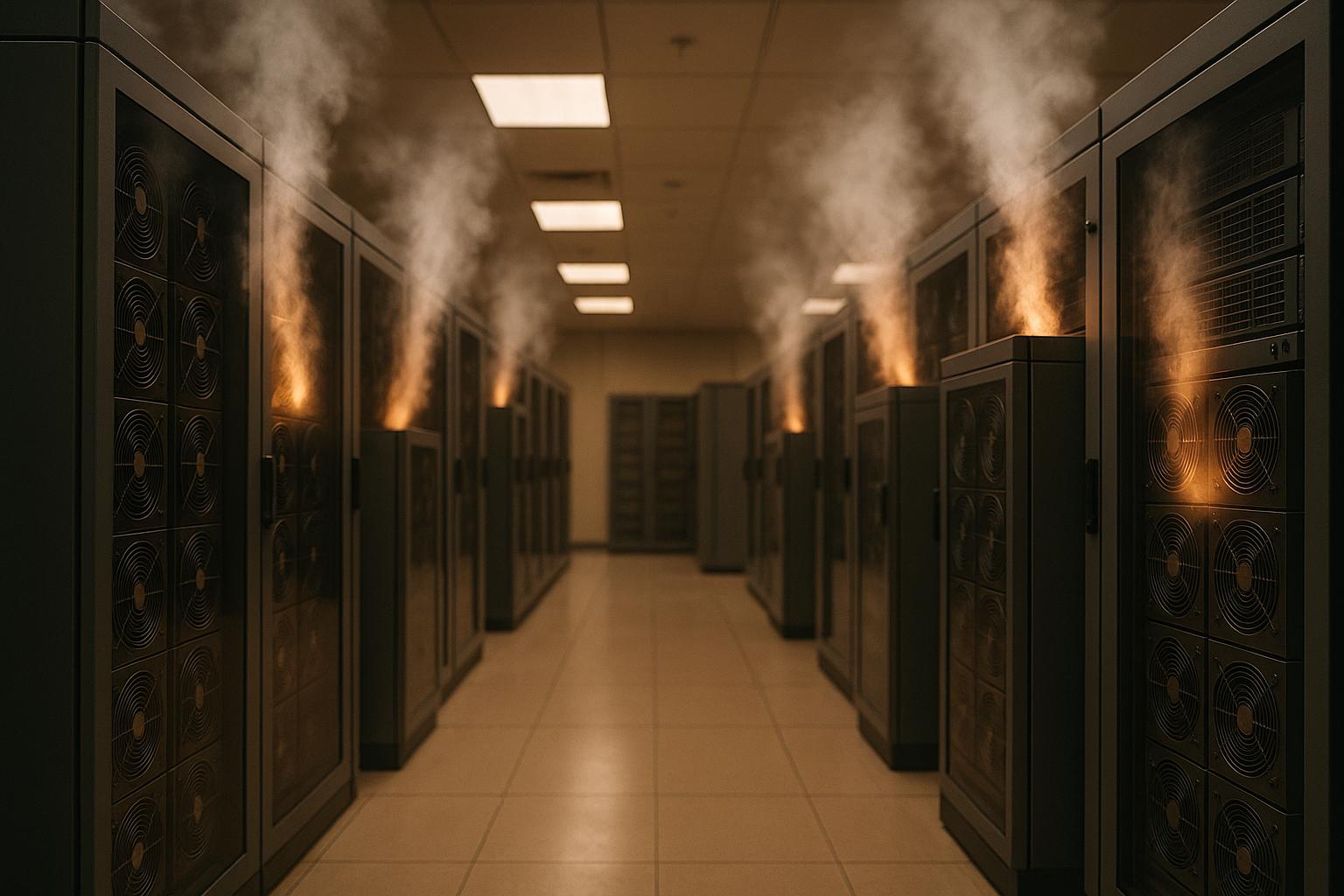
A major technical outage at the CME Group, the largest derivatives marketplace in the world, disrupted financial markets on Friday, November 28, 2025, exposing vulnerabilities within the infrastructure underpinning global trading. The incident, caused by a "chiller plant failure" at a data center near Chicago, halted trading for several hours on the CME’s Globex electronic trading platform, leaving market participants unable to access real-time pricing for key US stock index futures.
This disruption, occurring on the holiday-shortened Black Friday trading session, affected several crucial derivatives markets, including futures and options tied to US stock indexes, US Treasuries, and commodities. Although trading resumed later in the day and broader stock indexes ultimately showed slight gains, the outage has raised concerns about the resilience of critical financial systems.
Cooling System Failure at the Core of the Outage
The outage began late on Thursday, November 27, 2025, when the cooling system at the CyrusOne CHI1 data center, which hosts CME's Globex platform, experienced a failure. This prompted an emergency shutdown of Globex, which handles near round-the-clock trading for a wide array of financial products. CME Group issued its first notifications about the problem at approximately 8:40 PM Central Time. However, the outage persisted for over 11 hours, freezing price feeds for major US stock index futures, including those tied to the S&P 500, Nasdaq 100, and Dow Jones Industrial Average.
The prolonged disruption left investors, brokers, and traders struggling to adapt. Many faced significant challenges in managing risk, as the inability to access official price benchmarks forced them to rely on internal estimates or alternative data sources. Some referred to the situation as "flying blind" during critical market hours.
sbb-itb-ae35a94
Market Reactions and Broader Impacts
Despite the severity of the outage, its timing on a lower-liquidity Black Friday session likely helped minimize broader market fallout. When trading resumed, the S&P 500, Dow Jones Industrial Average, and Nasdaq Composite all posted slight gains for the day, suggesting that limited activity may have absorbed the shock. Nonetheless, the incident has sparked broader discussions about the fragility of financial systems and the need for stronger safeguards against such disruptions.
Key Stakeholders and Impacted Parties
The outage's effects rippled across various segments of the financial ecosystem:
- CME Group: As the operator of the affected trading platform, CME Group faces reputational damage, potential financial losses, and likely regulatory scrutiny. The company is expected to incur costs related to investigating the root cause, implementing corrective measures, and possibly compensating affected clients.
- Market Participants: Institutional investors, high-frequency trading (HFT) firms, and retail brokers were among those most impacted by the inability to trade or access accurate pricing information. HFT firms, which depend on real-time data and fast access, were particularly disadvantaged. Meanwhile, investors with open positions in CME-listed derivatives faced heightened uncertainty.
- Alternative Trading Platforms: Competing exchanges and trading venues that were unaffected by the outage may have seen temporary increases in trading activity or inquiries during the disruption.
- Data Center Providers: As the source of the outage, CyrusOne, which operates the affected data center, could also face questions about its infrastructure resilience and emergency response protocols.
Broader Industry Implications
The CME outage has highlighted the critical role of technology in ensuring orderly financial operations and the risks posed by single points of failure in centralized systems. This incident underscores the need for robust redundancy and disaster recovery protocols, particularly for institutions considered "systemically important" to global markets.
Regulatory scrutiny is anticipated in the wake of the outage. Agencies like the Commodity Futures Trading Commission (CFTC) and the Securities and Exchange Commission (SEC) are likely to examine CME's protocols and may impose stricter operational standards to prevent future occurrences. Enhanced requirements for redundancy, regular stress testing of systems, and detailed reporting of technical failures could become key focus areas for regulators.
Lessons from the Outage
The CME Group outage on Black Friday serves as a reminder of the operational risks inherent in highly automated, technology-reliant financial systems. While the market quickly recovered and broader disruptions were contained, this event underscores the importance of proactive measures to fortify critical infrastructure.
Market participants, exchanges, and regulators alike are expected to revisit their contingency plans and explore ways to mitigate reliance on single platforms. The incident may also drive increased interest in advanced monitoring tools, redundant systems, and multi-venue trading strategies to ensure resilience in times of crisis.
As CME Group works to investigate the root cause and implement corrective actions, the financial industry will be watching closely to assess the steps taken to restore trust and confidence in the reliability of its systems. This outage, though challenging, offers a valuable opportunity for the industry to refine its approach to operational resilience and safeguard the stability of global financial markets.


Streamline your workflow, achieve more

Lorem ipsum dolor sit amet, consectetur adipiscing elit. Maecenas ac velit pellentesque, feugiat justo sed, aliquet felis.



Lorem ipsum dolor sit amet, consectetur adipiscing elit. Maecenas ac velit pellentesque, feugiat justo sed, aliquet felis.