Leading AV Production Teams For Galas And Award Ceremonies

Chief Executive Officer
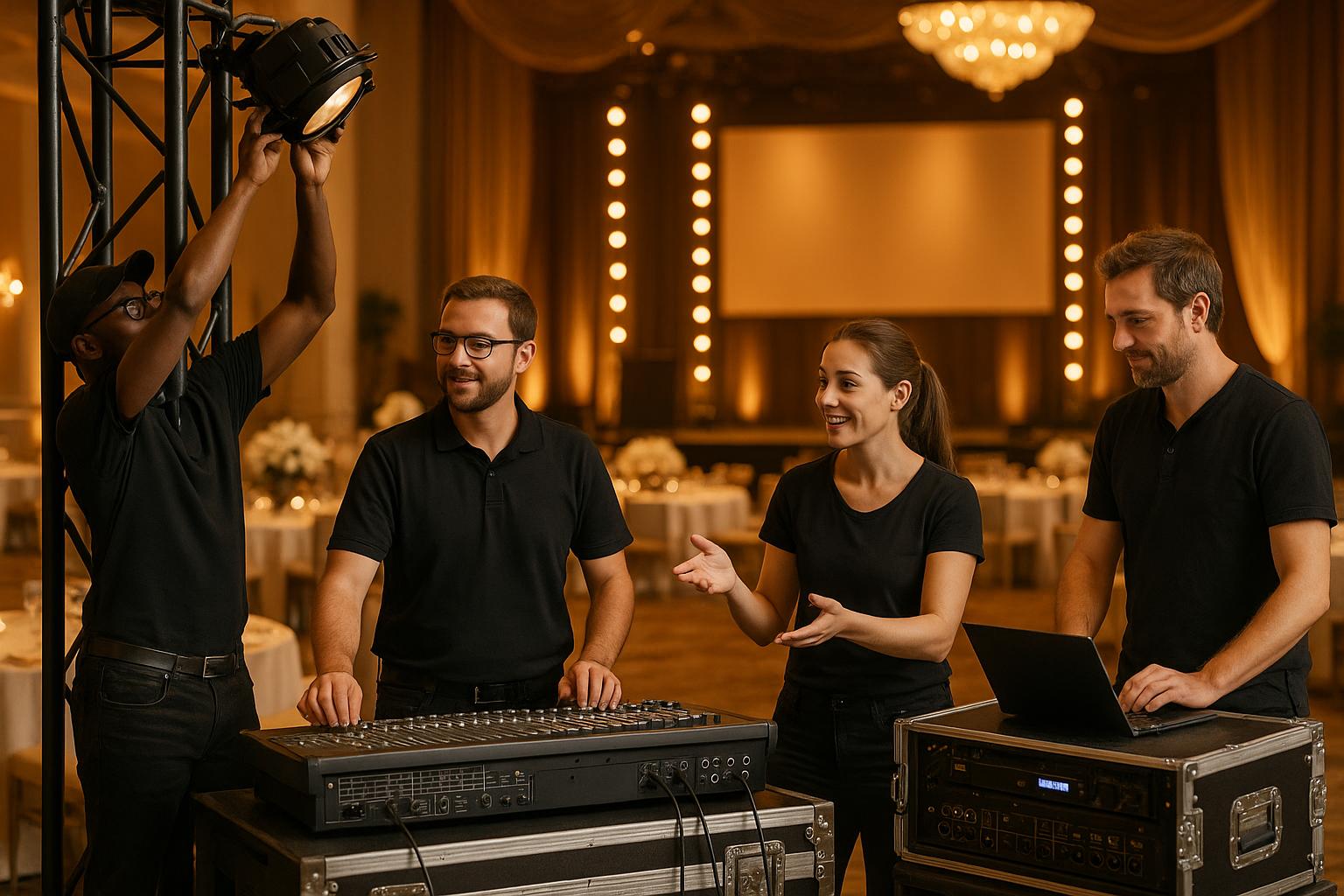
Producing a flawless gala or award ceremony requires precision, planning, and teamwork. From managing audio clarity to coordinating lighting and video transitions, every detail matters. As the AV production lead, your role is to ensure the event runs smoothly, creating a memorable experience for attendees.
Here’s what you need to know:
- Key Responsibilities: Oversee all technical elements, manage the team, and ensure seamless execution.
- Challenges: High-profile guests, live streaming, and brand reputation demand perfect coordination.
- Preproduction: Assemble a skilled team, gather client requirements, and design tailored AV systems.
- Event Day: Use a detailed run of show, clear communication protocols, and backup plans to handle risks.
- Post-Event: Conduct reviews with your team and stakeholders to improve future events.
This guide covers practical strategies to help you lead AV teams effectively, whether for a small corporate dinner or a 1,000-guest gala.
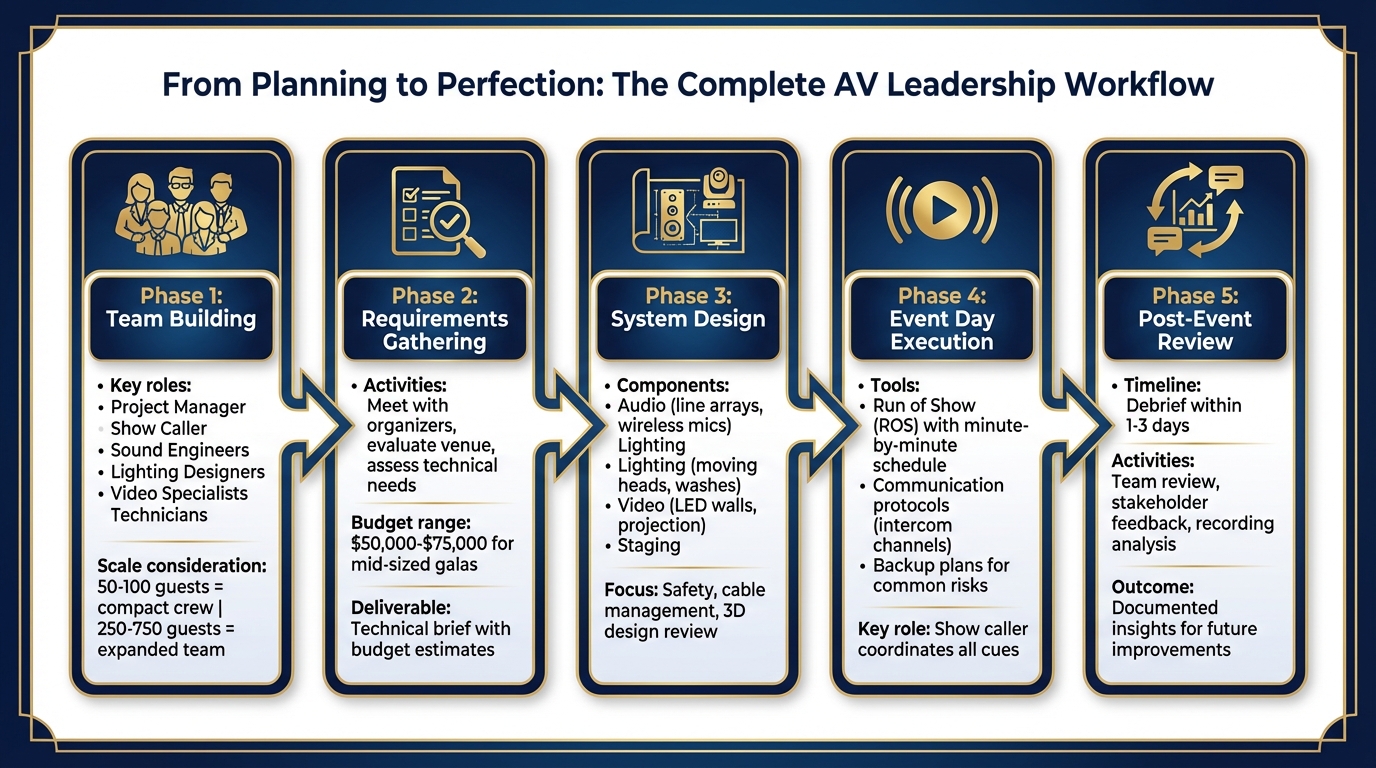
5-Phase AV Production Process for Galas and Award Ceremonies
Event A/V Essentials Part 5: Creating Your Onsite Production Schedule - Logan Clements
The Role and Challenges of AV Leadership
Now that we've touched on the importance of flawless execution, let's dive into your responsibilities as the AV production lead and the unique hurdles that come with the role.
What an AV Production Lead Does
An AV production lead - sometimes referred to as a Production Manager or Show Caller - is the driving force behind the entire production. You're responsible for coordinating every audiovisual element to deliver a smooth, on-time event experience. Your main tasks include creating the run sheet, cueing lighting, sound, video, and stage movements, and keeping communication clear and steady with your team and presenters. On the big day, you're the go-to person for all technical operations, ensuring cues are hit with precision and troubleshooting any issues on the spot.
This role stands apart from general event planners or venue AV managers because it demands quick, decisive action. Whether it's spotlighting a speaker at the perfect moment, rolling a video package, or fixing a technical hiccup in real time, your ability to think on your feet is critical. Mastering these skills is key to transitioning smoothly into the preproduction phase, where planning truly begins.
Production Requirements for Galas and Award Ceremonies
Galas and award ceremonies bring their own set of challenges, where precision is the name of the game. These high-profile events often involve notable guests, live streaming, and a brand's reputation on the line. Every detail must be meticulously planned and executed to maintain credibility, captivate the audience, and foster meaningful connections.
Leading in this environment means staying ahead of potential risks, coordinating closely with vendors, rigorously testing all technical elements, and managing budgets strategically to handle surprises without derailing the event's vision. These demands highlight the importance of thorough preproduction planning, which will be explored in the next section.
Preproduction Planning Steps
A solid preproduction plan is the backbone of any successful event. It’s where you take the client’s ideas and turn them into an actionable strategy, assemble the right team, and map out the technical systems to bring the event to life.
How to Build Your AV Team
The size and complexity of your AV team should reflect the event’s scale. For smaller galas with 50–100 guests, a compact crew - like a production manager, sound engineer, lighting technician, and video operator - might be enough. However, for larger events with 250–750 attendees, you’ll need to expand the team. This could include additional camera operators, video switchers, audio engineers, lighting designers, and stagehands to handle the increased workload and equipment demands.
Key positions to fill include:
- A project manager to oversee logistics and coordinate with event planners.
- A show caller to cue all technical elements during the live event.
- Sound engineers skilled in mixing live audio.
- Lighting designers who can craft the event’s visual tone.
- Video production specialists to manage cameras and switching.
- Onsite technicians for setup, teardown, and equipment operation.
When hiring, prioritize professionals with a track record of performing under pressure and strong communication skills. These attributes are crucial for translating the event’s vision into a seamless experience.
Before the big day, test all content and rehearse with your team to ensure everything runs smoothly. If the event involves weekend setups or falls on non-standard days, confirm technician availability early and coordinate with venue staff for equipment delivery and security.
Once your team is ready, the next step is to dive into the event’s technical requirements by collaborating closely with clients and stakeholders.
Gathering Requirements from Clients and Stakeholders
Begin by meeting with organizers to understand the event’s purpose, audience size, and schedule. Ask specific questions to uncover details like the number of presenters, technical tools needed (e.g., laser pointers or high-speed internet), and the complete agenda.
Evaluate the venue carefully. Consider whether it’s indoors or outdoors, its dimensions, acoustics, lighting conditions, and any potential obstacles. These factors will directly impact your choice of equipment and how it’s set up. Collaborate with your AV provider to determine the ideal microphones, speakers, and screens for clear sound and visibility.
All the information you gather should be summarized in a technical brief that includes budget estimates. For mid-sized galas, AV budgets typically range from $50,000 to $75,000, though costs can vary based on factors like rigging needs, ceiling height, power availability, and internet speeds. Use checklists to document everything - contacts, equipment specs (like power ratings and cable lengths), setup diagrams, power sources, backups, and installation timelines.
This detailed preparation will guide you in designing an AV system that matches the event’s goals.
Designing AV Systems for Galas and Awards
Your AV setup should strike the right balance between sophistication and impact. The essentials include audio systems with line array speakers and wireless microphones, lighting with moving head fixtures and washes, video displays like LED walls or projection screens, and staging with scenic elements.
For a high-end gala, consider using a 30'×10' 4K LED wall, 12'×8' side walls, L-Acoustics K2 line arrays with subwoofers, Shure wireless microphones, and 6–8 Robe BMFL moving head fixtures. Keep in mind that different venues require tailored approaches. For instance, hotel ballrooms often have lower ceilings and unique power distribution needs compared to theaters, which may offer more flexibility for rigging.
Safety should always be a priority. Plan for efficient cable management to avoid hazards and minimize labor costs. Decide whether front or rear projection is better based on the throw distance and available space. To catch potential issues early, request 3D designs of the setup.
sbb-itb-ae35a94
Managing the Event Day
When the big day arrives, it’s all about timing, communication, and quick thinking. Staying calm and organized under pressure is the foundation of a successful event.
Building a Detailed Run of Show
A run of show (ROS) is your event’s playbook, breaking down every moment with precision. It’s a minute-by-minute schedule that includes clear timestamps in the 12-hour format - like 6:30 PM for doors opening, 7:00 PM for the show start, and 7:15 PM for opening remarks. Each entry should outline what’s happening on stage, the AV cues required, and who’s responsible for executing them.
For example, at 7:45 PM, when the first award category begins, your ROS might include: "LX 8 (spotlight on podium), Audio 3 (switch to handheld mic), Video 12 (play nominee reel on LED wall)." This level of detail ensures smooth transitions and a professional flow throughout the event.
Be sure to build in buffer time between segments for applause, presenter delays, or last-minute adjustments. A typical gala might move from a cocktail reception to dinner, followed by speeches, awards, and entertainment. Your ROS should reflect these natural pauses while keeping the momentum going.
Once your roadmap is locked in, turn your attention to keeping the team in sync.
Setting Up Communication Protocols for AV Teams
Clear communication is the glue that holds everything together during a live event. Assign specific roles to team members - camera operators, audio engineers, lighting technicians, video switchers, and a show caller who oversees the entire production. Everyone should know exactly what they’re responsible for and who they report to.
Use an intercom system with designated channels to avoid cross-talk between departments. For instance:
- Channel 1: Show caller and department heads
- Channel 2: Audio team
- Channel 3: Video team coordination
Standardized show-calling language is critical to avoid confusion. As AVFX explains:
"A good show caller doesn't just react - they anticipate".
Before the event starts, hold a pre-show briefing with the AV team. Walk through the ROS, highlight key moments, and confirm everyone understands their cues. Utilize real-time communication tools, such as event chat systems, to stay connected during the show. Have at least one team member stationed outside the main room to monitor communications and handle any network issues.
Rehearsals are essential - focus on communication protocols to identify and fix any weak spots before the audience arrives.
Handling Common Risks and Backup Plans
Even the best plans can hit a snag, so be ready for the unexpected. For instance, wireless microphones can experience interference from cell phones or other frequencies. To avoid disruptions, program backup channels and have spare batteries, cables, and extra wireless mic systems readily available.
Script changes are another common hiccup at galas and award shows. Presenters may go off-script, or organizers might request last-minute revisions. Stay flexible and work closely with organizers to manage these changes quickly. Incorporate contingency cues into your ROS to account for deviations from the plan.
Equip your AV team with basic troubleshooting skills so they can resolve issues on the spot. Make sure technicians are easy to reach throughout the event for immediate support. Strong project management and a well-prepared team can help prevent surprises, while having dedicated tech support ensures the show runs smoothly even under pressure.
Post-Event Review and Improvement
After the event wraps up, it's time to turn your experience into actionable insights. A thorough review of what worked and what didn’t is key to making future productions even better.
Conducting Debriefs with Teams and Stakeholders
Within just a few days of the event - ideally 1 to 3 days - schedule a detailed debrief with your production team. This includes everyone from audio engineers and lighting technicians to video operators and IT staff. Break down the event step by step, reviewing key segments and technical cues against the event's run of show. Make sure to document any deviations or unexpected challenges for future reference.
Once the internal review is complete, bring in clients, sponsors, and other key stakeholders for their perspective. Ask for specific feedback on the audiovisual aspects - Was the sound clear? Did the visuals hold the audience's attention? Combine their insights with metrics like attendee satisfaction and engagement levels to get a full picture of the event’s impact. This collaborative feedback process helps you celebrate successes and pinpoint areas for improvement.
Analyzing Recordings and Data for Future Events
Take a close look at the event recordings to evaluate pacing, audio clarity, and visual quality. Watch for things like awkward lighting changes, poor camera angles, or moments where the schedule went off track. These observations should be documented and used to refine your approach for future events.
For added insights, Corporate Optics can provide post-event analytics to help you dive deeper into technical performance and audience engagement trends. Use these findings to fine-tune your preproduction process for the next gala, award ceremony, or event you organize. Each review is a step toward delivering an even more polished experience next time.
Conclusion
Successfully managing an AV production team for galas and award ceremonies hinges on three key elements: detailed preproduction planning, clear communication, and careful post-event analysis. When these components work together, they ensure that every technical aspect aligns with the event’s vision and keeps attendees engaged from beginning to end.
This approach not only streamlines the planning process but also lays the groundwork for smooth live execution. Effective AV leadership demands attention to detail, seamless coordination, and proactive problem-solving. Tools like site visits and real-time communication platforms help teams anticipate and address potential issues, allowing them to adapt quickly when challenges arise. The results speak for themselves: the Asian Paints Incentive Program, which earned the 2025 MEA Legacy Award, showcased how meticulous planning and creative solutions can create unforgettable experiences. Similarly, the Marin Humane gala highlighted how a skilled AV team can deliver outstanding results, even under demanding circumstances.
FAQs
What key skills are needed to successfully lead an AV production team for galas and award ceremonies?
To successfully lead an AV production team for events like galas or award ceremonies, you’ll need to bring together technical know-how and leadership skills. Here’s what matters most:
- Deep technical understanding of audiovisual systems to guarantee smooth setups and operations.
- Strong communication skills to keep your team and stakeholders on the same page.
- Quick problem-solving abilities to handle any last-minute hiccups.
- Organizational prowess for managing schedules, resources, and priorities effectively.
- Smart budgeting to stay within financial limits while maximizing resources.
- Teamwork and collaboration to create a positive and efficient working atmosphere.
These skills are the foundation for delivering a seamless event that leaves a lasting impression.
What are the best ways to maintain clear communication with AV team members during a live event?
To keep communication smooth with your AV team during a live event, start by equipping all key members with dedicated communication tools, like radios or wireless headsets. This ensures everyone stays connected. Provide a detailed run-of-show and cue sheets ahead of time so the team knows the event's flow and their specific tasks.
Schedule a pre-event briefing to go over expectations, assign roles, and address any last-minute questions. Appoint a team leader to manage coordination and serve as the main contact person. During the event, rely on real-time monitoring tools to quickly spot and fix any technical hiccups, keeping everything on track.
What are the most common technical issues during galas, and how can they be avoided?
Technical hiccups like audio feedback, signal loss, equipment glitches, and connectivity breakdowns often rear their heads during galas and award ceremonies. To keep things running smoothly, thorough pre-event testing is a must. This helps pinpoint potential trouble spots and confirms that all gear is in working order.
It's also smart to have backup equipment ready for key items like microphones and projectors. That way, if something goes wrong, you can swap it out without missing a beat. Before the event kicks off, make sure all AV systems are set up and calibrated correctly. And don’t forget to have skilled technical support on hand during the event. Their quick response can keep minor issues from turning into major disruptions.
Related Blog Posts


Streamline your workflow, achieve more
Lorem ipsum dolor sit amet, consectetur adipiscing elit. Maecenas ac velit pellentesque, feugiat justo sed, aliquet felis.



Lorem ipsum dolor sit amet, consectetur adipiscing elit. Maecenas ac velit pellentesque, feugiat justo sed, aliquet felis.