5 Reasons Why Planning A Leadership Conference Drives Positive Business Outcomes

Chief Executive Officer

Leadership conferences are more than just gatherings - they are an investment in improving how organizations operate. They help align teams, build leadership skills, encourage collaboration, boost employee engagement, and deliver measurable financial returns. Here’s a quick breakdown of the key takeaways:
- Team Alignment: Ensures everyone is working toward the same goals, improving strategy execution and collaboration.
- Leadership Development: Builds stronger leaders and prepares future ones, reducing turnover and saving costs.
- Collaboration: Breaks down silos between departments, sparking new ideas and problem-solving approaches.
- Employee Engagement: Shows employees their growth matters, increasing loyalty and motivation.
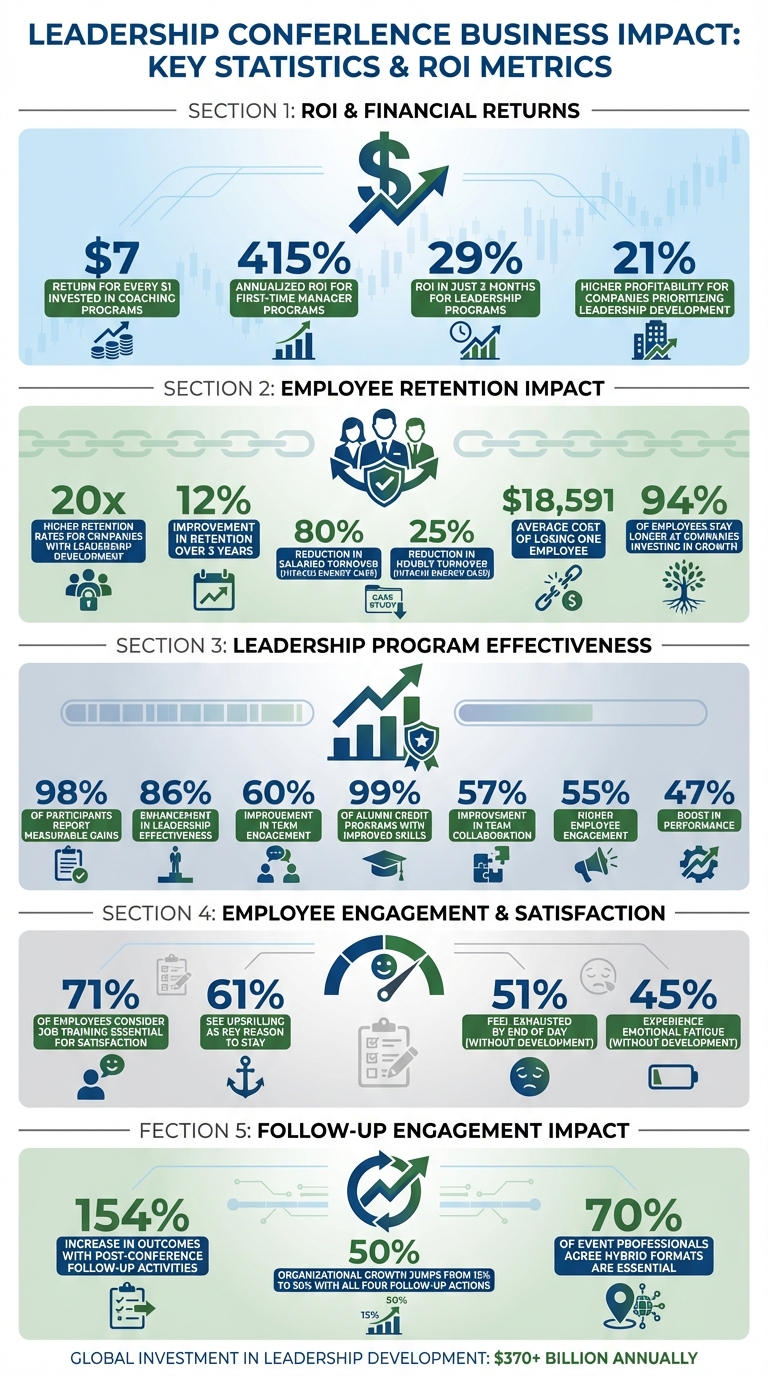
- Return on Investment (ROI): Leadership programs can yield up to $7 for every $1 spent, with metrics like retention and productivity showing clear benefits.
Leadership Conference ROI and Business Impact Statistics
The Surprising Facts About Leadership Development
1. Better Team Alignment on Business Goals
Leadership conferences bring teams together to refine strategies, clarify individual roles, and align on a shared vision - ensuring everyone works toward the same objectives. This collective focus lays the groundwork for noticeable improvements across the board.
The results speak for themselves: 98% of participants in leadership programs report measurable gains in areas like strategic execution, collaboration across departments, and management effectiveness. Research from the Center for Creative Leadership highlights this further, showing that alignment not only boosts financial performance but also helps organizations position the right people in the right roles.
"Organizations need a leadership strategy that closely connects with the business strategy and equips employees with the leadership skills needed to implement it. Leadership development allows organizations to shape the culture and strategy of the business, setting them up for agility and growth." - Center for Creative Leadership
Interactive workshops and case studies play a key role, improving decision-making and ensuring everyone understands the organization’s priorities. When team members hear the same message at the same time, it fosters a shared focus and builds momentum to move forward together.
2. Improved Leadership Skills and Succession Planning
Strengthening leadership skills is a cornerstone of sustainable growth, especially when aligned with team goals. Leadership conferences play a pivotal role in identifying and nurturing future leaders. Through interactive workshops, case studies, and strategic discussions, these events often reveal high-potential talent that might otherwise go unnoticed in day-to-day operations. Spotting this talent early not only boosts retention but also fortifies the long-term resilience of an organization.
The importance of leadership development becomes even clearer when you consider that only 5% of businesses offer leadership training across all levels, leaving significant talent gaps. Companies that prioritize leadership development enjoy 20 times higher employee retention rates, while 58% of workers admit they would leave if such opportunities were lacking. And with the average cost of losing an employee sitting at $18,591, investing in leadership programs is not just a strategic move - it’s a financial one.
Structured leadership programs have a powerful impact, enhancing effectiveness by 86%. For example, participants in programs from the Center for Creative Leadership reported an average 60% improvement in team engagement and the ability to develop others. Additionally, 99% of alumni credited these programs with sharpening essential skills like communication, influence, and managing change.
"The research is clear: Leaders are made, not born. And they are increasingly self-made." - Ethan Bernstein, Harvard Business School Professor
The benefits of leadership development extend beyond organizational gains - participants often see personal financial rewards. Among Harvard Business School Online learners, 42% reported an average compensation increase of $17,000 after earning a leadership certificate, with 16% receiving bonuses averaging $14,000. These tangible outcomes highlight the clear return on investment that leadership development delivers for both individuals and their organizations.
3. More Cross-Department Collaboration and New Ideas
Leadership conferences break down the walls that often separate departments in daily operations. By bringing together professionals from different areas through interactive workshops and focused breakout sessions, these events create opportunities for fresh perspectives and creative problem-solving that are hard to achieve in isolated work environments.
Instead of grouping participants by similar roles or functions, structured breakout sessions mix individuals from various departments. These diverse groups tackle specific leadership challenges, encouraging open idea exchange and collaborative problem-solving. This kind of cross-department interaction often leads to the kinds of innovative insights that can reshape how teams approach their work.
Adding to this, thought leaders and industry experts play a key role in these conferences. They share new strategies and frameworks that challenge conventional thinking, helping participants see their challenges in a whole new light.
Networking opportunities, like speed networking sessions or informal social lounges, take collaboration even further. These structured interactions connect people from across the organization, creating lasting channels for exchanging ideas and solving problems together. These connections build on earlier efforts to align teams, reinforcing the organization's overall strategy.
sbb-itb-ae35a94
4. Higher Employee Engagement and Retention Rates
Attending leadership conferences sends a clear message: your team’s growth is a top priority. According to Gallup, 71% of employees consider job training essential for job satisfaction, and 61% see upskilling as a key reason to stay with their current employer. When organizations invest in their employees' professional development, it fosters loyalty and boosts productivity. Beyond just learning new skills, these events can reignite your team's daily motivation and enthusiasm.
The benefits go far beyond just showing up. Many employees report feeling drained - 51% say they’re exhausted by the end of the day, and 45% experience emotional fatigue. Leadership conferences offer a much-needed reset, giving employees the chance to connect with peers, exchange ideas, and gain new perspectives that can reignite their passion for their work.
"Engaged employees are more productive, more loyal, and more committed to the success of your business." - NWAutoCare.org
These events also create opportunities for active participation and feedback. They tackle what employees value most: learning new skills and building professional networks. By highlighting the benefits - such as sparking creativity, enhancing skills, and broadening connections - you demonstrate that their growth truly matters. This sense of being appreciated directly translates into higher engagement, which fuels better business outcomes.
Encourage your team to dive into workshops, network with other attendees, and share their takeaways once they return. When employees are empowered to ask questions and contribute ideas during discussions with other leaders, it reinforces that their input is valued. Plus, the relationships built at these events can lead to mentorships and collaborations that continue long after the conference ends.
5. Clear ROI Through Smart Event Planning
Leadership conferences can deliver real financial returns when planned with intention. Globally, organizations invest over $370 billion annually in leadership development programs. For example, running first-time managers through a leadership program yields a 29% ROI in just three months and a 415% annualized ROI, meaning $4.15 is gained for every $1 spent [17, 21]. Similarly, coaching programs show an average return of $7 for every $1 invested [19, 21].
"People leaders are increasingly being asked to make the business case for programs they implement. This type of tangible return speaks in real dollars and cents and shows that leadership development is a profit multiplier."
- John Topping, President and COO, BetterManager
These figures highlight why tracking meaningful metrics is critical - not just satisfaction scores, but metrics tied to business outcomes.
The right metrics make all the difference. Rather than focusing solely on satisfaction rates or completion stats, organizations should measure outcomes like revenue growth, team productivity, and retention rates [16, 20, 21]. A 2024 Forrester Total Economic Impact study revealed that DDI's Leadership Development Subscription improved employee retention by 12% over three years for a composite organization. Hitachi Energy, after launching leadership training, reduced salaried turnover by 80% and hourly turnover by 25%. Considering that losing an employee costs an average of $18,591, these retention gains directly benefit the bottom line.
ROI also improves when engagement continues beyond the event itself. A 2014 study of the Global Leadership Summit - a two-day event with 260,000 participants annually - found that leaders who engaged in follow-up activities like re-watching sessions, mentoring, or applying leadership principles experienced a 154% increase in key outcomes compared to those who only attended. Organizational growth tied to the Summit jumped from 15% to 50% when participants embraced all four follow-up actions.
"The greatest impact of the Summit doesn't happen at the Summit. Year‐round engagement in personal leadership development determines the lasting value."
- Al Mueller, Philanthropy Advisor, Excellence in Giving
To maximize these financial gains, smart planning involves investing in high-quality speakers, post-conference materials, and robust systems for tracking multiple metrics. Beyond engagement and turnover, organizations should measure team collaboration, leadership effectiveness, and productivity improvements. Companies that prioritize leadership training report impressive results: a 57% improvement in team collaboration, 55% higher employee engagement, and a 47% boost in performance. When conference objectives align with executive priorities and data-driven practices are in place, leadership development stops being an expense and becomes a proven driver of profit.
Planning Tips for U.S. Leadership Conferences
When it comes to organizing a leadership conference, thoughtful planning can make all the difference. Here are some key areas to focus on:
Budget Planning
Think of leadership conferences as more than just an expense - they’re an investment in your organization’s future. To secure approval, clearly explain how attending the event will provide a competitive edge. Kris Grant, CEO of HR consultancy ASPL Group, highlights this point:
"It is important for HR managers who are seeking approval for staff to attend conferences to point out to management and the board the competitive advantage that can be obtained from employees gaining knowledge and skills at a conference."
By emphasizing the tangible benefits, such as improved skills and knowledge, you can demonstrate how leadership development directly impacts your organization’s success.
Venue Selection
Choosing the right venue isn’t just about convenience - it’s about creating opportunities for meaningful connections. Dr. Ben Farr-Wharton, Associate Professor of Management and Associate Dean at the School of Business and Law at Edith Cowan University, explains:
"Sometimes, events outside the formal program - such as meetings on the side, early morning coffee meetings or late-night discussions at the hosting hotel's bar - can generate the most lucrative outcomes from the event."
Opt for venues in major cities that offer informal spaces like lounges, cafes, or hotel bars. These areas encourage spontaneous networking, which can lead to valuable collaborations and insights.
Hybrid Formats
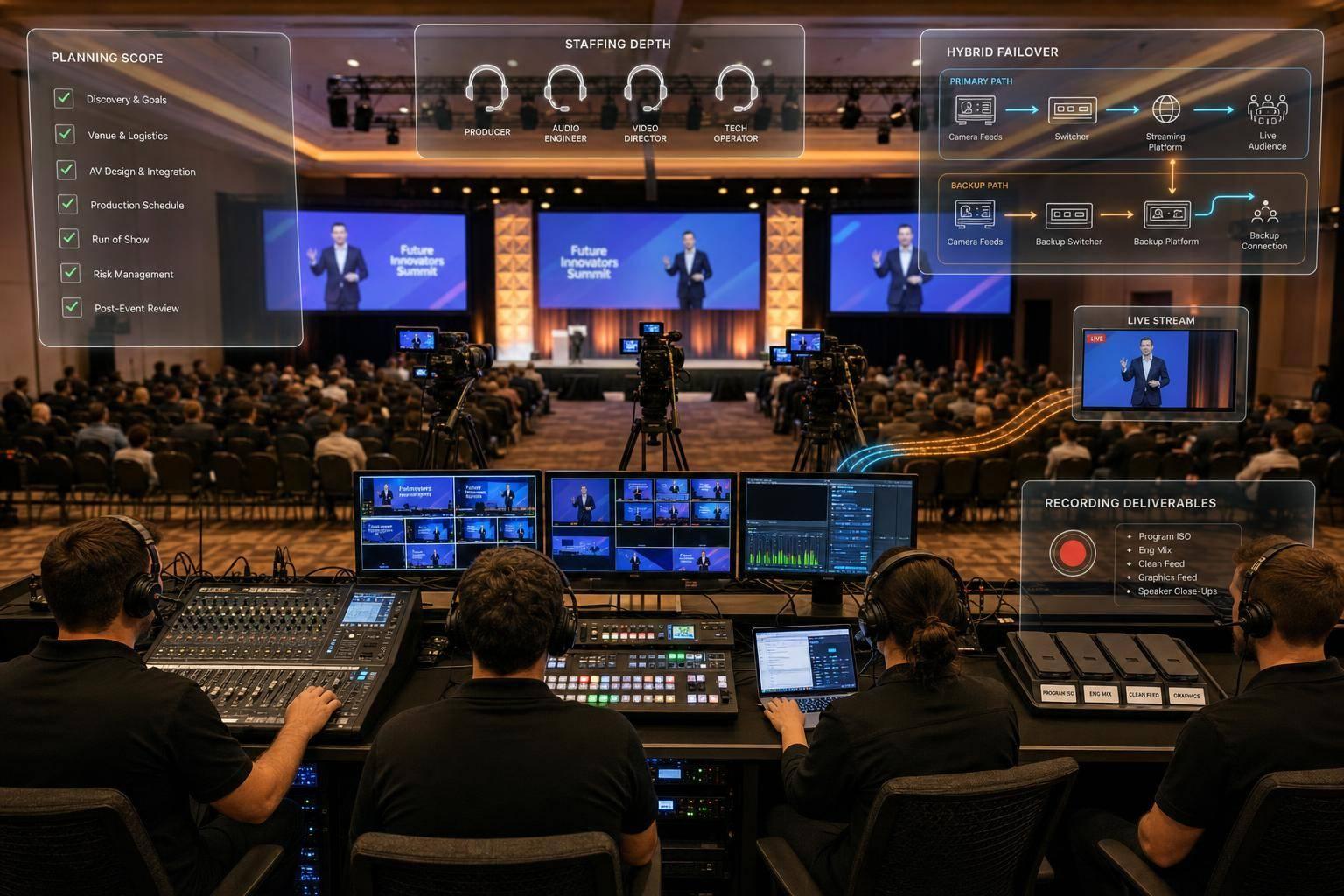
Hybrid events are becoming a game-changer, allowing you to reach a broader audience while managing costs. With 70% of event professionals agreeing that hybrid formats are essential for the future of meetings, combining in-person and virtual elements ensures accessibility for remote teams and satellite offices. However, to make these events truly effective, it’s crucial to use interactive tools and have dedicated moderators to keep virtual participants engaged.
Corporate Optics
For a seamless experience, consider working with professional event planners like Corporate Optics. They handle every detail, from venue sourcing and budget management to hybrid production and live streaming. Their post-event analytics, which track metrics like retention, productivity, and revenue growth, ensure your leadership conference delivers measurable results from start to finish.
Conclusion
A thoughtfully planned leadership conference can do more than just inspire - it has the power to reshape how an organization functions. These events bring teams together around shared goals, strengthen leadership pipelines, encourage cross-department collaboration, and improve employee engagement. The result? Tangible benefits that ripple across the entire company.
Consider this: companies that prioritize leadership development enjoy 21% higher profitability and achieve employee retention rates 20 times greater than those that don't make this investment. Additionally, 94% of employees at organizations that invest in growth report staying with their employers longer. These numbers make it clear - leadership conferences aren't just a "nice-to-have"; they’re a smart business strategy.
The impact doesn’t stop when the event ends. The key to long-term success lies in maintaining momentum. Encouraging employees to engage with conference materials year-round - whether it’s revisiting session recordings, diving into books by keynote speakers, or working with mentors - ensures the lessons learned translate into ongoing growth. This kind of sustained effort turns a single event into a launchpad for meaningful, lasting change.
Every detail matters, from choosing the right venue to deciding on a hybrid or in-person format. Professional execution - covering everything from budget management to post-event analytics - ensures you can track the conference’s influence on retention, productivity, and revenue growth.
With the right approach, your next leadership conference can be more than just an event. It can be a catalyst for transformation, delivering results that resonate far beyond the closing session and directly impact your bottom line.
FAQs
How do leadership conferences help align teams more effectively?
Leadership conferences provide a platform for teams to connect, communicate, and collaborate effectively. These gatherings offer leaders practical strategies to bridge communication gaps, build trust, and align their teams around common goals. By dismantling barriers and promoting a shared vision, these events can enhance team unity and contribute to stronger results for the organization.
What financial benefits can businesses gain from hosting leadership conferences?
Investing in leadership conferences can bring clear financial gains for businesses. These events play a key role in aligning teams with company goals, boosting productivity, and cutting down on inefficiencies. The leadership skills honed during these conferences often lead to smarter decision-making and stronger team dynamics, which can have a direct and positive impact on a company’s financial performance.
Moreover, leadership conferences serve as a breeding ground for fresh ideas and collaboration. This environment can spark the creation of new strategies, products, or services that contribute to revenue growth. When organized thoughtfully, these events offer a strong return on investment (ROI) by blending professional growth with measurable business results.
How does cross-department collaboration benefit businesses, and how can leadership conferences help foster it?
Collaboration across departments is a cornerstone for sparking new ideas, streamlining processes, and keeping teams aligned toward shared goals. When people from different specialties join forces, they bring fresh perspectives to the table, tackle tough problems more effectively, and develop unified strategies that drive the organization forward.
Leadership conferences play a key role in making this kind of collaboration happen. These events create a structured space where leaders and team members from various departments can come together, exchange ideas, and build relationships. Through activities like workshops, group discussions, and team-building exercises, these conferences help tear down barriers between teams and cultivate stronger, more connected working relationships across the company.
Related Blog Posts



Streamline your workflow, achieve more

Lorem ipsum dolor sit amet, consectetur adipiscing elit. Maecenas ac velit pellentesque, feugiat justo sed, aliquet felis.



Lorem ipsum dolor sit amet, consectetur adipiscing elit. Maecenas ac velit pellentesque, feugiat justo sed, aliquet felis.