Successful Companies Who Produce Corporate Town Halls

Chief Executive Officer
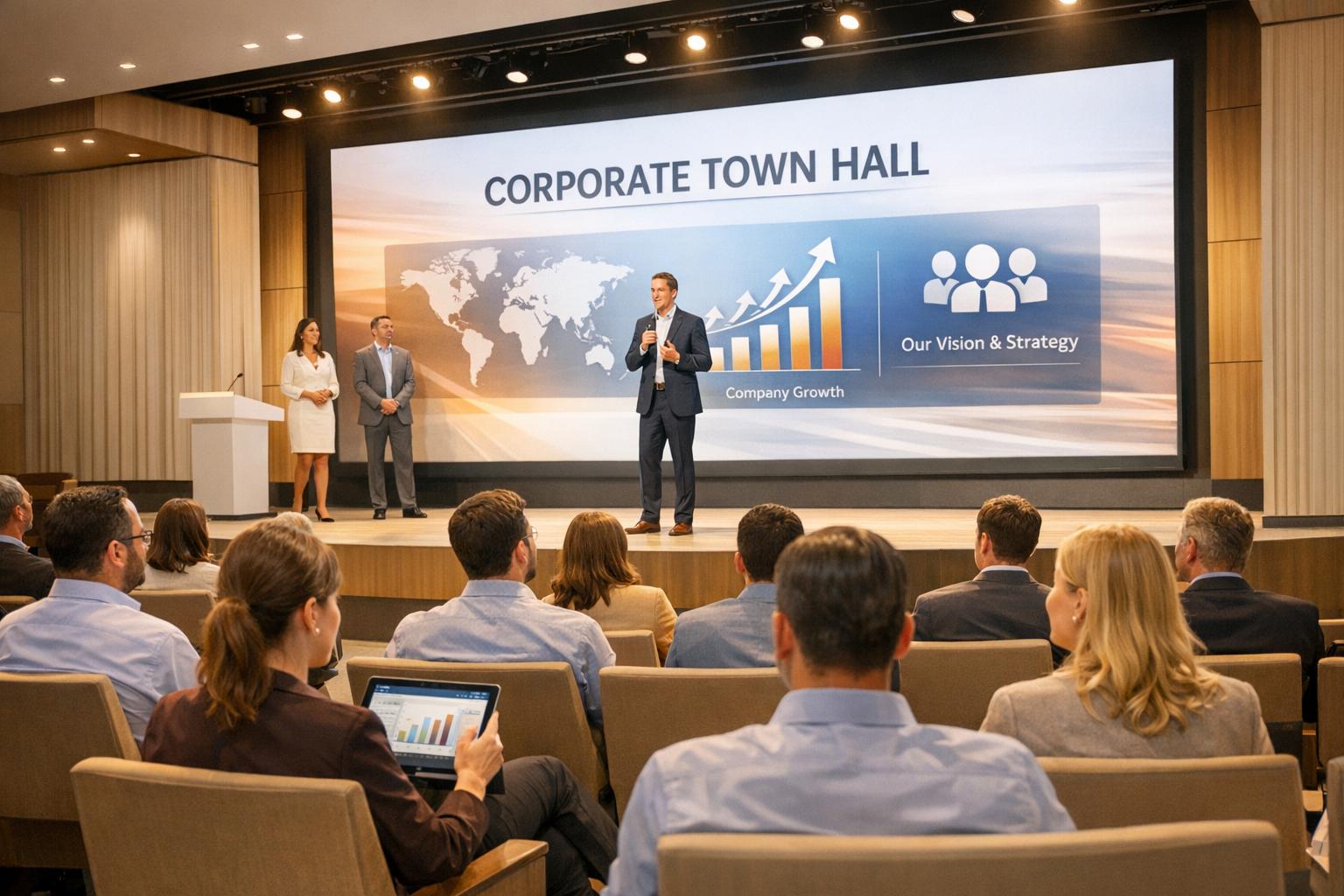
Corporate town halls are more than just meetings - they’re a direct line between leadership and employees, designed to share updates, clarify goals, and promote engagement. Companies like Amazon, Thermo Fisher Scientific, and Akamai Technologies have redefined these events by treating them as polished productions, not routine gatherings. The results? Higher employee participation, clearer communication, and measurable improvements in engagement.
Here’s what makes them work:
- Professional production: High-quality visuals, clear audio, and tools like teleprompters keep events smooth and engaging.
- Interactive elements: Live Q&A, polls, and chat features encourage participation, even for remote teams.
- Thorough preparation: Rehearsals and pre-event planning ensure seamless execution.
- Data-driven insights: Post-event analytics help refine future meetings.
For example, Amazon’s shift to shorter, quarterly town halls with a “talk show” format boosted interest. Thermo Fisher’s virtual series during the pandemic reached global teams effectively. Akamai’s fully virtual approach increased live engagement from 50% to 80%.
The takeaway? Treat town halls as high-quality productions, and you’ll see better communication and stronger employee connections.

Corporate Town Hall Success Metrics and Engagement Statistics
SVVS 2025: Producing the CEO Town Hall
Core Components of Effective Corporate Town Halls
For town halls to resonate, they need a well-thought-out approach. Success hinges on professional production, reliable technology, and careful planning to ensure the event informs, engages, and motivates. Let’s break down the elements that make this possible.
Professional Audiovisual Production Standards
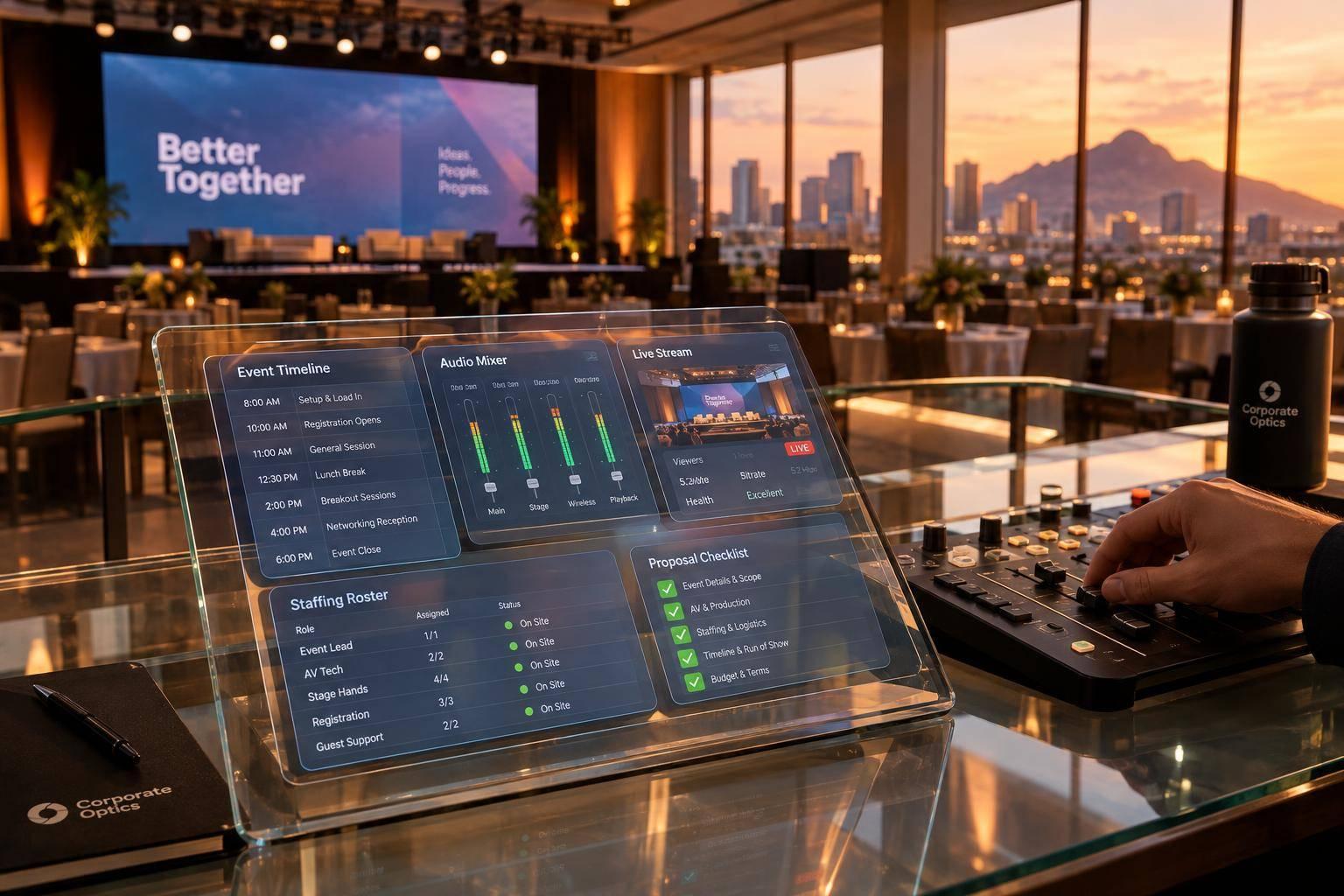
The quality of audiovisual production can make or break a town hall. Research highlights that only 23% of participants fully engage in audio-only meetings, while 55% stay attentive during video-enabled or in-person sessions. This explains why top companies prioritize broadcast-level production quality.
Features like high-definition 1080p streaming and multiple camera angles are now the norm for keeping audiences focused. LED video walls and custom backdrops not only enhance the visual experience but also reinforce the company’s branding, creating a polished, TV-like atmosphere. Allison Davis, CEO of Davis & Co., emphasizes the importance of visuals:
"Humans are visual creatures. We look at who is giving us this information [and ask ourselves], 'Are they trustworthy?'"
Audio is equally critical. Strategically placed speakers ensure everyone in the room hears clearly, while accessible microphones encourage audience interaction. Teleprompters help executives stay on message, and hard-wired internet connections prevent disruptions like lag or dropped signals. Having a backup administrator on hand adds an extra layer of security.
A great example of this in action is Reader's Digest. In 2006, they hosted a global town hall for 4,700 employees across 20+ countries. Post-event feedback revealed that 89% of employees felt their questions were addressed, and 95% said the meeting clarified the company’s business direction.
Hybrid and Virtual Event Technology
For companies with distributed teams, technology plays a pivotal role in ensuring remote participants feel equally involved. A "remote-first" mindset means giving the virtual experience as much attention as the in-person event.
Interactive tools like live Q&A, polls, and chat features turn passive viewers into active participants. Experts suggest dedicating 30% of the meeting to open discussions. Platforms such as Microsoft Stream can handle up to 10,000 attendees, while enterprise-level solutions can scale to 40,000.
Accessibility features are vital for global teams. Options like live captions, translated subtitles, and time zone-friendly scheduling show respect for diverse workforces. Simon Ball, Global Head of Digital Media Solutions at Nasdaq Corporate Solutions, highlights the importance of thoughtful scheduling:
"The effort that an executive team makes by holding a meeting that is not in a friendly time zone for themselves to create that engagement speaks volumes."
Some companies are also exploring asynchronous options. Pre-recorded video updates allow employees to catch up on their own time while staying connected to company announcements. These strategies naturally tie into the importance of technical rehearsals to ensure everything runs seamlessly.
Planning and Technical Rehearsals
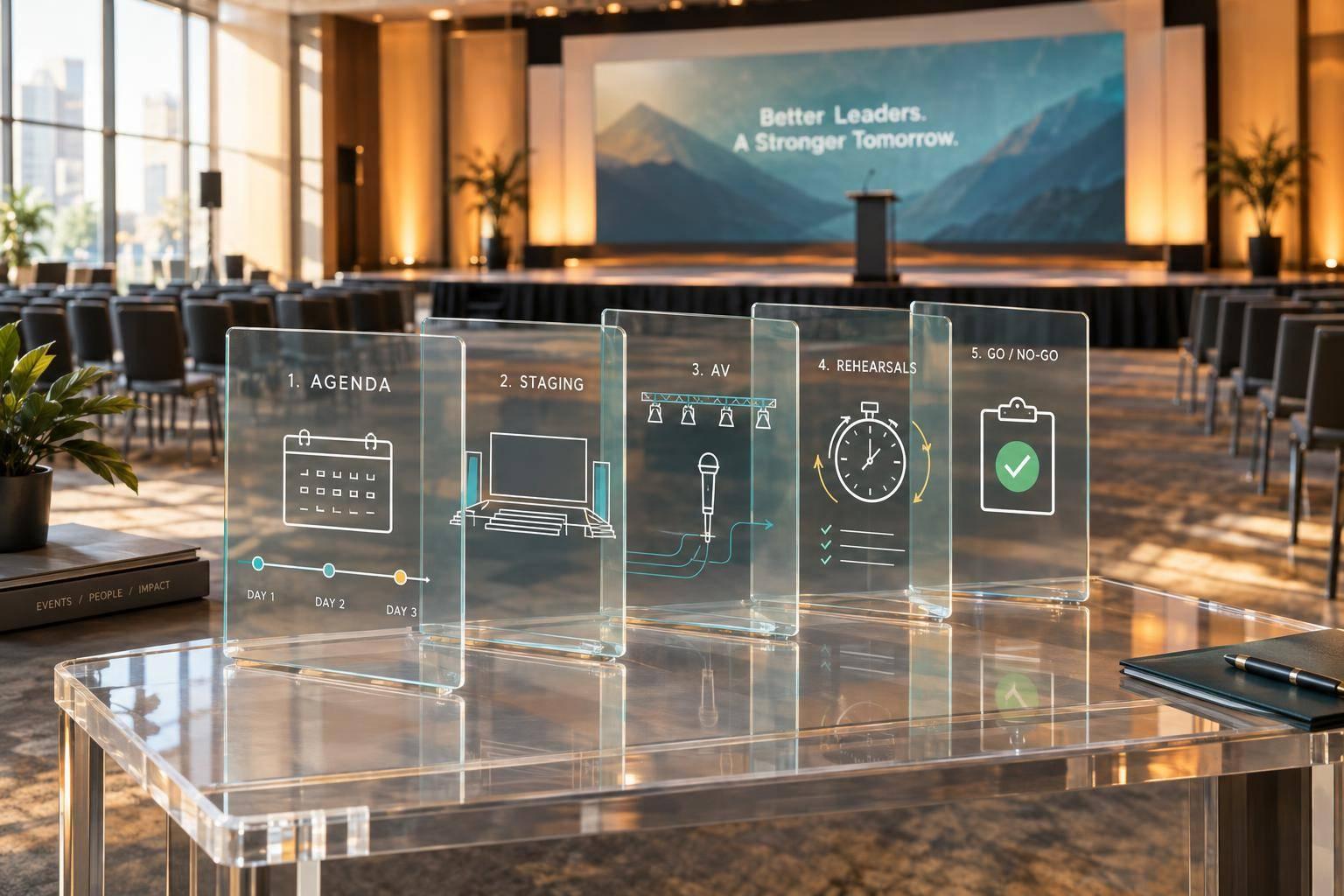
Behind every successful town hall is thorough preparation. Technical rehearsals are essential to avoid mishaps and ensure the event feels polished.
Full dress rehearsals, conducted 1–2 days before the event, test microphones, video feeds, screen sharing, bandwidth, and speaker transitions. Skipping this step can lead to technical failures that distract from the message. As Alison Davis, CEO of Davis & Co., puts it:
"Town halls are events, not information dumps."
Preparation goes beyond technology. Collecting employee questions in advance through tools like Slack, Teams, or email ensures leadership can respond thoughtfully. A quick 30-minute pre-event briefing helps address last-minute adjustments, while limiting individual speaker time to 8 minutes keeps the event engaging.
Consider United Rentals Inc., which saw the benefits of careful planning during a town hall tour led by Craig Pintoff, Vice President of HR. Their preparation paid off: employee engagement survey completion rates jumped from 40% to 80%. The insights gathered led to meaningful changes, including a peer review system and updates to their 401(k) match policy.
Case Study: Thermo Fisher Scientific's Global Town Halls
Thermo Fisher Scientific, with a workforce of over 10,000 worldwide, had to rethink its approach to town halls during the COVID-19 pandemic. Within just six weeks, the company shifted from 70 planned in-person events to a fully digital format. This led to the creation of the 36-webinar "Reveal 2020" series, spearheaded by Senior Event Specialist Thelma Pichel. This transition also paved the way for innovative strategies in mobile production and performance tracking.
Mobile Production and Custom AV Solutions
To replicate the energy of physical events, Thermo Fisher designed branded digital environments using the ON24 platform. These virtual spaces included features like lobbies, networking lounges, exhibit halls with virtual booths, and auditoriums, all tailored to reflect the company's identity. Recognizing the needs of a global team, they scheduled repeat sessions across various time zones.
The technical team also took on the challenge of training 150 staff members on the platform within the same six-week timeframe to ensure seamless execution. Speaking about their collaboration with ON24, Thelma Pichel noted:
"We needed a vendor that would be a collaborative partner and create the type of experience we had our minds set on, which we found in ON24."
Performance Tracking and Event Refinement
To gauge the effectiveness of their digital town halls, Thermo Fisher closely monitored metrics such as registration numbers, live attendance, booth visits, and chat activity. During the "Reveal 2020" series, the results were impressive: 3,800 attendees, 4,669 booth visits, and 472 chats. These insights helped refine future events.
For instance, at the Ignite Surface Analysis conference, this data-driven approach delivered exceptional results. The company surpassed its Marketing Qualified Lead (MQL) goal by 150% and its Sales Qualified Lead (SQL) goal by 200%. This success highlights the impact of leveraging detailed analytics to fine-tune virtual event strategies.
sbb-itb-ae35a94
Case Study: Virtual Platforms for Enterprise Town Halls
Akamai Technologies has shown how virtual platforms can reshape enterprise communication with impressive results. In September 2025, the company shifted from scattered in-person meetings to a fully virtual town hall program. This change significantly boosted live audience engagement, moving from 50% to 80%, while recorded sessions ensured 100% reach.
Simon Gerzina, Akamai's Senior Global Events Manager, highlighted the impact of this shift:
"As a virtual program, we had much better adoption because we could actually include everyone. We went from only being able to get in front of maybe 50% of our population, to being able to get in front of 100% of our people with the recording and 80% live."
Custom Branding and Real-Time Analytics
Modern virtual platforms offer tools to personalize join pages, emails, and virtual backgrounds, seamlessly aligning with corporate branding.
These platforms also provide real-time analytics through dashboards that track poll responses, Q&A activity, and chat engagement. This allows event managers to make on-the-spot adjustments for better audience interaction. Victoria Younes, Executive Events Manager, shared her experience with these tools:
"With the analytics in the background, that was my 'Aha moment!'"
These features not only enhance branding but also ensure a more interactive and engaging experience for participants.
HD Streaming for Distributed Teams
Enterprise-grade platforms are designed to support thousands of viewers simultaneously while maintaining high-definition video quality. Through network optimization and thorough technical preparation, they ensure smooth, uninterrupted streaming.
With 52% of U.S. knowledge workers in remote-capable roles working in hybrid setups as of early 2025, dependable HD streaming has become a necessity. Companies that excel in virtual town halls prioritize full rehearsals with presenters to test internet bandwidth, minimizing the risk of buffering or dropped connections during live broadcasts. Additionally, live monitoring and backup streaming options safeguard against unexpected disruptions.
This level of technical precision underscores the importance of professional production standards in elevating corporate communication through virtual town halls.
Corporate Optics' Town Hall Production Process

Corporate Optics turns client goals into memorable town hall events through a well-defined process. This starts with strategic discovery, moves into technical and scenic design, and is enhanced by AI-driven tools. The result? Events that connect with both in-person and remote audiences while improving corporate communication.
Discovery and Planning
Every successful event begins with a solid plan, and Corporate Optics kicks off with collaborative sessions to define clear post-event objectives. By working closely with leadership teams, they identify key communication priorities and understand the audience's needs. Agendas are carefully crafted to fit within the ideal 30 to 60-minute attention span, ensuring maximum engagement. To keep things focused, speakers are limited to three topics, each within strict time constraints. This detailed planning sets the stage for a balance between technical accuracy and engaging visuals.
Technical and Scenic Design
Corporate Optics brings a polished, "talk show"-style production to their town halls, creating a professional yet approachable environment. Strategic camera angles highlight both speakers and the audience, while professional lighting ensures clear visibility without harsh shadows or glare. Instead of overwhelming audiences with dense slides, the focus is on impactful visuals. Branded elements like roll-in videos, custom graphics, and interactive features, such as a "Wall of Wins", keep the company's identity front and center throughout the event. Pre-event rehearsals are conducted to test all technical aspects - audio, visuals, and streaming - while backup equipment is always ready to ensure a seamless experience.
AI-Powered Event Tools
To take their events to the next level, Corporate Optics integrates AI-driven tools into their process. Using prompts.ai, they streamline production from start to finish. During the planning phase, these tools assist with speaker preparation and scriptwriting. During live events, AI monitors employee chats in real-time, analyzing sentiment and surfacing the most pressing questions for leadership to address. After the event, the platform helps analyze data to determine whether goals were achieved and how the audience responded. These insights provide actionable feedback to refine future town hall strategies.
Conclusion
The success stories of Amazon, Thermo Fisher Scientific, and Akamai Technologies highlight how corporate town halls can thrive when treated as polished broadcast productions rather than routine meetings. Amazon’s quarterly, high-energy sessions kept their global workforce engaged; Thermo Fisher Scientific’s professional "Reveal 2020" virtual series reached thousands, with 3,800 attendees and 4,669 booth visits; and Akamai Technologies boosted live audience participation from 50% to 80%, achieving 100% reach through recorded sessions.
These examples share a clear takeaway: impactful town halls require strategic planning, top-tier audio-visual quality, and reliable technology. Together, these elements transform ordinary meetings into events that inspire engagement and productivity.
Corporate Optics builds on these proven methods with a seamless production process. From defining clear objectives during discovery sessions to conducting technical rehearsals that prevent surprises, every detail is carefully managed. Their use of AI tools enhances the experience by analyzing real-time sentiment, surfacing key questions, and improving post-event strategies. This combination of thoughtful planning and cutting-edge technology ensures every town hall delivers maximum impact.
Whether you're organizing your first virtual town hall or refining an established approach, the fundamentals remain the same: concise agendas, professional production, interactive features, and supportive technology. Companies that prioritize employee engagement see a 21% boost in productivity, making quality town hall production a smart investment. By adopting these best practices, businesses can turn every town hall into a dynamic and engaging event that drives results.
FAQs
How do professional audiovisual standards improve corporate town halls?
Professional audiovisual (AV) standards can transform corporate town halls into engaging and effective events by ensuring crystal-clear audio, vivid visuals, and a smooth delivery of information. High-quality audio - think 44.1 kHz/16-bit or better - and full-HD or 4K video make it easier for participants, whether onsite or remote, to stay fully tuned in. These standards capture essential nuances like facial expressions and tone of voice, helping to build trust and foster genuine connections. Add in proper lighting, thoughtfully framed camera angles, and low-latency streaming, and you’ve got a setup that minimizes distractions and keeps the focus exactly where it should be: on the message.
Beyond just clarity, professional AV setups open the door to interactive features like multi-camera views, real-time captioning, and live polls. These tools not only encourage audience participation but also ensure Q&A sessions run smoothly without any tech hiccups. When town halls are produced with the polish of a professional broadcast, employees are more likely to stay engaged, actively participate, and walk away with key takeaways. This level of production strengthens communication and helps create more meaningful connections across the organization.
What are the best ways to make virtual town halls more engaging?
To make virtual town halls more engaging, integrate interactive features that actively involve participants. One popular option is hosting live Q&A sessions, where employees can ask questions in real time and hear direct responses from leaders. This approach not only boosts transparency but also helps build a stronger sense of connection. Incorporating live polls or surveys is another great way to gauge audience sentiment, prioritize discussion topics, or even test participants' knowledge. Additionally, chat windows and emoji reactions offer quick and accessible ways for attendees to share feedback, express support, or raise questions.
For more in-depth engagement, try using breakout rooms for small-group discussions. Scheduling these at key moments can help maintain energy and encourage meaningful conversations. Adding gamified elements like live quizzes, word clouds, or trivia contests can inject a sense of fun and friendly competition, leaving a lasting impression. By combining these features, you can create a dynamic and interactive event that keeps employees engaged and connected from start to finish.
Why is using data important to improve corporate town halls?
Using data is key to making corporate town halls more effective. It turns vague opinions into clear, actionable insights. By looking at metrics such as attendance rates, audience participation, and feedback collected after the event, companies can pinpoint what resonated with employees and what fell flat. This helps organizers tweak formats, fine-tune content, and schedule sessions in ways that better suit the team's needs.
Data also connects engagement levels to business success. Studies show that employees who are more engaged tend to perform better. This makes it worthwhile to include interactive features like live polls, Q&A segments, and visually appealing presentations. Simply put, leveraging data ensures town halls are not just informative but also engaging and aligned with the company’s goals.
Related Blog Posts


Streamline your workflow, achieve more

Lorem ipsum dolor sit amet, consectetur adipiscing elit. Maecenas ac velit pellentesque, feugiat justo sed, aliquet felis.



Lorem ipsum dolor sit amet, consectetur adipiscing elit. Maecenas ac velit pellentesque, feugiat justo sed, aliquet felis.