7 Trends In Franchise Meeting Production In 2026

Chief Executive Officer
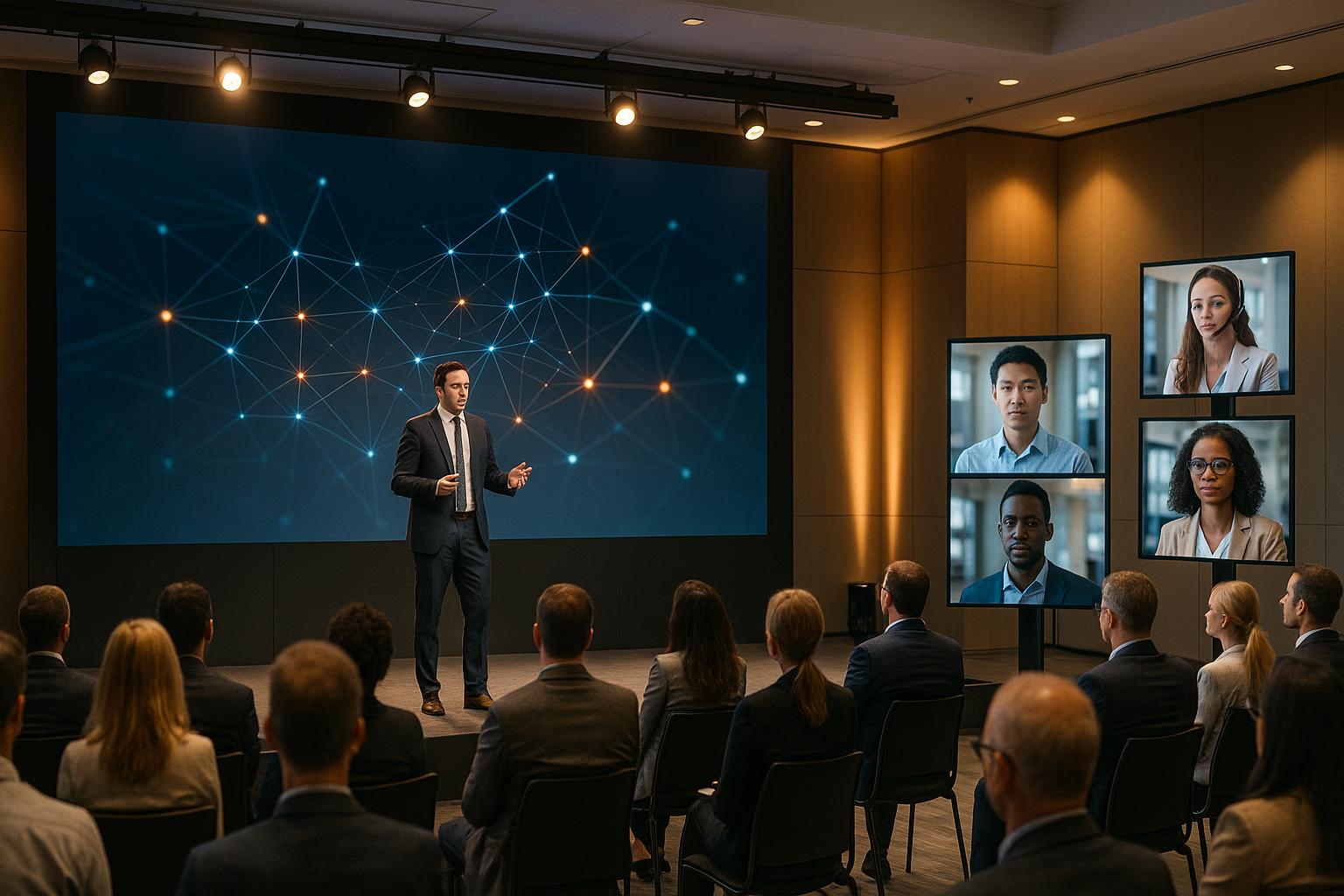
Franchise meeting production is evolving fast, and by 2026, the focus will be on creating engaging, tech-driven, and results-oriented events. Here’s what’s shaping the future:
- Hybrid Events: Combining in-person and virtual formats is now standard, with tools ensuring equal participation across locations.
- AI in Planning: AI streamlines workflows, reduces costs, and improves event quality by automating tasks like content editing and engagement tracking.
- Immersive AV Tech: Technologies like AR/VR and advanced audiovisual systems ensure consistent brand messaging and enhance engagement.
- Data-Driven Design: Real-time analytics help adjust meetings on the fly and optimize resource allocation.
- Flexible Production Models: Modular AV setups and portable tools make it easier to scale events across regional and national networks.
- Improved Speaker Support: AI tools assist franchisee presenters with real-time translations, captions, and content suggestions.
- Broadcast-Quality Standards: High-quality video production strengthens communication and professionalism across franchise networks.
These trends are redefining how franchises connect, ensuring their meetings are impactful, efficient, and engaging while meeting the growing demands of attendees.
7 Key Trends in Franchise Meeting Production for 2026
1. Hybrid Events as the Standard for Franchise Systems
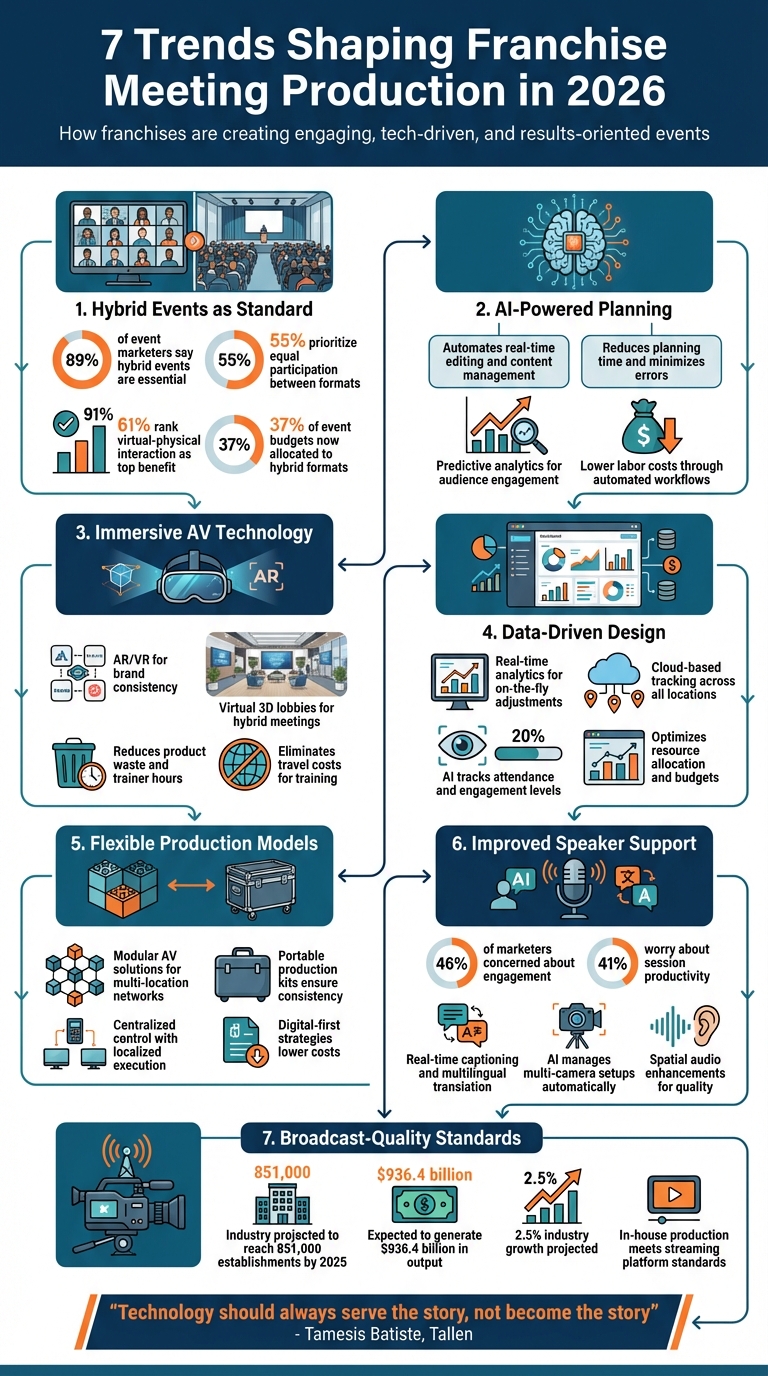
Hybrid events have become the go-to format for franchise meetings, and the numbers back this up: 89% of event marketers say hybrid events are essential to organizations, and 91% see them as key to the future. For franchises spread across multiple states or regions, hybrid events solve a big problem - bringing together a wide variety of stakeholders. This format lays the groundwork for improved engagement and more effective communication.
Impact on Franchise Engagement and Communication
Hybrid events aren’t just about sharing information - they’re about connecting people. In fact, 61% of event professionals rank the interaction between virtual and in-person attendees as the top benefit, even above saving money. That’s a huge win for franchise networks where collaboration among regional managers, multi-unit operators, and new franchisees is critical, no matter where they’re located.
One of the biggest challenges is ensuring equal participation between virtual and in-person attendees. It’s a priority for 55% of event marketers, who see this balance as crucial to a successful hybrid event. Tools like live Q&A sessions, real-time polls, and interactive features make sure virtual participants are just as involved as those in the room - an essential factor for franchise systems aiming to keep everyone engaged.
Scalability for Regional and National Franchise Networks
Hybrid formats are a game-changer for franchises operating across different time zones and regions. They eliminate the hassle and cost of travel for hundreds of franchisees while offering flexibility to scale events as needed. It’s no surprise that 37% of event budgets now go toward virtual and hybrid formats, surpassing spending on purely in-person or virtual events.
"With faster internet and smarter technology, we can now bring the virtual and physical experience closer together. Even when people can't be there in person, they can still be part of the event through interactive moments, feedback, and real-time visuals." - Victor Johnson, Production Designer at Tallen
Alignment with Emerging AV and AI Technologies
Hybrid events are no longer just glorified video calls. Advanced AV technology has transformed them into immersive experiences. AI-driven tools like microphone arrays, professional-grade video conferencing cameras, and noise-canceling systems make sure everyone - whether they’re in a conference room or at home - gets the same clear, high-quality experience. These tools also work seamlessly with AI-powered features, such as personalized agendas, matchmaking between franchisees with shared interests, and real-time content suggestions based on attendee preferences.
Engagement remains a concern, with 46% of event marketers questioning whether their events will keep people interested and 39% worrying about virtual attendees feeling left out. Hybrid-ready AV solutions tackle these worries head-on by delivering broadcast-quality production, making virtual attendees feel just as involved as those on-site.
2. AI-Powered Planning and Production Workflows
AI is revolutionizing how franchise meetings are planned and executed, offering tools that handle real-time editing and predict audience engagement. This is particularly valuable for hybrid meeting formats, where seamless coordination across multiple locations is essential. The franchise industry, already leaning into data-driven operations, is embracing these advancements to enhance speed, precision, and transparency. This shift is redefining meeting production processes, integrating technology to improve both quality and efficiency.
Integration with Advanced AV and AI Technologies
By automating workflows, AI dramatically reduces planning time and minimizes errors [14, 16]. For instance, real-time editing tools allow production teams to tweak content during live meetings, adapting instantly to audience reactions. Predictive analytics further enhance engagement by identifying the formats, topics, and speakers most likely to resonate with attendees [14, 16].
When paired with cutting-edge audiovisual systems, these AI tools create smoother, more engaging production experiences [1, 2, 15]. By handling logistical tasks, AI allows event teams to focus on strategic elements rather than getting overwhelmed by operational details.
Cost Benefits for US-Based Franchise Systems
AI doesn't just improve efficiency - it also cuts costs for franchise systems in the United States. Automated workflows eliminate redundant steps and reduce the need for large production teams. Tasks like camera switching and audio mixing, which once required multiple specialists, can now be managed by AI-driven platforms. For franchises operating across several states, this ensures consistent production quality without a proportional rise in expenses.
Platforms such as prompts.ai, developed in collaboration with Corporate Optics, exemplify how AI can streamline corporate meeting and event production. While there’s an initial investment in these tools, the long-term savings are significant. Lower labor costs, fewer mistakes, and faster content distribution after events all contribute to delivering high-quality franchise meeting experiences while keeping budgets in check.
3. Immersive AV Technology for Brand Consistency
Impact on Franchise Engagement and Communication
Immersive technologies like Augmented Reality (AR) and Virtual Reality (VR) are transforming how franchises maintain brand consistency. These tools allow franchise systems to deliver uniform, engaging experiences no matter where attendees are - whether it’s Boston, Dallas, or Seattle. For instance, AR can overlay digital features onto physical spaces, giving franchisees a creative way to showcase products and demonstrate procedures in a more dynamic manner.
Take virtual lobbies for hybrid franchise meetings as an example. These branded 3D spaces let attendees explore venues and participate in interactive learning sessions. This ensures that franchisees receive the same visual identity and messaging, reinforcing brand standards while keeping engagement high. Such immersive solutions also make it easier for franchises to grow seamlessly across different regions.
Scalability for Regional and National Franchise Networks
AV over IP (AVoIP) systems and cloud-based platforms are making it easier than ever to scale immersive AV experiences. These technologies distribute content uniformly across regional meetings, ensuring consistency in messaging and visuals. Modular display setups and software-driven systems further streamline the process, allowing franchise networks to expand their meeting capabilities without needing to overhaul existing production setups. This approach ensures that every location stays true to the franchise’s identity.
Cost-Effectiveness for US-Based Franchise Systems
Cost efficiency is another major advantage. VR training programs, for example, help cut long-term expenses by reducing product waste, minimizing trainer hours, and eliminating travel costs. Beyond saving money, these programs ensure consistent training quality. Franchisees can practice procedures in a virtual environment before working with actual inventory, which not only reduces waste but also enforces standardized protocols across the board.
4. Data-Driven Meeting Design and Performance Metrics
Impact on Franchise Engagement and Communication
With the rise of advanced AV tools and AI technologies, meeting planners are now using real-time analytics to make on-the-spot adjustments. Instead of sticking to rigid agendas, teams can tweak sessions based on how attendees are responding. AI-powered platforms track metrics like attendance and engagement levels, offering insights that help shape more effective strategies for future meetings. These tools are helping franchise networks refine their approach and implement successful practices across locations.
Scalability for Regional and National Franchise Networks
Cloud-based analytics take things a step further by ensuring consistent performance tracking across all franchise locations. Whether it’s a regional meeting in Phoenix, Atlanta, or Portland, or a national conference, these tools enable meaningful comparisons across different markets. By leveraging AI and digital analytics, franchise systems are now better equipped to enhance operational performance across their entire network.
Cost-Effectiveness for US-Based Franchise Systems
Data analytics also play a key role in budget planning. Instead of evenly distributing resources across all aspects of a meeting, planners can identify which elements have the most impact and focus spending there. Predictive analytics streamline resource allocation, making it possible to produce engaging, scalable meetings without overspending.
5. Flexible Production Models for Multi-Location Franchise Networks
Scalability for Regional and National Franchise Networks
Franchise systems are increasingly adopting modular AV solutions that can be rolled out across various markets. Portable production kits and mobile units ensure consistent meeting experiences, whether you're in Dallas, Seattle, or Miami. This modular design allows for centralized control while still enabling localized execution, creating a more streamlined and cost-effective approach to managing production workflows.
For multi-unit franchise networks, this shift is particularly impactful. It reflects an entrepreneurial approach where systems can scale efficiently across different markets without the need for hefty upfront investments at every location.
Cost-Effectiveness for US-Based Franchise Systems
Flexible production models bring significant financial benefits to franchise systems. By outsourcing specialized tasks and embracing digital-first strategies, franchises can lower costs while maintaining high production quality. AI-powered tools, for instance, help manage content and scheduling, cutting down on manual labor expenses. This approach not only ensures efficient resource allocation but also keeps meeting budgets under control.
Integration with Emerging AV and AI Technologies
Emerging AV and AI technologies are taking these scalable and cost-efficient models to the next level. Cloud-based platforms now support real-time collaboration, while AI handles tasks like content management, scheduling, and basic AV mixing. These advancements reflect the industry's broader shift toward technology-driven, data-focused operations that prioritize both efficiency and scalability.
sbb-itb-ae35a94
6. Better Speaker Support for Franchisee Presenters
Impact on Franchise Engagement and Communication
Delivering clear and consistent brand messaging across a franchise network is no small feat, especially when franchisee presenters often lack professional presentation skills. Yet, these individuals are tasked with sharing critical updates and brand messages. In fact, 46% of event marketers express concerns about event engagement, while 41% worry about session productivity. When presentations fall flat, the entire network risks miscommunication and disengagement.
AI tools are stepping in to fill these gaps. Features like real-time captioning and multilingual translation - delivered in the speaker's own voice - ensure that franchisees across diverse regions can fully grasp the message. This real-time assistance eliminates language barriers and strengthens communication across the board.
"Another game-changing use of AI is its ability to translate content in real time in the speaker's voice, even if that speaker doesn't know the translated languages. 'It sounds natural, and it allows the whole world to consume content,' he marveled." - Brian Ludwig, Senior Vice President of Sales at Cvent
With these tools, even the most nervous franchisee presenters can transform into confident communicators, effectively engaging audiences nationwide.
Alignment with Emerging AV and AI Technologies
Advanced AI production tools are addressing the technical hurdles that often intimidate inexperienced speakers. From managing multi-camera setups and enhancing backgrounds to adding real-time speaker overlays, these tools handle the heavy lifting, allowing presenters to focus entirely on their message. AI writing assistants further ease the burden by generating session descriptions and content outlines, while facilitation tools suggest polls and open-ended questions tailored to audience preferences, encouraging interaction.
Managing live Q&A sessions can be chaotic, but AI simplifies this by sorting and organizing incoming questions for moderators, ensuring smooth discussions. Additionally, spatial audio enhancements improve sound quality, making even first-time presenters sound polished and authoritative.
These innovations don’t replace the human touch - they amplify it. By equipping franchisee presenters with cutting-edge tools, they can deliver professional, engaging sessions that resonate across their networks. This blend of AI-driven solutions and human effort aligns seamlessly with broader trends in hybrid and AI-enhanced event production, ensuring franchise networks stay connected and on-message.
7. Broadcast-Quality Production for Franchise Communications
Impact on Franchise Engagement and Communication
Franchisees now expect video content that matches the quality of leading streaming platforms. Anything less can make the communication feel unprofessional. High-quality, broadcast-level production not only enhances a brand’s image but also ensures that key messages are delivered clearly and effectively. This approach transforms routine corporate updates into engaging and memorable experiences that resonate across the entire franchise network. When the videos franchisees receive are on par with the content they consume daily, they are more likely to watch, remember, and act on the information provided.
The shift toward higher production standards has also paved the way for scalable, cost-efficient solutions across franchise systems.
With advancements in hybrid and AI-driven production, franchises no longer need to rely on external channels or settle for mediocre video quality. Instead, they can produce top-tier content in-house that meets broadcast standards. This not only strengthens brand consistency but also ensures that every franchisee receives messages that are both impactful and clear.
Scalability for Regional and National Franchise Networks
As franchise networks grow, the need for scalable production becomes more pressing. By 2025, the franchise industry is projected to expand by 2.5%, reaching 851,000 establishments nationwide. With multi-unit and multi-brand models gaining ground - especially in the Southeast and Southwest regions - consistent communication strategies are more important than ever. Broadcast-quality production ensures that even geographically dispersed franchisees receive the same high-quality messaging, regardless of location.
Portable and flexible tools make it possible to maintain this standard across diverse regions, whether you're producing content for franchisees in Dallas or Chicago. This consistency reinforces professionalism and ensures that every franchisee feels equally connected to the brand.
Cost-Effectiveness for US-Based Franchise Systems
The U.S. franchise industry, expected to generate over $936.4 billion in output by 2025, places a high value on production quality. While the upfront costs of broadcast-quality production might seem steep, the long-term benefits - like increased engagement and stronger brand loyalty - make it a worthwhile investment. AI-powered tools and streamlined workflows help reduce production expenses while maintaining high standards, making this level of communication accessible even for mid-sized franchise networks.
Alignment with Emerging AV and AI Technologies
Broadcast-quality production doesn’t just stand alone - it integrates seamlessly with the digital tools franchises already use for marketing, customer service, and data management. AI-driven features handle complex tasks like color correction, audio mixing, and graphics integration, while immersive visuals and LED walls capture attention. These technologies not only enhance the visual appeal but also ensure that communication meets the expectations of both online and in-person audiences.
Comparison of Approaches
The move from traditional methods to modern franchise meeting production isn't just about embracing new tech - it's about rethinking how franchises connect with their networks. Here's a closer look at why many franchise systems are making this transition in 2026.
Hybrid Events vs. In-Person-Only Meetings
In-person meetings are great for building personal connections, but they're often constrained by venue size and the challenges of travel. Hybrid events, on the other hand, break these barriers. Using Remote Integration Models (REMI), franchises can manage video feeds across vast distances, making it possible to broadcast meetings far and wide. While hybrid setups do require investment in specialized AV equipment, they save costs by eliminating the need for full studio builds and on-site control rooms. This mix of virtual and physical elements shows how technology can bridge distances seamlessly, while also streamlining the planning process.
AI-Assisted Workflows vs. Manual Planning
Manual planning can be time-consuming and prone to errors, but AI changes the game. It speeds up tasks like drafting content, scoring attendees, and analyzing engagement, all while encouraging creativity. As Daniel Tjan from Gevme puts it, "AI won't replace jobs - but professionals who leverage it will lead the industry". In fact, 81% of event planners agree that AI not only speeds up processes but also inspires new ideas. Combined with immersive technologies, this shift offers a more engaging experience than traditional methods.
Immersive AV Technology vs. Standard Ballroom Setups
Standard setups with screens and projectors can't compete with the impact of immersive AV technology. Tools like LED walls and integrated scenic designs can transform a simple ballroom into an engaging, themed environment. These setups create "windows into environments", offering dynamic storytelling that captivates audiences in ways traditional methods can't.
Each of these comparisons highlights the scalability of modern approaches, ensuring that franchises can deliver consistent, high-quality experiences - whether at a local level or across a national network.
Conclusion
The trends shaping 2026 are changing the way franchise systems connect and communicate. By incorporating hybrid models and leveraging AI advancements, franchises are reimagining event production. Whether it's hybrid events that broaden your audience or AI-driven workflows that simplify planning, these tools help franchises deliver consistent and meaningful experiences across their networks.
It’s essential to involve your production partners early in the planning process - before locking in venues or budgets. Use these conversations to explore how tools like LED walls can amplify your brand message, how data analytics can tailor experiences for attendees, and how cloud-based workflows can cut costs while maintaining high-quality production. As Tamesis Batiste, Project Director of Enterprise Events at Tallen, points out:
"When we're part of the process from the start, we can design with purpose. Technology should always serve the story, not become the story."
The focus should always be on creating immersive experiences that strengthen franchise relationships and deliver measurable results - boosting efficiency while reinforcing leadership.
To achieve this, having solid technical support is crucial. Companies like Corporate Optics provide comprehensive event planning, AI-powered tools, and Emmy Award-winning audiovisual design tailored specifically for franchise networks.
FAQs
How can hybrid events boost engagement in franchise meetings?
Hybrid events bring together the strengths of in-person and virtual gatherings, making franchise meetings more accessible while preserving a personal connection. By offering both on-site and online participation options, they cater to attendees' individual preferences and busy schedules.
One standout feature of hybrid events is their ability to boost participation through interactive elements like live Q&A sessions, real-time polls, and breakout rooms. These tools ensure everyone feels included and engaged. Plus, the use of cutting-edge audiovisual technology and AI-powered tools helps deliver smooth, dynamic experiences that keep participants connected and involved - whether they're in the room or tuning in remotely.
How is AI transforming franchise meeting production?
AI is transforming how franchise meetings are planned and executed, making the process smoother, more engaging, and tailored to attendees' needs. AI-powered tools can handle tasks like automating schedules, fine-tuning event layouts, and analyzing participant preferences to craft experiences that resonate on a deeper level.
On top of that, AI-driven analytics offer real-time feedback on attendee behavior, giving event planners the data they need to make smarter decisions for future gatherings. By using AI technologies, franchises can cut down on planning time, lower expenses, and create events that are not only efficient but also more captivating for their audiences.
How does immersive audiovisual technology help maintain brand consistency across franchise locations?
Immersive audiovisual (AV) technology is a game-changer for maintaining brand consistency across franchise networks. It ensures a cohesive and engaging experience through high-quality visuals, synchronized presentations, and uniform content formats, no matter the location or event.
With tools like branded virtual environments, interactive displays, and AI-powered content personalization, franchise operators can align every location with the same professional standards and core brand values. This approach doesn’t just enhance brand recognition - it also fosters trust and loyalty among customers and franchisees.
Related Blog Posts


Streamline your workflow, achieve more

Lorem ipsum dolor sit amet, consectetur adipiscing elit. Maecenas ac velit pellentesque, feugiat justo sed, aliquet felis.



Lorem ipsum dolor sit amet, consectetur adipiscing elit. Maecenas ac velit pellentesque, feugiat justo sed, aliquet felis.