Ultimate Guide To Understanding What Services Are Included In Meeting Production

Chief Executive Officer
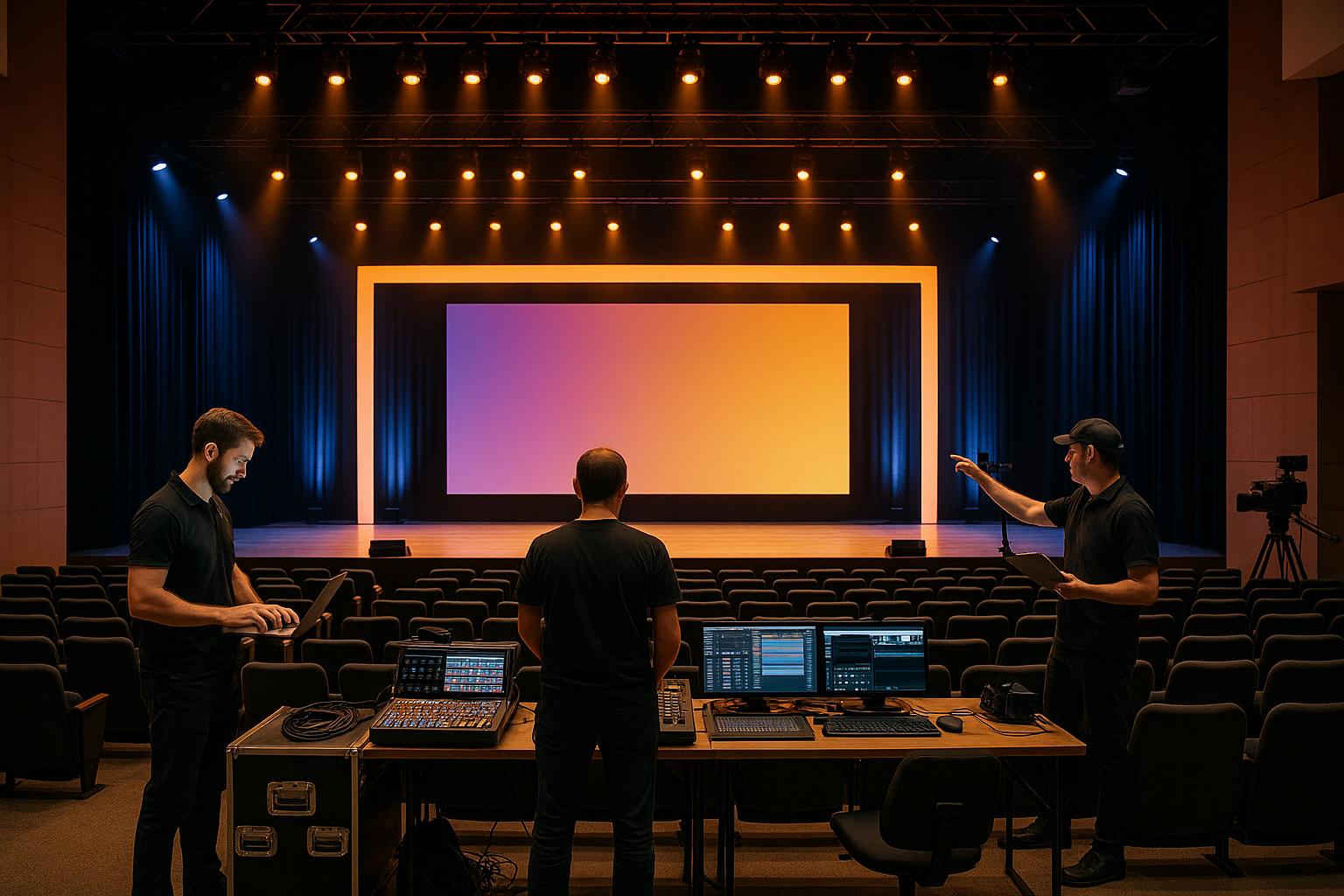
Meeting production is all about managing the technical and visual elements of an event to create a polished experience. Unlike event planning (which focuses on logistics) or event management (which ensures smooth operations), meeting production handles sound, lighting, video, and stage design to deliver a professional, engaging atmosphere. Here's a quick breakdown of what it covers:
- Pre-Event Planning: Venue selection, budgeting, technical designs, and agenda creation.
- Audiovisual Systems: High-quality audio, video, and lighting setups tailored to the venue.
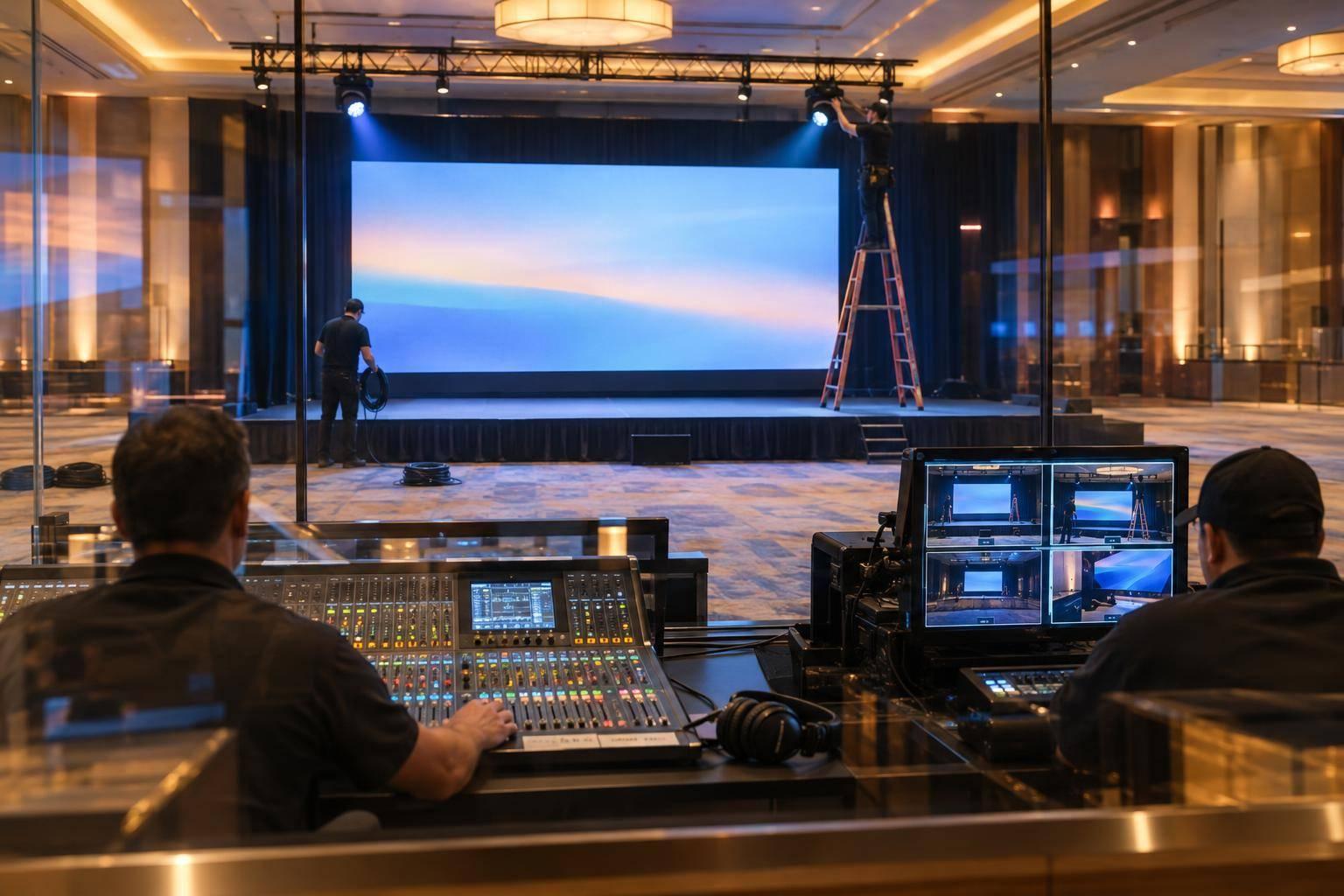
- On-Site Management: Technical directors, audio engineers, and other staff ensure flawless execution.
- Hybrid Solutions: Live streaming, audience interaction tools, and post-event recordings.
- Post-Event Deliverables: Analytics, video edits, and reports to maximize the event's impact.
Professional production teams ensure events run smoothly, from planning to execution, and provide tools to extend the event's value beyond the live experience.
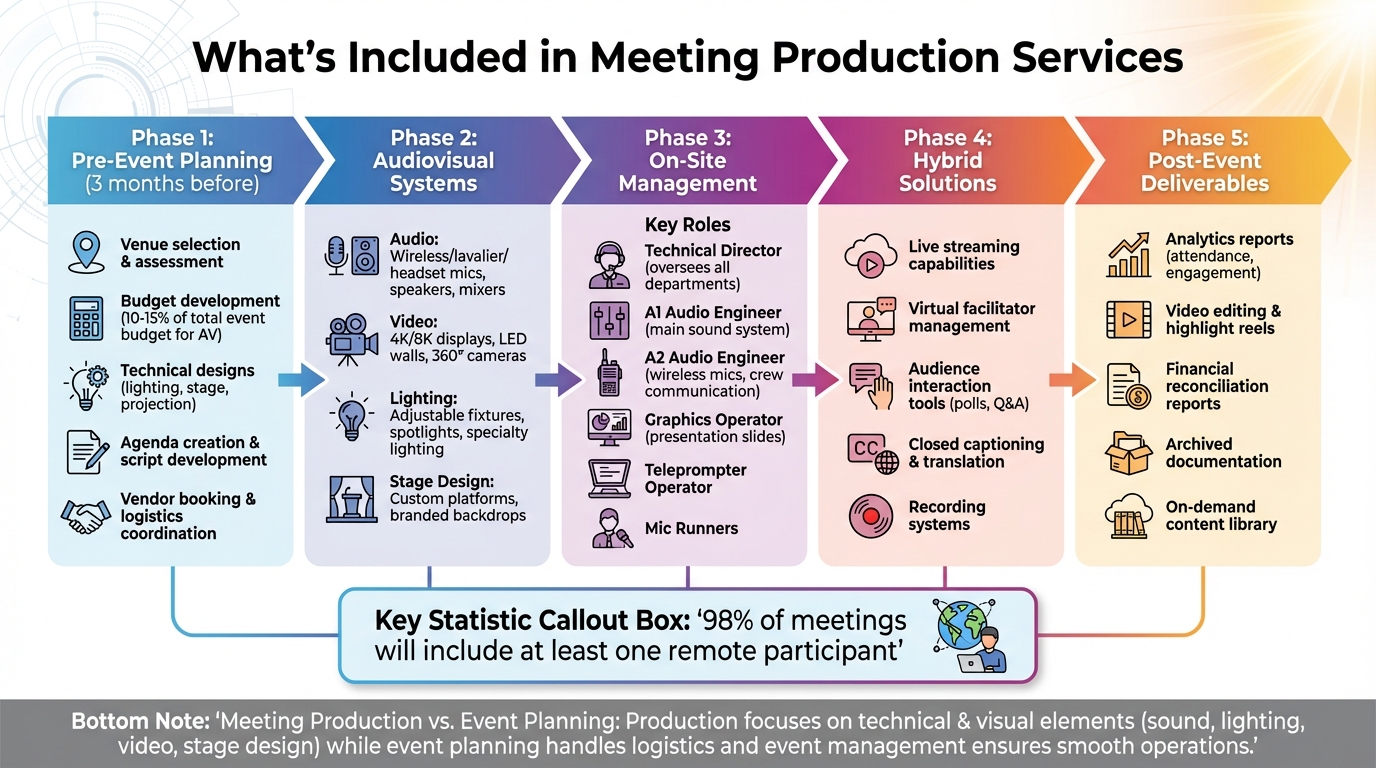
Meeting Production Services Timeline and Components Overview
Planning and Event Coordination Services
Pre-Production Planning
Pre-production kicks off about three months before the event. This phase lays the groundwork for a successful event, starting with discussions about your vision and goals. The production team evaluates budget constraints, reviews lessons from previous events, and identifies the key outcomes you want to achieve.
Choosing the right venue involves more than just picking a beautiful location. The production team assesses power requirements, permitting needs, transportation logistics, and nearby hotel options to ensure the venue meets all technical and logistical demands. They also gather cost estimates from AV vendors, furniture suppliers, and other providers to create a budget that’s practical and efficient.
At the same time, technical planning gets underway. Teams design detailed lighting, stage, and projection plans, taking precise measurements to ensure everything fits perfectly. They may create custom backdrops or use pipe-and-drape setups, all while developing comprehensive equipment lists. Meanwhile, the event agenda begins to take shape as the team collects presenter materials, refines key themes, and crafts detailed scripts to outline every moment of the event. This meticulous planning ensures a seamless transition to show management on the big day.
Technical Direction and Show Management
Technical directors are the backbone of event production, creating detailed schedules and managing the showflow to coordinate every technical element. They ensure that sound, lighting, video, and special effects work in harmony. On event day, they fine-tune audiovisual cues, oversee stage transitions, and quickly resolve any technical issues that arise.
Their responsibilities also include managing crew schedules, organizing labor, and overseeing stage logistics to keep everything running smoothly. Before the event, they conduct thorough equipment testing and rehearsals to catch and fix any potential problems in advance.
"Our technicians are true masters – certified in their fields and adept at troubleshooting any on-site or streaming challenge that may arise, from equipment failures to last-minute changes. We manage all crew tasks and responsibilities, scheduling, and stage logistics to ensure cohesive event audio-visual productions." – The Catalyst Companies
Vendor and Logistics Coordination
Vendor and logistics coordination ties all the external elements together, ensuring every detail aligns with the event plan. About three months before the event, production teams start booking show crews, confirming day rates, and arranging travel and lodging. They create detailed schedules to map out vendor truck arrivals, load-in and load-out times, crew call times, and meal breaks. This coordination extends to third-party vendors like rental companies, caterers, and riggers, making sure everyone understands their role and timing.
Venue-specific requirements demand extra care. For rigging, teams provide CAD drawings to rigging supervisors in advance, accounting for equipment weight, ceiling heights, and existing fixtures like chandeliers. They also navigate union rules, power needs, and insurance requirements to avoid last-minute hiccups. Having the right crew size is equally important - undersized teams can cause delays and stress, while properly staffed load-ins keep everything on track.
Event A/V Essentials Part 5: Creating Your Onsite Production Schedule - Logan Clements
Audiovisual Systems and Stage Design
Audiovisual and stage design elements play a pivotal role in shaping the sensory experience of your event, building on the groundwork laid during pre-production and technical planning.
Audio Solutions
Clear communication starts with a well-designed audio system. The setup typically includes various microphones - like wireless, lavalier, or headset options - paired with speakers that can be in-wall, ceiling-mounted, or freestanding, offering stereo or surround sound options. Behind the scenes, audio mixers and processors work to eliminate distractions like background noise, echo, and feedback, ensuring a seamless sound experience.
Tailoring audio to the room's acoustics is key. For instance, a ballroom with high ceilings demands a different speaker configuration than a smaller, carpeted boardroom. These details are carefully planned during pre-production, where teams assess the venue to create a sound system that delivers balanced, powerful audio. This ensures remote participants in hybrid meetings enjoy the same clarity as those attending in person.
While audio ensures your message is heard, visuals take center stage in captivating your audience.
Video and Display Technology
Visual technology has come a long way from simple projectors and pull-down screens. Today’s events leverage cutting-edge tools like flat-panel displays, LED walls, interactive screens, and high-definition cameras (including 360° and smart cameras) for stunning, high-resolution visuals. The growing use of 4K and even 8K resolution displays adds an extra layer of sharpness and engagement to presentations.
Strategically placed screens throughout the venue ensure every attendee has a clear view, no matter where they’re seated. Interactive flat panels, often used for product launches or live demonstrations, allow presenters to manipulate content directly on the screen, creating a more engaging and dynamic experience. Together, these technologies set the stage for visually compelling events that leave lasting impressions.
Lighting and Scenic Design
Lighting does more than brighten a room - it sets the tone and mood of your event. Adjustable lighting, spotlights, and specialty fixtures work in harmony to highlight speakers, enhance displays, and reinforce branding. Thoughtfully designed lighting directs attention to key areas, shaping the overall atmosphere and making the event visually memorable.
"AV isn't just about making sure people can hear and see - it's about using sound systems, lighting, video, and projection mapping to transform a space and captivate attendees." – Executivevents
Stage lighting and scenic design are tailored to fit your event’s specific theme. Custom platforms, branded backdrops, and other stage elements tie everything together. A simple, clean stage design might suit a corporate presentation, while a product launch may call for bold, interactive backdrops to energize the audience. Production teams align lighting, sound, and visual elements to create a cohesive, immersive environment that reinforces your message. When done right, these components work together to transform ordinary venues into unforgettable experiences.
Event Technology and Hybrid Meeting Services
After setting up your stage and audiovisuals, the next step is integrating technology that connects in-person and remote attendees. With projections showing that up to 98% of meetings will include at least one remote participant, hybrid solutions are no longer optional - they’re a must. Here’s a closer look at the tools that bridge the gap between physical and virtual engagement.
In-Room Event Technology
In-room technology ensures presentations flow smoothly and keeps audiences engaged. Tools like presentation switching systems allow seamless transitions between devices - whether it’s a laptop, tablet, or live feed. Audience response systems make sessions interactive with live polls and Q&A, turning passive listeners into active contributors. For speakers, teleprompters provide the confidence to deliver clear, focused messages. These behind-the-scenes tools remove technical hiccups, letting presenters stay focused on their delivery.
Live Streaming and Hybrid Solutions
Building on in-room tech, streaming capabilities take hybrid events to the next level. Live streaming breaks down physical barriers, enabling participants from anywhere to join. But the real magic of a hybrid event lies in creating a synchronized experience for both in-person and virtual attendees. Virtual facilitators play a key role, managing chat discussions, relaying questions from remote participants, and ensuring everyone feels included. High-quality cameras and audio capture every nuance, while features like closed captioning and live translation make content accessible to a global audience.
"We also have a practice of being on Zoom during meetings regardless of whether you're on-site or not - so that those who are remote can easily observe facial expressions, and because the chat functionality has become such an integral part of communicating during these meetings." - Jackie Dube, Chief People Officer at The Predictive Index
Recording and Post-Event Content
Recording your event turns it into a resource that keeps delivering long after the live session ends. High-quality recordings can be stored in a resource library, offering on-demand access for those who missed the event or want to revisit key moments. Research shows that on-demand content can boost engagement by 10x or more. Production teams can also create highlight reels, edit keynote sessions, and repurpose content into bite-sized clips for social media or webinar materials. This approach transforms a single event into a continuous source of value, extending its reach and impact well beyond the original audience.
sbb-itb-ae35a94
On-Site Operations and Risk Management
Once meticulous pre-production planning is complete, the focus shifts to on-site execution. Even the best-laid plans can fall apart without flawless implementation on the ground. Managing equipment, solving problems quickly, and having reliable backups are what separate seasoned professionals from less experienced teams.
On-Site Staffing
The on-site crew is the backbone of event execution. At the helm is the Technical Director, who oversees all departments and makes critical, real-time decisions. Audio Engineers, commonly referred to as A1 and A2, handle specific aspects of sound management. The A1 is responsible for designing and operating the main sound system, ensuring every microphone and audio source is balanced perfectly. Meanwhile, the A2 works behind the scenes, placing lavalier microphones on speakers, managing wireless frequencies, and keeping crew communication running smoothly.
Graphics Operators play a pivotal role in managing presentation slides and visual elements. They handle last-minute updates and ensure content transitions seamlessly during the event. For interactive segments like Q&A sessions, Mic Runners navigate the audience with wireless microphones, ensuring every question is heard loud and clear.
The size of the event dictates how many crew members are needed. A small seminar may only require a handful of technicians, while a multi-day conference demands a larger, more specialized team. This well-organized staffing ensures presenters and content are supported without a hitch.
Speaker and Content Support
Speakers rely on a range of support services to deliver their presentations effectively. Before stepping on stage, they undergo tech checks for microphones, slide transitions, and teleprompter settings. The Teleprompter Operator ensures the text scrolls at the perfect pace, allowing speakers to maintain eye contact with the audience rather than reading from notes.
When last-minute changes arise - such as updated slides delivered just before showtime - the Graphics Operator steps in to manage those adjustments seamlessly. Many production teams use cloud-based software for real-time updates to cue sheets, ensuring every team member, from camera operators to lighting technicians, stays aligned.
"Our certified technicians expertly troubleshoot on-site or streaming challenges that may arise, from equipment failures to last-minute changes." – The Catalyst Companies
This detailed coordination ensures that both speakers and content shine during the event.
Contingency Planning and Live Show Management
For professional production teams, redundancy is non-negotiable. Backup projectors, spare microphones, and duplicate streaming encoders are always on hand, ready to be deployed at a moment’s notice. By mirroring pre-event technical rehearsals, contingency plans ensure the event runs smoothly even if something goes wrong. Skilled technicians monitor systems continuously, enabling immediate activation of backups when needed.
The secret to avoiding chaos lies in meticulous planning. Asking the right questions during pre-production helps identify potential risks, while careful logistical planning minimizes surprises. For hybrid events, internet connections are tested and fine-tuned in advance to avoid streaming delays that could frustrate remote attendees.
"While being prepared for the unexpected is a must, successful event production companies also need to be flexible and quickly adapt to changing circumstances." – Shoflo
This blend of preparation and adaptability ensures that even when challenges arise, high-stakes events continue without a hitch.
Post-Event Deliverables and Cost Breakdown
Deliverables After the Event
The work doesn't stop when the event ends. The post-event phase produces valuable outputs that can extend the benefits of your investment far beyond the event itself. Detailed reports provide a clear picture of financial performance, budget reconciliation, and sponsor outcomes, offering a transparent record to guide future improvements and inform budgeting decisions. These deliverables ensure that the event's impact continues to resonate.
Analytics reports are another key asset, offering insights into attendance, session participation, and social media activity. These data points highlight which topics struck a chord with your audience, evaluate the success of your promotional efforts, and help fine-tune strategies for future events. Additionally, essential documents - like contracts, invoices, attendee lists, and feedback reports - are systematically archived, making them easily accessible for future planning.
Video content is also transformed during this phase. Raw footage is edited into polished, professional videos that can be used for ongoing marketing efforts, ensuring your presentations continue to reach new audiences long after the event wraps up. Comprehensive post-event documentation ties everything together, providing a foundation for refining future events based on lessons learned during planning and execution.
Understanding Pricing in Meeting Production
The value of a well-executed event doesn’t just lie in the experience - it’s also reflected in the pricing structure. Meeting production costs can vary widely depending on the size, complexity, and specific services required. Experts generally suggest allocating 10% to 15% of your total event budget to audiovisual production. The costs typically break down into key areas like equipment rentals, labor, venue fees, and specialized services.
Labor costs cover roles such as technical directors, audio engineers, and graphics operators. These costs can fluctuate based on the event’s duration, the size of the crew, and the location. Equipment needs - ranging from basic projectors to advanced LED walls - also play a major role in determining rental fees. Even the venue itself can significantly impact costs; a seemingly low-cost venue might require extensive custom staging or specialized production elements, ultimately driving up expenses.
There are also hidden costs to consider. These might include crew travel, permits, union regulations, and fees for power and internet services. Hotels, in particular, often charge steep fees for power, internet, and restrictions on using outside AV providers. Relying on piecemeal planning - hiring separate vendors for different services - can lead to inefficiencies, multiple contracts, and a higher risk of delays, all of which can add unexpected expenses. To avoid surprises, it’s wise to include a contingency budget for unforeseen costs.
"You always come in On-time and On budget." – CUNA Mutual Group
Choosing full-service production can simplify the process. By bundling services, you reduce the risk of errors and may even save money. Regular updates, clear documentation, and onsite rehearsals ensure transparency and help bring your vision to life, down to the smallest detail.
Conclusion: What to Expect from Meeting Production Services
Meeting production blends cutting-edge technology with creative strategies to captivate attendees and bring your event vision to life. From the initial planning stages to post-event deliverables, professional teams handle everything - sound, lighting, video, and design - ensuring every detail aligns with your goals.
Each step in the process enhances the live experience, making sure the overall event impact is both cohesive and memorable. This isn't just about equipment rentals; it's about collaborating with experts who elevate your event beyond logistical basics, transforming it into something truly impactful.
When you partner with Corporate Optics, you gain access to tailored solutions that deliver crisp audiovisuals, flawless HD/4K streaming, and dependable execution. Their expertise covers everything from meticulous pre-planning to on-site technical support and efficient load-outs, ensuring smooth operations - even when last-minute changes arise. This level of support ensures your event leaves a lasting impression.
A skilled production partner not only anticipates potential challenges but also safeguards sensitive information for confidential events. They customize every aspect - from set design to virtual components - to match your theme and budget seamlessly. Additionally, Corporate Optics incorporates AI-driven tools to streamline production while maintaining the essential human connection.
Professional meeting production goes beyond managing technology; it's about crafting live experiences that engage and deliver tangible results. Whether you're organizing a leadership summit, a shareholder meeting, or a hybrid event, the right production services ensure your message resonates long after the event wraps up.
FAQs
How is meeting production different from event planning and management?
Meeting production zeroes in on the technical side of an event. This includes tasks like setting up audiovisual equipment, designing the stage, integrating event technology, managing live streaming, and providing on-site technical support. Its primary goal is to ensure everything runs seamlessly during the event by handling these elements in real time.
On the other hand, event planning and management focus on the logistical details - things like scheduling, coordinating with vendors, and overseeing the overall flow of the event. If event management is about crafting the blueprint, meeting production is what transforms that plan into reality using specialized tools and technical expertise.
How do hybrid solutions improve the experience for both in-person and remote attendees?
Hybrid solutions elevate the experience for both in-person and remote attendees by blending live streaming, interactive virtual platforms, and engagement tools. These tools enable remote participants to join discussions, ask questions, and access high-quality presentations - all in real time.
By bridging the gap between on-site and online audiences, hybrid solutions create a shared experience that keeps everyone connected and involved, encouraging active participation and collaboration throughout the event.
What factors influence the cost of meeting production services?
The cost of meeting production services hinges on a few main factors: event scope, equipment quality, duration, location, and complexity. These aspects shape the level of resources and expertise required to ensure everything runs smoothly.
For instance, hosting a large-scale event with intricate stage designs and advanced audiovisual setups will naturally cost more than a straightforward, smaller meeting. Adding features like live streaming or integrating custom event technology can also increase expenses, particularly if specialized or high-end equipment is involved. By identifying your event's unique requirements and aligning them with your budget, you can plan smartly and maximize the value of your production services.
Related Blog Posts
- Best Companies for Large-Scale Corporate Meeting Production
- Leading Providers For Sales Meeting Production
- Why Full-Service Event Production Companies Improve Your Conference Experience
- 4 Meeting Production Companies That Excel At Seamless AV (audio/video), Lighting, and Stage Design for Corporate Conferences, and events


Streamline your workflow, achieve more

Lorem ipsum dolor sit amet, consectetur adipiscing elit. Maecenas ac velit pellentesque, feugiat justo sed, aliquet felis.



Lorem ipsum dolor sit amet, consectetur adipiscing elit. Maecenas ac velit pellentesque, feugiat justo sed, aliquet felis.