Ultimate Guide to AV Vendor Contract Negotiation

Chief Executive Officer
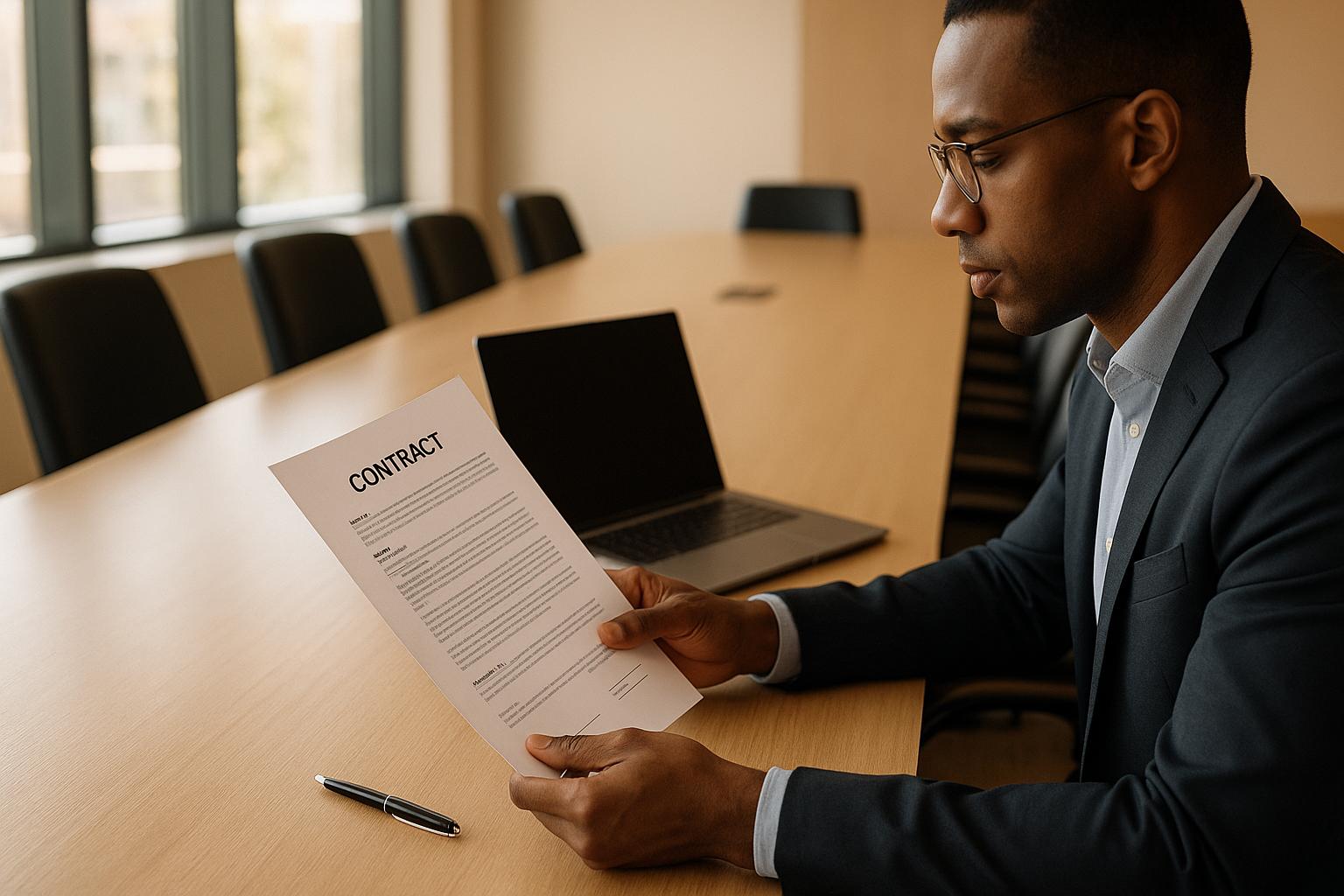
Negotiating AV vendor contracts is crucial for controlling costs, setting clear expectations, and ensuring smooth event execution. Poorly managed agreements can lead to budget overruns, miscommunication, and logistical issues. Here's how to approach it effectively:
- Focus on Event Goals: Start by aligning your AV needs with your event's purpose instead of just listing equipment. Vendors should propose solutions tailored to your objectives.
- Transparent Pricing: Request detailed cost breakdowns to avoid hidden charges. Separate base services from optional add-ons and explore discounts for long-term partnerships or early payments.
- Risk Management: Include contingency plans, technical rehearsals, and clear terms for handling issues like equipment failures or last-minute changes.
- In-House vs. External Providers: Evaluate whether the venue’s in-house AV team or an external provider offers better flexibility, expertise, and service scope for your event.
- Long-Term Partnerships: Building ongoing relationships with AV vendors can streamline future events, improve consistency, and reduce overall costs.
10 Strategies to Follow While Negotiating Contracts with Vendors
AV Vendor Contract Basics
AV vendor contracts serve as the backbone of event production, outlining crucial details and ensuring smooth collaboration. They’re much more than simple agreements for renting equipment - they establish a partnership that covers every stage, from initial planning to post-event wrap-up.
What AV Vendor Contracts Do
These contracts set clear expectations and protect everyone involved. By defining roles, managing risks, and specifying payment terms, they help ensure events run without major hiccups.
One of their key functions is preventing misunderstandings. When responsibilities are clearly defined, there’s less room for confusion or missed tasks, which makes for a smoother event. Additionally, these agreements address how to handle unexpected challenges, like equipment issues or weather disruptions. With clear payment terms and budget guidelines, both you and your vendor are safeguarded, creating a stable working relationship.
Main Parts of an AV Vendor Contract
A well-crafted AV vendor contract typically includes these essential components:
- Scope of Work: Details all production services, such as lighting design, technical planning, and venue logistics.
- Pricing and Payment Terms: Breaks down total costs, payment schedules, base services, and any extra charges for full financial clarity.
- Timeline and Deliverables: Maps out project milestones, from initial planning to event execution.
- Technical Specifications: Lists the required equipment, setup details, and technical capabilities.
- Contingency Planning: Outlines backup plans for potential issues like equipment failures or venue challenges.
Industry Terms and Roles
Understanding industry-specific terms is key to negotiating an effective contract. For example, there’s a difference between in-house AV suppliers and external vendors.
An in-house AV supplier is tied to the venue and may have exclusive or preferred vendor rights. While this can simplify coordination with the venue, it might limit your options. On the other hand, an external AV vendor operates independently, offering more flexibility and often bringing specialized expertise to the table.
Terms like event production team or full-service event production signal that the vendor handles more than just equipment. These teams manage everything from design and technical planning to lighting, audio/visual coordination, and on-site execution. Similarly, technical event production covers all the technical aspects of your event, including contingency planning, while vendor coordination refers to managing multiple suppliers to ensure everything runs seamlessly.
How to Negotiate AV Contracts
Navigating AV contract negotiations successfully requires more than just comparing prices. The best results come from a thoughtful strategy that prioritizes understanding your event's purpose and forming a partnership that delivers true value.
Focus on Event Goals, Not Just Equipment
Starting negotiations with a list of equipment can lead to overspending on unnecessary items or overlooking crucial elements that could better serve your event's purpose. Instead, begin by focusing on the big picture - what your event is meant to achieve.
Corporate Optics recommends starting with their "Discover" phase, which involves strategic discussions about your event's mission and what success looks like for your organization. This approach encourages vendors to propose solutions tailored to your event's goals rather than simply offering a generic equipment list.
During negotiations, ask vendors to explain how their equipment and services align with your objectives. This ensures you're not paying for items you don't need while keeping the focus on achieving your event's goals. Once this foundation is set, you can move on to discussing pricing in detail.
Clear Pricing and Cost-Saving Opportunities
After defining your event goals, request a detailed pricing breakdown. Insist on separating base services from optional add-ons to avoid vague estimates that combine everything into one lump sum.
The planning phase is critical for identifying cost-saving opportunities. Corporate Optics emphasizes collaboration during this stage:
"Your vision comes to life as we guide you through the technical needs, venue logistics, speaker requirements, leadership team coordination, and the guest experience. This phase ensures production elements are within budget and align with your goals."
Early collaboration with vendors can help you stay within budget and avoid costly last-minute changes. If you’re planning multiple events throughout the year, consider negotiating a package deal. Many vendors offer discounts for long-term partnerships, which can significantly lower overall costs. Additionally, discuss payment terms - some vendors might offer discounts for early payments, while others prefer milestone-based payments tied to project phases.
Another way to save is by requesting substitutions for equipment or services that provide similar quality at a lower cost.
Negotiating Beyond the Price Tag
While cost is important, focusing solely on the lowest bid can create challenges during the event. Smart negotiators look beyond price to secure value through flexibility, reliability, and non-monetary terms that enhance the overall experience.
Flexibility is key. Seek vendors with a proven track record of structured project management and the ability to adapt to unexpected challenges. A strong partnership with a vendor who offers comprehensive support can make all the difference. As one client shared:
"Every time we work with Corporate Optics, we know we're in good hands. Their attention to detail and ability to adapt to challenges is unmatched."
- Ed D., Senior Managing Director, Chief Operating Officer
Negotiate scalability options that allow you to adjust services as your event evolves. For example, you might need to add equipment, extend setup times, or change technical requirements. Ensure these adjustments can be made without incurring penalty fees.
Contingency planning is another critical aspect of the contract. Discuss provisions for backup equipment, alternative venues, and procedures for handling technical failures. Vendors who address these scenarios upfront often provide better value than those offering the lowest price without comprehensive support.
Consider bundling additional services that can enhance your event. For instance, extended rehearsal time or post-event analytics might be more affordable when included in the initial agreement. Also, clarify labor terms - such as overtime, meal breaks, and setup/breakdown times - to avoid surprise charges.
One Corporate Optics client summed up the value of a strong partnership:
"Such a tremendous team and group to work with. They always remain calm (with a smile), have our back, and are prepared for anything. I cannot tell you how appreciated it is to have a partner that makes these events fun."
- Pete L., SVP, Marketing
Building a collaborative relationship with your AV vendor will often yield better results than focusing solely on price. A strong partnership ensures smoother operations and a more successful event.
In-House vs. External AV Providers
When planning an event, selecting the right AV provider can make all the difference. Deciding between a venue's in-house AV team and an external provider like Corporate Optics requires a clear understanding of their differences in service, flexibility, and expertise. This choice not only affects your contract negotiations but also plays a significant role in the success of your event.
Main Comparison Points
The decision between in-house and external AV providers isn't just about equipment - it’s about the overall experience and support they bring to the table.
Service Scope and Project Management
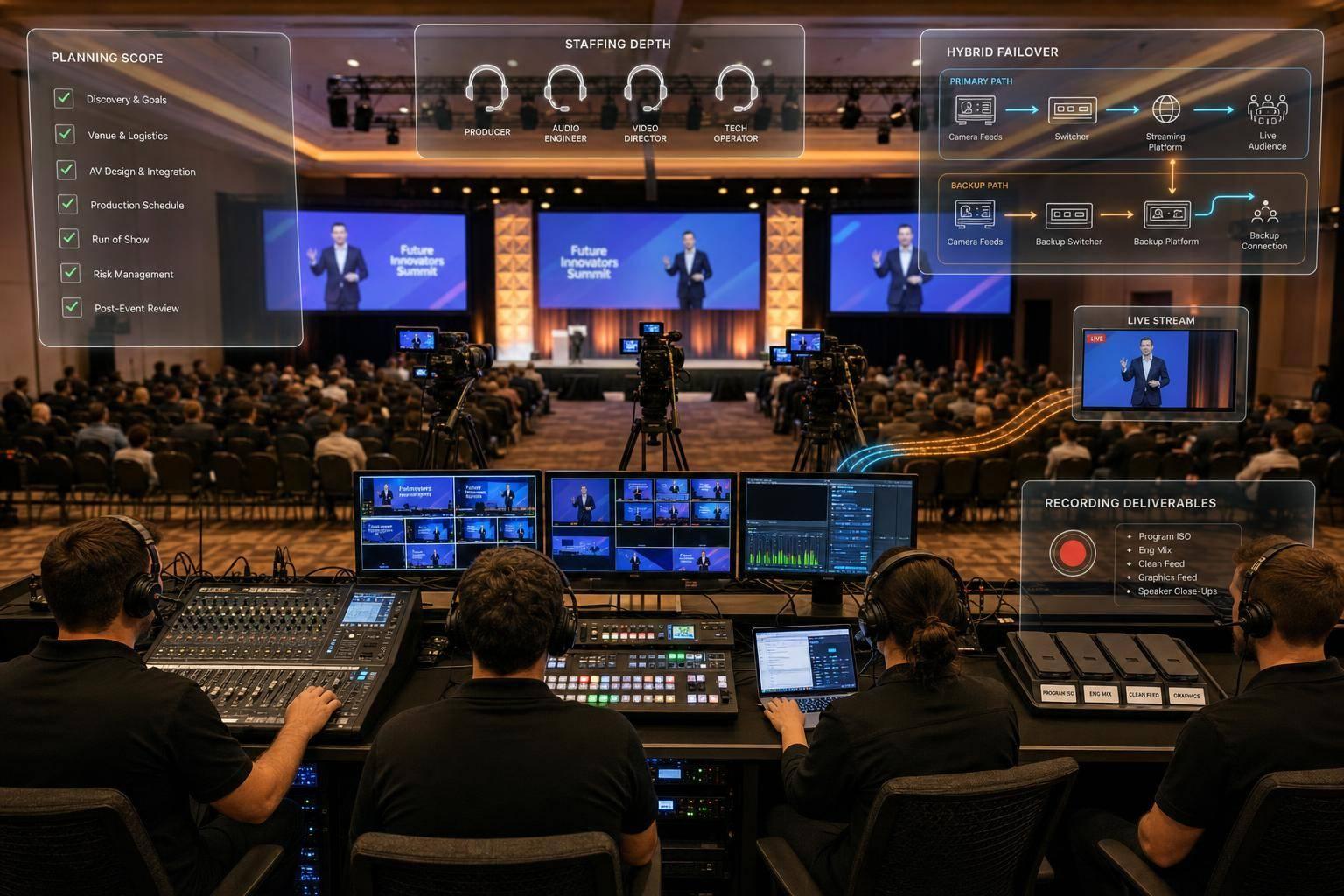
In-house AV teams typically handle the basics: operating standard equipment and offering routine technical support. Their work is often tied to the venue's specific protocols. On the other hand, external providers offer end-to-end event production. For example, Corporate Optics takes a holistic approach, managing everything from initial planning to on-site execution. They oversee every detail, including lighting, sound, visuals, and stage design, ensuring a cohesive and well-executed event.
Geographic Flexibility
In-house AV teams are usually limited to their venue, which can be a drawback if your event spans multiple locations or is held off-site. External providers, like Corporate Optics, excel in this area. They can support events anywhere, ensuring consistent quality no matter the location. This flexibility is particularly valuable for multi-city events or outdoor activations.
Industry Knowledge
While in-house teams are familiar with their venue’s routine needs, they may lack the expertise required for more complex or specialized events. External providers bring a broader range of experience, often working across industries. Corporate Optics, for instance, has managed events for corporate clients, sports organizations, social activations, and government projects. This diverse experience equips them to handle unique challenges and deliver tailored solutions.
| Comparison Factor | In-House AV | External AV Providers |
|---|---|---|
| Service Scope | Basic equipment operation | Full-service event production |
| Geographic Reach | Limited to venue location | Nationwide or global flexibility |
| Industry Experience | Venue-specific expertise | Broad, multi-industry knowledge |
| Staffing Model | Fixed schedules, shared resources | Dedicated teams with continuous support |
| Equipment Options | Standard inventory | Access to advanced, specialized technology |
| Contingency Planning | Basic backup procedures | Comprehensive risk management strategies |
Dedicated Support
In-house teams often juggle multiple events, which can limit their availability for extended setups, rehearsals, or last-minute adjustments. External providers, however, offer dedicated support, focusing solely on your event. This ensures they’re available to address challenges and provide solutions in real-time, even under pressure.
Creative Possibilities
Venue AV teams tend to rely on familiar setups, which can restrict creativity. External providers bring fresh ideas and innovative solutions, allowing for unique and memorable event experiences.
Venue Restrictions and Preferred Vendor Rights
Understanding venue policies is just as important as comparing service providers. Many venues have partnerships with in-house AV teams, but this doesn’t necessarily prevent you from working with an external provider.
Working Within Venue Policies
Venues often recommend their in-house AV teams, but most allow external providers under certain conditions. When negotiating your contract, ask about additional fees, insurance requirements, and how external providers will coordinate with in-house staff. Addressing these details early can help you avoid unexpected costs and ensure a smooth process.
Collaboration Between Teams
A successful event requires seamless collaboration between external providers and venue staff. Corporate Optics, for example, has extensive experience working alongside in-house teams to ensure flawless execution. Discussing logistics such as load-in schedules, power access, and communication protocols in advance can help avoid issues on event day.
Negotiating External Provider Access
When finalizing your venue contract, make sure to secure the right to use your preferred AV partner. Include specific terms that guarantee access to necessary facilities, infrastructure, and power. This ensures efficiency and helps manage costs effectively.
Evaluating Value
Ultimately, it’s essential to weigh the overall value that external providers bring compared to in-house teams. Beyond upfront costs, consider factors like service quality, flexibility, and the level of strategic support offered. The long-term benefits of working with a dedicated external provider can often outweigh the initial investment. As one satisfied client shared:
"Every time we work with Corporate Optics, we know we're in good hands. Their attention to detail and ability to adapt to challenges is unmatched."
– Ed D., Senior Managing Director, Chief Operating Officer
This kind of reliability and personalized support is invaluable, especially for organizations that host multiple events throughout the year.
sbb-itb-ae35a94
Important Contract Terms and Risk Management
Minimize risks in your AV vendor contract to avoid unexpected issues on event day. Address potential challenges early to ensure everything runs smoothly. The strategies below will help strengthen your contract and keep your event on track. These steps work hand-in-hand with your negotiation efforts to prevent problems that could impact your event's success.
How to Reduce Risk
Put Everything in Writing
Make sure every change or update to your agreement is documented in writing. For example, Corporate Optics emphasizes this during its Develop phase, ensuring "no surprises, just results" by carefully recording all details upfront.
Include Technical Rehearsals
Schedule technical rehearsals as part of your contract to catch and fix issues ahead of time. These rehearsals are crucial for spotting equipment malfunctions or operational glitches before they become problems on event day.
Ensure Real-Time Problem Solving
Live events can be unpredictable, so it’s essential to work with vendors who can handle challenges as they happen. Look for vendors who excel at resolving issues on the spot to keep your event running smoothly.
Integrate Strategic Program Management
Select vendors with a strong program management approach that covers every stage of your event - from planning to execution. This ensures thorough backup plans and consistent quality control throughout the process.
Building Long-Term AV Vendor Relationships
Partnering with an AV vendor for the long haul can transform how events are produced. Instead of starting from scratch with every event, you create a foundation of trust and mutual understanding that leads to better results over time. This strategy not only improves event execution but also ties into the contract negotiation strategies discussed earlier.
Benefits of Long-Term Partnerships
Consistent Service and Professionalism
When you work with the same AV partner repeatedly, you establish a level of consistency that’s nearly impossible to achieve with one-off contracts. Over time, the vendor becomes familiar with your organization’s standards, preferences, and event style, resulting in more polished and cohesive outcomes.
"Corporate Optics made our national dealer meeting unforgettable. Their professionalism and creativity set a new standard for our events!"
– Bill G., Senior Director
Comprehensive Program Management
A long-term AV partner doesn’t just handle basic setups. They integrate scenic design, lighting, audio, and visual elements into a seamless production, allowing your team to focus on broader event goals without worrying about technical details.
Trust and Shared Vision
Ongoing relationships are built on a shared vision and clear objectives. This alignment from the outset minimizes communication hurdles that often arise with new vendors, ensuring smoother collaboration and execution.
Quick Problem-Solving and Proactive Support
An experienced partner who knows your events can quickly adapt to challenges while anticipating potential needs. With contingency plans in place, they ensure your events run smoothly, even when unexpected issues arise.
By leveraging these advantages, Corporate Optics has developed a phased support model that ensures every event builds on the last, delivering consistent excellence.
How Corporate Optics Supports Event Management

Corporate Optics simplifies event management with its structured Project Life Cycle approach. This method ensures every event is a step forward, maintaining high standards while incorporating lessons learned from past experiences.
Discover Phase
The process begins with a deep dive into your organization’s mission and goals, setting the stage for a partnership built on clarity and shared objectives.
Design Phase
In this phase, Corporate Optics collaborates with your team to address technical requirements, venue logistics, speaker needs, and guest experience goals. Every detail is aligned with your budget and event objectives.
Develop Phase
Their team takes care of logistics, coordinates with other vendors, conducts technical rehearsals, and implements contingency plans. This preparation ensures predictable results and minimizes surprises on event day.
Deliver Phase
On the big day, Corporate Optics executes the plan with precision, adapting in real-time to ensure your message resonates with attendees. Their expertise allows them to handle challenges seamlessly, ensuring a flawless experience.
In addition to event-day execution, Corporate Optics offers scenic and lighting production, speaker support, live streaming, and post-event analytics. By providing a full-service model, they eliminate the need to juggle multiple vendors, reducing complexity and communication breakdowns.
"Corporate Optics took our event to the next level. Their creativity, professionalism, and attention to detail are top-notch. They brought vision to life flawlessly. Above and beyond care and execution. Highly recommend."
– Nikki D., Vice President of Sales
This long-term partnership approach doesn’t just elevate individual events - it enhances the overall quality and impact of your event program over time.
Key Points for AV Vendor Contract Negotiation
Negotiating an AV vendor contract isn’t just about comparing quotes or equipment lists. The real goal is to find a partner who understands your event’s purpose and can deliver results that align with both your objectives and budget. Here's how to approach the process effectively.
Start with Your Event’s Goals
A strong AV partnership begins with a shared understanding of your event’s goals. When discussing contracts, prioritize vendors who take the time to learn about your organization’s vision before diving into technical details. This ensures their solutions are tailored to your needs rather than offering a one-size-fits-all approach.
Demand Budget Transparency from the Start
One of the most critical aspects of negotiation is ensuring the vendor commits to keeping production costs within your budget. Choose vendors who integrate budget alignment into their design process. As Corporate Optics explains:
"Your vision comes to life as we guide you through the technical needs, venue logistics, speaker requirements, leadership team coordination, and the guest experience. This phase ensures production elements are within budget and align with your goals."
This proactive approach minimizes the risk of unexpected expenses down the line.
Prioritize Strategic Program Management
Beyond meeting budgets and goals, a vendor’s ability to manage the event strategically is invaluable. The best AV partners offer end-to-end coordination, allowing you to focus on leading your event rather than juggling logistics. Seek vendors who can handle every aspect, from scenic design to lighting and audio-visual setup, ensuring seamless execution.
Assess the Entire Project Life Cycle
Effective negotiations should cover the full scope of your event, from initial planning through to the final execution. Contracts should address logistics management, vendor coordination, technical rehearsals, and contingency plans. By setting clear expectations, you can ensure your event runs smoothly, even if last-minute adjustments are needed.
Think About Long-Term Relationships
While negotiating individual event contracts is essential, there’s often greater value in building long-term partnerships with experienced AV providers. These relationships foster consistency, improve communication, and streamline future events, making each one more successful than the last.
Ultimately, successful AV vendor contract negotiation comes down to finding a partner who blends technical know-how with strategic insight, budget awareness, and a dedication to your event’s success.
FAQs
What are the benefits of hiring an external AV provider instead of using an in-house team for event production?
Partnering with an external AV provider can elevate your event production in several ways. These providers bring a wealth of specialized knowledge, access to advanced technology, and a wider array of equipment, ensuring your event runs smoothly and looks professional. Plus, they’re always in tune with the latest industry trends and advancements, which can help create a more engaging experience for your audience.
Take a provider like Corporate Optics, for example. They handle every aspect of your event’s audiovisual needs - from the initial planning and design stages to live streaming and even post-event analytics. This means your in-house team can focus on other important tasks, while seasoned experts manage the technical complexities and handle any surprises that may arise during the event.
What steps can I take to ensure my AV vendor contract includes effective contingency planning?
When drafting your AV vendor contract, it's crucial to include detailed contingency planning to address any potential hiccups during your event. Start by identifying possible risks - think equipment malfunctions, sudden schedule changes, or unforeseen delays. Collaborate with your vendor to outline specific solutions for these scenarios and ensure they're part of the agreement.
Your contract should clearly cover essentials like backup equipment availability, on-site technical support, and step-by-step escalation procedures for emergencies. Also, make sure it defines timelines, roles, and any costs tied to these contingency plans. This thorough approach can help keep your event running smoothly, no matter what surprises come your way.
What are some effective strategies for negotiating better pricing and terms with AV vendors for long-term partnerships?
To get better pricing and terms from AV vendors, it’s all about creating a solid, cooperative partnership. Start by outlining your project’s specific needs, budget, and long-term objectives. Being upfront allows vendors to customize their services and present solutions that meet your expectations.
Think about combining multiple services or events into one deal to take advantage of volume discounts. You can also explore ways to cut costs, like adjusting schedules or opting for alternative equipment. Make sure to go over the contract carefully to confirm all details - pricing, deliverables, and any extra fees should be crystal clear.
If you're aiming for a long-term relationship, highlight the mutual perks. For instance, offering consistent business or exclusivity can help you negotiate better terms. Keeping the lines of communication open and building trust can lead to stronger collaboration and added value as the partnership grows.
Related Blog Posts


Streamline your workflow, achieve more

Lorem ipsum dolor sit amet, consectetur adipiscing elit. Maecenas ac velit pellentesque, feugiat justo sed, aliquet felis.



Lorem ipsum dolor sit amet, consectetur adipiscing elit. Maecenas ac velit pellentesque, feugiat justo sed, aliquet felis.