What To Expect From A Company Who Handles End-to-End Conference Production

Chief Executive Officer
End-to-end conference production simplifies event planning by managing every detail - from venue selection to post-event analysis. These companies handle logistics, technology, and design, allowing businesses to focus on their goals. Key benefits include:
- Venue Selection & Negotiation: Securing the best space with favorable terms.
- Technology & Audiovisual Solutions: Advanced setups for both in-person and hybrid events.
- Event Design: Custom visuals, stage setups, and branding that align with your goals.
- Speaker & Attendee Coordination: Streamlined registration, travel, and scheduling.
- Post-Event Analytics: Insightful data to measure success and improve future events.
Core Services from End-to-End Providers
Venue Selection and Contract Negotiation
Choosing the right venue can make or break your conference. End-to-end providers leverage their industry connections to secure favorable rates and terms while ensuring venues meet important standards like ADA compliance and fire safety regulations.
The process typically involves site visits, capacity planning for both in-person and virtual participants, and technical evaluations to ensure the space can handle your audiovisual needs. Providers also work closely with venue staff to coordinate timelines for setup, rehearsals, and takedown, reducing the risk of scheduling conflicts.
Once the venue is locked in, providers tailor audiovisual solutions to maximize the space’s potential.
Audiovisual and Technology Solutions
Today’s corporate conferences demand more than a microphone and a projector. End-to-end providers design AV setups that fit your event’s unique needs. Think LED walls, multi-camera live streaming, and wireless content-sharing tools.
For hybrid events, they take it a step further by integrating streaming platforms with interactive features like live polls, Q&A sessions, and breakout room coordination. To ensure a seamless experience, providers also set up backup systems and redundant internet connections to avoid any unexpected tech issues.
Take Corporate Optics, for example. They specialize in crafting AV solutions that merge technical expertise with creative design, delivering a premium experience for both in-person and online attendees.
But it’s not just about the tech - how the event looks and feels matters just as much.
Event Design and Scenic Production
The visual design of a conference plays a key role in creating an unforgettable experience. End-to-end providers develop design concepts that align with your brand, incorporating stage setups, lighting, signage, and even custom-built elements.
The process starts with a deep dive into your brand guidelines and event goals. From there, providers create detailed design drafts to show exactly how the space will come to life. They also work with venues to ensure every design element is installed correctly and adheres to safety standards. For added flair, custom fabrication might be used to craft unique design pieces that enhance both the look and functionality of the event.
Speaker, Attendee, and Sponsor Coordination
Once the technical and design aspects are in place, providers focus on managing the people involved. Coordinating speakers, attendees, and sponsors requires meticulous planning. This includes arranging travel, scheduling technical rehearsals, and optimizing presentations for both live and virtual formats.
For attendees, providers streamline registration and check-in processes while offering tools like mobile event apps. These apps provide schedules, speaker bios, and networking opportunities, while also gathering data on attendee preferences and engagement.
Sponsors are seamlessly integrated into the event. Providers balance sponsor visibility with the overall attendee experience by managing branded activations, content placements, and lead-generation systems - all while maintaining a polished, professional atmosphere.
Post-Event Analytics and Reporting
The work doesn’t stop when the event ends. Providers gather post-event analytics to measure ROI and evaluate attendee engagement, offering valuable insights to refine future events. These data-driven reports help extend the event’s impact well beyond its conclusion.
Go behind the scenes how to plan a successful conference
The Event Production Process: Step by Step
Turning an idea into a successful conference requires a well-structured production process. Here's a closer look at how it unfolds.
Initial Consultation and Planning
Every great event begins with a solid plan. The first step is a consultation to clarify your event's goals, audience, budget, and timeline. From there, a detailed schedule is crafted, breaking down tasks and setting clear milestones.
For larger corporate conferences, these timelines often span 3–6 months. Early discussions focus on key deadlines, like booking the venue and scheduling rehearsals, while also identifying potential risks and creating strategies to address them before they become problems.
Budgets are divided into categories like venue costs, AV equipment, design, staffing, and contingency funds. This breakdown helps you decide where to allocate resources to achieve the biggest impact. With the groundwork laid, the focus shifts to the technical side of things.
Technical Planning and Logistics
This stage dives into the nitty-gritty of AV, lighting, staging, and any specialized technology your event requires.
Technical surveys are conducted to assess power needs, internet capacity, and venue limitations. Providers then create detailed technical riders, outlining what equipment will be used, how it will be positioned, and how it will function during the event.
Coordination with the venue staff ensures smooth load-ins and load-outs, while equipment placement is carefully planned for optimal performance. For hybrid events, this step also involves rigorous testing of streaming platforms and interactive tools to ensure a seamless connection between in-person and virtual attendees.
Backup files and format conversions are prepared to optimize presentations for both live and online audiences. Once every technical detail is finalized, the focus shifts to execution.
On-Site Management and Backup Planning
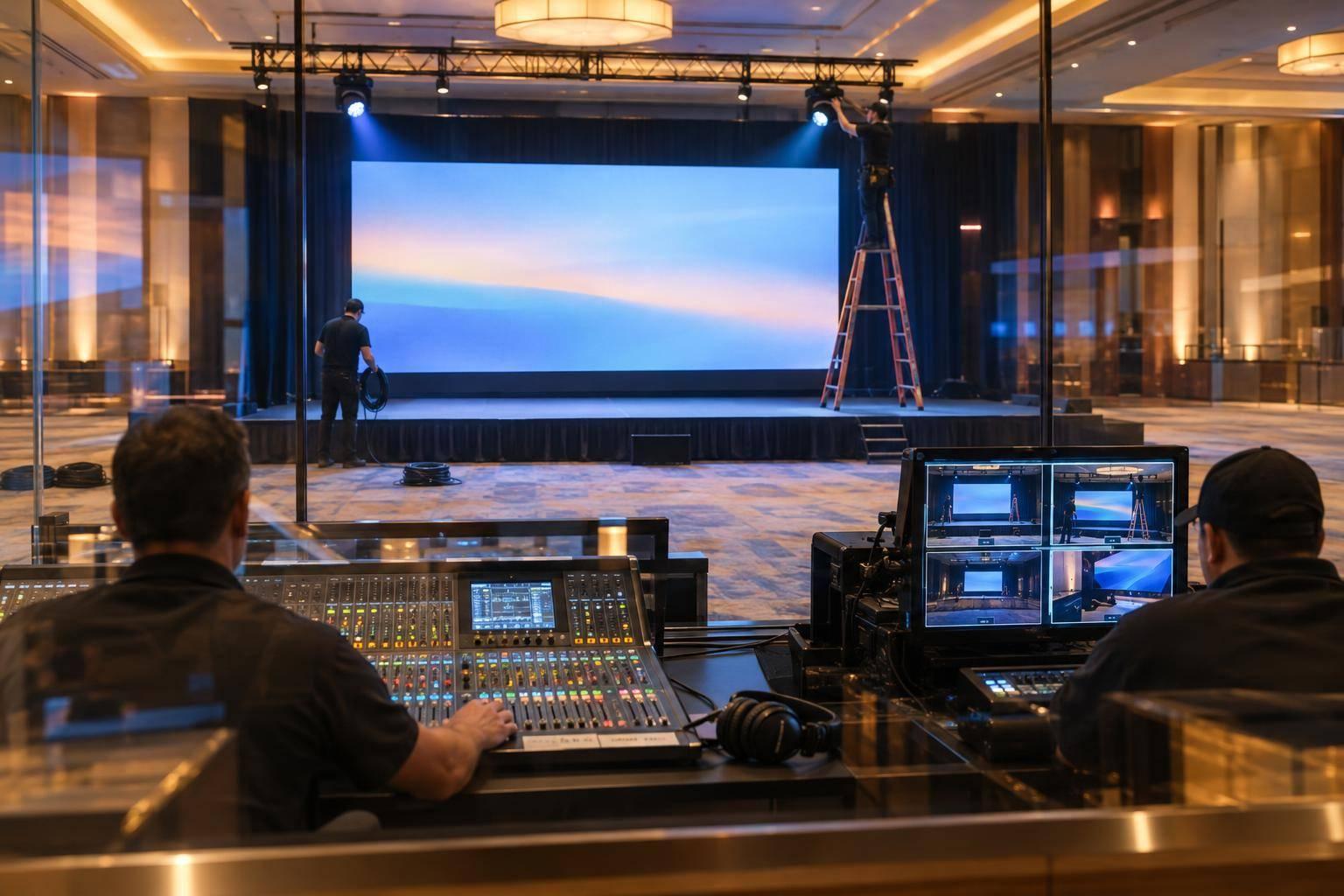
When the big day arrives, the production team takes charge. They coordinate vendors, oversee the schedule, and handle any issues that pop up, so you can focus on engaging with your attendees and speakers.
As ALLEVENTS puts it:
"Our team provides comprehensive on-site management, ensuring smooth transitions and immediate solutions to any challenges." - ALLEVENTS
A team of professionals - including audio engineers, lighting designers, video technicians, and streaming specialists - works together to manage every technical aspect of the event.
Backup planning is a key part of the process. Contingency measures cover everything from spare AV equipment to alternative Wi-Fi solutions. As Agency X explains:
"With professionals handling the complex puzzle of technical production, you dramatically reduce the chance of last-minute surprises. Backup equipment, contingency plans for technical glitches, and on-site troubleshooting are all part of the package, giving you peace of mind that the show will go on no matter what." - Agency X
Before the event kicks off, final run-throughs are conducted to test all systems, review contingency plans, and ensure any last-minute updates - whether related to speakers, registration, or the agenda - are seamlessly integrated.
sbb-itb-ae35a94
Technology and Innovation in Conference Production
With cutting-edge AV solutions at their core, modern conference production now leans heavily on technology to create immersive, hybrid experiences. These tools are designed to engage both in-person and virtual audiences, ensuring events run smoothly and leave a lasting impression.
Advanced AV Technology and Hybrid Event Solutions
The rise of hybrid events has pushed production teams to blend traditional audiovisual setups with advanced live streaming platforms. High-definition cameras capture multiple perspectives, while professional streaming software delivers the content seamlessly to online attendees.
AI-powered tools now play a significant role, monitoring audience engagement and enabling real-time adjustments to enhance the experience. Hybrid events also benefit from interactive features like virtual breakout rooms, which foster deeper audience participation. Improved audio technology, including advanced microphones and noise-canceling systems, ensures crisp and clear communication for all attendees - whether they’re in the room or tuning in remotely.
Wireless presentation systems add another layer of convenience, allowing presenters to share content effortlessly across different devices, creating a polished and cohesive experience for everyone.
Data Privacy and Accessibility Standards
Modern event platforms prioritize data security and accessibility. To protect attendee information, providers employ strong encryption methods and secure data storage solutions. Simultaneously, they integrate accessibility features like real-time captioning, sign language interpretation, and compatibility with assistive devices, making events more inclusive.
Compliance with laws such as the Americans with Disabilities Act (ADA) further supports accessibility. This includes offering assistive listening devices and ensuring that staging, seating, and other physical spaces are accessible to all participants. These measures set a strong foundation for the evolving trends reshaping the conference landscape.
New Trends in Conference Production
Artificial intelligence is transforming event planning by analyzing engagement metrics and attendee behavior, offering valuable insights for future events. Virtual reality is also making waves, enabling immersive presentations and shared experiences that connect participants, no matter where they are.
Sustainability is becoming a key focus, with many companies adopting digital solutions to cut down on paper use and energy consumption, reducing the environmental impact of their events. Meanwhile, advancements in real-time language translation technology are breaking down language barriers, allowing multilingual audiences to participate seamlessly through instant interpretation. These innovations are shaping the future of conference production, making events more engaging, inclusive, and environmentally conscious.
Improving Audience Engagement and Experience
Once the technical production and design are flawless, the next step is crafting an experience that truly resonates with attendees. A memorable conference isn’t just about great speakers or well-organized content - it’s about actively involving participants and fostering connections that make the event unforgettable.
Interactive Tools and Real-Time Feedback
Interactive tools can turn a passive audience into an engaged group. For instance, live polling platforms let attendees vote or share opinions during presentations, creating a dynamic exchange of ideas. This immediate feedback not only keeps the energy up but also allows speakers to fine-tune their presentations on the spot.
Digital Q&A platforms take the awkwardness out of traditional microphone sessions. Attendees can submit questions through their devices, and moderators can prioritize the most relevant ones. Voting systems highlight popular questions, ensuring the discussion stays focused on what the audience cares about most. This approach also empowers quieter participants who may hesitate to speak up publicly.
Gamification adds a layer of fun and competition to the event. By rewarding activities like attending sessions, networking, or visiting booths with points and leaderboards, organizers can sustain engagement, especially during longer events.
Real-time feedback tools, such as emoji reactions or sliding scales, give organizers instant insights into session performance. These tools help identify what’s working and what’s not, allowing for quick adjustments or providing valuable takeaways for future events.
These interactive features not only keep attendees engaged but also allow events to be tailored in real time to meet audience and corporate needs.
Customizing Experiences for Corporate Clients
Corporate events demand a personalized touch to align with a company’s goals and identity. Beyond using advanced technology and design, these events need to reflect the brand’s essence in every detail.
Brand integration is more than just slapping a logo on a banner. Custom stage designs can incorporate a company’s colors and values, while branded mobile apps provide attendees with personalized schedules. Digital signage throughout the venue reinforces the brand’s image, creating a cohesive and immersive experience.
Tailoring content for different attendee groups can make a big impact. For example, sales teams might benefit from hands-on training sessions, while executives focus on strategy workshops. Mobile apps can push tailored notifications to specific groups, ensuring everyone gets the information most relevant to their role.
Speaker selection and session formats can also be customized. By collaborating with clients, event planners can bring in industry experts who align with the company’s goals and audience needs. Whether it’s a panel discussion, a workshop, or a keynote, each session is designed to deliver on specific learning objectives.
Networking opportunities are another area where customization shines. Some companies may prefer structured speed networking, while others lean toward casual receptions. Digital networking tools can also connect attendees with shared interests or complementary expertise, making it easier to build meaningful relationships.
Ensuring Smooth On-Site Operations
Behind every successful conference is meticulous planning and execution. Professional staffing ensures everything runs smoothly, transforming potential chaos into a seamless experience.
Efficient registration is key to setting the right tone. Multiple check-in stations and digital options help avoid long lines and create a stress-free start for attendees. Meanwhile, technical support teams stay on top of audio, lighting, and presentation equipment, ready to troubleshoot any issues. Backup systems and proactive technicians ensure that technical hiccups don’t disrupt the flow of the event.
Catering logistics go beyond simply serving food. Teams manage dietary restrictions, schedule meal breaks to avoid overlapping with sessions, and keep refreshment stations stocked to encourage networking while minimizing crowding.
Contingency planning is a must. Backup plans for outdoor events, solutions for transportation delays, and the presence of medical and security staff ensure that unexpected challenges are handled efficiently. This level of preparation lets attendees focus entirely on the event, free from distractions.
When all these elements come together, they create a conference experience that’s not only engaging but also runs like clockwork, leaving attendees impressed and connected.
Conclusion: The Value of Complete Conference Production
Working with a full-service provider can make conference production feel effortless. By handling all aspects of the event, from technical details to creative execution, this approach eliminates the hassle of juggling multiple vendors. It ensures that every element aligns seamlessly with your company’s vision and goals.
One of the biggest advantages is reducing stress and minimizing risks. Expert teams come prepared with backup equipment, clear contingency plans, and skilled on-site troubleshooting to handle unexpected issues. As highlighted in the technical planning sections, these precautions help ensure everything runs smoothly. This means corporate leaders can stay focused on their message and objectives instead of worrying about technical hiccups, like malfunctioning microphones or unstable live streams.
Professional AV solutions also elevate the experience with crisp audio, sharp visuals, and dynamic lighting, creating a conference that leaves a lasting impression. Often, it’s these technical touches that distinguish a standard meeting from an unforgettable event.
Additionally, dedicated project managers oversee every detail, from setup to teardown, streamlining communication and ensuring no aspect is overlooked. This comprehensive management approach keeps everything on track.
Finally, hybrid solutions have become a must for blending in-person and virtual experiences, allowing for broader audience engagement.
FAQs
What are the benefits of working with a company that manages every aspect of conference production?
Partnering with a company that manages every aspect of conference production can make a world of difference. These experts take care of everything - from selecting the ideal venue and installing cutting-edge audiovisual systems to planning the layout, handling on-site logistics, and even analyzing the event's success afterward.
By leaving these tasks to professionals, you can concentrate on what matters most: delivering meaningful content and connecting with your audience. With the technical and logistical details expertly managed, your conference runs seamlessly, leaving a lasting impression on attendees.
How do companies that handle end-to-end conference production protect attendee data and ensure accessibility?
Companies that handle every aspect of conference production place a strong emphasis on data privacy and accessibility, adhering to strict protocols to protect attendees. They collect only the information essential for the event, ensure attendees give explicit consent, and provide straightforward options for managing personal data. Clear communication is a priority - they explain how data will be used and outline attendees' rights to access, update, or delete their information.
To make events accessible to everyone, these companies leverage cutting-edge technology. This includes features like captioning services, compatibility with screen readers, and hybrid event formats that cater to both in-person and virtual participants. By blending secure privacy practices with inclusive design, they deliver an event experience that's both seamless and welcoming for all attendees.
What technologies are used by conference production companies to create engaging hybrid events?
Conference production companies use modern technologies to make hybrid events more interactive and engaging for everyone involved. For instance, tools like audience response systems allow both in-person and virtual participants to join real-time activities, including polls, Q&A sessions, quizzes, and even word clouds.
In addition, advanced audiovisual setups play a key role in ensuring smooth communication between live and remote attendees. Features such as high-definition video streaming, dynamic virtual backgrounds, and integrated event platforms work together to deliver a seamless and unified experience for all participants.
Related Blog Posts


Streamline your workflow, achieve more

Lorem ipsum dolor sit amet, consectetur adipiscing elit. Maecenas ac velit pellentesque, feugiat justo sed, aliquet felis.



Lorem ipsum dolor sit amet, consectetur adipiscing elit. Maecenas ac velit pellentesque, feugiat justo sed, aliquet felis.