7 Key Services Offered By Conference Production Companies

Chief Executive Officer
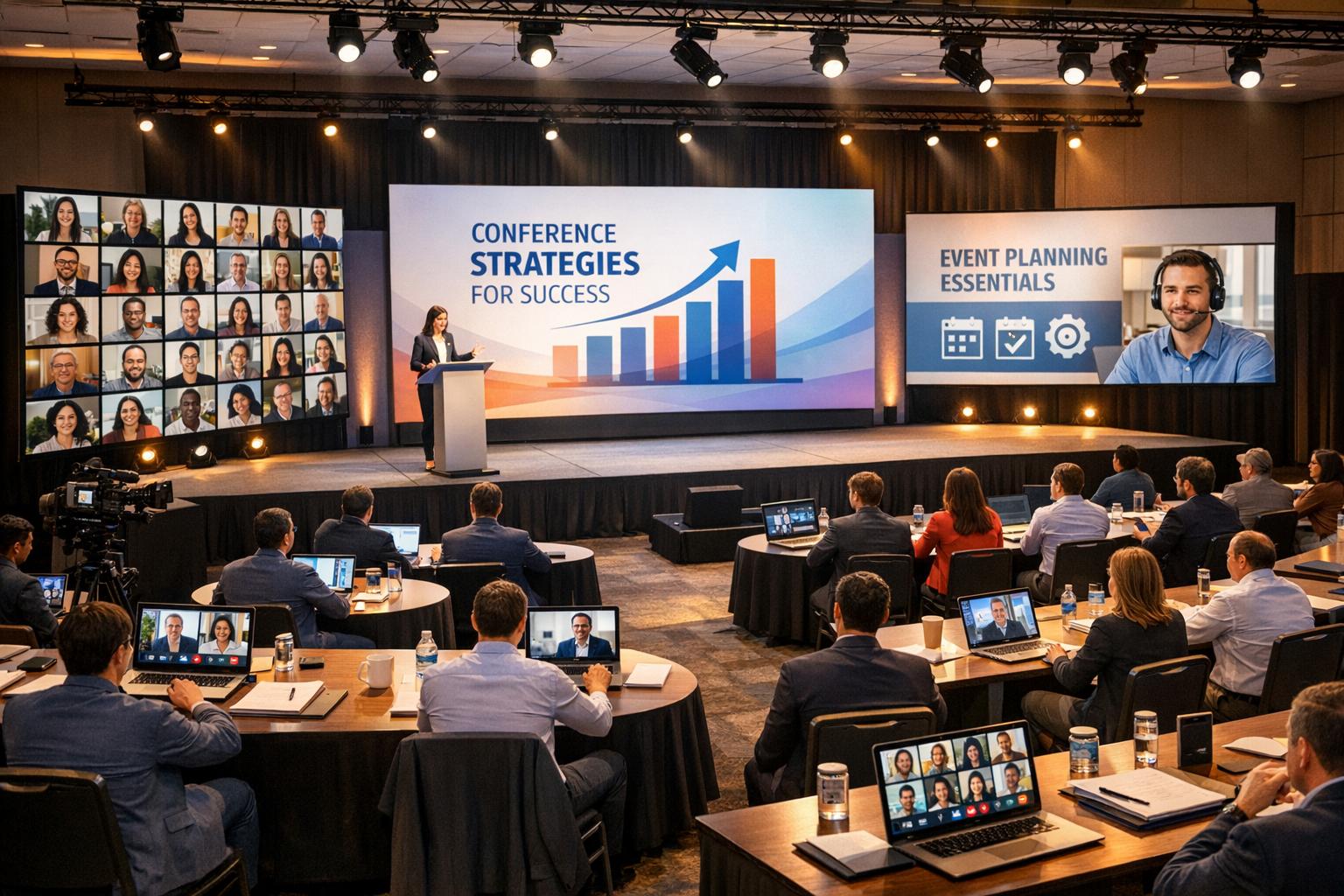
Conference production companies specialize in transforming event ideas into polished, professional experiences. They handle the technical and creative aspects, ensuring events run smoothly and leave a lasting impression. Here’s a quick overview of the seven key services they provide:
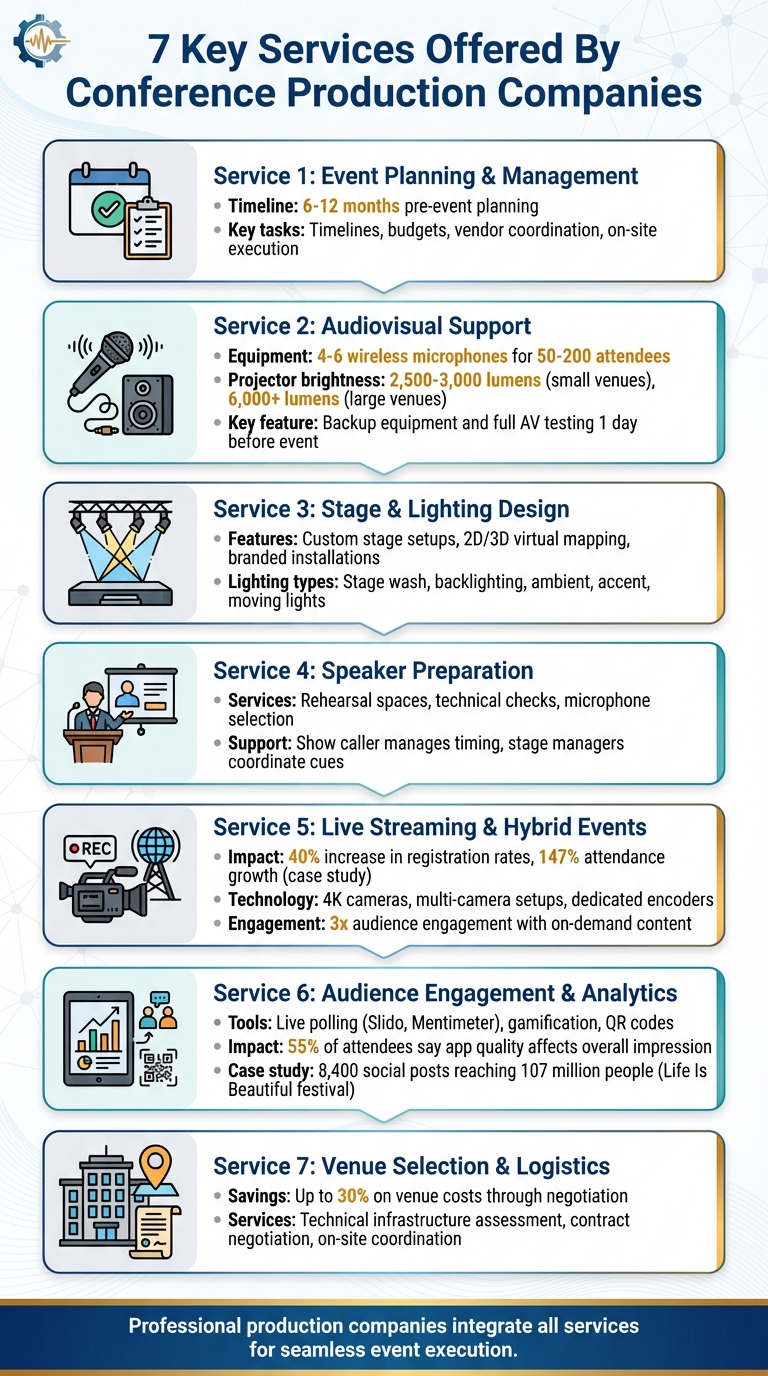
- Event Planning & Management: Oversee timelines, budgets, vendor coordination, and on-site execution.
- Audiovisual Support: Provide and manage sound systems, lighting, displays, and backup equipment for flawless delivery.
- Stage & Lighting Design: Create custom stage setups, scenic elements, and lighting to enhance the atmosphere.
- Speaker Preparation: Offer rehearsals, technical checks, and live event management to ensure seamless presentations.
- Live Streaming & Hybrid Events: Deliver high-quality broadcasts and interactive tools for both in-person and remote audiences.
- Audience Engagement & Analytics: Use tools like live polls and post-event data to boost participation and measure success.
- Venue Selection & Logistics: Choose venues that meet technical needs and handle on-site coordination.
These services simplify event production, reduce risks, and elevate the overall experience for attendees and organizers alike.
7 Key Services Offered by Conference Production Companies
How We Manage To Create A Successful Conference Event
1. Complete Event Planning and Production Management
Conference production companies take charge of every stage of an event, from the initial idea to the final teardown. This all-in-one approach includes creating timelines, allocating budgets, coordinating vendors, and managing on-site execution. By consolidating these responsibilities, they simplify the process, saving you from juggling multiple vendors and technical details. This centralized management ensures a well-coordinated and smoothly executed event.
The planning process typically kicks off 6–12 months before the event, with key pre-production tasks, like booking technical crews, beginning 2–3 months prior. To keep everything on track, production companies create detailed "run-of-show" documents that outline every minute of the live event. They also develop schedules tailored to technical crew workflows and include backup systems to handle unexpected challenges. This level of precision is essential for delivering a seamless and memorable event experience.
Production companies also tap into their extensive networks to secure special deals and discounts, helping you get the most value for your investment while avoiding unexpected costs.
"What I love about these guys is they actually anticipate. They are thinking ahead of things that could come up and coming up with solutions before you even realize that things could be a problem." – Ryan Deiss, CEO, Digital Marketer
Thanks to this comprehensive approach, all event components - audio, video, lighting, and staging - are seamlessly integrated rather than functioning as separate pieces. This significantly reduces your workload, allowing you to focus on your core message while the production team handles the technical complexities.
2. Audiovisual Equipment and Technical Support
When it comes to delivering a seamless conference experience, having the right audiovisual (AV) setup makes all the difference. Conference production companies handle everything from sound systems and projection equipment to video displays and microphones, along with a skilled technical team to ensure that every word is heard clearly and every visual looks polished. These setups are meticulously planned to ensure smooth operations and top-notch performance.
Different types of microphones are used depending on the situation. Lavalier microphones allow speakers to move freely, while handheld microphones are ideal for audience Q&A sessions. Headset microphones provide consistent sound quality for speakers who need hands-free mobility. For medium-sized events with 50–200 attendees, a typical setup might include 4–6 wireless microphones paired with a multi-channel audio mixer to manage sound efficiently.
Visual displays play an equally important role. Projectors are a common choice, with brightness levels tailored to the venue - 2,500–3,000 lumens for dimly lit rooms, and 6,000 lumens or more for larger spaces [31,33]. For well-lit settings, LED walls are often preferred because they deliver sharper, more vibrant images. Lighting is another critical element: stage wash lighting ensures speakers are clearly visible, backlighting helps them stand out on camera, and ambient lighting creates the perfect mood for the event.
"Clarity is key. Your message needs to be heard and seen with precision." – St. Bonavenue
Reliability is non-negotiable in professional AV setups. Backup equipment like extra microphones, cables, batteries, and even secondary laptops are always on hand to avoid disruptions. A full AV test is conducted at least one day before the event, giving the team time to address any issues or replace faulty equipment. For hybrid events, wired Ethernet connections are used instead of Wi-Fi to ensure stable live streaming.
The technical team plays a crucial role in making everything run smoothly. From setup to real-time troubleshooting, they handle the details so speakers can focus on their presentations. Technical directors coordinate every aspect of the show, ensuring that any potential issues are resolved quickly and the event stays on track [39,40]. With this level of expertise, your conference is sure to leave a lasting impression.
3. Stage Design, Scenic Elements, and Lighting
The stage is where your brand’s story takes center stage - literally. Conference production companies transform ordinary venues into immersive environments through custom stage setups, creative scenic designs, and personalized lighting. It all starts with advanced virtual venue mapping, using 2D and 3D schematics combined with real-time renderings. This allows teams to fine-tune the design before the event even begins, ensuring everything aligns perfectly with the technical planning previously discussed.
"Production Design encompasses the process of taking all visual and audio aesthetics of an event production from their first conception into a ready-to-build blueprint." – PORT Lighting
Once the design is approved, it becomes a detailed technical plan that outlines lighting, AV setups, and rigging. Safety is a top priority, so these blueprints are reviewed by structural engineers. From there, in-house artisans bring the vision to life by crafting custom decor elements - such as backdrops, furniture, drapery, and branded installations - that reflect the event’s unique identity.
Lighting plays a pivotal role in shaping the atmosphere and enhancing the audience’s experience. Accent lighting and moving lights add drama to key moments, while laser shows and projection mapping elevate high-energy segments. By pre-programming lighting cues, every effect is perfectly synchronized with the event’s flow, creating a seamless and impactful presentation.
"Stage design is a critical element of event production, shaping the audience's experience and the event's overall impact. A well designed stage captivates your audience, amplifies your message, and blends aesthetics with functionality." – The Catalyst Companies
From custom-built stages to LED video walls, every detail is carefully integrated to reinforce your message and leave a lasting impression on attendees.
4. Speaker Preparation and Show Flow Management
Conference production companies go the extra mile to ensure speakers are fully prepared for their moment on stage. They provide rehearsal spaces designed to replicate the live stage environment, giving presenters a chance to practice while technicians fine-tune the equipment. This preparation phase is critical for identifying and resolving potential technical hiccups.
Audio and visual teams work closely with speakers to test every detail. From checking microphones to ensuring slide decks display seamlessly and remote clickers work without a hitch, nothing is left to chance. They even help speakers decide on the best microphone type for their presentation style - whether it’s a headset for freedom of movement, a lavalier for a subtle look, or a handheld for better control. These meticulous tests are designed to address issues before they can impact the live event.
"When your speakers are prepared, they'll deliver their best, and you'll know everything is running smoothly - leaving you free to focus on the bigger picture." – DCE Productions
Once rehearsals and technical checks are complete, the focus shifts to managing the live event. This is where precise show flow management becomes essential. Stage managers play a key role, coordinating real-time cues to keep everything on schedule and ensuring smooth transitions between segments. Production teams handle content logistics by collecting and formatting slide decks, as well as preparing onboarding packets for speakers. These packets often include technical details, audience insights, and potential Q&A topics to help speakers feel confident and ready.
A dedicated show caller oversees the entire run of show, carefully timing each segment to ensure that one speaker running late doesn’t derail the event. This level of support allows speakers to focus solely on delivering their message, while the production team takes care of the technical and logistical details.
sbb-itb-ae35a94
5. Live Streaming and Hybrid Event Production
Today's conference production companies approach hybrid events as two separate yet synchronized productions - one tailored for in-person attendees and the other for remote participants. Each audience requires its own technical setup. For the live stream, this means using dedicated encoders, 4K cameras, and custom audio mixes. Meanwhile, the physical venue relies on equipment like PA systems, stage lighting, and LED walls. Together, these elements ensure a smooth and professional broadcast.
A solid live stream depends on backup systems like cellular bonding, extra encoders, and multi-bitrate streaming to avoid disruptions. For instance, Corporate Optics has successfully combined high-quality RED cameras with an L-Acoustics SYVA audio system and Shure Axient microphones to deliver high-caliber productions.
Engaging remote audiences requires more than simply pointing a camera at the stage. Production teams often assign a virtual moderator to oversee online chat, troubleshoot technical issues, and relay questions from remote participants to on-stage speakers. Interactive tools like live polls, Q&A features, and networking platforms are integrated into a unified system accessible to both in-person and virtual attendees. This strategy has tangible benefits - organizations that include virtual elements in their events report a 40% increase in registration rates, breaking down barriers like travel costs and location constraints. These interactive features not only keep viewers engaged but also enhance the overall experience for remote audiences.
"Hybrid events are, and will be, a balancing act of entertaining and catering to the needs of live and virtual audiences at the same time, creating a memorable event experience on both sides of the camera." - AV Alliance
For remote viewers, production quality is crucial. Multi-camera setups, managed with professional software like vMix or Wirecast, create a polished broadcast that feels far more professional than a basic webcam feed. Additional touches like custom motion graphics, speaker name overlays, and branded tickers elevate the virtual experience. One industrial technology firm that shifted its major event to a hybrid format saw attendance grow by an impressive 147%. Plus, the value of recorded content extends well beyond the live event - on-demand access can triple audience engagement long after the conference wraps up.
6. Audience Engagement Tools and Event Analytics
Conference production companies are turning to interactive technologies to captivate audiences and gather valuable insights. Tools like Slido and Mentimeter allow live polling during presentations, giving speakers real-time feedback to adjust their content as needed. These platforms also create visually engaging word clouds to reflect audience sentiment, while moderated Q&A features enable participants to anonymously upvote the most pressing questions, ensuring the discussion stays relevant. Such features set the stage for effective engagement strategies that go beyond passive participation.
Gamification takes audience involvement to the next level, especially during multi-day events. Activities like digital scavenger hunts, trivia games on platforms such as Kahoot, and leaderboards motivate attendees to explore exhibit halls and interact with sponsors. For example, at the Life Is Beautiful festival, organizers used Everwall to showcase over 8,400 social media posts in real time. This approach reached more than 107 million people, generating buzz both inside and outside the venue. Physical tools like Catchbox - a throwable microphone - solve logistical challenges in large rooms, making audience participation easier and more dynamic.
Post-event analytics provide a treasure trove of insights. Data reveals which sessions were the most popular, where attendees lost interest, and when engagement peaked. Companies like AWS and 6sense are taking this a step further by using platforms like Bizzabo to directly link engagement metrics to business outcomes, such as pipeline growth and revenue. This data-driven approach shifts the focus from subjective impressions to measurable results, offering clear justification for budgets and actionable insights for future events.
"An event's success isn't measured by the number of people who show up. It's measured by how well the attendees understand, absorb, and implement the content." – innoVia Productions
Streamlining engagement tools also plays a key role in enhancing the attendee experience. Production companies often recommend consolidating multiple functions into a single platform to avoid overwhelming participants. Instead of requiring several app downloads, one integrated platform can handle everything from live polling to networking. QR codes simplify the process even further, providing instant access to engagement features without the need for additional installations. This streamlined approach not only improves functionality but also aligns with the seamless execution attendees expect. In fact, 55% of participants say the quality of an event app significantly impacts their overall impression of a conference.
7. Venue Selection and On-Site Logistics
Venue selection and on-site logistics are the final pieces that bring an event production together. Choosing the right venue isn't just about size; it’s about ensuring the space can meet the technical demands of the event. Production companies carefully assess technical infrastructure - like AV capabilities, rigging points, power supply, and internet bandwidth - to make sure the location can handle complex setups. They also analyze floor plans and attendee flow to ensure the venue layout complements the event's goals rather than causing logistical headaches. Addressing these factors early ensures the space aligns with the production's needs.
Negotiating venue contracts is another critical step. Experienced production companies can save clients up to 30% on venue costs by leveraging pre-negotiated rates and strong industry relationships. They also manage legal details, from union labor rules to venue-specific regulations, which can trip up less experienced teams. Starting negotiations early not only secures better pricing but also ensures access to the most suitable venues.
On the event day, the production team takes charge of execution. Acting as on-site representatives, they handle vendor coordination, direct staff, and resolve issues in real time, allowing clients to focus on engaging with their attendees. For example, in June 2025, Events of a Lifetime Productions organized the "Summit of Success" for ManpowerGroup’s 1,300 top performers at The XCaret Arte in Mexico. Over four days, they delivered nine immersive events, creating unique experiences that reflected the company’s culture. Senior leadership called it a perfect embodiment of their values.
"Your role is the host of the event... Leave the logistics onsite to us." – GoGather
Even after the event concludes, the work doesn’t stop. Production teams oversee teardown and equipment storage, managing everything from dismantling AV setups to removing signage. At the NRA 2025 in Chicago, Fellsway Media handled the construction and dismantling of a 22-foot-high suspended tent structure at McCormick Place. The circus-themed activation left a lasting impression, generating strong brand recall long after the event.
Service Comparison Tables
Choosing between managing events internally or hiring a production company boils down to factors like cost, risk, and technical expertise. Internal teams often deal with ongoing staffing expenses and lack the vendor relationships needed to negotiate better deals. As Pierre Metrailler, CEO of SpotMe, points out, while event management companies provide a project manager, production companies bring in specialized technicians to handle complex audio-visual needs. Internal teams frequently encounter issues like poor planning, disorganization, and equipment malfunctions. In contrast, production companies minimize these risks with backup systems and seasoned troubleshooting expertise. Additionally, production companies offer access to high-end equipment, such as LED studios, 4K transmission systems, and advanced staging setups - resources typically beyond the reach of in-house teams. This sets the stage to compare how these elements distinguish internal teams from professional production companies.
| Feature | In-House Event Management | Conference Production Company |
|---|---|---|
| Cost | Ongoing internal staffing expenses; risk of budget overruns due to limited vendor leverage | Project-based pricing; savings through established supplier networks |
| Risk | Higher likelihood of poor planning, disorganization, and technical issues | Lower risk with expert onsite troubleshooting and risk management |
| Technical Capability | Generalist staff with basic in-house AV equipment | Specialized technicians, LED studios, 4K transmission, and advanced staging |
Beyond these essential factors, advancements in audience engagement tools further emphasize the advantages of hiring production companies. Modern AI-driven platforms now enable real-time, data-responsive visuals, automated reporting, and CRM integration, elevating the overall event experience.
| Feature | Standard Engagement Tools | AI-Powered & Advanced Solutions |
|---|---|---|
| Interaction | Basic mobile apps, Q&A sessions, and printed delegate materials | AR/VR experiences, real-time polling, and AI-generated audio content |
| Data Analysis | Manual feedback collection and simple attendance tracking | Predictive analytics, data-driven strategies, and automated performance reports |
| Accessibility | Basic live streaming and traditional signage | Live interpretation, AI-guided onboarding, and interactive wayfinding |
These comparisons demonstrate how professional production services can elevate every aspect of an event. From meticulous planning to advanced audience engagement, production companies ensure a seamless experience that aligns perfectly with your objectives.
Conclusion
Production management acts as the backbone of any successful event, seamlessly connecting pre-production planning, on-site coordination, and post-event analysis to bring your brand's vision to life. It’s the key to turning ideas into flawlessly executed realities.
As highlighted earlier, the difference between a good event and one that runs without a hitch often lies in the technical expertise and experience of your production partner. For many organizations, technology poses a significant challenge. That’s why having a partner with in-depth technical knowledge is critical - they can navigate complex audiovisual setups, lighting systems, and staging requirements, ensuring everything runs smoothly.
Corporate Optics delivers on this promise with Emmy Award-winning expertise and advanced, AI-powered production methods. As a partner of prompts.ai - an innovative platform designed to streamline corporate meeting and event production - Corporate Optics combines broadcast-level quality with cutting-edge technology. This approach embodies the essential services discussed throughout this article, showcasing the importance of working with a specialized production partner.
FAQs
How do conference production companies boost audience engagement during events?
Conference production companies enhance audience engagement by incorporating interactive elements such as live polls, Q&A sessions, surveys, and real-time feedback tools. These features not only encourage active participation but also help attendees feel more involved and connected throughout the event.
Additionally, they facilitate networking and collaboration opportunities, whether the event is in-person, virtual, or hybrid. With reliable technical support and captivating content, these companies ensure participants remain engaged and walk away with a memorable and rewarding experience.
How does technical support contribute to a successful conference?
When it comes to pulling off a successful event, technical support is the backbone that keeps everything running smoothly. From managing audiovisual equipment to overseeing lighting and staging, their job is to ensure that all the technical elements work flawlessly. This expertise not only prevents hiccups but also ensures that any unexpected issues are resolved quickly, so presentations and performances stay on track.
By taking care of these critical details, the technical team frees up event organizers to focus on what matters most - delivering engaging content and connecting with the audience. The result? A polished and seamless experience that leaves a lasting impression on everyone involved.
Why is choosing the right venue essential for a successful conference?
Choosing the perfect venue is a key factor in making your conference successful and memorable. The venue not only establishes the atmosphere of the event but also affects the technical arrangements and shapes the overall experience for attendees.
An ideal venue offers enough room for audiovisual equipment, stage setups, and interactive activities, while also ensuring it meets safety standards and accessibility needs. Details like its location, parking availability, and adherence to local regulations are equally important to ensure a smooth, professional event that connects with your audience.
Related Blog Posts


Streamline your workflow, achieve more

Lorem ipsum dolor sit amet, consectetur adipiscing elit. Maecenas ac velit pellentesque, feugiat justo sed, aliquet felis.



Lorem ipsum dolor sit amet, consectetur adipiscing elit. Maecenas ac velit pellentesque, feugiat justo sed, aliquet felis.