Ultimate Guide For What Production Companies Offer When Producing Your Annual Conference

Chief Executive Officer
Planning an annual conference is a complex task, but production companies simplify the process. They manage everything from audiovisual setups and stage design to hybrid event technology and post-event analysis. Here’s what they offer:
- Audiovisual Services: High-quality sound systems, video production, and lighting to create clear, engaging presentations.
- Stage Design: Custom-built stages, layouts, and scenic elements tailored to your brand and event goals.
- Hybrid & Virtual Event Support: Live streaming, webcasting, and tools for connecting in-person and remote audiences seamlessly.
- Event Technology: Tools like live polling, Q&A platforms, and content management systems to engage attendees and streamline operations.
- Logistics & Planning: Venue sourcing, vendor coordination, budget management, and risk planning to ensure smooth execution.
- Post-Event Reporting: Detailed metrics, attendee engagement data, and session recordings to evaluate success and improve future events.
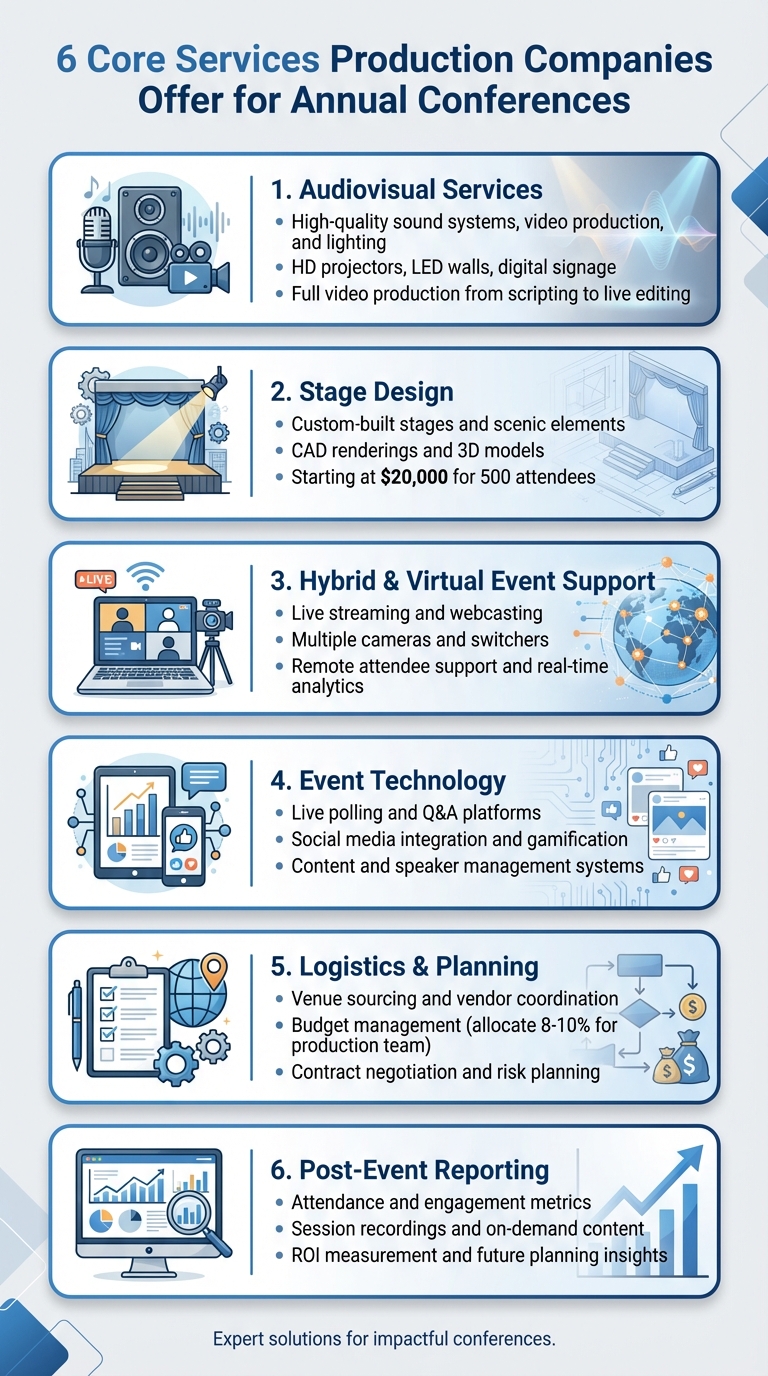
6 Core Services Production Companies Offer for Annual Conferences
How to Source an A/V Vendor for Your Next Event - Part #1: Why & When - Logan Clements
Audiovisual Services for Professional Presentations
Audiovisual equipment plays a key role in making any conference successful. Production companies offer a full range of AV solutions to ensure your speakers are heard clearly, your visuals are sharp, and your message resonates with every attendee - whether they’re in the front row or tuning in remotely.
Audio and Video Solutions
A great sound system starts with understanding the venue’s acoustics and the size of the audience. Production companies provide everything from PA speakers and monitors to audio consoles and a variety of microphones - wireless, handheld, and lavalier - to ensure crystal-clear sound. On the video side, they offer HD projectors, LED walls, digital signage, and media playback systems. Many companies also handle full video production, covering everything from scripting to live editing.
"Meeting planners and event designers appreciate having AV technology, support, and creative content all from a single provider. Working with studioAVFX streamlines event production and delivers peace of mind." - AVFX
To elevate presentations even further, they incorporate design services, motion graphics, and 3D modeling, while also managing speaker sessions and providing essential backup equipment to keep things running smoothly.
Lighting Design for Atmosphere and Focus
Lighting does more than just brighten a room - it sets the mood, directs attention, and reinforces your brand. Production companies use cutting-edge lighting systems, including LED fixtures, moving lights, and special effects, to craft dynamic environments. They create tailored lighting plans based on your event’s theme, often using 3D renderings to give you a clear preview of the setup.
"Turnkey AV systems for conferences - featuring immersive LED lighting, crisp sound, and seamless integration for ballrooms or general sessions." - 22nd Avenue Entertainment Logistics
Proper lighting ensures speakers are highlighted during key moments, adds visual interest during transitions, and keeps your branding front and center. Whether it’s a large general session or an intimate executive meeting, lighting designs are customized to fit the scale and tone of your event.
Hybrid and Virtual AV Support
Planning a hybrid or virtual conference? These setups demand advanced technical expertise. Production companies handle live streaming, webcasting, and video conferencing to seamlessly connect in-person and remote participants. This includes everything from encoding and platform configuration to registration management, remote attendee support, and real-time analytics for tracking engagement.
The technical setup often involves multiple cameras, switchers, monitors, and reliable internet connections. Professional teams operate the equipment, manage live streams, troubleshoot issues, and even moderate online chats to ensure smooth interaction between physical and virtual audiences. Presenters can either use their own laptops or rely on centralized systems for consistent quality across sessions.
"Our experts can be your go-to media production resource or an extension of your marketing team. We can handle field work at trade shows and conferences when you can't." - AVFX
Contingency planning is a must for hybrid events. Production teams build redundancies into their systems, such as backup internet connections, spare equipment, and dedicated technical support for remote attendees, ensuring your event stays on track even if technical issues arise.
These comprehensive AV solutions are the foundation of engaging stage designs and seamless event technology, paving the way for smooth and impactful conference planning.
Stage Design and Scenic Production
A well-designed stage is more than just a platform - it’s the centerpiece of your event. It sets the tone, conveys your brand message, and leaves a lasting first impression. Production companies specialize in creating custom stages that align seamlessly with your event's audiovisual elements, ensuring everything works together to amplify your brand.
Custom Scenic Design and Fabrication
Custom stage design starts with turning your brand vision and event goals into detailed CAD renderings and 3D models. These tools allow you to preview the stage from every angle, suggest changes, and finalize the design long before the event takes place.
The fabrication process covers a wide range of elements, including backdrops, stage structures, props, drapes, and even furniture tailored to your event’s theme. For example, Repertoire Productions once created custom stage pieces, laid down specialty carpeting for a unique venue, and built a backlit stage with adjustable colors. The result? A visually stunning setup that elevated the event’s professionalism and left a strong impression.
"Your event needs to look and sound better than previous events, and stay fresh with modern expectations." - Repertoire Productions
For events with around 500 attendees, stage design packages typically start at $20,000, with costs increasing based on factors like LED screen size, custom-built elements, and the complexity of the setup. If you’re planning multiple events, consider modular stage components that can be reused and adapted for various venues. This approach not only ensures consistency across events but also helps reduce long-term costs.
For those working with tighter budgets, prioritizing high-impact elements like dynamic lighting, bold screen graphics, and professional rental items (e.g., stylish on-stage seating) can transform the stage without overspending.
Once the stage design is finalized, the next step is strategic layout planning to ensure every attendee has a great view.
Stage and Room Layout Planning
After designing a standout stage, careful planning of the room layout ensures maximum engagement and safety. Production teams account for factors like stage dimensions, placement, and height, tailoring these to the venue and audience size. They also map out sight lines for every seat, plan backstage access, and incorporate ADA-compliant ramps and entrances seamlessly.
Using 3D renderings and CAD drawings, production companies can visualize the entire space. This includes rigging plots for safely suspending heavy equipment like LED walls and advanced lighting systems. These technical plans are shared with venue staff to ensure all safety and compliance measures are addressed before setup begins.
"The stage isn't just where the action happens - it's where attention is focused, expectations are set, and first impressions are made." - Eagle Production Co
The best layouts go beyond the stage, treating the entire venue as a cohesive experience. From entryways to lounges and hallways, every space can be activated to reinforce your message. This holistic approach ensures that your branding and event theme resonate from the moment attendees walk through the door, creating a seamless and memorable experience.
Event Technology for Engagement and Efficiency
Production companies go beyond just setting up the stage and handling audiovisuals. They use technology to turn passive attendees into active participants while streamlining behind-the-scenes operations. These tools make conferences more interactive and ensure everything runs smoothly, creating a seamless connection between creative production and logistical execution.
Audience Engagement Tools
Interactive tools like live polling, Q&A platforms, social media integration, and gamification are game-changers for audience participation. These tools encourage attendees to actively engage, improve retention, raise event awareness, and provide real-time feedback. For example, live polling allows you to gauge audience opinions instantly, while gamification can inject some fun into the event, keeping energy levels high.
The data collected during these interactions is invaluable. It shows what resonates with your audience, giving you the flexibility to tweak messaging during the event or refine future strategies based on measurable insights. The ultimate goal? Build a sense of community and keep attendees engaged from start to finish.
Content Management and Speaker Support
Managing the technical side of presentations is another key responsibility of production teams. For example, ON Services highlights "Content and Speaker Management" as one of their main services, emphasizing their ability to enhance attendee engagement at conferences and meetings. This process includes collecting presentation files - whether PowerPoint, Keynote, or Google Slides - well in advance to ensure they’re formatted correctly and technically compatible.
Technical run-throughs are scheduled early, ideally at least 10 business days before the event, to ensure everything is in place and properly staffed. During the event, production teams fine-tune audiovisual cues, manage stage transitions, and quickly address any technical hiccups. On-site technical staff are always on hand to troubleshoot and provide real-time support, ensuring your agenda stays on track without interruptions.
Venue Technology Planning
Even the most innovative stage design won’t work if the venue’s infrastructure can’t handle it. That’s why production companies perform thorough site surveys to assess essentials like power availability, internet speeds, rigging points, and space dimensions. They also prepare contingency plans with backup equipment to handle any unexpected challenges.
This meticulous planning ensures that all conference technology integrates smoothly with the venue’s systems. For example, production teams can adjust streaming quality to match the venue’s internet capacity, avoiding frustrating lags and ensuring a high-quality experience for remote attendees. By addressing these technical details upfront, they eliminate potential headaches, allowing you to focus entirely on delivering great content without worrying about connectivity or equipment issues.
sbb-itb-ae35a94
Event Planning and Logistics
Production companies take charge of every detail to ensure your conference runs smoothly from start to finish. They handle vendor coordination, contracts, budgets, and even backup plans, making sure everything aligns with your vision. These essential services integrate seamlessly with advanced stage design and technology solutions.
Venue Sourcing and Vendor Coordination
Choosing the right venue goes beyond just finding a space - it’s about finding the perfect fit. Production companies evaluate venues like hotels, convention centers, or unique destinations based on attendee accessibility, space needs for sessions and networking, and how well the location matches your event's theme and budget. They also review proposals and negotiate vendor contracts, securing favorable terms while minimizing risks.
"Sourcing is so much more than site selection. Anyone can research and book a venue. We're here to bring more to the table"
Their role extends to identifying and vetting suppliers worldwide, coordinating audiovisual services, catering, entertainment, event staffing, transportation, and security.
"During our annual event, Maritz assisted with three off-site events over a two-day period. They expertly negotiated great pricing and provided awesome customer service. And they helped us leverage our proposals through a structured review process"
Budget Planning and Cost Management
Staying within budget while delivering a high-quality event requires both expertise and strong industry connections. Production companies create detailed budgets, continuously monitor expenses, and reconcile costs. They also suggest cost-saving alternatives for audiovisual needs and leverage their buying power to negotiate savings.
"Working with AMP Events was heaven-sent. They consulted us every step of the way to assist us from design to alternative cost saving options for AV requirements to stay within budget"
Some companies even share hotel commissions with clients when managing the entire event. A good rule of thumb is to allocate about 8–10% of your event budget for the production team - excluding costs for lighting, AV, decor, and printed materials - to ensure smooth execution.
Contingency Planning and Risk Management
No matter how well you plan, unexpected challenges can arise. Production companies prepare for these by developing contingency plans and troubleshooting strategies well in advance. This includes having backup equipment, alternative vendor contacts, and experienced teams ready to adapt to any changes.
"The team's professionalism and ability to problem solve made our experience worry free"
Post-Event Analysis and Reporting
The event doesn’t end when the last session wraps up. Production companies step in to provide detailed analysis and reporting, helping you measure the event’s success. They look at key factors like registration goals, actual attendance, and feedback on speakers and topics. This information reveals whether your event achieved its goals and highlights areas for improvement.
These companies also evaluate how well your event supported networking and lead generation. By working with you to define specific Key Performance Indicators (KPIs), they ensure the analysis aligns with your event strategy. To gauge overall attendee satisfaction, post-event surveys are conducted. Detailed metrics, such as attendance and engagement breakdowns, are then used to guide future planning.
Attendance and Engagement Metrics
Knowing who attended and how they engaged is essential for planning your next event. Production companies compare registration numbers to actual attendance, track participation in sessions, and compile reports on attendee behavior. These insights help you understand the event’s impact.
Custom dashboards are often used to highlight trends and audience preferences. For instance, BI WORLDWIDE - a company that organizes 3,000 events annually across more than 30 countries with a 98% client retention rate - emphasizes the importance of measuring return on investment (ROI).
"If you aren't getting a positive return, your event wasn't an investment. It was an expense. Do it right. Let us help." – BI WORLDWIDE
On-Demand Content and Recorded Sessions
Recorded sessions add another layer of insight to live event metrics. Production companies manage these recordings, analyze their performance, and handle attendee follow-ups. These recordings are not only valuable for those who couldn’t attend but also serve as a resource for future marketing efforts.
Conclusion
Pulling off a successful annual conference takes a mix of skills, careful planning, and strong industry connections. That’s where production companies shine - they bring the expertise needed to tackle challenges and transform them into seamless, memorable events.
From handling vendor negotiations and securing permits to managing risks, these professionals take the weight off your team’s shoulders. This allows your staff to focus on what they do best while also benefiting from better rates and cost efficiencies. And let’s not forget - your brand’s reputation rides on the quality of your event. Production companies ensure everything runs smoothly, leveraging advanced equipment and proven systems to perfect every detail, from lighting and sound to live streaming and content management. Their preparation helps keep disruptions at bay.
Even after the event, their role doesn’t end. Post-event analysis and repurposing content extend your return on investment and provide insights for future planning. Whether it’s a hybrid conference for hundreds or a private leadership meeting, partnering with seasoned professionals ensures your event not only meets your goals but also leaves a lasting impression on attendees. That level of support is what makes working with experts invaluable.
FAQs
What should I look for when selecting a production company for my annual conference?
When selecting a production company for your annual conference, it's important to evaluate their experience, service offerings, and how well they can align with your event's unique objectives. Ideally, the company should provide a full suite of services, including audiovisual setup, stage design, event technology, and tools to enhance audience engagement.
It's also worth reviewing their history with similar events. Pay attention to how they handle details and manage logistics - these factors can make or break your event. The right production partner will not only keep everything running seamlessly but also create an experience that leaves a lasting impression on your attendees.
How do production companies seamlessly integrate technology for hybrid and virtual events?
Production companies play a crucial role in seamlessly blending hybrid and virtual event technology. They handle all the technical elements, from setting up and operating audiovisual gear to managing live streaming tools and interactive platforms. The goal? To create a unified experience that works equally well for both in-person and remote audiences.
These teams don’t just stop at the basics - they adapt their approach to fit your event’s unique requirements. Whether it’s ensuring a strong and stable internet connection, coordinating dynamic camera angles, or adding interactive features like live polls and Q&A sessions, they’ve got it covered. Their know-how guarantees a polished and engaging experience for everyone involved.
What should I budget for when hiring a production company for my annual conference?
When organizing your annual conference, collaborating with a production company can be a major part of your budget, but it’s key to delivering a professional and well-executed event. Plan to set aside about 8-10% of your total event budget for production services. This typically includes essentials like audiovisual equipment, stage design, event technology, and logistical coordination.
To make the most of your investment, schedule a meeting with the production company to outline your goals and priorities. They can help you figure out what’s possible within your budget and offer practical solutions to ensure your conference runs smoothly and leaves a lasting impression.
Related Blog Posts


Streamline your workflow, achieve more

Lorem ipsum dolor sit amet, consectetur adipiscing elit. Maecenas ac velit pellentesque, feugiat justo sed, aliquet felis.



Lorem ipsum dolor sit amet, consectetur adipiscing elit. Maecenas ac velit pellentesque, feugiat justo sed, aliquet felis.