Leading Meeting Production Are Companies That Specialize In Event Design, Audiovisual (AV) Services, Staging, Streaming.

Chief Executive Officer

Corporate events demand flawless execution. From event design to AV production, staging, and streaming, top meeting production companies bring together technical expertise and creative solutions to elevate the attendee experience. Here's what makes them indispensable:
- Event Design: Transform venues into immersive environments that align with your brand and goals.
- Audiovisual (AV) Services: Ensure clear communication with advanced audio, video, and lighting systems.
- Staging: Create impactful physical platforms that enhance visibility and engagement.
- Streaming: Expand your event's reach with high-quality hybrid and virtual setups.
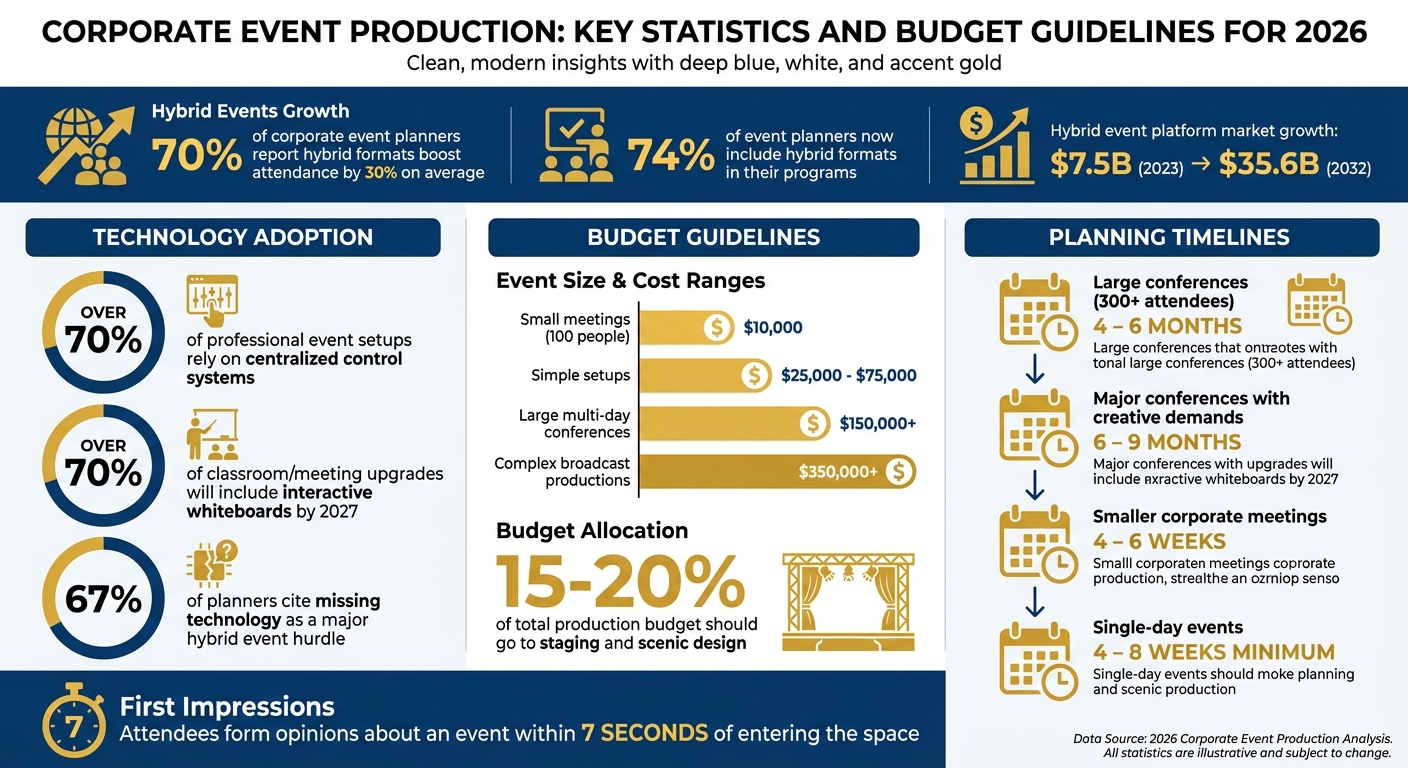
Corporate Event Production Statistics and Budget Guidelines 2026
📡 Behind the Scenes: Pro AV Setup for 3-Day Corporate Conference #AxientDigital #YamahaDM7
sbb-itb-ae35a94
Event Design: Creating Immersive Experiences
Event design has transformed corporate meetings into multi-sensory experiences that leave a lasting impact. Top production companies now approach venues as immersive stories, where layouts guide attendees through purposeful experiences, and branded visuals and installations communicate the event’s core message. This approach turns attendees from passive spectators into active participants, engaging them on a deeper level.
Guy Zwick explains it best:
"When senses are fully activated, attendees feel immersed in the experience, not just present in the room."
This means lighting isn’t just about visibility - it sets the mood. Audio systems are designed for clarity and comfort, while dimensional scenic elements add depth for both live attendees and on-camera presentations. Every detail is considered, from the moment guests arrive and register to how they interact in networking areas and what they take away at the end. Each space is crafted to serve a specific purpose.
The Importance of Planned Event Design
Good event design starts with a clear vision of what the event should achieve. As ShowREADY emphasizes:
"Great event AV doesn't start with gear. It starts with outcomes."
Production teams focus on defining how attendees should feel or act - whether the goal is learning, networking, or inspiration. From there, they select the technology and layouts that align with these objectives.
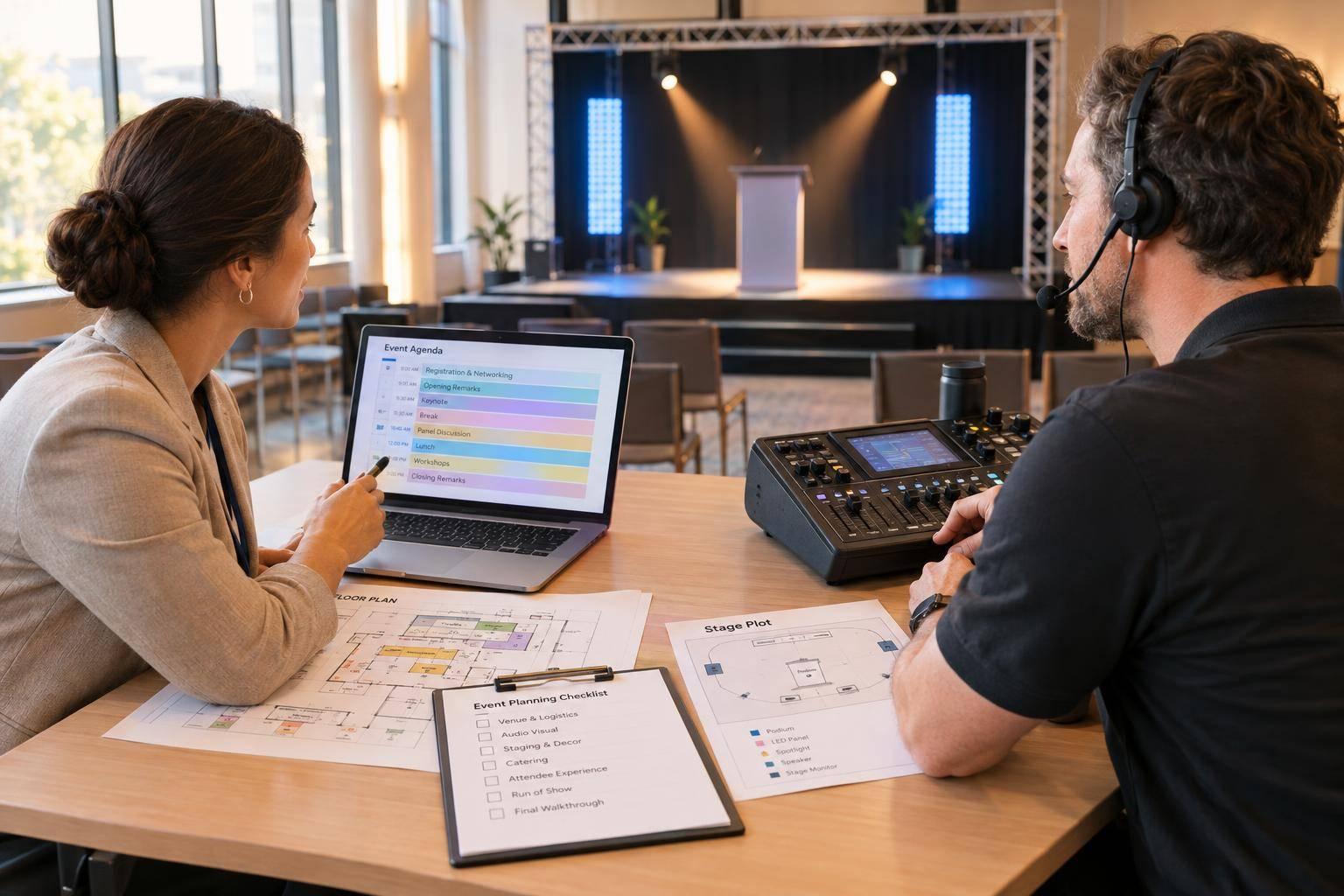
Timelines are critical for successful execution. Large-scale conferences or events with heavy creative demands often require six to nine months of planning, while smaller corporate meetings typically need four to six weeks. Engaging production partners early in the process allows for smarter budgeting and more efficient room designs. By aligning on goals from the start, production teams can use modern tools to bring these visions to life.
Tools and Techniques in Modern Event Design
Once the outcomes are defined, advanced tools help production teams design events with precision. For example, 3D modeling and virtual walkthroughs allow teams to visualize every detail - stage layouts, lighting positions, video elements - before anything is built. Tools like Vectorworks provide renderings that eliminate uncertainty, enabling confident approvals and identifying potential issues early.
LED walls have become more than just backdrops. By 2026, they’re used to create layered scenic designs that seamlessly integrate branding into the stage itself. As American AV, a company managing over 1,100 events annually in more than 60 cities, puts it:
"In 2026, the question isn't if you use LED - it's how intentionally you design with it."
Other creative techniques include projector mapping for dynamic effects, modular backdrops that adapt to multi-city events, and second-screen technology that enhances real-time interaction. The goal has shifted from simply filling a room to crafting experiences that resonate in person and translate effectively into post-event marketing content.
Audiovisual (AV) Services: Enhancing Communication
Audiovisual services are the foundation of any successful corporate event. Whether it’s the speaker’s microphone, presentation slides, or stage lighting, AV systems ensure clear and impactful communication. For gatherings with 50 or more attendees, professional AV production creates polished, engaging experiences.
Working with third-party AV providers gives access to cutting-edge technology. These providers allocate more of the budget toward high-quality equipment and seamless execution, rather than venue commissions.
Key Components of AV Services
The effectiveness of AV production relies heavily on its core elements. For audio, systems include digital mixing consoles, wireless microphones, line array speakers, and amplifiers - all designed to ensure every word is crystal clear. Visual technology features high-definition projectors, LED video walls, multi-screen displays, and confidence monitors to help speakers stay on track. Lighting design plays a crucial role, with stage lights, spotlights for key speakers, and precise lighting cues that enhance both the atmosphere and visuals for cameras.
Behind the scenes, technical direction is vital. A Technical Director oversees the crew, manages camera switches, coordinates signal flow, and resolves any technical issues in real time. For hybrid events, multi-camera setups with live switching integrate seamlessly with platforms like Zoom or Teams, allowing remote participants to engage fully.
Specialized infrastructure also supports complex events. This includes rigging systems for equipment safety, robust IT networks for reliable connectivity, and simultaneous interpretation services for international audiences. For a 100-person meeting, costs might start around $10,000, while larger, multi-day conferences can exceed $150,000. Smaller events with budgets under $5,000 may manage with in-house AV, but larger productions benefit greatly from expert partners.
Leveraging Advanced Technology
By 2026, LED walls are expected to be a staple in event design, offering dynamic, adaptable backdrops that enhance both live and recorded content. The focus isn’t just on using LED technology - it’s about designing it with intention to leave a lasting impression.
Interactive tools are also reshaping events, turning passive audiences into active participants. For example, over 70% of institution-wide classroom and meeting upgrades are projected to include interactive whiteboards by 2027, which encourage collaboration and engagement. Modern AV providers offer flexible payment options like AV as a Service (AVaaS), bundling equipment and support into manageable monthly costs with automatic upgrades. Additionally, more than 70% of professional event setups now rely on centralized control systems, which integrate various components into a unified operation. This technology not only captivates attendees but also ensures smooth event execution.
Timelines for booking AV services are crucial. Large conferences with 300+ attendees typically require 4 to 6 months of preparation, while single-day events need at least 4 to 8 weeks. Early collaboration with AV partners helps optimize budgets and room layouts from the outset. As Susan Beardsley from Diversified puts it:
"Corporate event AV services sit at the intersection of strategy, storytelling, and technology."
This thoughtful approach ensures technology supports the event’s goals, rather than dictating them. With advanced AV systems integrated into expert event design and execution, every event can achieve a seamless and impactful experience.
Staging: Setting the Scene for Success
When paired with thoughtful event design and AV integration, staging turns ideas into memorable, immersive experiences. The stage isn't just a physical platform - it's the heart of your event, shaping first impressions and setting the tone. Attendees often form an opinion about an event within just 7 seconds of entering the space. That makes the stage not just a focal point but a visual and emotional anchor for your event. A well-planned stage grabs attention, minimizes mental fatigue, and reinforces your brand in a powerful way.
"The stage isn't merely a physical platform - it's the visual and emotional epicenter of your conference." - White Massif Industry Insights
Staging works hand-in-hand with AV setup. For example, the placement of screens can impact lighting and enhance visuals for both in-person and virtual audiences. For large-scale conferences, conference event production planning should start 6–9 months in advance to ensure all stage-specific elements are accounted for. Allocating 15–20% of the total production budget to staging and scenic design is a good rule of thumb. This early planning ensures clear sightlines, effective layouts, and a seamless experience for everyone.
Designing Effective Stage Layouts
The best stage layouts prioritize clear visibility for all attendees, no matter where they're seated. Start with platform height: use 8-inch risers for small gatherings, 16-inch risers for mid-sized rooms, and 24-inch risers for large venues to ensure everyone has a clear view. For the best screen visibility, aim for a screen width that’s one-sixth the distance to the back row.
Stage depth is just as crucial. Speakers need enough room to move naturally, and cameras require proper angles to capture presentations effectively. For hybrid events, lighting must meet broadcast standards, and camera placements should provide clear shots for virtual attendees. While traditional front-facing stages work well for formal setups, 360-degree designs create a more intimate feel, making every seat feel like the front row. However, these layouts require advanced audio and lighting solutions to avoid shadows and ensure consistent coverage.
A standout example of innovative staging is Drake's "Some Special Songs 4 EU" tour in October 2025. The production featured two stages connected by transparent acrylic walkways, a massive 180-foot by 50-foot mothergrid, and a kinetic lighting rig with 16 automated trusses supporting 112 motorized platforms. Creative lead Matte Babel explained:
"I was inspired by the simplicity of galleries that were minimal with a slightly raw and industrial feel. Spaces where lighting brings the art to life."
Modern Staging Materials and Techniques
Modular staging systems have revolutionized event production. These platforms are reconfigurable, require no tools, and adapt to different venue sizes and formats. Typically, they support loads of 125–150 pounds per square foot, and the investment often pays off after just three uses.
The choice of surface materials can significantly impact both functionality and aesthetics. Carpet-finished decks reduce noise from footsteps and dropped items, while custom vinyl wraps offer a chance to incorporate branding directly into the stage. For more formal events, polished wood finishes provide a sleek, professional look.
LED video walls have become a cornerstone of modern staging. Indoor LED walls need brightness levels of 800–1,500 nits, while outdoor setups require 5,000–10,000 nits. For close viewing distances (under 10 feet), a pixel pitch of P2.5–P3 is ideal. For larger venues, P3.91–P4.81 is more effective. While LED walls cost three to five times more than projection systems, their superior brightness and color performance make them worth the investment.
Sustainability is also becoming a priority in staging. Materials like FSC-certified wood, bamboo panels, recycled fabrics, and biodegradable elements allow event organizers to reduce their environmental footprint without sacrificing quality. Biophilic design - using elements like living walls, natural wood, and stone - has been shown to boost creativity and attendee well-being.
Minimalist stage designs, with clean lines and strategic use of negative space, keep the focus on speakers and their content. This approach works especially well for executive briefings and data-heavy presentations. Energy-efficient LED lighting systems, which use up to 75% less energy than traditional options, complement this style perfectly.
For hybrid events, the stage must cater to both in-person and virtual audiences. This means optimizing camera angles, ensuring broadcast-quality lighting, and incorporating dedicated streaming production areas into the design. Guy Zwick from Highway 85 Productions sums it up well:
"When corporate event AV works well, no one notices it. Speakers are clear, visuals are easy to see, and the stage supports the message. When it is done poorly, it becomes the only thing people talk about." - Guy Zwick, Highway 85 Productions
These staging innovations seamlessly tie into an integrated event design approach, elevating the experience for live and hybrid audiences alike.
Streaming: Expanding Event Reach
Streaming has transformed events from local gatherings into global experiences. By breaking down geographical barriers, it allows executives, clients, and partners from all over the world to participate without the hassle of travel. 70% of corporate event planners report that hybrid formats have boosted attendance by an average of 30%. The hybrid event platform market is also on a rapid growth trajectory, projected to hit $35.6 billion by 2032, up from $7.5 billion in 2023.
But streaming isn’t just about broadcasting - it’s about creating a fully interactive, virtual event space. Integrated into event production systems, streaming ensures smooth coordination with event design, AV, and staging. When done right, remote attendees can engage through live polls, moderated Q&A sessions, chat features, and real-time analytics. This kind of interactivity offers valuable insights into audience behavior and engagement, helping organizations measure ROI in ways that traditional in-person events couldn’t. Plus, high-quality recordings extend the value of your event, turning it into a resource for marketing or training long after the live session wraps up.
"A livestream transmits an event. Hybrid event production creates a second, equal event space - with one shared stage and two active audience rooms." - MEETYOO
Best Practices for Live Streaming
Audio quality is critical. Poor sound or lip-sync issues can quickly drive remote viewers to disengage. Marina Calabuig from Novelty International emphasizes: "Audio is both the most critical and most overlooked component in live streaming for events". For instance, at the 2025 Infarma pharmaceutical trade fair, Novelty ensured a seamless experience with multichannel audio capture, synchronized AV, and simultaneous interpretation, earning praise for its audio clarity.
To avoid technical hiccups, rely on dedicated, high-speed wired connections with backup systems instead of standard venue Wi-Fi. During Google’s ESCAL8 2024 cybersecurity competition, Novelty International used advanced digital mixing and full signal redundancy, ensuring a stable and uninterrupted broadcast that allowed real-time engagement in a high-pressure setting.
Full rehearsals are essential. Simulating the entire event flow - transitions, live speakers, and virtual content - helps identify potential technical issues before they become on-air problems. With 67% of planners citing missing technology as a major hurdle for hybrid events, investing in the right tools from the start is non-negotiable.
Moderated Q&A sessions are another key element. Filtering virtual audience questions through a moderator ensures a professional flow and keeps discussions relevant. AI tools are also gaining traction, offering automated live captioning, multi-language translation, and searchable transcriptions for post-event use.
Integrating Hybrid Event Solutions
Following hybrid meeting planning best practices ensures that creating a successful hybrid event isn’t just about adding a camera to a live venue - it’s about designing two distinct experiences that share a common stage. 74% of event planners now include hybrid formats in their programs, with the best results coming from treating in-person and virtual audiences as equals.
"If your virtual audience feels like spectators instead of participants, you're doing it wrong - and leaving value on the table." - AVFX
Just as immersive staging and thoughtful AV setups elevate physical events, hybrid solutions bring that same level of engagement to online attendees. Content should be tailored for both audiences - slides and scripts need to work on small screens as well as large projection walls. Avoid in-room-only references that might alienate virtual participants. For a unified experience, provide on-site attendees with QR codes to access the same interactive features as remote viewers.
The technology for hybrid events goes beyond basic streaming tools. Professional cameras, microphones, and switchers ensure crisp audio and video quality. Encoding software like OBS enables polished production with graphics and overlays. Dedicated platforms offer features like moderated Q&A, live polling, and branded interfaces that generic meeting tools can’t match.
Advancements like 5G connectivity are enhancing streaming quality and reducing latency in crowded venues. Meanwhile, AR and VR are making waves with virtual exhibition booths and training simulations for remote attendees. AI-powered tools are also reshaping post-event workflows, automatically generating chapter markers and highlight clips from live streams for immediate distribution.
The benefits don’t stop when the event ends. Recorded sessions with captions and timestamps should be available within 24–48 hours, turning a one-time event into an ongoing resource. This approach extends the event’s reach, transforming live moments into searchable content and marketing material that continues to deliver long-term value.
Choosing the Right Meeting Production Partner
When it comes to executing advanced event designs and seamless AV integration, choosing the right production company is a game-changer. This decision goes far beyond just setting up equipment - it’s about safeguarding your speakers, your message, and your brand. A solid production company handles everything from design and engineering to staging, lighting, LED systems, and show control, ensuring your event runs smoothly from start to finish.
Key Factors to Consider
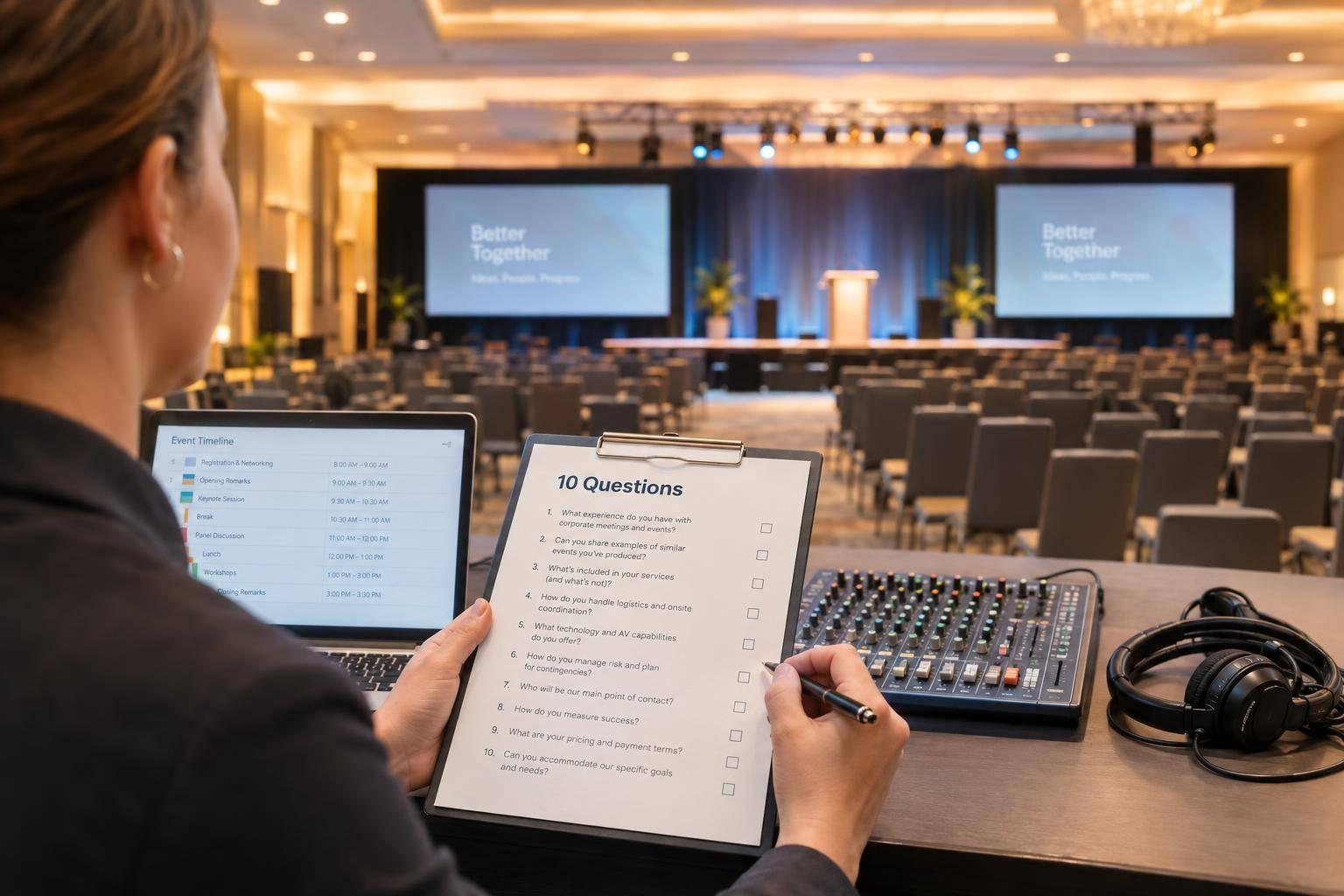
Before you commit to a production partner, ask some critical questions: Do they own their inventory? Who will be managing onsite operations? What’s their backup plan for technical issues? These questions will help you gauge the company’s ability to deliver under pressure.
It’s also essential to ensure they specialize in corporate events. A company with experience in music festivals or weddings might not meet the high-stakes requirements of executive summits, investor meetings, or healthcare conferences. Ask for examples of their work on multi-day corporate events or other high-trust industry gatherings to confirm they align with your standards.
Budget expectations for 2026 vary widely. Simple setups can range from $25,000 to $75,000, while large-scale productions with complex broadcast integrations can exceed $350,000. Keep in mind, LED video walls are a major expense driver. Pre-production timelines are another indicator of professionalism - top-tier partners typically start planning 3–6 months before major conferences and 6–10 weeks ahead for smaller meetings. This lead time allows for rehearsals, technical testing, and contingency planning, which are crucial when 67% of event organizers cite technology issues as a significant challenge.
These factors highlight the need for a partner who provides not just technical expertise but also proactive planning and problem-solving.
How Corporate Optics Delivers Value
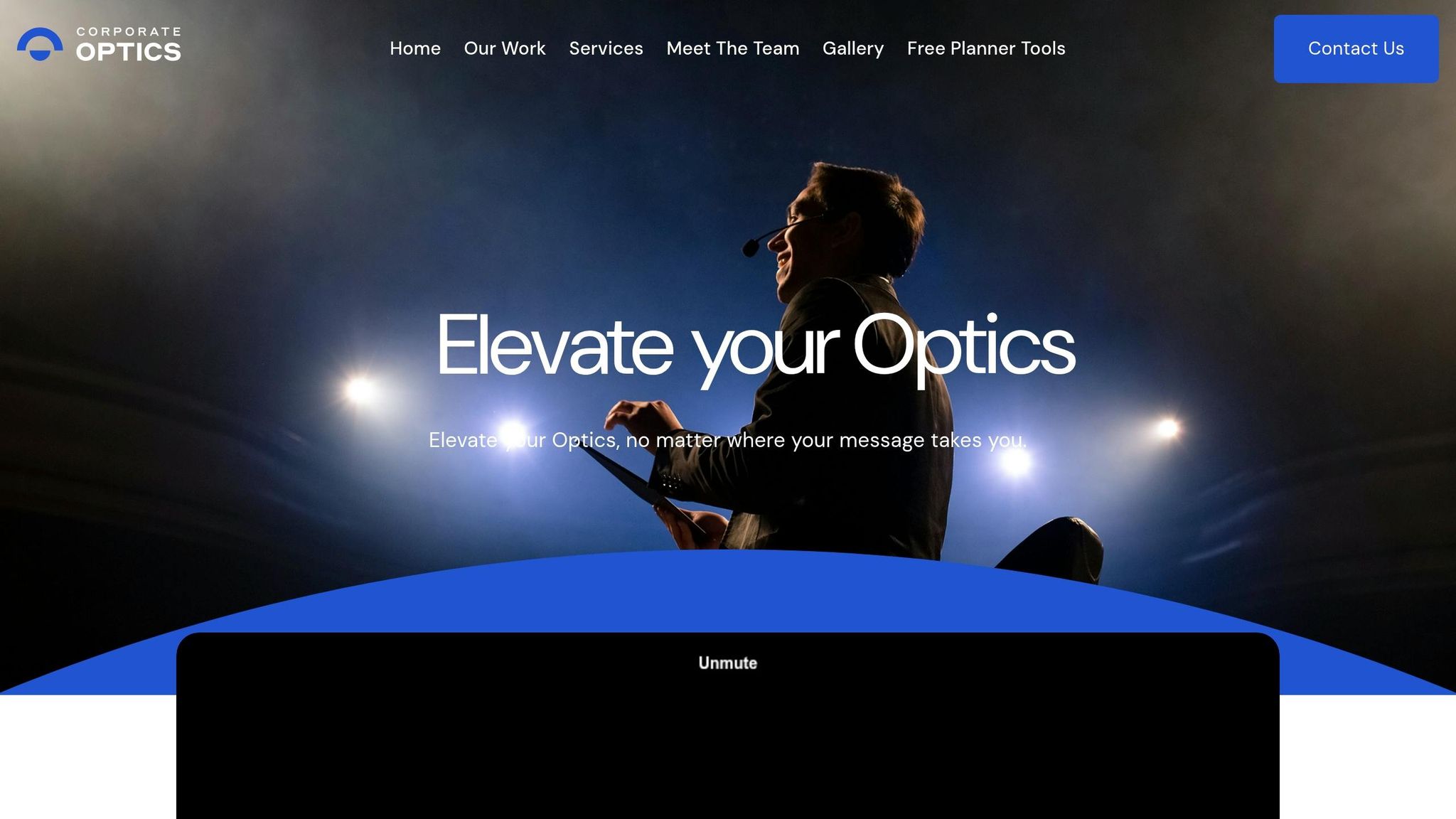
Corporate Optics stands out by delivering comprehensive event production services. From early agenda planning and venue sourcing to on-site staffing, speaker support, and post-event analytics, they focus on flawless execution and measurable results. As the partner provider for prompts.ai - an AI platform designed to streamline corporate event production - Corporate Optics seamlessly integrates cutting-edge technology into every stage of the process.
Their approach prioritizes operational control and risk management. With capabilities like custom fabrication, intelligent lighting design, and broadcast-quality streaming infrastructure, Corporate Optics handles the technical complexities that define executive events. Whether it’s a leadership summit, shareholder meeting, or global product launch, they treat each event as a critical opportunity to showcase your brand. Their process includes strategic planning, rigorous rehearsals, and 24/7 technical support to ensure everything runs without a hitch.
This isn’t just about providing equipment - it’s about delivering elevated experiences that align with your goals and protect your reputation when it matters most.
Conclusion
Specialized expertise can turn ordinary meetings into unforgettable brand experiences. When you collaborate with a production company that truly understands event design, AV services, staging, and streaming, you're doing more than just securing equipment - you’re safeguarding your speakers, your message, and your brand image. This proactive approach minimizes technical hiccups and boosts audience engagement.
A reliable production partner handles technical direction, show control, and real-time coordination, freeing you to focus on your content and stakeholders instead of getting bogged down by logistical challenges. They can transform plain venues into immersive brand showcases, manage the complexities of hybrid events with seamless connectivity and broadcast-quality streaming, and ensure smooth transitions through meticulous rehearsals and redundancy planning.
"Corporate event production is a strategy, not a line item." - TriVision Studios
By blending immersive design with precise technical execution, every aspect of your event works together to create a cohesive and impactful experience. This harmony of design and technology is at the heart of what we do.
Corporate Optics takes this to the next level by offering end-to-end technical management, enhanced by AI-driven efficiencies through its partnership with prompts.ai. From initial concept to post-event analytics, every detail is crafted to elevate your brand. Whether you’re hosting a leadership summit, shareholder meeting, or global product launch, this approach ensures precision, reduces risks, and delivers measurable results.
For events where every detail counts, Corporate Optics can bring your vision to life, creating a flawless experience that leaves a lasting impression on your audience.
FAQs
What should I ask a meeting production company before hiring them?
When discussing your event needs, it's important to dig into their expertise in AV technology, stage design, and event execution. Ask whether they provide on-site technicians to handle equipment during the event and if they offer hybrid or virtual solutions to accommodate remote attendees. Check if they have access to advanced tools like LED walls or projection mapping for a polished, professional look.
You’ll also want to confirm their experience with events similar in size to yours. Ask about their rehearsal processes and how they handle troubleshooting to ensure everything runs smoothly. Pricing transparency is another key point - make sure they’re upfront about costs. If custom scenic design is important for your event, inquire about their ability to deliver tailored options. Finally, ensure they’re familiar with your specific event type, whether it’s in-person, hybrid, or virtual.
How far in advance should I book AV, staging, and streaming?
For large corporate events or conferences, it's best to book AV, staging, and streaming services 4 to 6 months in advance. This ensures you’ll have access to the right equipment and experienced providers, while also allowing ample time for planning. For smaller or single-day events, booking 4 to 8 weeks ahead usually works. This timeline helps guarantee everything runs smoothly, especially for hybrid setups or events with high stakes.
What’s the best way to budget for LED walls and staging?
When planning your budget for LED walls and staging, it's essential to grasp the typical costs involved. Basic setups generally begin at around $25,000, while more elaborate productions can surpass $350,000. The size and complexity of your event will largely determine where your costs fall within this range.
To make the most of your budget, consider partnering with full-service providers who can offer customized solutions. Keep in mind that your expenses will include not just the equipment itself but also labor, setup, and even content creation. Starting your planning early and maintaining open communication with experienced vendors can help you allocate your funds efficiently and steer clear of unexpected costs.
Related Blog Posts
- 4 Meeting Production Companies That Excel At Seamless AV (audio/video), Lighting, and Stage Design for Corporate Conferences, and events
- Leading Providers Of Professional Meeting Production To Consider In 2026
- Top Corporate Meeting Planning Services From Event Production Companies
- End-To-End Annual Meeting Production Companies For Your Next Company Conference


Streamline your workflow, achieve more

Lorem ipsum dolor sit amet, consectetur adipiscing elit. Maecenas ac velit pellentesque, feugiat justo sed, aliquet felis.



Lorem ipsum dolor sit amet, consectetur adipiscing elit. Maecenas ac velit pellentesque, feugiat justo sed, aliquet felis.