Best Practices for Post-Event ROI Analysis

Chief Executive Officer
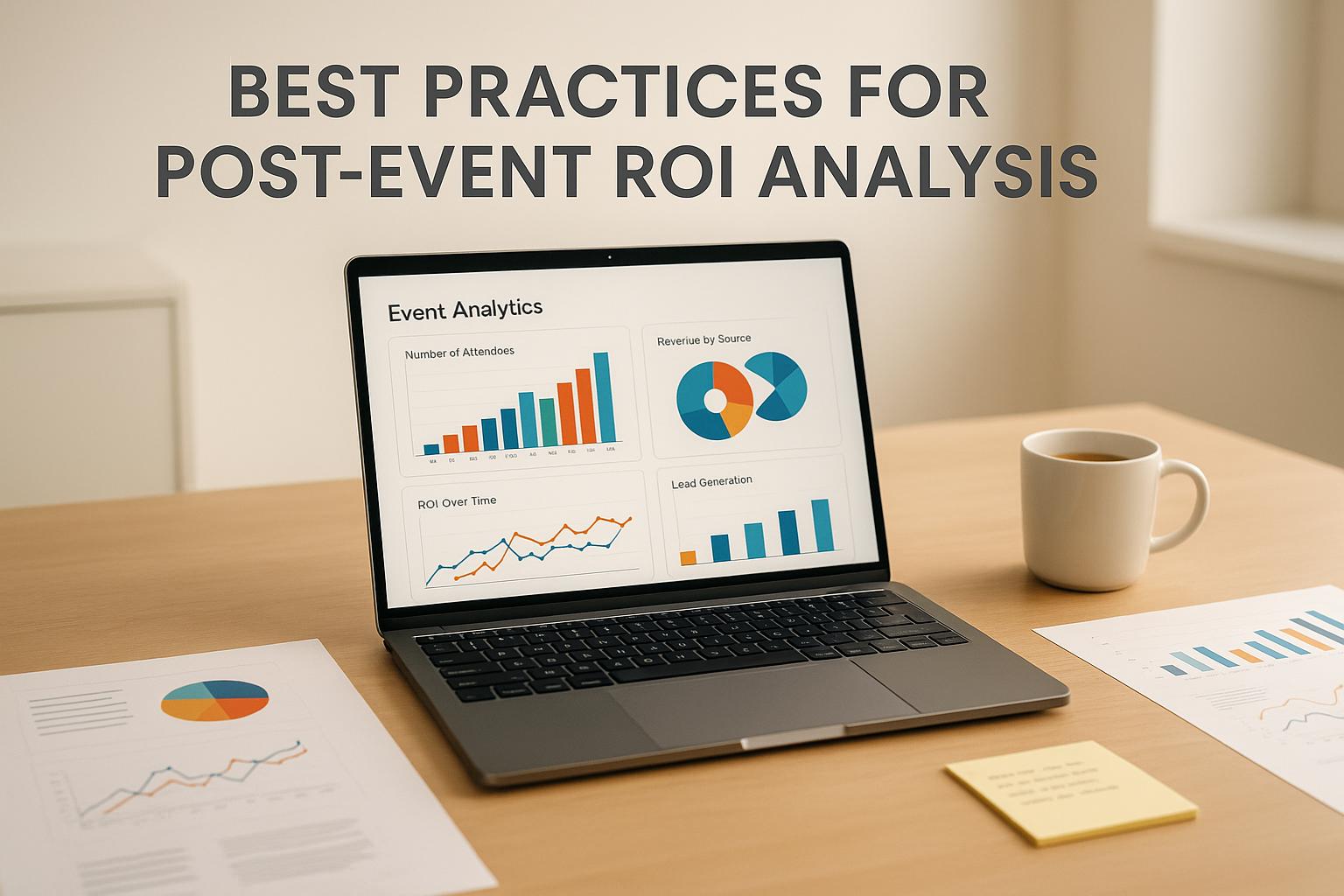
Post-event ROI analysis is the key to making your events more effective and results-driven. Here's why it matters and how to do it right:
- Why It’s Important: Post-event analysis helps you measure success, justify budgets, and improve future events by identifying what worked and what didn’t.
- What to Measure: Focus on metrics tied to your event goals - like revenue, attendee engagement, lead quality, or brand visibility.
- How to Collect Data: Use tools like registration platforms, event apps, CRM systems, and post-event surveys for a complete picture.
- Turning Insights Into Action: Use debrief sessions and a "lessons learned" database to document successes and challenges. Partnering with experts and using AI tools can streamline this process.
- Continuous Improvement: Track metrics over time to refine your approach and ensure better results with every event.
How to prove ROI for your event program
Setting Clear Objectives and Metrics for ROI Analysis
The success of an event is determined long before the first guest walks through the door. Without clear objectives and measurable metrics in place from the start, evaluating the event’s impact becomes more guesswork than strategy. Defining specific goals upfront ensures that your event’s performance can be accurately assessed, providing valuable insights for future planning.
Creating Measurable Goals
Effective ROI analysis hinges on having well-defined, measurable goals. Corporate Optics highlights this in their "Discover" phase, where they focus on identifying the event's deeper purpose:
"We start by diving into your needs and aspirations, uncovering the core mission objectives that will drive the event's success. Through conversations and strategy questions, we build the foundation for a partnership rooted in clarity, trust, and shared vision."
One way to ensure clarity is by using SMART goals - objectives that are Specific, Measurable, Achievable, Relevant, and Time-bound. For example, instead of a vague goal like "increase brand awareness", a SMART goal could be: "Generate 500 qualified leads from target demographics within 30 days of the event." This specificity makes it easier to track progress and measure success.
Aligning event goals with broader business objectives is equally important. When every aspect of the event is designed with specific outcomes in mind, evaluating its effectiveness becomes straightforward and actionable.
Key ROI Metrics for Events
The metrics you choose should directly tie to your event’s primary objectives. Here are some key categories to consider:
- Financial Metrics: These measure the bottom-line impact of your event. Examples include revenue generated, cost per lead, and customer acquisition costs. They provide a clear picture of financial returns.
- Engagement Metrics: These reflect how well attendees connected with the event. Metrics like session attendance, interaction during presentations, social media mentions, and time spent in various event areas offer insights into attendee interest and involvement.
- Lead Generation Metrics: Tracking the number and quality of leads gathered during the event is critical. Metrics might include the volume of contact information collected, meetings scheduled, and how leads progress through the sales funnel. Focusing on quality over quantity ensures you’re targeting real opportunities.
- Brand Visibility Metrics: These assess the event’s impact on market presence. Look at media coverage, social media reach, sentiment around brand mentions, and attendee feedback on brand perception. While these may not offer immediate financial data, they can shape long-term business outcomes.
- Technical Reliability Metrics: Evaluate how well the event’s infrastructure supported its goals. This includes audiovisual system uptime, streaming quality, and attendee satisfaction with technical elements. Technical hiccups can undermine even the best content.
- Attendee Satisfaction Scores: Metrics like Net Promoter Scores (NPS), session ratings, and feedback on event elements provide insights into the overall experience. High satisfaction often leads to repeat attendance and positive word-of-mouth.
Once you’ve identified the right metrics, adapt them to fit the specific type of event you’re hosting.
Selecting Metrics Based on Event Type
Different types of events require different measurement approaches. Here’s how to tailor metrics based on the event format:
- Corporate Conferences: These often focus on education and networking. Useful metrics include session attendance, knowledge retention, and the number of meaningful connections made. Financial metrics may be secondary unless the event directly drives sales.
- Product Launch Events: These prioritize awareness and adoption. Key metrics include media coverage, engagement with product demos, pre-orders, and social media buzz. Since results may take time to materialize, longer tracking periods are necessary.
- Hybrid Events: These require tracking both in-person and virtual engagement. Metrics should include virtual attendance, streaming quality, online interaction rates, and satisfaction comparisons between physical and digital attendees. Hybrid events often demand advanced tools for effective analysis.
- Training and Educational Events: Success here is measured by learning outcomes. Metrics like pre- and post-event assessments, certification completion rates, and skill application in the workplace show how well knowledge was transferred.
- Networking Events: These focus on relationship building. Metrics might include the number of meaningful connections, follow-up meetings, partnership opportunities, and deals initiated. The value of these events often grows over time as relationships develop.
Data Collection and Integration Methods
Gathering event data effectively requires a well-thought-out approach that taps into multiple touchpoints throughout the event's lifecycle. By creating structured processes, you can bring together data from various sources to build a complete picture of how your event performed.
Sources of Event Data
Collecting data from diverse sources is the foundation for calculating ROI metrics. Each source offers unique insights into different aspects of your event's success:
- Registration platforms: These tools capture key details such as attendee demographics, registration trends, and early engagement signals. This initial data helps gauge interest and participation levels.
- Event apps and engagement platforms: During the event, these platforms track real-time behaviors like session attendance, networking activity, poll responses, and content downloads. This data shows which sessions and activities resonate most with your audience.
- Social media analytics: By monitoring metrics like mentions, hashtag usage, reach, and sentiment on platforms such as LinkedIn, Twitter, and Instagram, you gain an external perspective on brand visibility and audience perception beyond the event venue.
- CRM systems: These systems are essential for tracking post-event outcomes, such as lead progression, updates to sales pipelines, and nurturing long-term relationships that stem from event interactions.
- Post-event surveys and feedback forms: These tools provide qualitative insights, offering a deeper understanding of attendee satisfaction, perceived value, and areas for improvement that raw numbers can’t convey.
- Technical production systems: Metrics from audiovisual setups, streaming platforms, and venue technologies - like system uptime and streaming quality - ensure that technical execution supports, rather than detracts from, the attendee experience.
- Financial systems: These track all event-related expenses and revenue streams, giving you a clear view of cost efficiency and overall ROI.
Combining Data for Complete Insights
The true power of event data lies in integrating these sources into a unified system. A centralized repository allows you to connect data points across touchpoints, revealing patterns that might otherwise go unnoticed. For instance, linking social media engagement metrics with post-event conversion rates can uncover valuable trends.
Modern AI platforms add an extra layer of intelligence by integrating various data sources and automating workflows. These tools reduce repetitive tasks, improve governance, and simplify access to multiple AI models, helping you make sense of complex datasets. Standardizing data - like using consistent naming conventions, date formats, and measurement units - is essential for accurate comparisons and analysis. Tracking an attendee’s journey across these touchpoints can highlight the interactions most closely tied to desired outcomes.
For example, companies like Corporate Optics use these methods to integrate data from registration platforms, engagement apps, CRM systems, and technical production tools. This consolidated view provides actionable insights that inform strategic decisions, laying the groundwork for the next stages of event planning.
Once this unified data view is in place, automation becomes a critical step for timely and efficient reporting.
Automation Tools for Data Collection
For larger events, automating data collection is a game-changer. It reduces manual work, minimizes errors, and ensures a steady flow of accurate information.
- Event management platforms: These tools often come with built-in analytics that automatically capture key metrics, freeing up your team to focus on analysis rather than data entry.
- API integrations: Seamless data exchange between systems ensures that all your tools work together efficiently.
- Real-time dashboards: These provide immediate visibility into metrics, allowing production teams to monitor technical performance while marketing teams track engagement and lead generation. Quick access to this data is essential for addressing issues as they arise.
- AI-powered workflows: AI tools automate routine tasks like generating daily summaries or detailed post-event reports, keeping stakeholders informed without extra effort.
- Data validation tools: These run in the background, checking for inconsistencies or missing data. This ensures the integrity of your datasets and provides reliable insights for analyzing ROI.
sbb-itb-ae35a94
Running Effective Post-Event Debriefs
Once your event data has been integrated, the next step is to hold a structured debrief session. This is where insights are transformed into actionable strategies, helping your team fine-tune approaches and boost the return on investment (ROI) for future events.
How to Structure a Debrief Meeting
Start by bringing together the key players - team members from planning, technical production, and marketing. Begin the meeting by revisiting your original objectives and the metrics you used to measure success. This sets the stage for a focused and productive discussion.
Divide the conversation into three main areas: what worked well, what challenges arose, and what could be improved. Use both quantitative data and qualitative feedback from surveys to get a well-rounded perspective. Let the data guide the discussion, offering a clearer picture of what needs attention.
Using Data to Guide Discussions
Data plays a critical role in making objective, informed decisions. Compare your event’s key performance indicators (KPIs) against the goals you initially set. This comparison helps pinpoint the factors that contributed to your event’s successes or presented obstacles. Encourage team members to connect their personal observations with the data for more precise insights.
For example, analyzing metrics like registration numbers, technical performance, and audience engagement can reveal strengths and weaknesses. You might even uncover less obvious connections, such as how technical glitches impacted attendee behavior. These insights can spark meaningful discussions and guide future improvements.
Debriefing Formats and Their Effectiveness
Debrief meetings can take on various formats, depending on your team’s preferences and logistics. In-person sessions encourage dynamic conversations and immediate feedback, while virtual meetings make it easier for remote team members to participate. A hybrid approach combines the best of both worlds, allowing flexibility without losing the benefits of face-to-face interaction.
To ensure the session's effectiveness, record the meeting, create a summary of actionable takeaways, and assign follow-up tasks to specific team members. This approach not only reinforces accountability but also keeps the momentum going as you work toward continuous improvement.
At Corporate Optics, we understand the impact a well-structured debrief can have on event performance. Tailoring your review process to your team’s specific needs can uncover actionable insights that shape future success. A focused debrief not only sharpens your strategies but also maximizes your event ROI.
Converting Insights Into Action Plans
Turning post-event ROI insights into actionable strategies is key to improving future outcomes. Without a clear plan to implement lessons learned, even the most detailed debrief can end up as just another conversation without real impact.
Building a Lessons Learned Database
After a comprehensive debrief, the next step is to turn insights into practical actions. One effective way to do this is by creating a centralized "lessons learned" database. This repository should capture recurring challenges, successful strategies, and areas for improvement in a way that's both searchable and actionable.
Start by documenting specific problems and their solutions. For example, if your technical team experienced audio feedback issues during speaker presentations, record the issue along with the steps taken to fix it. Include details like the equipment used, the venue's acoustics, and preventive measures for future events. These specifics - microphone types, room layouts, and other contributing factors - can help avoid similar problems down the line.
Also, make sure to document what worked well. If a particular engagement strategy led to higher participation rates, record the details: the approach, timing, audience demographics, and any supporting technical elements. This ensures that successful tactics can be replicated in future events.
AI tools can make this process even more efficient. Platforms like prompts.ai can centralize your event data and automate how insights are organized, making it easier for your team to access relevant information when planning future events.
Partnering With Event Production Experts
Working with experienced event production partners can provide valuable insights and help you implement improvements more effectively. These professionals bring expertise from handling similar challenges and can align their solutions with your ROI findings.
For example, if your analysis reveals that poor live streaming quality affected virtual attendee engagement, a seasoned production team can recommend specific solutions - such as better equipment, stronger bandwidth, or reliable backup systems. Their expertise ensures that the improvements directly address the issues identified.
"Corporate Optics took our event to the next level. Their creativity, professionalism, and attention to detail are top-notch. They brought vision to life flawlessly. Above and beyond care and execution. Highly recommend." - Nikki D., Vice President of Sales
AI-powered tools like prompts.ai can further enhance this collaboration. These platforms automate workflows and provide visibility into which recommendations are implemented, making it easier to measure their impact and ensure accountability.
This kind of collaboration sets the foundation for tracking progress and achieving measurable improvements.
Monitoring Progress Over Time
To gauge the effectiveness of your action plans, consistent tracking across multiple events is essential. Establish a standardized set of metrics to monitor for every event, regardless of its size or type. This consistency allows you to spot trends and measure the cumulative impact of your strategies.
Start by setting baseline measurements and tracking both leading and lagging indicators. Leading indicators might include metrics like registration conversion rates, early engagement levels, or pre-event survey responses. Lagging indicators, on the other hand, could include final attendance numbers, post-event satisfaction scores, and revenue generated. By analyzing both types of data, you can identify trends early and make adjustments as needed.
Conduct quarterly reviews to compare ROI metrics across events. These reviews can reveal patterns - like certain venues or event formats consistently delivering better results - or highlight areas that still need improvement.
Technology can simplify this process. AI platforms can automate data collection and analysis, saving your team from manual reporting and allowing them to focus on strategic decisions. Tools like prompts.ai can even help you compare different solutions and optimize your productivity.
Keep tracking progress, even if an event performs well. Continuous improvement means always seeking ways to enhance ROI, turning your event program into a strategic asset that grows stronger with each execution. By maintaining this long-term perspective, you can transform individual events into a cohesive, results-driven strategy.
Conclusion: Improving Event Success Through ROI Analysis
Measuring post-event ROI is more than just a box to check - it's the cornerstone of turning events into strategic tools for long-term success. The best organizations treat every event as an opportunity to learn, refine, and improve, building a cycle where insights lead to smarter decisions and better results.
To truly enhance ROI, focus on three critical areas: comprehensive data collection, strategic partnerships, and applying lessons learned systematically. When these elements align, they create a self-reinforcing loop of progress that grows stronger with each event.
Making data-driven decisions means looking beyond attendance figures. It’s about digging into engagement metrics, conversion rates, and long-term outcomes. Top-performing organizations don’t just gather data - they connect the dots across every interaction to inform future strategies and investments.
Strategic partnerships are another key to success. Take, for instance, Corporate Optics, which excels in program management by aligning technical needs, venue logistics, and production elements with your organization’s goals from the very beginning. Their expertise ensures events remain focused on your objectives while adapting to challenges in real time. This level of collaboration transforms ROI analysis into actionable strategies for continuous improvement.
Technology also plays a crucial role in streamlining this process. Tools like prompts.ai harness AI to automate workflows across sales, marketing, and operations, delivering the analytics and insights needed to track performance over multiple events. These platforms not only save time by eliminating repetitive tasks but also provide visibility into compliance and usage trends, helping you pinpoint what works best. Together, these strategies foster a culture of ongoing improvement and data integration, reinforcing the strategic debrief process.
Organizations that truly maximize their event investments understand that ROI analysis isn’t a one-off task - it’s an evolving process. Each event adds to a growing reservoir of knowledge, making every subsequent effort more impactful and effective.
FAQs
How can I align event goals with business objectives to improve ROI analysis?
To get a clearer picture of ROI, begin by aligning your event goals with your organization’s overarching business objectives. Pinpoint key metrics that link your event’s performance to tangible results - whether that’s boosting sales, building brand awareness, or enhancing customer engagement.
Make it a priority to design impactful moments during the event that reflect your company’s mission and values. These moments should not only leave a lasting impression on your audience but also contribute directly to your desired business outcomes. By establishing these connections upfront, you’ll be able to measure success more effectively and fine-tune your approach for future events.
How can I effectively combine data from different sources to evaluate event ROI?
To fully understand your event's ROI, start by collecting data from all relevant sources. This includes ticket sales, attendee feedback, social media interactions, and post-event surveys. Once you've gathered the information, bring it all together in one place - whether that's a platform or a simple spreadsheet - so you can analyze trends and compare results to your original goals.
Pay close attention to key metrics like revenue generated, cost per attendee, and audience satisfaction scores. Using post-event analytics tools can make this process easier, providing valuable insights to help fine-tune your future events. Need help with this? Corporate Optics offers expert support in post-event analytics and reporting, helping you get the most out of your event efforts.
How can AI and automation enhance the accuracy and efficiency of post-event ROI analysis?
AI tools and automation can make post-event ROI analysis much easier and faster by cutting down on manual work and boosting data accuracy. These tools can automatically pull and process information from different sources - like attendee feedback, registration stats, and engagement metrics - delivering useful insights far more quickly than older, manual methods.
By spotting patterns and trends in how events perform, AI offers a way to fine-tune future strategies to get the most out of your investment. Take Corporate Optics, for example. This platform combines advanced post-event analytics with technical production expertise, offering detailed reports and actionable recommendations to help you plan and execute events more effectively.
Related Blog Posts


Streamline your workflow, achieve more

Lorem ipsum dolor sit amet, consectetur adipiscing elit. Maecenas ac velit pellentesque, feugiat justo sed, aliquet felis.



Lorem ipsum dolor sit amet, consectetur adipiscing elit. Maecenas ac velit pellentesque, feugiat justo sed, aliquet felis.