In Need Of A Production Company With Creative Help? Why To Reach Out To Corporate Optics Today.

Chief Executive Officer
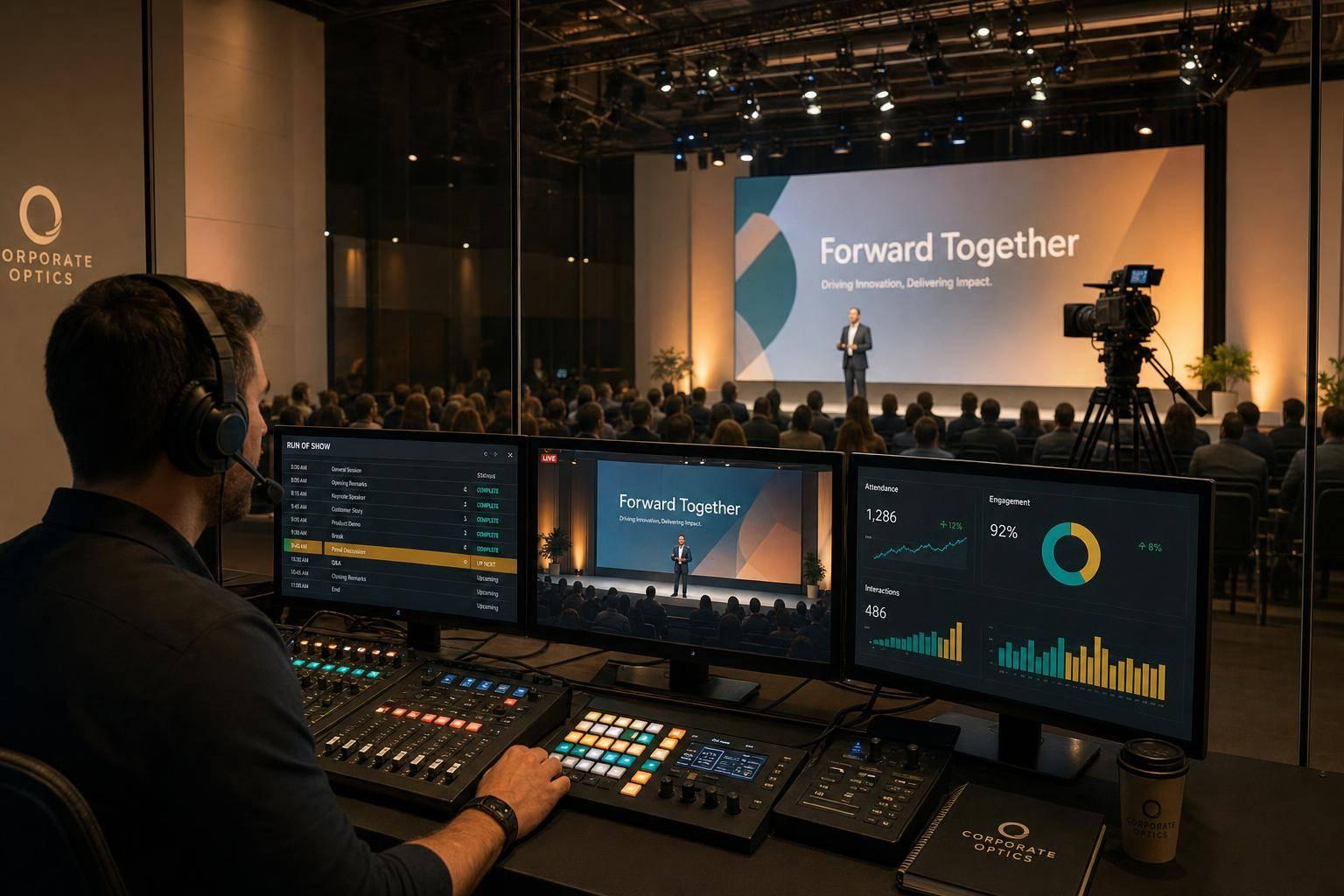
If you want a high-stakes event to run well, one team should guide the idea, the AV plan, the stage, the stream, and show day. That is the core point here: Corporate Optics helps turn a loose event request into a clear live, hybrid, or virtual program with one line of ownership.
I’d sum it up like this:
- You start with a broad ask, like a sales kickoff, investor update, or leadership meeting.
- One team then maps the agenda, visuals, speaker prep, stage setup, audio, lighting, video, and stream.
- That cuts mix-ups between planning and production.
- It also helps control costs, show flow, and last-minute changes.
- After the event, you get reporting tied to goals like attendance, engagement, and sponsor results.
A lot of event issues come from split ownership. One group handles the message. Another handles the room. Another handles the stream. That is often when slide errors, cue misses, brand drift, and budget overruns show up. For larger business events, even a small show-day mistake can affect how people view the company.
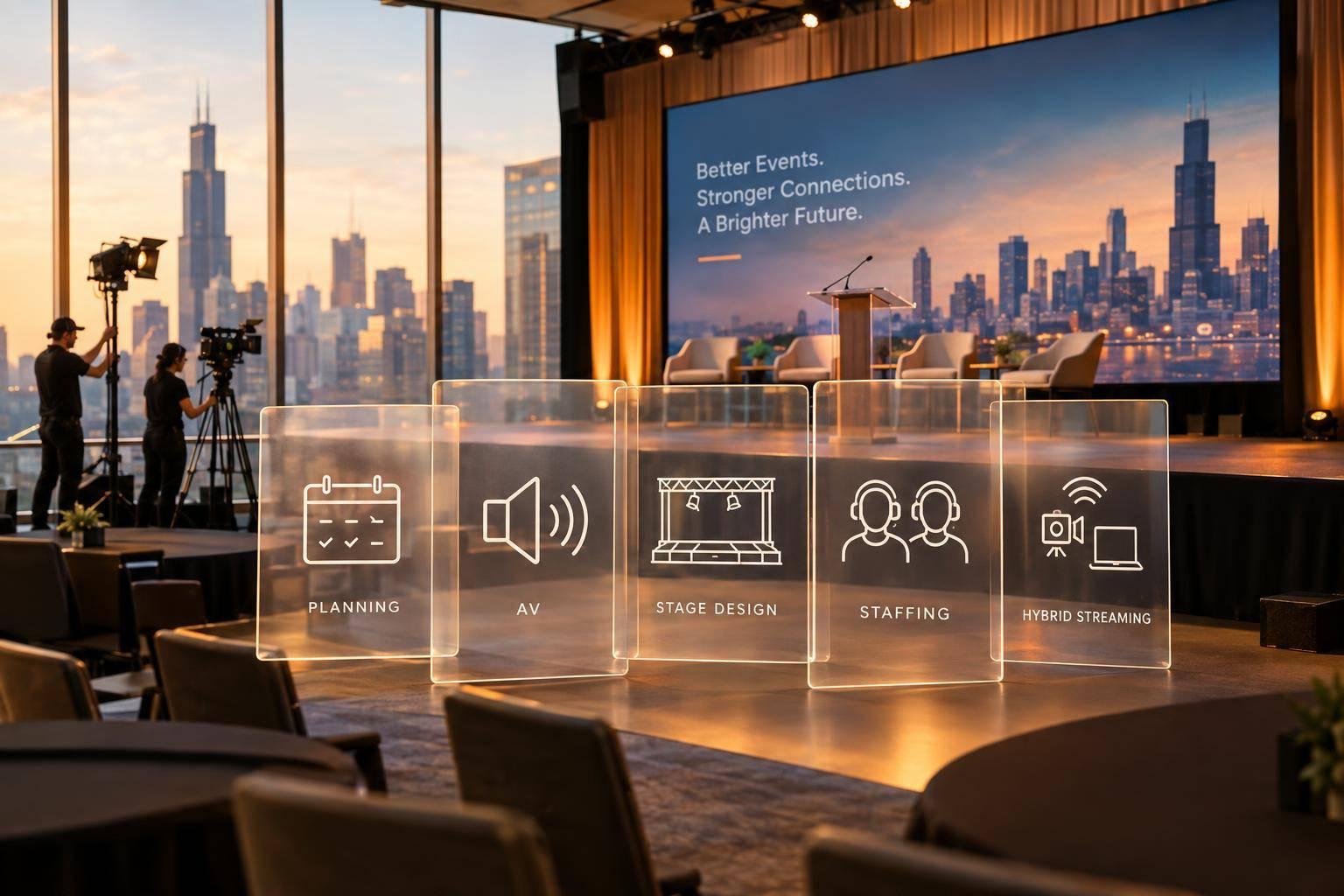
Here’s the simple takeaway: if you need help shaping the event idea and conference event production, Corporate Optics offers planning, design, AV, staging, broadcast support, staffing, rehearsals, backup systems, and post-event reporting in one process.
| Need | What this article says Corporate Optics does |
|---|---|
| Early event planning | Defines goals, audience, format, and budget |
| Event look and message | Builds slides, motion graphics, and show flow |
| Speaker prep | Handles rehearsals, blocking, monitors, and mics |
| Room and stage setup | Manages audio, lighting, scenic, LED, and projection |
| Hybrid or virtual delivery | Runs cameras, switching, graphics, and streaming |
| Show-day control | Uses stage managers, show callers, and backup gear |
| After-event follow-up | Shares attendance and engagement reporting |
If I had to put the whole article into one sentence, it would be this: Corporate Optics is presented as a single event production partner that helps plan the program, build the show, run the room, support the stream, and keep changes under control.
AV Production | Audio, Visual & Technical Event Solutions | Immersive Event Experiences | Happiffie
sbb-itb-ae35a94
The Problem With Separating Creative Planning From Technical Production
When creative teams and AV teams work from separate plans, problems tend to show up on event day. And those gaps are often where event quality starts to slip.
Common Event Problems: Mixed Messaging, AV Issues, and Last-Minute Changes
A fragmented event usually looks like inconsistent branding, broken cueing, or both. One team builds the theme. Another team puts it on stage. What the audience gets is mismatched visuals, mistimed playback, or a presentation that just feels off.
In high-stakes settings like investor days, leadership summits, or national sales kickoffs, those mistakes do more than create awkward moments. They chip away at the audience's confidence in the company itself.
Last-minute changes make the situation even harder. A C-suite leader updates slides two hours before showtime, but no one owns the update from start to finish. Then the wrong version plays on stage.
Budget issues can follow the same pattern. A creative partner may pitch a concept without tying it to the AV needs and production costs. Later, the final invoices come in well above what was approved.
Why One Integrated Production Partner Improves Control
With a full-service event production company, creative directors, technical directors, and show operators work from the same documents, the same timeline, and the same goals. That means creative and technical trade-offs get worked out before show day, not in the middle of setup or during the live program.
It also takes pressure off your internal team. Instead of managing every handoff, they can work through one chain of communication.
An integrated partner keeps communication, budget decisions, brand standards, and technical testing under one point of control. Corporate Optics closes those gaps by aligning creative direction with technical execution from the start.
That process shapes how Corporate Optics handles planning, content, and on-site delivery.
What Corporate Optics Delivers From Concept Through On-Site Execution
Corporate Optics supports events from the first idea to the final cue. That keeps the big-picture direction and the on-site work moving together across live, hybrid, and virtual programs. The team works with corporate enterprises, government agencies, and sports organizations in all three formats. So a rough ask doesn’t stay rough for long - it turns into a production plan the team can build, staff, and run.
Planning, Content Design, and Speaker Support
Corporate Optics turns event goals into an agenda, visual content, and speaker prep that hold up both in the room and on screen. Early planning starts with the main job of the event, whether that means building investor confidence, aligning a national sales team, or launching a product. From there, the team builds a detailed agenda around the event’s timing, venue, and budget.
Content design includes slides, motion graphics, titles, lower thirds, and transition graphics. When executives bring dense strategy decks, the team reshapes them into clear, story-led presentations that make sense for both in-person and remote viewers. Speaker support covers rehearsals, stage blocking, teleprompter setup, confidence monitor setup, and microphone assignment, so leaders step on stage prepared and steady.
"Corporate Optics took our event to the next level. Their creativity, professionalism, and attention to detail are top-notch. They brought vision to life flawlessly." - Nikki D., Vice President of Sales
AV, Staging, Scenic, Lighting, and Broadcast Production
On the technical side, Corporate Optics provides AV production for corporate events including professional sound systems, multi-camera video capture, projection, LED walls, custom stage design, scenic design, and lighting cues tied to the run-of-show. Lighting does more than make the stage look good. It sets the tone, guides attention, and helps each segment shift cleanly into the next.
For hybrid and broadcast events, the team handles multi-camera switching, live graphics insertion, and streaming setups across platforms, with redundant signal feeds in place to cut the risk of downtime. Remote speakers get standard guidelines, tech checks, plus camera and audio coaching before they go live. That broadcast experience shapes how Corporate Optics builds each stage, with camera angles and viewer experience considered from the start, especially when both in-room and online audiences need a strong experience at the same time. That same technical setup carries straight into logistics and show-day staffing.
Logistics, Staffing, and Post-Event Measurement
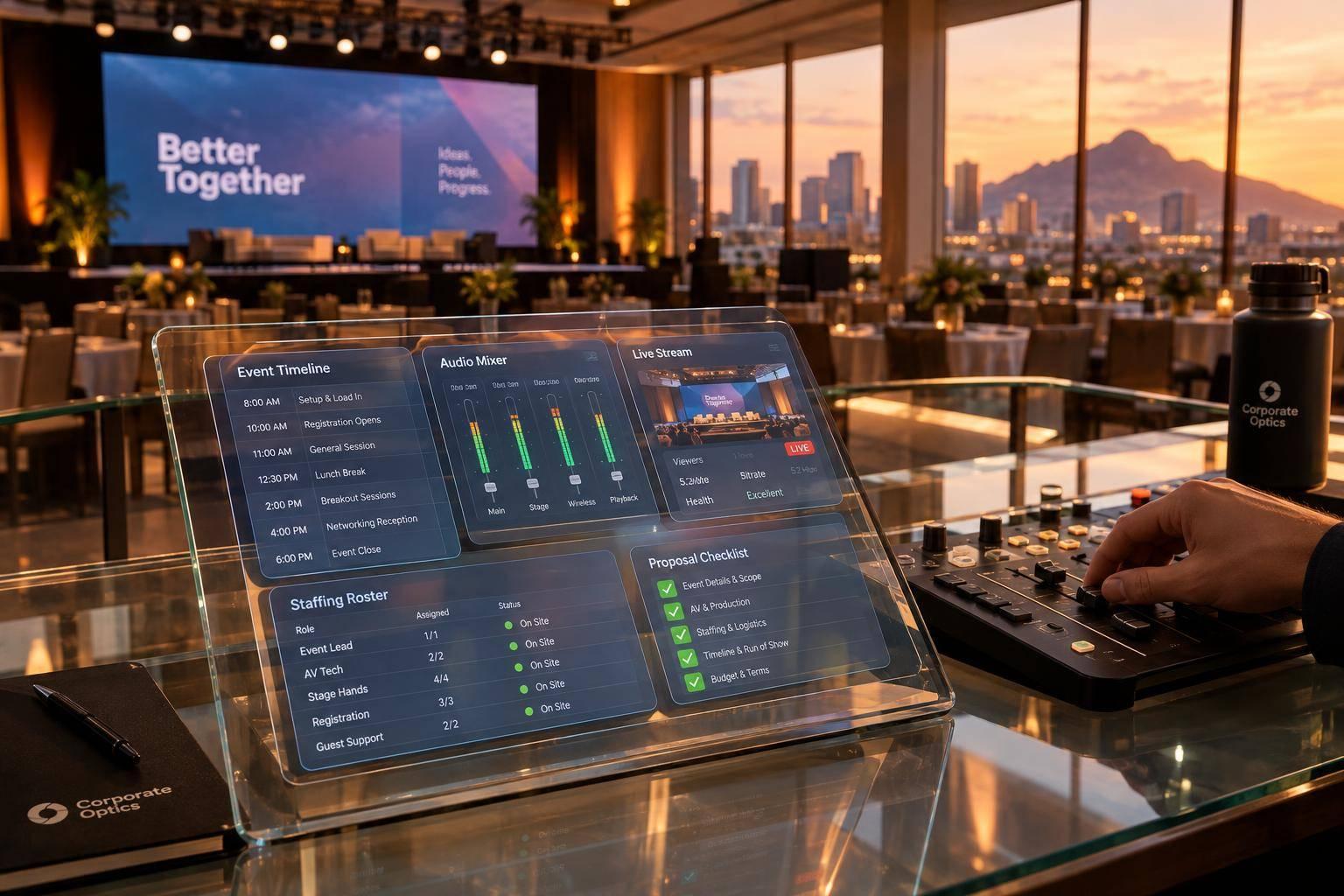
Logistics support can include venue sourcing, vendor coordination, attendee registration, badge printing, access control, and sponsor activation management, all handled within the client’s approved budget. On-site, Corporate Optics staffs producers, stage managers, technical directors, camera operators, and front-of-house technicians. The team also puts contingency plans and backup gear in place before doors open. That kind of prep helps keep the audience experience steady and gives clients reporting they can use after the event.
After the event, Corporate Optics can provide reports on attendance, engagement, content performance, and sponsor performance, all tied back to the original goals. Live polling, Q&A, and social walls can also be built in and branded to collect feedback in real time.
How Corporate Optics Turns a Vague Event Request Into a Branded Live or Hybrid Program
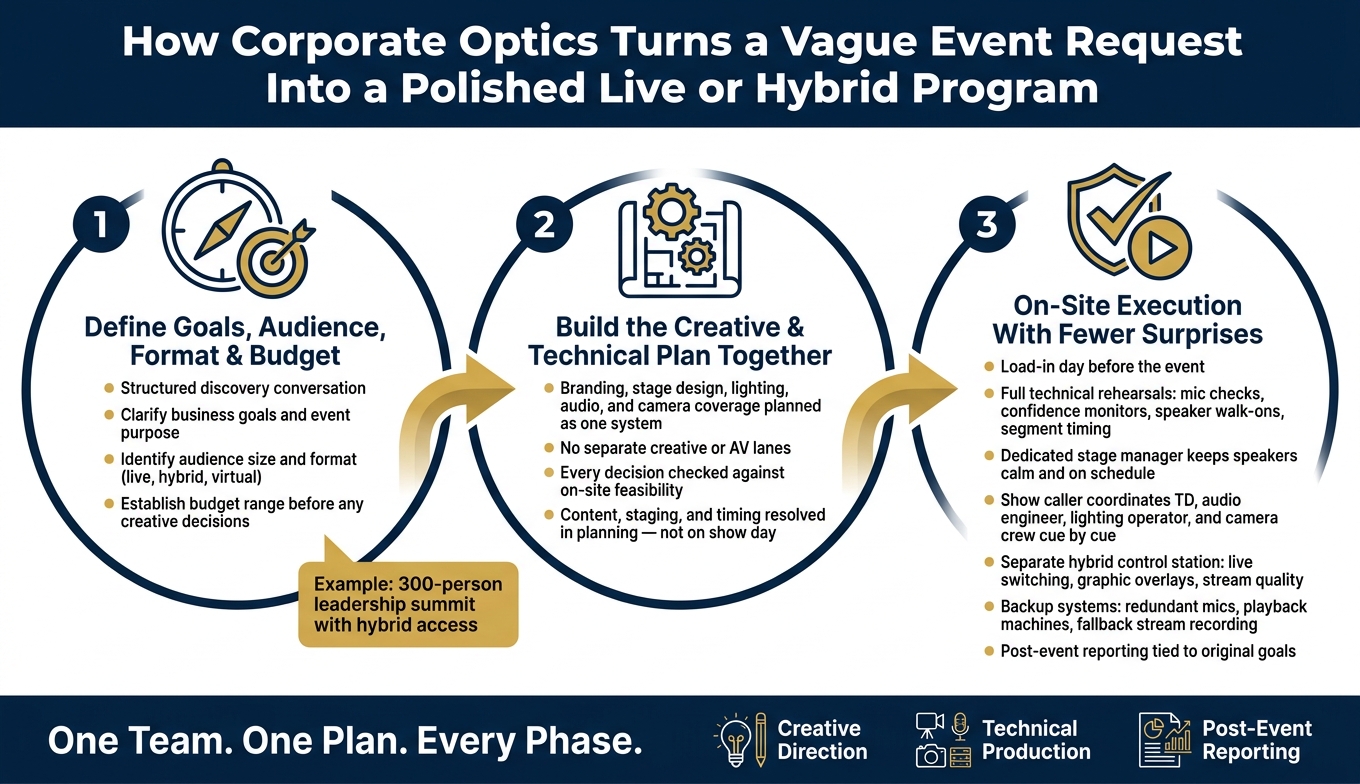
How Corporate Optics Turns a Vague Event Request Into a Polished Live or Hybrid Program
Most event requests start the same way: a short email or a quick call asking for an annual leadership meeting that feels more polished than last year. That’s a starting point, not a plan.
Corporate Optics turns that broad ask into a clear live or hybrid program through a planning process that connects goals, production, and logistics from the start.
Step 1: Define Goals, Audience, Format, and Budget Range
The first step is a structured discovery conversation.
Say a 300-person technology company needs a one-day leadership summit with hybrid access, a clear agenda, and a set production budget. From there, Corporate Optics works through the business goals, audience, format, and budget range so the event has direction before any visual or technical decisions are made.
This part matters more than people think. If the team doesn’t know who the event is for, what it needs to do, and how much room there is in the budget, the rest can drift fast.
Step 2: Build the Creative and Technical Plan Together
Next, Corporate Optics builds the creative and technical plan as one connected system.
That means branding, stage design, lighting, audio, and camera coverage are planned to fit the room and the flow of the show. Nothing gets treated as a separate lane. Every choice is checked against what will work on-site, so decisions about content, staging, and timing are handled in planning instead of becoming day-of problems.
Once the plan is set, the same team carries it through rehearsal and show day. That continuity helps cut confusion and keeps the program moving the way it was designed.
Step 3: On-Site Execution With Fewer Surprises
Corporate Optics usually arrives for load-in the day before the event. Full technical rehearsals cover:
- Microphone checks
- Confidence monitor content
- Speaker walk-ons and exits
- Timing for each segment
A dedicated stage manager helps keep speakers calm and on schedule. If a last-minute slide change comes in, it goes through a controlled process instead of turning into a scramble backstage.
During the event, a show caller works from a detailed show script and coordinates the technical director, audio engineer, lighting operator, and camera crew cue by cue. For hybrid sessions, a separate control station handles live camera switching, graphic overlays, and stream quality in real time.
Corporate Optics also plans for the failure points that tend to trip up live programs. That includes backup microphones, redundant playback machines, and a fallback recording if the stream drops.
After the event, reporting ties back to the original goals. Each phase stays connected, so creative, technical, and logistics choices all support the same event goal. That’s what helps keep high-stakes events on message and on schedule.
Conclusion: How Corporate Optics Simplifies High-Stakes Event Production
After discovery, planning, and rehearsal, the value is pretty clear. In high-stakes events, working with one production partner from start to finish cuts risk at every step. The simplest way to do that is to keep strategy and execution with the same team.
Corporate Optics keeps creative direction and technical production in sync, so each part of the event supports the same message. That also makes show-day coordination much easier.
That kind of consistency matters when internal teams need one place for approvals, schedules, and event changes. Instead of juggling several vendors, planners work from one plan that covers concept, run-of-show, technical specs, and staffing. If a speaker drops out or slides change, one team can make the update fast.
Key Takeaways for Executives, Planners, and Marketing Teams
For executives, planners, and marketing teams, the result is simple: faster decisions, cleaner execution, and clearer post-event reporting when Corporate Optics handles creative, production, and delivery as one process.
FAQs
What types of events can Corporate Optics support?
Corporate Optics supports a wide range of corporate and professional events with end-to-end production, audiovisual, and creative support.
That includes leadership conferences, general sessions, annual meetings, awards ceremonies, board meetings, virtual meetings, webinars, town halls, sales kickoffs, company all-hands meetings, and custom events.
The team supports the full event lifecycle across in-person, virtual, and hybrid formats.
When should I bring Corporate Optics into the planning process?
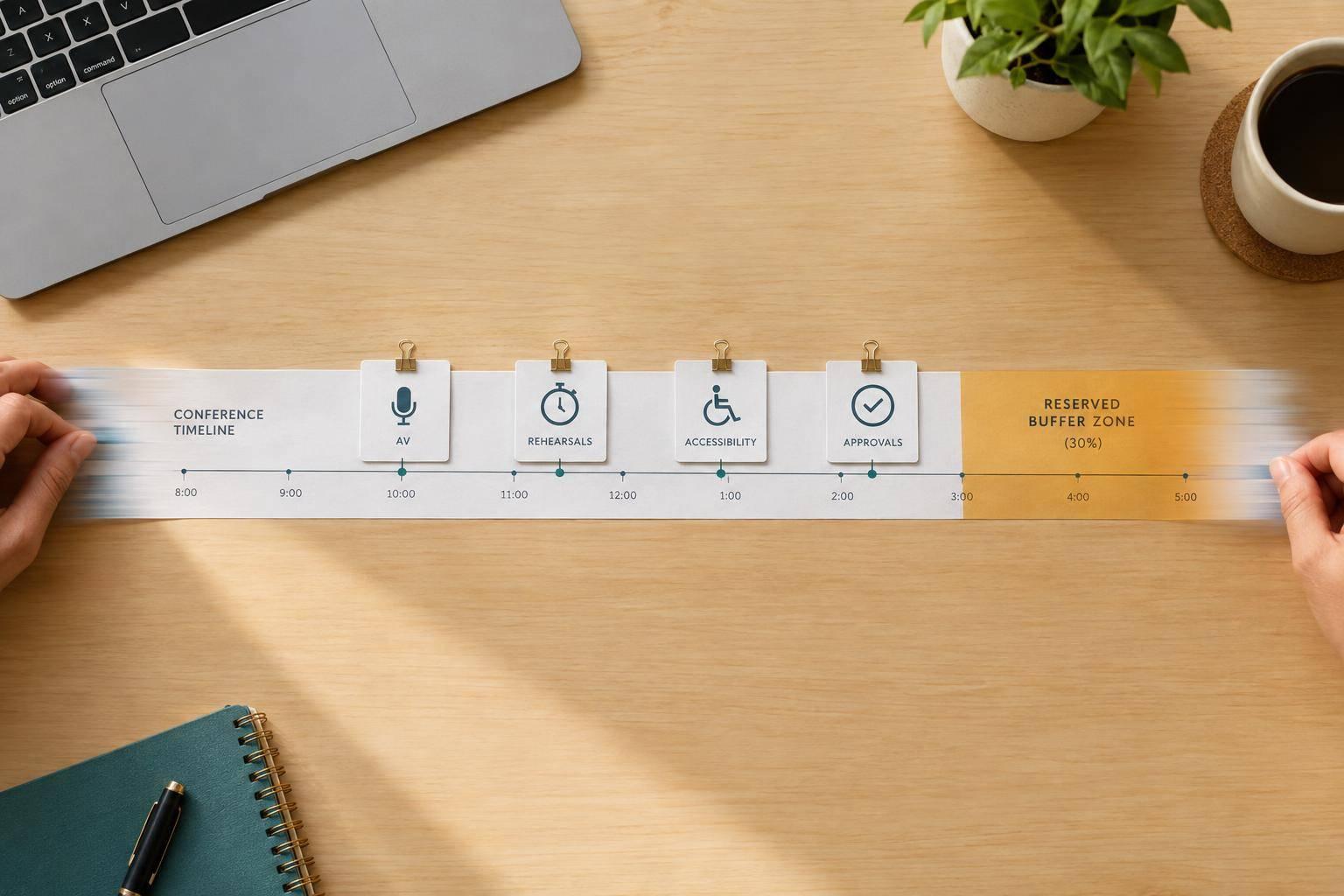
Bring Corporate Optics in as early as you can - ideally 3–6 months before the event, or 6–12 months for larger or more complex conferences.
That runway gives everyone time to review goals, work through venue limits, confirm technical needs, and put together a coordinated plan from creative through production.
For smaller meetings, 6–10 weeks can still work.
If you need a fast estimate, send your event date, venue, headcount, room list, and agenda right away.
How does one team reduce event-day risks?
One integrated production team helps cut event-day risk because everyone works from one shared show plan across AV, staging, lighting, streaming, and run-of-show control. In plain English: fewer handoffs, fewer missed cues, and one clear owner when something needs attention.
They also map out each room’s needs, run rehearsals, check the setup before doors open, and prepare backup options like spare gear and alternate workflows. That kind of prep helps avoid delays and last-minute scrambling on site.
Related Blog Posts


Streamline your workflow, achieve more

Lorem ipsum dolor sit amet, consectetur adipiscing elit. Maecenas ac velit pellentesque, feugiat justo sed, aliquet felis.



Lorem ipsum dolor sit amet, consectetur adipiscing elit. Maecenas ac velit pellentesque, feugiat justo sed, aliquet felis.