Program Management Firms For Leadership Communications Across Multiple Sites

Chief Executive Officer

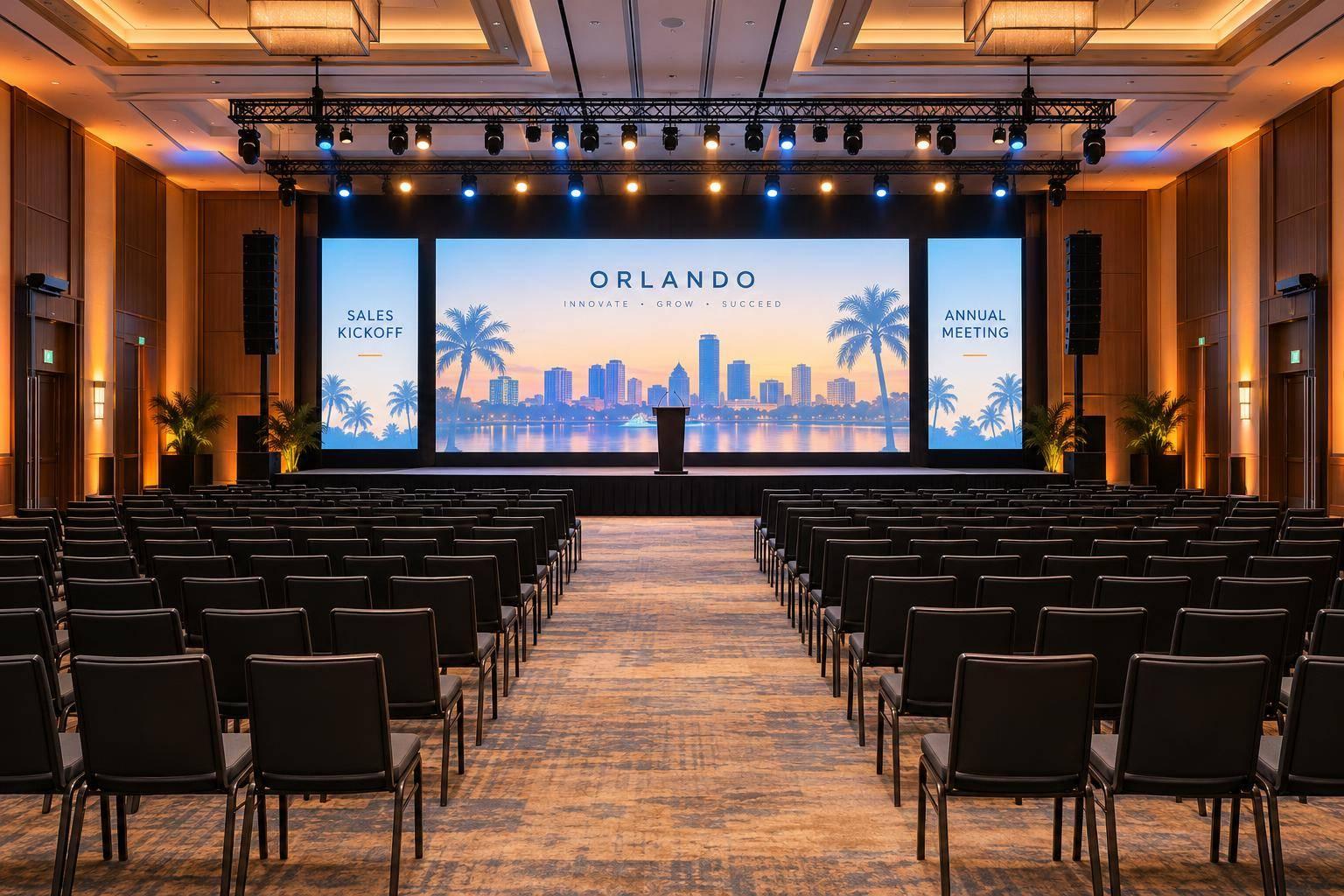
Managing leadership communication across multiple locations is challenging due to digital overload, technical issues, and inconsistent messaging. Program management firms solve these problems by coordinating technology, logistics, and production for clear, reliable communication. They use centralized systems, professional audiovisual setups, and hybrid event solutions to ensure leadership messages are delivered effectively, even in complex, multi-site setups.
Key takeaways:
- Centralized systems: Standardized platforms (e.g., Microsoft Teams) reduce inconsistencies.
- Advanced AV setups: High-quality cameras, microphones, and backup systems ensure seamless communication.
- Hybrid event solutions: Combine live and virtual audiences for maximum engagement.
- Local adjustments: Regional leaders customize messages to fit team needs.
With hybrid work now standard, these firms are essential for ensuring leadership messages resonate across distributed teams.

Multi-Site Leadership Communication: Key Statistics and Benefits
Strategies for Multi-Site Leadership Communications
Building a Centralized Communication Framework
Creating a reliable communication system across multiple locations starts with a centralized cloud infrastructure. This ensures that security and governance policies are applied consistently everywhere, eliminating confusion caused by different tools or access levels at various sites. The objective is to establish a single, dependable system that everyone can trust and use effectively.
At the heart of this approach are standardized digital platforms. For example, using a single meeting application like Microsoft Teams across all locations reduces inconsistencies in how employees search, share, and collaborate. Cindy Whylings, Manager of Internal Innovations at McChrystal Group, highlights the value of such standardization:
"A consistent and informative communications forum, when done right, leads to more efficient information-sharing that can increase the speed and agility of how hybrid work is performed".
On the technical side, broadcast-quality AV setups are crucial. These include multi-camera arrays, AI-powered tracking systems, and control rooms that ensure seamless communication. Central producers work closely with local producers at regional sites to manage transitions and maintain synchronization, ensuring leadership messages are delivered with clarity and precision to every location.
To prevent interruptions during critical communications, redundancy and fail-safes are a must. This includes dual-path signal redundancy, backup internet connections, and double-microphone podiums. These measures safeguard leadership credibility during high-stakes events. Additionally, interactive tools like polling software, live Q&A features, and dedicated chat rooms allow both remote and on-site audiences to actively engage.
While centralization ensures consistency, incorporating regional insights helps tailor messages to resonate with diverse audiences.
Using Local Expertise for Regional Adjustments
Centralized systems are most effective when paired with local expertise. By blending a unified structure with regional adaptation, leadership messaging becomes more impactful. Program management firms can assign site leaders at each location to act as key communicators. These leaders, familiar with their teams’ day-to-day operations and local regulations, bring an essential perspective that headquarters might overlook. Considering that managers influence up to 70% of team engagement, their involvement is critical to driving performance.
A hub-and-spoke model works well for balancing global and local communication. Headquarters delivers the core message, while local leaders adjust it to fit regional needs. Jenni Field, Founder of Redefining Communications, explains:
"The communication needs of a manager running a store will be different from the head office functions and the organisation as a whole".
This approach focuses on standardizing the "what" of the message while local leaders customize the "how." For instance, while the core message remains consistent, regional managers may choose the most effective delivery method - whether through team meetings, digital notice boards, or mobile-first platforms. SMS platforms, known for their 98% read rate and quick response times (averaging 90 seconds), are particularly effective for mobile workers.
Before rolling out new communication strategies, firms should conduct "insight" phases at regional sites. This involves understanding local workflows and challenges to ensure messaging aligns with specific needs. Feedback loops are equally important. Dedicated digital channels allow employees to share input directly with leadership, ensuring their voices are heard and the communication strategy evolves to meet real-world demands.
Technology Solutions for Distributed Leadership Communication
Advanced Audiovisual Setups for Leadership Messaging
Professional audiovisual (AV) setups are critical for delivering consistent and impactful leadership messaging to distributed teams. Centralized control systems, like those from Crestron, Extron, or Q‑SYS, streamline the management of audio and video signals, ensuring a unified quality and brand experience across all locations. This approach eliminates inconsistencies in sound and visuals that could otherwise undermine a leader's credibility.
AV over IP technology plays a key role in scalable, multi-site communication. By transmitting high-quality audio and video over standard Ethernet networks, this system allows organizations to route content - such as keynotes, slides, or live feeds - to specific locations globally. Matrix switchers act as digital hubs, enabling precise control over content distribution.
For broadcast-quality video, 4K PTZ cameras with AI-powered tracking provide a dynamic experience, automatically following speakers to keep remote participants engaged. Paired with advanced ceiling microphone arrays equipped with noise-canceling features, these setups ensure crystal-clear sound in any setting, from large auditoriums to smaller meeting rooms. As Bose Professional highlights, "Audio quality is vital no matter where audiences are participating, and research shows that video helps participants build deeper relationships, even in remote environments".
The shift toward hybrid work is undeniable, with 94.1% of employees viewing it as a permanent change and 73% of CEOs seeking ways to optimize real estate costs. In response, many organizations are transforming unused conference spaces into fully equipped broadcast studios. Phil Rapp, Solution Architect, explains, "Your broadcast shouldn't break the fourth wall. The best hybrid events enhance the in-room energy while extending it to everyone else - flawlessly and invisibly".
To ensure reliability, robust network infrastructure is non-negotiable. Dedicated high-speed connections, managed switches with Quality of Service (QoS) settings, and separate VLANs for AV traffic help maintain seamless communication. Backup systems, such as mobile hotspots or secondary encoders, provide additional layers of security, ensuring uninterrupted leadership messaging even during technical issues.
While AV systems handle the technical delivery of messages, unified digital platforms simplify real-time coordination across locations.
Virtual Collaboration Platforms for Real-Time Coordination
Digital collaboration platforms complement AV setups by centralizing communication tools into a single, easy-to-use interface. Platforms like Zoom Workplace and Microsoft Teams integrate meetings, chat, phone systems, and shared documents, reducing the hassle of switching between different applications - an especially valuable feature for teams spread across multiple time zones.
AI-powered tools further enhance these platforms by summarizing meeting discussions, capturing context, and automatically drafting follow-ups or identifying action items. This automation ensures projects stay on track, even when team members are working asynchronously.
Interactive features, such as live polling, moderated Q&A sessions, and real-time chat, turn one-way broadcasts into engaging conversations. These tools allow leaders to gauge audience sentiment and address concerns on the spot, fostering a deeper connection with teams across various locations.
Hybrid Event Solutions for Maximum Engagement
Hybrid event technology bridges the gap between physical and virtual audiences, ensuring remote participants feel as engaged as those attending in person. By synchronizing live video feeds from regional locations, presenters can interact with audiences in real time, preserving the energy and immediacy of in-person events while extending their reach to distributed teams.
To create a polished experience, organizations are investing in multi-camera setups, professional lighting, and dedicated green rooms. These elements deliver a broadcast-quality presentation that strengthens leadership presence. This trend is reflected in the industry, where 75% of event planners have adopted hybrid formats, and 60% are increasing investments in virtual platforms. Advanced visual tools, including ultra-wide LED screens, motion graphics, and extended reality (XR) sets, further enhance storytelling, captivating both physical and virtual audiences.
Hybrid platforms also offer valuable data insights. They track metrics like session attendance, engagement levels, and dwell times, helping leaders measure the effectiveness of their messaging. With 95% of marketers now monitoring return on investment in real time, these analytics provide actionable insights for refining future communication strategies. By understanding which messages resonate most and identifying areas for improvement, leaders can continuously enhance their approach to distributed communication.
Case Studies: Multi-Site Communication Implementations
Corporate Leadership Summit with Multi-Site Coordination
In August 2023, the Global Leadership Network (GLN) faced a massive logistical challenge: delivering its annual Global Leadership Summit to over 400,000 attendees in 110 countries, presented in 55 languages. To achieve this, Kyle Healy, GLN’s Director of Broadcast and Online Experiences, collaborated with Advanced Systems Group (ASG) to replace traditional satellite broadcasts with a cloud-based production workflow.
The result? A total of 12 live streams tailored to multiple time zones and languages, reaching over 650 sites globally. A centralized master control allowed precise insertion of region-specific content.
"This year, with the Haivision SRT contribution solution into GV AMPP, we were able to have multiple different outputs and use GV AMPP as a master control so I could control and cut feeds off at a specific point",
- Kyle Healy.
The team relied on the SRT (Secure Reliable Transport) protocol to ensure stable video transmission between physical venues and cloud processing platforms. Remote editors also accessed live video files in real time, reducing social media content turnaround from four days to just two hours.
"AMPP's cloud ecosystem is more agile and scalable. If I need more switcher capacity, playout and record channels or whatever, AMPP can be reconfigured on-the-fly to cover that need",
- Kyle Healy.
This approach highlights how cutting-edge workflows can transform corporate events, offering insights that can be applied to government and regional office communications.
Government Agency Communications Across Regional Offices
These advanced methods have also proven effective in government and corporate communications. In October 2025, Compugen developed a hybrid town hall solution for a global food services client at their Canadian flagship office. Working within a tight budget, the team transformed an empty space into a communication hub for over 200 employees. The setup included wide-area microphones and multiple support displays, enabling seamless communication.
The project’s success led the client to expand the model to other North American locations. Similarly, Pb Norwich (Production Bureau) executed a Global Leaders' Forum that connected two physical venues - one in the UK with 120 attendees and another in the US with 120 attendees - alongside 100 virtual participants. Full broadcast studios were built in both locations, enabling bi-directional communication between presenters on opposite sides of the Atlantic. The event, streamed via the Cvent platform, provided a cohesive experience for all attendees.
These examples emphasize the importance of scalable audiovisual solutions in ensuring effective leadership communication across diverse and distributed settings.
sbb-itb-ae35a94
Planning a Corporate Comms strategy w/SharePoint News & Viva Amplify | Microsoft 365 Conference
Partnering with the Right Program Management Firm
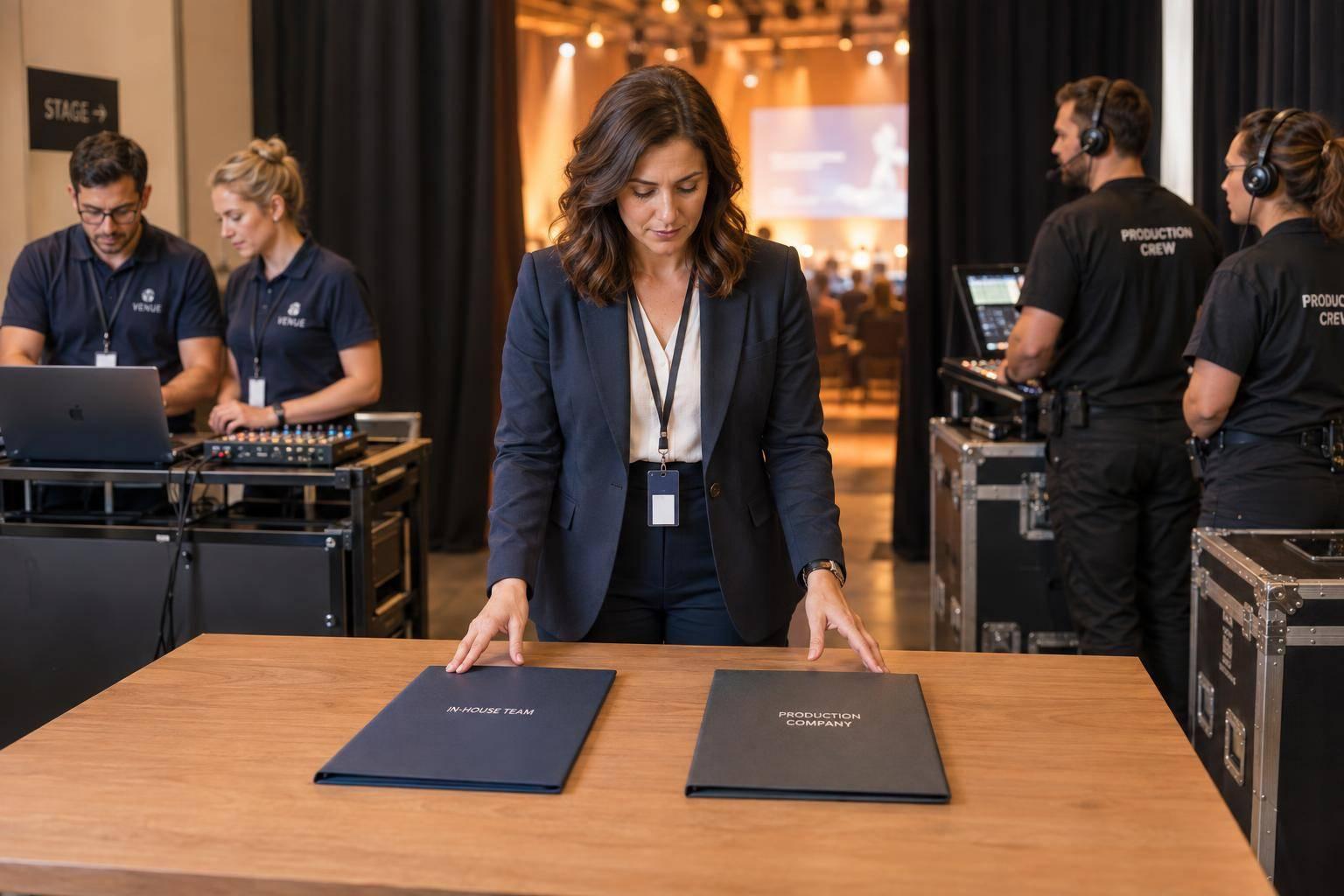
After outlining strategies and technologies, the next step is finding a firm with the right expertise to ensure seamless leadership communications.
Evaluating Expertise and Capabilities
Start by assessing the firm's technical expertise. They should cover areas like lighting, audio, LED displays, projection, engineering, and presentation management. Look for firms that provide detailed technical documentation, such as CAD drawings, site surveys, and ground plans - these reflect their precision and attention to detail.
Another critical factor is their experience in multi-site coordination. The firm should demonstrate the ability to synchronize video feeds, intercoms, and centralized production. Ask about their primary and backup connections to handle potential issues. Keep in mind that hybrid events often require 30%–50% more preparation time and can double pre-production costs.
Firms with expertise in Extended Reality (XR), Augmented Reality (AR), and virtual studio environments are better equipped for evolving leadership communication needs. Also, check if they can integrate with your existing platforms like Teams, Slack, or Zoom.
These evaluations will help you ask the right questions to ensure the firm aligns with your strategic goals.
Key Questions to Ask Before Signing a Partnership
Start by exploring how the firm aligns its solutions with your business objectives. Ask about their process for identifying and recommending solutions tailored to your needs. Also, dig into how they incorporate user preferences to ensure a consistent experience for end-users across global locations.
"The technology problem in hybrid meetings goes deeper than having the right tools. Most organizations buy equipment without understanding the specific technical challenges that hybrid formats create."
- Allison Dunn, CEO, Deliberate Directions
Contingency planning is another must-discuss topic. Request detailed protocols for handling technical challenges, such as presenter connectivity issues or equipment failures. Ask about their "zero-fail" protocols for high-stakes leadership messaging. With 70% of meetings now utilizing hybrid formats and technical issues being a common complaint, understanding their approach to real-time problem-solving is crucial.
Operational details matter, too. Ask if they offer on-site managed services, remote monitoring, and what their quality review and escalation procedures look like. Find out if they provide quarterly business reviews or regular touchpoints to track KPIs and measure ROI. Additionally, discuss how they handle time zone differences for remote audiences and what buffers they include for virtual transitions. Preparation is key - successful hybrid events now require a 2:1 ratio of rehearsal time to performance time, so their readiness will indicate their commitment to delivering a flawless experience.
Conclusion: Improving Leadership Communication Across Sites
Effective communication is the backbone of multi-site leadership, ensuring clarity, accountability, and engagement across dispersed teams. In fact, communication accounts for 80% to 90% of a program manager's responsibilities. When communication falters, it often becomes a leading cause of project failure. With 88% of remote workers identifying inconsistent leadership and miscommunication as major challenges, the need for improvement has never been more urgent. Specialized program management firms provide the expertise to tackle these issues head-on.
These firms play a critical role by connecting headquarters with field locations, offering the technical know-how and coordination necessary for consistent messaging. They centralize information, standardize processes, and deliver high-quality production to ensure executive communications resonate effectively. The focus isn’t on adding more tools but on implementing a unified, reliable solution that works for every site.
"The idea that a strategy can be brilliant and its execution poor is simply wrong."
- Roger L. Martin, Author and Strategist
This quote highlights the importance of flawless execution in leadership communication. To achieve this, organizations should conduct regular communication audits to evaluate the effectiveness of their channels, segment their audiences to craft tailored messages, and establish efficient approval workflows to empower local decision-making. For companies like SSP, managing over 700 locations and a workforce of 10,000 - where 8,000 employees lack email access - the right program management partner can mean the difference between scattered messaging and a unified leadership presence.
As hybrid work becomes the norm, professional program management is no longer optional. It's a critical investment in maintaining culture, transparency, and operational efficiency across all locations. By adopting these practices, organizations can ensure their culture and performance remain strong, no matter how widespread their teams are.
FAQs
How do program management firms maintain consistent leadership communication across multiple locations?
Program management firms maintain consistent leadership communication across multiple locations by leveraging centralized platforms, cutting-edge audiovisual tools, and real-time collaboration technologies. These tools make it possible to share messages seamlessly, ensuring every site receives accurate and synchronized information.
They often rely on hybrid event setups, incorporating multi-camera broadcasts and professional-grade video conferencing to deliver polished, uniform messages. This ensures that leadership communication remains clear, professional, and aligned with the organization's objectives, no matter where the audience is located.
By integrating secure digital platforms, top-tier broadcasting tools, and interactive communication systems, these firms minimize miscommunication and support smooth coordination across all locations.
What are the benefits of using advanced audiovisual systems for communication across multiple locations?
Advanced audiovisual (AV) systems are game-changers when it comes to connecting teams across multiple locations. By delivering crystal-clear audio and video, these systems make remote participants feel just as involved as those attending in person. The result? A smooth, connected experience that enhances communication and engagement.
Features like multi-camera setups, professional-grade lighting, and broadcast-level production tools elevate presentations to a whole new level. These tools help organizations deliver polished, attention-grabbing messages - perfect for conveying leadership updates or important announcements.
But it’s not just about looking good. Advanced AV systems also shine in fostering real-time interaction and collaboration. Tools like interactive displays, reliable streaming platforms, and advanced audio systems minimize technical hiccups and keep everyone on the same page. This makes them a go-to solution for high-stakes events like leadership summits, town halls, and investor meetings where clarity and impact are non-negotiable.
Investing in advanced AV technology doesn’t just improve communication - it ensures attendees leave with a lasting impression of professionalism and engagement.
How does local expertise improve centralized communication across multiple locations?
Local know-how is a game-changer for centralized communication systems. By customizing messages to fit the specific language, customs, and workflows of each location, professionals with regional expertise ensure the communication feels relevant and connects with diverse audiences.
Beyond messaging, this expertise simplifies the rollout of tools like audiovisual systems or virtual collaboration platforms by tailoring them to meet the unique needs of each site. The result? Fewer misunderstandings, better engagement, and a smoother, more efficient communication strategy that ties all locations together seamlessly.
Related Blog Posts
- Best Strategic Program Management Company For Leadership Communications
- 5 AV Organizations Known For Producing Leadership Conferences for Fortune 500 Companies.
- Best Strategic Program Management Firms With Strong Leadership Communications For Your Next Event
- Tight Timeline For A Leadership Conference? Use These 3 Production Companies To Support You



Streamline your workflow, achieve more

Lorem ipsum dolor sit amet, consectetur adipiscing elit. Maecenas ac velit pellentesque, feugiat justo sed, aliquet felis.



Lorem ipsum dolor sit amet, consectetur adipiscing elit. Maecenas ac velit pellentesque, feugiat justo sed, aliquet felis.