Simultaneous Interpretation Systems Explained

Chief Executive Officer
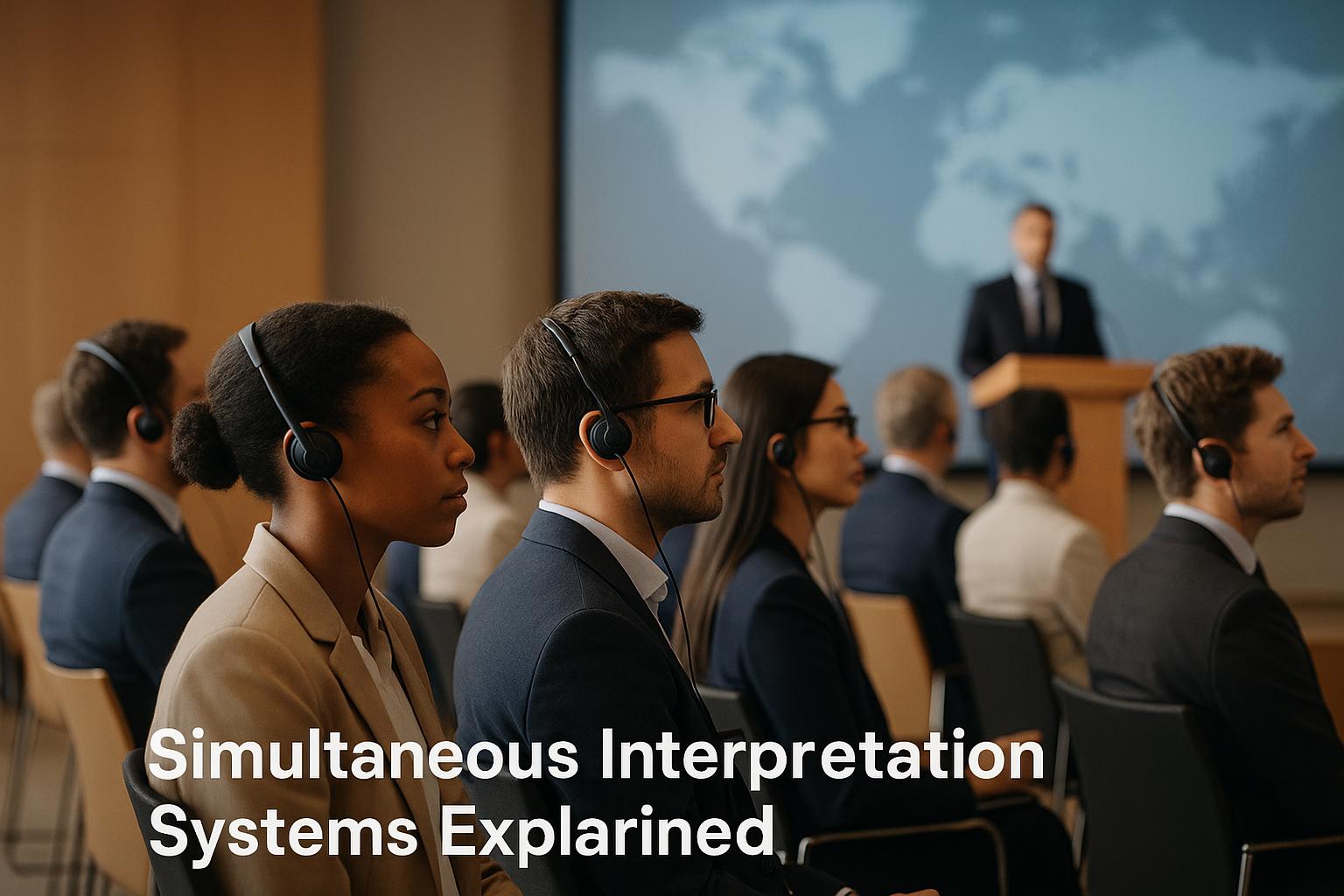
Simultaneous interpretation systems allow real-time translation during live events, ensuring speakers and attendees communicate effectively, regardless of language differences. These systems combine advanced audio-visual technology with human interpreters to deliver instant translations via headsets or receivers.
Here’s how they work:
- Audio Capture: A speaker’s voice is transmitted to interpreters in soundproof booths.
- Real-Time Translation: Interpreters translate speech instantly.
- Delivery: Translations are sent wirelessly to attendees' devices.
Key uses include:
- Corporate Events: Shareholder meetings, product launches, and conferences.
- Government Functions: Policy discussions, workshops, and summits.
- Sporting Events: Engaging global audiences and sponsors.
Emerging technologies like AI tools and Remote Simultaneous Interpretation (RSI) are improving efficiency, reducing costs, and expanding access to interpreters. These systems are indispensable for ensuring clear communication at multilingual events.
ListenTALK for Simultaneous Interpretation
Main Components of Simultaneous Interpretation Systems
Simultaneous interpretation systems are designed to capture and transmit audio in real time, enabling smooth multilingual communication during events. These systems rely on a well-coordinated setup to ensure accurate audio capture and delivery, which is crucial for effective real-time translation.
Key elements of an interpretation setup include dependable audio capture, minimizing background noise, and flawless integration with the venue's AV systems. These factors work together to provide clear and uninterrupted communication, regardless of language barriers.
Corporate Optics leverages its expertise in technical event production to create systems that support effortless multilingual communication for corporate, government, and international events.
The Role of Simultaneous Interpreters
Simultaneous interpreters play a crucial role in facilitating real-time communication across languages. Whether it's an international conference, a corporate meeting, or a high-stakes diplomatic event, they bridge language barriers, ensuring that messages are clearly conveyed. Their work complements the technical systems that handle the interpretation process, bringing a human touch to multilingual communication.
This job demands intense concentration and quick thinking. Interpreters must process what they hear and deliver accurate translations without missing a beat. It’s not just about translating words - it’s about capturing the tone, context, and cultural subtleties of the speaker. This requires sharp listening skills, deep cultural understanding, and the ability to think and speak simultaneously under pressure.
Because the mental workload is so intense, interpreters usually work in pairs. By taking turns during long sessions, they can stay sharp and maintain high-quality translations throughout the event. This teamwork ensures that the audience receives an accurate and seamless interpretation, no matter how complex the discussion.
Up next, we’ll look at how simultaneous interpretation systems handle the technical side of delivering translations in real time.
How Simultaneous Interpretation Systems Work
Simultaneous interpretation systems combine advanced technology with human skill to provide real-time translations. These systems ensure that multilingual audiences stay connected and engaged during live events by delivering translated audio almost instantly.
Signal Flow and Translation Process
The process starts with microphones capturing the speaker's voice and sending the audio to a central control unit. From there, the original audio is transmitted to soundproof interpretation booths, where interpreters listen and translate the speech in real time.
The translated audio is then sent through wireless channels to the event space. Attendees use portable receivers and headphones to tune into the channel for their chosen language. This setup allows each listener to hear clear and uninterrupted translations on a dedicated channel.
Digital protocols play a key role in maintaining audio clarity and reducing interference, ensuring the translation remains smooth and reliable throughout the event.
This efficient signal flow helps keep delays to a minimum, even during live translation.
Reducing Delays in Real-Time Translation
Keeping the delay between the original speech and its translation as short as possible is vital for the natural flow of an event. The system is designed to reduce latency through advanced digital processing and careful equipment placement. For instance, placing interpretation booths close to the stage minimizes the distance the audio needs to travel, while well-positioned transmitters ensure strong signal coverage throughout the venue.
Real-time adjustments, such as balancing audio levels and suppressing background noise, further enhance the quality of the translation. These efforts ensure that interruptions are avoided and delays are barely noticeable, allowing the audience to follow the event almost as if the speech were in their native language.
sbb-itb-ae35a94
Uses of Simultaneous Interpretation Systems
Simultaneous interpretation systems play a crucial role in facilitating communication at multilingual events. By breaking down language barriers, these systems ensure that participants from diverse linguistic backgrounds can engage fully, no matter the type of event.
Corporate, Government, and International Events
These systems are indispensable for corporate events, ranging from public conferences to private meetings. For instance, when multinational companies hold shareholder meetings or product launches, interpretation systems ensure that every stakeholder can follow and contribute, regardless of their native language.
Government events - whether at the local, state, or federal level - also rely heavily on these systems. Conventions, workshops, seminars, and expos often bring together individuals with varying linguistic needs. Real-time translation ensures everyone can engage in meaningful discussions about policies, budgets, and other critical topics.
International conferences and summits, such as diplomatic meetings, trade negotiations, and global policy discussions, demand precise interpretation to maintain the integrity of each speaker's message. Accurate, real-time translations are essential to preserving the nuance and intent behind every statement. Beyond these formal settings, interpretation systems also enhance engagement at sporting events and lifestyle gatherings, proving their adaptability across a wide range of scenarios.
High-Stakes and Multilingual Environments
In high-pressure environments like international summits or government negotiations, the ability to provide fast and accurate translations is non-negotiable. These systems ensure that every detail is conveyed clearly, allowing participants to make informed decisions and contribute effectively to the event's success.
At Corporate Optics, we specialize in technical event production and are dedicated to ensuring smooth multilingual communication. By integrating cutting-edge interpretation systems, we help create an inclusive environment where every participant feels heard and understood.
In the next section, we’ll dive into emerging technologies that are pushing the boundaries of simultaneous interpretation.
New Developments in Simultaneous Interpretation Technology
Advancements in real-time interpretation are taking established methods to the next level. With new tools and platforms emerging, simultaneous interpretation for multilingual events is becoming more streamlined and effective, without compromising on quality.
AI-Powered Interpretation Tools
Artificial intelligence is reshaping the way simultaneous interpretation works by improving accuracy and easing the mental strain on human interpreters. These AI-driven tools assist interpreters by offering real-time terminology suggestions, analyzing context, and pre-processing audio to filter out noise and identify speaker changes. This support allows interpreters to focus more on delivering seamless translations.
However, implementing these tools isn’t as simple as flipping a switch. It requires careful planning to meet strict data security standards and demands technical teams to be trained in integrating these tools with existing audio-visual (AV) setups.
Remote Simultaneous Interpretation (RSI)
Remote Simultaneous Interpretation (RSI) is changing the game by connecting interpreters through secure, high-quality audio and video streams. This approach not only broadens access to skilled interpreters but also cuts down on the logistical challenges and costs of in-person setups.
RSI systems rely on ultra-low latency audio transmission to ensure smooth communication. However, they require a stable internet connection, strong backup systems, and seamless integration between traditional AV equipment and cloud-based platforms. Additionally, remote interpreters depend on high-quality video feeds to pick up on non-verbal cues that would otherwise be available in a live setting.
To successfully implement these technologies, thorough technical rehearsals and backup plans are non-negotiable.
At Corporate Optics, we blend our deep expertise in traditional event production with cutting-edge interpretation technology. Our technical teams collaborate closely with interpretation providers to ensure AI tools and RSI platforms are integrated without a hitch, delivering seamless multilingual communication for any event.
Conclusion: Improving Multilingual Communication at Events
Simultaneous interpretation systems play a vital role in making multilingual events successful. From the specialized hardware to the soundproof booths where skilled interpreters work, each piece functions together to break down language barriers and create inclusive experiences for global audiences.
At the heart of this process is the human touch, which remains irreplaceable even in a tech-driven world. Professional interpreters bring more than just linguistic skills - they carry cultural understanding, emotional awareness, and the ability to make split-second decisions that no machine can replicate. Their teamwork ensures accuracy and preserves the subtle meanings that are often lost in translation.
When you combine these human capabilities with advanced technology, the result is a seamless experience. AI-powered tools and remote interpretation platforms now support interpreters by reducing their cognitive burden and expanding access to specialized talent. These innovations enhance the overall system, making it even more effective for high-stakes events like corporate summits and government meetings.
Event success hinges on careful planning, precise technical execution, and strong collaboration between interpretation teams and AV crews. At Corporate Optics, we bring together expert event production and cutting-edge interpretation technology. Our technical teams work hand-in-hand with interpreters to ensure both traditional systems and newer tools, such as AI and remote simultaneous interpretation (RSI) platforms, perform flawlessly. The result? Clear and effective communication for today's global events.
Investing in professional simultaneous interpretation systems is not just about logistics - it’s about engagement, clarity, and leaving a lasting impression. As organizations continue to operate on a global scale, these systems will remain essential for building connections and ensuring that every event crosses language barriers with impact and precision.
FAQs
How do simultaneous interpretation systems support multiple languages at the same event?
Simultaneous interpretation systems make it possible to translate spoken content into multiple languages in real time, ensuring that everyone in the audience can understand in their preferred language. These setups rely on specialized tools, such as microphones for speakers, headsets for listeners, and interpreter consoles for translators.
Interpreters typically work from soundproof booths, where they listen to the speaker through headphones and immediately translate the message into another language. The translated audio is then transmitted to the audience via wireless headsets. This process allows for smooth multilingual communication, making it especially useful for large events like conferences, corporate meetings, or international summits.
What are the benefits of using AI-powered tools in simultaneous interpretation systems?
AI-powered tools in simultaneous interpretation systems bring several standout benefits. They improve precision and speed by using advanced algorithms to translate speech in real-time, significantly lowering the chances of mistakes. This ensures smooth communication during multilingual events.
These tools are also well-equipped to manage large-scale gatherings, effortlessly supporting multiple languages and speakers at once. On top of that, they simplify event planning by reducing the need for extensive human interpreters, which can save both time and money. In short, AI-driven interpretation solutions are transforming how multilingual events are handled, making them more seamless and engaging.
How does Remote Simultaneous Interpretation (RSI) improve accessibility and cut costs for multilingual events?
Remote Simultaneous Interpretation (RSI) has transformed multilingual events, making them easier to manage and more inclusive. By allowing interpreters to work remotely, RSI eliminates the need for on-site booths and specialized equipment. This means events can cater to a wide range of languages without being bogged down by logistical hurdles.
Another big advantage? Cost savings. With RSI, you can skip expenses like interpreter travel, lodging, and the physical setup of interpretation gear. It also simplifies event coordination, ensuring smooth communication for global audiences while keeping everything budget-friendly.
Related Blog Posts


Streamline your workflow, achieve more

Lorem ipsum dolor sit amet, consectetur adipiscing elit. Maecenas ac velit pellentesque, feugiat justo sed, aliquet felis.



Lorem ipsum dolor sit amet, consectetur adipiscing elit. Maecenas ac velit pellentesque, feugiat justo sed, aliquet felis.