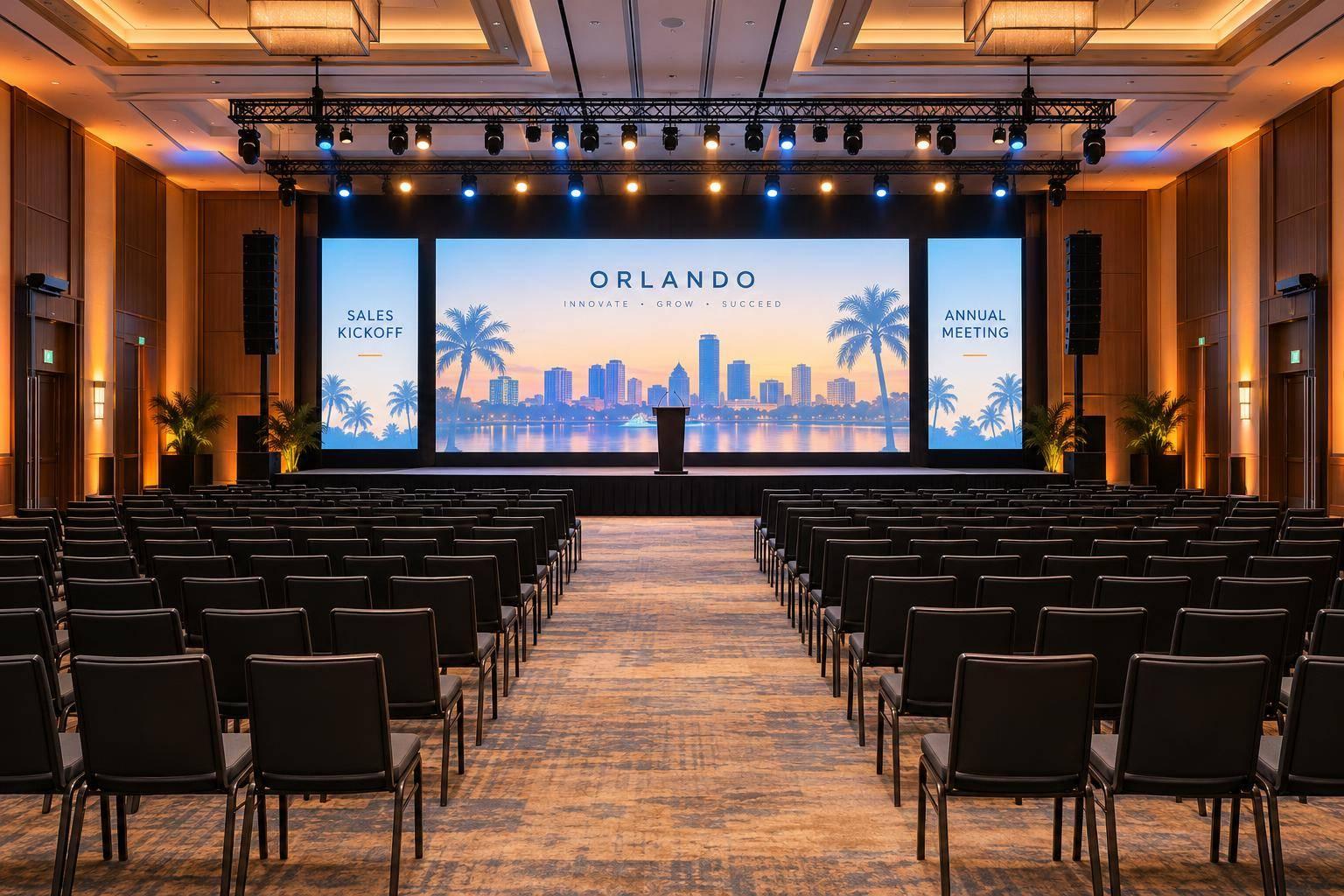
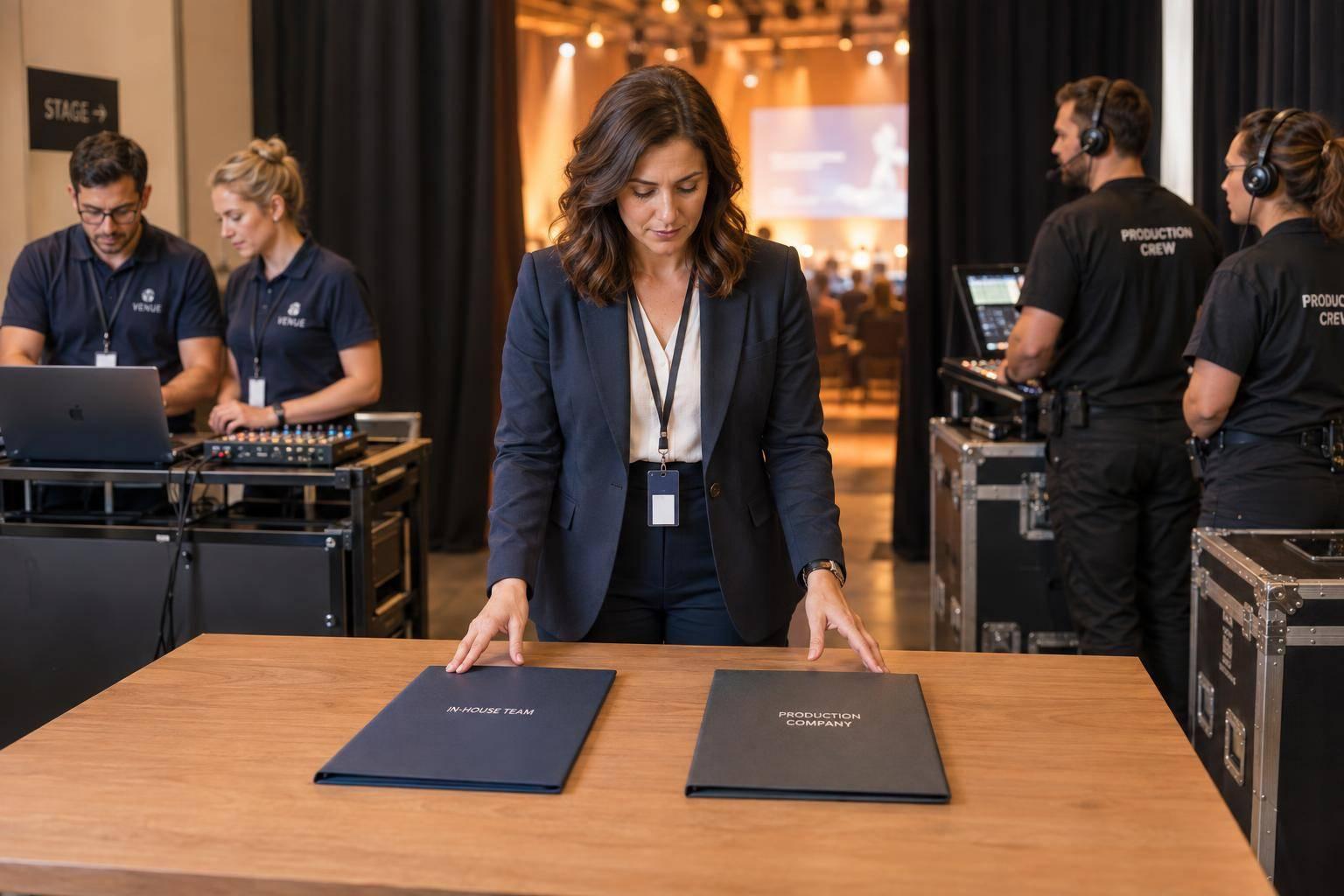
Services Provided by Technical Production Companies for Annual Conferences, Leadership Summit, or Regional Town Halls

Chief Executive Officer
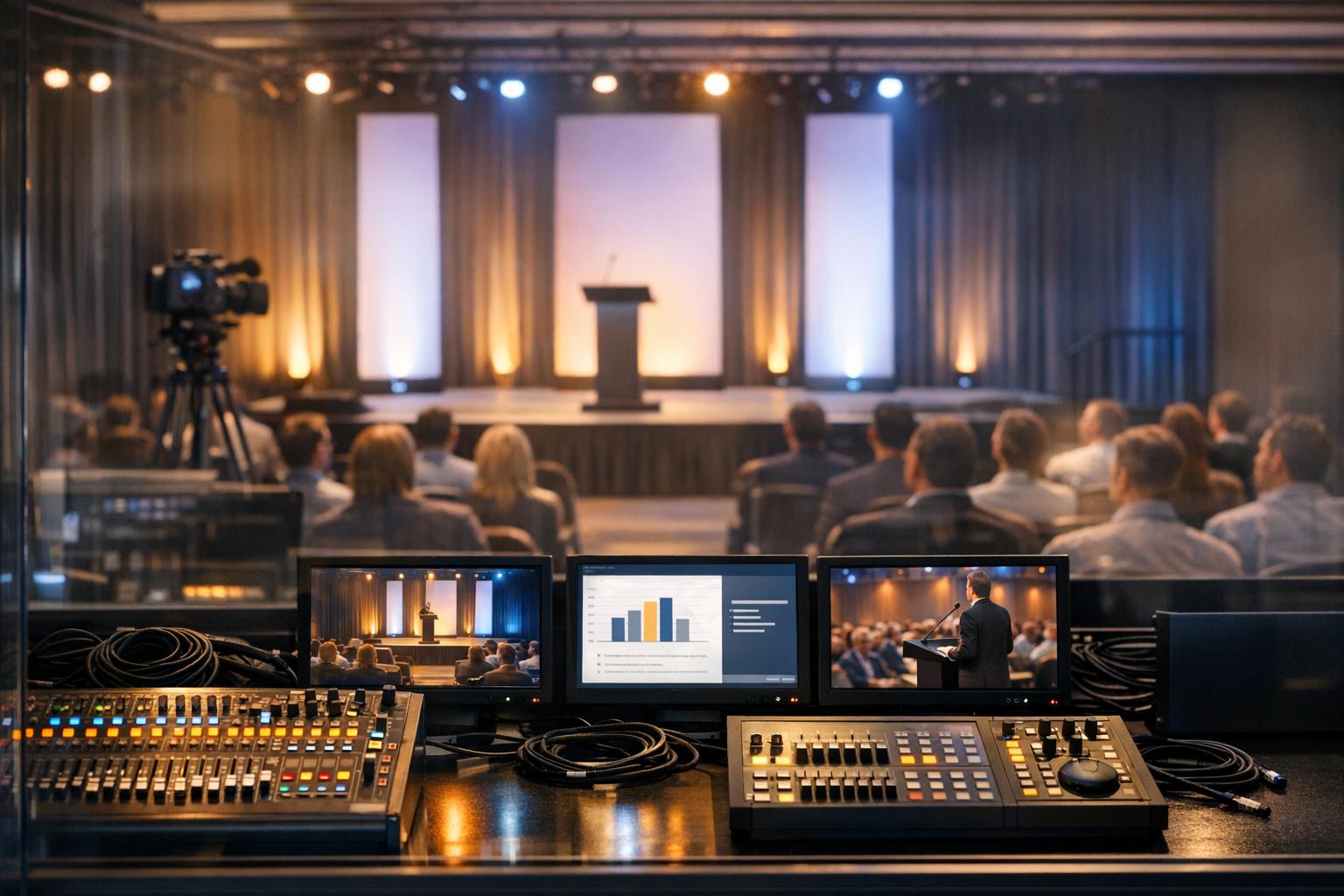
Technical production companies handle the behind-the-scenes logistics that make corporate events successful. From managing audiovisual (AV) equipment to creating custom stage designs and ensuring smooth live streaming, these teams ensure every technical detail is covered. Their services include:
- AV Solutions: High-quality sound, visuals, and display technology like LED walls, HD projectors, and microphones tailored to the venue size and audience.
- Stage Design: Custom-built stages, scenic elements, and lighting setups aligned with the event's branding and goals.
- Live Streaming: Reliable tools for hybrid events with features like video recording, multilingual support, and interactive elements (Q&A, polls).
- On-Site Support: Technical teams oversee real-time operations, troubleshoot issues, and manage speaker rehearsals for seamless execution.
What is audio visual and event production?
sbb-itb-ae35a94
Audiovisual Solutions for Corporate Events

Microphone Types and Best Use Cases for Corporate Events
AV equipment is the backbone of corporate events, ensuring clear communication and captivating visuals. Without proper sound and visuals, even the most engaging content can lose its impact. Top AV and production companies specialize in delivering solutions that work seamlessly for both in-person and remote audiences.
"Audio visual equipment is the lifeblood of modern event production. From compact panel discussions to full-scale festivals, AV solutions shape how your audience hears, sees, and remembers your event." - HB Live
A well-executed AV setup creates an atmosphere where speakers feel confident, messages resonate, and audiences stay engaged - even during long programs. With up to 50% of the office-based workforce now working in hybrid setups, these solutions must cater equally to physical attendees and remote participants.
Display Technology
The effectiveness of visual content delivery hinges on the display technology used. HD projectors are a go-to for large auditoriums with controlled lighting, offering flexibility and scalability at a reasonable price. For spaces with high ambient light - like outdoor events or brightly lit venues - LED video walls provide vivid colors and sharp contrasts that projectors can’t achieve.
For smaller settings like breakout sessions or VIP lounges, 4K monitors deliver crisp, detailed visuals. Some events take it a step further with projection mapping, which transforms ordinary surfaces - walls, stages, or even entire buildings - into dynamic visual displays. For example, a San Francisco conference in 2022 featured a 220-foot floating screen and a 3D holographic entrance, earning it a BizBash Award.
Confidence monitors are another key element, allowing speakers to view their notes and slides without turning away from the audience. This helps maintain eye contact and create a more engaging presentation. During site visits, verify that ceiling heights and room dimensions can accommodate your display setup, and use CAD drawings to ensure clear sightlines for all attendees.
While visuals draw attention, sound systems ensure the message is delivered loud and clear.
Audio Equipment and Sound Design
Clear audio is critical for effective communication. Technical production teams customize speaker systems to suit the venue’s acoustics, ensuring even sound coverage throughout the space.
Microphones play a crucial role, with different types suited to specific needs. Lavalier and headset mics allow hands-free movement, making them ideal for dynamic presentations. Gooseneck mics are perfect for fixed positions like lecterns, while handheld mics work well for interactive Q&A sessions. Digital mixers manage audio from multiple sources - microphones, video playback, and remote feeds - while foldback monitors help speakers hear themselves on stage, boosting their confidence.
Here’s a quick guide to microphone types and their best use cases:
| Microphone Type | Best Use Case | Primary Benefit |
|---|---|---|
| Lavalier (Lapel) | Speeches/Presentations | Hands-free, low visibility |
| Handheld | Q&A / Interviews | Easy to pass between speakers |
| Headset | Formal Presentations | Maximum mobility with consistent audio |
| Gooseneck | Lecterns / Boardrooms | Fixed position, reaches up to speaker |
A full technical rehearsal is non-negotiable. It ensures every microphone works, faulty cables are replaced, and all audio cues are perfectly synchronized before the event kicks off.
Video Recording and Webcasting
Video recording and webcasting expand your event’s reach far beyond the physical venue. High-definition studio cameras and PTZ (Pan-Tilt-Zoom) robotic cameras capture speakers and audience reactions from multiple angles. These feeds are then processed through video switchers to create polished, broadcast-quality content. PTZ cameras, in particular, can be operated remotely by a single person, cutting labor costs while maintaining professional standards.
IMAG (Image Magnification) systems project live camera feeds onto large screens, ensuring that even attendees in the back rows can see details like facial expressions and presentation slides. For hybrid events, hardware encoders and capture cards deliver high-quality live streams, making remote participants feel just as engaged as those in the room.
Studies show that high-quality video fosters stronger connections and a sense of belonging, even in remote settings. Post-event, production teams can host recorded content online, extending its value and allowing those who missed the live session to catch up on key moments. To avoid last-minute issues, allocate at least 10% of your AV budget as a contingency for unexpected technical needs.
These AV solutions lay the groundwork for creating immersive and impactful event experiences, with more details to follow in the next sections.
Stage Design and Scenic Production
The stage is the centerpiece of any event, tying together lighting, sound, and messaging to represent your brand. A thoughtfully designed stage not only draws attention but also reinforces your brand identity and keeps the audience engaged. In fact, 84% of marketers believe events help differentiate their brand. By aligning stage design with AV and lighting systems, you create a seamless and impactful event experience.
Production teams start by diving deep into your brand. They assess your event’s goals, target audience, and messaging to ensure the stage design reflects your company’s image. Using 3D renderings and animated previews, they let you visualize the stage from every angle before moving into production. For a conference of around 500 attendees, a visually compelling stage design package generally starts at $20,000. These early steps are crucial for crafting a stage that’s tailored to your event.
Custom Stage Fabrication and Setup
Custom stage fabrication takes event design to the next level. Teams create everything from bespoke stage sets and branded podiums to dimensional logos, reveal walls, and projection surfaces - all tailored to your event’s theme. For example, at the NFPA Conference & Expo 2025 in Las Vegas, a 100-foot screen and a custom "Udon" scenic package helped enhance key sessions. Similarly, at OpenText World 2024, a production team designed a stage for 2,000 in-person attendees and 10,000 virtual participants, while managing over 25 breakout sessions.
"The professionalism and technical expertise of the Stagevision crew is unparalleled and was a vital factor in the success of OpenText World." - Laurie Powers, Sr. Director of Corporate Events at OpenText
Fabrication teams work closely with lighting and video crews to integrate stage backdrops with LED walls, projection mapping, and ambient lighting. They also handle rigging plots, ensuring heavy elements like screens or lighting rigs are safely suspended and meet venue structural requirements. When possible, adding a backstage entrance can improve event flow and provide a polished experience for presenters.
Scenic Elements and Set Design
Scenic elements transform event spaces into immersive brand showcases. Modular stages and LED walls offer flexibility, allowing for real-time branding and quick reconfigurations - perfect for multi-room conferences or fast-paced events. SEG backdrops provide a sleek, modern aesthetic that aligns with your brand’s image. A great example is the WNBA All-Star Fan Fest in July 2024, where a production team partnered with Google Pixel to create a 30-foot-wide video wall and a kaleidoscope tunnel with mirrored surfaces, leaving a lasting impression on attendees.
Projection mapping adds another layer of creativity by turning surfaces into dynamic displays. At the Zimmer Biomet Trade Show in 2024/2025, Aluvision frames and tiles were used to blend LED walls, lighting, and SEG backdrops, reflecting the client’s contemporary brand vision. Beyond the stage, teams often extend the experience throughout the venue, using branded entryways, step-and-repeat backdrops, and decorative elements to maintain a cohesive look.
For recurring events, reusable modular designs are a smart choice. They help maintain consistency while cutting down production costs over time. Site visits with your fabrication team are key to planning for rigging points, power needs, and optimal sightlines from all angles.
Lighting Design and Production
Lighting does more than just brighten a space - it sets the tone, guides focus, and strengthens brand identity. It’s a powerful tool for shaping the event experience. As the Loopyah Content Team explains:
"Event lighting sets mood, guides attention, and quietly tells your story before a single word is spoken." – Loopyah Content Team
Professional lighting teams follow best practices for conference event production by first understanding your event’s goals and the message you want to convey. They then translate this into precise lighting specifications. For instance, general seating areas are typically lit at 200–300 lux to keep attendees alert, while stages for presenters demand 800–1,200 lux for broadcast-ready visuals. The color temperature also matters, with neutral to cool whites (3,500–5,000K) used for focused sessions and warm whites (2,700–3,200K) creating a more welcoming vibe for receptions. These details form the foundation for dynamic lighting control throughout the event.
Stage and Ambient Lighting
Modern intelligent lighting systems allow for complete customization of your event atmosphere. Programmable fixtures can adjust color, brightness, and direction on the fly. For example, uplighting spaced 8–12 feet apart along walls creates seamless color coverage that enhances your brand presence, while spotlights and follow-spots ensure keynote speakers remain the center of attention. Kinetic lighting takes it a step further - these motorized fixtures can move, rise, or shift during presentations, syncing with music or video for an immersive experience. Combining static washes with moving lights ensures smooth transitions between segments, and a thorough camera rehearsal with finalized lighting cues ensures the visuals look just as good on screen as they do in person.
Custom Lighting for Corporate Branding
Lighting can be a subtle yet effective way to reinforce your brand identity. Gobo projection, for instance, uses custom stencils to project your logo or event theme onto walls, floors, or ceilings - a budget-friendly branding solution. Consistency is key, especially for hybrid or fully digital events. A 45-degree key light angle on presenters minimizes shadows, and remote speakers are lit and framed to align with corporate standards. Technical planning is also essential to avoid disruptions - keeping circuits under 80% of their breaker capacity prevents power failures, while energy-efficient LED technology with networked controls offers creative flexibility while cutting down on power use and heat output.
Live Streaming and Hybrid Event Technology
Hybrid events have become the go-to format for corporate gatherings, where ensuring remote participants feel equally included is a top priority. As AVPartners puts it:
"Without expert AV design your online attendees may feel like second-class participants, audio could lag, and engagement drops." – AVPartners
To achieve a seamless experience, professional live-streaming relies on a five-step workflow: Capture (using cameras and audio equipment), Encode (digitizing the signal), Process and Package (transcoding for various devices), Deliver and Scale (distribution via a CDN), and Playback (viewing on the end user's device). High-quality setups typically combine digital cameras with professional audio sources, using SDI cables for 4K resolution over long distances. Compression with codecs like H.264 or H.265 ensures efficient streaming, while CDNs enable low-latency delivery to global audiences.
In early 2020, Freeman, a global event agency, partnered with Wowza to tackle a staggering 3,000%+ increase in streaming hours. By scheduling pre-recorded videos to play as "live" sessions, they streamed around 95,000 hours of content monthly. This included multi-lingual support and simulcasting across platforms - all without adding extra staff. This "simulive" method delivers broadcast-quality content while reducing real-time technical risks.
Broadcast-quality production - complete with branded motion graphics, logos, sponsor banners, and tickers - keeps virtual audiences engaged visually. Features like virtual green rooms let producers prep remote speakers privately, while Remote Integration Model (REMI) technology brings in contributors from anywhere, maintaining professional-grade results. For critical events, cloud redundancy and mobile broadband or satellite solutions can safeguard against interruptions.
Interactive Tools for Remote Audiences
Streaming quality is just one piece of the puzzle. Interactivity tools help remote participants feel fully integrated into the event. Features like live polls, real-time Q&A with guest spotlights, public and private chats, and virtual breakout rooms ensure everyone - remote or in-person - can actively participate. Gamification elements like leaderboards and challenges keep energy levels high, while social media walls display attendee posts from platforms like Instagram, LinkedIn, and TikTok in real time. Digital reactions (e.g., hearts, thumbs up) and QR-coded photo booths add another layer of engagement.
CraftJam CEO Nora Abousteit used a two-camera setup for virtual workshops during 2020–2021: one camera focused on the instructor’s face to maintain a personal connection, and the other highlighted their hands to demonstrate techniques. Similarly, Daybreaker, a hybrid dance party series, uses interactive Zoom chats and high-quality audio equipment to connect remote attendees with live DJs, creating a shared experience through themed digital environments. Interestingly, research suggests that 47% of people are more likely to ask questions during virtual events than in-person ones.
At physical venues, using two laptops - one for moderating virtual interactions and another for managing streaming and audio - helps avoid feedback issues. Full dry runs are essential to test remote cameras, audio, and connectivity. Dedicated moderators can oversee chat and Q&A sessions, freeing presenters to focus on their content. Confidence monitors allow on-site speakers to view slides, notes, and remote audience prompts without breaking eye contact with the room.
Simultaneous Interpretation and Accessibility
These tools don’t just enhance reach - they also demonstrate a commitment to inclusivity. Live closed captioning, simultaneous interpretation, and multilingual translation ensure accessibility for hearing-impaired viewers and international audiences. High-quality audio and 4K cameras are crucial for remote participants to clearly see and hear speakers. For example, the North-West Biotech Initiative kept all sessions at their "Inclusion in STEMM" hybrid conference under 30 minutes to accommodate shorter remote attention spans, while providing live closed captions via Zoom.
Security measures like Digital Rights Management (DRM), AES encryption, and token-based authentication protect sensitive corporate data and prevent unauthorized access. To maximize global reach, simulcasting enables a single stream to broadcast across multiple platforms - like YouTube, Facebook, and LinkedIn - simultaneously. Post-event, many organizations are moving toward creating branded, on-demand content libraries, allowing attendees to revisit sessions year-round and extending the event's impact.
On-Site Technical Support and Event Operations
State-of-the-art equipment is only as good as the people running it. On-site technical teams are the driving force behind successful corporate events, handling everything from fine-tuning audio to resolving unexpected technical hiccups. Paired with reliable AV and streaming systems, these teams ensure every aspect of the event runs smoothly.
Real-Time Technical Management
Technical directors and production managers oversee every detail as the event unfolds. They manage audio levels to avoid feedback, operate intricate LED walls and dynamic lighting systems, and facilitate interactive elements like live polls and Q&A sessions. If something goes wrong, they’re quick to troubleshoot, ensuring transitions remain seamless.
For example, in January 2025, GlobeStream Media and The Creative Group collaborated on the Vistra Retail 2025 Sales Kick-Off at Texas Live! in Arlington, Texas. The technical team flawlessly executed a high-energy, day-long sales rally for over 200 senior leaders and top performers, delivering impeccable audiovisual support. Similarly, during the Inductive Automation Ignition Community Conference (ICC) 2025, GlobeStream Media and Tucker Media Group handled technical production for over 1,200 in-person attendees and thousands of virtual viewers. They managed everything from immersive audio to LED visuals for keynotes, breakout sessions, and even a "Build-a-Thon" competition.
To ensure everything is event-ready, full-scale trial runs are critical. These rehearsals help identify any equipment issues and confirm that cameras, microphones, speakers, and video presentations are functioning properly. The growing complexity of event operations is reflected in the global event logistics market, valued at $68.63 billion in 2023, with a projected CAGR of 6.3% from 2024 to 2030. Technical teams also make themselves easily identifiable with uniforms or branded lanyards, allowing for faster responses when problems arise.
But the work doesn’t stop with real-time adjustments - backstage coordination plays a key role in keeping everything on track.
Backstage and Equipment Coordination
Behind the scenes, backstage teams ensure presenters and equipment are perfectly synchronized. They manage "Speaker Ready Rooms", where presenters can rehearse and receive technical guidance. They also oversee "load-in" and "load-out" logistics, handling the setup and teardown of staging, rigging, and power distribution. Additionally, they manage content systems that collect speaker presentations and update digital signage as needed.
Clear communication protocols, such as walkie-talkie and phone systems, are essential for addressing backstage needs promptly. To prevent congestion and maintain a smooth flow, teams often designate separate routes for vendors moving equipment. Many modern crews are also adopting eco-friendly practices, such as using 100% LED lighting to reduce energy consumption by over 70% and opting for rechargeable batteries to cut down on waste.
Custom Solutions for Different Corporate Event Types
Corporate events come in many shapes and sizes. A multi-day summit, for instance, has vastly different technical needs compared to a single-day town hall. To meet these varied requirements, technical production companies adjust their services based on the event's scale, goals, and audience - whether participants are attending in person, remotely, or through a hybrid setup.
The process begins with a personalized approach. For high-stakes events, production teams conduct technical site visits, design workshops, and rehearsals to create environments that align with the event’s objectives and venue capabilities.
From there, teams integrate audiovisual, IT, and digital tools - like event apps and registration platforms - into a cohesive plan that covers everything from the initial concept to on-site execution and post-event analysis. Below, we’ll explore how these strategies are tailored for annual conferences, leadership summits, and regional town halls.
Annual Conferences and Leadership Summits
Large-scale events like annual conferences and leadership summits require meticulous planning and attention to detail. These events often feature custom stage designs, immersive environments, and multi-day management to leave a lasting impression. Custom-built stages are particularly effective in reinforcing corporate branding and messaging.
To maintain audience engagement over several days, production teams use elements such as LED video walls, dynamic lighting setups, and interactive tools like live polling and Q&A sessions. For example, a two-day gala in San Francisco embraced a "water and nature" theme, featuring a 3D holographic entrance and a 220-foot floating projection screen. This innovative approach earned the event a BizBash Event Experience Award for Best Conference in 2022.
Leadership summits, in particular, demand specialized support for speakers and presenters. Production teams provide tools like confidence monitors, teleprompters, and professional cue clickers, along with coaching and technical assistance, to ensure executives deliver their messages seamlessly. Rehearsals are also critical for testing cameras, microphones, and video feeds to guarantee everything runs smoothly when the event begins.
Regional Town Halls and Community Engagement Events
Regional town halls focus on connecting employees across multiple locations, often through broadcast-quality live streaming and two-way communication tools. Clear, reliable audio is key, so these events often utilize advanced systems like ceiling microphones and professional PA setups to ensure everyone - whether in the room or remote - can hear clearly. With hybrid work environments becoming the norm, organizations continue to adapt their hybrid meeting planning strategies to meet the needs of distributed teams.
To enhance visibility in larger venues, image magnification (IMAG) technology combines high-definition cameras with large LED or projection screens, ensuring even those seated far from the stage can see the speaker clearly. Interactive tools like live polling, real-time Q&A, and event apps foster engagement and create meaningful connections between speakers and participants, even in dispersed settings.
On-site technicians, trained in both technology and hospitality, oversee every detail to ensure flawless execution. For smaller venues or huddle rooms, all-in-one USB conferencing devices simplify connectivity and reduce troubleshooting headaches.
These tailored solutions build on core technical strategies, ensuring that every event - no matter its size or format - meets the unique needs of the audience and organization.
Conclusion
Technical production companies have a knack for turning ordinary events into standout experiences. With services ranging from audiovisual equipment and modular stage design to live streaming and on-site technical support, they ensure every element works together smoothly. This allows event organizers to concentrate on what truly matters: delivering their message and connecting with their audience.
By implementing the strategies outlined earlier, production teams ensure events run like clockwork. Professional crews bring technical expertise to the table, offering backup systems, running rehearsals, and addressing issues on the fly. This level of preparation guarantees a seamless experience for attendees, whether they’re sitting in the room or tuning in remotely.
"We handle every detail so you can focus on what matters - your message and your audience." – Corporate Optics
For organizations hosting events like leadership summits, annual conferences, or town halls, partnering with the right technical team can make all the difference. Corporate Optics combines cutting-edge planning tools with award-winning production skills to deliver events that leave a lasting impression. Whether it’s a multi-day conference with immersive visuals or a single-day town hall with top-notch streaming, their expertise ensures measurable success.
Bringing a production company into the planning process early - during venue selection and agenda creation - can help avoid unexpected challenges and make the most of your budget. Aligning technical execution with your event’s goals creates a polished and engaging experience for every attendee. With the right partner, your event will reflect professionalism, precision, and a strong connection to your audience.
FAQs
What are the main advantages of hiring a technical production company for hybrid events?
Hiring a technical production company for hybrid events comes with several clear benefits, ensuring an engaging experience for both in-person and virtual audiences. These companies specialize in integrating audiovisual systems with digital streaming tools, creating a unified experience where every participant feels connected, no matter how they're attending.
Their expertise also extends to managing complex technologies - like professional-grade cameras, microphones, and interactive platforms - which minimizes the risk of technical hiccups. This means you can focus on delivering impactful content while leaving the logistics in capable hands.
On top of that, these companies offer services tailored to the specific needs of each event. From coordinating venues and streaming platforms to handling live broadcasts and analyzing post-event data, they ensure every detail is covered. This level of customization boosts audience engagement and helps your event make a memorable impact.
How does stage design help strengthen brand identity at corporate events?
Stage design plays a powerful role in showcasing and strengthening your brand identity. By creating a visually engaging environment that mirrors your company's values and messaging, it becomes more than just a backdrop - it's a statement. A thoughtfully designed stage grabs attention, draws people in, and connects your audience to your brand on a deeper level.
Key elements like custom backdrops, branded visuals, and thematic designs help craft a cohesive look. Incorporating brand colors, logos, and dynamic lighting effects ensures that every detail aligns with your marketing goals. Beyond just looking great, a creative stage setup can leave a lasting impression, helping your audience remember your brand long after the event is over.
How do technical production companies ensure smooth live streaming for remote attendees?
Technical production companies play a key role in delivering flawless live streaming by blending cutting-edge technology, thorough preparation, and hands-on support. They rely on top-tier streaming platforms and professional audiovisual gear to ensure the video and audio are crisp and dependable.
Careful pre-event planning is essential. This includes creating detailed run-of-show documents and conducting rehearsals to identify and fix any potential technical hiccups ahead of time. Once the event is live, real-time monitoring and on-site technical teams step in to tackle any issues immediately, ensuring minimal interruptions.
Together, these efforts guarantee a smooth, high-quality streaming experience for remote viewers, keeping them fully engaged and connected from start to finish.
Related Blog Posts
- Top 3 Services Event Production Companies Provide for Annual Conferences
- Top Production Companies To Work With For Organization's Annual Conference
- 4 Meeting Production Companies That Excel At Seamless AV (audio/video), Lighting, and Stage Design for Corporate Conferences, and events
- 7 Services Techincal Production Companies Provide For Company Conferences


Streamline your workflow, achieve more

Lorem ipsum dolor sit amet, consectetur adipiscing elit. Maecenas ac velit pellentesque, feugiat justo sed, aliquet felis.



Lorem ipsum dolor sit amet, consectetur adipiscing elit. Maecenas ac velit pellentesque, feugiat justo sed, aliquet felis.