A/V Production Teams Who Specialize In Executive-Level Meeting Production

Chief Executive Officer
High-stakes executive meetings demand flawless A/V execution. Whether it's a CEO keynote, board meeting, or hybrid leadership summit, even minor technical issues can disrupt communication and harm credibility. Specialized A/V teams ensure secure, professional setups tailored to the unique requirements of these events.
Here’s what sets executive-level A/V production apart:
- Precision and Security: Confidential discussions require secure networks and trusted crews bound by NDAs.
- Tailored Technology: Events need high-resolution visuals, professional sound engineering, and redundancy to prevent disruptions.
- Hybrid Challenges: Equal quality for in-person and virtual attendees demands advanced setups and robust connectivity.
- Expert Teams: From production managers to audio engineers, every role contributes to a polished experience.
Behind the Scenes in Event Production: Who Does What?
sbb-itb-ae35a94
What Executive-Level A/V Production Requires
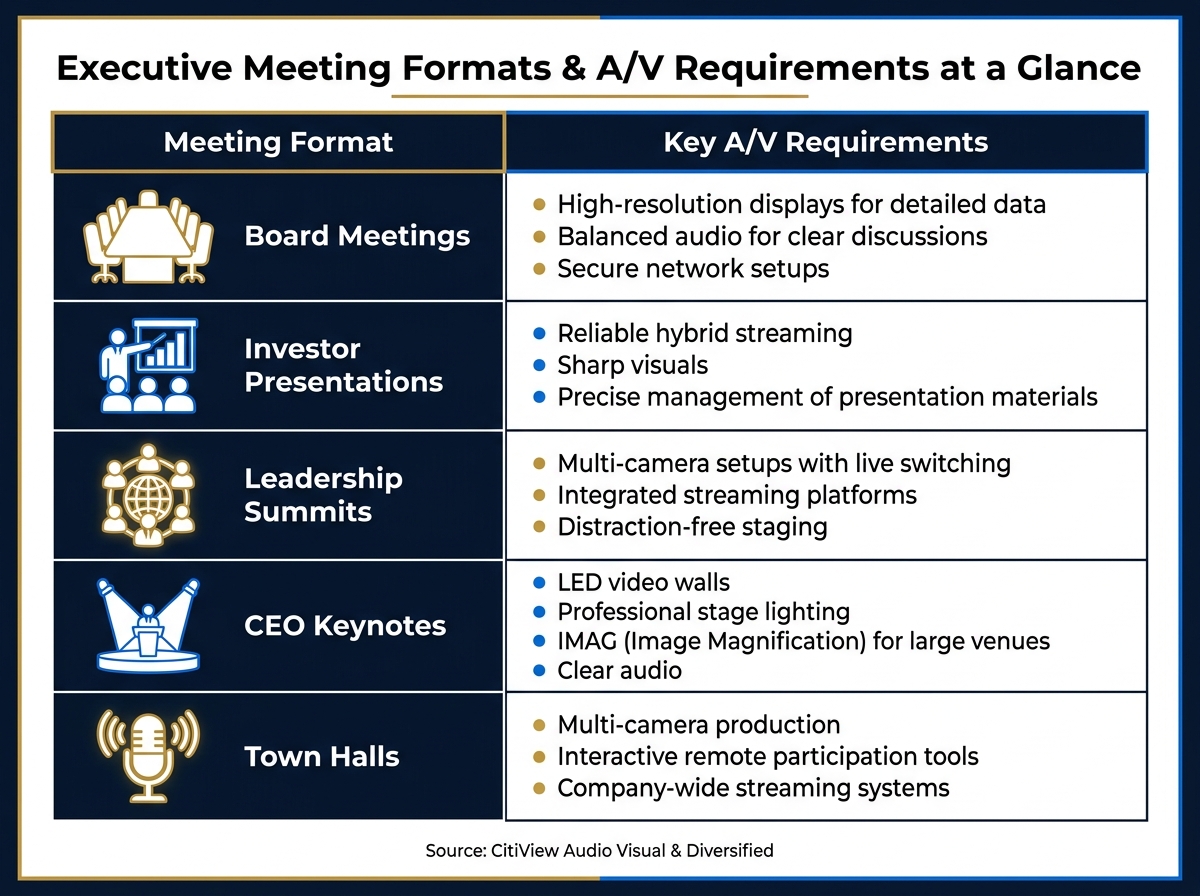
Executive Meeting Formats & A/V Requirements at a Glance
Executive A/V production isn’t just about setting up equipment - it’s about creating an environment where senior leaders can communicate effectively, confidently, and without interruptions. At this level, precision is non-negotiable, as credibility hinges on flawless execution during high-stakes events.
Challenges Specific to Executive A/V Production
The demands for executive-level A/V production are far more complex than standard setups. A technical glitch during a CEO’s keynote, for instance, can derail messaging and harm credibility.
"A technical failure during a CEO keynote can damage credibility and disrupt carefully planned messaging." - CitiView Audio Visual
To mitigate such risks, production teams must deliver comprehensive solutions, including professional sound engineering, high-resolution visuals, optimized lighting for cameras, and real-time technical monitoring throughout the event.
Redundancy is a critical element in these setups. For example, wired internet connections with automatic failover systems and backup microphone channels ensure uninterrupted performance. These safeguards are essential for maintaining seamless communication.
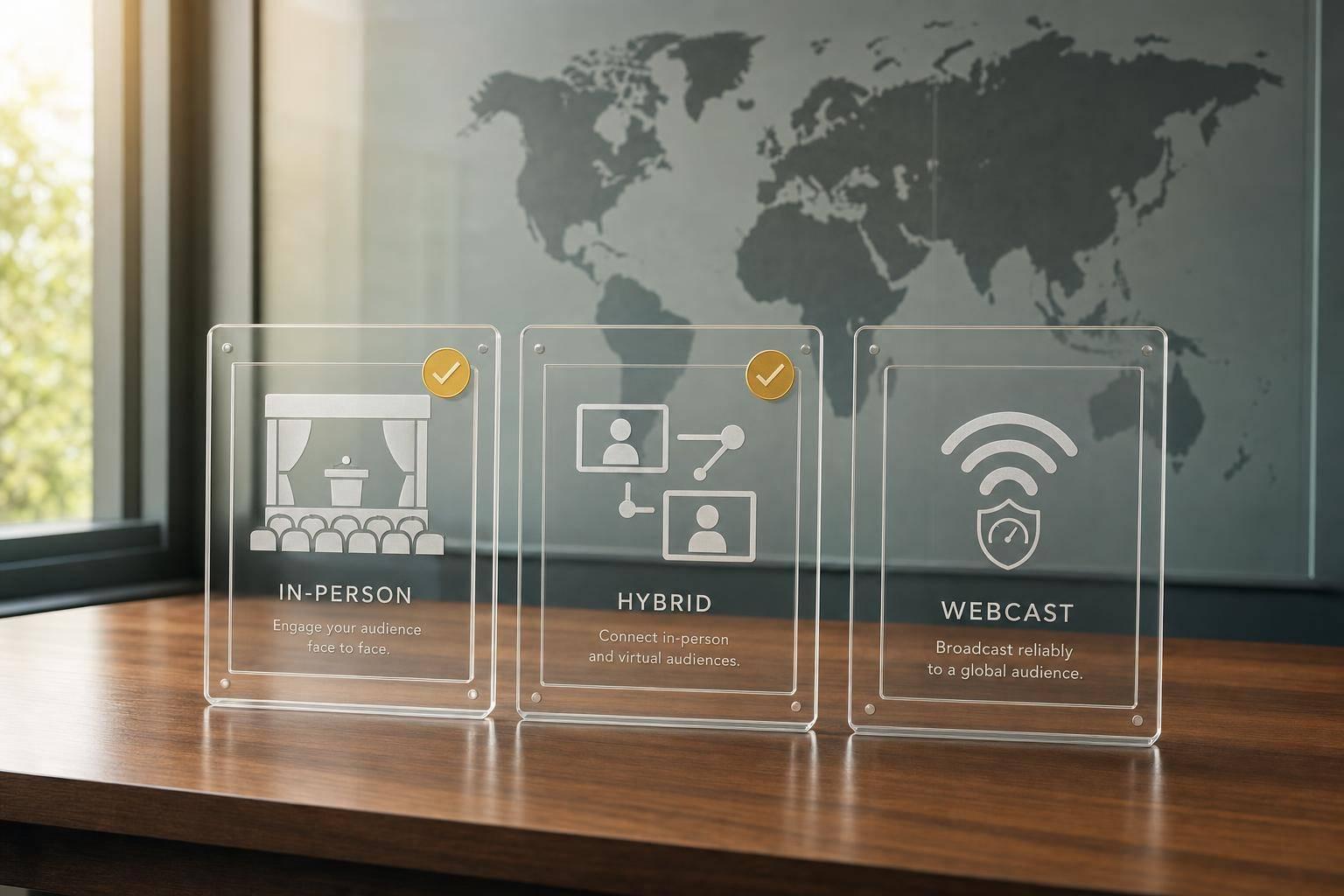
Hybrid events introduce even more complexity. Ensuring a remote participant in San Francisco experiences the same quality as someone in the front row in New York requires multi-camera streaming, professional-grade encoding, and a robust Content Delivery Network (CDN). Achieving parity between in-person and virtual experiences remains a technical challenge that demands careful execution.
By addressing these challenges, teams can better understand the specific technical needs for various executive meeting formats. These requirements shape the approach for each type of meeting.
Common Executive Meeting Formats and Their A/V Needs
Each executive meeting format has unique technical requirements, and understanding these needs upfront is essential for a smooth and effective event.
| Meeting Format | Key A/V Requirements |
|---|---|
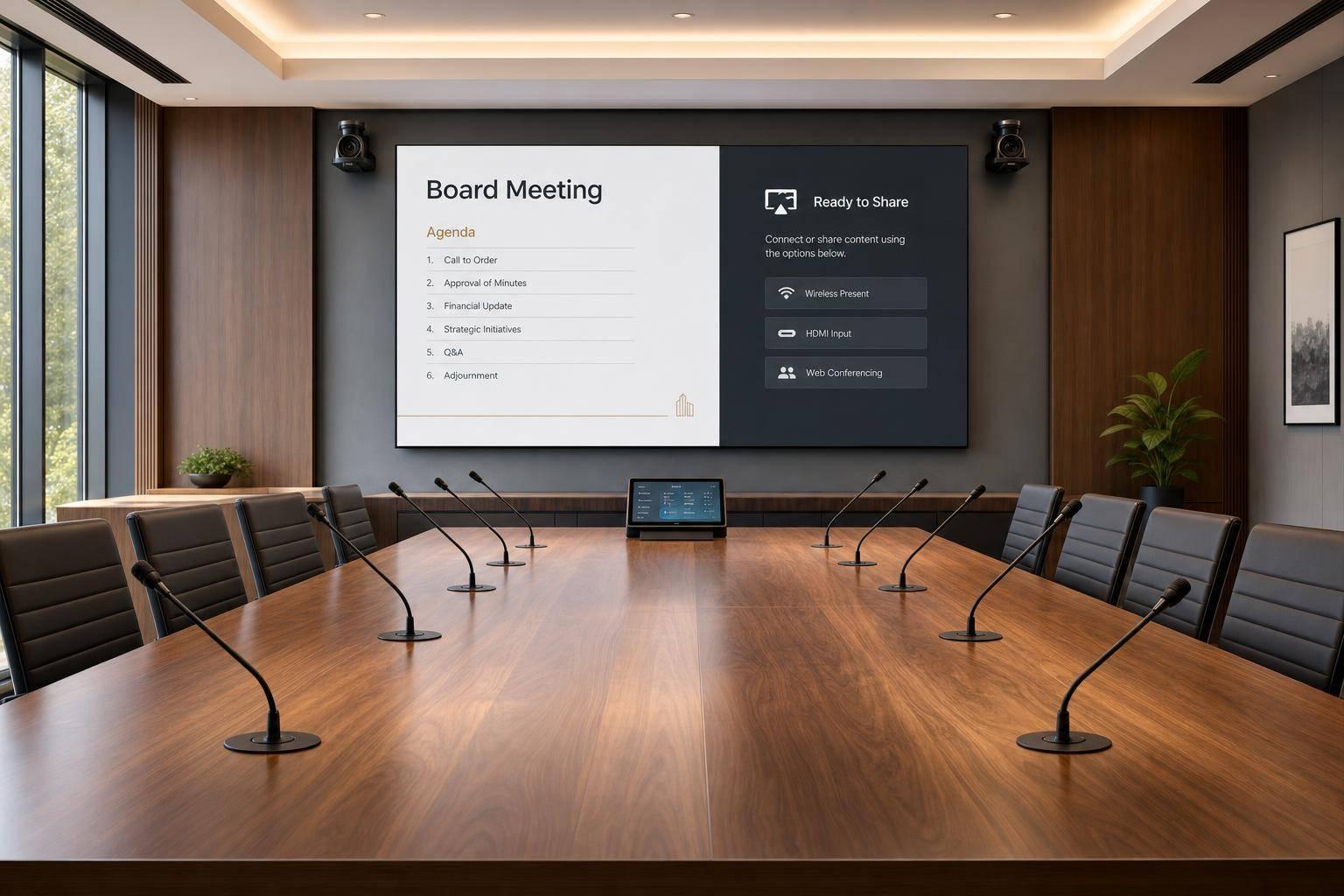
| Board Meetings | High-resolution displays for detailed data; balanced audio for clear discussions; secure network setups |
| Investor Presentations | Reliable hybrid streaming; sharp visuals; precise management of presentation materials |
| Leadership Summits | Multi-camera setups with live switching; integrated streaming platforms; distraction-free staging |
| CEO Keynotes | LED video walls; professional stage lighting; IMAG (Image Magnification) for large venues; clear audio |
| Town Halls | Multi-camera production; tools for interactive remote participation; company-wide streaming systems |
Leadership summits often feature hybrid components, requiring teams to manage platform-specific workflows while continuously monitoring performance to ensure global participation.
In contrast, board meetings and investor presentations prioritize clarity over spectacle. Data-heavy presentations require displays sharp enough to capture every detail, while audio systems must support dynamic conversations without interference. These settings demand a high level of precision, as even minor technical missteps can impact communication effectiveness.
Roles and Responsibilities in an Executive A/V Production Team
Every seamless executive meeting relies on a skilled team working in perfect harmony. Each member contributes to a polished event, combining their expertise to create a cohesive experience.
Leadership and Technical Oversight Roles
Leading the charge are production managers and technical directors, who coordinate all aspects of the event - from audio and video to lighting and staging. Their job is to unify these elements under a single, well-orchestrated plan.
Before the event, this leadership team dives into pre-production tasks, which include creating detailed documentation and conducting site visits to address any venue-specific challenges.
"Event production includes equipment, experienced crew, technical direction, and full show management." - CitiView Audio Visual
Project managers collaborate closely with technical directors to fine-tune room layouts, content workflows, and technology needs during the planning phase. For larger executive gatherings, it’s recommended to engage this leadership team 6–12 weeks in advance to ensure the right crew and equipment are secured.
Technical and Creative Specialists on the Team
Audio engineers handle live sound mixing and build redundancy into the system, while video directors manage multi-camera setups and live switching to capture the best shots in real time. Meanwhile, lighting designers use techniques like color and movement to highlight speakers and ensure they look professional on camera - especially critical for hybrid events.
Adding a creative dimension, scenic designers craft custom stages and branded environments that align with the company’s visual identity.
As Susan Beardsley, Media Service Delivery Senior Manager at Diversified, puts it:
"Corporate event AV services sit at the intersection of strategy, storytelling, and technology."
Together, these specialists create a solid foundation for smooth speaker support and flawless event execution.
Speaker Support and Show Operations
Even the most seasoned executives benefit from backstage support. Show operations specialists manage tools like confidence monitors, teleprompters, and real-time cues, allowing presenters to focus entirely on their delivery. Rehearsals are essential at this stage, as they help identify and resolve any technical or timing issues before going live.
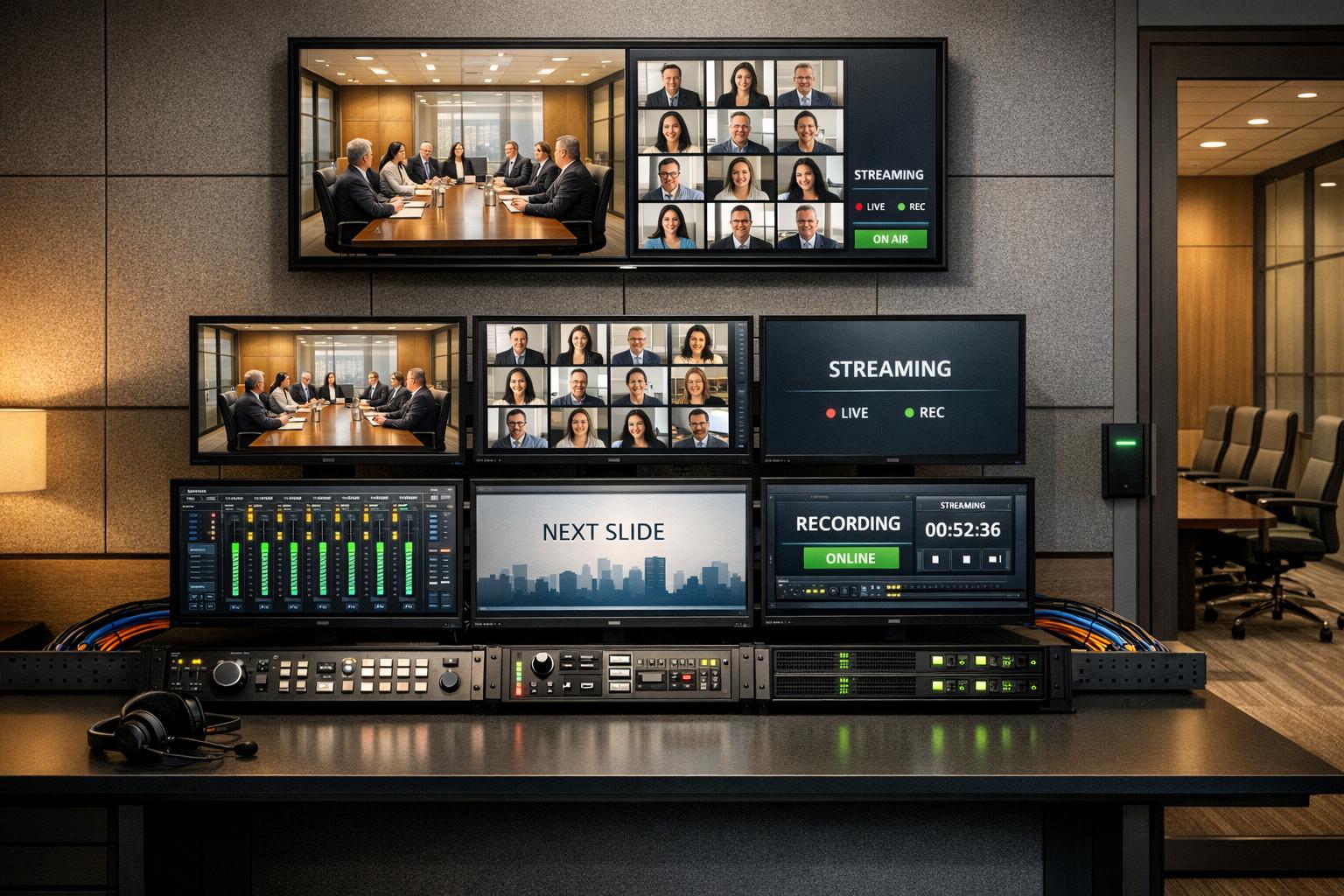
For hybrid events, a dedicated team ensures smooth streaming operations. They handle platform workflows, monitor bandwidth, and implement failover systems to keep remote participants connected without interruptions. These elements are carefully integrated into the overall show plan from the very beginning.
Core Technical Components for Executive A/V Production
Even the most skilled teams need specialized equipment to deliver a seamless experience during high-stakes executive meetings.
Audio Systems to Ensure Every Word Is Heard
Clear sound is the backbone of any successful executive meeting. Line array speaker systems ensure consistent audio distribution, so every attendee hears with equal clarity. Wireless lavalier and headset microphones give presenters the freedom to move around without sacrificing sound quality, while digital mixing consoles allow audio engineers to manage multiple input sources in real time.
Digital Signal Processing (DSP) plays a key role by automatically eliminating feedback and balancing acoustics - especially important in venues with challenging sound dynamics. Stage monitors help presenters hear themselves clearly, reducing potential disruptions.
Enterprise-level setups often include dual redundant systems, such as backup amplifiers and signal paths, to maintain 99.99% signal uptime. A venue acoustic assessment is essential to determine the best speaker placement based on room size and surface materials.
Of course, great audio is only part of the equation - visuals are equally important for impactful presentations.
Visual and Camera Systems for Professional Coverage
LED display walls and multi-screen configurations go beyond simply displaying slides; they help set the tone of the room. When designed thoughtfully, these visual elements allow a space to adapt seamlessly to different parts of the agenda, such as transitioning from a strategy session in the morning to a keynote in the afternoon.
Camera systems also play a critical role, especially when sessions are recorded for later use in executive communications or training. Proper camera placement and multi-camera switching ensure professional-quality coverage. As Diversified aptly states, "Technology should amplify the message, not compete with it". Pre-production planning should address key considerations, such as ensuring every attendee has a clear view and accounting for potential changes in room layout throughout the event.
For hybrid events, robust connectivity becomes a central focus.
Hybrid and Virtual Event Infrastructure
Hybrid events bring added technical challenges. Reliable wired internet is essential, as venue Wi-Fi often cannot handle the demands of live executive broadcasts. Bandwidth planning is crucial to support simultaneous streaming, interactive features like live polls and Q&A, and remote speakers joining the session.
"Wired internet and bandwidth planning ensures stable, high-speed connectivity that keeps livestreams smooth, demos running flawlessly, and attendees fully engaged." - Diversified
Automatic failover systems safeguard against unexpected outages by seamlessly switching to backup connections. Additionally, aligning the technical setup with the chosen platform - whether Zoom, Microsoft Teams, or a custom enterprise solution - is critical. Conducting platform-specific rehearsals ahead of the event helps identify and resolve potential workflow issues before going live.
How to Work with a Specialized A/V Production Team
To get the most out of your A/V partner, start planning your corporate event with them well before the event. Treat them as a key part of your planning process, not just a vendor handling logistics. By involving your A/V team early, you can align their expertise with your event goals and create a seamless experience.
Matching A/V Capabilities to Meeting Goals
The first step is to focus on the outcome you want to achieve. What emotional response are you aiming for? What decisions or actions should result from the meeting? Once you’ve nailed down those objectives, the technical requirements will naturally follow.
"The most effective partners bring strategy, not just technology." - Diversified
A great A/V team will ask thoughtful questions about audience flow, emotional engagement, and how the event space should evolve throughout the day. This approach - designing the experience around the desired outcome - sets specialized teams apart from basic equipment providers. For large-scale or complex events, bring your A/V partner on board 6 to 9 months in advance. For smaller meetings, aim for at least 4 to 6 weeks of lead time.
Budgeting for Executive A/V Production
Once your goals are clear, ensure your budget aligns with the level of technology and support your event requires. Costs will vary depending on the scope of your production. A simple boardroom meeting is very different from a hybrid event with hundreds of remote attendees.
Key cost considerations include:
- Technical redundancy: Backup systems and failover connections to avoid disruptions.
- Venue assessment fees: Evaluating the space to ensure it meets technical needs.
- Media production: Recording the event for future use, such as training materials or executive updates.
Investing in media production can stretch your budget further - recorded content can be repurposed for internal communications or other uses, boosting your ROI. Additionally, flexible staffing models can help you manage costs by bringing in expert crews only when needed, avoiding unnecessary overhead.
Coordinating with Internal Teams and Stakeholders
Coordination between your A/V team and internal departments is critical for a smooth event. This includes IT, communications, and executive leadership. Companies like Corporate Optics work closely with your internal team, the venue, and their own on-site crew to ensure every detail aligns.
"Our collaboration with your team results in a well-executed singular experience, crafted with your goals in mind." - Corporate Optics
For hybrid events, involve your IT team early to handle streaming infrastructure and test network access. Presenters should also be briefed on production cues and transitions well in advance - rehearsals are non-negotiable to identify and fix any timing or technical issues before the event. For sensitive meetings, confirm that your A/V team follows strict confidentiality measures, such as secure communication channels and controlled access to content.
Conclusion: Getting Executive Meetings Right
Executive meetings are high-stakes events. Whether it’s a CEO addressing the board, a leadership team aligning on strategy, or a company delivering a major announcement, the way these moments are presented can amplify - or undermine - the message. A technical glitch at this level isn’t just inconvenient; it directly impacts leadership’s credibility. That’s why these meetings require more than just working equipment - they demand flawless execution.
This guide highlights the need for expert A/V production, redundancy, and broadcast-level precision. Every piece of the puzzle - from technical oversight to speaker preparation - must fit seamlessly, with teams proactively addressing potential issues before they occur.
"Great events don't happen by chance. They're designed, engineered, and executed with precision."
Modern executive meetings must cater to both in-room and remote participants. Achieving this requires an integrated approach to sightlines, camera work, audio quality, and connectivity. With rising expectations, only specialized teams can deliver this level of seamless coordination.
From stage setup to hybrid meeting infrastructure, Corporate Optics ensures every detail reflects the professionalism your leadership expects. This attention to detail not only supports your agenda but transforms corporate communication into a true strategic advantage.
FAQs
What should I ask an A/V team to confirm they can handle an executive meeting?
Do you have experience managing high-stakes executive events where flawless technical execution and strict confidentiality are non-negotiable? It's crucial to confirm your ability to handle secure AV setups, support presenters effectively, and manage live streaming with interactive features such as Q&A sessions.
Additionally, do you provide comprehensive planning services, including detailed run-throughs, rehearsals, and contingency strategies to address potential challenges? We’d also like to request references from similar executive-level events to ensure your team can deliver a polished and professional experience.
How can hybrid attendees have the same experience as in-room leaders?
To make sure hybrid attendees stay engaged, prioritize smooth technology, steady content delivery, and interactive elements. Keep a close eye on audio, video, and streaming quality as the event unfolds, and adjust visuals so they work well on smaller screens. Use tools like Q&A sessions, polls, and chat features to encourage participation and interaction. Include accessibility options such as captions and interpreters to make the experience welcoming for everyone. Thoughtful preparation and hands-on management are essential for delivering a seamless and engaging hybrid event.
What level of A/V redundancy is worth paying for in a high-stakes meeting?
Investing in A/V redundancy is a must for high-stakes meetings. It ensures everything runs smoothly, even if something unexpected happens. Key steps include having backup connectivity and automatic failover systems in place. These measures safeguard against outages, delays, or disruptions, helping you maintain a professional atmosphere and keep attendees engaged without frustration.
Related Blog Posts
- Leading Audio Visual Companies Supporting Board-of-Directors Meeting Production
- Full-Service Event Production Companies Known For Leadership Communications Production
- Great Production Companies For Meeting Planning And Run-Of-Show Management
- End-To-End Annual Meeting Production Companies For Your Next Company Conference


Streamline your workflow, achieve more

Lorem ipsum dolor sit amet, consectetur adipiscing elit. Maecenas ac velit pellentesque, feugiat justo sed, aliquet felis.



Lorem ipsum dolor sit amet, consectetur adipiscing elit. Maecenas ac velit pellentesque, feugiat justo sed, aliquet felis.