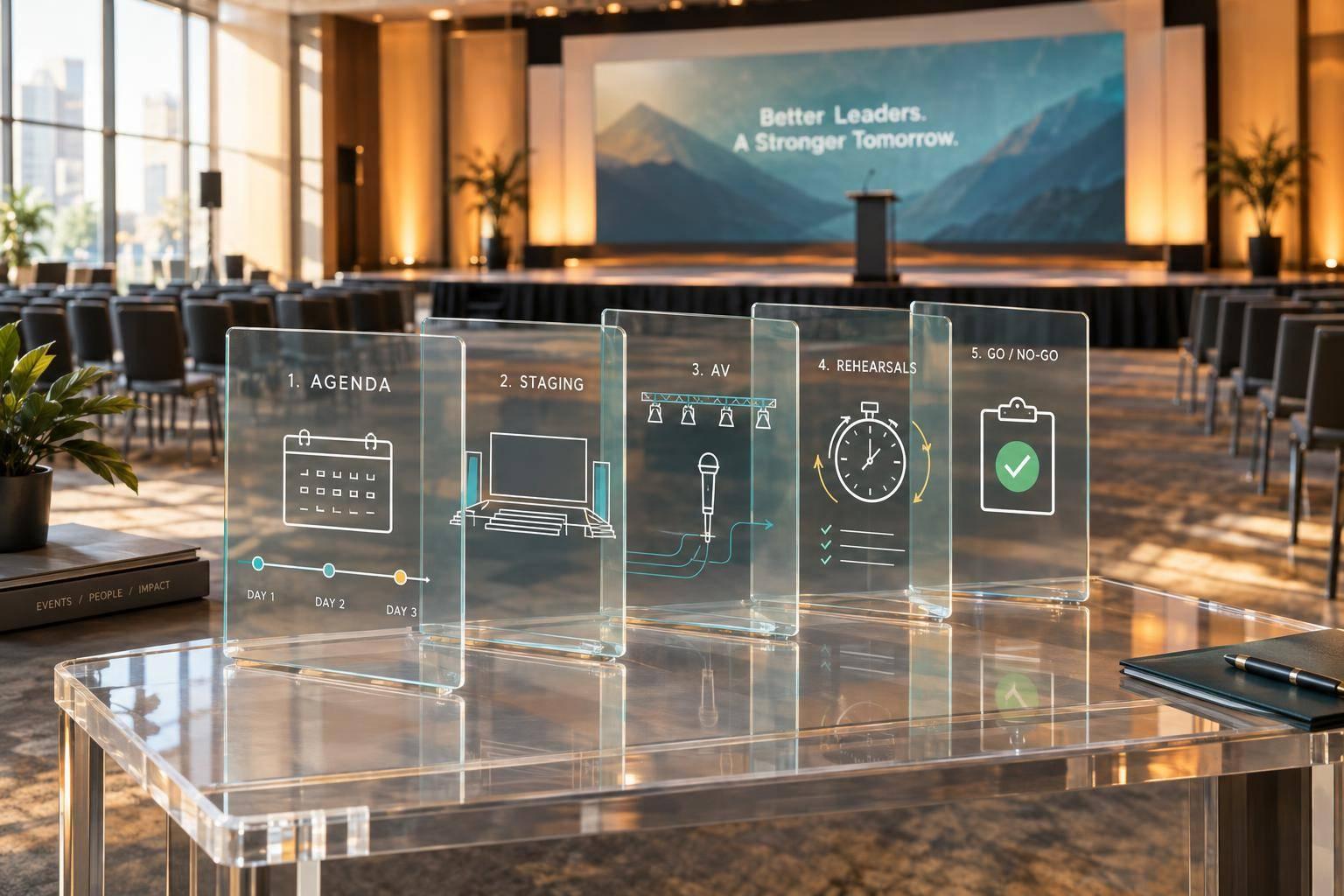
5 Best Practices For Conference Production & Agenda At Annual Meetings

Chief Executive Officer
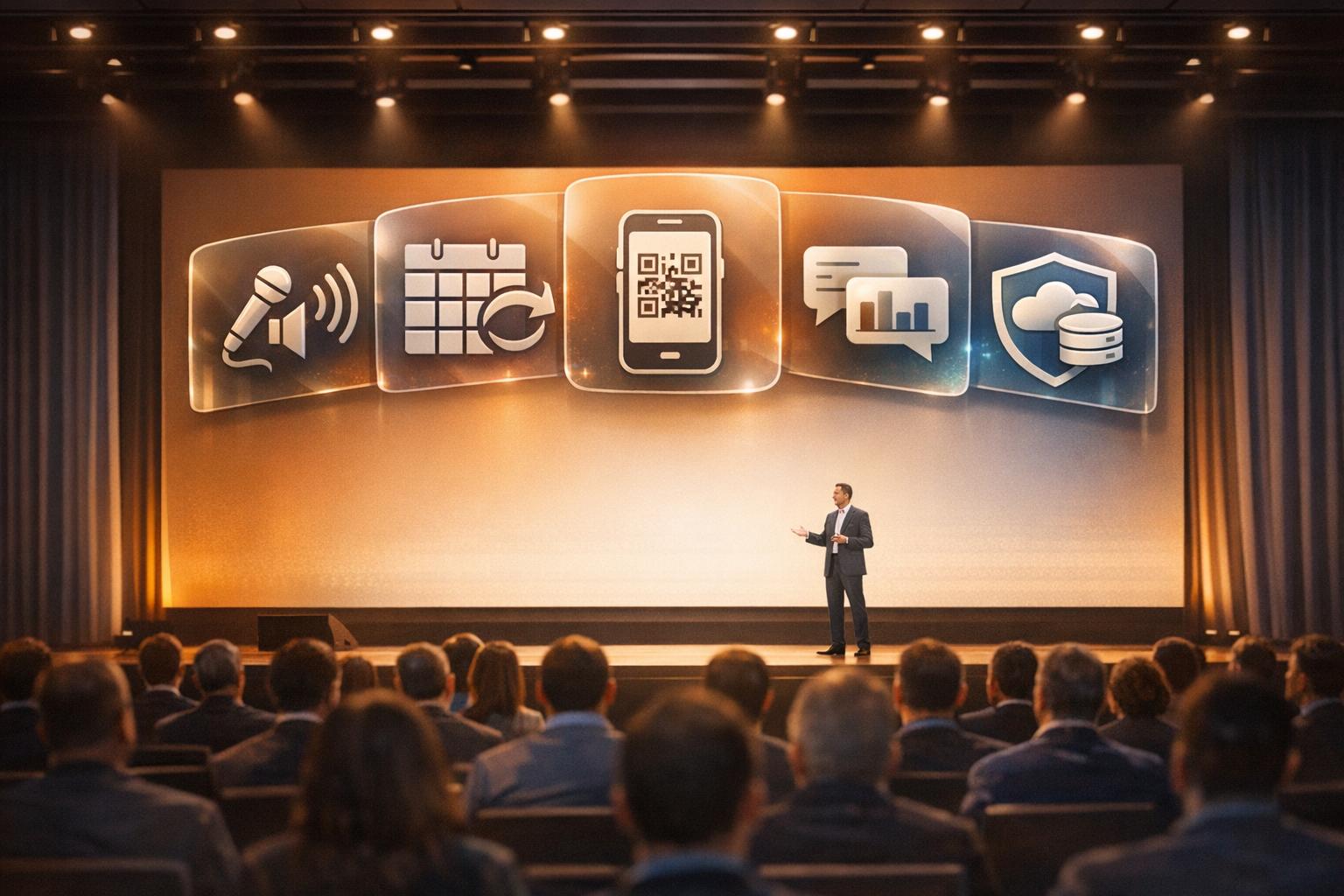
Annual meetings can be more impactful with structured planning and smart strategies. Here are five key practices to ensure your event is productive, engaging, and aligned with your goals:
- Professional AV Services: Minimize technical issues with expert audio-visual and event production teams. This ensures smooth execution and keeps attendees focused.
- Flexible Agendas: Create dynamic schedules that cater to different interests and energy levels. Tools like event apps can personalize experiences and boost session attendance by up to 35%.
- Registration Technology: Streamline check-ins and gather real-time feedback with modern platforms, reducing wait times and improving attendee engagement.
- Interactive Sessions: Replace passive presentations with hands-on workshops, live polls, and small group activities to keep participants involved and attentive.
- Backup Plans: Prepare for unexpected disruptions with clear contingency measures, ensuring the event runs smoothly even if challenges arise.
These practices not only enhance the attendee experience but also drive measurable results by keeping your event focused and organized.

5 Best Practices for Conference Production and Annual Meeting Agendas
Your playbook for executing complex conferences
sbb-itb-ae35a94
1. Work with Professional AV and Event Production Services like Corporate Optics
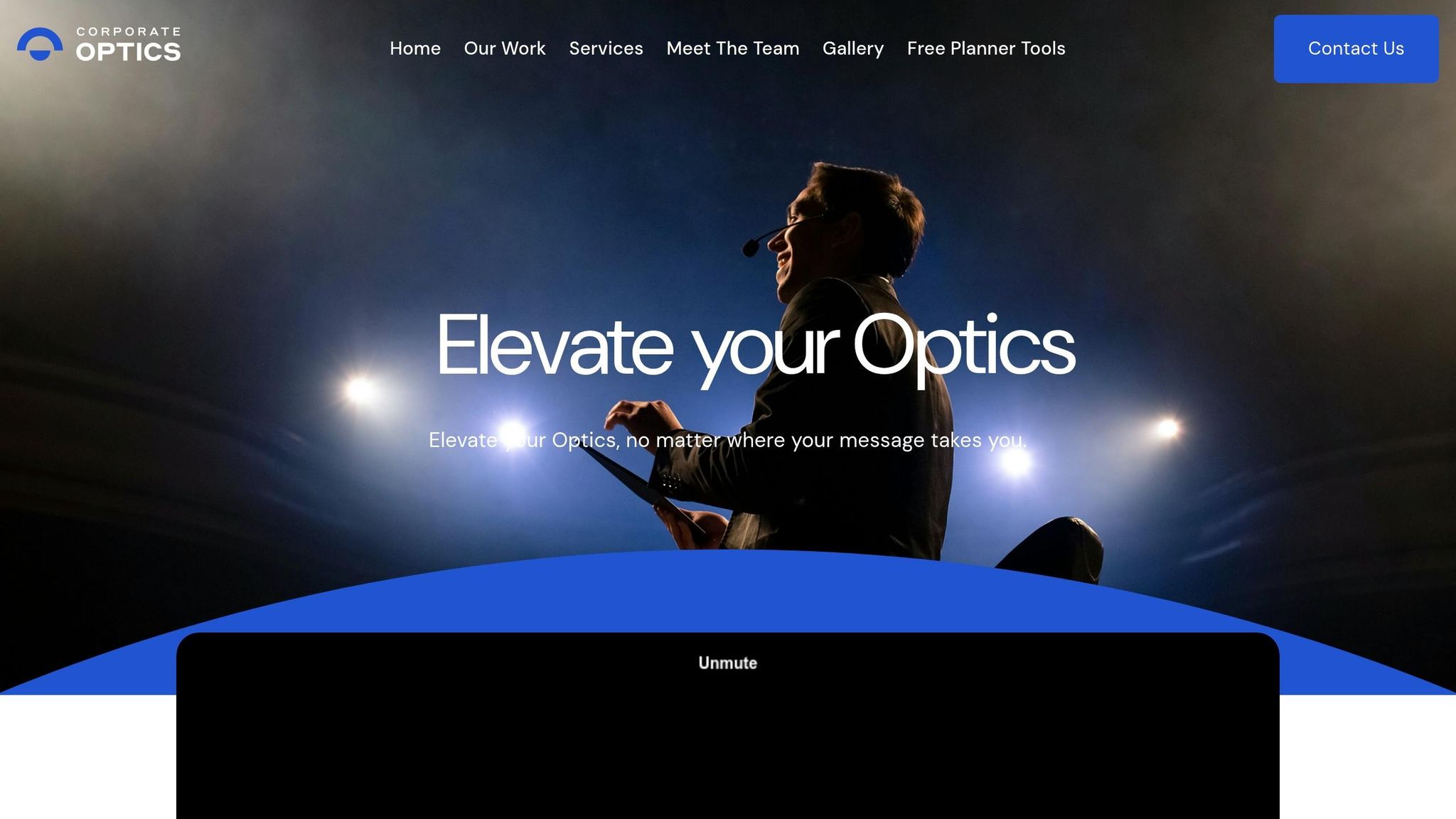
Technical hiccups - like poor sound, bad lighting, or streaming disruptions - can throw a wrench in annual meetings. Professional AV services step in with the expertise and gear that in-house teams often lack, ensuring everything runs smoothly.
Impact on Attendee Engagement
A well-executed production sends a clear message: your organization values quality and respects attendees' time. When the tech works seamlessly, participants stay focused on the content, boosting engagement and helping your message land effectively.
Efficiency in Execution
Handling the technical side of events can get complicated fast. Professional teams take care of the heavy lifting - coordinating vendors, setting up equipment, running sound checks, and fixing potential issues before they even happen. This lets your team zero in on bigger priorities, like crafting compelling content or connecting with key stakeholders. Plus, these teams can easily adjust to fit the scale of your event, no matter the size or complexity.
Scalability for Different Meeting Formats
Every meeting has its own vibe, whether it’s a small, high-stakes discussion with a handful of participants or a larger quarterly planning session. Professional AV services adapt their approach to fit the format. Take Corporate Optics, for instance - they ensure the technical setup aligns perfectly with the specific needs of your event.
Alignment with Corporate Objectives
The right production partner doesn’t just handle the tech; they make sure it aligns with your goals. Whether you’re aiming to celebrate milestones, drive alignment, or make critical decisions, they’ll design solutions that support your message. Many also offer post-event analytics to gauge engagement and identify which sessions struck a chord with your audience. By tying technology to your objectives, they help create a meeting agenda that’s not only engaging but also adaptable for future planning.
2. Build a Flexible Agenda That Keeps Attendees Engaged
A well-thought-out agenda is just as important as high-quality AV production when it comes to hosting a successful meeting. A rigid schedule can quickly sap energy, while a flexible agenda keeps things dynamic and allows attendees to tailor their experience. By letting participants select sessions that align with their interests, you create a more engaging environment. Event apps with features like personalized itineraries make this even easier, enabling attendees to craft schedules based on their preferences or skill levels. This approach can lead to a 35% increase in session attendance.
Impact on Attendee Engagement
Switching between energetic keynotes and quieter, more focused breakout sessions helps attendees stay refreshed. For example, scheduling major presentations in the morning, when people are most alert, and saving networking or low-pressure activities for the afternoon can boost overall engagement. For introverted participants, offering smaller group formats - like themed roundtables or trivia games - can encourage involvement without the stress of open-ended social interactions. As Trish Leonard, Owner and President of TLC Marketing and Creative Services, explains:
"The tactics that create the most meaningful engagement are the ones that make attendees feel like they're part of the story, not just spectators."
These thoughtful formats ensure attendees remain engaged and invested throughout the event.
Efficiency in Execution
Digital tools can make managing a flexible agenda seamless. If a speaker cancels or a session runs over time, real-time push notifications can cut attendee confusion by 50%. Adding 5–10 minute buffer periods between sessions also helps with transitions and technical setups, giving the event a polished and professional feel. Additionally, AI solutions for corporate events that recommend sessions based on attendee preferences have been shown to boost overall engagement by 20%.
Scalability for Different Meeting Sizes
Adapting your agenda to suit the size of your meeting is key. For larger events, breakout sessions can create smaller, more intimate groups within a big crowd. In contrast, smaller gatherings might benefit from a single-stream agenda with modular elements. For conferences with over 3,000 attendees, offering multiple workshop tracks and making them easy to navigate through a mobile app ensures everyone can find something relevant.
Alignment with Corporate Objectives
Every item on your agenda should support your event's main goal, whether that’s generating leads, educating attendees about a product, or aligning internal teams. To maintain focus, define a single "primary job" for your meeting. Regular check-ins during the event can help you adjust as needed, ensuring the agenda stays relevant while keeping your business objectives front and center.
3. Use Technology for Registration and Real-Time Feedback
Making the most of registration technology is a game-changer when it comes to running smooth and efficient annual meetings. Modern platforms combine registration, check-in, badge printing, and analytics into one streamlined process. For instance, attendees can receive QR codes in their confirmation emails or use self-service kiosks to check in and print badges in seconds. This eliminates long lines at the entrance and ensures attendees are ready to engage right away.
Impact on Attendee Engagement
Real-time feedback tools can turn a passive audience into active participants. For example, incorporating live polls during the first few minutes of a keynote session helps capture audience expectations and shapes the direction of the talk. On top of that, NFC-enabled badges make networking easier by allowing attendees to connect instantly while also tracking which sessions they attend. This keeps engagement levels high and ensures a more interactive event experience.
Efficiency in Execution
Cloud-based systems offer flexibility and speed by instantly updating last-minute changes like registrations, ticket upgrades, or attendee substitutions. Automated workflows handle tasks like sending confirmation emails and calendar invites, giving your team more time to focus on the bigger picture. Pre-event tests of badge printers and network connections can help avoid issues during busy times. Interestingly, structured task management systems have been shown to boost task completion rates by nearly 29%. These efficiencies not only simplify event-day operations but also align with broader business goals.
Scalability for Different Meeting Sizes
Whether you're hosting a small meeting with 50 attendees or a global conference with tens of thousands, registration technology can scale to meet your needs. Smaller events might use simple form builders with email notifications, while larger events benefit from high-volume automation, CRM integrations, and 24/7 support. Conditional logic forms can also improve the sign-up process by tailoring questions to specific roles, like VIPs or exhibitors, reducing form abandonment and improving the accuracy of collected data.
Alignment with Corporate Objectives
Integrating registration platforms with CRMs such as Salesforce or HubSpot can provide real-time lead tracking and personalized follow-ups. This connection makes it easier to analyze key metrics, like Attendee Acquisition Cost, or to break down feedback by job title or industry. These insights ensure your annual meeting delivers measurable business outcomes while creating a positive experience for attendees.
4. Add Interactive Sessions to Increase Participation
Integrating interactive sessions into your event can significantly boost how engaged and involved participants feel. Traditional, passive presentations often fail to hold attention, but interactive formats like hands-on workshops, live polling, speed networking, and tabletop simulations are much more effective at keeping attendees interested and active. These methods not only capture attention but also help participants retain information better. Activities like problem-solving exercises, breakout voting, and design sprints are particularly appreciated compared to lengthy lectures.
Impact on Attendee Engagement
To make the most of interactive sessions, plan your agenda strategically. Start with high-energy sessions to set the tone, dive into more in-depth content mid-morning, and then re-energize attendees with interactive segments after lunch. Research shows that attendees are most engaged during 60- to 90-minute blocks, so keep keynotes under 20 minutes and panels under 30 minutes. For live polling, aim to include 2–4 meaningful polls per hour to keep things dynamic without overloading your audience. Small-group breakouts, capped at 6–8 participants, work well to ensure everyone has a chance to contribute - whether your event hosts 200 or 20,000 attendees.
Efficiency in Execution
Event apps can simplify transitions between interactive sessions by letting attendees pre-select their activities, access digital whiteboards, and receive real-time updates tailored to the event. Short breaks between sessions allow participants to reset and help organizers manage any technical adjustments needed for hands-on activities. Moving attendees between zones or spaces can also boost engagement and prevent mental fatigue. As The Event Planner Expo highlights:
When guests physically move, they mentally re-engage. Movement breaks monotony and helps ideas land deeper.
This approach makes the shift between interactive moments and broader corporate objectives feel seamless, enhancing the overall event experience.
Alignment with Corporate Objectives
To align interactive sessions with your event's goals, design each activity to support learning, networking, or discovery. Every session should tie back to one of these three core attendee objectives. For example, instead of open-ended mixers, use structured networking activities like "Match & Spark" rounds to create meaningful connections in a short amount of time. Gamification elements - such as points, leaderboards, or mini-quests - can encourage behaviors like attending all sessions or engaging with demos. As The Loopyah Content Team explains:
Design interactivity to serve attendee objectives first; spectacle is secondary. When the format fuels learning, meeting, and discovery, satisfaction and loyalty follow.
5. Prepare Backup Plans to Handle Problems and Keep Events Running Smoothly
No matter how much planning goes into an event, unexpected disruptions are inevitable. The real test lies in how well you’ve prepared for these moments. As KDM Events notes:
What will affect the outcome the most is how well you planned for it, how well you perform under pressure, and how timely this issue is communicated to you when it does occur.
Here’s how you can ensure quick and effective responses when challenges arise.
Efficiency in Execution
Contingency planning isn’t something to figure out on the fly - it should be built into your event coordination from the start. Keep vendors and suppliers in the loop about backup procedures before the event begins. Miscommunication with vendors is often the root cause of disruptions. For technical issues, insist that your AV provider has an onsite manager available to handle problems immediately, rather than relying on remote support.
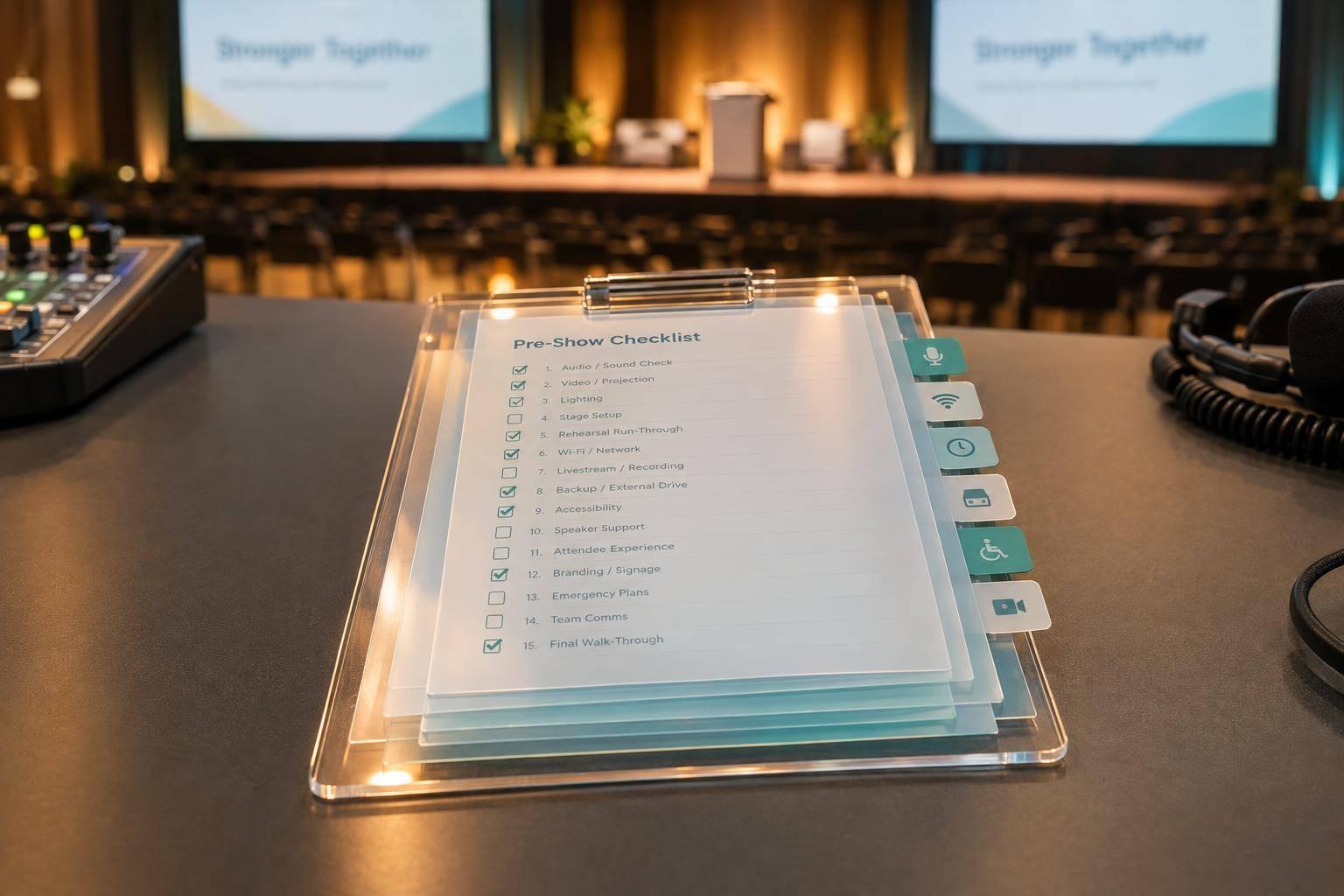
Structured planning makes a difference. Research shows that using a checklist system for contingencies can increase task completion rates by nearly 29%, with overall performance nearing 80%. That’s a significant boost in preparedness.
Scalability for Different Meeting Sizes
Your backup plan should be tailored to the size and complexity of your event. Smaller meetings often require quick, on-the-ground fixes, while larger events need tiered response systems to address major issues efficiently.
For hybrid or virtual events, record all live sessions. This ensures that attendees dealing with connectivity issues or those in different time zones can still access the content later. Conducting multiple technology checks and even bringing in a third-party security audit can help prevent platform failures or cybersecurity problems. These scalable measures protect both the event’s functionality and its broader goals.
Alignment with Corporate Objectives
Your contingency plans should work hand-in-hand with your company’s overall strategy. Regular monitoring helps keep your event aligned with corporate goals, even if unexpected changes force you to adapt. Katie Schmarr, an Onboarding Expert at Rhythm Systems, highlights the importance of staying flexible:
Setting goals is only half the battle. Establish a process for regular check-ins to monitor progress. This ensures that your plans remain relevant and adaptable as circumstances change.
Assigning clear responsibilities and deadlines, combined with real-time strategy tools, allows you to pivot quickly if something goes off course. This approach not only keeps the event running smoothly but also ensures it stays true to its purpose.
Conclusion
Planning an annual meeting isn’t just about completing a checklist - it’s about turning your event into a powerful tool that drives revenue, boosts product adoption, and aligns your team’s efforts toward shared goals. By combining professional production, clear agendas, modern technology, interactive formats, and reliable contingency plans, you’re not just organizing a meeting - you’re creating a strategic opportunity with measurable business impact.
The key is moving from isolated event planning to a unified, goal-driven approach. Identify a single, primary objective for your meeting - whether it’s generating new business opportunities, improving team alignment, or advancing product knowledge - and build every element of the event around that focus. This level of clarity ensures your efforts make a lasting impression.
High-performing teams often refer to this strategy as building a "data engine." Instead of relying on generic post-event surveys, track meaningful signals like session engagement and time spent in key areas to predict your event’s return on investment. Break your larger goals into actionable tasks with clear deadlines, assign ownership, and hold regular check-ins to maintain momentum. This approach ensures that the energy and progress from your meeting don’t fade once it’s over.
Annual meetings are also a chance to showcase leadership, strengthen relationships with stakeholders, and create a culture where attendees feel connected to your company’s mission. Start by forming a cross-functional planning team with members from Marketing, Sales, Product, and HR to establish success metrics before diving into the details. And don’t forget - networking is still the top reason people attend corporate events. Design your agenda to encourage meaningful interactions, not just passive information sharing.
FAQs
How do I pick the meeting’s one main goal?
To determine your meeting's main goal, zero in on what you aim to accomplish and make sure it ties into your larger objectives. Begin by pinpointing the primary outcome - whether it's making decisions, sharing information, or aligning your team. The '7 P's' framework emphasizes the importance of Purpose. Clearly defining this will shape your agenda and help keep the meeting on track toward achieving its intended results.
What tech do I need for fast check-in and feedback?
Digital badging solutions can make check-in and feedback at your conference much faster and more efficient. These systems allow for quick attendee registration and capture real-time data, cutting down on long wait times. With smart badging, you can easily verify access to specific areas and simplify the entire check-in process. By pairing an online platform for badge creation with live check-in data, you create a seamless experience for both your attendees and your event staff.
What backup plans should every annual meeting have?
To keep annual meetings running smoothly, having backup plans for technical hiccups is a must. Here's what you can do:
- Backup Power and Equipment: Make sure you have backup power sources, extra microphones, and spare cables on hand. These small steps can prevent big disruptions.
- Thorough Equipment Testing: Test all your gear ahead of time. This includes audio, visual, and any other tech you'll rely on during the event.
- Speaker Rehearsals: Rehearse with all presenters to ensure they're comfortable with the setup and equipment.
- Detailed Schedules: Create a clear, detailed event schedule so everyone knows what to expect and when.
By planning ahead with these steps, you can tackle potential technical problems and keep the event running without a hitch.
Related Blog Posts


Streamline your workflow, achieve more

Lorem ipsum dolor sit amet, consectetur adipiscing elit. Maecenas ac velit pellentesque, feugiat justo sed, aliquet felis.



Lorem ipsum dolor sit amet, consectetur adipiscing elit. Maecenas ac velit pellentesque, feugiat justo sed, aliquet felis.