Leading Program Management Firms With Strong Leadership Communications

Chief Executive Officer

In corporate event production, clear leadership communication is key. Top firms stand out by delivering the right information at the right time, ensuring smooth operations and positive attendee experiences. This article examines three firms - Corporate Optics, Jacobs, and KCI Management - and their approaches to leadership communication, event execution tools, and stakeholder management strategies.
Key Takeaways:
- Corporate Optics: Uses a four-stage framework (Discover, Design, Develop, Deliver) and advanced tools like AI-driven planners for efficient event execution. Offers strong presenter support but requires early tech training.
- Jacobs: Focuses on a listening-first approach and real-time insights via its Data Solutions platform. Ideal for large-scale projects but may be too complex for smaller organizations.
- KCI Management: Provides hands-on leadership and consistent updates. Best for close collaboration but may lack capacity for managing multiple large events.
Each firm excels in specific areas, offering unique strengths tailored to different organizational needs.
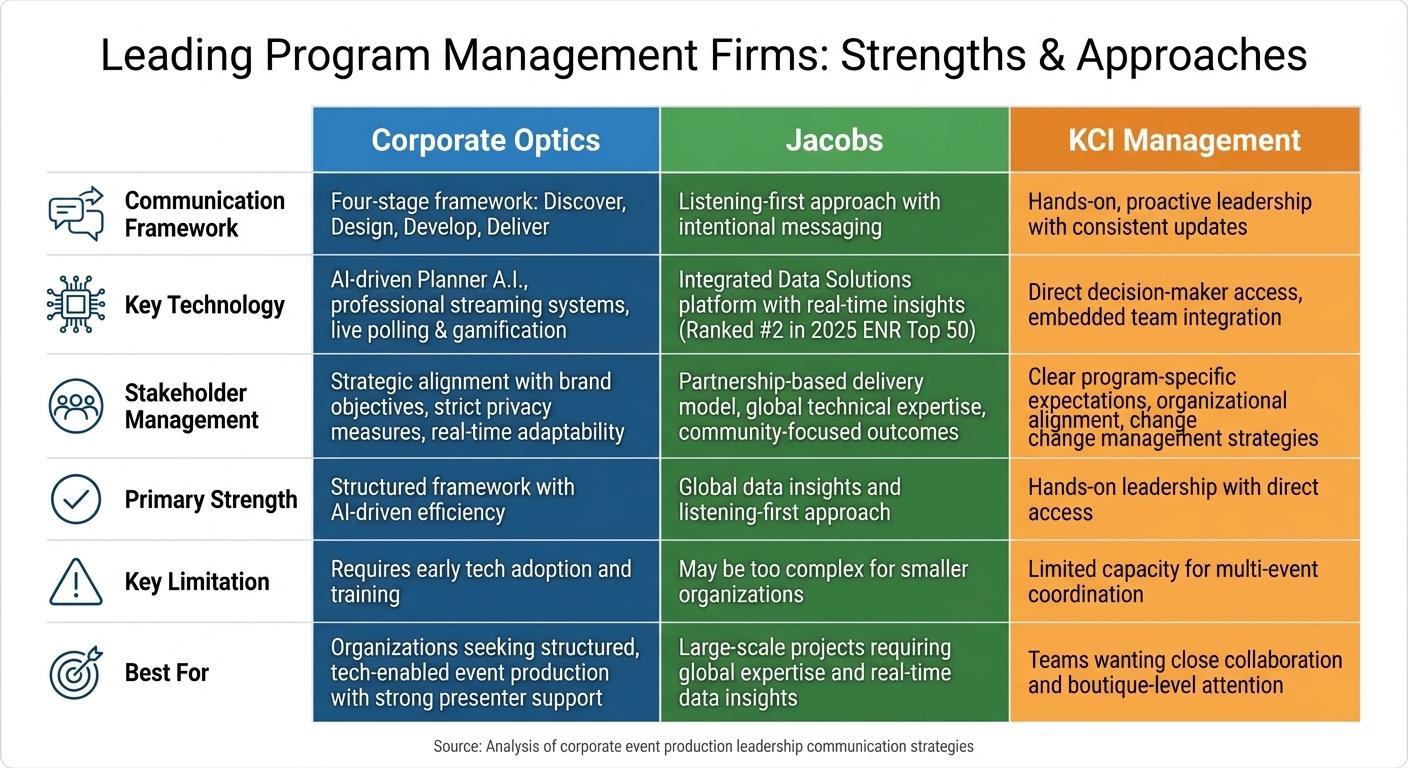
Comparison of Top 3 Program Management Firms: Corporate Optics vs Jacobs vs KCI Management
1. Corporate Optics

Leadership Communication Strategies
Corporate Optics approaches communication with a structured four-stage framework: Discover, Design, Develop, and Deliver. This system ensures that technical details, budgets, and leadership goals align seamlessly throughout the event planning process. It all starts with strategic discussions and probing questions to pinpoint the core objectives, fostering clarity and trust before diving into the creative phase.
For leadership teams, the company offers a range of presenter support services. These include script writing, teleprompter assistance, and professional rehearsals to ensure messages are conveyed with accuracy and confidence. Pete L., SVP of Marketing, shared his experience:
"Such a tremendous team and group to work with. They always remain calm (with a smile), have our back, and are prepared for anything."
This methodical strategy naturally integrates with advanced technology to deliver seamless event execution.
Event Execution Tools and Technologies
Corporate Optics complements its communication framework with cutting-edge tools designed to simplify event execution. For instance, AI-driven solutions handle routine planning tasks, streamlining pre-production workflows and reducing costs. The firm's Planner A.I. handles administrative duties, allowing teams to focus on strategic decision-making.
For hybrid events, Corporate Optics uses professional-grade streaming systems with redundant signal feeds and switching setups to guarantee broadcast reliability. To boost audience engagement, the firm incorporates engagement measurement tools like live polling, Q&A platforms, and gamification features. These technologies integrate smoothly with their production services, which include audio, visual, lighting, and scenic design tailored to corporate, sporting, and government events.
Stakeholder Management Approaches
Beyond technology, Corporate Optics emphasizes effective stakeholder management. By combining its strategic communication expertise with technological efficiency, the firm ensures stakeholders are well-informed and confident in their decisions. Event planners receive clear technical guidance, enabling them to align event decisions with broader brand objectives. For high-level meetings, the company employs strict privacy measures and secure communication systems to protect sensitive information.
During the "Deliver" phase, the team remains flexible, adapting in real time to maximize the impact of key messages. This adaptability is a hallmark of their approach, as highlighted by Ed D., Senior Managing Director and Chief Operating Officer:
"Every time we work with Corporate Optics, we know we're in good hands. Their attention to detail and ability to adapt to challenges is unmatched."
sbb-itb-ae35a94
2. Jacobs
Leadership Communication Strategies
Jacobs prioritizes a listening-first approach in its leadership communication. By fostering two-way dialogue, the company ensures that the perspectives of clients, guests, and internal teams are heard and integrated right from the start of event planning. This method creates a sense of inclusion, making all stakeholders feel their input truly matters.
To avoid overwhelming teams with excessive information, Jacobs focuses on delivering intentional messaging. Updates are shared only when they are timely and relevant, helping teams stay aligned with core priorities without unnecessary distractions. This clarity in communication lays a strong foundation for the company's use of advanced technologies.
Event Execution Tools and Technologies
Ranked #2 in the 2025 ENR Top 50 Program Management Firms, Jacobs combines its global expertise with cutting-edge digital tools. At the heart of its operations is the integrated Data Solutions platform, which provides real-time insights to guide decision-making at every stage of event planning and execution.
This advanced digital infrastructure ensures consistency and reliability, supporting projects from the initial concept phase all the way through to final delivery.
Stakeholder Management Approaches
Jacobs uses a partnership-based delivery model to manage the complexities of planning, procurement, and delivery. By embedding its global technical expertise into each client’s specific business goals, Jacobs fosters a collaborative relationship that goes beyond the typical vendor-client dynamic.
This approach also reflects a broader commitment to creating positive social outcomes. Jacobs aims to deliver programs that provide tangible benefits to communities, addressing social, economic, and environmental needs in a balanced way. This dedication to partnership strengthens their ability to execute events seamlessly and effectively.
Project Management & Event Management Mastery | Leadership, Time Management & Business Growth
3. KCI Management
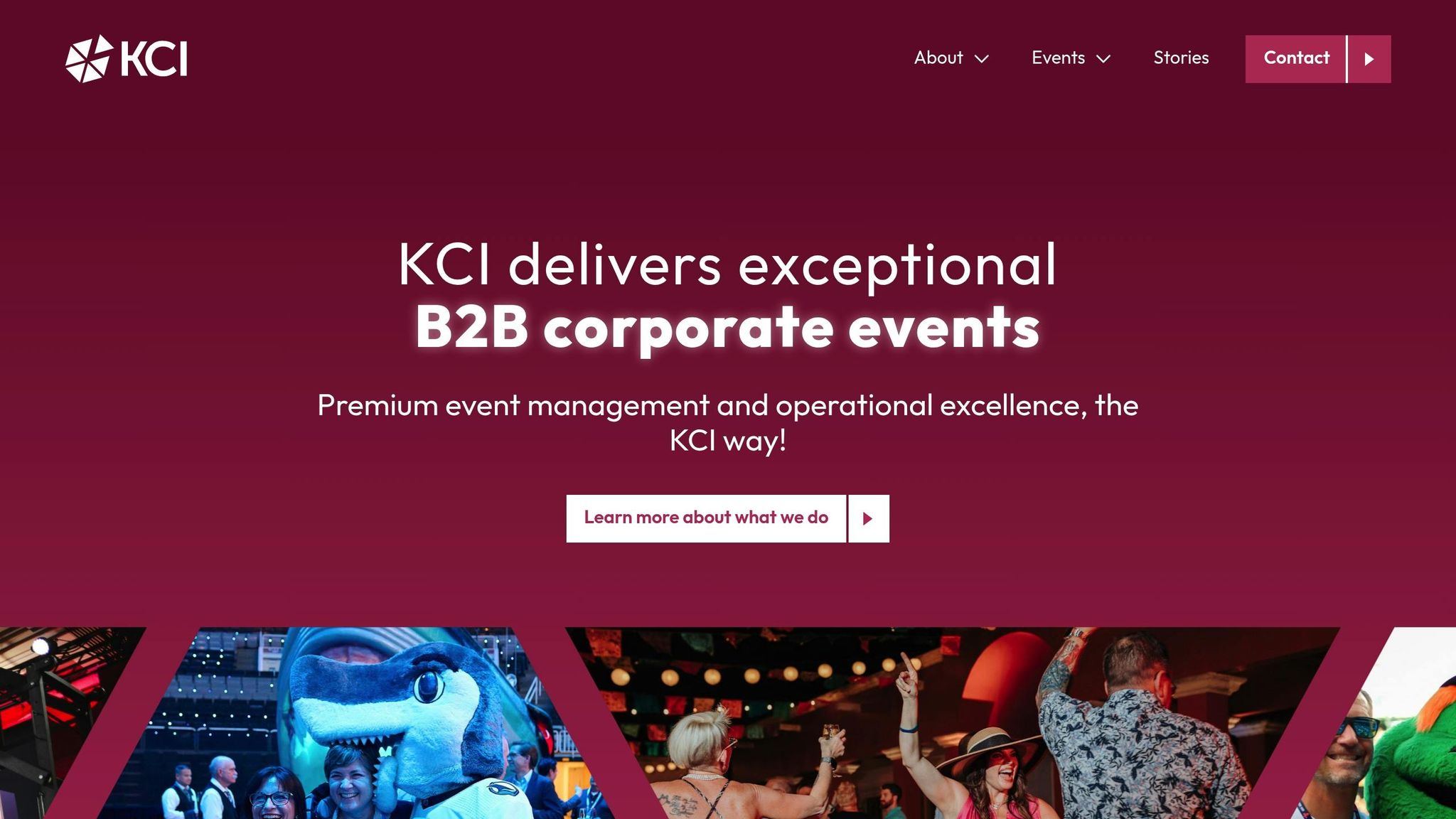
KCI Management brings a hands-on approach to leadership and stakeholder coordination, ensuring smooth execution and alignment on shared objectives.
Leadership Communication Strategies
KCI Management takes an active role in driving progress. By consistently reporting updates and suggesting actionable steps, they help avoid delays caused by unclear expectations or miscommunication. Unlike models that focus on passive coordination, KCI ensures decisions are made promptly to keep events on schedule.
Positioning itself as both a strategic partner and a trusted advisor, KCI embeds directly into a client’s team. This close collaboration ensures alignment on even the most complex business goals. As a boutique agency, they also prioritize accessibility, making sure decision-makers are always available throughout the event planning process.
Stakeholder Management Approaches
From the outset, KCI Management focuses on setting clear, program-specific expectations. This involves bringing together clients, management teams, and stakeholders to establish a unified direction. By addressing potential communication gaps early, they reduce the risk of missteps or scope creep that can disrupt events.
For larger programs with multiple stakeholders, KCI emphasizes organizational alignment and securing leadership support. They rely on well-thought-out change management strategies to ensure everyone, from executives to frontline teams, understands their role in the event's success. Managers actively seek input before making decisions, balancing proactive leadership with attentive listening.
Strengths and Weaknesses
Every firm brings its own blend of advantages and challenges to leadership communication in corporate event production. Understanding these can help organizations decide which approach aligns best with their needs. Here's a closer look at the strengths and potential hurdles of each firm:
Corporate Optics leverages a structured four-stage process - Discover, Design, Develop, and Deliver - that ensures every detail, from technical specs to budgets, aligns with leadership goals. Their use of AI-driven tools and professional production support enhances efficiency and ensures messaging stays on point. However, their reliance on a robust tech suite requires early adoption and thorough training, which might pose difficulties for companies with limited technical resources or tight timelines.
Jacobs prioritizes a listening-first approach and a carefully crafted messaging strategy, helping avoid information overload while keeping stakeholders aligned. Their integrated Data Solutions platform delivers real-time insights across global operations, supported by their #2 ranking in the 2025 ENR Top 50 Program Management Firms. Their collaboration-focused delivery model fosters strong partnerships, but their large-scale infrastructure might feel overly complex for smaller organizations.
KCI Management shines with its hands-on leadership style and proactive decision-making. They provide consistent updates and actionable recommendations to keep projects on track. As a boutique agency, they offer direct access to decision-makers and integrate seamlessly into client teams. Their focus on clear expectations and organizational alignment ensures smooth execution. However, their smaller size could limit their ability to handle multiple large-scale events across different locations simultaneously.
| Firm | Primary Strength | Key Limitation |
|---|---|---|
| Corporate Optics | Structured framework with AI-driven efficiency | Requires early adoption and training |
| Jacobs | Listening-first approach and global data insights | May be too complex for smaller organizations |
| KCI Management | Hands-on leadership with direct decision-maker access | Limited capacity for multi-event coordination |
This breakdown highlights how each firm’s unique approach impacts their event production outcomes, helping organizations make informed decisions based on their specific goals and constraints.
Conclusion
The discussion above sheds light on how leadership communication strategies, while varied, often converge toward shared principles. Effective communication transforms event production from a purely logistical exercise into a well-coordinated, strategic effort. The companies highlighted in this analysis demonstrate that clarity, structure, and active listening are essential for successful event execution. As Brenna Adkins from Bishop-McCann aptly puts it:
"Communication is the thread that holds it all together".
Clear alignment ensures everything runs smoothly.
Success doesn’t hinge on adopting the latest or most complex technology. Instead, it’s about finding the right communication framework that fits the specific needs of your organization. Brian Lagestee, CEO of Clarity Experiences, sums it up perfectly:
"Structure doesn't stifle creativity; it enables it. People think process means restriction, but really, it gives you freedom".
The goal is to establish a communication strategy that keeps everyone informed and working toward the same objectives. This structured approach aligns with the technology-focused methodology championed by Corporate Optics.
Start by asking the right questions. Brian Kellerman, CEO of GoGather, highlights this as a critical step:
"When we ask clients, 'What does success look like?' they often pause. That's our job, to help them get there".
From defining roles to setting up communication channels and contingency plans, a well-thought-out strategy is the foundation for achieving exceptional outcomes.
FAQs
How do I choose the right leadership communication framework for my event?
To pick the best framework for your event, begin by evaluating its goals, scale, and the specific needs of your stakeholders. Different frameworks are tailored to meet different objectives, so understanding these factors is key. Take inspiration from leading companies that use AI tools to streamline planning and provide real-time updates. Incorporate centralized communication platforms and project management tools to maintain clear and consistent messaging. Ultimately, select a framework that aligns with your event’s complexity and communication demands to ensure smooth coordination and strong engagement.
What should we set up first to keep stakeholders aligned during planning?
Clear communication is the backbone of any successful project. To keep everyone aligned, make use of practical tools like production guides, schedules, floorplans, wiring diagrams, and packing lists. These resources help ensure that all stakeholders stay informed and coordinated throughout the planning process, minimizing confusion and keeping things running smoothly.
When do teams need training on event tech to avoid execution issues?
Teams need to get familiar with event technology well in advance of the big day. This preparation helps avoid headaches like internet outages, app glitches, or hiccups with projection and sound systems. Running thorough tests and having access to reliable technical support can go a long way in keeping everything running smoothly.
Related Blog Posts
- Best Strategic Program Management Company For Leadership Communications
- Best Strategic Program Management Firms With Strong Leadership Communications For Your Next Event
- Top Providers For Leadership Communications During Large-Scale Programs & Conferences
- 5 Partners For Program Management For Your Next Leadership Communications Event



Streamline your workflow, achieve more

Lorem ipsum dolor sit amet, consectetur adipiscing elit. Maecenas ac velit pellentesque, feugiat justo sed, aliquet felis.



Lorem ipsum dolor sit amet, consectetur adipiscing elit. Maecenas ac velit pellentesque, feugiat justo sed, aliquet felis.