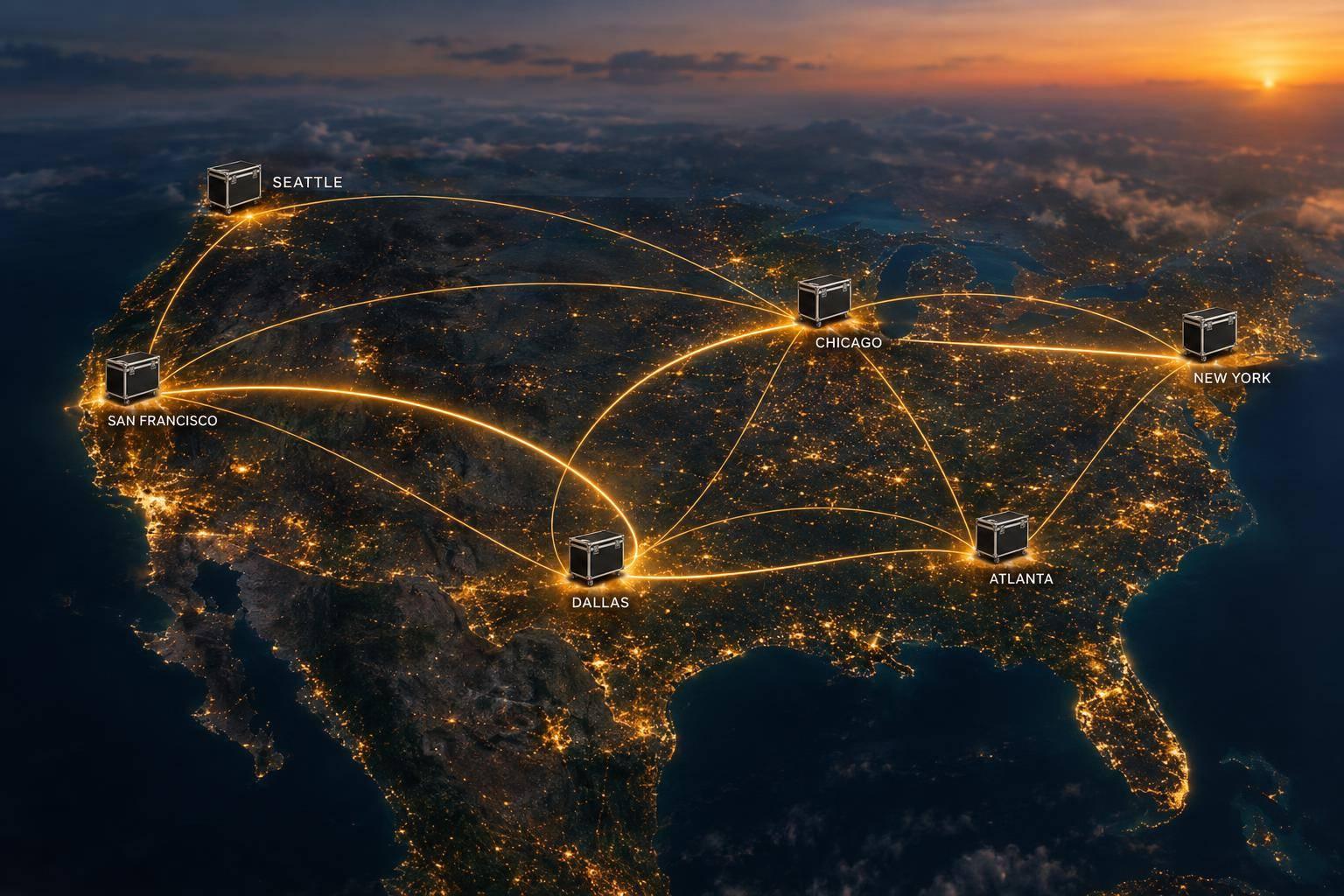
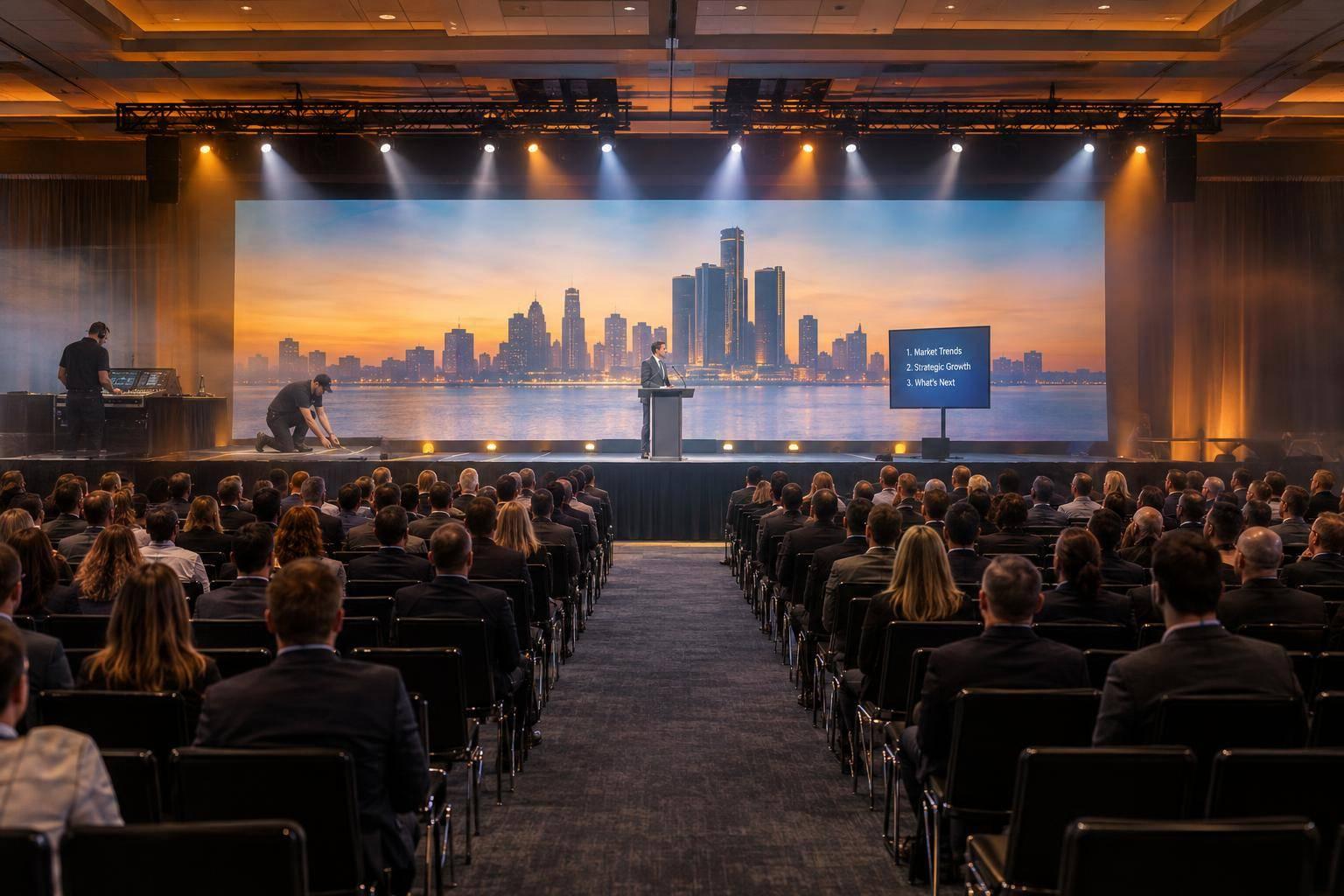
A Michigan-Based Production Company With National Reach: How Corporate Optics Supports Events Nationwide.

Chief Executive Officer
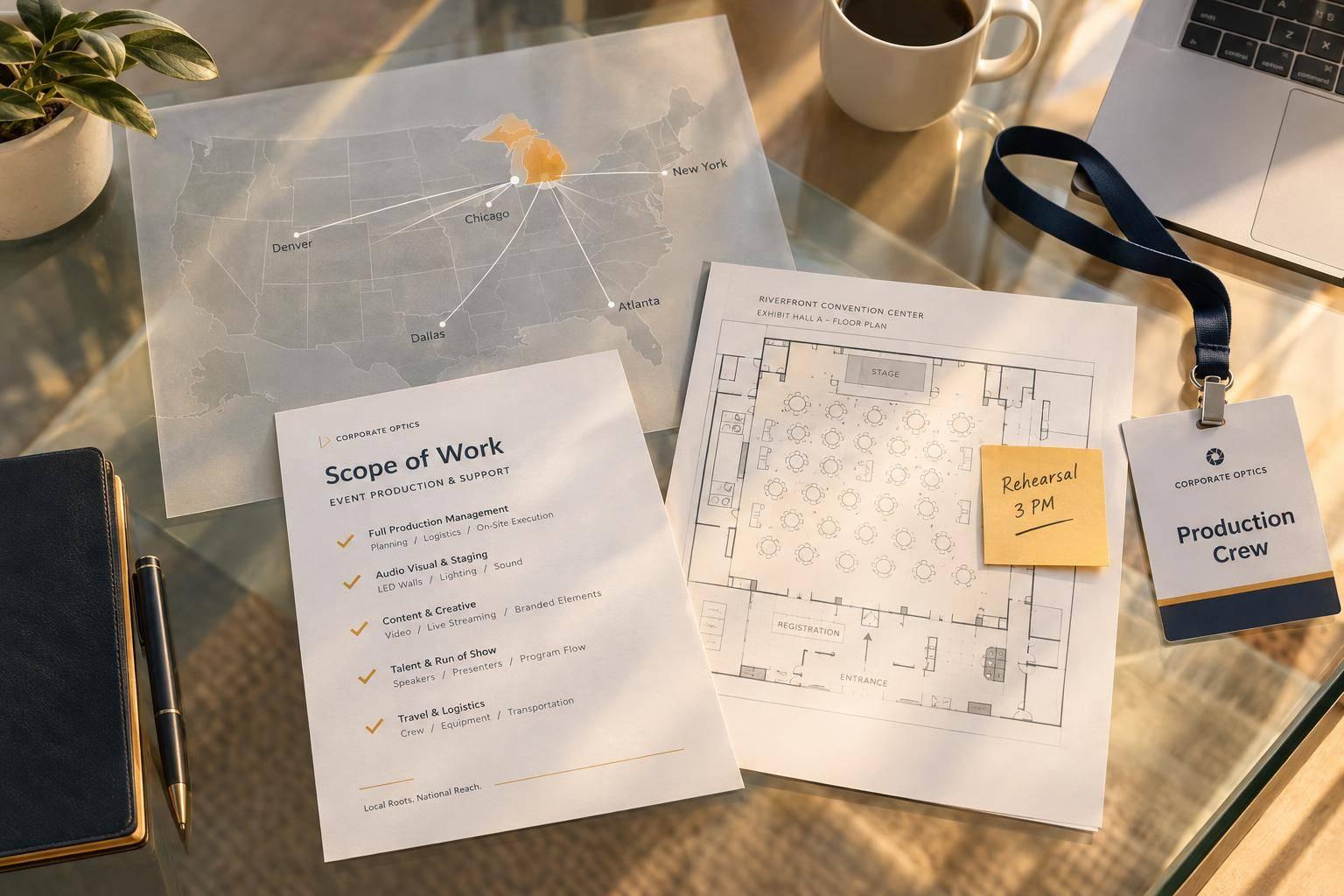
Corporate Optics says it supports corporate events nationwide, but planners should confirm its work at comparable venues before booking. The available material documents 1 out-of-state example in Orlando - not a verified record across multiple locations.
The Michigan-based company provides professional production support including AV production, lighting, scenic elements, speaker support, staffing, and live streaming. For an out-of-state event, the key checks are:
- Project records: Confirm the company’s role and any reported results.
- A written scope: Assign equipment, crew, freight, travel, local labor, and venue duties.
- Show-day plans: Confirm rehearsals, cue timing, streaming handoffs, and backup coverage.
- Multi-location delivery: Set shared technical requirements and name the person responsible at each site.
The bottom line: a stated service area is a starting point - not proof of performance.
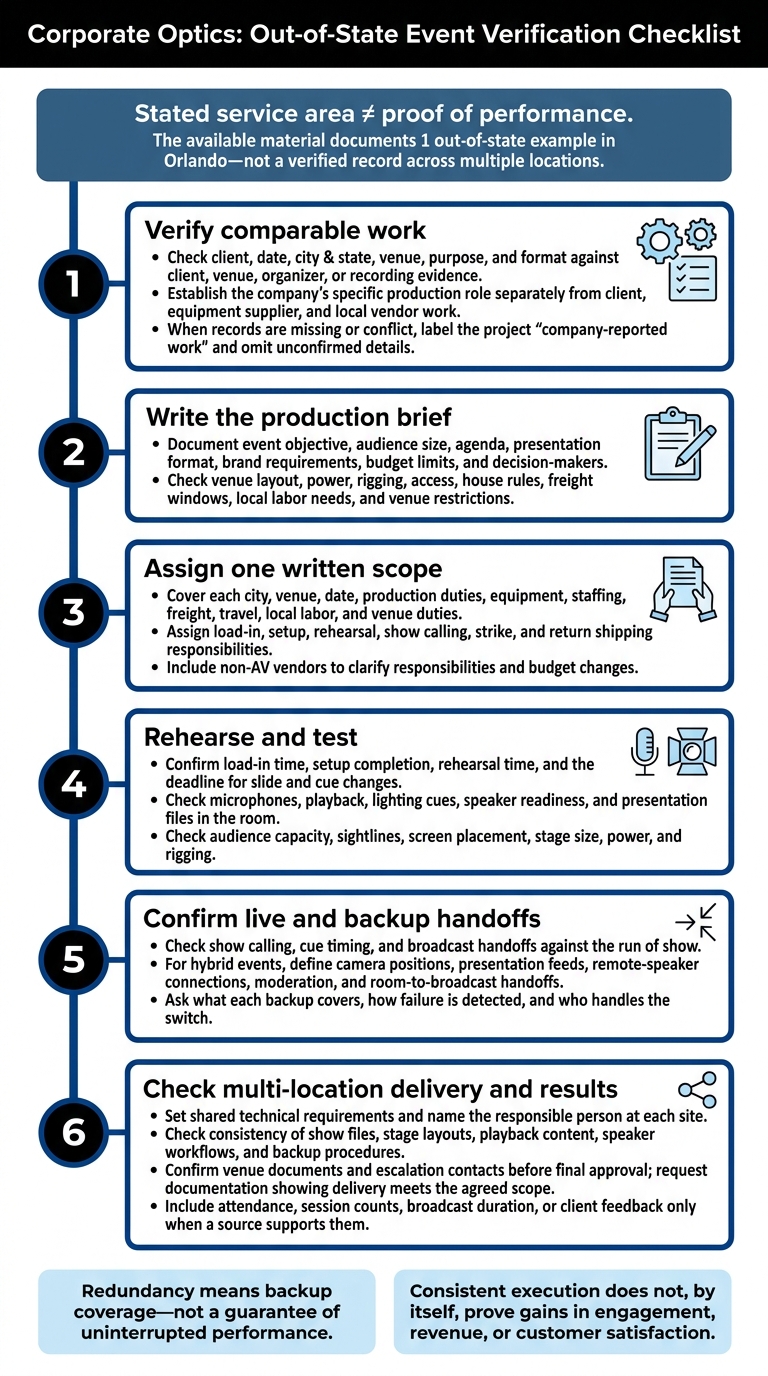
Corporate Optics: Out-of-State Event Verification Checklist
Pre-Event Planning and Logistics
Client Needs and Venue Requirements
For Corporate Optics events outside Michigan, start with a written production brief. Document the event objective, audience size, agenda, presentation format, brand requirements, budget limits, and decision-makers.
Use that brief to align the technical plan with the venue’s layout, power, rigging, access, and house rules. For out-of-state events, also flag freight windows, local labor needs, and venue restrictions.
Equipment, Crew, and Scheduling
Assign responsibility for freight, local labor, venue orders, load-in, setup, rehearsal, show calling, strike, and return shipping. Keep those assignments in one written scope so responsibilities stay consistent across sites.
The schedule should confirm load-in time, setup completion, rehearsal time, and the deadline for slide and cue changes. Include non-AV vendors in the same scope to keep responsibilities and budget changes clear. Use this document as the baseline for load-in and show-day execution.
sbb-itb-ae35a94
Verified Corporate Optics Events Outside Michigan
Public materials show Corporate Optics working outside Michigan. But most of that support comes from the company’s own content - not client, venue, or organizer records. After reviewing planning and logistics, the next step is to check whether outside sources confirm the project.
Event Goals, Locations, and Production Roles
Before calling a project a verified case study, check its client, date, city and state, venue, purpose, and format against client, venue, organizer, or recording evidence. When records are missing or conflict, label the project company-reported work and omit unconfirmed details.
Corporate Optics describes a broad range of production services, but those claims don’t confirm what it delivered at a specific event. Check project records to establish its role and separate its work from the work of the client, equipment suppliers, and other audio-visual production companies.
Production Decisions and Reported Results
Once you’ve verified the project, assess the production decision and the reported result separately. Project records should show the constraint, what changed in production, and the result. For multi-city work, check whether show files, stage layouts, playback content, speaker workflows, and backup procedures stayed consistent across locations.
Include attendance, session counts, broadcast duration, or client feedback only when a source supports them. Delivering an event doesn’t, by itself, prove business impact. For multi-location programs, assess consistent execution separately from proven gains in engagement, revenue, or customer satisfaction.
On-Site AV Production and Execution
For out-of-state Corporate Optics events, on-site execution tests how well the production plan fits the destination venue. The company’s published materials offer little venue-specific detail, so room layout, cue timing, and speaker support need close attention.
Audio, Video, Lighting, and Speaker Support
Corporate Optics lists audio, video, lighting, scenic elements, teleprompters, show scripting, and rehearsals among its conference event production services. Confirm which services are in scope, then use on-site rehearsals to check microphones, playback, lighting cues, and speaker readiness.
Build the room plan around audience capacity, sightlines, screen placement, stage size, power, and rigging. Confirm presentation files and test playback in the room. For hybrid events, include broadcasts and cue management in that same plan.
Show Coordination, Broadcasts, and Backup Plans
Corporate Optics says it coordinates scripts, awards, multimedia, and live cues. At the destination venue, check show calling, cue timing, and broadcast handoffs against the run of show.
Before a hybrid event opens, define camera positions, presentation feeds, remote-speaker connections, moderation, and room-to-broadcast handoffs. Corporate Optics also describes video switchers and backup signal paths. Ask what each backup covers, how the team detects a failure, and who handles the switch. Redundancy means backup coverage - not a guarantee of uninterrupted performance.
Conclusion: Assessing Corporate Optics for Out-of-State Events
Corporate Optics says it serves New York City, Orlando, Las Vegas, and Los Angeles. Confirm availability in each city and ask for verifiable project records that show consistent execution.
The stated service footprint alone doesn't verify results or establish performance at specific venues.
What to Confirm for Multi-Location Events
For multi-location events, spell out every responsibility in one written scope. Cover each city, venue, date, load-in and load-out window, production duties, equipment, staffing, freight, travel, local labor, rehearsals, streaming, show-calling authority, and backup coverage.
Before final approval, confirm venue documents and escalation contacts. Request documentation showing that delivery meets the agreed scope.
FAQs
How far ahead should I book Corporate Optics for out-of-state events?
Bring Corporate Optics in as early as possible, ideally when planning starts or you’re choosing a venue. Booking early leaves time for site surveys, technical planning, and logistics coordination.
Recommended lead times depend on the event’s scale:
- Large-scale events: At least 12 months
- Complex multi-city programs and large conferences: 4 to 6 months
- Executive summits or custom environments: 8 to 16 weeks
- Smaller meetings: Generally 6 to 10 weeks
What affects the cost of production outside Michigan?
Costs depend mainly on local logistics, labor, and venue requirements. Equipment freight charges vary by distance and schedule. Labor costs hinge on union rules, crew minimums, job classifications, and overtime. Venues may also charge for power, rigging, internet infrastructure, and storage.
Planning 3 to 6 months ahead helps you avoid rush freight charges and premium labor rates while keeping your budget on track.
How can I verify Corporate Optics’ experience at my venue?
Ask your venue for a project record that names the client, defines the scope, and ties results to the team’s work. It should also include evidence that matches your event’s scale and stakes.
Request technical documents - such as system diagrams, input lists, and room coverage plots - to review the team’s planning. Recordings of production communications from past events can also show how the team maintains standards under pressure [3].
Related Blog Posts
- Best Techincal Production Companies That Provide Event Planning, Audio, Video, Lighting, Staging, and Immersive Tech In Michigan
- Most Recommended Meeting Production Companies For Technical AV In Michigan
- Why Corporate Optics Is A Great Event Production Company To Work With In Detroit, Michigan.
- Why Corporate Optics Is A Great Event Production Company To Work With In Auburn Hills, Michigan.


Streamline your workflow, achieve more

Lorem ipsum dolor sit amet, consectetur adipiscing elit. Maecenas ac velit pellentesque, feugiat justo sed, aliquet felis.



Lorem ipsum dolor sit amet, consectetur adipiscing elit. Maecenas ac velit pellentesque, feugiat justo sed, aliquet felis.