5 Ways Production Teams Support Executive Speakers At Press Conferences

Chief Executive Officer
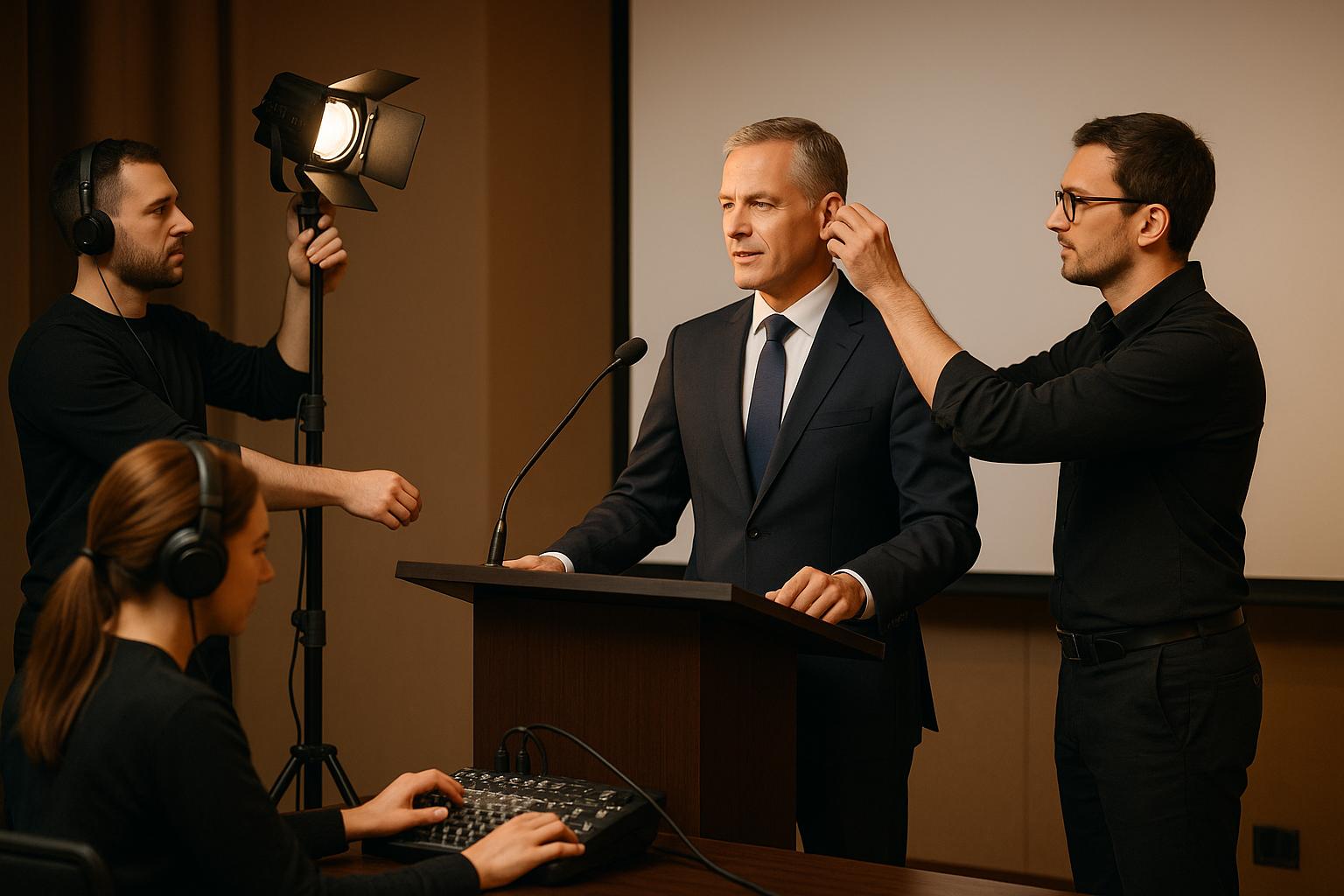
Production teams ensure press conferences are professional and error-free by managing technical setups, speaker preparation, and live event coordination. Their work allows executives to focus on delivering their message confidently without distractions. Here’s how they do it:
- Audio and Visual Setup: Ensuring clear sound and sharp visuals with backup systems in place.
- Speaker Coaching: Helping executives refine delivery, handle tough questions, and master tools like teleprompters.
- Live Technical Support: Addressing on-the-spot issues like microphone glitches or slide malfunctions.
- Event Flow Management: Coordinating stage operations, timing, and audience logistics.
- Teleprompters and Monitors: Assisting with tools for smooth, natural presentations.
Production teams handle every detail to ensure a polished, distraction-free event that maintains the company’s image and message integrity.
How to Produce a Multi-Language Press Conference with LiveU Studio
How Production Teams Help Executive Presentations
Production teams play a pivotal role in turning high-stakes press conferences into seamless corporate presentations. Their job goes far beyond setting up cameras and microphones - they act as strategic partners, making technical choices that enhance the credibility of executives and reinforce the company’s message.
From the very beginning, their collaboration with executive speakers is multi-layered. Before the event, they meticulously assess venues and equipment, laying the groundwork for a smooth presentation. This preparation ensures that everything is set for effective, real-time teamwork during the event itself.
During live events, production teams are the unseen hands fine-tuning every detail. They monitor audio levels, adjust lighting, and manage camera angles, all while keeping an eye on audience reactions. Through earpieces, they provide speakers with subtle cues on pacing, positioning, or technical tweaks - ensuring the presentation flows naturally without interruptions.
What sets these teams apart is their ability to combine technical expertise with an understanding of human behavior. They make swift adjustments - enhancing lighting to boost confidence, refining audio for better clarity, or tweaking visuals for maximum impact - all without drawing attention to the changes.
Modern production teams also leverage real-time data insights. By tracking social media sentiment and engagement metrics during the event, they help executives adapt their delivery on the fly, highlighting messages that resonate most with the audience.
Rehearsals are another cornerstone of their work. Production teams collaborate closely with executives to identify potential hurdles and develop contingency plans. From simulating technical glitches to preparing for unexpected audience questions, they ensure speakers are ready for anything.
Given how even minor technical issues can impact a company’s image, these teams leave nothing to chance. They implement multiple backup systems for every critical element of the setup, reinforcing their commitment to protecting the company’s reputation and ensuring a flawless presentation.
1. Setting Up Audio and Visual Equipment
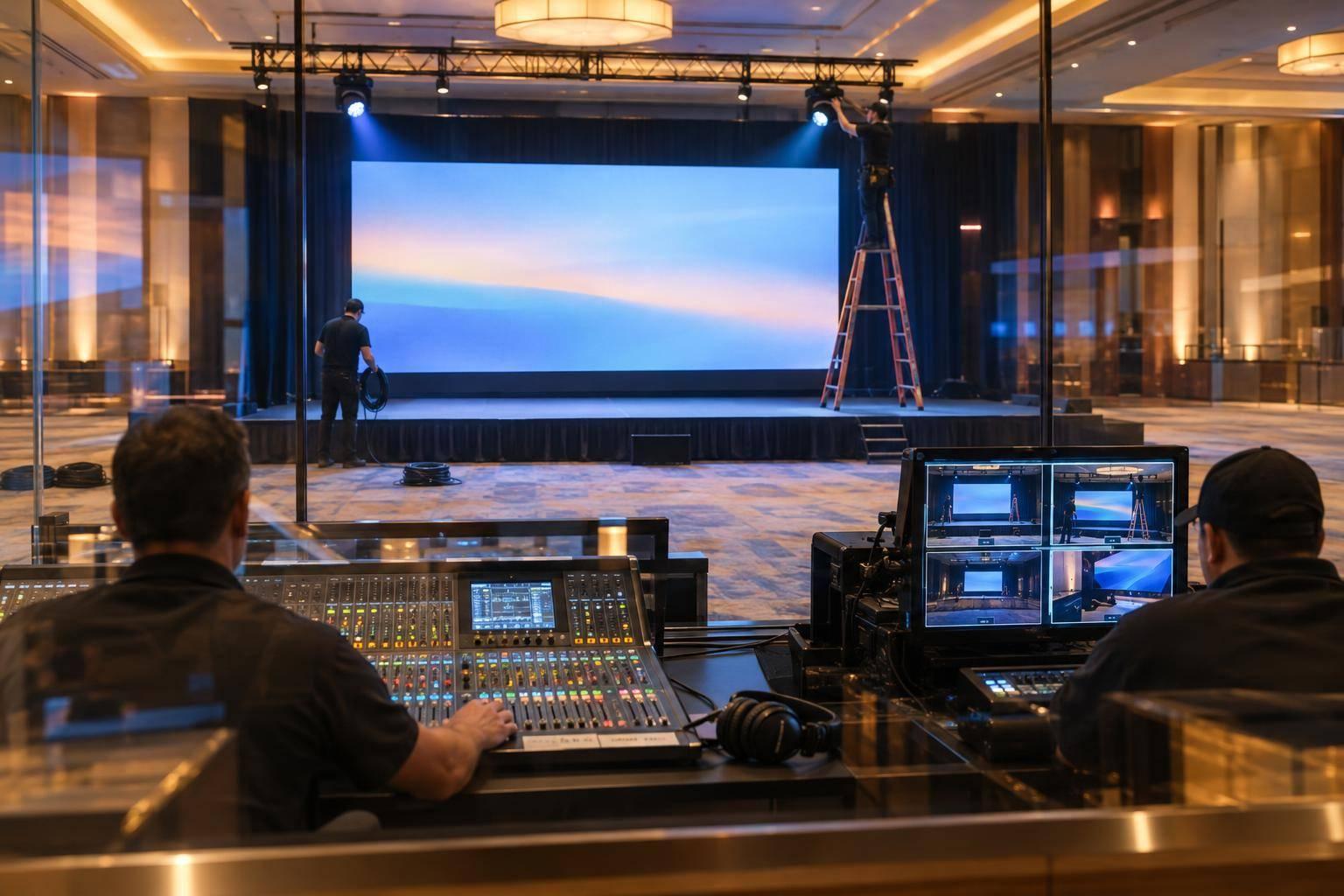
For a press conference to hit the mark, clear audio and sharp visuals are non-negotiable. Start with wireless lavalier and handheld backup microphones to ensure every word is heard. Run thorough sound checks, fine-tuning decibel levels and adjusting room acoustics to create a crisp and clear audio experience for both in-person and remote audiences.
On the visual side, proper camera angles and lighting make a world of difference. Use multiple cameras - wide shots, medium frames, and close-ups - to capture the speaker effectively. Adjust lighting to avoid shadows, helping the speaker appear polished and confident on screen.
Confidence monitors placed at eye level can guide speakers without being distracting. Additionally, having backup audio feeds and camera systems in place ensures the event runs smoothly, no matter what. These technical details play a big role in maintaining a professional image during important announcements.
Behind the scenes, production teams work closely with broadcast partners. They provide clean video feeds and isolated audio tracks that news outlets can easily incorporate into their coverage. Keep cables organized to prevent trip hazards or interruptions, and use real-time audio processing to maintain consistent sound quality, even when the speaker’s tone or volume changes. This level of preparation ensures the message is delivered flawlessly.
2. Coaching Speakers and Helping with Preparation
Delivering a polished presentation goes beyond technical perfection - it requires confidence and strong communication skills. That’s where speaker coaching comes in. Production teams help executives transform from nervous presenters into confident speakers who can handle tough questions and stay focused under pressure. This coaching complements the technical groundwork already in place.
Preparation starts weeks before the event. Production teams work closely with executives to refine key messages and practice delivery techniques. They guide speakers on using effective body language, maintaining eye contact, and mastering their pace, tone, and projection to convey authority and confidence.
Mock press conferences are a key part of the preparation process. These simulated sessions include challenging questions designed to test the speaker’s composure. Executives practice pausing before answering, staying calm under scrutiny, and steering conversations back to their main points - even when faced with off-topic or difficult questions.
Teams also ensure executives are comfortable with teleprompters, camera angles, and confidence monitors, so they can focus on delivering their message seamlessly.
Message timing is another crucial element. Production teams coach executives to deliver concise opening statements that clearly communicate key points before moving into a Q&A session. They help identify the most critical messages to convey, ensuring those points come across no matter what questions arise.
Preparation doesn’t stop there. Teams also train executives for crisis communication scenarios. Whether it’s addressing sensitive topics or responding to unexpected questions, this training helps speakers acknowledge concerns while staying aligned with the company’s messaging. This kind of preparation is especially critical during press conferences involving tough announcements or controversial issues.
Physical presentation is just as important. Production teams offer advice on wardrobe choices, ensuring clothing looks great on camera and avoids distracting patterns or colors. They also coach executives on posture, hand gestures, and facial expressions that project confidence and credibility to both in-person and broadcast audiences.
3. Providing Live Technical Support
Even with meticulous planning, technical glitches can pop up during live events, making on-the-spot support absolutely crucial. Production teams strategically place skilled technicians throughout the venue to keep a close eye on equipment and swiftly address any issues that could disrupt the executive's presentation.
When it comes to audio monitoring, it’s all about staying sharp. Technicians use professional headsets to listen for feedback, sudden volume drops, or microphone hiccups. They’re ready to tweak levels, switch to backup equipment, or reroute signals immediately. This ensures the executive’s voice remains steady and commanding, no matter what happens behind the scenes.
Visuals need just as much attention. From projection systems to digital displays and lighting, everything is monitored from dedicated control stations. If a slide doesn’t advance, a screen goes blank, or the lighting changes unexpectedly, technicians are on it. Backup systems are always on standby, ready to kick in within seconds, so transitions remain smooth, keeping the audience focused on the presentation instead of distractions.
Teleprompter management is another critical task during live events. Operators follow along with the speaker, adjusting the scrolling speed to match the executive’s natural rhythm. If the speaker pauses for questions or veers off script, operators can quickly pause or jump to the correct section. This allows the executive to maintain a natural flow while keeping their key points easily accessible, all without skipping a beat.
Wireless headsets and intercoms keep the technical team in constant communication. This coordination ensures seamless cues for camera work, audio adjustments, and lighting changes. For example, camera operators get a heads-up about upcoming slide transitions, audio engineers are alerted to microphone switches, and lighting techs prepare for shifts - all while the speaker stays focused on delivering their message.
Backup systems play a huge role in maintaining the event’s momentum. Redundant setups for audio, visuals, and streaming ensure that even if something fails, the presentation continues without a hitch. This level of preparation is vital for preserving the executive’s credibility, especially during high-stakes moments.
For remote audiences, technicians also keep a close watch on live streaming quality and connectivity. If there’s a hiccup, they can quickly switch to backup systems, ensuring viewers online experience the same smooth delivery as those in the room.
sbb-itb-ae35a94
4. Managing Event Flow and Stage Operations
Behind every smooth press conference is a production team orchestrating the event like unseen conductors, ensuring everything flows seamlessly. Their role goes far beyond fixing technical glitches - they create an environment where executives can focus entirely on delivering their message without worrying about logistics.
Timing is everything. Production teams rely on detailed run sheets that outline every moment of the event, from the speaker's entrance to the final Q&A. Stage managers use wireless communication systems to stay in constant contact with security, media relations, and technical crews, ensuring transitions happen exactly as planned.
The physical setup on stage also demands constant attention. From podium placement to backdrop alignment, production teams ensure the executive always appears professional and centered on camera. Lighting technicians make real-time adjustments to prevent distracting shadows or overexposure, maintaining a polished visual presentation. This level of precision matches the technical readiness established earlier.
Managing the audience is another critical piece of the puzzle. Production teams work with venue staff to arrange seating, ensuring key media outlets have prime spots while maintaining clear sightlines for cameras. During Q&A sessions, they oversee the flow of questions and transitions between speakers, ensuring everything runs smoothly and stays on track.
Even small details, like planning the executive's entrance and exit, play a big role in the overall impression. Stage managers map out routes that avoid technical equipment and provide a confident, commanding approach to the stage. They also prepare contingency plans for unexpected hurdles, ensuring the executive's movements appear effortless. If the event runs long or issues arise, production teams quickly adjust schedules, tweak Q&A durations, or shift break timings to keep things on track and maintain the executive's composure.
Media logistics are another layer of coordination. Production teams work closely with camera operators to ensure smooth transitions between wide shots and close-ups, using visual cues to enhance timing. They also manage remote participants and satellite feeds, integrating these elements seamlessly into the event. All of this careful coordination ensures the technical aspects enhance the executive's message rather than distract from it.
Ultimately, these behind-the-scenes efforts create a polished and distraction-free stage, allowing executives to focus on what really matters: delivering their message with confidence and impact.
5. Using Teleprompters and Confidence Monitors
Teleprompters and confidence monitors play a vital role in helping executives deliver intricate messages while maintaining a genuine connection with their audience. These tools build on earlier strategies for refining event presentations, offering a seamless way to balance technical precision with natural delivery.
Teleprompters, positioned directly in front of the camera lens, allow speakers to read their scripts without breaking eye contact with the audience. Nearby confidence monitors display key points, giving speakers an additional reference to ensure their presentation flows naturally.
During rehearsals, production teams fine-tune teleprompter settings to match each executive's speaking pace, while off-stage operators adjust displays in real time. For multi-camera setups, strategically placed monitors help executives address different sections of the audience without going off-script. Backup measures, like printed scripts and wireless monitors capable of immediate content updates, are also in place to handle unexpected disruptions.
To ensure a polished delivery, production teams coach speakers to avoid staring too intently at the teleprompter. Instead, they encourage natural gestures and occasional glances away to keep the presentation engaging. Executives are also trained to recover gracefully if they momentarily lose their place, further enhancing their poise.
Comparison Table
To better understand the roles of teleprompters and confidence monitors in executive presentations, here's a breakdown of their key differences:
| Feature | Teleprompter | Confidence Monitor |
|---|---|---|
| Primary Purpose | Provides word-for-word script delivery, allowing speakers to maintain direct eye contact with the audience or camera. | Displays slides, notes, or cues, enabling presenters to stay engaged with the audience without turning away. |
| Best Use Cases | Ideal for scripted presentations, formal speeches, and video recordings. | Perfect for interactive sessions and presentations that require dynamic engagement. |
| Mobility | Keeps the speaker in a fixed position within the teleprompter's viewing range. | Suited for presenters who move around the stage freely. |
| Content Display | Projects a scrolling script that matches the speaker's pace. | Shows current slides, upcoming slides, presenter notes, and filtered audience questions. |
| Eye Contact | Ensures consistent eye contact with the audience or camera. | Allows natural glances while maintaining audience connection. |
| Setup Requirements | Utilizes high-quality dielectric beamsplitter mirrors and requires an operator for smooth operation. | Needs strategic placement at the base of the stage with an upward angle to suit the speaker's line of sight. |
| Technical Complexity | Involves specialized equipment and trained operators. | Relies on standard display setups with customized content. |
Teleprompters rely on high-quality dielectric beamsplitter mirrors to ensure clear, ghost-free text, paired with a dedicated operator who scrolls the script in real time to match the speaker's delivery. They are most effective when speakers rehearse extensively to get comfortable with the scripted content and pacing.
On the other hand, confidence monitors offer greater flexibility by displaying reference slides, notes, or cues - such as PowerPoint's presenter view - without breaking audience engagement. Production teams can fine-tune these monitors by adjusting resolution and brightness to align with stage lighting, ensuring the content is easy to see from different angles.
Ultimately, the choice between teleprompters and confidence monitors depends on the event's format. Teleprompters shine in scripted settings, while confidence monitors are better suited for interactive, dynamic presentations. This comparison helps production teams select the right tool to meet the specific needs of each event.
Conclusion
Production teams play a crucial role in the success of press conferences, turning potential chaos into polished professionalism. Their expertise spans a range of responsibilities, including audiovisual setup, speaker preparation, real-time technical support, event flow management, and the use of specialized equipment. This allows executive speakers to focus solely on delivering their message without distractions.
Beyond the technical aspects, these teams fine-tune every detail of a presentation. Whether it's adjusting microphone levels, perfecting lighting, coaching speakers on body language, or troubleshooting unexpected technical challenges, their thorough approach ensures every element contributes to a seamless delivery.
The strategic use of advanced tools further elevates speaker performance. As highlighted earlier, tools like teleprompters help speakers maintain steady eye contact during scripted presentations, while confidence monitors support dynamic and engaging delivery, especially when mobility is required.
Skilled production teams do more than just prevent technical issues - they enhance the overall presentation. In high-stakes press conferences, every detail matters, from the placement of confidence monitors to the precision of slide transitions. Their work transforms capable speakers into compelling presenters who leave a lasting impression on their audience.
For organizations planning press conferences, investing in skilled production support is essential. A well-executed presentation not only strengthens message delivery but also bolsters the organization’s credibility and brand image. On the other hand, technical missteps can detract from even the most carefully crafted messages.
FAQs
How do production teams handle technical issues during live press conferences?
Production teams ensure everything runs seamlessly by offering real-time technical support during the event. They keep a close eye on all equipment - microphones, speakers, and visual displays - to quickly spot and fix any issues that arise.
To stay prepared for the unexpected, they often rely on backup systems and have a dedicated troubleshooting team on standby. This level of preparedness helps maintain a smooth flow, allowing the executive speaker’s message to remain the center of attention without any distractions.
How do production teams help executives confidently handle tough questions during press conferences?
Production teams are essential in helping executives handle tough questions during press conferences. One key aspect of their role is speaker coaching, which equips executives to anticipate challenging topics, deliver clear and concise answers, and project confidence even under intense scrutiny. This process often involves mock Q&A sessions, feedback on tone and body language, and techniques for staying calm when faced with unexpected or sensitive questions.
Beyond preparation, production teams also provide practical support during the event itself. Tools like teleprompters or confidence monitors can display key talking points, ensuring speakers stay on message and maintain focus. By combining thorough preparation with real-time assistance, production teams enable executives to communicate with clarity and confidence, no matter how high the stakes.
How do teleprompters and confidence monitors help executive speakers deliver better presentations at press conferences?
Teleprompters and confidence monitors are essential tools for executive speakers aiming to deliver smooth, professional presentations during press conferences. Teleprompters allow speakers to follow their script while maintaining direct eye contact with the audience. This not only helps them stay on message but also strengthens their connection with the crowd, building trust and engagement.
Meanwhile, confidence monitors provide a discreet way to display key information like slides, bullet points, or notes. This setup helps speakers stay organized and focused without having to turn their backs to the audience. Together, these tools ensure executives come across as composed, well-prepared, and captivating during important events.
Related Blog Posts


Streamline your workflow, achieve more

Lorem ipsum dolor sit amet, consectetur adipiscing elit. Maecenas ac velit pellentesque, feugiat justo sed, aliquet felis.



Lorem ipsum dolor sit amet, consectetur adipiscing elit. Maecenas ac velit pellentesque, feugiat justo sed, aliquet felis.