Looking For An AV Production Team With Experience Producing Dealer Meetings? Look Into Corporate Optics. Read More To Find Out Why.

Chief Executive Officer
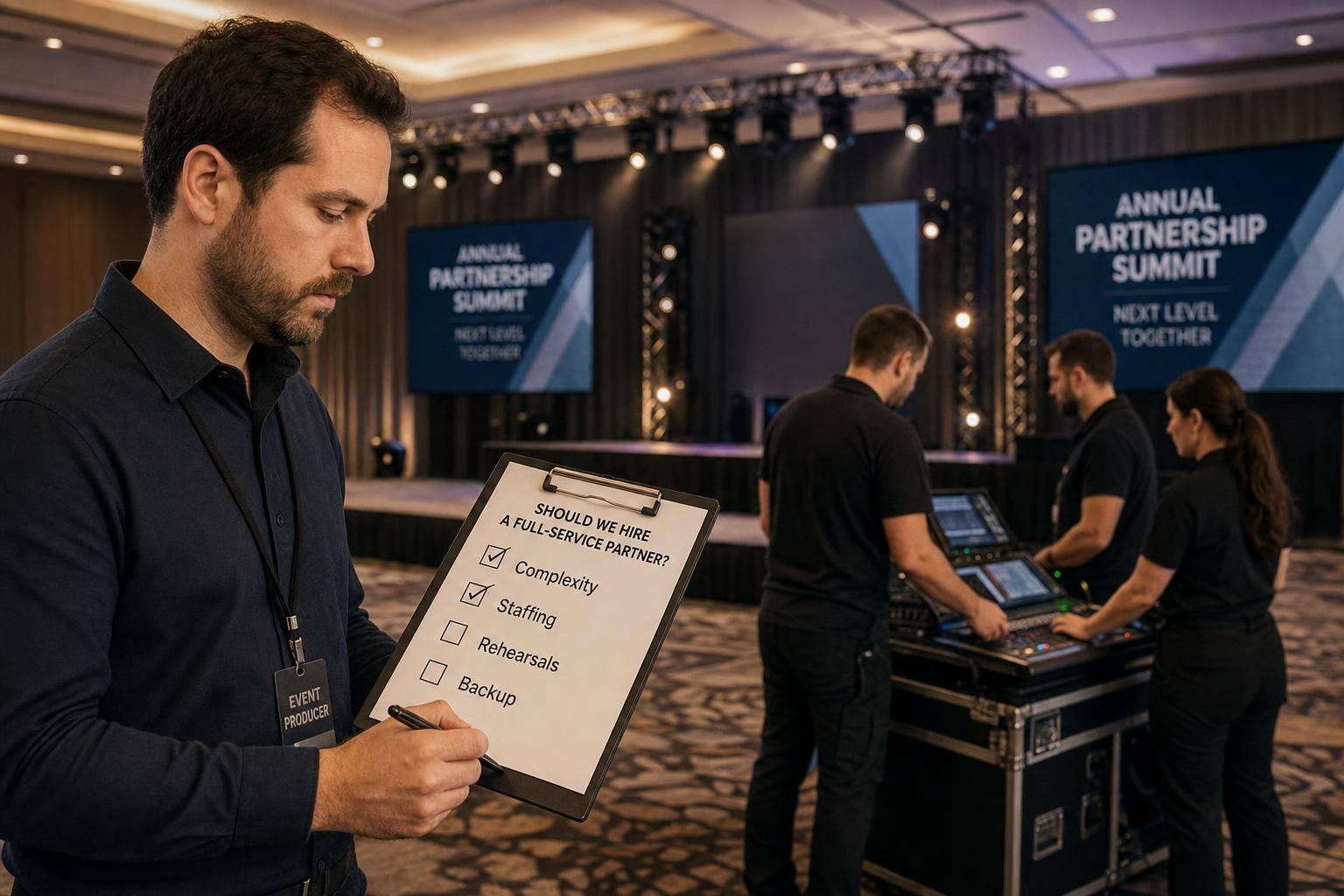
If your dealer meeting goes wrong, the damage can last 12 to 18 months. That’s why I’d treat AV as more than a room setup. Based on the article, Corporate Optics stands out because it handles the parts that matter most: executive keynotes, product reveals, breakout rooms, hybrid streams, speaker support, and post-event reporting.
Here’s the short version of why someone may look at them first:
- Executive sessions: clear sound, stage screens, timers, teleprompters, and cue control
- Product launches: close-up cameras, live screen switching, branded stage looks, and recorded footage for later use
- Hybrid delivery: webcast audio paths, bandwidth checks, backup internet, and live stream monitoring
- Multi-room meetings: shared run-of-show, room-level cue sheets, media control, and tech staff in key rooms
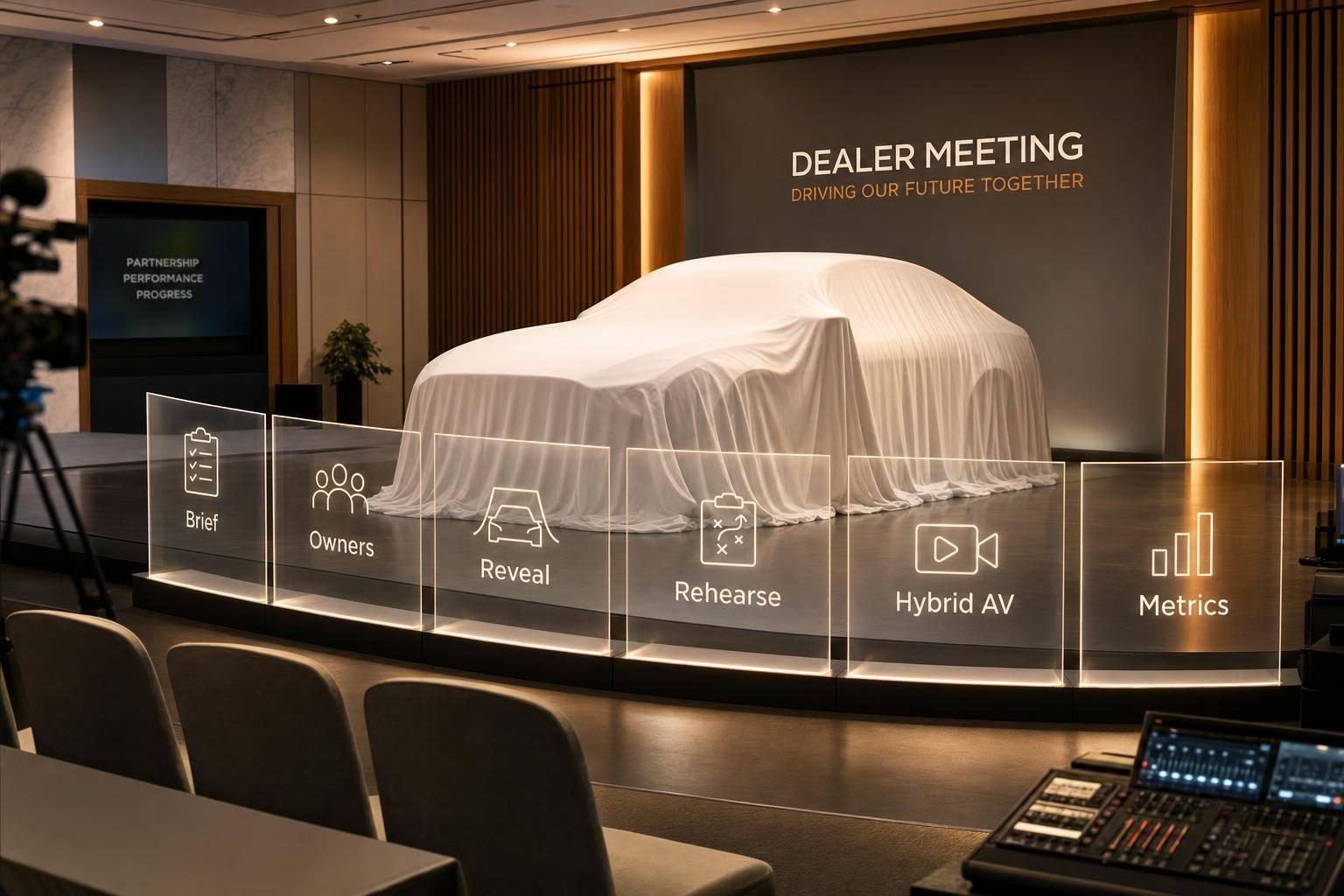
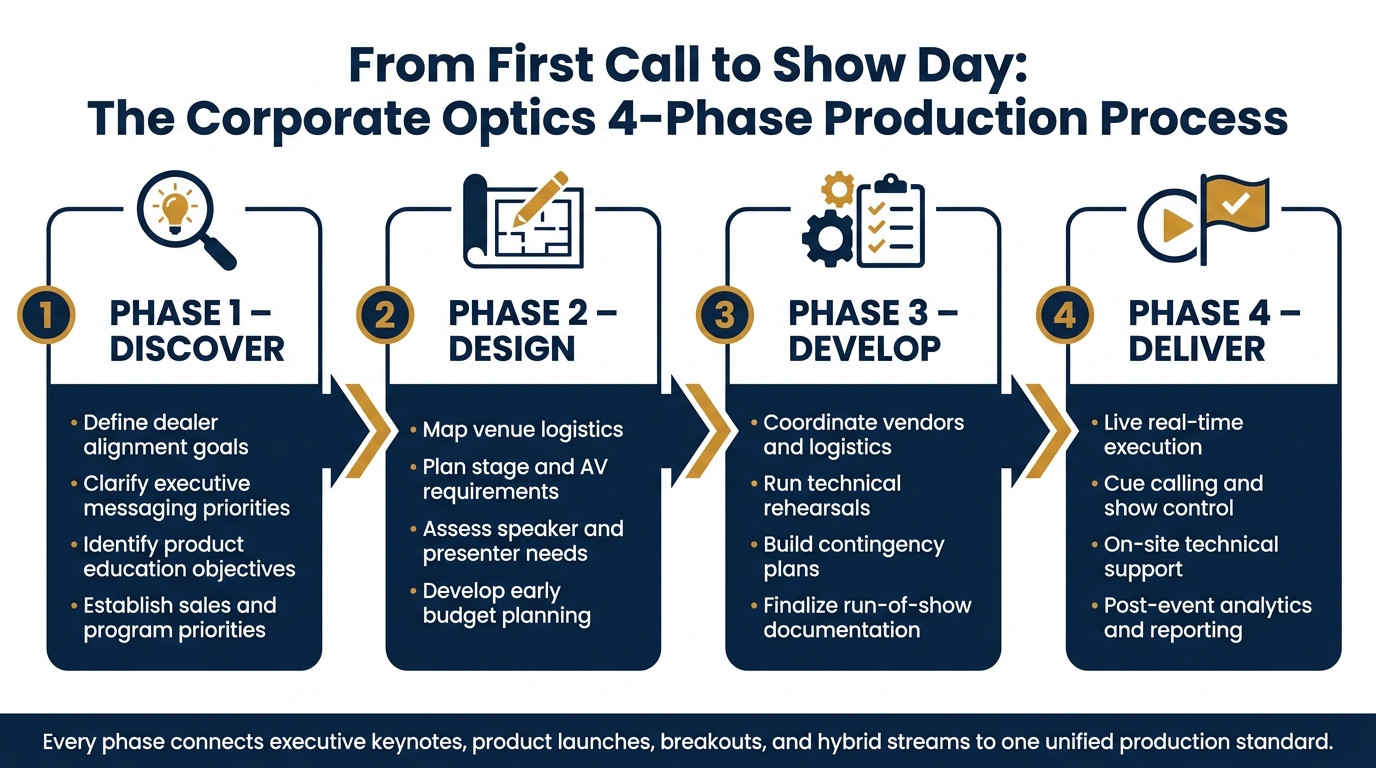
- Planning process: a four-step model - Discover, Design, Develop, Deliver
The core point is simple: dealer meetings have a lot of moving parts, and small AV failures can weaken the message fast. I’d read this article as a case for choosing a team that can keep the keynote, launch, breakouts, and remote feed on the same standard from start to finish.
Problem: Executive Presentations Must Look and Sound Flawless
The first big test for dealer-meeting production is the executive keynote. If people in the room can't clearly hear the message or properly see the speaker, the session starts to lose force fast. In a dealer meeting, that can come across as weak leadership.
Why Visibility, Audio Clarity, and Timing Matter
Hotel ballrooms are tough rooms for speech. They tend to be wide and flat, with low ceilings and support columns. That setup can make a basic PA system fall short. People in the back and along the sides need the same speech clarity as the front row. That usually means a properly sized line array or a distributed point-source system, tuned with measurement tools so coverage stays even and feedback or echo buildup stays under control.
Then there's visibility. At a dealer meeting, people aren't just listening to leadership. They're also reading the room. They're judging confidence, direction, and product credibility. If the stage is too low or the screens are too small, side and back-row attendees may not be able to read the slides or even clearly see the speaker. Large LED walls or projection screens on both sides of the stage help fix that. Add live camera feeds to those screens, and every seat has a clear view.
Timing is where general sessions often start to drift. Dealer meeting agendas are usually tight, so there's not much room for mistakes. If walk-on music cuts off too soon, a slide moves before the speaker is done, or a video starts late, the whole session can feel rushed. Even strong content can lose impact when those small moments go off-beat. That same level of control matters even more once the meeting moves from keynote delivery into live product demos.
How Corporate Optics Supports Speaker Delivery
Corporate Optics handles executive session support as one connected system. The team designs and tunes the sound setup around the venue's size and seating plan. Wireless microphone planning also takes RF interference into account, which matters in dense urban hotel settings. Each executive gets a dedicated wireless mic, with backup units ready to go.
On stage, confidence monitors let speakers see the current slide, the next slide, and a running timer. That helps them stay on pace without breaking eye contact with the audience. For high-pressure scripted moments like pricing announcements or policy changes, teleprompter support helps keep wording tight and exact. Stage lighting is set up for both the live audience and the camera feed at the same time, so executives look sharp on the webcast without harsh shadows or blown-out highlights. A show caller runs a detailed cue sheet that covers each walk-on, mic unmute, video roll-in, and lighting shift, which lets the crew adjust smoothly if a speaker ends early or adds an off-the-cuff comment.
"Such a tremendous team and group to work with. They always remain calm (with a smile), have our back, and are prepared for anything."
That same discipline carries into product launches, where timing, visuals, and camera coverage all need to hit together.
sbb-itb-ae35a94
Problem: Product Launches Need Clear Demonstrations and Strong Visual Impact
After the keynote, the launch still has work to do. It needs to prove the message both on stage and on screen.
Dealer meetings turn new models, pricing, and incentives into tools the sales team can use. That only works if the AV setup makes the details easy to see and the reveal hits at the right moment. If people miss the product features or pricing steps, the room loses energy fast.
AV Elements That Improve Product Launch Accuracy
A dedicated close-up camera sends live detail shots to large screens in real time through IMAG (image magnification). That way, dealers can follow product details no matter where they’re sitting. A technical director manages live switching between the wide presenter shot, the close-up product feed, and pre-produced motion graphics. The cuts follow the presenter’s story, so the show keeps moving without awkward pauses. Animated graphics can also roll out pricing and program details step by step instead of dumping everything on the audience at once.
Comparison Table: Specialized Launch Production vs. Minimal AV Setup
| Specialized Launch Production | Minimal AV Setup | |
|---|---|---|
| Visual Clarity | High-resolution LED walls or projectors with multi-camera feeds and live switching | Basic projector with limited visibility for fine product details |
| Brand Presentation | Custom scenic elements, branded color palettes, and on-brand graphic templates | Generic setup with minimal brand alignment |
| Content Capture | Multi-channel recording archived for training, dealer portals, and future communications | Often unavailable or limited to a single low-quality room recording |
How Corporate Optics Builds Brand-Aligned Launch Moments
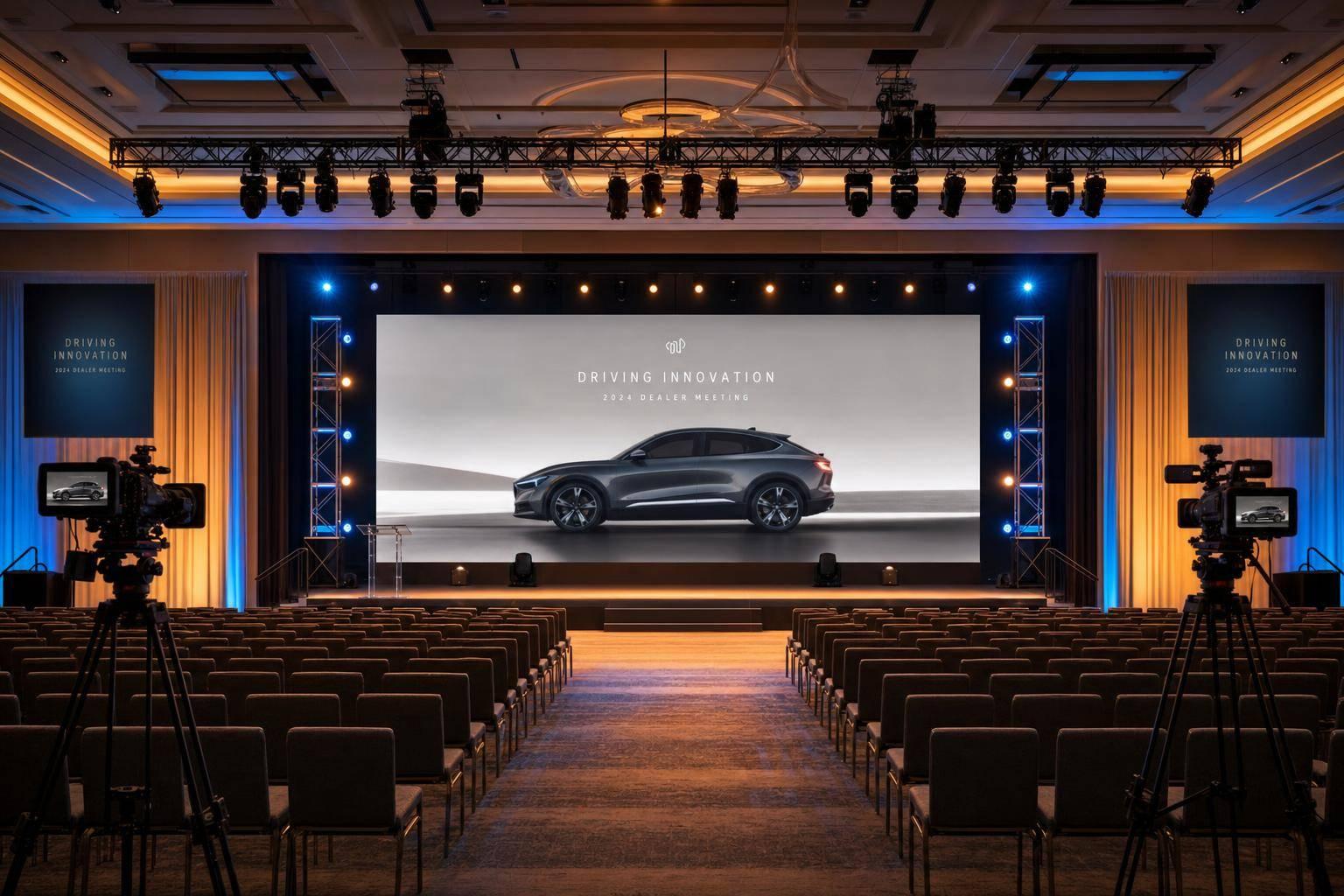
Corporate Optics handles launch design and technical execution as one connected plan. On the scenic and lighting side, the team can design and build custom product platforms, branded backdrops, and reveal elements based on a client’s retail campaign colors and design language. Reveal lighting helps turn a product walkout into a clear launch moment instead of just another stage entrance.
Video production is part of that same plan. Corporate Optics can produce launch openers, feature highlight videos, and motion graphics packages that keep the messaging consistent in the room and in post-event assets. Multi-channel video capture records the program feed, presenter cameras, and close-up product angles as separate ISO tracks. That matters because the footage can then be used after the event for training modules, dealer portal content, or internal communications, instead of being stuck as one wide room recording that’s tough to reuse. For remote dealers, multi-camera streaming extends the launch experience to remote dealers.
That same level of control gets harder once the meeting spreads across multiple rooms or locations.
Problem: Multi-Location, Hybrid, and Breakout Sessions Are Hard to Coordinate
Dealer meetings almost never stay in a single room for long. The minute the main-stage program branches into breakouts and remote feeds, coordination gets harder. People fly in from different parts of the U.S., remote dealers log in from different time zones, and the agenda splits into simultaneous tracks. That setup can get messy fast, and the cracks tend to show when AV planning wasn't built around that reality from day one.
Where Dealer Meeting Coordination Often Breaks Down
The biggest problems usually start with small misses that pile up.
A breakout room running on a dim hotel projector while the main ballroom has a full LED wall sends a clear message: some sessions seem to matter less. Remote dealers on a webcast hear thin, echo-heavy audio because the streaming mix wasn't separated from the in-room reinforcement feed. A presenter leaves the general session for a training breakout and walks into the wrong slide deck, the wrong mic pack, or an empty room with no tech support in sight.
Then the schedule shifts, which it almost always does. A session runs long. A product demo gets added. Without centralized show control, slides, signage, and playback files don't update together. One room gets the change. Another doesn't. Add staffing gaps, and some breakout tracks start late while presenters fumble with their own gear. That's the point where AV control stops being a background detail and starts shaping the dealer experience.
How Corporate Optics Manages Hybrid and Multi-Room Execution
Corporate Optics keeps those moving parts lined up with one shared production plan. A centralized run-of-show covers every space: general session, breakouts, product labs, and remote streams. So if timing shifts in one area, it doesn't quietly throw the rest of the program off track.
Room cue sheets spell out when music starts, when mics go live, and when transitions happen. That gives every technician the same rhythm to follow. For webcast sessions, the team uses dedicated hardware encoders, pre-event bandwidth testing, and a separate audio path, so remote dealers hear a balanced presenter feed instead of the room mix. A dedicated webcast operator monitors that feed throughout the session.
On-site, each key room has a dedicated technician. A lead technical director manages transitions and shifts staff when the agenda changes. Because media is controlled from one place, a last-minute content update can go to every affected room at the same time.
Backup gear is part of the plan from the start, including:
- Spare wireless mics
- Mirrored presentation files
- Secondary internet circuits
If a stream drops or a presenter gets delayed, pre-produced content fills the gap and keeps the program on schedule. That way, every dealer gets the same message and the same level of execution across every room and stream.
Why Corporate Optics Is a Strong Fit for Dealer Meetings From Planning Through Show Day
Corporate Optics 4-Phase Dealer Meeting Production Process
Dealer meetings need one connected production plan. Executive keynotes, product launches, breakouts, and webcasts all have to run on the same technical standard. If one part slips, the whole meeting can feel off. That kind of control starts early and has to hold steady all the way through show day.
What an End-to-End Production Approach Looks Like
Corporate Optics works through four phases: Discover, Design, Develop, and Deliver. Each phase builds on the one before it, which helps keep the meeting on track from the first planning call to the final session.
During Discover, the team defines the main goals: dealer alignment, executive messaging, product education, and sales priorities. In Design, they map out venue logistics, stage and AV needs, speaker requirements, and budget planning early, before small issues turn into big ones.
In Develop, the focus shifts to logistics, vendor coordination, technical rehearsals, and contingency planning. That work helps presenters feel ready and keeps the run of show from drifting. Then Deliver is the live moment: real-time execution, cue calling, and on-site support that keep transitions, media elements, and timing moving cleanly. After the event, analytics on attendance, session engagement, webcast participation, and audience interaction show what connected with the audience and what needs work next time.
That structure helps keep executive messaging, product demos, and hybrid delivery in sync.
Conclusion: The Core Reasons to Consider Corporate Optics
Dealer meetings bring product, sales, and executive pressure into the same room. That means production has to be planned with care, staffed the right way, and carried out without gaps. Corporate Optics keeps the work connected from discovery through delivery, so executives look polished, launches come across clearly, and every room and stream follows the same standard.
FAQs
How early should we involve an AV team for a dealer meeting?
For dealer meetings with complex scenic builds, bring in your audiovisual production team 4 to 6 months in advance.
If the meeting includes executive speakers, product demos, awards, or remote attendees, loop them in even earlier - ideally before the venue contract is signed. That extra lead time helps line up the room setup, rigging, internet, and screens so you can avoid technical problems later.
What AV support matters most for hybrid dealer meetings?
The most important AV support for hybrid dealer meetings is reliable, high-quality streaming and strong audience integration. In plain English: remote attendees need a smooth, clear feed that feels like part of the meeting, not an afterthought.
That usually means professional-grade cameras, dedicated hard-wired internet, and backup streaming systems to help avoid disruptions when something goes sideways.
It also helps to use separate signal paths so remote attendees can clearly see slides, hear audio, and catch product close-ups without one feed getting in the way of another. On top of that, interactive tools like polling, chat, and Q&A keep people involved instead of just watching passively.
Can event footage be reused after the meeting?
Yes. Corporate Optics provides professional event recording, so your edited sessions can keep working after the meeting is over.
You can reuse them as training materials, onboarding resources for new dealers, or a simple way to share key information with team members who couldn’t attend.
The team also handles post-event archiving, which helps keep your content organized and useful long after the event ends.
Related Blog Posts


Streamline your workflow, achieve more

Lorem ipsum dolor sit amet, consectetur adipiscing elit. Maecenas ac velit pellentesque, feugiat justo sed, aliquet felis.



Lorem ipsum dolor sit amet, consectetur adipiscing elit. Maecenas ac velit pellentesque, feugiat justo sed, aliquet felis.