Top 3 Event Production Companies (Not Just A Livestream Vendor) For Broadcast-Quality Hybrid Event Production

Chief Executive Officer
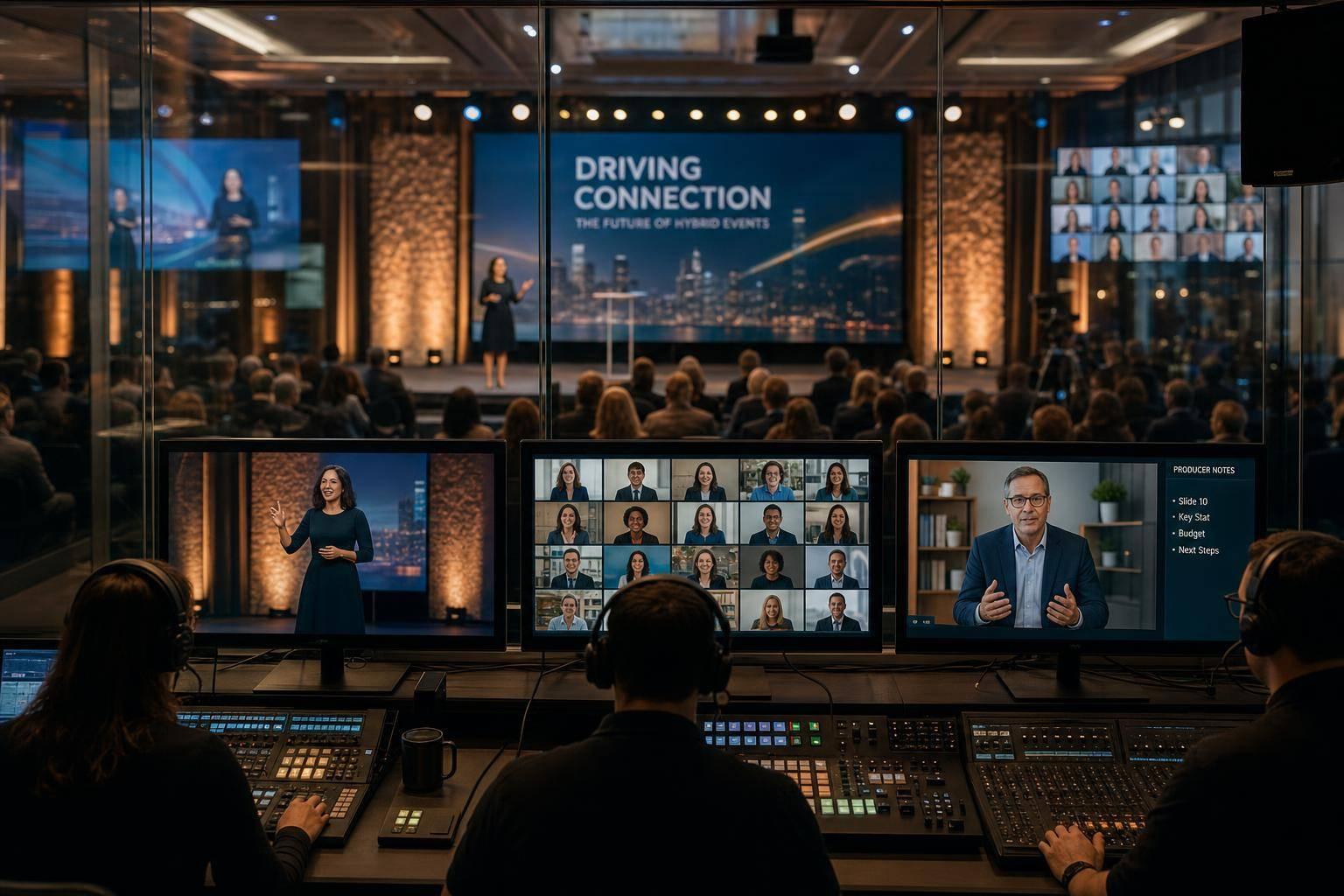
If you want a hybrid event to look like a live show instead of a webcam feed, these are the three names to look at: Corporate Optics, Ovation, and Vibe Agency.
I’d narrow the choice like this:
- Corporate Optics if you want tight show control, speaker support, and backup-heavy production
- Ovation if you need one team for stage, stream, and large conference work
- Vibe Agency if you want a more visual show and support for multi-city hybrid setups
This comparison looks at four things that matter most in a corporate hybrid event:
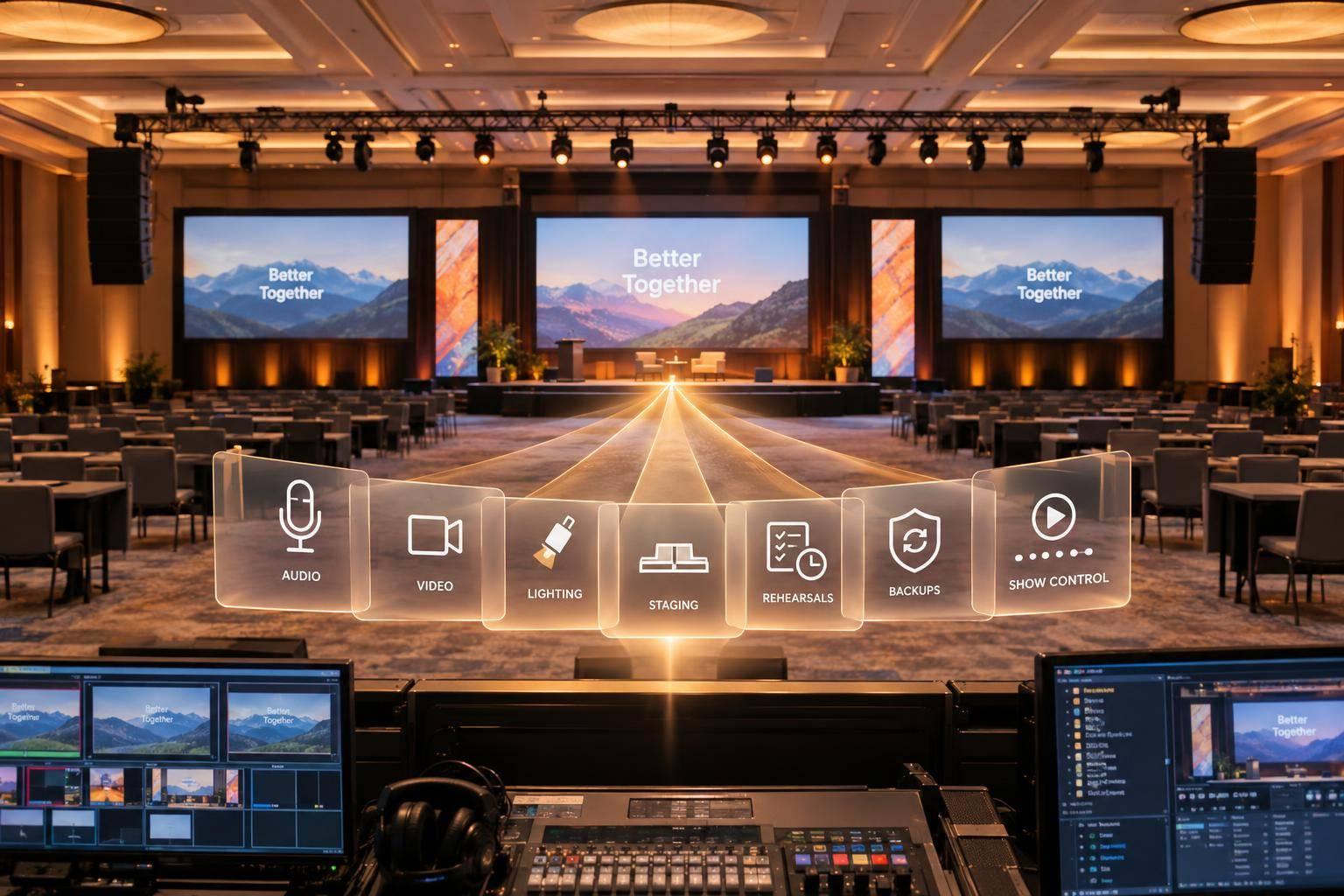
- Production depth
- Remote audience experience
- Executive show support
- Reliability at scale
You’ll also see proof points like 99.9%+ uptime, 10,000+ attendees, 320+ sessions, and a 147% attendance increase tied to past event work.
Before I’d hire any team, I’d ask three direct questions:
- Do you run separate audio mixes for the room and the livestream?
- Do you use hardwired internet instead of venue Wi‑Fi?
- What is your encoder failover plan if the main feed drops?
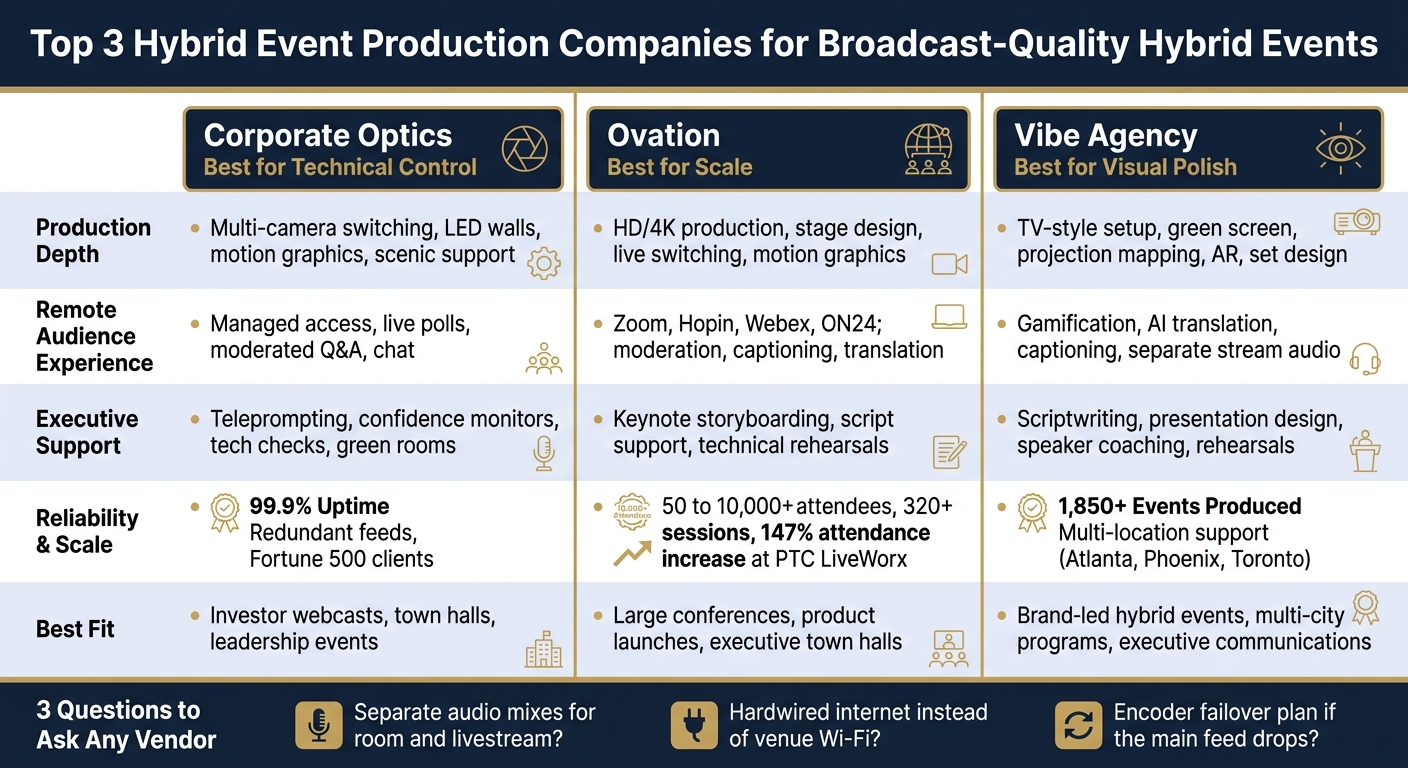
Top 3 Hybrid Event Production Companies Compared
Hybrid Event Video Production Explained | Jay Wardrup
sbb-itb-ae35a94
Quick Comparison
| Company | Production Depth | Remote Audience Experience | Executive Support | Reliability / Scale | Best Fit |
|---|---|---|---|---|---|
| Corporate Optics | Multi-camera switching, LED walls, graphics, scenic support | Managed access, polls, Q&A, chat | Teleprompting, confidence monitors, tech checks, green rooms | 99.9%+ uptime, redundant feeds, Fortune 500 work | Investor webcasts, town halls, leadership events |
| Ovation | HD/4K production, stage design, live switching, motion graphics | Zoom, Hopin, Webex, ON24, moderation, captioning, translation | Keynote storyboarding, script support, rehearsals | Events from 50 people to 10,000+ attendees | Large conferences, product launches, executive town halls |
| Vibe Agency | TV-style setup, green screen, projection mapping, AR, set design | Gamification, AI translation, captioning, separate stream audio | Scriptwriting, presentation design, speaker coaching, rehearsals | Supports multi-location events and large conferences | Brand-led hybrid events, multi-city programs, executive communications |
Bottom line: if you care most about control, start with Corporate Optics. If you care most about scale, look at Ovation. If you care most about visual polish, Vibe Agency is the better fit.
I’ve summed up the article below so you can size up each option fast.
1. Corporate Optics
Corporate Optics is a full-service event production company built for investor webcasts, executive town halls, and leadership conferences. It aims for a broadcast-grade experience through show calling, scenic integration, and live hybrid support.
Production Depth
What stands out here is how Corporate Optics brings production control, remote participation, and speaker management into one workflow. That matters because live events can get messy fast when those pieces live in separate systems.
Its productions can include large-scale and curved LED walls, custom motion graphics, branded lower-thirds, and overlays. The company runs a four-phase workflow that covers discovery, design, rehearsal, and delivery. It also builds contingency planning into pre-show prep, which is exactly where problems should be handled - not during the event.
Hybrid Audience Execution
For remote attendees, access is handled through managed invites, links, and landing pages, which helps cut down friction at the start. Broadcast-grade audio keeps executive speech clear, and interactive features like live polls, moderated Q&A, and chat give virtual attendees a reason to stay involved instead of drifting into the background.
Executive Show Support
Executive presenters usually need more than a mic and a slide deck. Corporate Optics supports speakers with spec sheets, teleprompting, confidence monitors, IMAG, presenter tech checks, slide hosting, and live troubleshooting.
Remote speakers can join the live stream through multi-camera setups, which helps the overall show feel polished instead of patched together. There’s also a dedicated backstage support team handling operations and last-minute requests, while presenter green rooms give speakers a place to stay focused before they go live.
Reliability and Scale
On the technical side, Corporate Optics runs remote studios with professional switching systems, broadcast platforms, and redundant signal feeds. Its live broadcasts are built for 99.9%+ uptime.
The company serves Fortune 500 organizations and major associations around the world. It also holds a 4.9/5 star rating across 21 reviews.
| Capability | Function |
|---|---|
| Multi-Presenter Support | Speaker cueing, tech checks, teleprompting, IMAG |
| Graphics & Visuals | Motion graphics, lower-thirds, branded overlays, LED walls |
| Backstage Ops | Green rooms, dedicated support team |
| Streaming Reliability | Redundant signal feeds, 99.9%+ uptime |
| Best Fit | Investor webcasts, town halls, leadership conferences |
2. Ovation
Ovation stands out when a hybrid event needs one production team to handle everything from stage build to virtual delivery. Based in Nashville, Ovation focuses on corporate conferences, product launches, and executive town halls. The big draw is simple: on-site and virtual production stay under one crew, so the event feels like one show, not two separate experiences.
Production Depth
Ovation supports HD and 4K multi-camera productions, pro lighting and audio, branded stage design, including scenic sets for press conferences, and motion graphics. Dedicated producers handle live switching and camera direction, which matters when the show has a lot of moving parts.
A good example is PTC's LiveWorx 2023. Ovation storyboarded and animated the CEO keynote, then built a stage that later hosted a Dierks Bentley concert. The event supported 10,000+ attendees across 320+ sessions. That same live-event discipline shows up in its executive town halls and product launch work.
Hybrid Audience Execution
Ovation works with Zoom, Hopin, Webex, and ON24. The team handles setup, moderation, polling, chat, translation, and captioning. That means clients aren't left stitching together tech, moderators, and production on their own.
At PTC's LiveWorx, the hybrid move helped drive a 147% attendance increase. After the event, Ovation also delivers VOD, highlight reels, and engagement analytics, which helps teams get more use out of the event content.
### Executive Show Support
Ovation doesn't just run the stage. It also works with scriptwriters to storyboard keynotes, which is a big deal for executive-facing events where pacing and message control matter. Remote speakers go through dedicated technical rehearsals before the event goes live, so there are fewer surprises when it's time to present.
Since 2015, Salesforce has used Ovation for Dreamforce, and Ovation has maintained a 100% video capture success rate across multiple years while coordinating with numerous vendors.
Reliability and Scale
Ovation's production setup uses secure cloud-based streaming with redundant backups. Its projects range from 50-person executive meetings to global conferences with 10,000+ attendees. From its Nashville base, the company supports corporate events across the U.S..
| Capability | Details |
|---|---|
| Multi-Camera Production | HD and 4K setups, live switching and camera direction |
| Platform Integration | Zoom, Hopin, Webex, ON24 |
| Executive Support | Keynote storyboarding, speaker rehearsals, script coordination |
| Post-Event Deliverables | VOD, highlight reels, analytics, content repurposing |
| Best Fit | Large-scale conferences, product launches, and executive town halls |
3. Vibe Agency
Vibe Agency brings a more visual, multi-location approach to broadcast-quality hybrid production. Founded in 2004, the company has produced more than 1,850 corporate events and has been recognized by Special Events Magazine and Eventex.
Production Depth
Vibe leans into a TV-style production model. Its setup includes green-screen production, projection mapping, and augmented reality, plus custom staging, set design, CAD drawings, and 3D renderings before the build even starts.
They also handle motion graphics, lower-thirds, and fast-turn editing to keep the stream moving. That matters for a simple reason: the remote audience isn't just watching the room from afar. They're having their own version of the event.
Hybrid Audience Execution
Vibe treats hybrid events as two separate audience experiences, each with its own needs. That mindset shows up in the details. Remote attendees get dedicated engagement through gamification, AI-powered translation and captioning, and separate audio paths for the in-room PA and the broadcast stream.
In late 2025, Vibe connected three regional in-person events in Atlanta, Phoenix, and Toronto to one virtual broadcast serving 300 remote attendees. That's a strong example of the kind of connected hybrid execution this shortlist is meant to surface.
Executive Show Support
Vibe also supports the people on stage, not just the gear behind the scenes. The team handles scriptwriting, presentation design, speaker coaching, and technical rehearsals so executives are camera-ready before showtime.
Reliability and Scale
For high-stakes productions, Vibe uses redundant systems and backup connections. The company also has a national vendor network across major U.S. markets. One point of contact manages audio, video, lighting, and staging, which makes coordination much cleaner.
That setup can support a small executive session or scale up to a multi-day conference with thousands of attendees.
| Capability | Details |
|---|---|
| Multi-Camera Production | TV-quality setups with green screen, projection mapping, and AR integration |
| Hybrid Execution | Separate in-room and broadcast audio paths, gamification, AI-powered translation and captioning |
| Executive Support | Scriptwriting, presentation design, speaker coaching, technical rehearsals |
| Post-Event Deliverables | Edited recordings and engagement analytics |
| Best Fit | Fortune 500 events, national multi-location hybrid productions, executive communications |
Pros and Cons
Use this section to line up event scope, audience needs, and how deep you want production to go.
This side-by-side view makes it easier to spot which production model fits your event without forcing it.
| Company | Key Pros | Tradeoffs | Best-Fit Event Types | Poor Fit For |
|---|---|---|---|---|
| Corporate Optics | In-house technical execution; cinematic multi-camera workflows; calm on-site support | Less boutique-focused for corporate-only buyers | Product launches, hybrid conferences with heavy visual needs | Deep strategic event marketing or global destination logistics |
| Ovation | Strong creative storytelling approach; proven capture reliability; experience with 5,000+ attendee events | Too planning-heavy for short-lead or lower-complexity events | Large-scale annual conferences, global town halls, complex hybrid meetings | Budget-driven events requiring only basic AV or streaming |
| Vibe Agency | Single point of contact for full production; treats hybrid as two distinct audience experiences | Best for premium budgets | Luxury brand activations, global leadership summits, incentive programs | Dry, technical training sessions with no brand-building goals |
The main difference comes down to what matters most: technical control, audience experience, or brand polish.
If you want a team that can handle the nuts and bolts on-site and make the show look polished on screen, Corporate Optics fits that lane. If your event has a lot of moving parts and needs a story-first approach across a big audience, Ovation makes more sense. And if the event is high-touch, brand-led, and built for both in-room and remote guests, Vibe Agency is often the cleaner match.
That tradeoff is what usually makes the choice pretty obvious.
Conclusion
Picking the right hybrid event production partner usually comes down to three things: technical control, audience engagement, or brand impact. The best fit depends on what the event needs most.
If technical control comes first, Corporate Optics is a match for events that need one team to handle multi-camera production, live switching, and on-site execution.
If scale and tracked engagement matter most, Ovation fits large, complex events that need reach and measurable results.
If brand impact is the main goal, Vibe Agency fits brand-led events where visual impact comes first.
Before you sign with any partner, check three details:
- Separate audio mixes for the in-room audience and the livestream
- Dedicated hardwired internet, not venue Wi‑Fi
- A clear encoder failover plan in case the main feed drops in the middle of a keynote
Go with the team that answers those points with clear specifics.
FAQs
What makes a hybrid event look broadcast-quality?
A broadcast-quality hybrid event treats remote and in-room participants as equal audiences. That doesn’t happen by pointing a camera at the stage and hitting record. It takes planned production from the ground up.
That means multi-camera production, live switching, broadcast-grade encoding, motion graphics, a separate stream audio mix, camera-ready lighting, redundant network and hardware backup, and interactive tools like live Q&A and polling.
How do I choose the right production partner for my event?
Pick a partner that plans for both the in-person crowd and the virtual audience from day one. You don’t want a basic livestream vendor that bolts streaming on at the end. You want a camera-first or dual-audience setup, so the lighting, audio, and stage design work well for everyone watching - whether they’re in the room or tuning in online.
It also helps to work with a team that runs the full production stack in-house. That includes multi-camera capture, show calling, scenic/AV integration, and remote speaker management. Ask for clear proposals, solid rehearsals, and backup plans for the tech side, because live events have a way of testing every weak spot.
What technical questions should I ask before signing?
Ask how they handle redundancy if the internet drops. For example, do they use dual encoding paths or hot-spare hardware so the stream stays up if one part fails?
You should also confirm the audio plan includes a separate broadcast mix. The room PA feed usually isn't enough on its own. What sounds fine in the venue can sound flat, muddy, or uneven online.
It also helps to ask about:
- Lighting calibration for cameras so speakers look clear on screen, not washed out or too dark
- Remote speaker management, including how virtual presenters are cued, monitored, and brought in
- Camera setup, such as camera count, camera positions, and how many operators are assigned
- Whether they use a camera-first framing strategy so the stream is built for virtual viewers too, not treated like a side feed
That last point matters more than people think. A show can feel smooth in the room but awkward online if framing, timing, and visual focus are built only for the live audience.
Related Blog Posts
- Leading Event Marketing & Production Companies
- End-To-End Annual Meeting Production Companies For Your Next Company Conference
- Leading Conference Production Companies For Hybrid Events And Live Streaming
- Leading Production Companies Who Support Global Virtual Broadcasts And Livestreaming With Zoom Or Microsoft Team Platforms


Streamline your workflow, achieve more

Lorem ipsum dolor sit amet, consectetur adipiscing elit. Maecenas ac velit pellentesque, feugiat justo sed, aliquet felis.


Lorem ipsum dolor sit amet, consectetur adipiscing elit. Maecenas ac velit pellentesque, feugiat justo sed, aliquet felis.