Leading Corporate Event Production Providers With Experience In New York City.

Chief Executive Officer
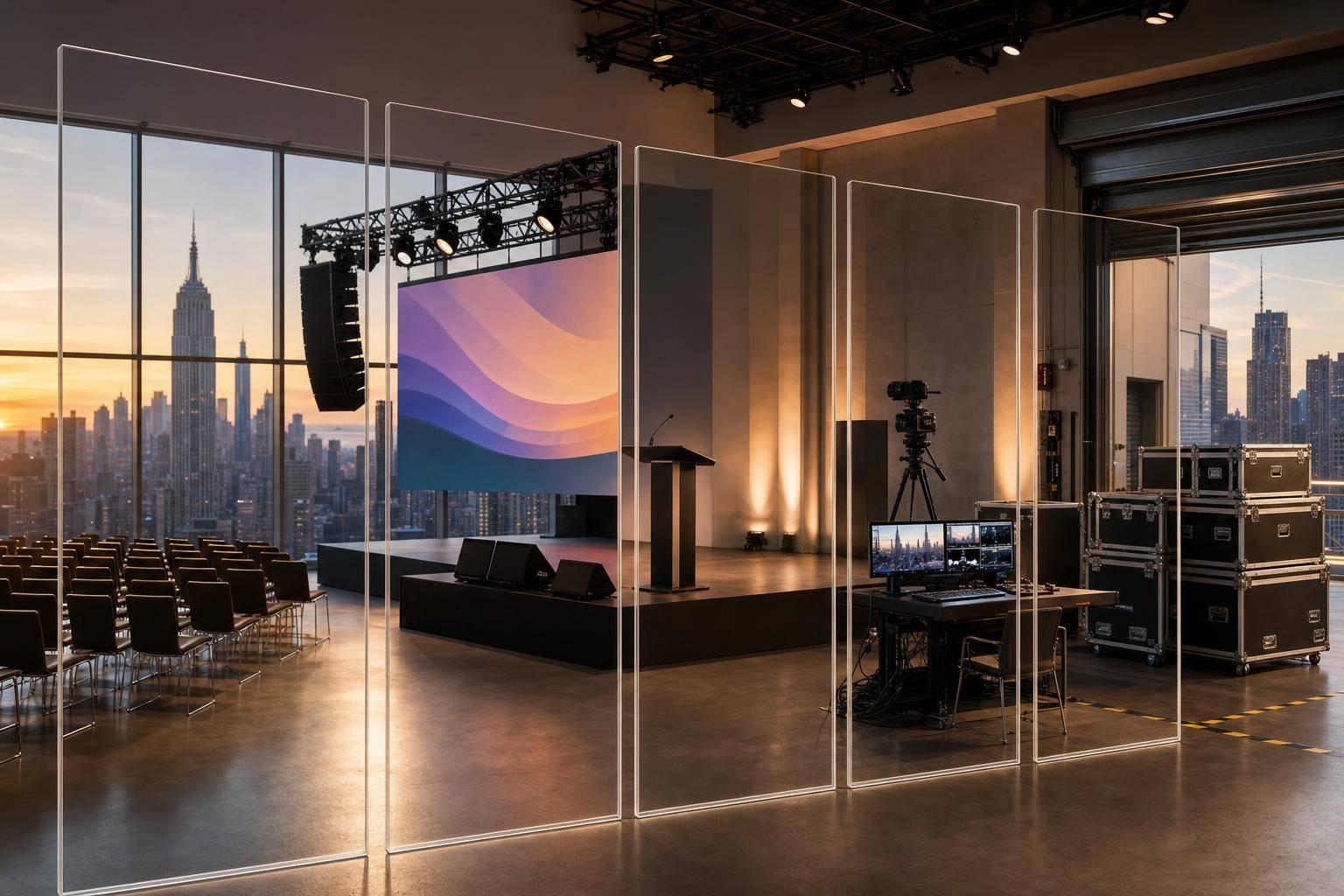
If you're planning a corporate event in NYC, venue rules and load-in limits can matter as much as the show itself. Based on this review, Corporate Optics stands out for broad production scope, Eventique fits tight-access luxury and historic venues, EMRG Media is better for permit-heavy installs, Wizard Studios fits landmark spaces, and Pinnacle Live is strongest in large ballrooms.
I see 5 clear picks, each with a different lane. The article compares them on AV, staging, lighting, live streaming, hybrid support, venue logistics, and on-site show management. It also points out a key NYC factor: high-end corporate productions often start at $25,000+, and about 85% of large trade show and convention venues in NYC work under union labor rules.
If I had to boil the article down, it says:
- Corporate Optics: best all-around fit for executive meetings, launches, awards, and hybrid shows
- Eventique: strong choice for historic and luxury venues with tight access
- EMRG Media: worth a look for outdoor structures, permits, and venue system tie-ins
- Wizard Studios: best suited to landmark venues with rigging and preservation limits
- Pinnacle Live: strongest match for large ballroom conferences and sightline-heavy rooms
The main takeaway is simple: pick the provider based on the venue first, then the event format. In NYC, that usually leads to a better fit on labor, timing, and budget.
Quick Comparison
| Provider | Best Known For | Main Fit in NYC | Main Watchout |
|---|---|---|---|
| Corporate Optics | AV, scenic, hybrid, speaker support | Executive meetings, conferences, hybrid programs | Scope should be fixed before contract |
| Eventique | Tight-access venue work, 4K hybrid production | Historic and luxury spaces | Less public detail for large ballroom setups |
| EMRG Media | Permits, union coordination, venue system tie-ins | Outdoor and logistics-heavy events | Limited public detail on AV and hybrid scope |
| Wizard Studios | Rigging and load planning in landmark venues | Historic and preservation-sensitive sites | Limited public detail on AV and hybrid scope |
| Pinnacle Live | Ballroom AV and 3D CAD sightline mapping | Large enterprise events | Less public detail for small or hybrid-first programs |
If you're choosing between these firms, the fastest path is to match your event to the room: landmark, ballroom, hybrid studio-style, or permit-heavy outdoor setup.

Top NYC Corporate Event Production Companies Compared
Full-Service Corporate Event Production⚡
1. Corporate Optics
Founded by Steven P. Simmons, Corporate Optics is a full-service technical event production company with 20+ years of experience and a client roster that includes Fortune 500 companies. The team works across a wide range of event types, including executive meetings, product launches, press conferences, awards nights, national dealer meetings, and hybrid events.
NYC Venue Logistics
Corporate Optics works directly with NYC venues, even when a venue already has its own in-house AV team. That means handling technical rehearsals, sorting out venue requirements, and planning for what could go wrong before show day starts. In New York City, that kind of venue know-how is a big deal. About 85% of large trade show and convention venues in NYC operate under union labor rules, so local experience can save time and prevent headaches. It also helps keep the technical setup in sync with the room, the run of show, and the event schedule.
AV and Hybrid Production
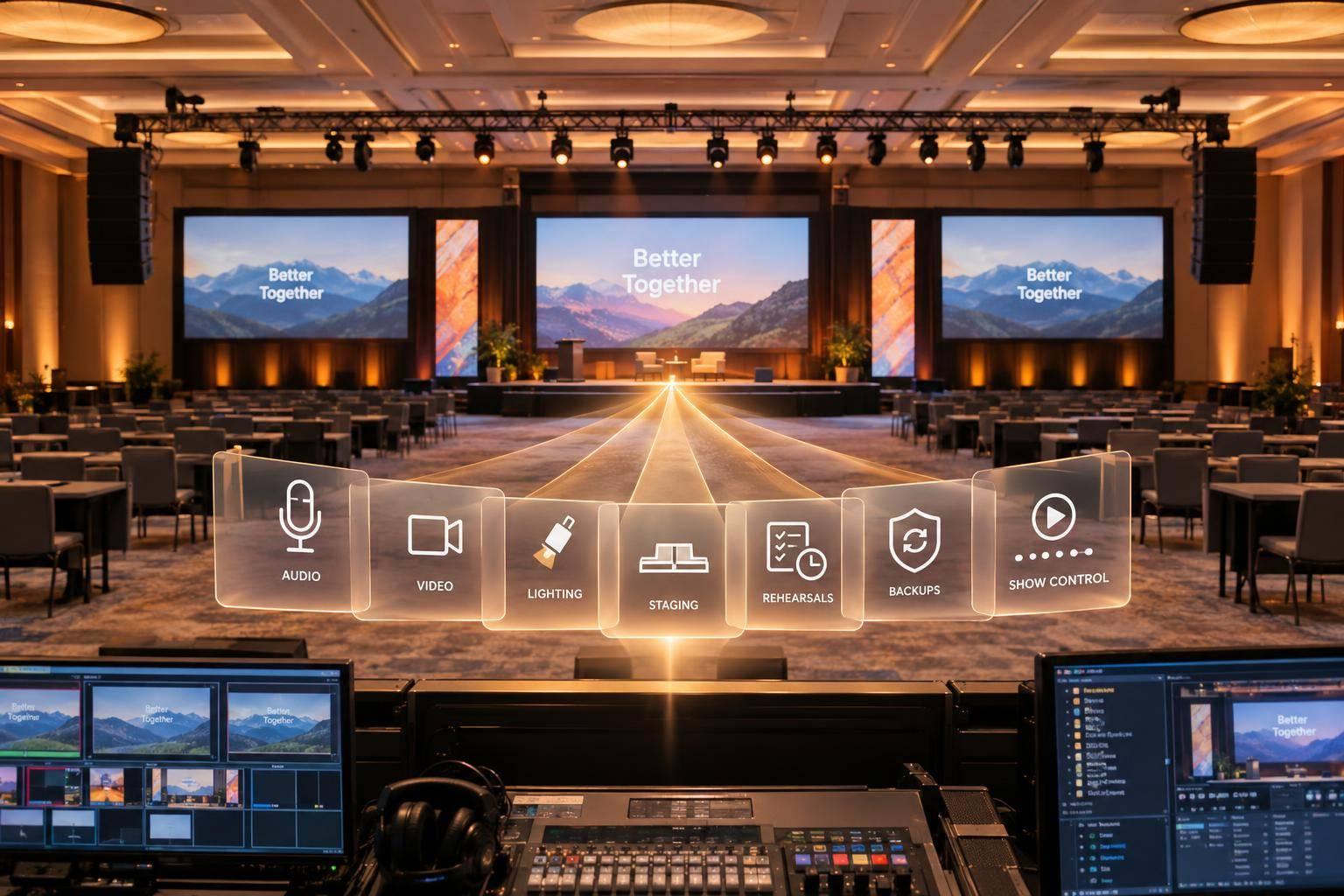
Their AV support covers curved LED walls, LED pillars, IMAG, projection, and moving tube lighting for live and hybrid events. For hybrid and live-streamed programs, they also handle lower-third graphics, teleprompters, and confidence monitors. That setup helps speakers stay on track and keeps content lined up for both the in-room crowd and remote viewers.
From there, the work moves beyond screens and signal flow into the stage itself.
Scenic and Staging Execution
Corporate Optics creates custom scenic environments built around the event’s brand and message. Its staging work includes customized stage entrances, speaker reveals, and textured or branded backdrops with integrated company logos. In plain terms, they don’t just support the show technically - they shape how it looks and lands in the room.
On-Site Management
On event day, Corporate Optics runs a structured on-site team. Speaker management includes greenroom coordination, presenter support, and calling the show live. That kind of support matters when timing is tight and small issues can snowball fast. Clients praise the team's calm under pressure:
"Such a tremendous team and group to work with. They always remain calm (with a smile), have our back, and are prepared for anything." - Pete L., SVP, Marketing
2. Eventique
Eventique fits venues where access rules, permits, and tech setup shape almost every part of the plan. It’s built for tight-access NYC spaces, with a strong fit for historic and luxury venues that need exact delivery windows and careful technical coordination. The team handles delivery timing, union cabling rules, and the mounting and cable-routing needs that often come with landmark properties.
AV and Hybrid Production
Those venue limits also influence how Eventique runs hybrid production. For hybrid events, it uses multi-camera 4K capture and low-latency streaming for both in-room and remote audiences. It also supports multi-platform encoding, live graphics, and moderated chat across Zoom, Microsoft Teams, and custom platforms. That setup helps speakers come across more cleanly, gives remote viewers a smoother experience, and keeps the room and online feed more closely aligned for executive meetings, launches, and conferences.
3. EMRG Media
EMRG Media’s work in New York City is shaped by a few hard realities: venue access, union coordination, and tight production timelines in Manhattan.
NYC Venue Logistics
For events that involve outdoor installs or temporary structures, teams have to deal with city permitting rules. Union coordination is also a standard part of the job, especially when cabling rules come into play or when production needs to tie into venue systems like Crestron. In a city like New York, that can squeeze the timeline fast. There’s not much room for delays during load-in, crew entry, or technical changeovers.
That’s why strong execution matters just as much as knowing the venue.
On-Site Management
On-site management becomes a big deal when access windows are tight and venue rules leave almost no room for mistakes. This kind of work isn’t mainly about showiness. It’s about keeping the schedule, the crew, and the venue’s requirements in sync. That directly affects whether an executive meeting or product launch starts on time and runs without disruption.
For buyers who care about technical production, a documented service scope matters just as much as venue experience. Public details on EMRG Media’s AV, live streaming, and hybrid services are limited. It’s smart to ask for a capabilities brief before committing to technical production.
sbb-itb-ae35a94
4. Wizard Studios
Wizard Studios stands out in venues where the building itself sets the rules.
NYC Venue Logistics
Wizard Studios works in permit-heavy, access-limited NYC venues, including landmark spaces that call for careful rigging and load planning. In historic and architecturally important properties, that job gets even trickier. Pressure-based mounts and detailed load planning help protect walls, ceilings, and other architectural features. Union coordination is also a standard part of NYC scheduling and crew planning.
Those limits shape the entire production plan. Scenic pieces, rigging points, and overhead installs all need to fit the venue's rules before anything else.
Scenic and Staging Execution
In landmark and historic venues, scenic build choices depend on what the structure can handle and what preservation rules permit. So instead of planning around the “ideal” setup, the team has to work around access limits, weight restrictions, and placement rules.
That affects more than one area at once:
- Rigging methods
- Overhead installs
- Stage placement
Each of those decisions has to match the building's physical limits.
AV and Hybrid Production
Publicly available details on Wizard Studios' AV and hybrid scope are limited.
On-Site Management
On-site execution in NYC depends on tight coordination across venue access, crew timing, and union labor.
In practice, that means the schedule can't be loose. Load-in windows, labor timing, and venue rules all have to line up for the show to move forward without delays.
5. Pinnacle Live
In large ballroom venues, the room layout shapes almost every production call.
AV and Hybrid Production
Pinnacle Live puts a lot of attention on dependable AV delivery, especially in large enterprise ballrooms where sightlines, ceiling height, and in-room lighting can clash with broadcast needs.
Scenic and Staging Execution
Its team uses 3D CAD mapping to check sightlines seat by seat. That helps cut down on blind spots caused by the venue layout.
On-Site Management
On-site delivery relies on preplanned cueing and room-specific logistics. In plain terms, the team maps out how the room will run before showtime, which helps keep execution clean across more complicated ballroom setups.
Pros, Cons, and Strengths at a Glance
For complex NYC corporate events, the main things that separate one provider from another are technical depth, hybrid event readiness, scenic execution, and on-site coordination. After looking at each provider, this quick snapshot makes it easier to see which team fits which kind of NYC event.
| Provider | Strengths | Potential Limits | Best Fit |
|---|---|---|---|
| Corporate Optics | Full-service AV and broadcast production, scenic and lighting design, live streaming, and speaker support | Custom pricing requires a fixed scope before contracting | C-suite meetings, leadership conferences, shareholder meetings, award ceremonies, and virtual or hybrid programs |
| Eventique | Tight-access venue coordination, multi-camera 4K hybrid production, multi-platform streaming support | Scope is strongest in historic and luxury venues; less documented for large ballroom formats | Historic and luxury venue events, executive meetings, and hybrid launches requiring low-latency streaming |
| EMRG Media | Union coordination, city permitting for outdoor installs, venue system integration | Limited public detail on AV and hybrid service scope; capabilities brief recommended before contracting | Events requiring outdoor structures, permit-heavy logistics, and venue system tie-ins |
| Wizard Studios | Landmark venue rigging, pressure-based mounting, load planning for architecturally sensitive spaces | Limited public detail on AV and hybrid production scope | Landmark and historic venue productions with strict preservation and rigging requirements |
| Pinnacle Live | 3D CAD sightline mapping, large ballroom AV delivery, preplanned cueing for complex room layouts | Scope centers on large enterprise ballrooms; less documented for intimate or hybrid-first formats | Large ballroom conferences and enterprise events where sightlines and room logistics drive production decisions |
Venue type is the fastest way to cut down your shortlist. Start there.
Landmark spaces call for rigging knowledge and code compliance. Midtown hotel and high-rise events often come with tight delivery windows and union coordination. Ballrooms, on the other hand, depend on sightline planning and multi-zonal audio.
That’s why the smartest move is simple: match the provider to the venue first, then narrow the list from there.
How to Choose the Right Provider for Your NYC Event
Start with your event goal, then work backward to the provider. The table below links common NYC corporate event types to the production strengths that matter most.
| Event Scenario | Key Provider Strength | Why It Matters in NYC |
|---|---|---|
| Executive meeting or leadership summit | Redundant broadcast pathways, signal failover | Dual fiber HD-SDI transmission helps prevent failure during critical earnings calls or leadership summits. |
| Product launch with immersive visuals | LED video walls (1.9mm–4.8mm pixel pitch), color calibration | Brand-accurate color matching and zero-latency wireless video transmission help avoid cable clutter in tight loft or pop-up venues. |
| Large multi-day conference | 24/7 Technical Command Center, union-compliant cabling | Continuous monitoring helps prevent disruptions across multi-floor venues, and Crestron integration keeps systems aligned. |
| Hybrid event | Low-latency streaming rigs, AI-tracking PTZ cameras | Low-latency streaming rigs with AI-tracking PTZ cameras and multi-platform encoding help keep remote audiences engaged. |
| Gala or landmark venue | Landmark rigging, permit coordination, pressure-based mounts | Historic sites like Cipriani Wall Street require preservation-sensitive installs, municipal permit coordination, and union labor compliance. |
Once you’ve matched your event type to the right capability set, confirm four things before you sign.
Venue rules come first. If your event is in a landmarked or architecturally sensitive space, ask how the provider handles preservation restrictions. Pressure-based mounts and modular trusses can protect architectural features, but only if the crew knows how to use them the right way.
Labor and logistics can make or break the day in Manhattan. Make sure the provider knows NYC union cabling rules and can work inside tight load-in windows. Limited service elevator access and restricted loading zones are standard in Midtown and Lower Manhattan. If a team isn’t ready for that, you’ll feel it in both time and cost.
Get the technical scope in writing. Ask for a spectrum analysis to reduce RF interference in steel-heavy buildings. Confirm redundant recording setups for any live-streamed content. If you’re hanging screens or video walls, verify that structural load analysis is included.
And don’t look at gear pricing alone. Your total budget in U.S. dollars should include delivery, full assembly, on-site technical support, and equipment removal. In NYC, bundled service packages are often the cleaner and more predictable choice, especially when last-minute problems can get expensive fast.
FAQs
How far in advance should I book event production in NYC?
Lead time comes down to the size of the event and how many moving parts are involved.
Executive summits often need 8–16 weeks. Large conferences usually take 4–6 months. And major high-stakes productions can require as much as 12–14 months.
Some providers can work on tighter timelines if they have specialized workflows in place. Even so, it’s smart to book early in New York City. That gives you a better shot at locking in the right venue and helps the event run smoothly.
What should I ask a provider before signing a contract?
Ask about technical readiness, backup plans, and transparency. You want to know how the team handles pressure before it turns into a problem.
For the event itself, confirm that they can provide separate audio mixes for the in-room audience and the livestream. That matters more than people think. What sounds good in the room often doesn’t sound right online. Also check that they use hardwired internet, not just venue Wi-Fi, and ask whether they have encoder failover in place if the main stream path drops. It’s also smart to confirm they bring on-site backup equipment for key gear like encoders, microphones, switchers, and playback systems.
You should also verify their NYC venue experience. New York can be a different beast. Ask whether they’ve worked with union labor, handled rigging rules, planned for venue power needs, and managed loading dock logistics in tight schedules and busy buildings. On top of that, confirm they understand insurance and permit needs, and ask how their crew structure is set up on show day so you know who’s leading what.
Pricing is another big one. Ask for clear line-item pricing so you can see what’s included, what may change, and where overages could come from. And if you want fewer surprises, ask whether they use 3D pre-visualization or CAD drawings to spot layout, sightline, staging, and cable-path issues before anyone rolls a case into the venue.
How do union rules affect event budgets and timelines?
In New York City, union rules have a direct effect on event budgets and timelines. They set labor requirements, staffing levels, and work hours. If you don’t plan for them early, costs can climb fast and schedules can slip.
That’s where an experienced production team matters. They coordinate local union labor and handle site-specific logistics, including tough Manhattan load-ins, so the build, strike, and show stay in sync with the event plan.
Related Blog Posts


Streamline your workflow, achieve more

Lorem ipsum dolor sit amet, consectetur adipiscing elit. Maecenas ac velit pellentesque, feugiat justo sed, aliquet felis.


Lorem ipsum dolor sit amet, consectetur adipiscing elit. Maecenas ac velit pellentesque, feugiat justo sed, aliquet felis.