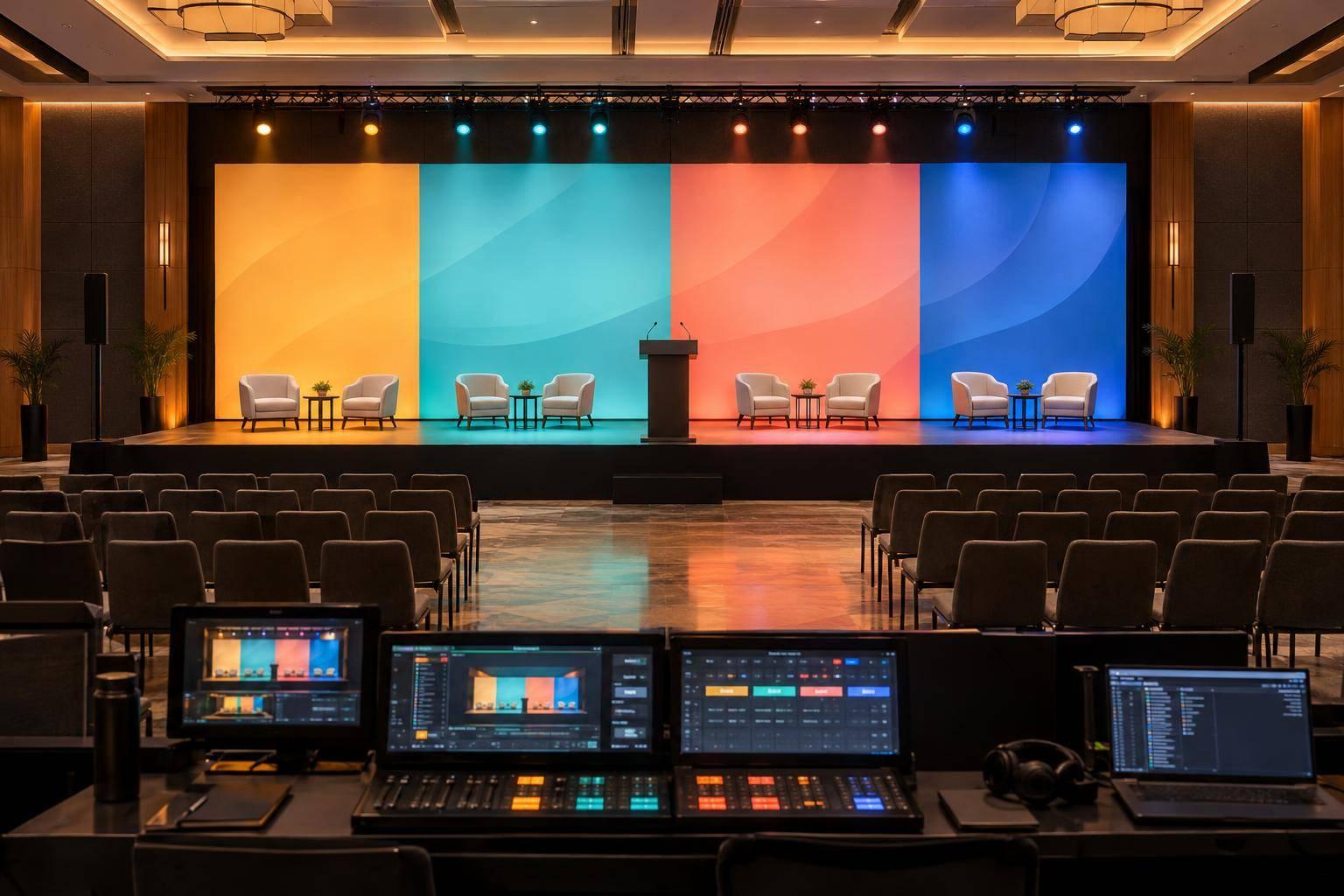
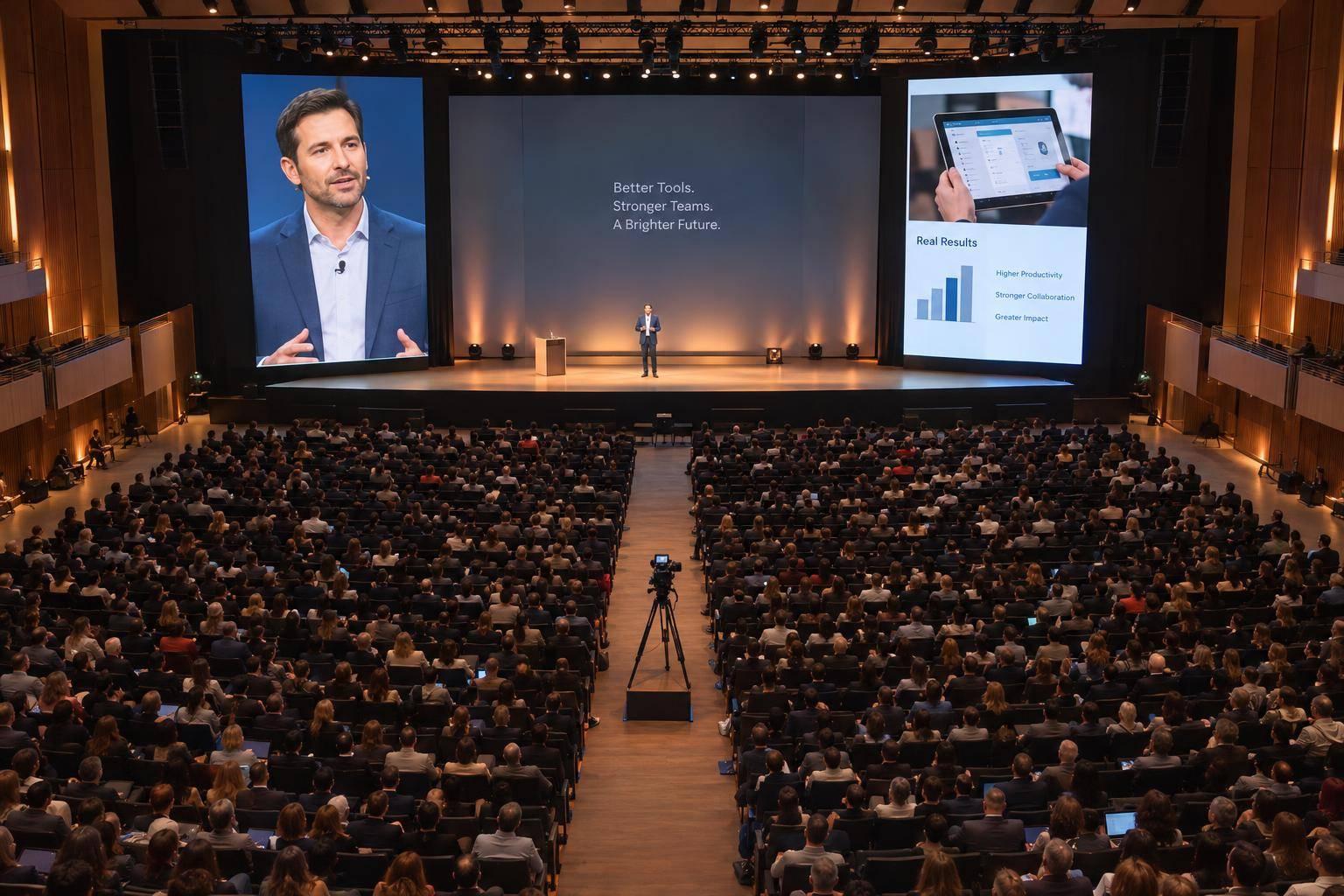
Why Corporate Planners Choose Corporate Optics For Full-Service Conference Production.

Chief Executive Officer
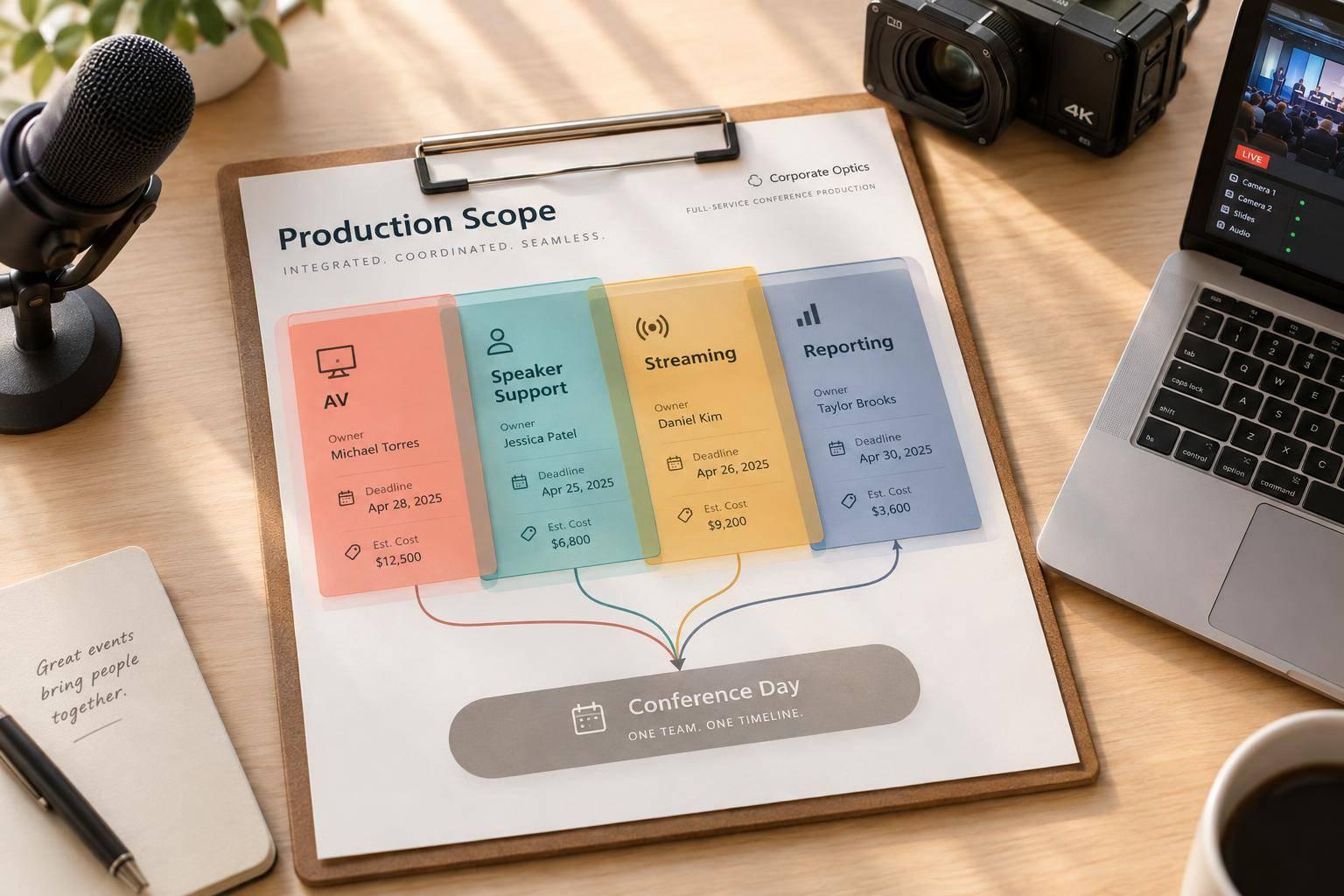
Corporate Optics gives conference planners one partner for planning, AV, speaker support, live production, and post-event reporting. Before booking, planners should get a written scope that names each deliverable, owner, deadline, and cost.
That scope should cover:
- Planning: Agenda timing, venue needs, budget, vendors, and approval deadlines.
- Production: Sound, screens, lighting, staging, streaming, and recording.
- Speaker support: Presentation files, rehearsals, cues, and backstage help.
- Event delivery: Setup, system tests, show control, backup plans, and teardown.
- Reporting: Agreed attendance, streaming, and feedback reports, with delivery dates.
The point is fewer handoffs and clear responsibility - not simply more services. A listed capability is not a promised deliverable unless it appears in the agreed scope.
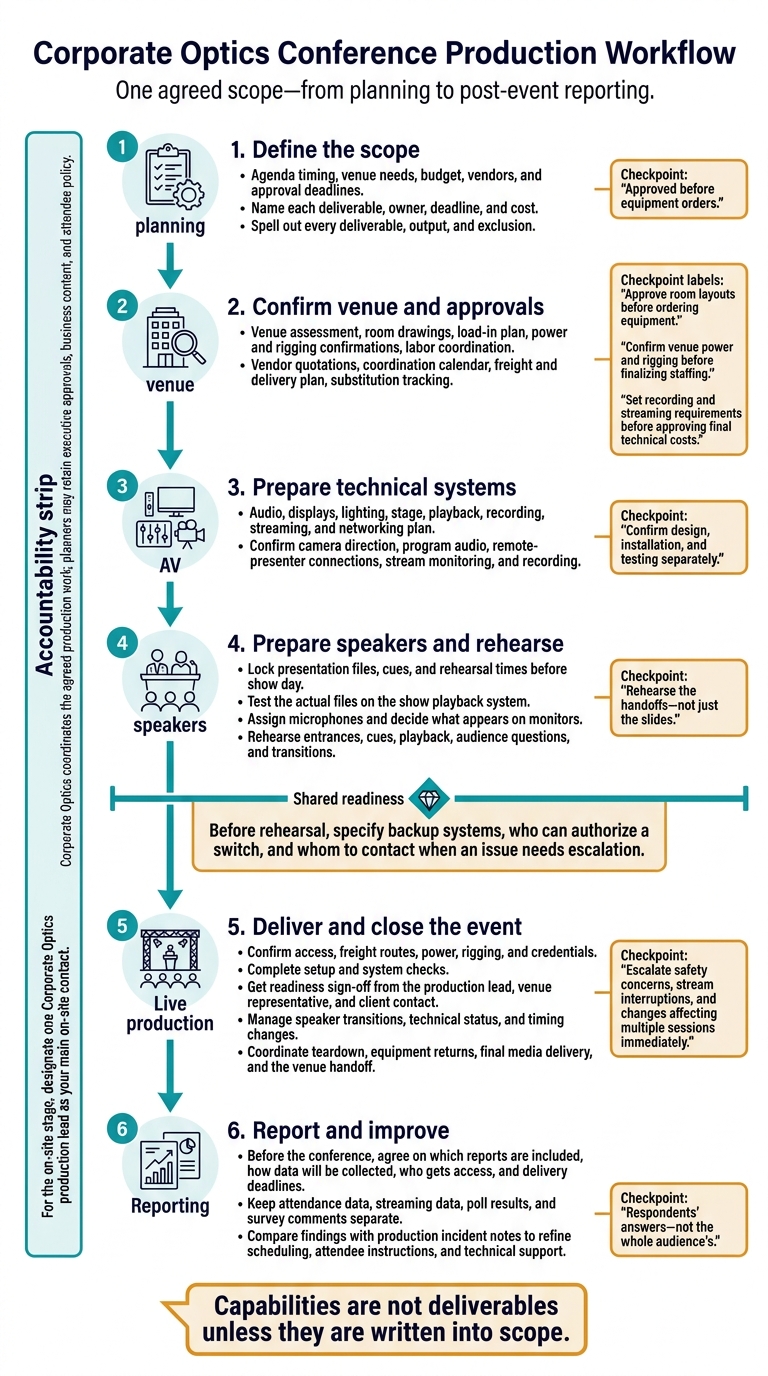
Corporate Optics Conference Production Workflow
Production Planning and Coordination with Corporate Optics
Corporate Optics turns conference goals into a production scope covering technical needs, venue logistics, speaker requirements, and executive approvals. The contract should spell out every deliverable, output, and exclusion. This scope guides budget approvals, vendor bookings, and show-day scheduling.
Agenda, Venue, Budget, and Production Schedule
Tie agenda development, venue sourcing, budget planning, and vendor coordination to the production calendar. Confirm session formats, meeting-room needs, venue logistics, and presenter requirements. Flag sessions that need executive support, recording, or broadcast. For any sound, displays, lighting, recording, networking, or broadcast work in scope, get the requirements in writing.
Sequence approvals around the work they affect. Approve room layouts before ordering equipment. Confirm venue power and rigging before finalizing staffing. Set recording and streaming requirements before approving final technical costs. The milestone schedule should show each decision deadline and which costs or tasks will change if approval slips.
Deliverables, Responsibilities, and Backup Plans
Use the table below to confirm scope, owners, and delivery dates before handing work over for execution. Planners may keep responsibility for executive approvals, business content, and attendee policy while Corporate Optics coordinates the agreed production work. Next, lock in technical systems and backup plans.
| Conference responsibility | Agreed Corporate Optics deliverable | Accountable owner | Delivery milestone |
|---|---|---|---|
| Planning | Master production brief, technical scope, budget inputs, risk register, and production schedule | Corporate Optics project lead; planner approves objectives and budget | Approved before equipment orders |
| Venue operations | Venue assessment, room drawings, load-in plan, power and rigging confirmations, labor coordination | Corporate Optics and venue operations lead | Completed before final quote and staffing |
| Vendors | Vendor quotations, coordination calendar, freight and delivery plan, substitution tracking | Corporate Optics vendor lead | Quotes approved before purchase commitments |
| Speakers | Presenter requirements, file-collection process, technical briefing, rehearsal schedule, and show-caller support | Corporate Optics speaker manager; planner owns executive priorities | Final files and rehearsal slots confirmed before show day |
| Technical systems | Audio, displays, lighting, stage, playback, recording, streaming, and networking plan | Corporate Optics technical director; venue confirms infrastructure | Tested during setup and technical rehearsal |
| Schedule control | Draft and final run of show, cueing plan, escalation contacts, change log, and show-day updates | Corporate Optics show caller; planner approves program changes | Final run of show issued before rehearsal |
Before rehearsal, specify backup systems, who can authorize a switch, and whom to contact when an issue needs escalation. Confirm venue-controlled labor, loading, and fire-code requirements. Assign credentialing, restricted access, screening, and executive movement to the security lead.
sbb-itb-ae35a94
Audiovisual, Stage, and Speaker Production
Once the scope is set, turn the plan into a room setup, a run of show, and a rehearsed speaker experience.
Audio, Displays, Lighting, and Stage Design
Turn the production brief into clear audio, readable visuals, clean lighting, and safe stage movement. Design for clarity first: people need to hear the speech, read the slides, and see the presenters. Keep branding consistent throughout.
| Production area | Purpose | Pre-event deliverables to confirm | On-site timing |
|---|---|---|---|
| Audio | Clear speech, playback, and audience questions | Acoustic review, microphone plan, even coverage, console inputs, backup approach | Load-in, line check, rehearsal, live mixing, teardown |
| Video and displays | Readable content, branding, and remote access | Screen or LED specification, file-format guide, playback plan, camera plot, signal-flow plan | Setup, content test, rehearsal, live switching, strike |
| Lighting | Presenter visibility and camera-ready exposure | Lighting plot, fixture list, cue plan, stage-lighting design | Rigging, focus, programming, cue checks, live operation |
| Scenic and staging | Safe movement, clear sightlines, and consistent branding | Stage plan, riser dimensions, scenic design, furniture, access and cable plan; check sightlines and camera framing | Fabrication or delivery, installation, safety inspection, show operation, removal |
| Streaming and broadcast | Delivery to remote audiences | Platform choice, encoding and output specifications, connectivity plan, permissions, remote-presenter workflow, backup plan | Connectivity test, stream rehearsal, stream monitoring, live switching, recording |
| Speaker support | Prepared presenters and predictable transitions | Presentation-collection schedule, microphone assignments, monitor plan, rehearsal schedule, cue and blocking notes | Speaker check-in, mic fitting, rehearsal, show calling, backstage support |
Confirm design, installation, and testing separately. A room drawing alone won't tell you whether attendees can read the screens or see the stage.
With the room design confirmed, move to speaker preparation.
Speaker Preparation and Technical Rehearsals
Lock presentation files, cues, and rehearsal times before show day. Set a deadline for collecting presentations, then test the actual files on the show playback system. Assign microphones and decide what appears on monitors before rehearsing entrances, cues, playback, audience questions, and transitions.
Rehearse the handoffs - not just the slides. Document who calls each cue, who runs playback, and who handles technical problems. Confirm responsibility for equipment checks and troubleshooting with Corporate Optics.
If remote viewers will join the session, give the broadcast workflow the same level of cueing and testing.
Live Streaming, Hybrid Sessions, and Broadcast
Define the scope of streaming, hybrid delivery, and broadcast clearly. Confirm camera direction, program audio, remote-presenter connections, stream monitoring, and recording.
Bring room audio, remote audio, cues, and transmission into one production workflow, with Corporate Optics as the accountable production partner. For hybrid sessions, decide how remote questions will reach the moderator and how presenters will receive cues. Plan the in-room and remote experiences separately so both audiences can hear, follow, and participate.
On-Site Production and Post-Event Reporting
Once planning and rehearsals are complete, on-site execution puts the schedule into action. Designate one Corporate Optics production lead as your main on-site contact, with authority and escalation rules agreed on in advance. Department leads should route issues through that person so decisions don’t get passed back and forth between the venue, crew, and speakers.
Load-In, Live Production, and Teardown
Before equipment arrives, confirm access, freight routes, power, rigging, and credentials. Complete setup and system checks, then get readiness sign-off from the production lead, venue representative, and client contact. Keep other checks focused on technology, room use, or the production schedule.
During the event, the lead manages speaker transitions, tracks technical status, and communicates timing changes. Escalate safety concerns, stream interruptions, and changes affecting multiple sessions immediately. Bring in the client decision-maker when approval is needed.
After the final session, coordinate teardown, equipment returns, final media delivery, and the venue handoff. Log unresolved issues and assign an owner to each. Once teardown is complete, the reporting package closes out the event record.
Post-Event Analytics and Follow-Up
Corporate Optics includes post-event reporting in its scope, with the reporting package serving as the final deliverable. Before the conference, agree on which reports are included, how data will be collected, who gets access, and delivery deadlines.
Keep attendance data, streaming data, poll results, and survey comments separate. They show participation, viewing activity, respondents’ answers - not the whole audience’s - and perceptions, respectively. Compare these findings with production incident notes, then use them to refine scheduling, attendee instructions, and technical support.
Conclusion: Confirm the Scope of Full-Service Production
Before production starts, get written confirmation of how Corporate Optics brings planning, AV, speaker support, streaming, and show control into one accountable production scope. This coordination helps keep the in-room and remote experiences consistent.
What to Confirm Before Production Begins
Check that the scope document covers objectives, audience, dates, venue needs, accessibility, budget, and schedule. Spell out every included AV, scenic, speaker, streaming, and recording deliverable. This is the last check before crews, content, and schedules are locked.
Document who approves design, technical, budget, content, and schedule changes. Name the responsible contacts and confirm content deadlines, rehearsal timing, remote-speaker tests, backup procedures, and reporting expectations. Capabilities are not deliverables unless they are written into scope.
Schedule a scope consultation with Corporate Optics to confirm what’s included, what’s excluded, who’s responsible, and how pricing works. Ask for a written proposal that ties each deliverable to an owner, deadline, and cost.
FAQs
How early should I book Corporate Optics?
Bring in Corporate Optics when planning starts or while selecting a venue. This leaves time for site surveys, technical checks, and resolving problems before they affect the event.
Plan for these lead times:
- Most large conferences: 4–6 months
- Large-scale events: 12 months or more
- Executive summits or custom environments: 8–16 weeks
- Events with complex logistics or custom scenic work: 8–16 months
What affects my conference production costs?
Conference production costs depend on equipment, labor, scenic requirements, streaming, and contingency planning. Ask for an itemized proposal in U.S. dollars that includes venue surcharges, transportation, and freight.
Bring a production partner in early to help prevent costly last-minute site issues. Bundling services with one partner often cuts total costs by 10% to 20% through better scheduling, consolidated equipment, and the removal of duplicate vendor fees and venue commissions.
How are last-minute agenda changes handled?
Corporate Optics manages last-minute agenda changes through centralized command and real-time coordination. The team updates a single run-of-show so every technical department receives changes at the same time.
If a speaker is absent, the team may hold the segment, play backup content, or move to the next item. Last-minute presentation edits are checked and tested before use to prevent mid-session confusion and keep the event on its original timeline.
Related Blog Posts
- Best Meeting Planning Company For Technical Production And AV
- Leading Companies To Work With For Full Conference Production
- Have A Multi-Day Conference To Plan? Let Corporate Optics Be Your AV Conference Technical Production Partner (And Why We’re Your Best Choice!)
- Corporate Optics: Orlando's AV Partner For Conference And Meeting Production.


Streamline your workflow, achieve more

Lorem ipsum dolor sit amet, consectetur adipiscing elit. Maecenas ac velit pellentesque, feugiat justo sed, aliquet felis.



Lorem ipsum dolor sit amet, consectetur adipiscing elit. Maecenas ac velit pellentesque, feugiat justo sed, aliquet felis.