What Does A Full-Service Corporate Event Production Company Actually Do?

Chief Executive Officer
A full-service corporate event production company plans and runs the technical side of your event - from stage setup to teardown. I’d check the written scope first: “full-service” doesn’t mean every task is included.
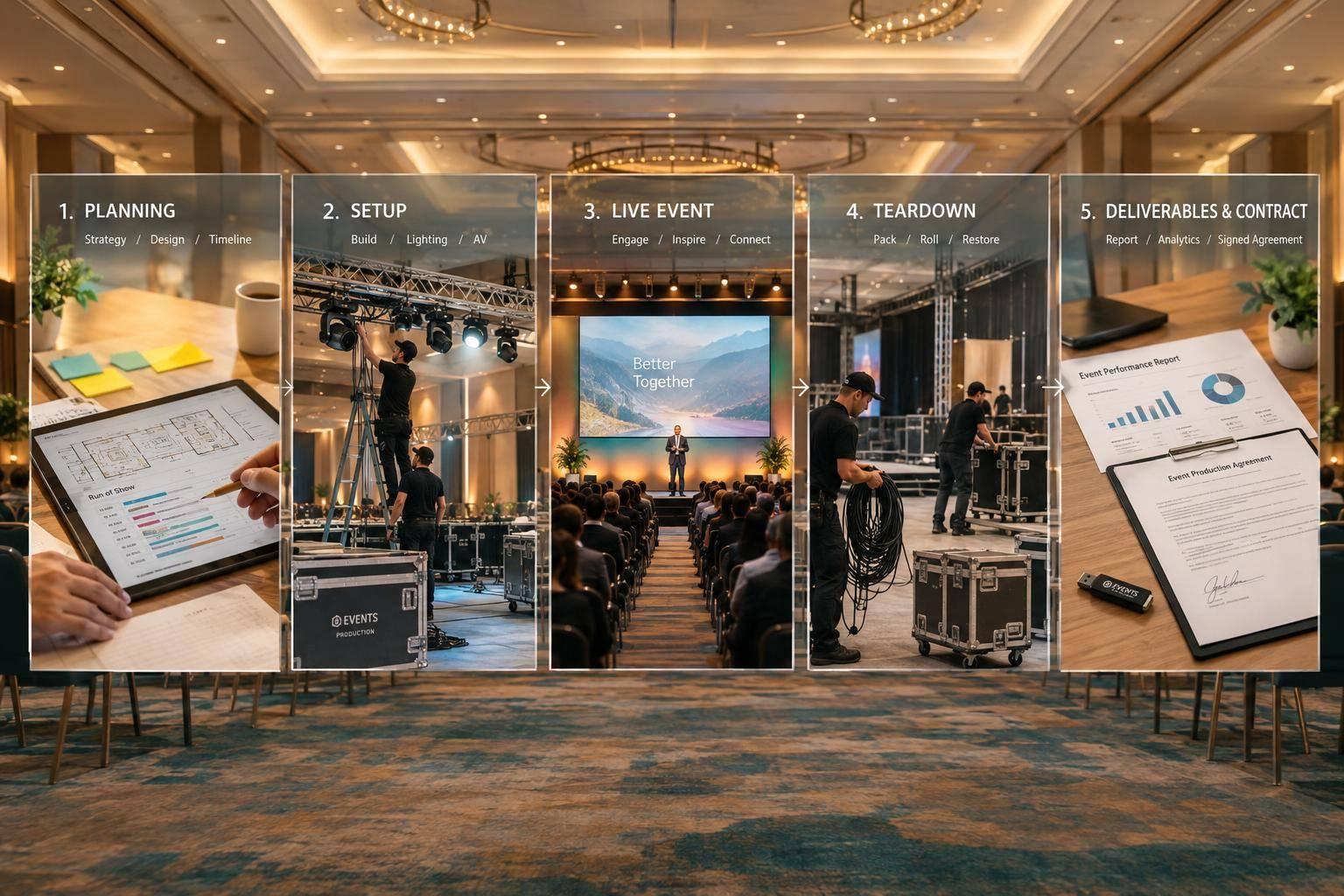
I look for coverage across 3 stages:
- Before the event: Budgeting for AV production, venue checks, stage and AV design, equipment, crew, schedules, and backup plans.
- During the event: Installation, speaker rehearsals, live cues, streaming if contracted, and technical fixes.
- After the event: Equipment removal, venue handoff, agreed file delivery, final charges, and a debrief.
Your team usually owns goals, messaging, speakers, and approvals. Registration, catering, editing, and other services may cost extra.
My rule: <u>Get deliverables, itemized pricing, deadlines, and decision-making authority in writing</u> - before you sign.

Corporate Event Production: From Planning to Closeout
Preproduction: Set the Scope, Budget, and Technical Plan
Turn the Event Brief Into a Production Plan
Once the brief is approved, the production partner turns it into a tracked technical plan covering objectives, budget, timeline, technical needs, risks, and deliverables. Typical deliverables include a preliminary budget, equipment list, staffing plan, production schedule, floor plan, risk register, and contingency plan. Ask for itemized pricing in U.S. dollars, with separate costs for equipment, labor, transportation, venue charges, internet, rigging, recording or streaming, overtime, taxes, and contingency.
Build the setup around the content. General sessions need sound and screens that reach the whole audience. Breakouts need equipment and staffing for each room. Product demonstrations may call for close-up cameras, dedicated lighting, extra power, and rehearsal time for resets. If recording or livestreaming is critical, document backup playback, spare microphones, duplicate files, and alternate connectivity.
Check the Venue and Design the Stage and AV Systems
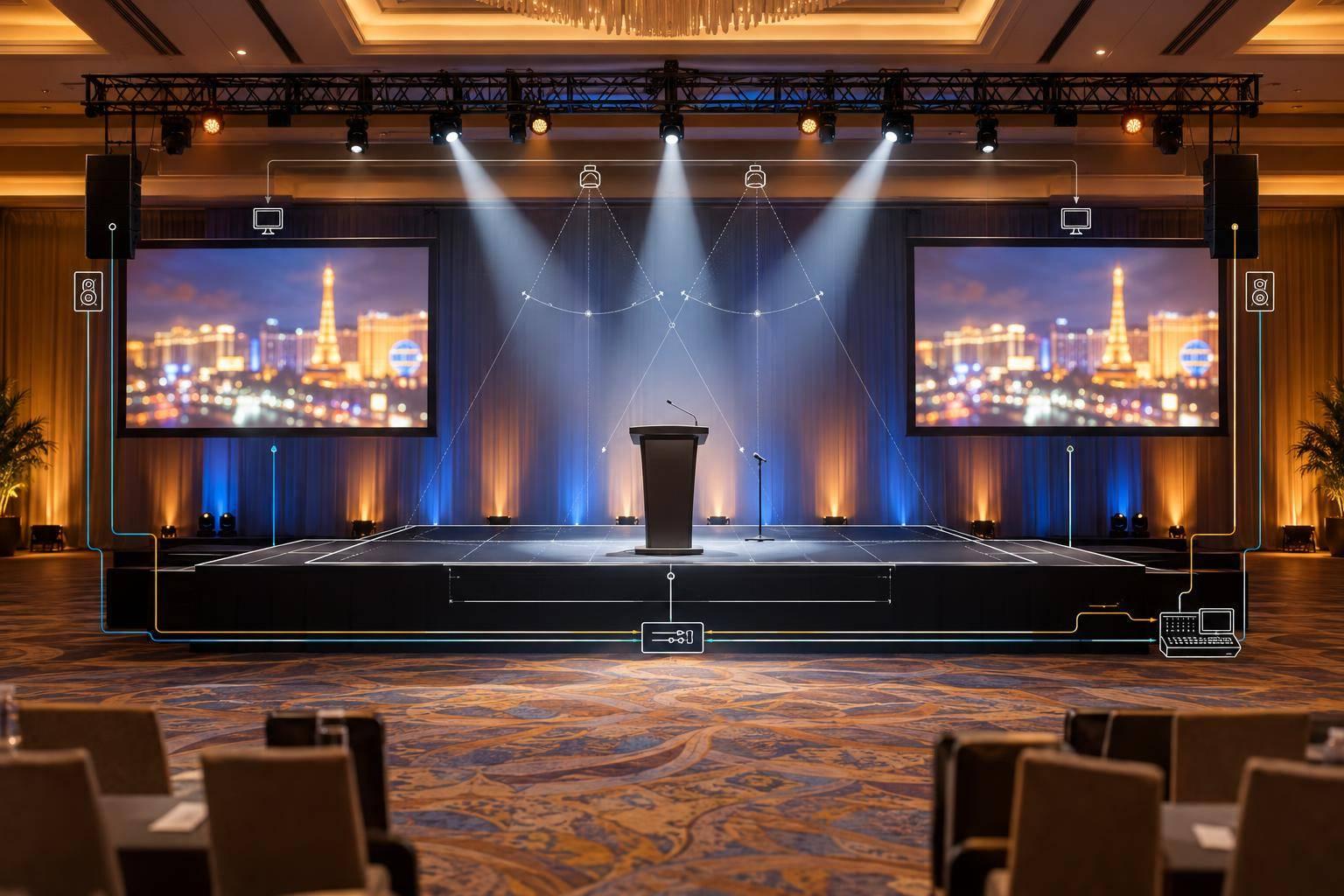
Require a venue walkthrough before final technical approval, ideally during venue contracting. Check stage space, acoustics, sightlines, ambient light, power, rigging limits, and internet. Also review room dimensions, ceiling height, accessibility, loading docks, freight elevators, and venue labor restrictions. Use these findings to plan the stage layout, lighting plot, speaker placement, screens, camera positions, cable paths, and audio/video routing map.
Confirm captioning, hearing assistance, and accessible stage access before finalizing the system design. Check whether remote presenter checks are included. For recording or livestreaming, confirm the platform, internet architecture, redundancy, caption workflow, remote presenter method, recording format, and privacy or approval requirements. Before speakers prepare their materials, set accepted slide formats, aspect ratios, video formats, file names, and submission deadlines.
Assign Responsibilities and Approval Authority
Use a responsibility matrix to assign duties for the budget, layout, content, and run of show. Final files should arrive before rehearsal, and the show flow should be finalized before the technical rehearsal. Put revision limits, late-change charges, communication rules, spending limits, and escalation steps in the contract.
The matrix below separates drafting, approval, and delivery duties.
| Task | Production partner | Internal team | Venue or vendor | Approval owner |
|---|---|---|---|---|
| Production brief and technical approach | Drafts technical requirements and recommendations | Defines business goals and approves approach | Supplies venue constraints | Client executive or event lead |
| Budget and equipment list | Drafts estimates and identifies assumptions | Approves budget and priorities | Supplies house-AV, labor, and facility charges | Client budget owner |
| Stage, lighting, audio, and video design | Drafts system designs and drawings | Approves brand requirements and audience experience | Supplies rigging, power, and venue compliance requirements | Client event lead plus venue where required |
| Speaker and presentation requirements | Drafts technical specifications and tests files | Manages speakers and approves final messaging | Supplies room access and house support | Internal content owner |
| Crew bookings and technical labor | Drafts staffing plan, books crew, and supervises technicians | Approves scope-related staffing costs | Supplies required house labor if applicable | Production lead and client budget owner |
| Venue access, dock, power, rigging, and internet | Drafts technical requirements and coordinates services | Approves event dates and access priorities | Supplies facilities, policies, and required services | Venue representative for facility approvals |
| Content, branding, and executive messaging | Drafts asset specifications and implements approved files | Creates content and approves final messaging | Supplies access and display restrictions | Client content and executive owners |
| Escalation and change control | Drafts change estimates and recommends solutions | Approves scope, cost, and business tradeoffs | Supplies facility or vendor resolutions | Named client decision-maker |
sbb-itb-ae35a94
Onsite Production: Set Up, Rehearse, and Run the Show
Install AV Systems and Prepare Speakers
Once the plan is approved, the team brings it to life on site. During load-in, crews inventory equipment, confirm dock access, build the stage, and install AV systems. Technicians check power, cable protection, and overhead safety before testing the full signal path: microphones to speakers, slides to screens, and camera feeds to recording or streaming. They also focus lighting on presenter positions.
Rehearsals pin down timing and file order. Speakers practice with the microphones, clickers, confidence monitors, and presentation files they’ll use during the event. Remote presenters test their connection, return audio, and screen-sharing handoff. Protect technical rehearsal time - don’t let installation eat into it. After rehearsal, production updates speaker files, rehearsal notes, the presenter contact sheet, crew call times, and the production schedule. The team then resets the room and checks systems before doors open.
Coordinate Live Cues With the Run of Show
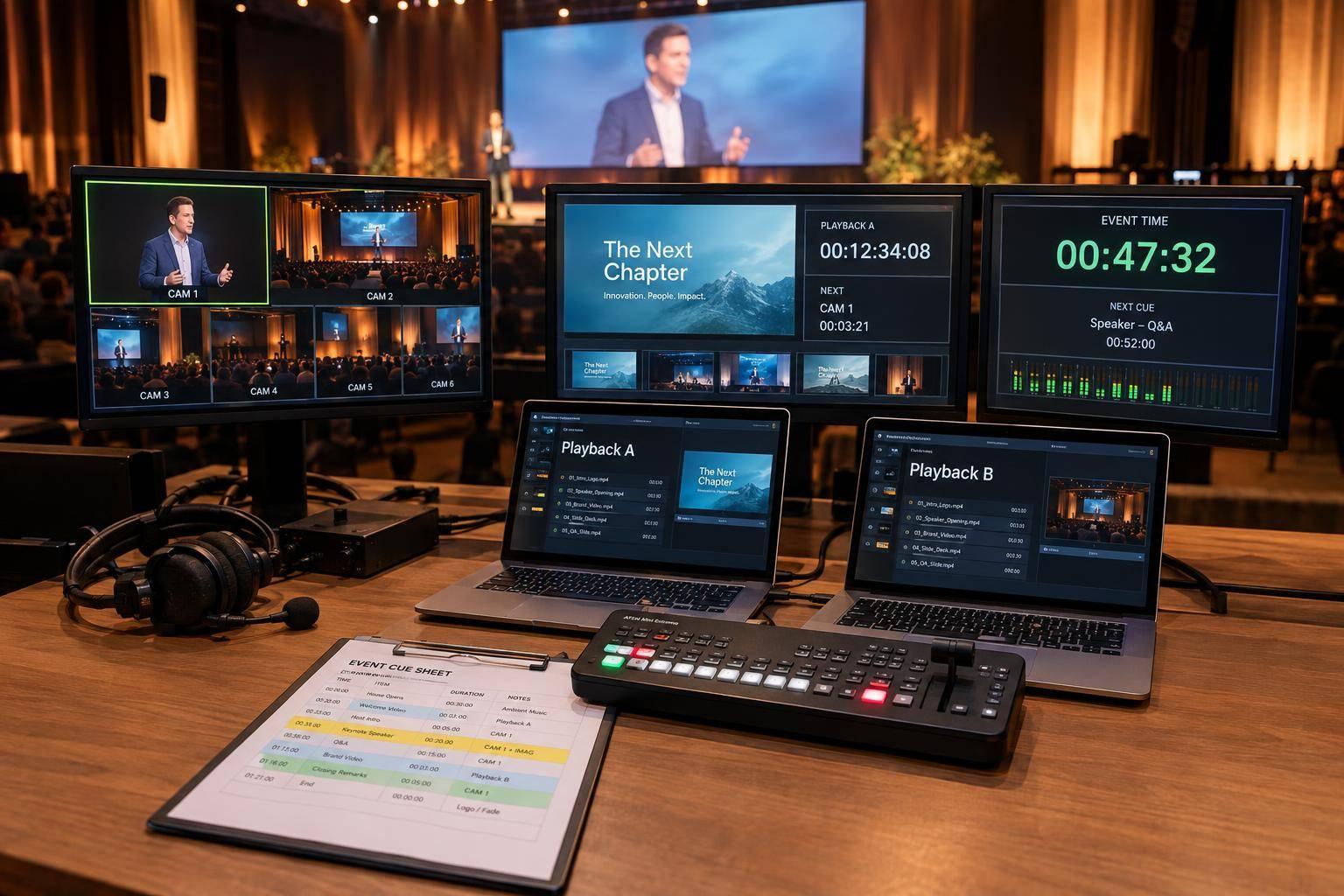
The run of show is the crew’s operating script. It tracks timing, presenters, media cues, stage moves, lighting, camera and livestream actions, cue owners, and fallback steps. After rehearsal, everyone should work from the same approved version. During sessions, the show caller calls standby and go cues across audio, video, lighting, playback, camera, streaming, and speaker-support crews. Between sessions, crews reset microphones, slides, and stage positions.
Clear roles keep the show moving. Show calling controls cue timing, while technical direction oversees systems, signal routing, and technical execution. Stage management handles presenter readiness, entrances, exits, and backstage traffic. Event management coordinates attendee and stakeholder needs. Production leads technical execution; the internal team approves business changes, including messaging, speakers, timing, and agenda shifts.
Handle Schedule Changes and Technical Problems
Crews monitor systems and presenter readiness throughout the show. When plans change, the team needs clear options:
- Late presentation: The content lead and producer can approve a tested replacement, use a backup version, or remove the media cue.
- Absent speaker: Stage management can hold the segment, move to an approved alternate, play a video, or advance the next agenda item.
- Session overrun: The show caller alerts the producer and internal event lead. They decide whether to shorten a break, remove an optional segment, or extend the program.
Microphone or internet failures should trigger documented recovery steps - not decisions made on the fly. Confirm that spare microphones, backup playback, alternate connectivity, local recording, and failover testing are covered by the scope and budget. After the last cue, production moves to strike and file delivery.
Teardown and Closeout: Clear the Venue and Deliver Files
Manage Strike, Load-Out, and Final Charges
After the final cue, the focus shifts to strike, inventory, and closeout. The strike plan should spell out when guests must clear the space, crew call and release times, dock and elevator access, truck order, work areas, waste disposal, and venue deadlines. It should also assign vendor duties and name who can release each area. Keep load-out separate from guest traffic and emergency exits clear. Qualified technicians should shut down and isolate power before crews disconnect, remove, pack, label, and count equipment for return.
During load-out, check rental items and accessories against delivery records. Record missing items or damage before suppliers leave. The producer should then walk the cleared space with the venue representative and client to check its condition and document damage, leftover materials, or unfinished work. Get written acknowledgment of the space handoff.
Financial closeout should show the approved budget, actual costs, deposits, credits, and balance due. Support overtime, added rentals, freight, and vendor charges with records. For every schedule change, document the cause, timing, affected crews, and approval. The agreement should state the reconciliation timeline and who approves disputed charges.
Deliver Recordings, Reports, and a Post-Event Review
Once the room is clear, file delivery and final documentation still need attention. Confirm whether the production partner’s handoff includes raw recordings, ISO files, or presentation files. Back up files before erasing the original media. Editing, captions, highlight reels, attendee engagement analytics, and post-event communications are separate services unless the proposal includes them.
The closeout package should include crew timesheets, vendor invoices, rental returns, freight records, approved change orders, damage reports, venue charges, deposits, and a final budget vs. actual report. This data is essential to measure conference ROI and justify future spend. Hold a debrief with the internal event owner, production lead, venue, and key vendors. Review incidents, schedule changes, what worked, and next steps, then give each follow-up action an owner and deadline. Specify these closeout records in the proposal before the event begins.
Conclusion: Confirm the Scope Before Signing
The contract - not the label - defines scope. Corporate Optics handles the agreed technical work. Your team still owns objectives, messaging, approvals, executive decisions, and business outcomes.
Review Deliverables, Costs, and Contract Terms
Use this table to check scope, owners, and deadlines against the production schedule, equipment list, drawings, crew plan, run of show, strike plan, and file delivery and closeout terms.
| Service area | Included deliverable | Responsible party | Assumptions | Excluded costs | Due date |
|---|---|---|---|---|---|
| Planning | Approved production schedule and technical plan | Production lead | Rooms and agenda confirmed | Extra planning rounds | Before design |
| Design | Approved stage, lighting, and AV drawings | Design lead; client approves | Venue dimensions verified | Fabrication; extra revisions | Before fabrication or rental |
| Equipment | Itemized gear and backup list | Technical lead | Owned, rented, or venue-supplied identified | Delivery; insurance | Before equipment order |
| Crew | Roles, counts, and call hours | Production manager | Simultaneous sessions defined | Overtime; union minimums | Before final labor booking |
| Show calling | Approved run of show and cue list | Named show caller and technical director | Client approves content | Extended show hours | Before rehearsal |
| Speaker support | Speaker file checks and presenter readiness | Presentation technician; client content owner | Content arrives on time | Teleprompter; late changes | Written content cutoff |
| Streaming | Approved streaming and recording setup | Stream lead; client or venue internet owner | Bandwidth verified | Platform; internet; captions | Before network booking |
| Setup | Installation and system testing | Technical lead | Venue access confirmed | Rigging; power; venue labor | Before load-in |
| Rehearsal | Scheduled technical and speaker rehearsal | Show caller; client speaker lead | Speakers available | Added rehearsal hours | Before crew booking |
| Strike | Approved strike plan and venue handoff | Production manager | Load-out window confirmed | Damage charges; overtime | Before venue approval |
| File delivery | Final file package, formats, and usage rights | Named delivery owner | Editing scope defined | Additional edits; transcripts | Before recording begins |
Pricing and contract terms need to match the scope. Review travel, freight, overtime, union labor, insurance, permits, rigging, power, venue fees, internet, taxes, and service charges. Get revision limits and substitution approvals in writing. Require change orders that show how each change affects price and schedule. Check deposit and payment milestones, cancellation liability for committed costs, and postponement or rebooking terms.
Complete the Final Approval Checklist
Before signing, confirm decision-makers, acceptance criteria, client deadlines, staffing, and on-site authority - including who can pause the show or approve overtime. Check which backup systems are included, who activates them, and which exclusions and closeout duties stay with your team.
Discuss your agenda, venue, audience, risks, and budget with Corporate Optics. Then compare the proposal’s written scope with the work you expect before approving the engagement. Make sure the agreement records the scope, pricing, deadlines, and authority - not just a service label.
FAQs
How early should we book event production?
Book your event production partner as early as possible to confirm technical needs, plan logistics, and avoid last-minute problems. Bring them in before you finalize venue contracts so they can survey the site and plan how the technical setup will fit into the space.
Allow 12 months or more for large-scale events, 4–6 months for large conferences or complex setups, 8–16 weeks for executive summits or custom-built spaces, and 6–10 weeks for smaller meetings.
How can we prioritize production on a tight budget?
Start with a detailed, itemized scope rather than a flat rate to avoid surprise invoices. Bring a production partner in early so design and technical plans line up. This helps prevent costly last-minute changes and gaps between teams.
Ask for clear estimates in U.S. dollars, with assumptions and exclusions spelled out. Set aside 10%–15% of your total production budget for unexpected overages, and tie every payment to a specific milestone to keep spending in check.
What event details are needed for an accurate quote?
Share the event name and purpose, dates, time zone, city, and venue. Include room lists and diagrams, ceiling heights, rigging limits, power access, and any union or house-vendor rules.
Provide session times, a draft run of show, audience size for each room, seating arrangements, and presenter counts and needs. Specify streaming, captioning, and recording requirements, including destinations, plus any remote speakers. Add rehearsal windows and expectations, load-in and load-out schedules, and daily show hours.
Request an itemized proposal in U.S. dollars that states assumptions, exclusions, and the process for approving changes.
Related Blog Posts



Streamline your workflow, achieve more

Lorem ipsum dolor sit amet, consectetur adipiscing elit. Maecenas ac velit pellentesque, feugiat justo sed, aliquet felis.



Lorem ipsum dolor sit amet, consectetur adipiscing elit. Maecenas ac velit pellentesque, feugiat justo sed, aliquet felis.