Post-Event Feedback: Steps for Continuous Improvement

Chief Executive Officer
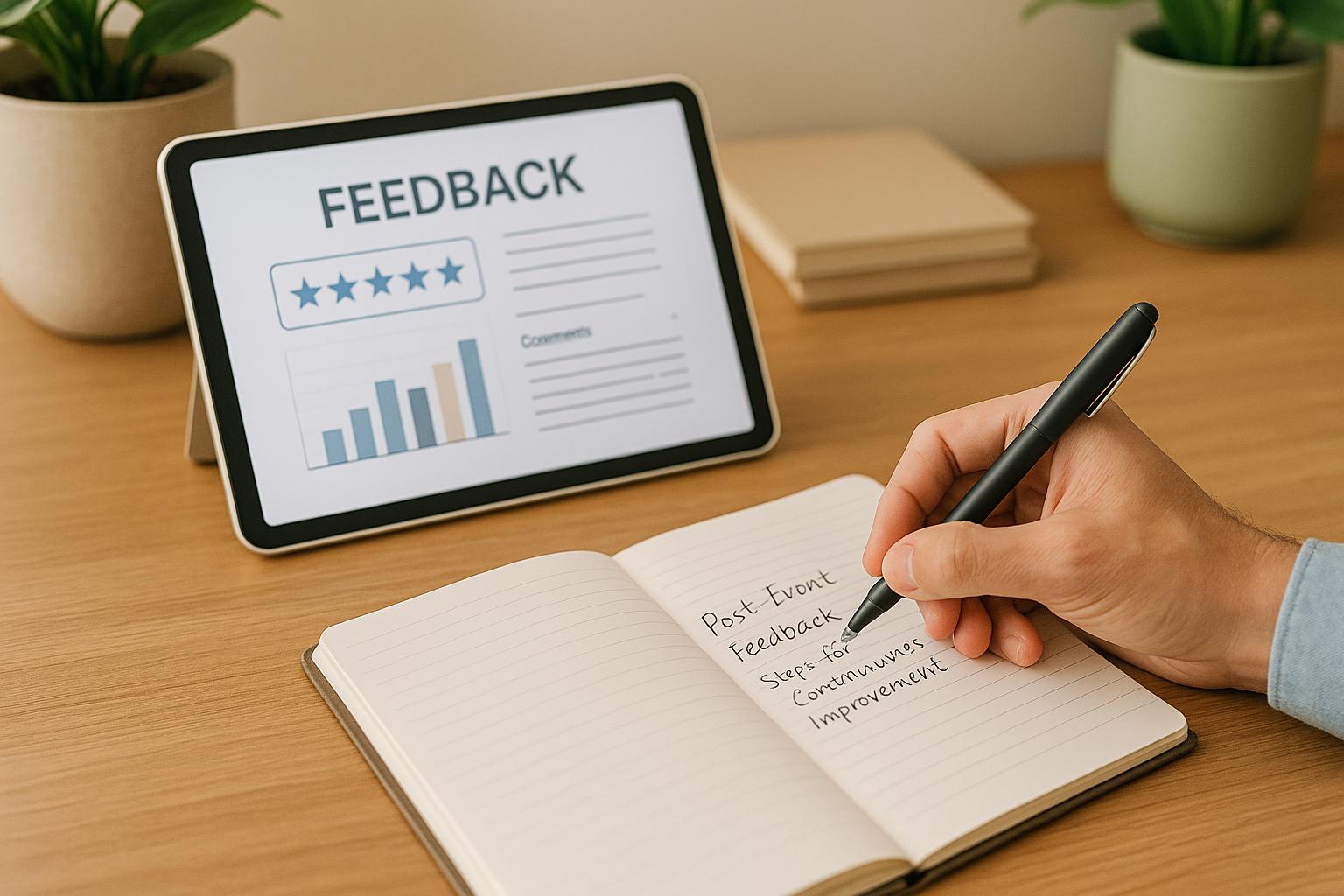
Post-event feedback is the key to improving future events. It helps identify what worked, what didn’t, and how to make your next event better. To get the most out of feedback, you need a structured approach to collecting, analyzing, and acting on it. Here’s how:
- Collect feedback effectively: Use methods like digital surveys, real-time polls, interviews, and social media monitoring to gather input from attendees, speakers, sponsors, and vendors.
- Time it right: Send surveys within 24–48 hours after the event to capture fresh impressions, and follow up with reminders to boost response rates.
- Analyze thoroughly: Centralize responses, group by themes, and use tools like sentiment analysis to identify patterns and prioritize improvements.
- Act on insights: Implement changes based on feedback, communicate those changes to participants, and test new ideas on a smaller scale before full rollout.
The goal is to turn feedback into actionable steps that improve attendee satisfaction and event outcomes. By closing the loop and showing participants how their input leads to changes, you build trust and engagement for future events.
How To Design Effective Post-Event Survey Questions?
How to Collect Feedback: Methods for Complete Data
Gathering meaningful feedback requires a mix of techniques and careful timing. The aim is to capture input from a variety of voices - attendees, speakers, sponsors, vendors, and your internal team - so you can identify areas for improvement that might otherwise go unnoticed. These perspectives help shape better outcomes for future events. Let’s dive into some effective methods for collecting feedback and making the most of it.
Feedback Collection Methods That Work
Digital surveys are a dependable way to gather structured feedback. Keep attendee surveys concise - around 5–7 questions - and allow for slightly more detailed surveys for speakers. Use a mix of question types, such as rating scales, multiple-choice, and open-ended prompts, to collect both measurable data and richer insights.
Real-time polling during events captures immediate reactions. Whether during sessions, keynotes, or networking activities, live polls provide a snapshot of how participants are feeling in the moment, helping you get a clearer picture of the overall experience.
One-on-one interviews with select stakeholders can uncover details that surveys might miss. Speaking directly with key attendees, speakers, or sponsors allows for deeper conversations that often reveal unique perspectives or specific challenges.
Social media monitoring offers an informal yet valuable way to gather feedback. By tracking event hashtags, mentions, and tagged posts on platforms like LinkedIn, Twitter, and Instagram, you can tap into candid opinions about what worked well and what didn’t. This real-time data can be invaluable for improving future events.
Vendor and team debriefs provide operational insights. Teams like catering, AV staff, and registration personnel often notice logistical or technical issues that might not be apparent to others. Their input can help fine-tune event execution.
AI tools can streamline the feedback process by automating tasks, analyzing data, and ensuring secure handling of responses.
When and How to Get People to Respond
Timing matters when it comes to feedback. Send out surveys within 24–48 hours after the event while the experience is still fresh in participants’ minds. For multi-day events, consider combining session-specific feedback with a post-event survey to avoid overwhelming respondents.
Encourage participation by showing respondents that their input makes a difference. Share how their feedback will shape future events, creating a sense of trust and involvement. While incentives like prizes can help, demonstrating the real impact of their responses is often more effective.
Make it easy to respond by optimizing surveys for mobile devices and including user-friendly features like progress bars and save-and-continue options. The simpler the process, the more likely people are to complete the survey.
Boost response rates with a follow-up reminder 3–4 days after sending the survey. Personalize these reminders to highlight the value of their specific feedback, rather than sending a generic message.
Tailor your outreach based on the audience. For example, speakers might appreciate direct, personalized messages from event organizers, while general attendees may respond better to automated invitations that reference the sessions they attended. Adjusting your approach for each group helps ensure higher engagement.
How to Analyze Feedback: Converting Data to Action Items
Once you've gathered feedback, the next step is turning it into meaningful improvements. The goal is to identify patterns that highlight strengths and weaknesses, bridging the gap between raw data and actionable change.
Step-by-Step Feedback Analysis Process
Centralize all feedback in one place. Gather survey results, social media comments, interview notes, and team debriefs into a single workspace. This gives you a complete view, avoiding the pitfalls of fragmented insights from scattered sources.
Group responses by key topics like venue, content quality, networking opportunities, technology, catering, and logistics. Organizing feedback this way makes it easier to spot recurring themes. For example, if several attendees mention audio issues during different sessions, you know where to focus for the next event.
Quantify qualitative feedback by assigning numerical values. Rate comments on a scale from highly positive to highly negative and track how often specific topics come up. This method helps prioritize issues that impact the most people and highlights where improvements will make the biggest difference.
Spot correlations in feedback to uncover hidden causes. For instance, if speakers praise AV support but attendees complain about poor audio, the problem might lie with the venue's acoustics rather than the equipment itself. These insights often lead to more effective solutions.
Pay attention to outliers. While one harsh critique might not reflect the majority, it could point to an overlooked issue others were hesitant to mention. Similarly, extremely positive feedback can reveal what worked well and should be repeated or expanded in future events.
Rank priorities by balancing impact and feasibility. Issues that affect many attendees and are relatively easy to fix should take precedence on your action list.
Using Post-Event Analytics Tools
Analytics tools can process large amounts of feedback quickly, helping you identify patterns and trends that might otherwise go unnoticed.
Sentiment analysis categorizes open-ended responses as positive, negative, or neutral, saving you the effort of manually reviewing every comment. This approach captures the overall mood and pinpoints specific areas of concern.
Text mining highlights frequently mentioned words and phrases across all feedback. Recurring terms like "networking", "rushed", or "excellent" can reveal common themes.
Cross-referencing feedback allows you to compare insights across different attendee groups. For example, first-time attendees might have different experiences than returning participants, or certain sessions might resonate more with specific professional demographics.
Corporate Optics offers post-event analytics services that blend technology with human expertise to produce actionable insights. Their platform processes feedback from multiple sources at once, generating reports that prioritize key areas for improvement while maintaining the context that pure automation might miss.
Data visualization tools turn raw feedback into clear charts and graphs, making it easier to share findings with stakeholders. Instead of sifting through pages of data, you can present visual summaries that clearly highlight what worked and what needs attention.
Benchmark tracking helps you measure progress over time. By using consistent analytics methods across events, you can see whether your changes improved attendee satisfaction or if certain issues persist.
sbb-itb-ae35a94
How to Use Feedback: Making Real Improvements
Feedback is only as valuable as the changes it inspires. The real challenge lies in taking what you’ve learned and turning it into meaningful updates for your next event.
Telling People What You Changed
When you act on feedback, let your attendees know - it strengthens trust and shows them their opinions matter. People are more likely to stay engaged when they see their suggestions have made a difference.
Consider creating a "You Asked, We Listened" message that highlights specific updates based on attendee feedback. For instance, if attendees complained about long registration lines, you might explain how you've added mobile check-in options or increased staffing. Be specific. Instead of saying, "We’ve improved catering", try, "Based on your feedback about limited vegetarian options, we’ve partnered with a new caterer to offer five plant-based entrées at our next event."
Share these updates through emails, social media, website announcements, and even registration confirmation messages. This not only demonstrates your commitment to improvement but can also serve as a selling point for future events.
If certain changes aren’t possible, be honest about why. For example, if budget constraints prevent implementing a popular request, explain the situation. Transparency shows you value their input, even when adjustments aren’t feasible.
Finally, track how these communicated changes impact registration rates and attendee satisfaction. Use this data to refine your approach and encourage even more engagement for future events.
Testing New Ideas Before Full Implementation
Before rolling out major changes, it’s smart to test them on a smaller scale. This reduces risk and gives you a chance to fine-tune processes.
For example, if attendees request more interactive sessions, pilot formats like roundtable discussions or workshops with a smaller audience segment. A/B testing can also be helpful - try different registration methods, networking setups, or session structures with separate groups to see what resonates best.
During these tests, gather real-time feedback. Place team members near pilot areas to collect immediate reactions, or use quick surveys to gauge attendee impressions. Keep detailed notes on what works and what doesn’t, including logistical challenges and required resources.
Define success metrics for your tests. Whether it’s attendee satisfaction, engagement levels, or operational efficiency, clear goals help you decide if a new approach is worth scaling up.
Recording and Assigning Action Items
Once you’ve gathered feedback and tested solutions, the next step is ensuring those ideas are followed through. Without clear documentation and accountability, even the best insights can fall through the cracks.
Set up a centralized database to track everything - original feedback, proposed solutions, implementation status, and results. This system acts as a record and prevents recurring issues.
Assign specific owners, deadlines, and success metrics to each action item. For example, instead of vaguely saying, "Improve catering", assign a task like, "Sarah will research three new catering options with vegetarian menus by January 15th and present recommendations by February 1st."
Organize tasks by priority and timeline. Some fixes can be implemented quickly, while others might require more time or budget approval. Keep separate lists for short-term and long-term goals to manage progress effectively.
Schedule regular review meetings - monthly or quarterly - to check on the status of feedback-driven improvements. This ensures nothing gets lost in the shuffle of event planning.
Finally, link improvements to measurable business outcomes. Show how addressing specific feedback leads to higher attendee retention, increased sponsorship interest, or improved satisfaction scores. This not only demonstrates the value of your efforts but also helps secure support for future initiatives.
What Works and What to Avoid
Learning from both successes and mistakes creates a foundation for continuous improvement. The key to a successful feedback program often lies in using effective strategies and steering clear of common missteps.
Proven Methods for Feedback Success
Use a mix of collection methods to gather well-rounded perspectives. Combine tools like digital surveys, paper forms, focus groups, and casual conversations to ensure you’re hearing from a diverse group of participants.
Time your feedback requests wisely to boost response rates. For example, send surveys within 24–48 hours after an event while the experience is still fresh, and follow up within a week to capture more reflective insights.
Keep surveys short and to the point. Limit them to 5–7 targeted questions to encourage higher completion rates.
Offer anonymity as an option, not a requirement. Providing both anonymous and identified feedback choices encourages honest input while allowing for accountability. This flexibility can lead to better participation and more detailed responses.
Ask targeted, specific questions. Instead of vague prompts like “How was the event?”, focus on areas like “How would you rate the registration process?” Specific questions lead to actionable feedback that’s easier to implement.
Close the loop by showing results. Let attendees know how their feedback influenced changes. When people see their input making a difference, they’re more inclined to engage in future feedback efforts.
Balance positive and negative feedback. Criticism highlights areas for improvement, while positive feedback reveals what’s working well and should continue. Both are essential for making informed decisions about future events.
Mistakes That Reduce Feedback Value
Even with the best intentions, certain missteps can undermine the value of your feedback efforts.
Don't rely solely on numerical ratings. A score of 3 out of 5 doesn’t explain why someone was dissatisfied or what could be improved. Always pair rating questions with open-ended ones to get the full picture.
Avoid asking for feedback on things you can’t change. If attendees provide input on areas outside your control and see no improvements, it can lead to frustration and disengagement.
Don't dismiss negative feedback as irrelevant. Critical comments often point to real issues that satisfied attendees might not mention. Even if only a small percentage of respondents highlight a problem, it could reflect a broader concern.
Stop sending generic feedback requests to everyone. Tailor your questions based on the individual’s experience. For example, someone who attended virtual sessions shouldn’t be asked about on-site catering or parking.
Act on feedback promptly. Review responses and create action plans immediately after an event. Delays can diminish the relevance and usefulness of the feedback.
Don't make assumptions about vague feedback. If attendees mention “poor audio quality,” dig deeper to understand whether the problem was the volume, the microphones, or the acoustics. Identifying the root cause is essential for finding the right solution.
Weigh feedback based on the source. Input from key stakeholders, repeat attendees, or members of your target audience may carry more weight than general comments. Context matters when deciding which changes to prioritize.
Don’t collect feedback without a plan. If you’re not ready to analyze responses and act on them, it’s better not to ask. Have a clear system in place for processing feedback before you start gathering it.
Conclusion: Using Feedback to Build Better Events
Post-event feedback is the secret ingredient that turns good events into exceptional ones. By consistently collecting, analyzing, and acting on what attendees share, you create a loop of constant improvement that not only enhances your events but also drives business growth.
Incorporating feedback right from the planning phase allows you to make targeted adjustments that truly resonate with your audience. This forward-thinking approach ensures your events evolve to meet - and exceed - expectations.
Successful event planners see every piece of feedback as an opportunity to refine attendee experience, boost retention, and improve overall outcomes. Whether it’s a corporate meeting, a product launch, or a massive conference, the insights you gather today can shape the unforgettable events of tomorrow.
The real impact lies in your commitment to thoroughly reviewing responses and turning them into actionable changes. This level of dedication not only results in better events but also strengthens your connection with attendees and builds your reputation as an organizer who genuinely listens.
For more complex productions, like those involving advanced audiovisual setups or live streaming, experts like Corporate Optics can bridge the gap. Their skills in technical design and post-event analytics help translate attendee feedback into seamless improvements that elevate satisfaction.
Investing in post-event feedback isn’t just about fixing what went wrong - it’s about setting the stage for future success. Higher attendee satisfaction, stronger word-of-mouth referrals, and long-term event growth are all within reach. Make feedback your not-so-secret weapon, and let each event be a stepping stone to even greater accomplishments.
FAQs
How can I effectively encourage attendees to share feedback after an event?
Gathering feedback from attendees after an event is key to improving future plans. To encourage participation, keep the process quick and easy. Send out a brief survey via email or text soon after the event while everything is still fresh in their minds. Use a mix of multiple-choice questions for quick responses and open-ended ones to capture more detailed thoughts.
To motivate attendees, consider offering perks like discounts on future events or the chance to win a gift card. Make it clear that their feedback plays a direct role in shaping better experiences moving forward. Showing appreciation for their input not only builds trust but also strengthens their connection to your events.
How can event organizers use feedback to improve future events?
To transform feedback into meaningful improvements, start by gathering input from attendees, staff, and stakeholders. Use tools like surveys, interviews, or post-event discussions to collect their thoughts. Pay close attention to recurring themes or specific issues that stand out. Once you've reviewed the feedback, focus on prioritizing changes that can make the biggest difference in the attendee experience and overall event outcomes.
Next, put together a clear action plan. Outline measurable goals, assign tasks to your team, and ensure everyone knows their responsibilities. Integrate these adjustments into your strategy for the next event, and make sure to track the results to measure progress. For added support, consider working with professionals like Corporate Optics. They can assist with post-event analytics and provide tailored solutions to improve future events.
How do analytics tools improve the process of analyzing post-event feedback?
Analytics tools are essential for turning raw post-event feedback into meaningful insights. These tools help you organize and analyze data to spot trends, pinpoint areas that need improvement, and evaluate how well your event strategies performed.
They also simplify the feedback process by automating data collection and reporting. This not only saves time but also reduces the chances of errors. With more advanced tools, you can dive deeper into understanding attendee preferences, engagement levels, and overall satisfaction - giving you the knowledge to refine future events for even better results.
Related Blog Posts


Streamline your workflow, achieve more

Lorem ipsum dolor sit amet, consectetur adipiscing elit. Maecenas ac velit pellentesque, feugiat justo sed, aliquet felis.



Lorem ipsum dolor sit amet, consectetur adipiscing elit. Maecenas ac velit pellentesque, feugiat justo sed, aliquet felis.