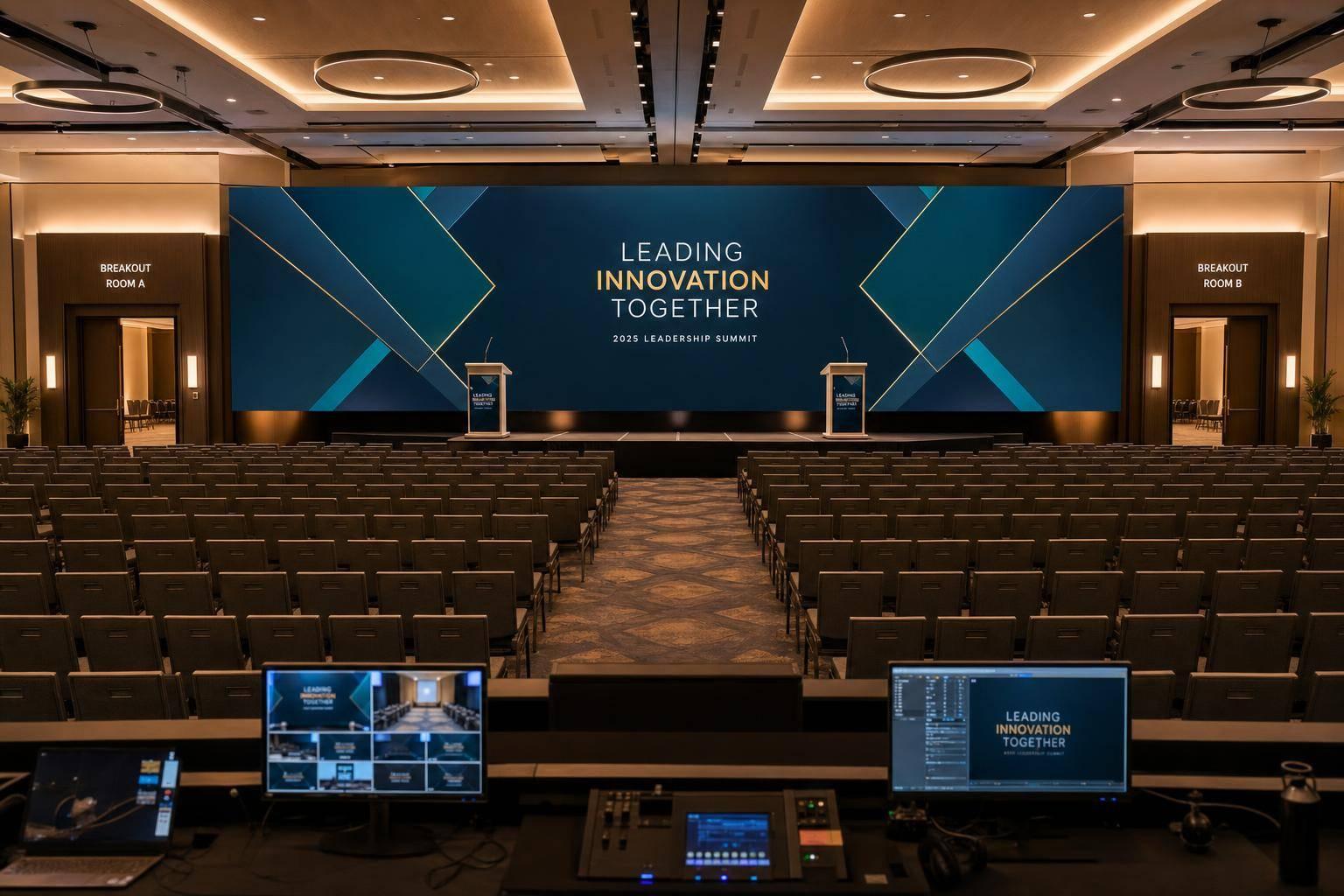
3 Turnkey Production Partners For An All-Associates Company Meeting.

Chief Executive Officer
If one part of your company meeting cannot fail, that part should decide your production partner.
I’d boil the choice down to three options:
- Corporate Optics: best when I want one lead to handle planning, production, and on-site control
- Broadcast-focused livestream partner: best when remote viewers matter as much as the room
- AV staging and on-site technical direction partner: best when the stage, sound, lighting, and floor execution come first
The article compares these partners across the points that usually shape the decision:
- Scope
- Livestream and hybrid delivery
- On-site ownership
- Best-fit meeting size
- Pros and cons
- Main risk each one owns
One detail stood out to me: fully managed AV productions can start at around $7,500 and go into the six- or seven-figure range. And for larger meetings, teams may need to start planning 6 to 12 months ahead.
How to Source an A/V Vendor for Your Next Event - Part #1: Why & When - Logan Clements
Quick Comparison
| Partner Type | Best For | Main Focus | Main Gap |
|---|---|---|---|
| Corporate Optics | Meetings with many moving parts | One team running the event end to end | Higher cost and more intake upfront |
| Broadcast-focused livestream partner | Remote-first or hybrid meetings | Stream stability and online viewing | Less ownership of room setup |
| AV staging and on-site technical direction partner | In-person-first meetings | Stage execution and backstage control | Less help with content and registration |
If I were choosing fast, I’d use this rule: pick the partner that owns your biggest failure point: coordination, stream uptime, or room execution.
1. Corporate Optics
This first model is for planners who want one team to run the meeting from start to finish.
Corporate Optics is a turnkey production partner for high-stakes internal meetings. The company handles corporate events from concept through final strike.
End-to-End Scope
Corporate Optics manages the event from concept through final strike. That includes AV production, scenic and lighting, speaker support, registration, and post-event reporting. So instead of juggling a stack of vendors, internal teams work with one production lead.
Hybrid and Livestream Delivery
Its hybrid production support helps create a steady experience for both in-room and remote employees. That matters when part of the audience is in the venue and part is watching from somewhere else.
On-Site Technical Ownership
Corporate Optics provides on-site technical direction to keep load-in, cues, and show execution coordinated. With that in place, the internal team can stay focused on the meeting itself instead of chasing production details backstage.
Best-Fit Meeting Scenario
Corporate Optics is a good fit for meetings that need one partner to handle planning, production, and strike while keeping the attendee experience polished. The next model puts more weight on broadcast-focused livestream production.
2. Broadcast-Focused Livestream Production Partner
If the first model is about owning the whole meeting, this one is about broadcast-level delivery and a better remote viewing experience.
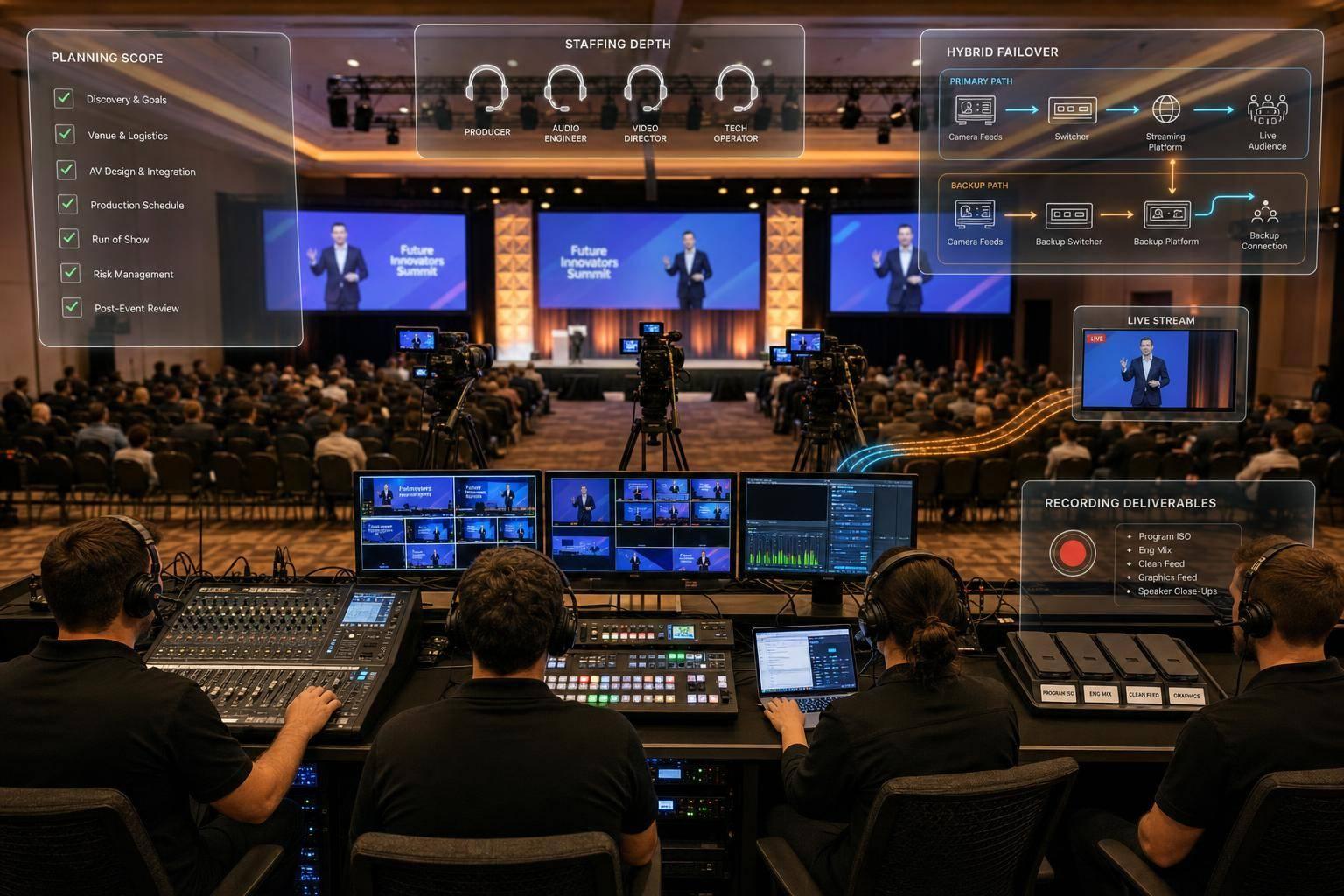
This setup works best when the people watching online matter just as much as the people in the room. A broadcast-focused livestream production partner runs an all-associates meeting like a live show, with backup systems, tight cueing, and a dedicated crew calling and running things in real time.
End-to-End Scope
These partners handle the full production cycle: pre-event strategy, show design, run-of-show planning, graphics and branding, multi-camera streaming, live switching, encoding, and post-event deliverables.
Hybrid and Livestream Delivery
This model stands out in the way it serves both in-room and remote audiences. Remote presenters and panels are built into the program from the start. Content can stream through public platforms or private corporate portals, depending on what the meeting calls for. Remote attendees can also use interactive tools like moderated chat, live Q&A, and polls.
The aim is simple: give people in the room and people online a smooth, well-run experience.
That only works if the crew can manage the show like a live broadcast.
On-Site Technical Ownership
A Technical Director leads the crew, which often includes camera operators and audio engineers, and oversees broadcast-grade gear such as multi-camera setups, professional lighting, and encoding systems. Reliability comes from built-in backup measures like redundant encoders, backup internet, and real-time signal monitoring.
Best-Fit Meeting Scenario
This partner type is a strong fit for large, distributed audiences that need a stable stream. Think national all-associates meetings, global town halls, or executive presentations where the remote experience needs to look polished and stay dependable. If the in-person audience is fairly small but online viewership is high, a broadcast-focused partner usually makes the most sense.
When the main priority moves away from livestream delivery and toward stage execution and on-site control, the next partner type fits better.
sbb-itb-ae35a94
3. AV Staging and On-Site Technical Direction Partner
When the in-room experience matters most, an AV staging and on-site technical direction partner takes charge of the stage, AV, and floor operations.
End-to-End Scope
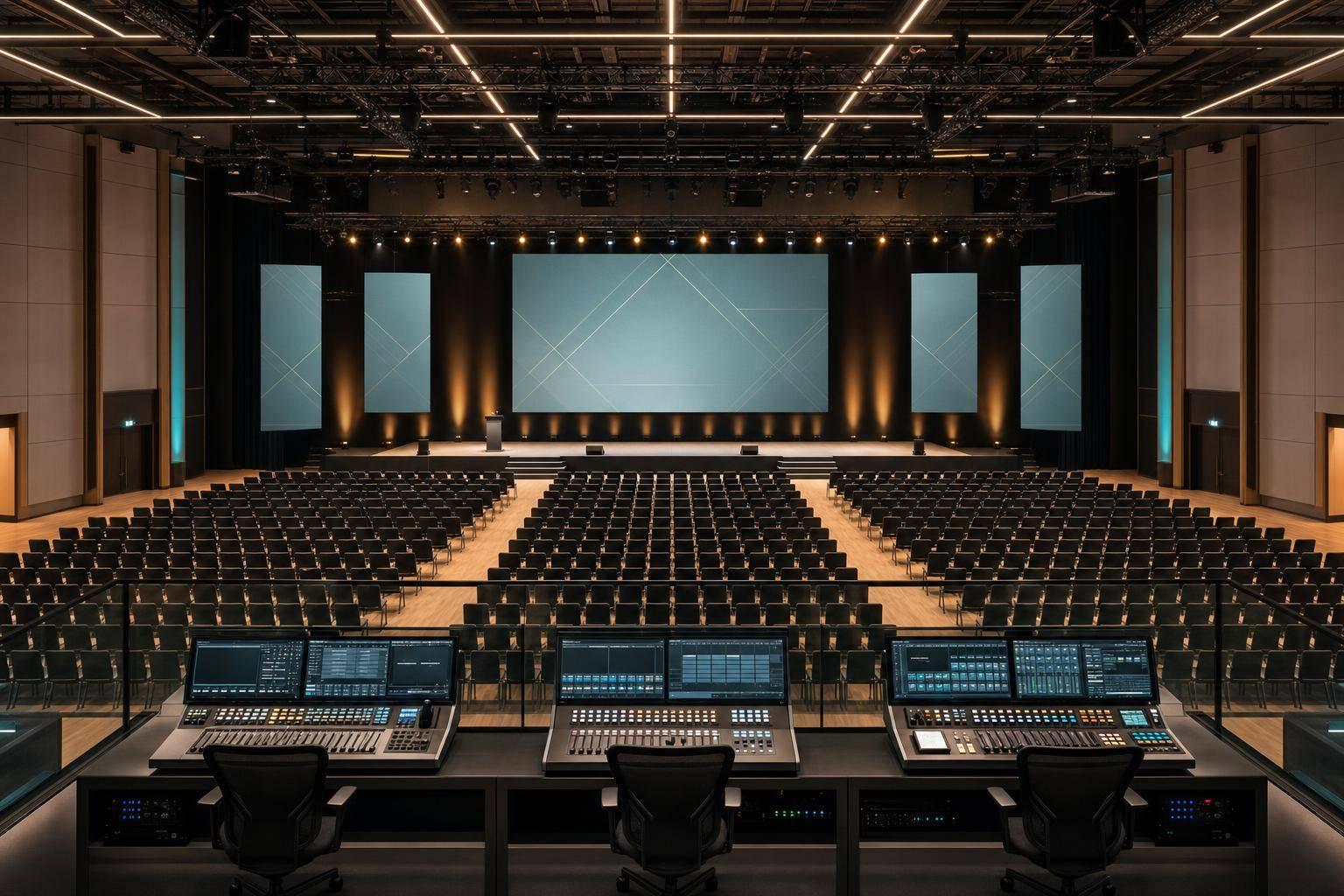
These partners handle scenic design, audio, video, lighting, rigging, power distribution, and project management across budgets, timelines, and vendor coordination. In plain English, they run the nuts and bolts that make the room feel polished and under control.
Fully managed productions can start at around $7,500 and climb into six- or seven-figure budgets. That range is wide for a reason: a small internal meeting and a major company kickoff are two very different beasts. It helps to bring this partner in 6–12 months early so they can assess venues, set the budget, and map out the technical plan. That same level of control extends to the live feed.
Hybrid and Livestream Delivery
Livestreaming is usually part of the package, but it plays a support role to the physical event instead of driving the whole production. These partners build broadcast-grade camera systems, live switching, and redundant streaming encoders right into the venue setup.
They can also bring in remote contributors through remote production workflows. So if a speaker is dialing in from another city, or even another country, the show can still move smoothly without feeling patched together at the last minute.
On-Site Technical Ownership
This partner acts as the on-site lead for floor operations. That means they direct the full crew - engineers, operators, and stagehands - while also managing backstage traffic, talent transitions, and live show calling in real time.
They also oversee load-in, load-out, and freight logistics. If you've ever seen an event fall apart because no one was clearly in charge behind the curtain, this is the role that prevents that mess.
Best-Fit Meeting Scenario
This setup works best when the internal audience comes first. Town halls, all-hands, leadership updates, and company kickoffs usually need a polished physical environment and disciplined show calling.
That’s where this kind of partner stands out most, especially in a side-by-side planning comparison.
How the 3 Partners Compare Across Key Planning Needs
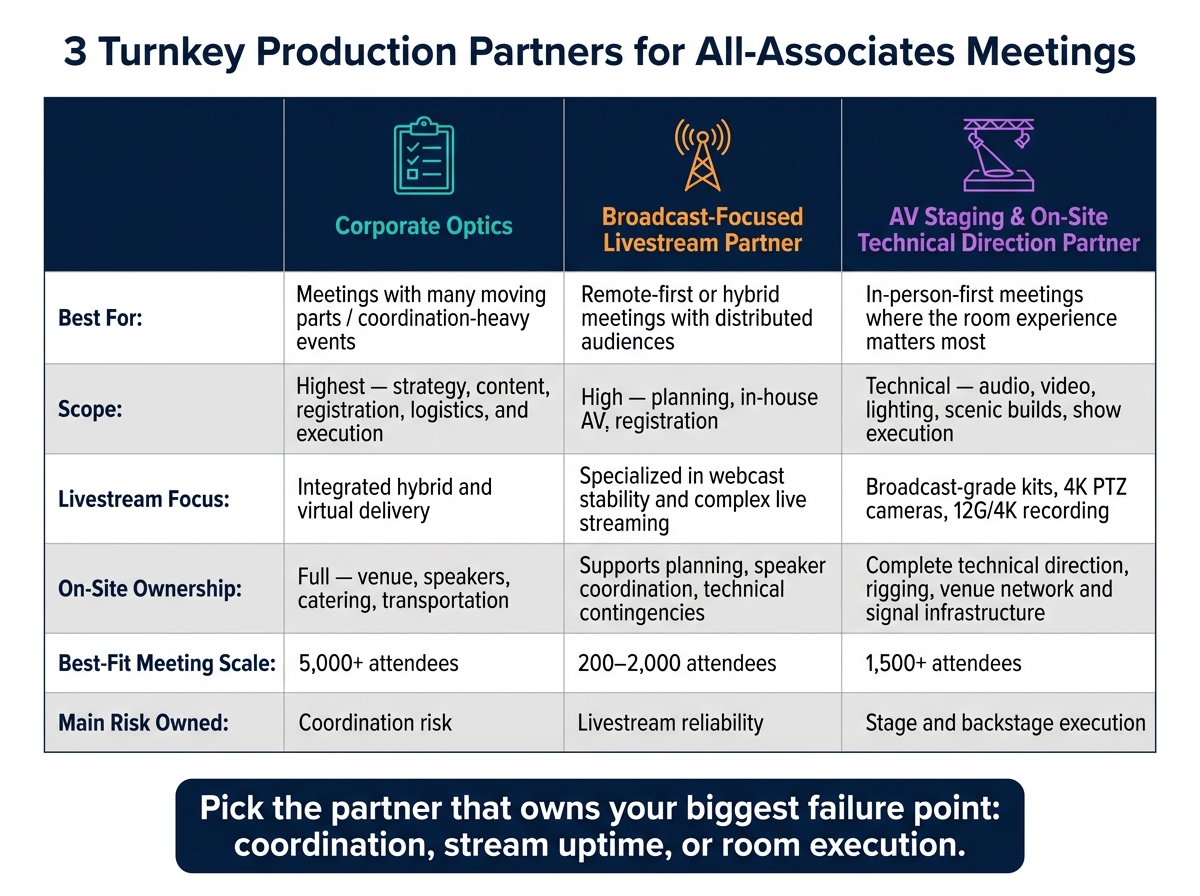
3 Turnkey Production Partners for Company Meetings: Side-by-Side Comparison
This side-by-side view helps you line up each partner type with the planning job that matters most to you. The sharpest differences show up when you look at priorities next to each other, following best practices for conference event production.
| Planning Need | Corporate Optics | Broadcast-Focused Livestream Production Partner | AV Staging and On-Site Technical Direction Partner |
|---|---|---|---|
| Scope | Highest: strategy, agenda and content development, registration, logistics, and execution | High: planning, in-house AV, and registration | Technical: audio, video, and lighting design, scenic builds, and show execution |
| Livestream Focus | Integrated hybrid and virtual delivery as part of show design | Specialized in webcast stability and complex live streaming | High-end broadcast kits, 4K PTZ cameras, and 12G/4K recording |
| On-Site Ownership | Full management of venue, speakers, catering, and transportation | Supports planning, speaker coordination, and technical contingencies | Complete technical direction, rigging, and venue network, internet, and signal infrastructure |
| Best-Fit Meeting Scale | 5,000+ attendees; high-stakes summits and company-wide strategy meetings | 200–2,000 attendees; mid-sized conferences and hybrid events | 1,500+ attendees; high-impact meetings with complex scenic needs |
Each option takes on a different share of the production work. The easiest way to read these tradeoffs is through risk ownership.
Corporate Optics takes on the most coordination risk because it manages content, logistics, and production under one lead. The Broadcast-Focused Livestream Production Partner is centered on livestream reliability and remote audience delivery. The AV Staging and On-Site Technical Direction Partner owns stage and backstage execution, from load-in to final strike.
Those differences set up the next section on pros and cons.
Pros and Cons of Each Partner Type
The table below gives you a quick side-by-side look at each partner type by strength, scope, and how much planning work falls on your team. Use it to line up the right partner with the meeting’s biggest risk: coordination, stream reliability, or room execution.
| Partner Type | Pros | Cons |
|---|---|---|
| Corporate Optics | Single lead from show design to load-out; lowest planner workload; covers strategy, logistics, and execution. | Higher cost for full-service management; requires a thorough discovery process. |
| Broadcast-Focused Livestream Partner | Best remote and hybrid experience; stable streaming for distributed audiences. | Does not fully own staging or room design; registration may sit outside scope. |
| AV Staging and On-Site Technical Direction Partner | Strong room impact through staging, lighting, and sound; solid on-site technical direction. | Limited content strategy support; registration usually excluded. |
Here’s the simple way to think about it: if your main concern is keeping a lot of moving parts lined up, Corporate Optics gives you one lead from start to finish. If the big issue is a smooth feed for people joining from different places, a Broadcast-Focused Livestream Partner is usually the better fit. And if the room itself needs to look sharp and run cleanly on show day, an AV Staging and On-Site Technical Direction Partner can be the right call.
That distinction matters more than it may seem at first. A partner can be great at one thing and still leave gaps somewhere else. So instead of picking based on a broad pitch, match the partner to the part of the event that has the most room for failure.
Conclusion
After looking at scope, livestream needs, and who owns the work on-site, the decision comes down to risk. Pick the partner built around the part of your event that has the least room for error: coordination, livestream uptime, or in-room delivery.
For meeting planning-heavy meetings, choose Corporate Optics if you need one lead to handle planning, execution, and on-site control. Having a single point of contact from planning through strike cuts down on handoff issues and helps keep the attendee experience polished.
For remote-first meetings, choose a Broadcast-Focused Livestream Partner if your remote audience matters just as much as the people in the room. This partner takes pressure off your team with a stable livestream and tools that help remote attendees stay involved.
For room-first meetings, choose an AV Staging and On-Site Technical Direction Partner (following AV production best practices) if the in-room experience comes first. This partner takes the weight off stage management through stage design, lighting, and tight show control.
Pick the partner that owns the one thing that cannot fail.
FAQs
How do I choose the right partner for my meeting?
Look at your meeting format, audience size, executive visibility, and timeline. Then figure out if you need a turnkey partner to handle the full technical scope, from planning and AV to streaming and post-event analytics.
When you compare providers, focus on experience that matches your event. That could mean hybrid redundancy, multi-city consistency, or both. Ask for a proposal that covers AV production, logistics, and program management. You should also ask for clear backup workflows and how those plans scale to fit your event.
When should we start planning production?
It depends on how complex the event is.
For smaller meetings, plan 3–4 months ahead. Mid-sized gatherings usually need 6–9 months. Larger conferences, especially those with multi-venue logistics or broadcast needs, often need 4–6 months.
Executive summits or events with custom scenic work should usually start 8–16 weeks out. And if you're planning an international event or a very large production, give yourself 12–18 months. That tends to give you the best shot at strong availability and pricing.
What should I budget for a company meeting?
Budget comes down to your meeting’s size, complexity, and production needs. In most cases, professional AV costs $25,000 to $200,000+. Smaller meetings often start around $15,000 to $20,000, while 300-person hybrid events usually fall between $35,000 and $65,000.
It also helps to set aside a 10% to 15% contingency. That extra room can save you from a nasty surprise if costs shift late in the process.
When you review quotes in USD, ask for clear line items for:
- Audio
- Video
- Lighting
- Staging
- Labor
- Freight
And read the fine print. Hidden costs can creep in fast, especially venue commissions, overtime, and shipping.
Related Blog Posts
- 4 Meeting Production Companies That Excel At Seamless AV (audio/video), Lighting, and Stage Design for Corporate Conferences, and events
- End-To-End Annual Meeting Production Companies For Your Next Company Conference
- Best Annual Meeting Production Companies For Large‑Scale Corporate Meetings, Investor Days And Leadership Summits
- Conference Production Companies Who Help Plan And Execute A Corporate Award Ceremony


Streamline your workflow, achieve more

Lorem ipsum dolor sit amet, consectetur adipiscing elit. Maecenas ac velit pellentesque, feugiat justo sed, aliquet felis.



Lorem ipsum dolor sit amet, consectetur adipiscing elit. Maecenas ac velit pellentesque, feugiat justo sed, aliquet felis.