Top Event Production Companies For Content Management And Live Events For Large-Scale Corporate Conference.

Chief Executive Officer
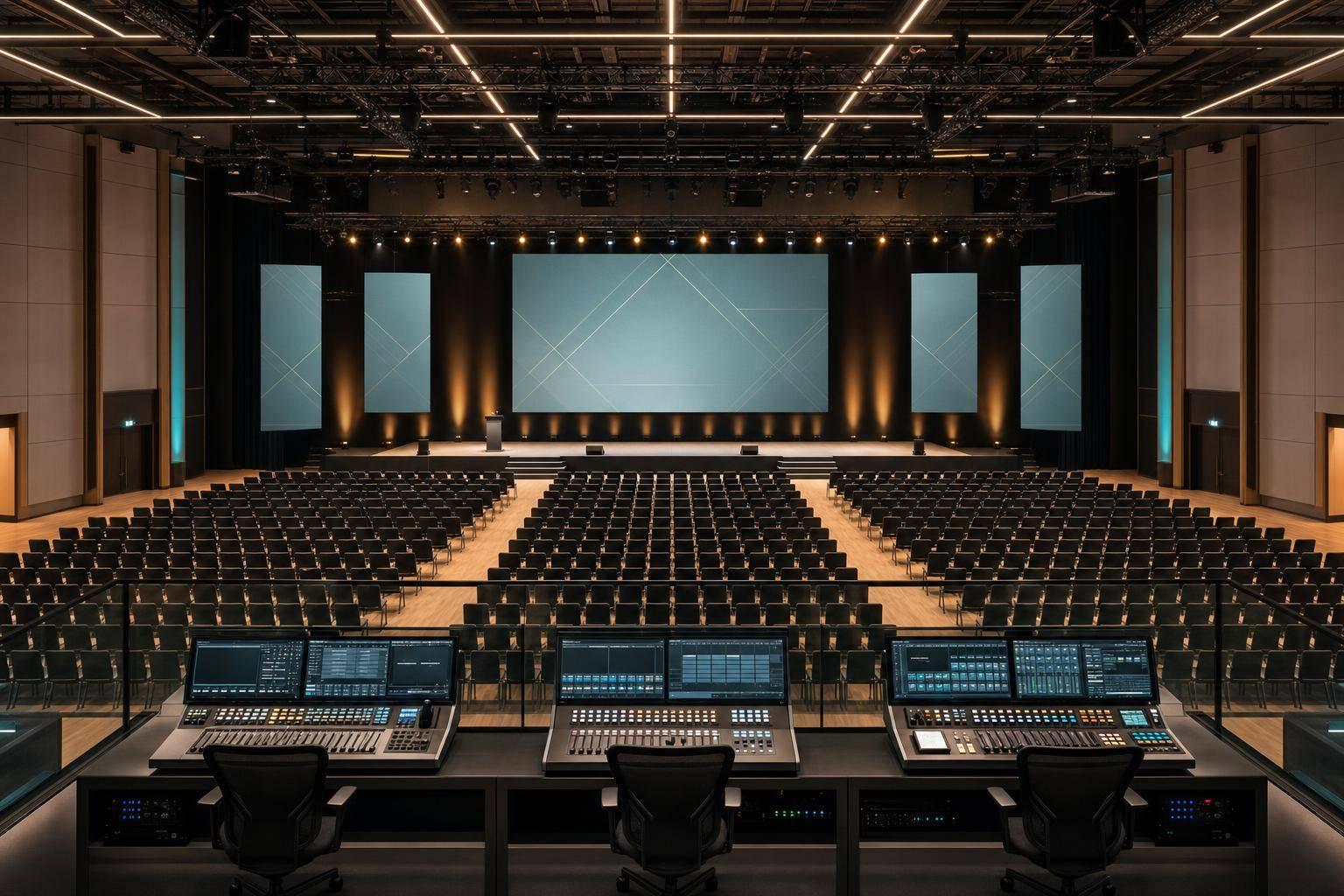
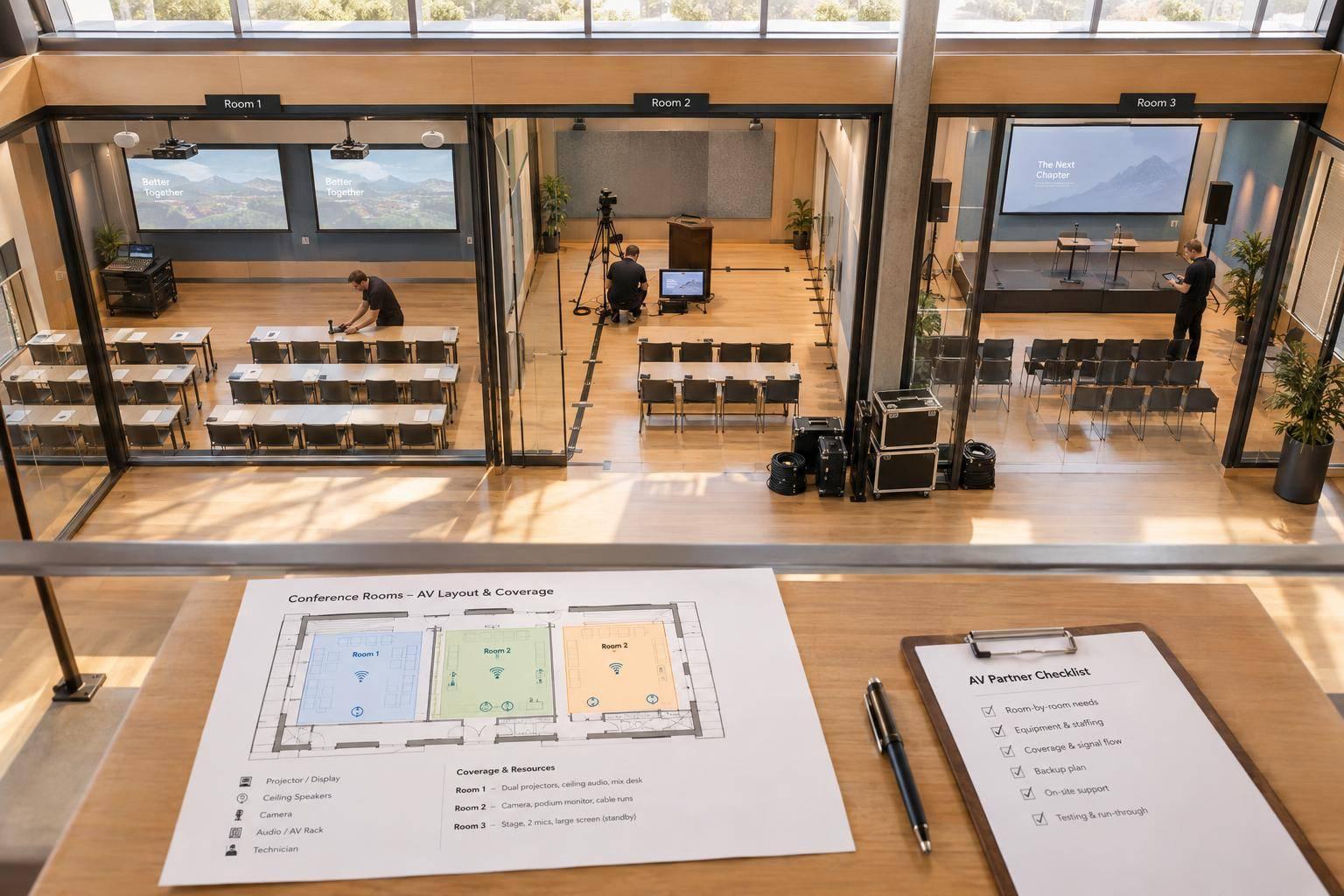
If I were shortlisting vendors for a large corporate conference, I’d sort them by four things first: speaker and session workflow, live show control, hybrid support, and scale.
This article reviews 8 U.S.-based companies across those exact points:
- Corporate Optics
- Freeman
- Encore
- George P. Johnson
- InVision Communications
- Opus Agency
- We & Goliath
- VDA, Inc.
The big takeaway is simple: no single company is right for every conference.
- If I wanted one team to cover content prep, AV, show calling, and streaming, I’d look at Corporate Optics
- If I needed enterprise-level speaker intake and agenda handling, I’d look at Freeman
- If venue-based AV and hotel or convention-center support mattered most, I’d check Encore
- If the event was a flagship brand conference with large stage builds, I’d review George P. Johnson
- If I cared most about broadcast-style keynote delivery and brand-led event storytelling, I’d include InVision and Opus
- If the program was hybrid-first with remote speakers and global attendees, I’d look hard at We & Goliath
- If I needed custom scenic build plus a branded virtual layer, I’d consider VDA
A few numbers help frame the field: Encore reports 400,000+ events annually, Freeman supported a case with 14,000 in-person and 7,500 virtual attendees, and Opus helped run a hybrid event with 15,000 in-person plus 15,000 virtual attendees.
Quick Comparison
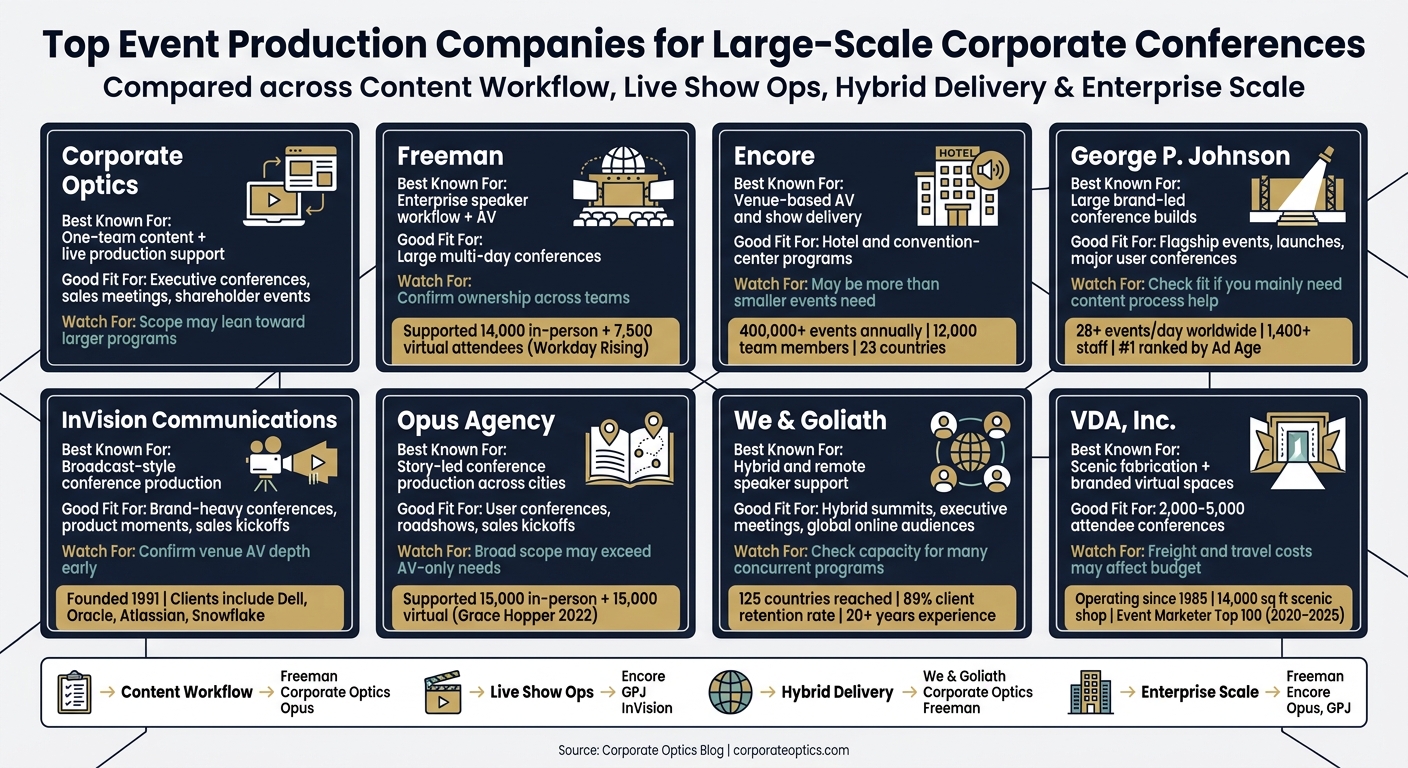
Top Event Production Companies for Large-Scale Corporate Conferences: Side-by-Side Comparison
| Company | Best known for | Good fit for | Watch for |
|---|---|---|---|
| Corporate Optics | One-team content + live production support | Executive conferences, sales meetings, shareholder events | Scope may lean toward larger programs |
| Freeman | Enterprise speaker workflow + AV | Large multi-day conferences | Confirm ownership across teams |
| Encore | Venue-based AV and show delivery | Hotel and convention-center programs | May be more than smaller events need |
| George P. Johnson | Large brand-led conference builds | Flagship events, launches, major user conferences | Check fit if you mainly need content process help |
| InVision Communications | Broadcast-style conference production | Brand-heavy conferences, product moments, sales kickoffs | Confirm venue AV depth early |
| Opus Agency | Story-led conference production across cities | User conferences, roadshows, sales kickoffs | Broad scope may exceed AV-only needs |
| We & Goliath | Hybrid and remote speaker support | Hybrid summits, executive meetings, global online audiences | Check capacity for many concurrent programs |
| VDA, Inc. | Scenic fabrication + branded virtual spaces | 2,000 to 5,000 attendee conferences | Freight and travel costs may affect budget |
My read: use this list to match the vendor to the event - not the other way around. If your conference has heavy keynote prep, many speakers, and remote attendees, the right choice will usually be clear once you compare workflow, show control, hybrid setup, and team scale side by side.
sbb-itb-ae35a94
1. Corporate Optics
Corporate Optics is a full-service event production company focused on technical production and AV for large corporate conferences.
Its services cover a lot of ground: agenda development, speaker asset management and speaker support, audiovisual design, scenic and lighting production, live streaming, and post-event analytics.
For content-heavy conferences, that workflow matters just as much as what happens on stage. Corporate Optics handles conference content from early planning through final delivery. That includes keynote coordination, speaker asset management, show-calling prep, and rehearsal planning, so the program stays organized as show time gets closer.
Its prompts.ai partnership also adds AI-assisted help for planning and communications.
Once the program is locked, the onsite production team steps in. Corporate Optics supports stage design, scenic fabrication, lighting, audio, video, on-site staffing, vendor coordination, show calling, and contingency planning. In plain English, it covers both the technical side and the day-of logistics that large conferences depend on.
For conferences with remote attendees, those services extend to hybrid delivery too. Corporate Optics supports live streaming, hybrid and virtual production companies, and broadcast support. It also offers audience engagement tools and post-event analytics to serve both in-room and remote audiences.
Corporate Optics is a strong fit for leadership conferences, shareholder meetings, award ceremonies, and large sales meetings. It makes sense for enterprise programs that need both content coordination and live execution.
2. Freeman
Freeman supports large enterprise conferences with content management, conference event production, and live execution across multi-day programs.
Content Workflow
Freeman works with Sessionboard to handle key parts of the speaker process, including proposal scoring, abstract management, onboarding, and speaker communications. Its Presentation Management services also cover submissions, session selection, deck collection, version control, and run-of-show packaging.
That setup helps keep content organized before the event starts. It also makes the move into show-day production a lot smoother, since the same system carries from planning into on-site delivery.
Live Show Operations
Once content is locked, Freeman moves into stage and show execution. Freeman's Studio Blue content team supports stage design, content integration, speaker support, teleprompting, and show calling. On the technical side, Freeman's AV production includes projection mapping, scenic design, video and presentation production, live switching, and presenter management.
In plain terms, Freeman isn't just handling slides in the background. It can also run the room, support speakers in the moment, and tie the full show together on stage.
Hybrid and Virtual Delivery
Freeman also supports hybrid and virtual events through partnerships with platforms like Swapcard and Hubilo. These platforms add digital engagement data such as networking activity, chat interactions, polling responses, and virtual booth visits.
One example is Workday Rising, where Freeman supported 14,000 in-person attendees and 7,500 virtual attendees. Post-event analytics included registration data and virtual participation data. So the same production model doesn't stop at the venue; it also extends to remote viewers. This requires specialized expertise in leading AV teams for virtual broadcasts to ensure technical redundancy and engagement.
Enterprise Scale Fit
Freeman is a fit for large enterprise conferences that want fewer handoffs across planning, content management, AV, and execution. That can matter when a program runs for several days and many teams need to stay in sync.
Freeman also holds Gold-level certification in the Events Industry Council Sustainable Event Standards, which may matter for enterprise clients with ESG reporting requirements.
3. Encore
Encore stands out because it connects creative direction, content prep, and live show delivery inside one workflow. The company presents itself as an integrated production partner that covers strategy, content management, technical direction, and live execution. For large corporate conferences, that setup can cut down on handoffs between teams.
Content Workflow
Encore's content process starts early. Event strategy and theme development help shape the structure of keynotes and general sessions. It also supports presentation help, speaker coaching, and video production, which helps slide decks, videos, and brand assets stay aligned and on message.
That work also includes setting content standards, versioning speaker files, and checking media specs before assets move into presentation systems. Speaker coaching helps presenters stay in sync with cues and timing.
Live Show Operations
That same workflow carries into show day. Encore provides show calling, scenic and staging design, and AV integration to connect content playback, lighting, and audio transitions. In plain English, the content team and the show team aren't working in separate lanes.
At Tealium Digital Velocity 2025, Encore handled end-to-end AV and production, including a 40-foot by 9-foot widescreen powered by a three-projector blend for keynote and content delivery. That example shows how Encore can manage both main-stage content and the technical side of delivery without breaking the workflow apart.
Hybrid and Livestream Delivery
For conferences with remote attendees, Encore extends the same production model into streaming and audience interaction. Its virtual layer supports registration, agendas, polling, Q&A, and chat. So it isn't just about sending out a video feed. It's about keeping remote attendees tied into the event flow.
At Cvent CONNECT, Encore EMEA deployed a dedicated streaming stage and dual show calling to keep the in-person and online experiences synchronized. That matters when both audiences need to follow the same run-of-show at the same time. Separate technical teams for in-room AV and streaming, along with redundancy planning, are part of that workflow.
Enterprise Scale Fit
Encore's size makes it a fit for multi-room general sessions, breakout spaces, and synchronized streaming across large conference programs. The company has nearly 12,000 team members, operations in 23 countries, support for more than 2,200 premier venues, and produces 400,000+ events annually, reaching about 25 million people worldwide.
It also has relationships with major hotel brands and convention centers, where it often serves as a preferred AV provider. For U.S.-based enterprise clients, that can make contracting and on-site logistics easier. The main fit question comes down to scope: Encore can cover almost every production layer, so planners need to line up the service package with what the conference actually needs.
4. George P. Johnson
George P. Johnson (GPJ) is an experience marketing agency based in Auburn Hills, Michigan. It works through 33 offices around the world and has about 1,400+ experience designers, strategists, creatives, fabricators, production specialists, and event managers. Advertising Age ranked GPJ the #1 event marketing agency in its Annual Agency Report for at least two years in a row, and the agency runs more than 28 events per day worldwide on average. For enterprise teams running large conference programs across regions, that kind of reach can make day-to-day coordination much easier.
What stands out with GPJ is how it connects content planning, broadcast-style production, and on-site delivery in one system. For conference planners, that matters most when speaker management, show calling, and hybrid delivery all need to work together without friction.
Content Workflow
GPJ supports conference content workflows across the full session planning process. That includes speaking and session planning, speaker and artist booking and management, event timeline planning, plus recording and post-event reuse. For hybrid programs, it captures keynote video, audio, visuals, and transcripts so teams can reuse content across live, on-demand, and regional versions.
At the IBM Security Summit, GPJ managed 8 general session presentations, 23 digital engagement scripts, 15 characters across 3 environments, 15 client stories, and 3 readiness assessments for about 400 attendees. That example gives a clear sense of how much moving content GPJ can handle at once.
Live Show Operations
Once the content plan is approved, GPJ moves straight into stage and show control. On the execution side, it handles crew coordination, venue labor, load-in, load-out, and cueing through one workflow. Its service mix also lines up well with large conference settings that need stage and broadcast production, people traffic flow planning, and security planning.
For IBM Think 2019, GPJ designed, fabricated, and installed more than 500,000 square feet of structures in a 48-hour window. That’s a huge build in a short time. Pulling that off takes tight coordination between the creative, fabrication, and production teams.
Hybrid and Livestream Delivery
GPJ approaches hybrid events more like broadcast productions and content studios than simple webcam-based streams. Its model focuses on integrated systems, livestreaming, live-to-on-demand reuse, and data capture for measurement. For spread-out programs, GPJ has also used simulated-live segments combined with live transitions, while shipping branded production kits to presenters’ homes to keep quality and brand consistency in line.
That approach is useful when a conference has speakers in many places but still needs to feel like one show, not a patchwork of separate feeds.
Enterprise Scale Fit
GPJ has served as a long-running experiential agency of record for IBM and Salesforce, and it has helped shape flagship programs such as IBM Think and large Dreamforce productions. As part of Project Worldwide, GPJ can also tap added content, digital, and production support.
At IBM Think, 80% of attendees said they were thrilled with their first Think conference and planned to return. That kind of result helps explain where GPJ fits best: global, multi-track conferences that need one clear strategy, tight content control, hybrid broadcast support, and disciplined live execution.
5. InVision Communications
InVision Communications blends audience engagement planning with broadcast-level production for large enterprise conferences. Founded in 1991, the agency is based in Walnut Creek, CA, with offices in Chicago and New York City. It has roughly 150 to 200 employees and serves enterprise clients across North America and around the world. It is WBENC-certified, and its client roster includes Dell Technologies, Oracle, Atlassian, and Snowflake. The agency also has deep experience in B2B tech and health sciences. That content-led setup shows up not just in messaging, but in the way it shapes the stage and the live show itself.
Content Workflow
InVision begins with event strategy, experience design, theme development, and visual identity. From there, it builds scenic, lighting, video, and digital pieces around that core plan. Its teams also create motion graphics, video content, and broadcast packages that match how attendees move through the event.
For enterprise conferences that also serve as big brand moments, this setup can make a general session feel more sharp, memorable, and tied to action. That same planning thread carries into show calling and on-site delivery.
Live Show Operations
InVision runs stage management, technical design, scenic and lighting, AV design, show calling, labor management, and on-site execution as one connected production system. That matters. Instead of treating each part of the event like a separate lane, the agency ties them together so the show feels steady from start to finish.
Its Drum Experience Award for Best Conference/Exhibition for Dell Technologies World 2022 is one example of that work earning outside recognition. The agency also won nine Muse Creative Awards for projects with Dell Technologies, Gartner, and ServiceNow. For conferences with remote audiences, this production model also carries over well into hybrid delivery with multi-camera streaming.
Hybrid and Livestream Delivery
InVision developed CLEANevents, which includes CLEANteams, CLEANstudios, and CLEANexperiences. This offering supports broadcast-quality recording and streaming from corporate campuses, professional studios in major U.S. markets, and controlled live settings. CLEANevents supports studio-grade virtual keynotes, hybrid general sessions, and multi-site programs with steady branding across formats.
The agency also handles platform configuration and digital attendee support. It can fold in pre-recorded content for both in-room and remote audiences, which is often where hybrid events either click or fall apart.
Enterprise Scale Fit
InVision is best suited for conferences where content and live production need to carry a major brand or product moment. Its track record includes large user conferences and sales kickoffs. For U.S. enterprises running flagship user conferences, sales kickoffs, executive summits, or product launches, InVision stands out when the stakes are high and the event needs clear content planning, broadcast-ready hybrid delivery, and steady live execution.
6. Opus Agency
Opus Agency is a global event agency focused on strategy, content, production, event technology, and measurement for large conferences and roadshows. It’s based in Beaverton, Oregon, and has offices across North America, Europe, and APAC. Its clients include Salesforce, AWS, NetApp, Dell, and TikTok.
Opus stands out when content, registration, and production all need to stay in sync across multiple cities. That’s a big deal for conferences that need to keep one clear story running through content planning, stage production, and hybrid delivery.
Content Workflow
Opus shapes the story arc before slide production begins. For large, multi-track conferences, that means gathering input from dozens of speakers and business units, then managing slides, videos, demos, and show files with version control. Its workflow includes content-planning sessions, content calendars, and format checks for fonts, media, and aspect ratios so everything is ready for rehearsal and show calling.
Because Opus also handles registration and event technology, content connects straight to agenda items, mobile apps, event sites, and post-event on-demand libraries. Once those assets are locked, the same team moves the program into show calling and on-site delivery. That handoff tends to be smoother when one group owns the full chain.
Live Show Operations
Opus has produced general sessions and breakout setups at the scale of NetApp INSIGHT 2024 in Las Vegas, where it delivered a 90,000+ sq. ft. expo built for attendee discovery and live content, with custom thematic zones, mobile app integration, sponsorship activation, and staffing.
For keynotes and other high-visibility sessions, the agency uses show producers, technical directors, stage managers, and show callers who run the full show flow and cue presenters, media, and technical elements as one system. Technical planning covers:
- audio, lighting, video, staging, LED walls, and teleprompters
- rehearsals and backup plans shaped around the venue and audience size
That same production approach carries over well to virtual and hybrid events.
Hybrid and Livestream Delivery
At Grace Hopper Celebration, Opus supported fully virtual editions in 2020 and 2021, then a hybrid format in 2022 with 15,000 in-person and 15,000 virtual attendees. Hybrid delivery usually includes multi-camera broadcast setups, streaming infrastructure, remote presenter workflows, and interactive tools like live Q&A and polls for online audiences.
In plain terms, it’s not just about putting cameras in the room. The online audience needs its own experience, and Opus appears set up to manage that.
Enterprise Scale Fit
Opus’s Salesforce World Tour partnership spans more than two decades, with a production model used across London, New York, Sydney, and Tokyo. The AWS Summit ASEAN circuit grew 993% since inception, and Opus managed 16,000+ attendees across a three-city run in Singapore, Bangkok, and Jakarta.
For enterprises comparing meeting planning partners for flagship user conferences, global sales meeting production, or multi-region roadshows, that level of operational depth makes Opus a strong fit.
7. We & Goliath
For teams that want a more hands-on boutique setup, We & Goliath puts a lot of attention on speaker workflow and hybrid event delivery. The agency has more than 20 years of experience producing virtual, hybrid, and in-person conferences, summits, and corporate events.
It brings together strategy, production, platforms, and marketing for those event formats. We & Goliath has worked with global enterprises since 1999 and reports an 89% conference client retention rate. That matters most in speaker-heavy conferences, where content planning and live execution need to stay in sync.
Content Workflow
We & Goliath handles the moving parts that can trip up a speaker-led event: registration, speaker management, technical coordination, cue sheets, and speaker training.
That means presenters know where to be, what to expect, and when they're live. On show day, the run of show stays tighter, and cueing is less likely to drift off course.
Live Show Operations
On the production side, the agency covers live switching, multi-camera production, branded graphics, audio, and on-site technical management.
It also manages on-site AV and event-day logistics. So instead of juggling separate vendors, teams can keep both the stage and the stream under one roof.
Hybrid and Livestream Delivery
Hybrid delivery is one of its strongest areas, especially for conferences with people tuning in from different places. The agency supports 3-camera livestreams with custom graphics, live chat, Q&A, polls, and social comment integration.
Streaming can go to:
- Zoom
- YouTube Live
- Facebook Live
- Branded webpages
- Interactive conference platforms
Its virtual and hybrid events have reached attendees in as many as 125 countries, with interpretation and captioning in six languages. It also offers post-event edited replays, highlight videos, and analytics.
Enterprise Scale Fit
This is a strong fit for enterprise teams that want one partner to run both speaker-heavy content workflows and live execution. That includes speaker-led summits, internal conferences, and hybrid executive meetings.
8. VDA, Inc.
VDA, Inc. is a strong match for conferences that need custom scenic build, tight control over content, and a branded hybrid setup. It’s a Boston-area experiential event design and marketing agency based in Somerville, Massachusetts, and it has been operating since 1985. Its 14,000-sq-ft scenic shop and 70,000-sq-ft operations facility give the team one connected workflow for creative design, fabrication, and live production. That helps with timelines and keeps builds under tighter control.
Content Workflow
VDA works closely with client teams by embedding account and production staff into the process, so keynote content, show files, and speaker assets stay lined up from prep through rehearsal and show day. That work covers keynote staging, presentation templates, motion graphics, video, and speaker materials. It also includes run-of-show documentation and version control, which matters a lot when changes start flying in at the last minute.
Its portfolio includes content-heavy tech conferences like CyberArk IMPACT and RainFocus INSIGHT, which points to a solid fit for multi-day conferences with a lot of moving parts on the content side.
Live Show Operations
For live production, VDA brings together teams across lighting design, audio engineering, scenic design, show calling, and other meeting production services. Because fabrication is handled in-house, the original design and the final execution stay closely tied. That cuts down on handoff risk during show build.
Hybrid and Livestream Delivery
VDA Virtual puts remote attendees into branded 3D spaces, including keynote halls, breakout rooms, expo halls, and networking areas. That’s a good fit when remote guests need more than a basic livestream and the event team wants the online side to feel like part of the same show. Producers can set schedules, access rules, chat, and polling so in-room and virtual audiences move through the same program flow.
Enterprise Scale Fit
VDA fits best with conferences in the 2,000 to 5,000 attendee range that need polished main stage production, custom scenic build, and hybrid support. Event Marketer named VDA to its Top 100 "It List" from 2020 through 2025. Travel and freight planning should also be part of the budget picture. The firm stands out most when stage design, fabrication, and virtual delivery all have to stay tightly coordinated.
How These Providers Compare Across Key Conference Needs
These providers tend to separate on three pressure points: content control, live show execution, and hybrid delivery. The easiest way to look at them is through four buyer questions: Who owns the content process? Who can run the show cleanly? Who handles hybrid well? And who can support large enterprise programs?
Content Workflow and Speaker Management
Content workflow is often where the gap shows up first. Corporate Optics treats agenda development, support executive speakers through keynote coordination, slide version control, and rehearsal as core services. That matters when a conference has lots of moving parts and little room for error.
Freeman puts more structure around speaker and agenda management through its Sessionboard partnership, including proposal scoring and speaker communications. Opus Agency ties content and media production to strategic planning and brand development.
Some providers stand out in more specific cases. InVision Communications is a strong fit when a conference needs a fast format change. We & Goliath does especially well with speaker-heavy programs. VDA, Inc. takes a close-in approach by placing staff inside client teams to handle keynote content, show files, and speaker assets.
Live Show Operations and AV Execution
For general sessions, control usually matters more than the gear list. A room can have top-tier equipment and still feel shaky if the show flow isn't tight.
Corporate Optics offers turnkey AV. Freeman adds projection mapping and full AV production. Encore focuses on venue-integrated AV, which can be a big deal in hotel and convention-center settings. George P. Johnson and VDA, Inc. lean into stage-led experiential builds. InVision Communications and Opus Agency put more weight on broadcast-style production. We & Goliath runs 3-camera livestream setups with live switching and custom graphics.
Hybrid, Livestream, and Audience Experience
This is where the differences get sharper. We & Goliath is the most specialized option in this group, with documented multilingual support across 125 countries and 16 remote recording sessions across 6 countries for a single client. That's not just a nice extra. For global audiences, it can shape the whole event plan.
Corporate Optics supports broadcast-grade streaming with redundant signal feeds and audience engagement tools. InVision Communications can spin up broadcast studio environments fast when event formats change. VDA Virtual puts remote attendees inside branded 3D environments. Freeman and Opus Agency both support hybrid delivery at enterprise scale, with streaming layered into broader conference production.
Enterprise Scale and Delivery Model
The table below sums up how each provider stacks up across the four core criteria.
| Provider | Content Workflow & Speaker Mgmt | Live Show Ops & AV Execution | Hybrid/Livestream & Audience Experience | Enterprise Scale & Delivery Model |
|---|---|---|---|---|
| Corporate Optics | Agenda, keynote, and rehearsal support | Turnkey AV and show calling | Broadcast-grade streaming and engagement tools | Multi-day, multi-room executive events |
| Freeman | Agenda and speaker communications via Sessionboard | Projection mapping and full AV production | Hybrid delivery at enterprise scale | Large enterprise conferences |
| Encore | Venue-coordinated content support | Venue-integrated AV coordination | Hybrid add-ons for large events | Large hotel and convention-center programs |
| George P. Johnson | Content through agency and partner teams | Experiential staging and large-scale builds | Hybrid via production partners | Flagship brand conferences |
| InVision Communications | Rapid content adaptation and format conversion | Broadcast-studio production | Fast-format livestream delivery | Mid- to large-scale corporate events |
| Opus Agency | Strategy, brand, content, and media production | Full-service broadcast-style production | Hybrid and virtual delivery at scale | Enterprise clients, multi-day agendas |
| We & Goliath | Speaker tech checks and run-of-show control | 3-camera livestream with live switching | Advanced hybrid platform, multilingual support | Mid-market to enterprise, hybrid-first events |
| VDA, Inc. | Embedded staff, version control through show day | Scenic fabrication, lighting, and audio | Branded 3D virtual environments with polling and chat | Custom-built enterprise events |
The next section breaks these tradeoffs into clear pros and cons by provider.
Pros and Cons by Provider
Use the table below to compare where each provider fits best and what you may give up in return.
It turns the provider profiles into quick buyer tradeoffs across four core lenses: content control, live execution, hybrid reach, and enterprise scale.
| Company | Key Pros | Key Cons | Best-Fit Buyer |
|---|---|---|---|
| Corporate Optics | One team handles content, show day, streaming, and post-event reporting | Usually a better match for larger programs with custom scope | Enterprise buyers running multi-day, multi-room executive conferences who want one partner accountable for both content and live production |
| Freeman | Structured speaker and agenda management through Sessionboard, paired with full AV production and hybrid delivery at enterprise scale | Because services span several teams, buyers should confirm who owns content and who owns show-day execution | Large enterprise conferences that want fewer handoffs across planning, AV, and live show operations |
| Encore | Integrated content development, show calling, and venue-coordinated AV in one production model | The full-service model can be more than smaller, single-session meetings need | Global or multinational programs that need steady production standards across many locations |
| George P. Johnson | Broadcast-style production and large experiential builds for flagship brand-led conferences | Its strengths lean toward brand-led conferences, so buyers with a narrow content-management need should check scope early | Brand teams running large-scale product launches or flagship corporate events where experiential impact comes first |
| InVision Communications | Content capture and repurposing are built into the production model, along with in-room and hybrid production | More focused on content than infrastructure, so buyers should confirm venue AV and show-day operating scope early | Mid- to large-scale corporate events where content repurposing and brand narrative matter just as much as live execution |
| Opus Agency | Strategy, content, and production are managed as one connected workflow across multi-city and multi-track programs | The broad scope may be more than buyers with AV-only needs require | Enterprise clients running flagship user conferences, global sales kickoffs, or multi-region roadshows |
| We & Goliath | Specialized hybrid infrastructure with multilingual support and a speaker-to-cue-sheet workflow built in | As a boutique firm, larger concurrent programs should be scoped with care | Hybrid-first or virtual-primary conferences, especially those with international audiences or complex remote speaker logistics |
| VDA, Inc. | In-house fabrication and embedded production staff keep scenic build, content, and show-day execution closely tied together | With a mid-size team, buyers should validate capacity for large concurrent calendars in advance | Buyers who want one partner for custom-built environments and immersive attendee experiences |
The conclusion below turns these tradeoffs into a final vendor shortlist.
Conclusion
After comparing the providers above, the choice comes down to fit, not reputation. Pick the partner that lines up with your conference’s content load, stage complexity, and audience mix. That gives you a clear way to narrow your shortlist.
Different production companies for conferences make sense for different event types. But the best pick still comes down to four things: content control, live execution, hybrid delivery, and scale. Use the event itself - not the vendor’s name - to trim the list.
Scale affects staffing, AV depth, and how much control you need over content. Score each vendor on content workflow, live production, hybrid capability, and post-event content reuse. Judge vendors by fit, not name recognition.
FAQs
How do I choose the right event production partner for my conference?
Choose a partner with single-source accountability for AV, staging, scenic design, and live show calling. That setup cuts confusion when things get busy and decisions need to happen fast.
Look at four things in particular: technical depth, on-site execution, national logistics, and risk controls.
Start with your biggest risk. Maybe it’s a hybrid keynote, a packed general session, or a venue with tight load-in limits. Then ask for an itemized proposal that spells out staffing, gear, and contingency plans.
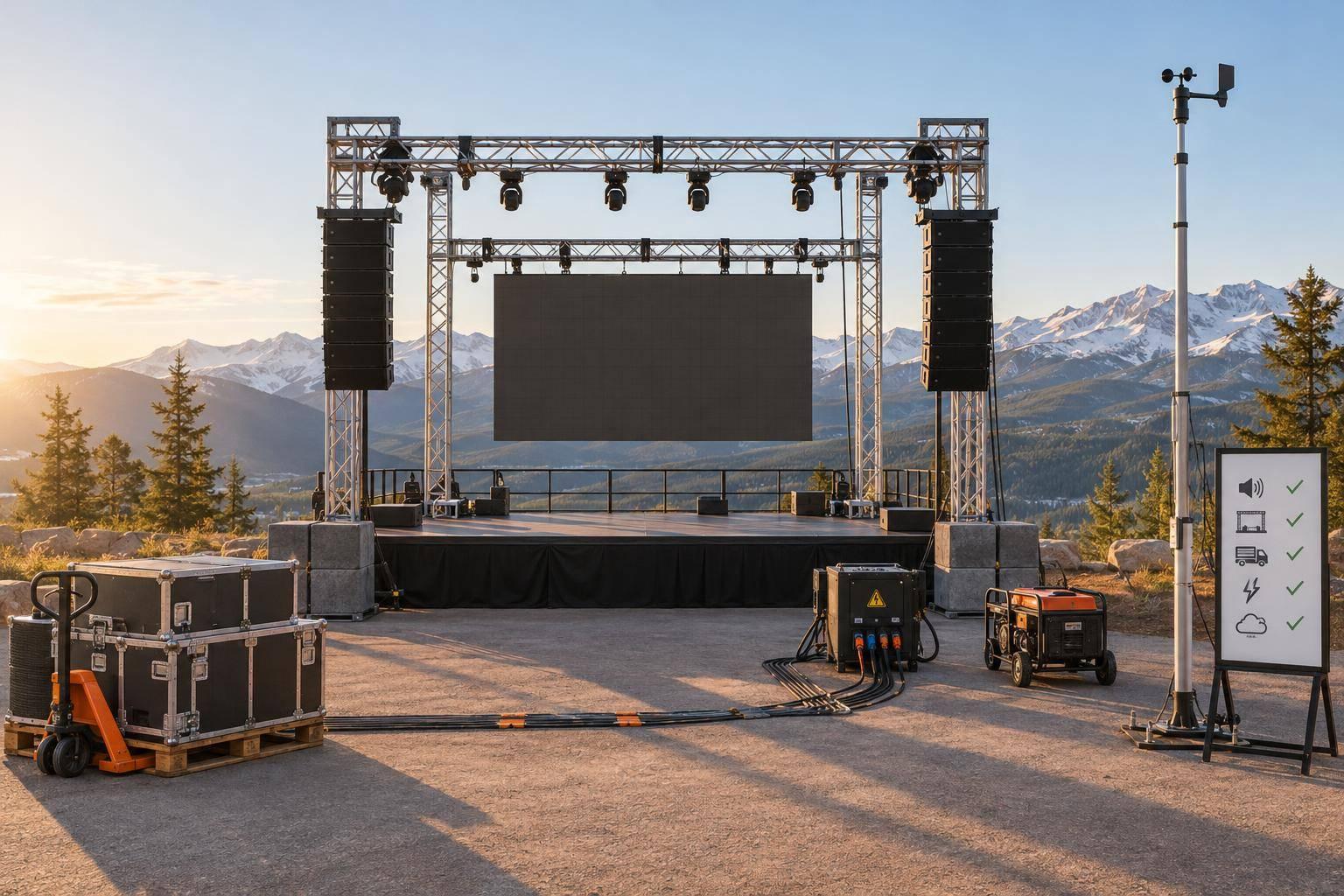
You’ll also want to confirm hybrid support and backup connectivity. If part of the event lives online, this part matters a lot. A weak internet plan can throw the whole show off course.
Finally, verify who owns the gear and crew. That tells you a lot about control, consistency, and how problems get handled on show day.
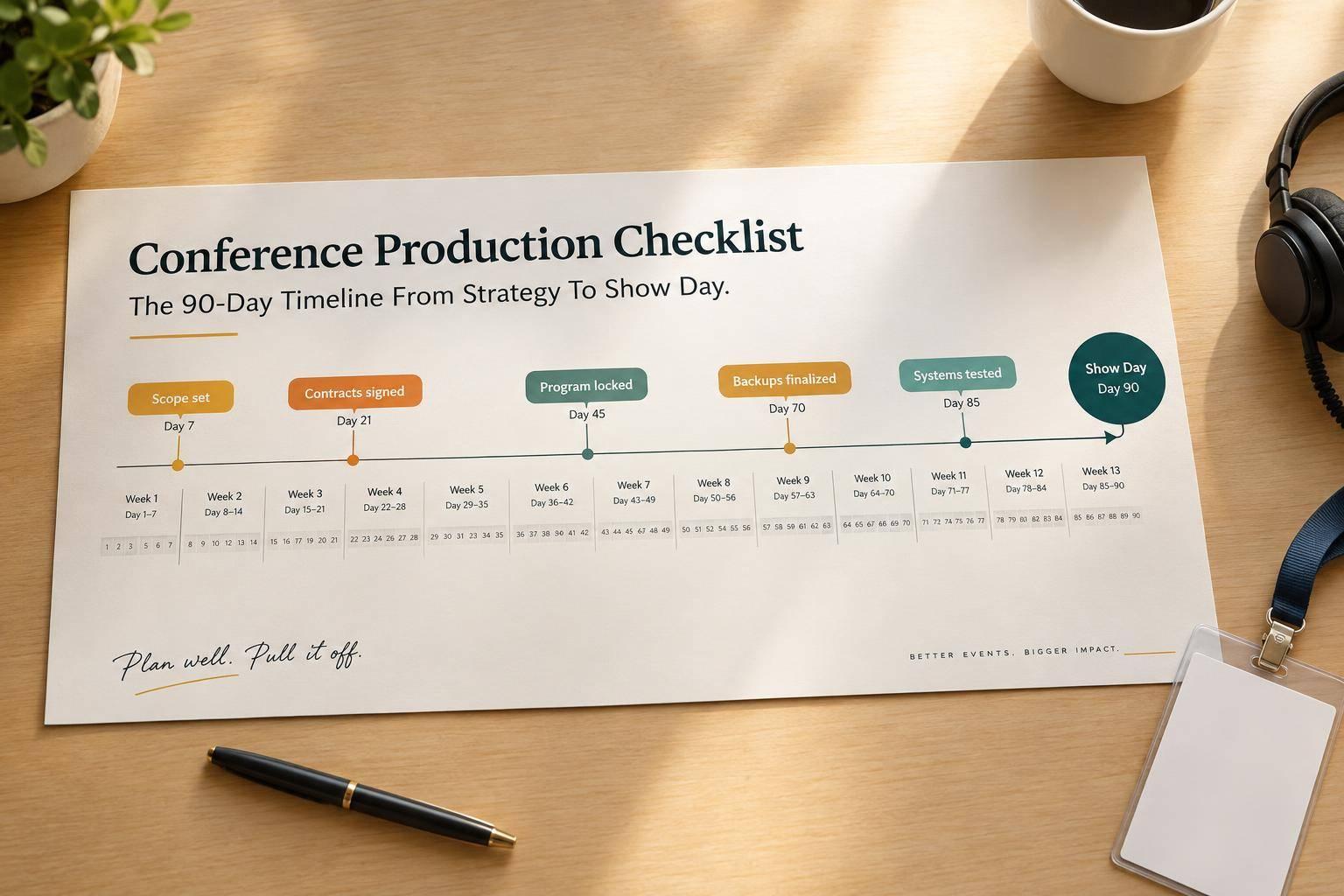
For large conferences, book 4 to 6 months ahead.
What services should a full-service conference production company provide?
A full-service conference production company should act as one clear point of accountability from early planning to final strike.
Core services usually include strategy and planning documents, integrated audio, video, lighting, and scenic production, speaker and content support, hybrid and virtual tools, and an on-site team that manages show calling, session delivery, and risk across the event.
When do hybrid and livestream capabilities become essential?
They come into play when an event needs to reach people beyond the room, like investor webcasts, executive town halls, or leadership conferences.
They matter even more when remote attendees need a polished, broadcast-grade experience that works hand in hand with the in-room production. That can include multi-camera streaming, live polls, Q&A, and consistent messaging for both virtual and in-person audiences.
Related Blog Posts


Streamline your workflow, achieve more
Lorem ipsum dolor sit amet, consectetur adipiscing elit. Maecenas ac velit pellentesque, feugiat justo sed, aliquet felis.


Lorem ipsum dolor sit amet, consectetur adipiscing elit. Maecenas ac velit pellentesque, feugiat justo sed, aliquet felis.