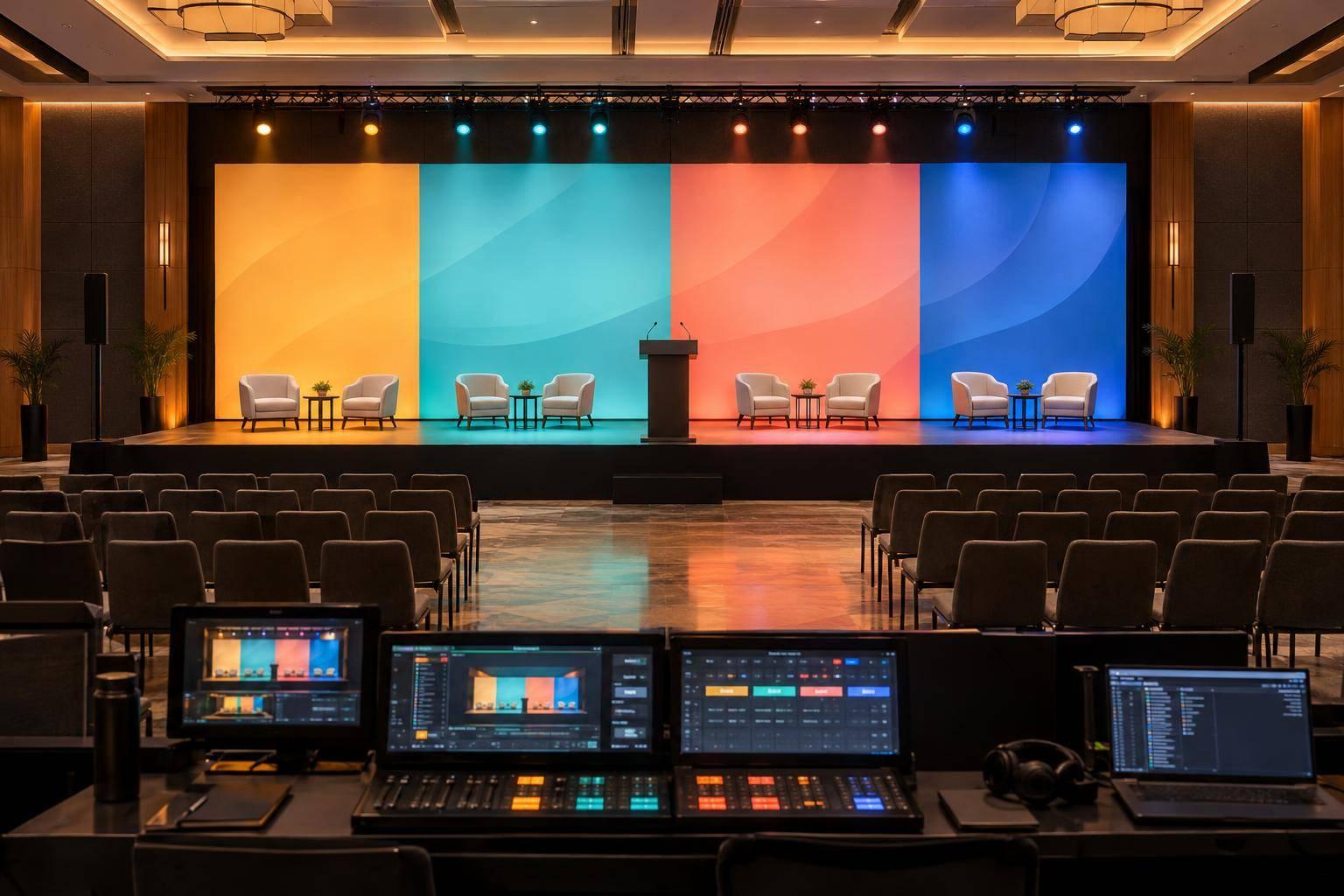
Two Decades Of Automotive Meetings: Why Automotive Brands Choose Corporate Optics For Dealer Events.

Chief Executive Officer
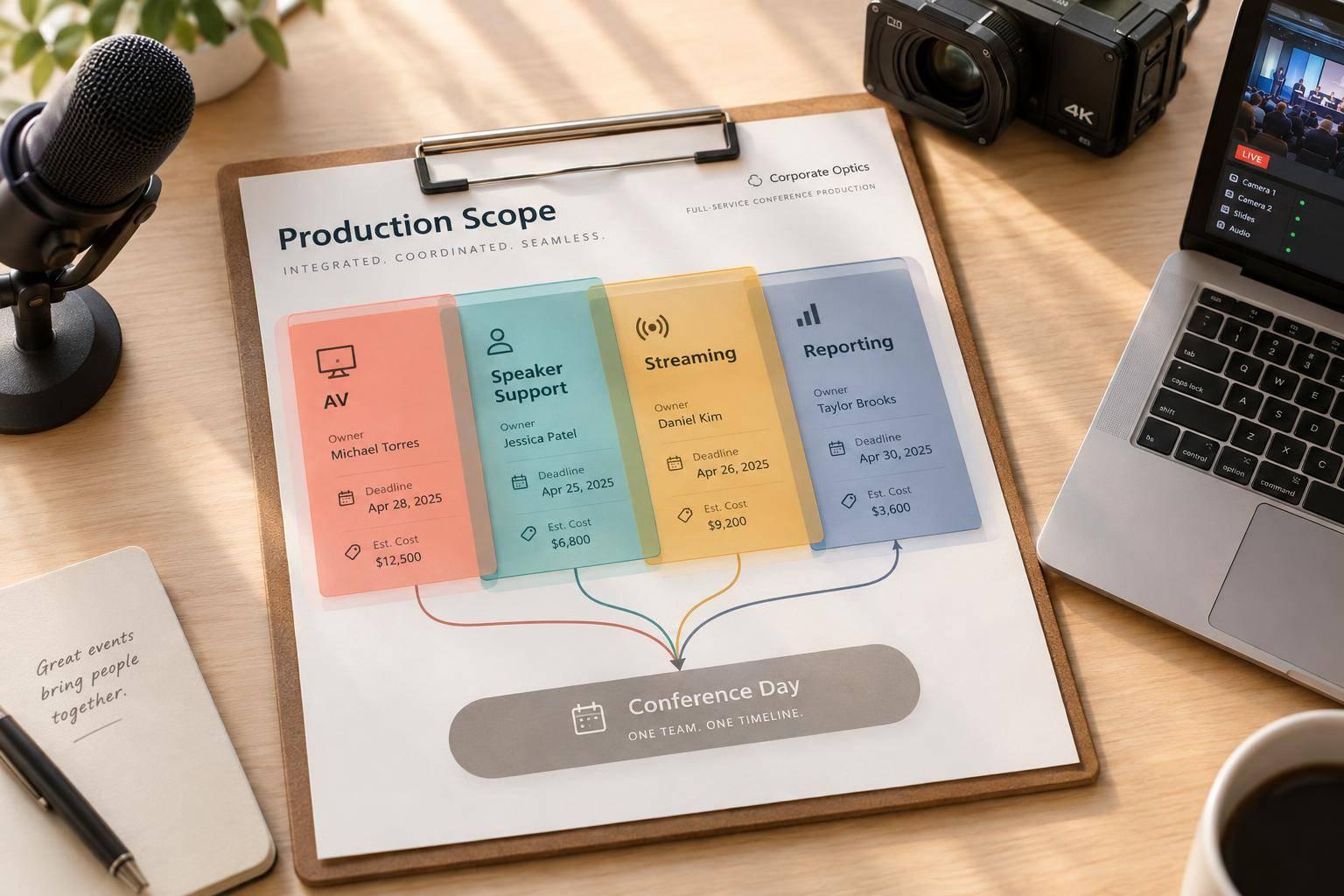
Corporate Optics cites more than 20 years in event production - but that does not establish 20 years of dealer-event work. Automotive brands should check dated project records, assigned production roles, and measured results before choosing a team.
Corporate Optics lists services from scenic design and top audio-visual production companies to scripts, teleprompters, and rehearsals. To assess whether those services fit a dealer event, review:
- Experience: Confirm project dates, venues, audience sizes, vehicle counts, and client-approved results.
- Message delivery: Check how reveals, executive sessions, training, and awards support the same brand message.
- Production controls: Review schedules, budgets, vehicle logistics, content security, rehearsals, and backup plans.
- Results and cost: Separate delivery metrics from sales outcomes, then request a line-item proposal based on the event brief.
The deciding factor is not years alone. It is whether the records show work that matches the event’s scope, audience, and risks.

Dealer Event Production Partner: Evidence Checklist
Verifying 20 Years of Automotive Meeting Experience
The records do not include a founding date or a dated archive of automotive projects. To back up the headline claim, request company-history records, automotive contracts, production schedules, and client-approved project summaries.
Company longevity does not prove 20 years of dealer-event work. Project records must show reliable execution, confidentiality controls, and production discipline. That’s the difference between a history in automotive work and proof of what the company delivered.
Documented Dealer Events and Production Scope
The public material mentions dealer recognition and Regional Dealer of the Year ceremonies but names no clients, dates, or venues. Treat this as a statement of capability - not a verified dealer-event case study. Include only projects with documented dates, locations, and assigned responsibilities in the case-study section.
For each proposed project, request the objective, date, location, format, and Corporate Optics’ exact responsibilities. Confirm dealer attendance and vehicle counts, and get client permission before publishing. Make clear which work Corporate Optics delivered and which tasks the venue, client, or other suppliers handled.
Case Studies: Challenges, Work, and Outcomes
Build each case study around one constraint, one response, and one result. For automotive brands, the test is whether the team can protect launch content, keep the schedule on track, and coordinate dealers under pressure.
Name the challenge: vehicle sequencing, simultaneous breakouts, product confidentiality, compressed move-in, executive messaging, remote attendance, or multiple suppliers. Then explain the venue, rigging, union, shipping, access, approval, or security limits that shaped the plan. These details help readers judge execution - not just familiarity with the industry.
The supplied material includes no verified automotive project totals, attendance totals, or audited results. Report only verified deliverables, and use project records to assess execution reliability, confidentiality controls, and production discipline. A session or content package does not prove better dealer knowledge, sales, or engagement without supporting data.
sbb-itb-ae35a94
Connecting Event Production to Automotive Brand Messages
Once experience is established, the next test is whether production choices support the brand message. Corporate Optics’ scenic design, lighting, speaker support, and video production shape how dealers receive automotive messages - from vehicle reveals and executive sessions to breakouts and awards.
Vehicle Presentations and Executive Sessions
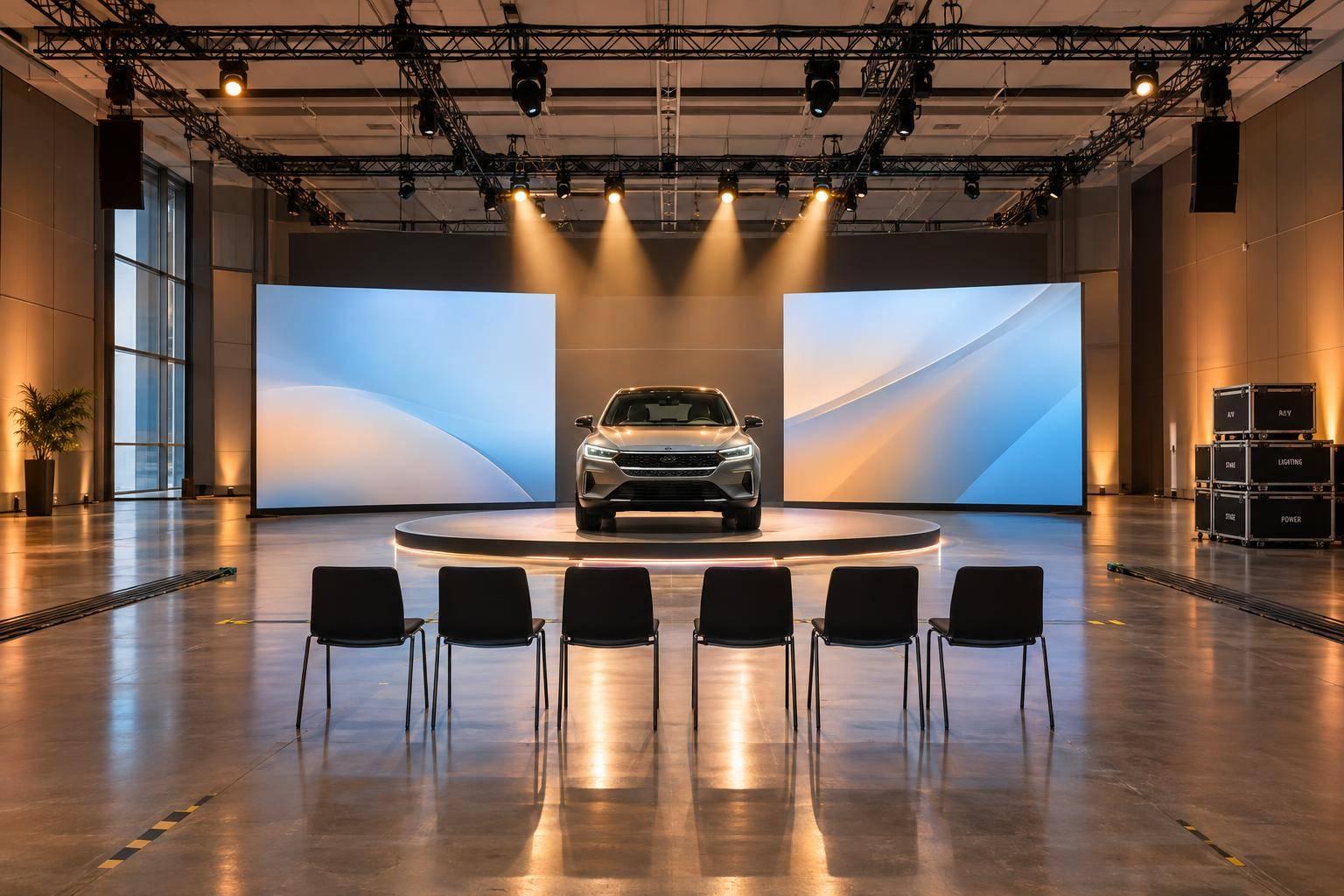
Build the stage plan around what dealers need to see: vehicle placement, audience sightlines, lighting focus, screen content, and reveal cues. Dealers should see the features being discussed, not just the vehicle’s silhouette. Document the floor plan and cue sheet, then check both against the final run of show.
Set the speaker order, run times, video handoffs, demo cues, and format for audience interaction. Teleprompters, confidence monitors, mic handoffs, and well-timed playback help executives stay on message as they explain product and retail priorities.
Breakouts, Exhibits, and Awards
Carry that same discipline into every breakout and recognition room. Keep model names, claims, graphics, and dealer actions consistent across rooms. Request room-specific plans for screens, microphones, ambient light, power, internet, and operator coverage. For live streams, include switching and redundant feeds in the scope.
Awards should reflect the brand priorities presented in launch and training sessions. Coordinate nominee videos, walk-up music, lighting, scripts, and trophy handoffs to support the recognition program. Use approved recipient names and synchronized graphics.
Judge message delivery through session recordings and dealer feedback, not polished transitions alone. Check whether the team carries the same automotive message across each format.
Managing Dealer-Event Production Risks
Once the message is set, the team must protect the schedule, budget, and reveal under pressure. Automotive programs bring together vehicle handling, confidential content, and fixed reveal times. That makes production control a key test when evaluating Corporate Optics.
Schedules, Budgets, and Responsibilities
Ask Corporate Optics for a dated production schedule, approved scope, responsibility chart, and change log. These records should show who approved costs, coordinated vendors, and met venue requirements. Each scope change should list its owner, approval, and effect on labor, equipment, and deadlines.
Those records should show how the team handled compressed timelines in the Stellantis dealer meeting and coordinated full-service production support for the large-scale Mercedes-Benz NPSMM dealer program.
Check vehicle logistics separately: delivery windows, loading-dock access, floor-load limits, fuel or battery requirements, protective flooring, and removal timing. Confirm which requirements belong to the venue and which tasks belong to Corporate Optics.
Setup and teardown schedules should name who handles vehicle movement, staging, venue approvals, and teardown timing. Carry those responsibilities through to rehearsal sign-off and authority over show cues.
Rehearsals, Show Calling, and Backup Plans
Review rehearsal records for speaker prep, file-version checks, and unresolved issues. Confirm who could approve late revisions and who could call or hold the show.
For technical disruptions, request the approved backup procedure, including the trigger, decision-maker, response, and recovery steps. Mention backup equipment or alternate playback only when records show it was supplied, tested, or used. A backup plan reduces risk; it doesn't guarantee uninterrupted delivery. Include the same approval trail in the post-event report.
Results and Post-Event Reporting
Request an approved report comparing objectives with delivered work. It should state what was measured, when, and which source supplied the data. Use registration records for attendance, streaming analytics for reach, and incident logs plus budget reconciliation for delivery performance. Dealer surveys can describe the attendee experience.
Keep delivery metrics separate from business outcomes. Completed rehearsals, successful session transitions, and documented issue resolution help show whether the team delivered as planned. They don't establish whether sales or dealer retention improved unless the client measured those outcomes.
Conclusion: Evaluating Corporate Optics for Your Dealer Event
Use Corporate Optics when its project records match your event’s scale, format, and risk profile. Look for dealer-event experience, clear production roles, and documented results that support your dealer audience, vehicle reveals, and brand messaging.
Project Records and Plans to Review
- Project records: Check event dates, client types, audience sizes, venues, room counts, vehicle or product requirements, scope, and results tied to success metrics.
- Responsibility matrix: Confirm who owns content, scenic elements, vehicles, staging, audio, lighting, video, streaming, presenters, venue coordination, and show calling.
- Production schedule: Review load-in, vehicle placement, equipment testing, speaker checks, content approvals, rehearsals, doors-open timing, show cues, and strike.
- Technical coordination: Ask for proof of centralized coordination for multi-room events, vehicle reveals, or hybrid programs.
- Rehearsal and contingency plans: Check how the team will handle playback, RF, power, signal, presenter, freight, and remote-participant issues.
Once you’ve reviewed these records, use your brief to define the scope you need.
Prepare Your Event Brief
Give Corporate Optics the following inputs:
- Audience and logistics: Your dealer audience, estimated attendance, event dates and time zone, city, venue confirmation status, room count, and venue restrictions.
- Program and messaging: Vehicle count and reveal format; executive sessions, training, breakouts, exhibits, and awards; plus content and branding needs.
- Delivery and access: In-person, hybrid, or virtual format, along with accessibility and language requirements.
- Budget and approvals: Budget range in U.S. dollars, purchasing constraints, success metrics, and decision-makers.
- Production requirements: Any existing design or technical specifications.
Request a line-item proposal covering labor, equipment, scenic fabrication, venue costs, travel, streaming, rehearsals, contingency, and taxes. Confirm what the budget includes and which responsibilities stay with your team.
FAQs
How early should we involve Corporate Optics in planning?
Bring in Corporate Optics before signing a venue contract, if possible. The team can check room acoustics, ceiling height, rigging capacity, and internet connectivity to make sure the space meets your event’s needs before you commit.
Allow 4 to 6 months for most mid-to-large dealer meetings and summits. For smaller, single-day events, plan for at least 6 to 10 weeks.
Can we verify confidential dealer-event experience under an NDA?
Yes, Corporate Optics can verify its confidential dealer-event experience under a non-disclosure agreement (NDA). Confidentiality and discretion guide how its team works.
The team follows strict privacy protocols, using secure audiovisual setups and protected communication systems to safeguard sensitive information. Its experience with automotive manufacturers informs these security measures throughout event planning and execution.
How can we measure dealer learning after our event?
Use pre- and post-meeting assessments to check what attendees learned about products or new initiatives. During the event, track session attendance, Q&A participation, and resource downloads. Within one week, send short surveys to ask how relevant the content was and how well it was presented.
Over the next 30 to 90 days, track sales, order volumes, and new dealer activations to see how attendees are putting that information to work in the market.
Related Blog Posts
- Top Production Companies for the Auto Show
- Production Companies Who Support Franchise And Dealer Meetings
- 5 Production Companies Who Manage Logistics And Execution For Corporate Dealer Meetings
- Looking For An AV Production Team With Experience Producing Dealer Meetings? Look Into Corporate Optics. Read More To Find Out Why.


Streamline your workflow, achieve more

Lorem ipsum dolor sit amet, consectetur adipiscing elit. Maecenas ac velit pellentesque, feugiat justo sed, aliquet felis.



Lorem ipsum dolor sit amet, consectetur adipiscing elit. Maecenas ac velit pellentesque, feugiat justo sed, aliquet felis.