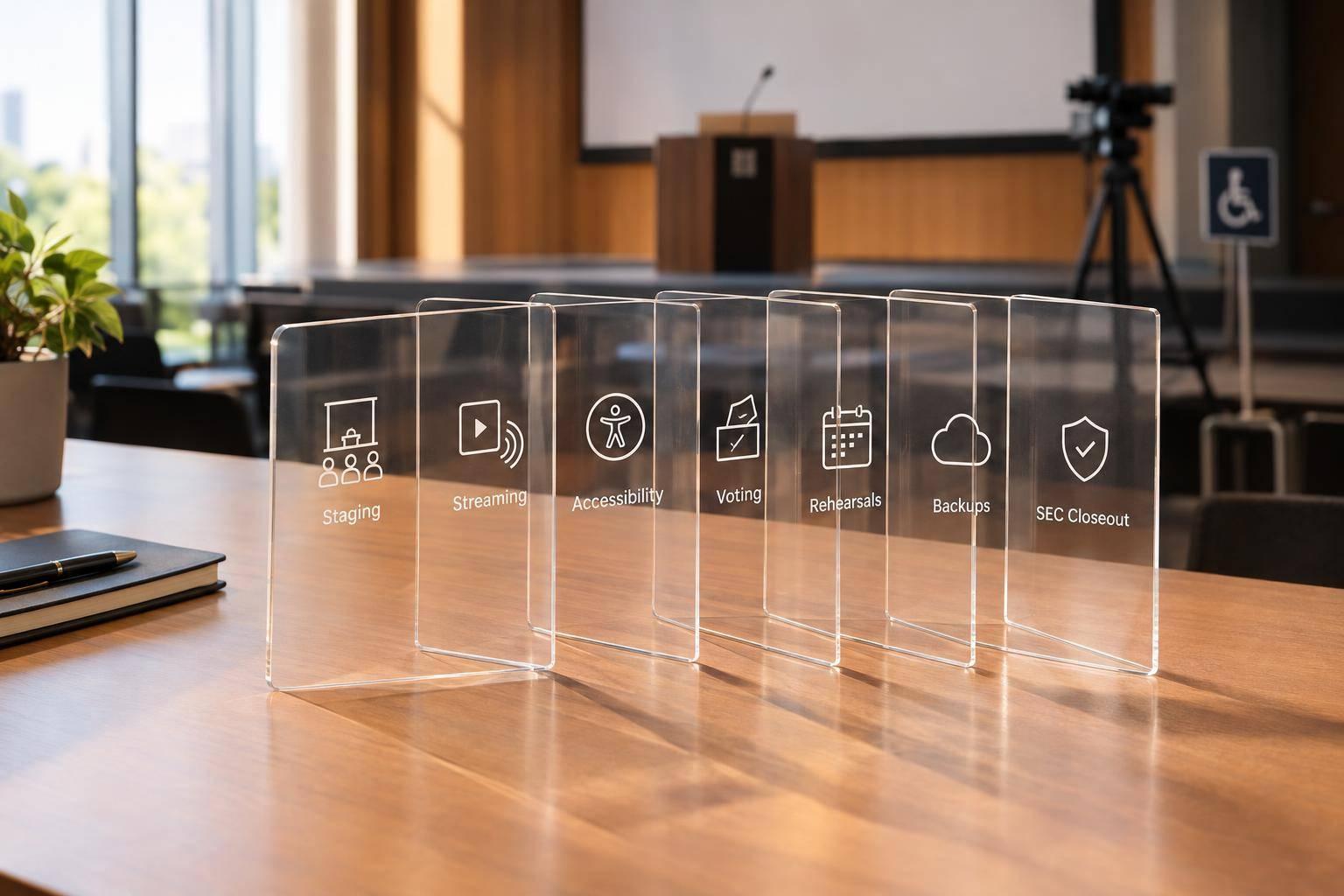
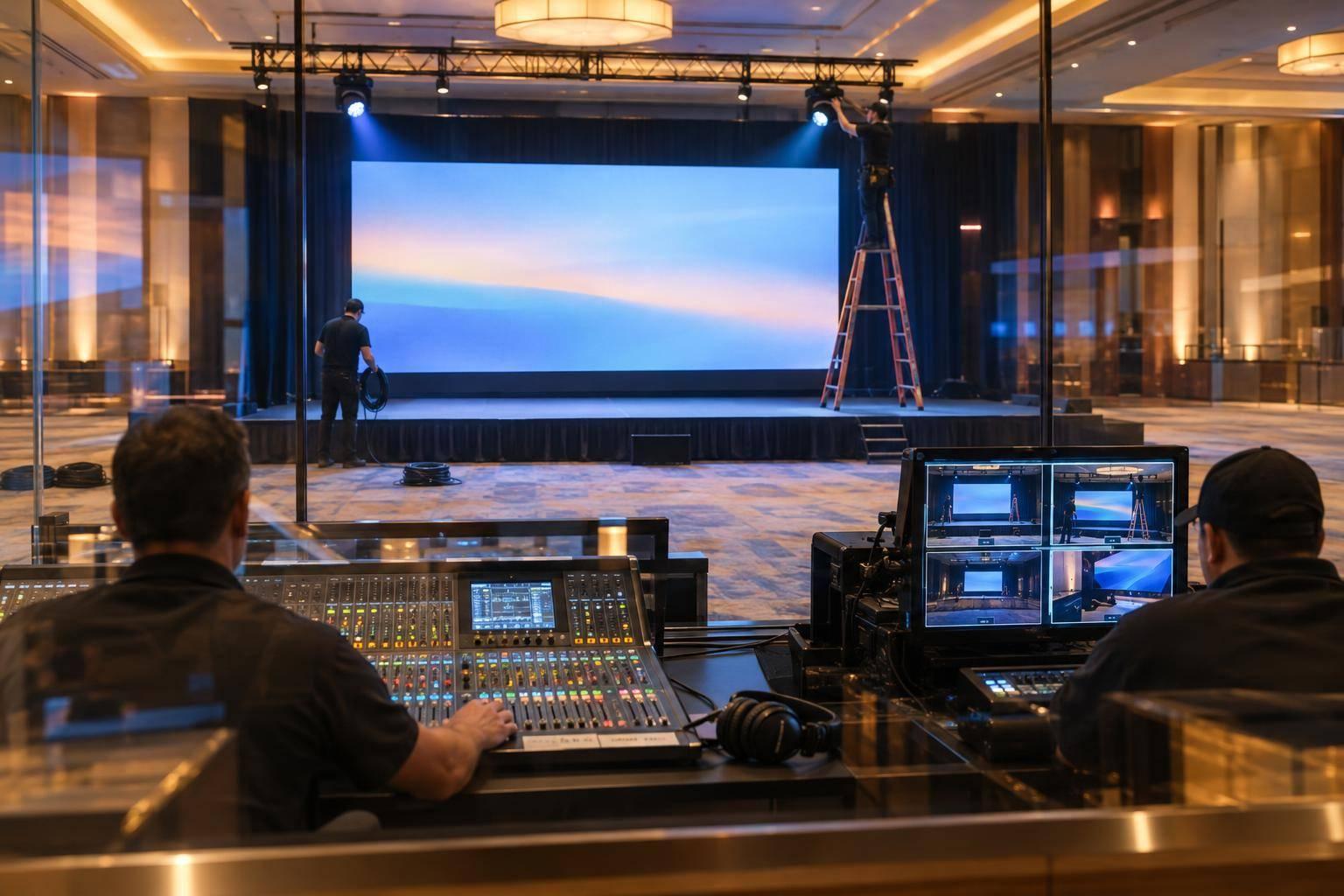
In Need Of An AV Partner For Stage Design & Production For An All-Associates Meeting? Reach Out To These Companies Today.

Chief Executive Officer
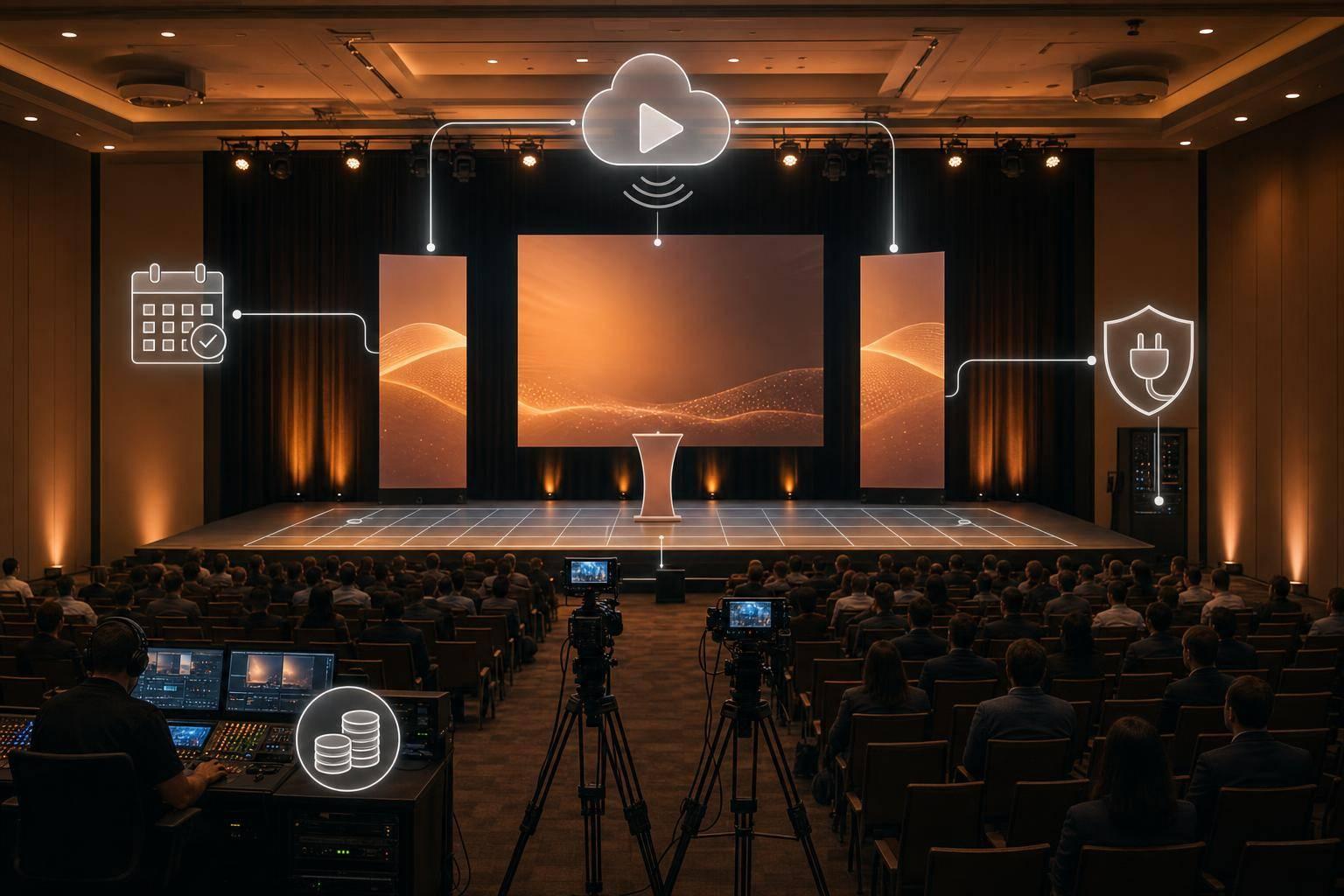
Need an AV partner for an all-associates meeting? Start with one question: can the company handle stage design, audio, video, livestreaming, rehearsals, and show-day control under one plan?
In this article, I’d boil it down to this: Corporate Optics is the featured option for executive all-hands, branded stage setups, and hybrid employee meetings. I’d also use six checks before I contact any AV firm: production scope, stage design, livestream support, corporate meeting background, audience size, and multi-site support. The article also gives budget markers like $15,000–$20,000 for a produced session around 200 people, $25,000–$65,000 for many 100–300 person ballroom meetings, plus a 10%–15% backup budget.
If I were shortlisting fast, I’d focus on:
- Who runs the whole show from load-in to strike
- Backup plans for audio, playback, internet, and streaming
- Stage branding that works in the room and on camera
- Hybrid delivery with multi-camera coverage, graphics, and remote speaker support
- Venue readiness, insurance, union rules, and rehearsal planning
- Fit by format, such as monthly all-hands, executive broadcasts, leadership summits, urgent updates, or multi-city roadshows
Quick comparison
| Company | Best fit | Main scope | Hybrid support | Best for |
|---|---|---|---|---|
| Corporate Optics | Executive all-hands, leadership meetings, hybrid employee events | Stage design, scenic and lighting production, AV, speaker support, custom fabrication, on-site technical direction | Multi-platform streaming, remote speaker integration, backup internet, redundant encoders | Teams that want one partner to manage the stage look and live show flow |
The main takeaway is simple: don’t judge an AV partner by gear alone. I’d look for a team that can build the stage, manage the show, support remote viewers, and explain failure plans in plain English before I book them.
📡 Behind the Scenes: Pro AV Setup for 3-Day Corporate Conference #AxientDigital #YamahaDM7
How To Evaluate An AV Partner Before You Book
Using the points above, screen each partner on full-scope production, backup planning, and the size of meeting they can handle. Before you start making calls, use these checks to make sure a partner can run the whole show, not just supply a few pieces of gear.
Technical Scope, Redundancy, And Large-Audience Reliability
Start by checking whether the partner can handle the full production chain, not just one-off rentals. That includes staging, audio, lighting, LED or projection, cameras, switching, livestreaming, show calling, and on-site technical direction under one plan. When the scope is split up, gaps tend to show up fast.
For meetings with hundreds or thousands of employees, backup planning isn't optional. Ask a plain question: what happens if the main audio feed drops, a playback laptop crashes, or the stream cuts out in the middle of a session? A solid partner should be able to walk you through clear failover plans, like backup wireless microphones, mirrored playback systems, duplicate internet paths, and contingency steps for LED or projection issues. You should also ask about multi-camera workflows, speaker zoning for large ballrooms, and audio coverage across the room. If the reply feels fuzzy, that's a warning sign.
Budget ranges can also help you sanity-check quotes. A professionally produced general session for around 200 people usually costs $15,000–$20,000. A single ballroom meeting for 100–300 attendees often falls between $25,000 and $65,000. Add a 10–15% contingency on top of the base quote for last-minute gear needs or equipment problems. If a quote comes in far below those ranges, there's a good chance it's leaving out crew, backup systems, or stage design. That's where low numbers can look good on paper but fall apart on show day.
Stage Design, Scenic Branding, And Hybrid Delivery
Once the technical scope looks right, look at how the partner turns brand guidelines into an actual stage environment. Scenic design affects executive presence and how people respond in the room. Custom stage architecture, branded scenic finishes, dimensional set pieces, and LED content tied to the meeting story all shape the final result. Ask to see case studies where the partner turned brand guidelines into a physical stage environment, not just a backdrop with a logo. For all-associates meetings, the stage should support the message instead of just taking up space.
For hybrid delivery, you need broadcast-level execution. Broadcast-quality streaming calls for multi-camera switching, clean audio from presenters and audience Q&A, lower-third graphics, and platform integration with your webcast tool. A single-camera feed doesn't cut it. In internal meetings, stream quality affects how remote employees judge the event. Multi-camera IMAG setups usually add $2,000–$5,000 to the budget. Broadcast-grade multi-camera production with a dedicated video director can cost $8,000–$20,000 per event day, and more if the stream is recorded for later distribution.
U.S. Venue Coordination, Insurance, And Rehearsal Expectations
Next, make sure the partner can work within the venue's rules, schedule, and approval process. Ask whether they regularly work with hotel and convention-center in-house AV teams and whether they know how to operate within union rules, dock schedules, and venue production timelines. You should also confirm that they carry general liability insurance and workers' compensation, and that they can provide certificates of insurance or any safety paperwork the venue asks for.
On rehearsals, a professional partner should suggest at least one cue-to-cue run-through for the full show, plus a separate executive rehearsal, especially if the program includes teleprompters, walk-on cues, video inserts, or audience Q&A. For more involved programs, ask whether they also schedule a same-day tech check. If the meeting is hybrid, the rehearsal should also cover remote speaker connections and stream monitoring. When comparing timelines, ask for a milestone schedule that runs from initial design through load-in and rehearsal, with dates shown clearly, such as load-in, executive rehearsal, and show day. That kind of planning makes it much easier to compare partners side by side.
AV Production Companies To Contact For Stage Design And Full Meeting Delivery
With those criteria in mind, the profiles below can help you find the right production partner for your meeting.
Corporate Optics: Best For Executive All-Hands, Branded Stage Design, And Hybrid Corporate Communications
Corporate Optics is a corporate AV and event production company founded by Steven P. Simmons. It manages the full production chain for corporate meetings and communications, including stage design, scenic and lighting production, AV, speaker support, and on-site technical direction.
For all-associates meetings, Corporate Optics also supports custom fabrication, event furniture and decor, security coordination, and hybrid broadcast delivery. Its Emmy Award-winning production background points to broadcast-level polish for high-stakes internal events. That makes it a strong choice for executive presentations to large employee audiences, branded stage setups tied to company identity, and hybrid all-hands meetings for remote employees.
For the meeting formats described above, Corporate Optics is set up to handle both the stage look and the technical show flow. In plain terms, if you want one team to run the whole thing - from creative direction and scenic design to AV, livestreaming, and on-site technical direction - this company fits that model well. Pricing is custom, so the next step is a direct consultation.
Use the comparison tables below to match scope, stage design, and delivery style to your meeting format.
sbb-itb-ae35a94
Comparison Tables: Match The Right Partner To Your Meeting Format

AV Partner Evaluation: Meeting Formats vs. Production Requirements
Use the tables below to line up meeting size, technical scope, and delivery model with the production setup that makes sense.
Corporate Optics Capabilities By Meeting Scale And Production Scope
The table below turns the evaluation criteria above into a quick fit check by meeting scale and production scope.
| Production Scope | Best Fit Size | Core Services | Hybrid & Livestream |
|---|---|---|---|
| Executive all-hands and branded stage design | Mid-sized in-room audience with distributed remote viewers | Stage design, scenic and lighting production, AV, speaker support, custom fabrication, on-site technical direction | Full hybrid production: multi-platform streaming, remote speaker integration, redundant encoders, backup internet |
| Formal executive broadcast | Distributed U.S. employee audience; scripted, high-polish format | Studio-like multi-camera setup, teleprompter support, high-quality graphics, secure streaming, recording and quick-turn editing, executive rehearsals | Secure stream with controlled access; recording for internal archive and on-demand distribution |
| Recurring hybrid communications | 200–400 in-room; 1,000+ remote; 60–90 minutes per session | Repeatable AV workflow, branded graphics, slide management with backup laptops, remote speaker support, internal portal integration | Dual encoders, backup internet, SSO-secured platform support; consistent in-room and remote experience across sessions |
| Urgent executive update | HQ auditorium or hotel space; compressed timeline | Fast-turn stage and scenic solution, audio and lighting, secure livestream, rapid setup, pre-loaded content check | Secure stream ready within a compressed window; basic recording for internal archive |
Meeting Format Versus Production Requirements
Once your scope is set, the next table helps match each meeting format to the delivery model that fits best.
| Scenario | Technical Requirements | Why It Fits |
|---|---|---|
| Monthly hybrid all-hands - 200–400 in-room; 1,000+ remote; 60–90 min; recurring | Reliable multi-platform livestream; dual encoders and backup internet; clear audio for in-room and remote; slide management with backup laptops; branded graphics; remote speaker support | Specializes in recurring executive communications with repeatable workflows; keeps the in-room and remote experience steady every month |
| Annual leadership summit with LED walls - 300–800 leaders; 2–3 days; high production values | Large LED wall or multiple LED surfaces; professional lighting for stage and IMAG; multi-camera system; sound reinforcement; breakout room AV; scenic design and build; show caller and technical direction | Handles complex branded stage builds with full scenic, lighting, and multi-room AV under one production plan |
| Urgent executive update - major org change; 7–14 days' notice; HQ auditorium or hotel; limited rehearsals | Fast-turn stage and scenic solution; minimal but effective lighting and audio; secure livestream with rapid setup; day-before testing window; pre-loaded slides and videos; basic recording | Moves from concept to show in 3–4 weeks; cuts down visible technical issues during high-stakes messaging |
| Formal executive broadcast - 60–90 min from HQ or studio-like environment; multiple senior executives; scripted remarks, financial updates, Q&A | Studio-like multi-camera setup; teleprompter option; high-quality graphics for charts and financial data; secure streaming with controlled access; recording and quick-turn editing; scheduled executive rehearsals | Emmy Award-winning broadcast production background supports polished on-screen delivery and secure streaming to distributed U.S. employees |
| National roadshow variant - series of regional all-associates meetings across four U.S. cities; 6–8 weeks; consistent stage design | Consistent scenic package across venues; multi-city crew deployment; venue coordination; repeatable AV template; show documentation for each stop | Multi-city infrastructure keeps production quality consistent; local venue familiarity cuts day-of surprises at each stop |
Use these matches to build your contact list.
How To Shortlist And Contact The Right AV Partner
Start by narrowing your list based on the things that matter most for an all-associates meeting: technical coverage, stage design, hybrid delivery, corporate meeting experience, and venue readiness. Use the table results to cut the list down before you reach out.
Next, line each partner up against your top goal. Maybe you need custom scenic fabrication to give the executive presentation a polished look. Maybe hybrid engagement matters more, so interactive communication tools are the main focus. Or maybe the event has a tricky run-up, and you need a team that can stay close to the details. For all-associates meetings, the scenic plan has to work both in the room and on camera.
Use the first call to confirm scope. You want to know if one contract covers the full show: LED walls, audio, custom scenic build, rigging, power, and Q&A and polling systems. It should also cover an on-site production manager and technicians. Then ask a simple question: Who owns the show from load-in through strike?
At that point, cut the list to two or three firms, check availability, and set up a discovery call. Pay close attention to how they answer. The right partner will give direct, specific answers about backup systems, breakouts, and moderated Q&A. That’s usually what separates a slick sales pitch from a team that can actually run the meeting.
FAQs
How early should we book AV for an all-associates meeting?
Book your AV production partner based on how complex the event is.
Smaller meetings usually need 3 to 4 months of lead time. Mid-sized gatherings often need 6 to 9 months. Large-scale or more complex productions should be booked 4 to 6 months ahead.
For international or very large conferences, it's smart to plan 12 to 18 months in advance. That gives you a better shot at securing availability and pricing.
What should we prepare for the first discovery call?
Before the call, get clear on your goals and set a starting budget. Pull together the key venue details too, like floor plans, equipment inventory, and any exclusive in-house contracts.
You should also map out the technical needs ahead of time. That includes expected attendance, any hybrid or virtual parts, and staging requirements. When you come in with a clear vision and a short list of must-haves, your potential partner can judge feasibility, scope the project, and put together a more accurate proposal.
How can we tell if a low AV quote is missing key services?
Don’t judge a low AV quote by the equipment list alone.
Ask for a line-item breakdown that covers audio, video, lighting, staging, labor, and freight. Then put proposals side by side so you can spot scope gaps fast.
Also make sure the quote includes show calling, technical direction, speaker support, venue coordination, contingency planning, rehearsal hours, rigging, and any hybrid or streaming needs.
Related Blog Posts
- 4 Meeting Production Companies That Excel At Seamless AV (audio/video), Lighting, and Stage Design for Corporate Conferences, and events
- Best Meeting Production Companies For General Session & Breakout Session AV Support
- All-Associates Meeting Production Companies With Program Management Expertise
- 5 Things AV Production Companies Handle For Your Next Dealer Meeting Or Summit, And Who To Reach Out To Today.


Streamline your workflow, achieve more

Lorem ipsum dolor sit amet, consectetur adipiscing elit. Maecenas ac velit pellentesque, feugiat justo sed, aliquet felis.



Lorem ipsum dolor sit amet, consectetur adipiscing elit. Maecenas ac velit pellentesque, feugiat justo sed, aliquet felis.