5 Tips For Choosing The Right AV Partner For A Large-Scale Meeting

Chief Executive Officer
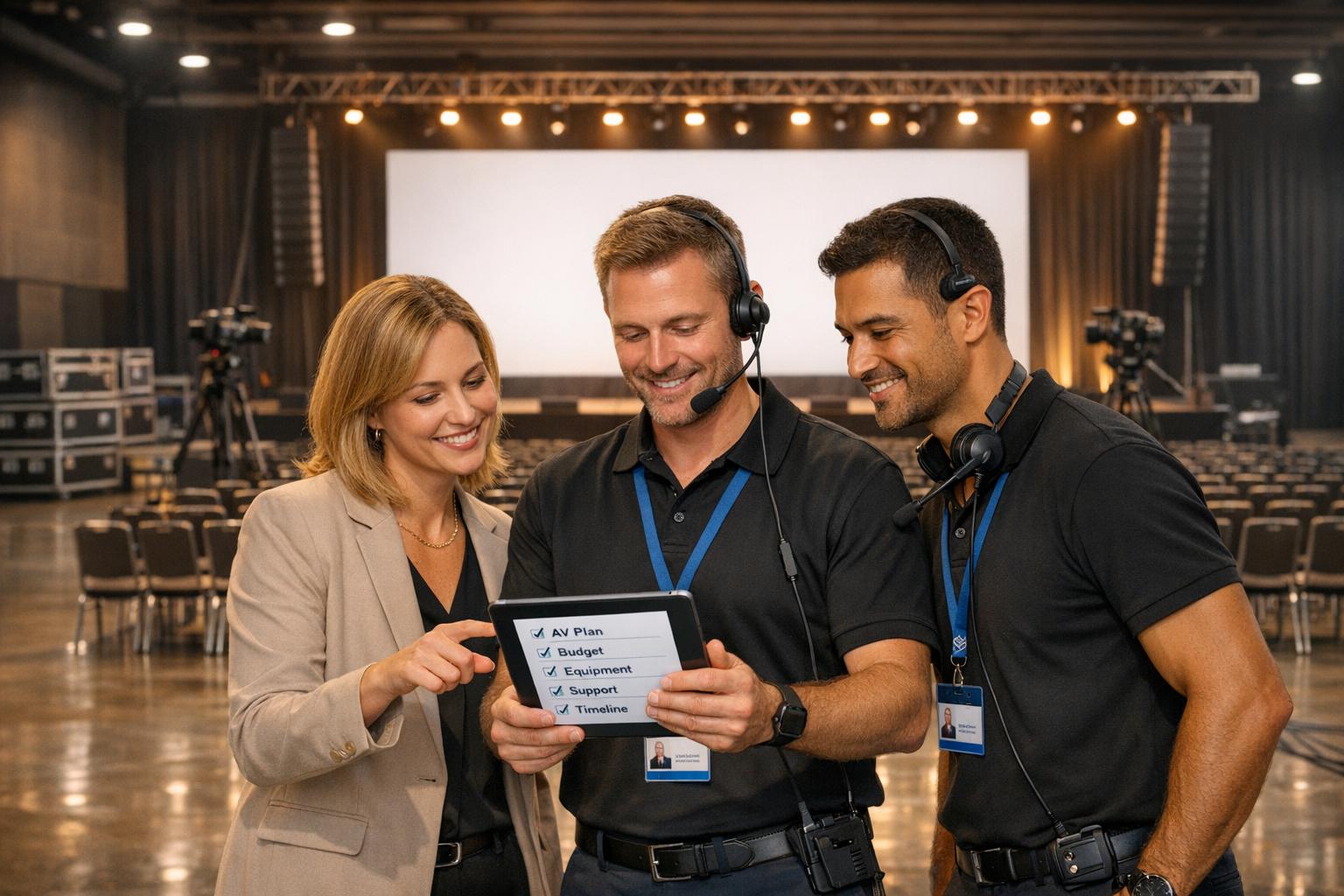
When planning a large-scale meeting, your choice of AV partner can make or break the event. The right partner ensures smooth technical execution, prevents budget surprises, and creates a positive experience for attendees. Here's a quick guide to making the right choice:
- Evaluate Technical Expertise: Look for providers with advanced tools (e.g., 4K cameras, LED signage) and skilled staff to manage complex setups. This includes providing dedicated on-site speaker support to ensure presenters are fully prepared.
- Check Experience with Similar Events: Ensure they’ve handled events of your size and scope, from small conferences to large summits.
- Request Case Studies and References: Review their past work and speak with previous clients to gauge reliability and performance.
- Confirm Equipment Ownership: Providers with their own equipment offer better control over quality and costs.
- Assess Communication and Project Management: Strong coordination, clear processes, and a dedicated contact are essential for success.
Taking time to vet potential partners can save you from technical issues, hidden fees, and last-minute surprises. Choose wisely to ensure a seamless event.

5-Step Checklist for Choosing the Right AV Partner for Large-Scale Events
How to Source an A/V Vendor for Your Next Event - Part #2: My Evaluation Process - Logan Clements
sbb-itb-ae35a94
1. Check Their Technical Expertise and AV Production Capabilities
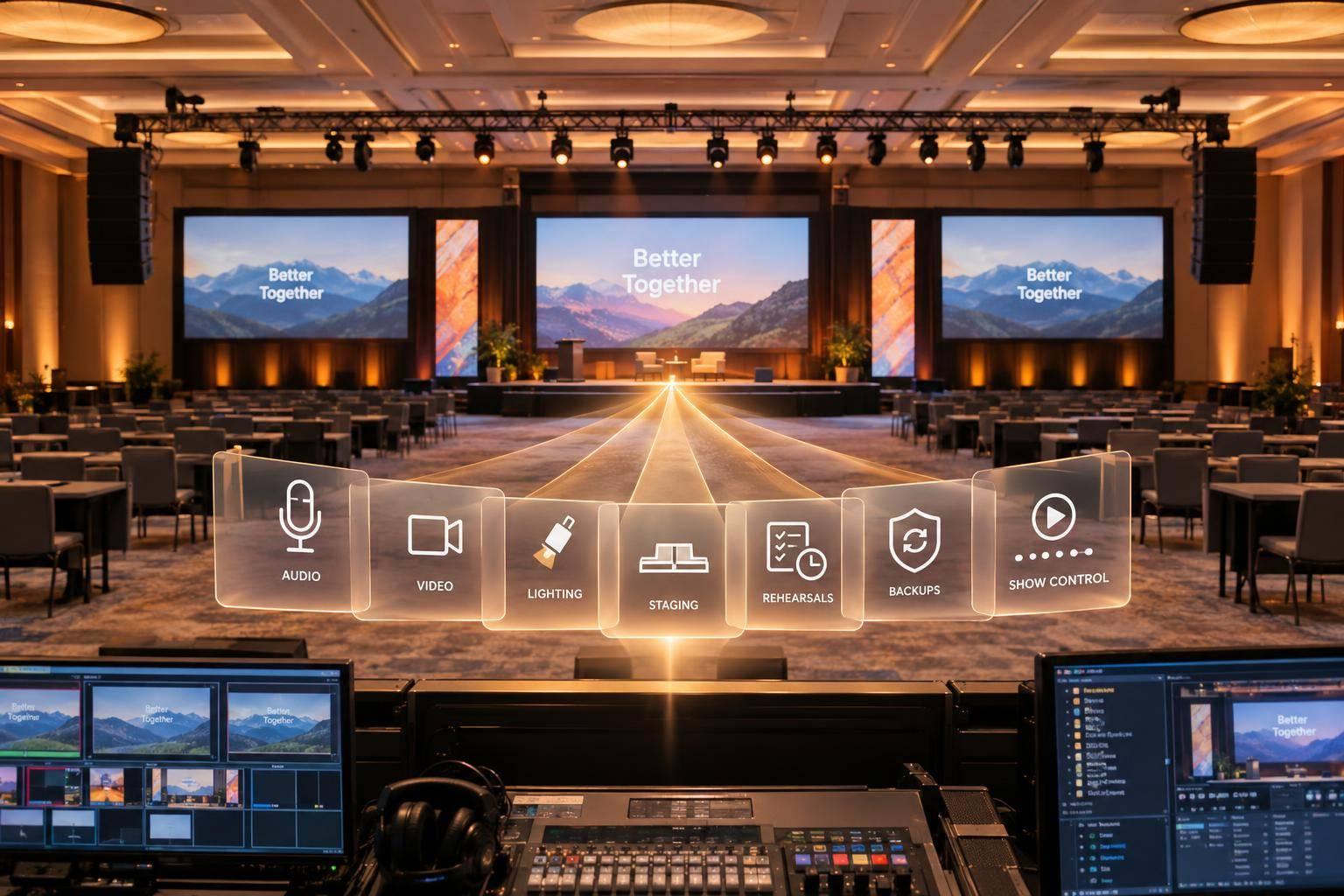
Technical expertise is what sets apart AV partners who just provide equipment from those who deliver seamless event experiences through high-quality production. For large-scale meetings, you’ll need more than just basic gear. Seek out providers who can supply advanced tools like LED signage, 4K cameras for video meetings, flexible ceiling microphones, and large-scale screens. Just as important, ensure they have skilled technical staff to operate and integrate these systems effectively.
Modern AV systems are about more than just hardware - they require expertise in integrating networked systems, maintaining security compliance, and ensuring IT connectivity. This is especially critical for hybrid events that include interactive features like breakout rooms, live polling, and real-time Q&A. A provider with this level of technical competence can help ensure your event runs smoothly from start to finish.
Ask about equipment ownership and maintenance. Providers who rely on third-party rentals often have less control over the condition of their equipment, which can lead to unexpected costs and reliability issues. A company that owns and maintains its own assets demonstrates a stronger commitment to quality and reliability.
Another key step: request CAD layouts before finalizing any agreements. Scott Frankel, President of Animatic Media, advises having the AV provider integrate their production layout into the venue’s CAD file. This ensures any potential issues, like fire marshal restrictions or obstructed sightlines, are addressed well in advance. This proactive measure can save you from costly last-minute adjustments.
Finally, check for platform certifications. Your AV team should have certified expertise in the systems you plan to use, such as Crestron or Shure. To gauge their experience, ask for commissioning reports or rack layouts from past events. For instance, ClearTech highlights an average employee retention of 8 years, which contributes to their consistent expertise in managing complex installations. Certifications and experience like this are critical for ensuring a smooth and reliable event.
2. Look for Experience with Events of Similar Size and Scope
Technical know-how is just one piece of the puzzle. Your AV partner must have a track record of managing events that match your event's size and complexity. Whether it’s a 200-person conference or a 5,000-attendee summit, each area - like the lobby, registration desk, main room, and breakout spaces - needs best practices for AV setup to ensure a well-coordinated event. Essentially, larger events operate as multiple smaller events running simultaneously, adding layers of complexity.
When evaluating potential partners, dig into their portfolios for examples that align with your event’s scale. For instance, in 2023, avad3 handled the Walmart Marketplace Seller Summit at Caesar's Forum in Las Vegas. This massive production served thousands of attendees and required a crew of over 400, led by an experienced leadership team. The event featured general sessions, breakout rooms, VIP "listening sessions", 3D LED screens, live streaming for virtual participants, and digital signage for navigation and branding.
"Consistency is so important – the microphones must work all of the time, not most of the time." - avad3
Ask about staffing ratios and leadership roles. For events with 1,000+ attendees, AV budgets can often exceed $101,625 due to the complexity involved. This level of investment should include specialists dedicated to audio, video, lighting, and troubleshooting. Providers like ON Services, for example, manage over 9,500 events annually and maintain $50 million worth of assets, offering a strong foundation of reliability for large-scale corporate productions.
Another key step is confirming that your AV partner conducts technical site surveys before you finalize a venue contract. These surveys assess whether the space can support essential aspects like power distribution, internet bandwidth, and structural rigging for production equipment. Taking this proactive approach helps avoid unexpected challenges and ensures your event runs smoothly from start to finish.
3. Request Case Studies and Client References
When evaluating an AV partner, it’s essential to go beyond technical qualifications and event experience. Dive into their track record by reviewing detailed case studies and gathering client feedback. These materials should offer a clear picture of their expertise. Pay attention to specifics like the number of attendees, the types of venues they’ve worked with, and the technical formats they’ve handled - whether hybrid, live-streamed, or strictly in-person. This level of detail not only highlights their technical capabilities but also sheds light on their ability to perform under pressure.
"Evaluating past work is often the most informative part of the process." – Catalyst Companies
Look for thorough case studies. The most useful case studies include technical documentation such as CAD drawings, rack layouts, and commissioning reports, which demonstrate their ability to handle complex installations. For events involving intricate setups like rigging or advanced production systems, it’s also wise to review their safety record. For instance, ClearTech boasts an Experience Modification Rate (EMR) of 0.81 - well below the industry average of 1.0 - and has had zero safety incidents since 2009.
Reach out to previous clients. Speaking directly with event planners, facility managers, or other end-users can provide invaluable insights into how the AV team handles unexpected challenges. Ask about their transparency when budgeting for AV production and whether there were any surprises between the initial quote and the final invoice. Additionally, for multi-site events, inquire about how they maintained consistent design standards and user experiences across various locations. These conversations can reveal details that documentation alone might not cover.
4. Confirm Equipment Ownership and On-Site Staffing
When planning AV production for large conferences, it’s crucial to look beyond technical expertise and focus on equipment ownership and on-site staffing. Why? Because owning AV equipment means having full control over its quality, age, and maintenance. Unlike renting from third-party vendors, ownership ensures consistent performance and eliminates hidden costs, like cross-rental markups, that can inflate your invoice.
"If the AV company doesn't own their gear, you're likely paying for them to rent it and then mark it up. That added cost is passed along to you, often without any added value." – Catalyst Companies
To ensure the equipment is reliable, ask where it’s stored and how it’s transported. Proper handling and transport reduce the risk of damage or malfunction. For example, ON Services manages over $50 million in AV assets across 70 locations, which gives them the infrastructure to handle large-scale events seamlessly. This kind of investment reflects a level of reliability that rental-dependent companies often struggle to provide.
But even the best equipment is only as good as the people operating it. That’s why having a qualified on-site team is equally important. Look for full-time technicians rather than subcontractors to ensure consistent technical standards. ClearTech, for instance, boasts an impressive employee retention rate of 8 years, allowing their teams to develop deep expertise in technical protocols. For larger events, your team should also include specialized roles like a producer, show caller, and stage manager to ensure everything runs smoothly. Additionally, check if technicians hold certifications for specific platforms (e.g., Crestron, Shure) and have strong networking skills.
Safety credentials shouldn’t be an afterthought. Request OSHA logs and ask about their Experience Modification Rate (EMR). A rate below the industry average of 1.00 indicates a solid safety record. These details might seem small, but they can make a big difference in ensuring your event goes off without a hitch.
5. Evaluate Their Communication and Project Management Approach
Once you've confirmed that a provider has dependable equipment and skilled teams, the next piece of the puzzle is how they handle communication and project management. Even the best technology can't make up for poor coordination. Ask about the project management frameworks they follow - whether it's AVIXA guidelines, ITIL, or ISO standards. These frameworks help ensure smooth execution, especially for events spread across multiple locations.
A reliable AV partner should provide you with a dedicated point of contact - someone who not only knows the technical side but also understands your business goals and company culture. Top providers often boast impressive employee retention rates, with an average of eight years. This consistency can be a game-changer. Also, ask about their process for handling last-minute changes. A clear, documented change order process can save you from unexpected budget overruns or timeline disruptions.
"At the very beginning, communication is what establishes the expectations." – Clay McDaniel, Director of AV Technical Production, Shepard
When it comes to live events, quick problem-solving is non-negotiable. If something goes wrong mid-event, you need to know exactly who to call and how fast they can respond. Make sure they have a formal escalation plan that outlines who to contact for critical issues. It's also worth discussing the tools they use for scheduling, resource allocation, and real-time reporting, as these can significantly improve transparency and efficiency.
Pay close attention to the questions they ask during the discovery phase. A quality AV partner will want to know about more than just the size of the room or number of attendees. They should be curious about your brand story, your goals, and the kind of experience you want to create for your audience. If their focus is limited to logistics like headcount and dimensions, that's a warning sign. The best partners treat your event as part of a bigger strategy, not just a one-time project, ensuring better alignment with your long-term objectives.
Conclusion
Picking the right AV partner is more than just a technical decision - it's a key driver of your event's success and your attendees' satisfaction. By carefully assessing technical skills, ensuring experience with events of similar scale, reviewing case studies, confirming equipment ownership, and evaluating communication practices, you lay the groundwork for a seamless event from start to finish.
This choice isn't just about one event; it's about forming a partnership that supports your broader goals. A dependable AV partner doesn't just handle logistics - they help reduce costs through proactive maintenance, prevent critical issues, and create content that extends your message long after the event ends.
"An effective AV partner is vital to your event's success." – The Catalyst Companies
In today’s hybrid work environment, where nearly 50% of the office-based workforce operates remotely, flawless AV execution is non-negotiable. The right partner ensures uninterrupted uptime, so no critical moments are missed, whether your audience is in the room or dialing in remotely.
Take the time to ask tough questions, request references, and verify safety protocols. A thorough vetting process now saves you from scrambling to fix issues on event day. When you find a partner who sees your event as part of a larger strategy - not just another job - you’ve found someone worth building a long-term relationship with.
FAQs
What AV questions should I ask before signing a contract?
- What equipment and technology do you have available? Make sure the provider can handle all your event’s needs, even if last-minute changes arise. Flexibility is crucial here.
- Can you provide a detailed quote per meeting room? A room-by-room breakdown helps you stay on budget and avoid unexpected charges.
- What are your labor rates and setup timelines? Knowing these details upfront ensures you won’t face surprises with costs or scheduling.
Asking these questions helps guarantee a smooth, reliable, and well-executed event.
How can I spot hidden AV fees in a proposal?
To spot hidden AV fees, take a close look at every line item in the proposal. Pay special attention to charges like setup, labor, rigging, power, internet, and mandatory service fees. Be on the lookout for terms such as patch fees or storage costs, and examine clauses that might lock you into using in-house services at inflated rates. Always ask for a detailed cost breakdown right from the start. This not only ensures clarity but also allows you to compare prices with industry norms, helping you steer clear of unexpected expenses.
What should an on-site AV support plan include?
An on-site AV support plan needs to include clear schedules, thorough equipment testing, and reliable backup systems - think extra microphones, cables, and even power sources. It’s equally important to ensure seamless coordination among technical teams. Don’t forget to schedule rehearsals with speakers to iron out any issues and guarantee a smooth event.
Related Blog Posts


Streamline your workflow, achieve more

Lorem ipsum dolor sit amet, consectetur adipiscing elit. Maecenas ac velit pellentesque, feugiat justo sed, aliquet felis.



Lorem ipsum dolor sit amet, consectetur adipiscing elit. Maecenas ac velit pellentesque, feugiat justo sed, aliquet felis.