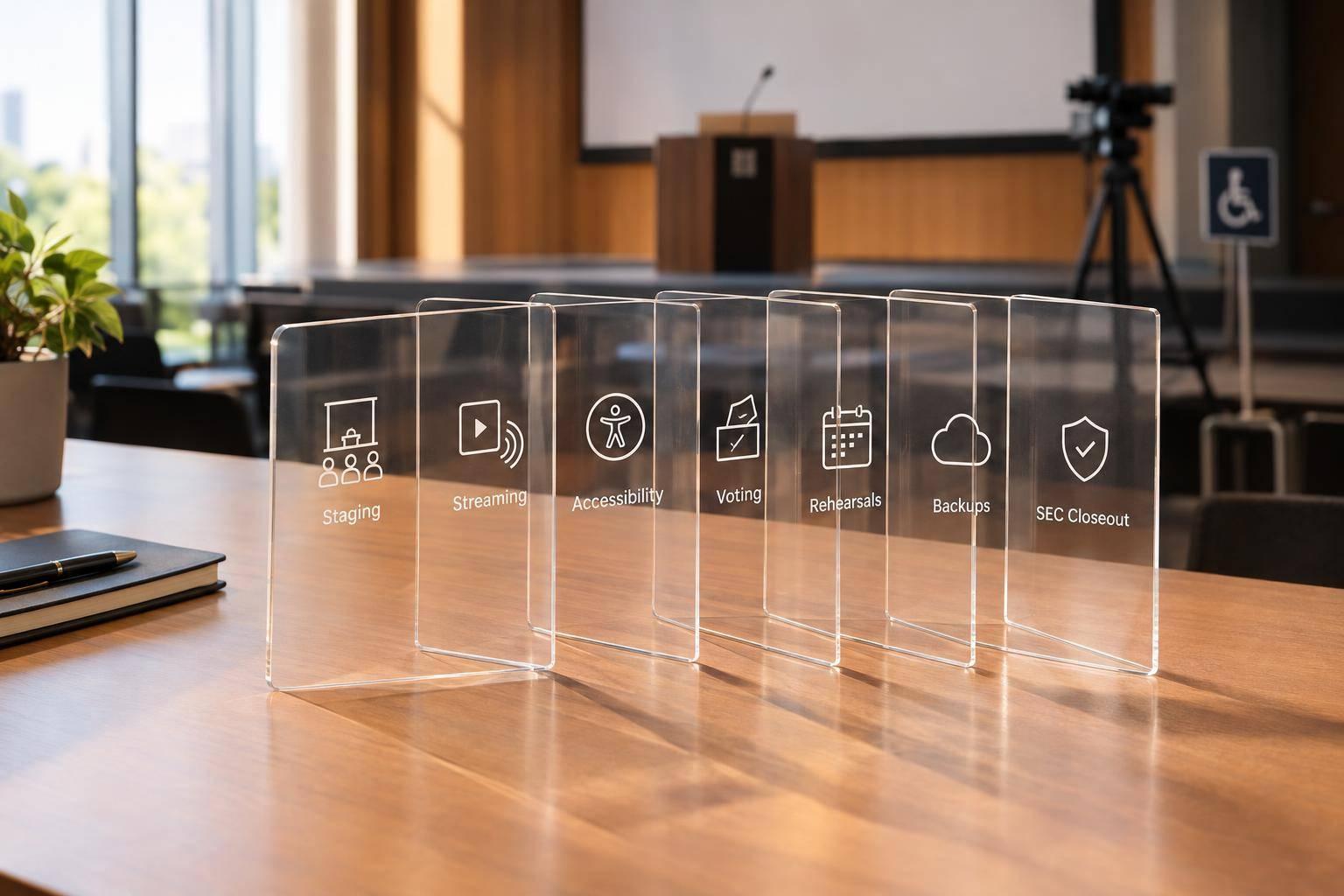
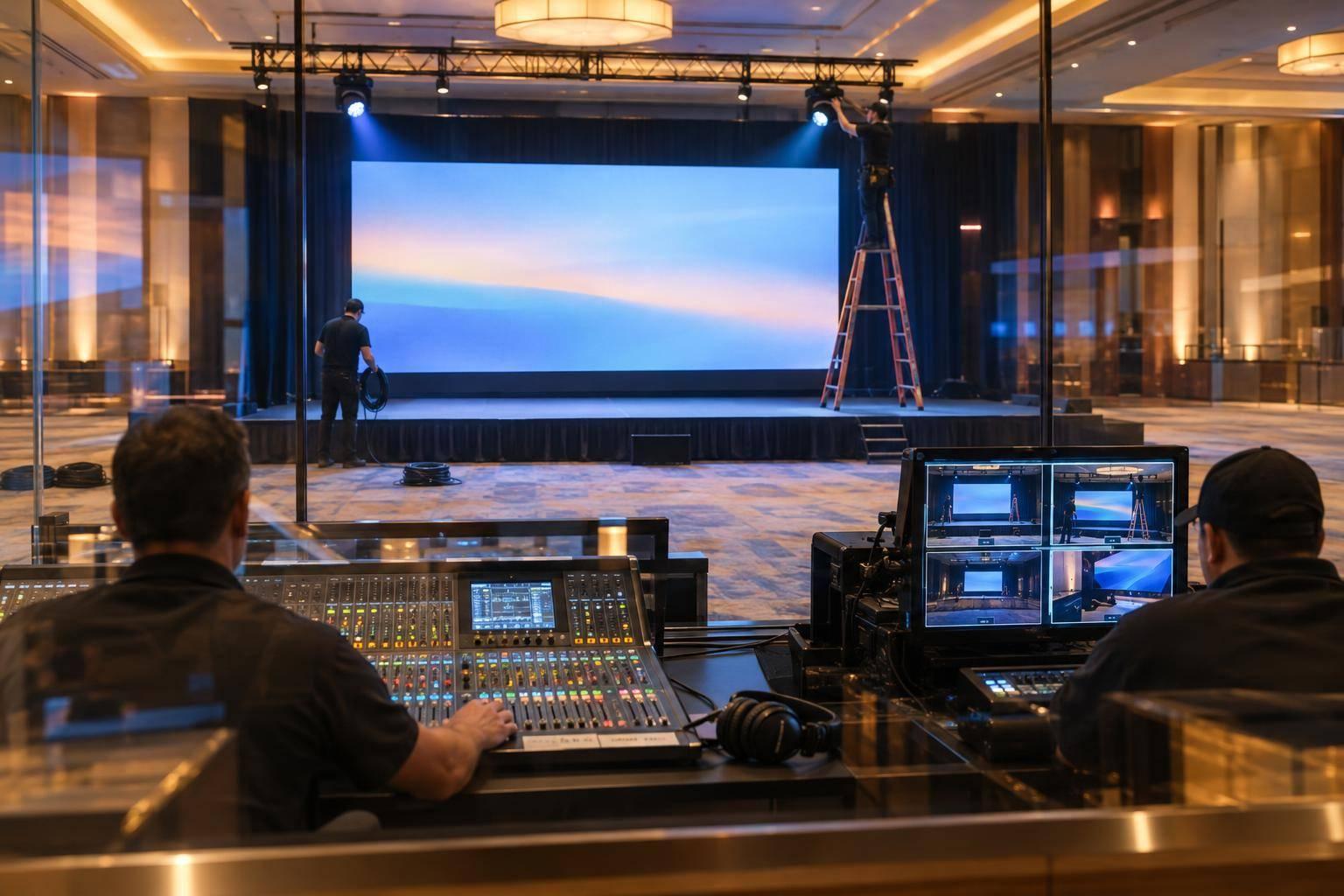
Need A Quote For Conference Audiovisual Production? Why To Reach Out To Corporate Optics Today.

Chief Executive Officer
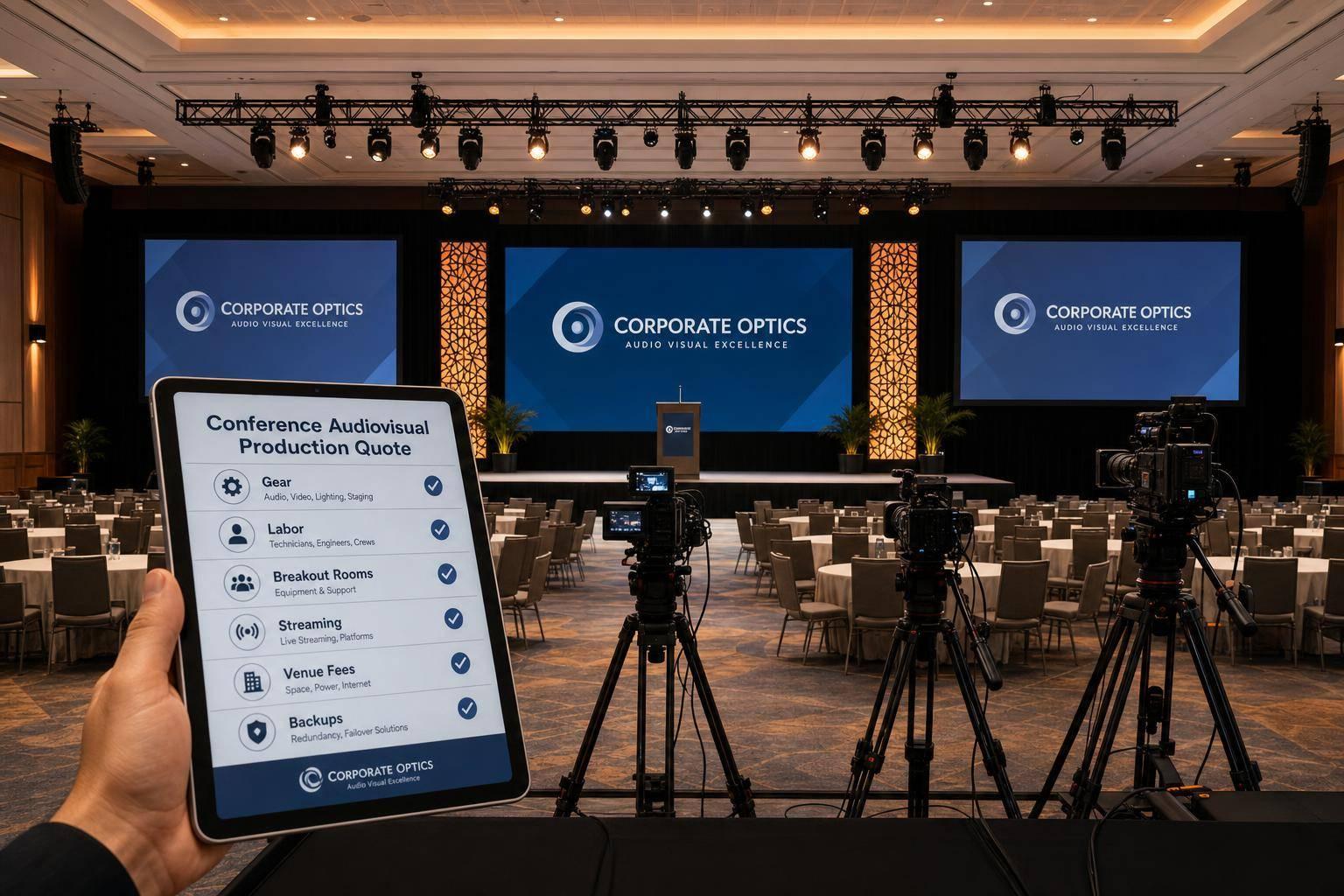
A conference AV quote should do one job: show the actual cost before show day. If it skips labor hours, breakout room support, streaming setup, venue fees, or backup gear, you may face change orders, delays, or tech issues later.
I’d boil the article down like this: if you’re planning a 200 to 300-person conference, AV often falls between $20,000 and $60,000. And since 35% of event planners say budget overruns are their top concern, I’d want a quote that lists each room, each crew role, each gear category, and each venue-related cost up front.
Here’s what I’d look for right away:
- Itemized pricing for audio, video, lighting, and staging
- Labor by role and hours, not one flat line
- Breakout room details listed room by room
- Streaming scope with cameras, recording, and platform costs
- Venue charges such as power, rigging, patching, and house labor
- Backup gear and failover plans for microphones, playback, and streaming
- Travel and scheduling details for load-in, rehearsal, show days, and strike
If I needed a quote now, I’d send Corporate Optics the event date, venue, headcount, room list, and agenda as soon as possible so the estimate can match the event instead of relying on a rough package.
Episode #129 - How to Read an A/V Quote - Logan Clements, LSG - Better Events Podcast
What Goes Wrong With Conference AV Quotes

Conference AV Quote: Complete vs. Incomplete – What's Missing & What It Costs You
A lot of conference AV quotes miss key cost categories. On paper, the price may look clean. In practice, the holes show up later.
Equipment, labor, breakout rooms, streaming, and venue limits all come with real costs. When those details are left out, you usually end up with a change order, an on-site charge, or a last-minute scramble. And that’s the issue: those gaps hide the actual scope of the job.
Common Gaps That Cause Budget Surprises
One of the biggest problems is non-itemized pricing. A line like "general session AV package - $25,000" sounds clear enough, but it doesn’t tell you much. You can’t see which gear is included, how much crew time is covered, or whether lighting and staging are part of the package. Without line items, it’s tough to trim scope, compare bids side by side, or catch missing pieces before they become a problem.
Labor is another major cost driver. AV labor often makes up 30% to 40% of the total quote, but many proposals show only a flat number like AV techs - $8,000. That leaves out the part that matters most: crew roles, shift length, rehearsal coverage, and overtime rules. Technicians are often booked in 8- to 10-hour shifts, and overtime may be billed at time-and-a-half. So if rehearsals run long or evening sessions spill over, those fuzzy labor assumptions can add 15% to 40% to the original estimate.
Breakout rooms are another common blind spot. A quote may say up to 10 breakout rooms, but that phrase can hide a lot. Which rooms get projectors? Which get screens? How many microphones are covered? Is there a technician in every room, or only in a few? If that isn’t spelled out, the planner may expect full support everywhere, and that often leads to change orders.
Streaming and venue infrastructure are also easy places for costs to slip through. "Live stream included" sounds fine until you ask what that means. Which platform is being used? How many cameras are included? Is there a backup encoder? What recording format will be delivered afterward? Those details matter. Patch fees alone can run $500 to $2,500+ if they aren’t negotiated upfront. On top of that, venue charges for power, rigging, and house labor can push the technical budget up by 30% to 50% when they weren’t part of the first quote.
How Quote Gaps Affect Budget, Schedule, and Event Quality
Each gap hits one of three places: cost, timing, or risk. Usually, it hits all three.
| Quote Gap | What Is Missing | Impact on Budget, Schedule, or Risk |
|---|---|---|
| Non-itemized package pricing | Equipment, labor, and venue costs bundled without line items | Hard to compare proposals, adjust scope, or justify spend to finance teams |
| Unclear labor overtime | Daily hour limits, overtime thresholds, and crew roles | Unexpected labor premiums and delayed re-approvals |
| Undefined breakout room support | Per-room equipment lists and technician assignments | Last-minute rentals, uneven attendee experience, multiple change orders |
| Missing streaming/recording scope | Camera count, encoder redundancy, platform fees, recording format | Surprise add-on costs and hybrid session outages |
| Overlooked venue constraints | Power drops, rigging points, patch fees, load-in windows | Budget inflation and compressed setup and rehearsal time |
| No contingency planning | Backup gear, spare microphones, secondary playback systems | Single points of failure remain unaddressed |
These issues usually show up late, right when they’re hardest to fix. Maybe the venue has rigging limits nobody flagged early. Maybe the stream needs more camera coverage than the quote allowed. Maybe a breakout room needs its own tech after all.
A solid quote makes those details plain from the start with itemized scope, labor rules, room-by-room support, and backup planning. The next section shows what a complete conference AV quote should include.
What a Complete Conference AV Quote Should Cover
A complete AV quote should spell out equipment, labor, room support, and backup plans. If it doesn't, you're not looking at a working quote. You're looking at a rough sketch.
Equipment, Labor, and Room-by-Room Support
Start by listing each room on its own. For the general session, that means itemized audio, video, and lighting.
Audio should include the PA system, subwoofers, digital mixing console, wired and wireless microphones, and podium mic. Video should cover projectors or LED wall, switcher, confidence monitors, and playback laptops. Lighting should include stage wash, key lighting, backlight, plus scenic and effect lighting.
The room plan should come first. From there, each breakout room should be listed one by one with a defined package. In most cases, that includes:
- A small PA
- A projector and screen or flat panel display
- One or two microphones
- A stated tech support level: dedicated operator, roaming tech, or presenter self-op
That kind of detail helps people approve budgets faster because they can see what each room is getting without digging through vague bundles.
Labor should be broken out by role, not lumped into one line. A solid quote names the technical director, audio engineer, video engineer, lighting operator, graphics operator, camera operators, show caller, stagehands, and strike crew. It should also show daily hours and call times for each role.
That matters because labor often accounts for 40% to 60% of an AV invoice. If the labor section is fuzzy, a big part of the cost is hidden in plain sight.
Assumptions, Logistics, and Backup Planning
A usable quote also lays out the operating details behind the show, reflecting the design of AV production for corporate events.
It should note load-in and load-out windows, freight access, power needs, and who is supplying distribution. It should also state whether venue power charges apply. Internet needs should be listed too, with a clear note on wired access versus Wi-Fi.
Travel should appear as its own section, with flights, hotel, ground transport, and per diem listed separately.
Backups need to be called out line by line. That includes spare microphones, duplicated playback laptops, redundant recording, and a backup streaming path. This is the stuff that turns a quote from "complete on paper" into something a team can actually use.
How Itemized Quotes Help Decision-Makers
Itemized quotes make scope changes far less messy.
A planner can cut a scenic element without touching audio coverage. A breakout room can shift from a dedicated tech to a shared one without anyone guessing what else changes. Finance teams can see exactly what they're approving. Procurement can compare proposals line by line instead of staring at two totals and hoping they're close enough.
These are the categories that should appear on every quote.
| Quote Component | Typical Line Items | Why It Matters |
|---|---|---|
| General Session Audio | PA system, subwoofers, digital console, wireless mics, podium mic | Supports clear sound in the main room. |
| General Session Video | LED wall or projectors, switcher, confidence monitors, playback laptops | Affects slide readability and hybrid viewing. |
| Lighting & Scenic | Stage wash, key lighting, backlight, scenic backdrop, truss, control console | Shapes camera presence and branding. |
| Breakout Room Packages | Small PA, projector/screen or flat panel, basic mics, tech support level | Under-scoping here leads to uneven attendee experiences and last-minute change orders. |
| Recording & Streaming | Cameras, encoders, recorders, streaming PCs, platform support | Extends content reach, serves remote attendees, and produces post-event assets. |
| Labor & Show Ops | Technical director, engineers, operators, show caller, stagehands | Staffing level controls show reliability. |
| Logistics & Contingency | Load-in/out schedule, power plan, internet specs, spare gear, backup paths | Prevents operational surprises and keeps technical risk visible before the event. |
If even one of these rows is missing, the quote is incomplete. That's the level of detail Corporate Optics puts into every conference estimate.
sbb-itb-ae35a94
Why You Should Contact Corporate Optics Today
Once you’ve defined the scope, the next move is simple: get Corporate Optics the details it needs to price the event the right way. Sending those details early gives the team time to build an accurate quote before deadlines start closing in. That kind of speed doesn’t come from guessing under pressure. It comes from a structured intake process.
How Corporate Optics Builds Accurate AV Estimates
Corporate Optics starts by gathering the core event details: the event date, venue, audience size, agenda, room plan, presentation format, and any venue constraints. Then the team matches each session and room with the right technical setup.
That matters because not every space needs the same level of support. A main ballroom keynote might need stage lighting, projection, confidence monitors, and show calling. A breakout room may only need a smaller audio package, microphones, and on-site technical support. Instead of applying one standard package to every room, Corporate Optics lines up support with the actual needs of each space. That keeps the quote accurate and cuts down on back-and-forth revisions.
To frame the right production level and price range fast, the team begins with four key parameters:
- Total headcount
- Number of breakout rooms
- Venue complexity
- Audience format
Corporate Optics estimates the full production scope, from design and lighting to sound, video, streaming, hybrid support and annual meeting broadcasts, speaker support, and on-site staffing. That support covers the event from setup through strike.
Faster Turnaround Through AI-Enhanced Planning Workflows
Once the scope is mapped, AI-assisted workflows help turn the intake into a cleaner proposal faster. Through its prompts.ai partnership, Corporate Optics uses AI-enhanced workflows to organize inputs, standardize line items, and speed proposal drafting.
For planners, that means getting a more complete proposal faster, with enough detail to compare scope, approve budgets, and keep things moving.
Conclusion: Start With a Clear Quote, End With a Reliable Conference
An incomplete AV quote doesn't just mess with your budget for AV production. It can create real problems on show day.
If labor lines are missing, breakout support isn't priced, or there's no backup plan, a mid-sized conference can run well over budget. And when something goes wrong on stage, your team is left scrambling. That kind of risk only drops when the quote covers the full scope from the start.
When each major cost is priced up front, you can see exactly where the money is going. That makes stakeholder approval easier too. Finance teams can review the quote line by line. Executives can connect AV spend to the event goals without guessing.
A well-scoped quote also makes the production plan much easier to run. Crew roles are clear. Room setups are clear. Timing is clear. Backup plans are clear before load-in.
Presenters get steady, reliable setups. Attendees deal with fewer disruptions. And if something fails, the team already has a response in place instead of trying to fix a crisis in the moment.
With the production plan mapped out, the next move is simple: send your event date, venue, headcount, and agenda to Corporate Optics now. The earlier those details come in, the more time the team has to build an accurate, room-by-room estimate - and the more time you have before the schedule is locked.
A clear quote is where a reliable conference begins. Reach out to Corporate Optics today.
FAQs
How early should I request an AV quote?
Request an audiovisual production quote as early as possible. That gives you time to lock in technical requirements and helps cut down on last-minute issues.
For most major conferences, ask for a quote 3 to 6 months ahead. If the event is larger or more complex, start 6 to 12 months in advance. Smaller meetings can often work with 6 to 10 weeks. Asking early also leaves room for site surveys and technical validation.
What event details should I send for an accurate estimate?
Send a detailed brief that covers the basics of your event setup.
Include your event format - in-person, virtual, or hybrid - along with the attendee count, venue name, and the venue’s technical spec sheet. That spec sheet should include room dimensions, available power, and load-in access. Those details matter more than people think. A ballroom with easy dock access is a very different job from a second-floor space with a tight freight elevator.
You’ll also want to share your agenda, session times, seating style, and technical needs. That includes items like:
- Recording or livestreaming
- Microphones
- Lighting
- Stage branding
- LED walls
- Cameras
- Stage plot or room schematic
The more detail you provide upfront, the better. It helps make sure your quote covers equipment, labor, and contingency planning - not just the obvious gear, but the behind-the-scenes work that keeps the event running smoothly.
What hidden venue fees can affect my AV budget?
Venue-related costs can throw off your AV budget if you don’t spot them early. A room might look fine on paper, then come with extra charges for things like:
- Rigging to hang equipment
- High-capacity power
- Upgraded internet
- Local union labor, permits, or insurance
The fix is simple: ask about these fees upfront. Then request an itemized AV quote that clearly separates venue-imposed charges from production services.
It’s also smart to set aside a 10–15% contingency fund for surprise tech costs. Even a well-planned event can run into last-minute add-ons, and that buffer can save you a headache.
Related Blog Posts
- Best Audio Visual Production Team To Use For Conferences In 2026
- Best Meeting Planning Company For Technical Production And AV
- Organizing A Company-Wide Sales Meeting And Need Help With AV? Get A Quote From These 3 Companies.
- Need A Quick AV Technical Production Quote For Next Corporate Conference? Reach Out To These 3 Companies.


Streamline your workflow, achieve more

Lorem ipsum dolor sit amet, consectetur adipiscing elit. Maecenas ac velit pellentesque, feugiat justo sed, aliquet felis.



Lorem ipsum dolor sit amet, consectetur adipiscing elit. Maecenas ac velit pellentesque, feugiat justo sed, aliquet felis.