Experienced Meeting Production Companies For Conference AV, Stage Design, And Seating Plans To Work With Today.

Chief Executive Officer
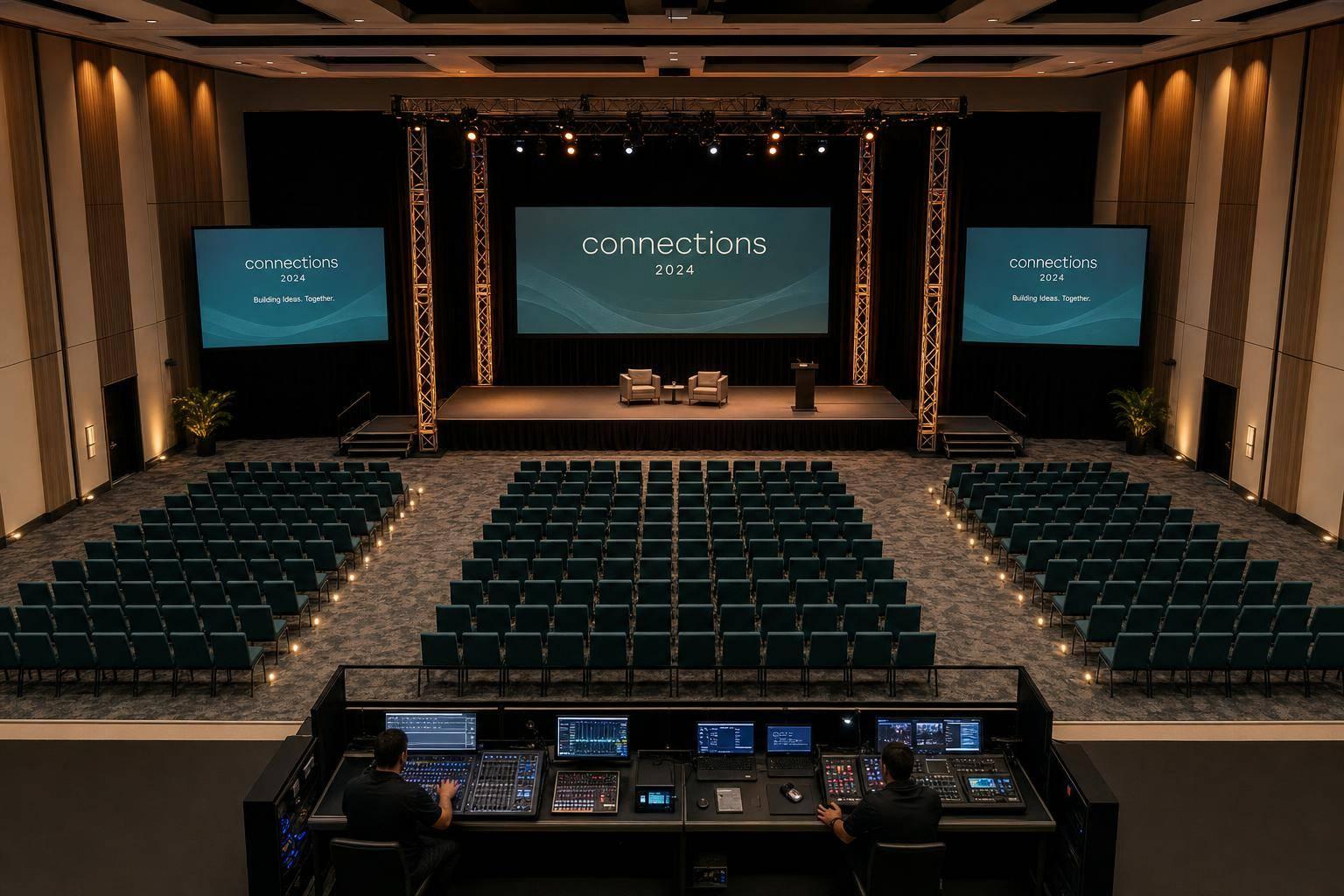
If your conference room has weak sound, blocked views, or a bad seating layout, people check out fast. From what I see in this article, the best fit comes down to three things: room size, stage complexity, and how much onsite support you need.
I’d narrow it down like this:
- Corporate Optics: best for executive meetings and smaller corporate events that need one team handling AV, stage, and speaker flow
- Encore: best for hotel-based conferences that need in-house venue access and detailed seat-view planning
- Freeman: best for large conventions and trade shows with labor, freight, and multi-room pressure
- INSPIRE: best for mid-sized ballroom programs focused on stage view and audience zoning
- AV Concepts: best for visual-heavy keynotes, launches, and hybrid events with mapping, LED, and pre-show room plans
The cost range in the article is $15,000 to $150,000+, with price tied mostly to:
- room size
- crew size
- LED walls and projection
- stage and scenic sets
- seating and sightline planning
- hybrid or streaming needs
Before I’d sign with any vendor, I’d ask for:
- line-item pricing
- staffing lists
- backup plans in writing
- room diagrams or CAD layouts
- show-calling and speaker support details
That’s the short answer: pick the company based on the room problem you need solved first, not just the quote.
Quick Comparison

Top 5 Meeting Production Companies Compared: AV, Stage & Seating
| Company | Best For | AV Focus | Seating / Sightlines | Onsite Support |
|---|---|---|---|---|
| Corporate Optics | Executive meetings, leadership events | LED walls, projection, IMAG | Classroom, theater, cabaret layouts | Cue calling, teleprompting, speaker help |
| Encore | Hotel conferences, roadshows | Large sound systems, blended projection | 3D seat mapping, blind-spot checks | Install coordination, As-Built docs |
| Freeman | Conventions, trade shows | Directional audio, LED boards | Seating matched to session type | Rehearsals, labor coordination |
| INSPIRE | Mid-sized ballroom programs | Multi-zone room sync | 3D sightline checks, audience zones | Onsite show support |
| AV Concepts | Launches, visual-heavy keynotes, hybrid events | Mapping, LED walls, streaming | CAD layouts, camera-line planning | Show callers, tech crew, run-of-show control |
If I were comparing these providers fast, I’d focus on one simple question: Who will make sure every seat can hear, see, and follow the show without last-minute fixes?
sbb-itb-ae35a94
1. Corporate Optics
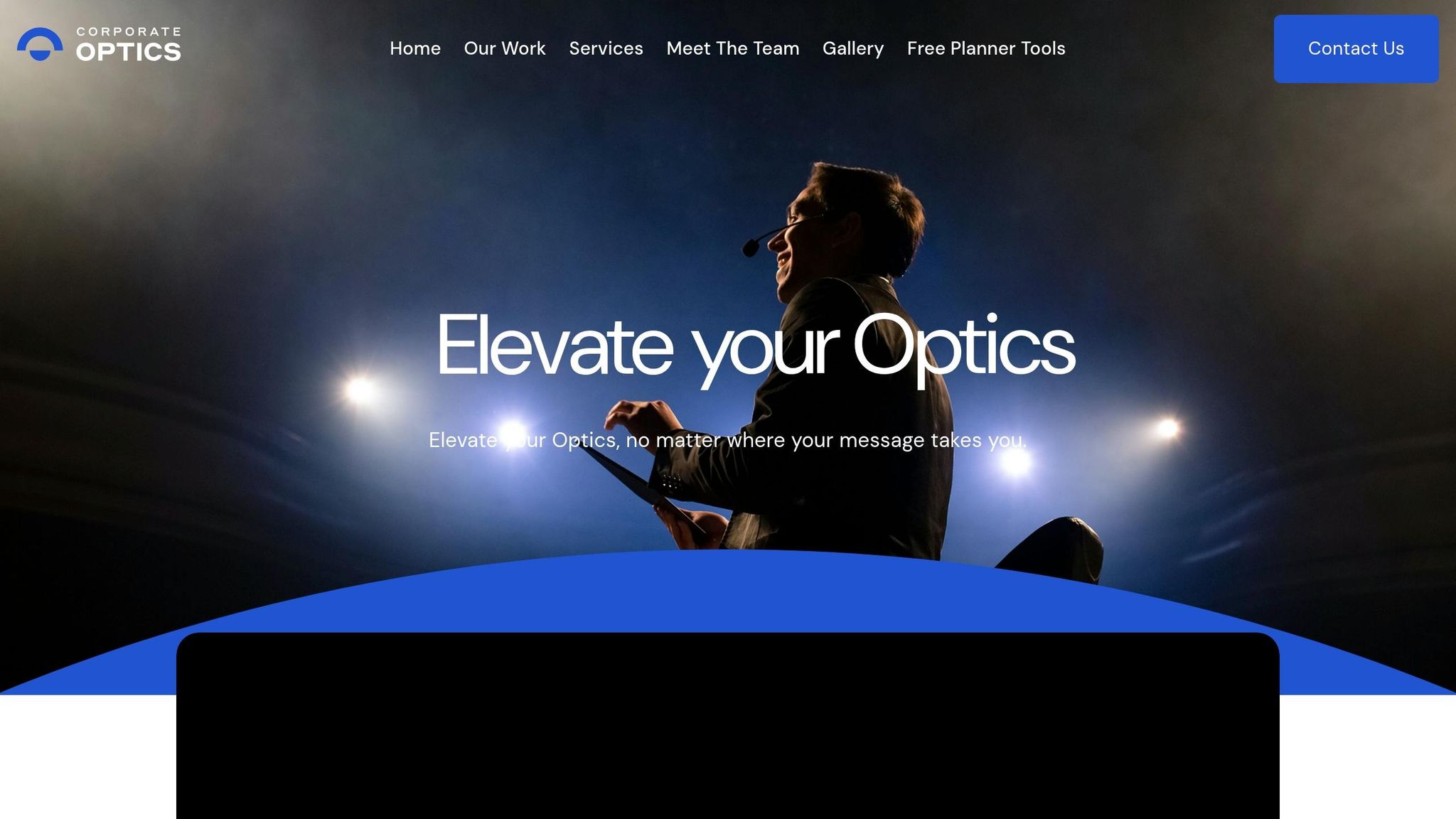
Corporate Optics plans conference production around three core goals: visibility, branding, and smooth speaker flow. They work in major U.S. conference markets across the country and bring AV, scenic design, speaker support, plus sightline and seating layout planning into one production process.
AV Depth
Their AV packages focus on LED walls, projection, moving tube lighting, graphics support, and IMAG so people can see clearly, even in large rooms.
Stage and Scenic Design
Corporate Optics builds branded stages with textured backdrops, speaker entrances, logo placement, and lower-third graphics. The setup is meant to keep the stage on-brand while giving speakers a clean, polished space to present.
Seating and Sightlines
Their sightline planning covers classroom, theater, and cabaret layouts. They pair those layouts with IMAG and LED walls so attendees in the back of the room still get a clear view.
Execution Support
Corporate Optics also helps presenters during the live event with teleprompting, confidence monitors, cue calling, and speaker management.
2. Encore

Encore supports large corporate conferences with AV design, scenic planning, seating analysis, and post-event documentation. That matters for a simple reason: room geometry affects audio coverage, screen placement, stage visibility, and audience comfort.
AV Depth
For large conferences, Encore deploys d&b audiotechnik sound systems and 20k Panasonic projectors used in blended projection to support clear spoken-word coverage and seamless wide-format displays, including screens as large as 15' × 45'. In practice, that means the room can't be an afterthought. The stage and screen setup need to be shaped around the space from the start, not dropped in at the last minute.
Stage and Scenic Design
Encore uses projection mapping to line up digital content with physical scenic flats, which helps branded backdrops look seamless. When that alignment is done well, the audience sees one finished visual scene instead of a mix of separate parts.
Seating and Sightlines
Their design team includes certified designers with AutoCAD and VidCAD certifications and conducts site surveys that account for ceiling height, lighting conditions, and furniture placement before finalizing classroom, theater, or cabaret layouts. They also use 3D CAD mapping to analyze every seat in a venue for clear sightlines and help remove blind zones caused by pillars or low ceilings .
That kind of planning goes beyond a seating chart. It carries through installation, show call, and final documentation, so the layout on paper matches what people experience in the room.
Execution Support
Encore coordinates with build teams during installation and delivers As-Built documents after the event detailing the complete infrastructure, equipment list, and all applicable design elements. That gives event teams a clear record of what was installed and how the full setup came together.
3. Freeman

Freeman treats AV, staging, and room layout as parts of the same job: making each session work better. It’s not handled as a set of separate budget items. You can see that mindset from the first system plans all the way through room setup and the show call.
AV Depth
Freeman brings in gear based on what the group needs instead of leaning only on a venue’s in-house inventory. They often pair projection with angled vertical LED boards to give the stage more depth and keep it from looking flat or static.
Audio is handled with the same level of care. Freeman often uses directional and surround sound, and smaller equipment has made that setup easier to rig than it used to be. The payoff is simple: people across the room can hear clear spoken-word audio from every seat.
Stage and Scenic Design
Freeman uses color, haze, accent lighting, and greenery to change the feel of a room between sessions without tearing down and rebuilding the set. That gives each segment its own look while still keeping the speaker front and center and the brand easy to follow throughout the program.
Seating and Sightlines
After the room build is set, Freeman matches the seating map to the format of the session. The team starts with the session type - keynote, panel, or classroom - then lines up microphones, screen placement, and seating to protect sightlines.
That planning also cuts down on last-minute fixes after load-in. No one wants to move chairs, swap mic positions, or shift screens once the room is already built.
Execution Support
Rehearsals matter here. Freeman’s production teams use on-site run-throughs to line up slide changes, music cues, and speaker entrances and exits. It’s the kind of behind-the-scenes work that keeps a session from feeling clunky.
At hotels, planners should also negotiate outside labor and equipment fees before signing, since some venues charge up to 50% of in-house rental rates. That level of coordination helps keep the program, floor plan, and speaker flow in sync.
4. INSPIRE

Seating and Sightlines
Beyond the seat map itself, INSPIRE sets up the room to keep people locked in. It uses 3D CAD mapping to check the sightline from every seat, which helps cut down blind spots caused by pillars or low ceilings.
For large conferences, INSPIRE splits the room into synchronized audience zones built around the main stage. That way, the stage stays easy to follow from each part of the room. The result is clear stage visibility and smoother audience movement.
5. AV Concepts

AV Concepts stands out when conference AV, scenic design, and room layout all need to work together as one build. They’re a live-event producer based in Tempe with nationwide coverage and more than 35 years of corporate meeting experience.
AV Depth
AV Concepts handles general sessions, breakouts, sponsor activations, and exhibit halls through a single production team. That matters because it cuts down on handoff issues between vendors.
Their work also spans events at very different scales. For SC23, they supported more than 14,000 attendees. For Cvent CONNECT 2015, they delivered AV production across keynotes, general sessions, and breakout rooms for more than 2,500 attendees.
Stage and Scenic Design
AV Concepts brings together LED walls, projection mapping, and branded scenic elements to build stage environments that match the client message and speaker program. In plain English, they’re not just placing screens on a stage. They’re shaping the whole room around what the audience needs to see and what the speakers need to deliver.
They also use 3D renders and previsualization drawings to get stage concepts approved before load-in. That step can save a lot of stress later. If something looks off on paper, it’s far easier to fix before trucks arrive. Their breakout-room design follows the same thinking, keeping secondary rooms visually aligned with the main stage.
That same previsualization process also carries into seating layout and camera sightlines.
Seating and Sightlines
Before load-in, they map seating around LED wall placement, projector throw distances, rigging points, and camera lines. They also use room diagrams and CAD layouts to plan theater, classroom, and cabaret setups, which helps spot sightline issues early.
This is one of those details people may not notice when it goes well, but they notice fast when it doesn’t. A blocked screen, a bad camera angle, or a seat with a weak view can change the whole room experience.
Those plans then feed into rigging, staffing, and show-calling decisions.
Execution Support
Their pre-production work includes technical drawings, run-of-show documents, equipment lists, staffing plans, and venue coordination for power, rigging, and union rules. So the prep isn’t just about gear. It also covers the practical stuff that can make or break show day.
Onsite, show callers, audio engineers, video directors, lighting operators, and stage managers manage live cues and handle issues in real time across all sessions. For hybrid events, they add camera platforms, streaming encoders, and separate audio mixes for remote viewers.
Side-By-Side Comparison: Capabilities, Deliverables, And Trade-Offs
After looking at each firm's core services, the best way to compare them is by the production model your conference actually needs: room visibility, technical depth, or logistics at scale. That's where the gaps start to show. The main differences come down to how each team handles event size, screen and stage clarity, and more complex room setups.
Corporate Optics ties AV, stage, and seating plans to room size and speaker movement, with managed AV support for board meetings and first-time corporate events. Hotel in-house teams can make ballroom logistics easier, but they can also push total production costs higher. Freeman is built for large events where freight, union labor, and show floor coordination become the biggest issue. AV Concepts is a strong fit when stage visuals lead the experience, especially for tech-forward keynotes that depend on projection mapping or immersive scenic builds.
The smartest place to focus is on the deliverables that shape the room most:
- AV coverage
- Stage visibility
- Seating flow
- On-site execution
| Company | AV Depth | Stage & Scenic Design | Seating & Sightlines | Execution Support | Best-Fit Use Case |
|---|---|---|---|---|---|
| Corporate Optics | LED walls, projection, IMAG, graphics support | Branded stages, textured backdrops, logo placement | Classroom, theater, and cabaret layouts; sightline planning | Teleprompting, confidence monitors, cue calling, speaker management | Leadership conferences, board meetings, first-time corporate events |
| Encore | d&b sound systems, blended projection, wide-format displays | Projection-mapped scenic flats, modular backdrops | CAD sightline analysis, 3D seat mapping, blind-zone removal | As-Built documentation, in-house hotel coordination | Hotel ballroom conferences, multi-city roadshows |
| Freeman | Directional and surround sound, vertical LED boards | Color, haze, accent lighting, session-to-session transitions | Session-matched seating, screen and mic placement | Rehearsal-based run-throughs, union labor management | Large-scale conventions, trade shows |
| INSPIRE | Synchronized AV across audience zones | Aesthetic-focused staging, creative lighting | 3D CAD sightline checks, zone-based audience layout | Dedicated on-site support, creative direction | Keynote general sessions, large ballroom programs |
| AV Concepts | Projection mapping, LED walls, hybrid streaming | Previsualized scenic builds, breakout-room alignment | CAD layouts for theater, classroom, and cabaret; camera sightlines | Technical production support, run-of-show documents, show callers | Tech-forward keynotes, multi-session conferences |
These differences help you match the right provider to your room setup, run-of-show, and production budget.
Pros And Cons Of Each Meeting Production Company
The summary below helps you compare each firm based on support level, visual complexity, and how well they handle different room sizes. In plain English: it turns broad differences into buying signals you can actually use.
Corporate Optics manages AV, stage design, and seating layout through one production process. That means you get single-point planning support, which can take a lot of stress off a corporate team. It's a strong fit for board meetings and other high-pressure executive events where clean coordination matters. The downside is reach. Compared with the biggest providers, its geographic coverage is smaller.
Encore stands out for one big reason: reach. As the in-house AV provider at thousands of hotel properties, it can make ballroom conference planning much easier. Fewer handoffs. Less back-and-forth. That said, convenience often costs more. Venue commissions can push the total spend up, and service can vary depending on the property.
Freeman is built for big rooms, trade show floors, and event plans where union labor, freight movement, and heavy coordination drive the job. If you're running a major convention, that scale helps. If you're planning a smaller meeting, it can feel like too much machine for the task. Pricing also tends to get more layered when the scope is tight.
INSPIRE puts a lot of attention on hospitality partnerships, stage visibility, and audience zone layout. That makes it a good pick for mid-sized corporate programs that need a polished stage look without the weight of a giant expo provider. The trade-off is a smaller inventory base and less reach than Encore or Freeman.
AV Concepts is the choice for visually ambitious productions. Projection mapping, immersive scenic builds, and a strong previsualization process are its lane. If you want a product launch to feel cinematic, this is where the company shines. But for a standard business presentation, that level of production can feel like overkill, and the pricing sits at the premium end.
Use this summary to match each provider to your main production risk. If you're worried about coordination, Corporate Optics may be the safer bet. If venue access is the issue, Encore has the edge. If labor, freight, and large-room logistics are driving the plan, Freeman fits better. If stage polish matters most for a mid-sized program, look at INSPIRE. If the event lives or dies on visual impact, AV Concepts is built for that job.
| Company | Pros | Cons | Best For |
|---|---|---|---|
| Corporate Optics | Single-point planning support; specialized in secure board meetings; guided budgeting support | Smaller global footprint compared to larger providers | First-time corporate planners and high-stakes executive meetings |
| Encore | Broad hotel and venue reach; convenient in-house presence at thousands of hotels; large equipment inventory | Can be more expensive due to venue commissions; service quality can vary by location | Large-scale hotel-based conferences and international roadshows |
| Freeman | Built for large-scale trade show logistics; comprehensive strategic design and large-scale execution | May feel impersonal for smaller, intimate meetings; complex pricing for smaller scopes | Major trade shows, exhibitions, and large conventions |
| INSPIRE | Strong hospitality partnerships; focus on stage visibility and zone-based audience layout | Smaller inventory and reach compared to Encore or Freeman | Mid-sized corporate events and hospitality-focused productions |
| AV Concepts | Projection mapping and immersive scenic builds; strong previsualization process | Premium pricing; can be too complex for standard presentations | Product launches and brand activations requiring high-impact visual environments |
Use the table to narrow the fit by room size, stage complexity, and required support.
Conclusion
Choose the partner that delivers reliable AV, a clean stage setup, clear sightlines, and fast onsite problem-solving. A low bid can look good at first. But if it leaves out backup gear, show calling, or full crew coverage, it often ends up costing more once the room is live.
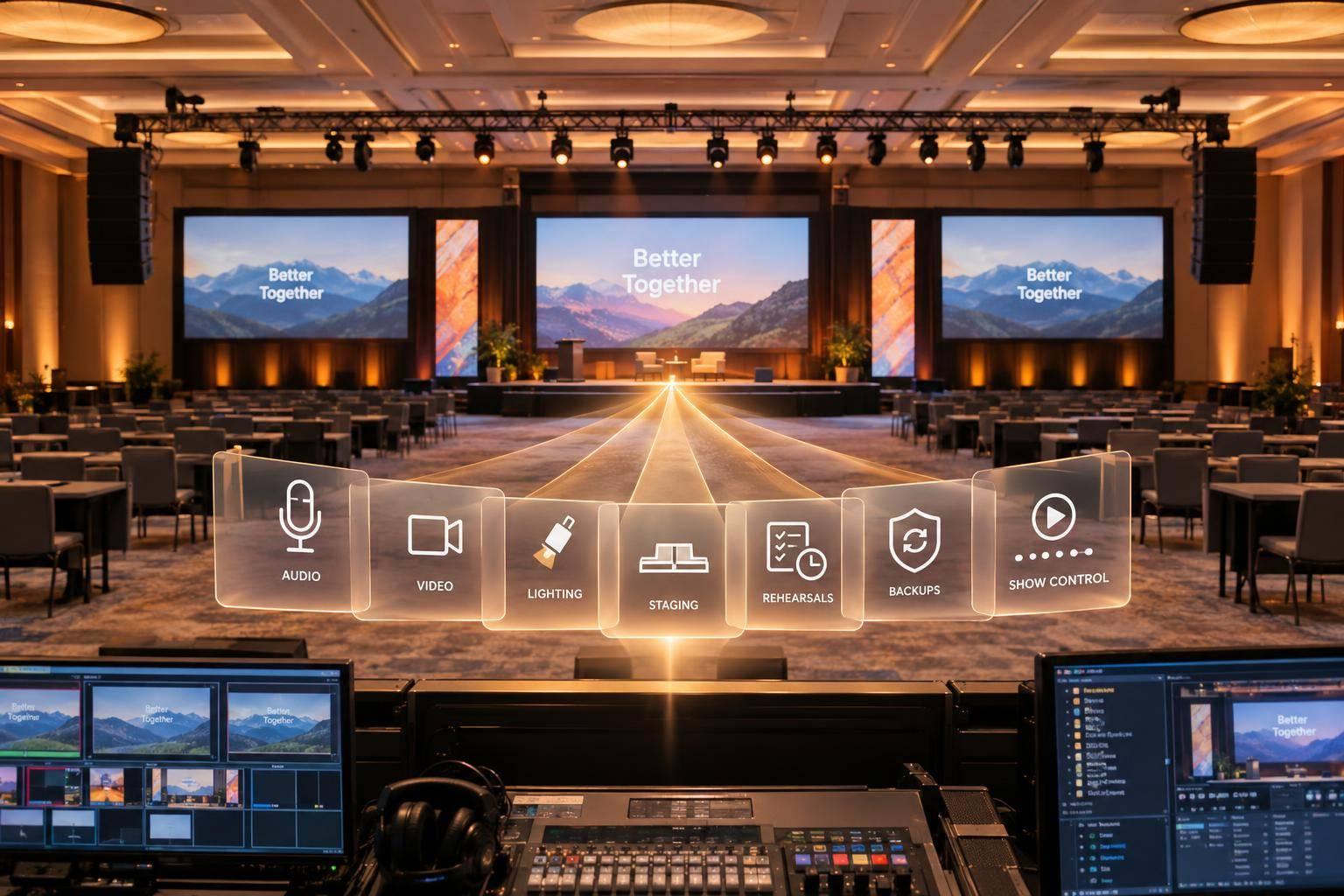
Then hold every proposal to the same production standard. Planning should bring AV, stage, seating, documentation, and show control into one workflow. That should be your baseline for judging any provider.
Before you sign, ask for:
- Line-item quotes
- Staffing lists
- Written contingency plans
Those items are the last filter for conference reliability, visibility, and audience comfort.
Choose the provider that protects clarity, comfort, and show control from load-in to close.
FAQs
How far in advance should I book conference production support?
Lead times depend on the size of the event and how much production work it involves.
As a general rule, executive summits often need 8–16 weeks of prep. Larger conferences usually need 4–6 months.
If your event has a custom scope or more involved production needs, build in extra time for site surveys, CAD layout planning, and equipment coordination. Bringing in your production partner early can help things run more smoothly.
What deliverables should I ask for before signing a contract?
Ask for the key deliverables upfront so nothing catches you off guard:
- Detailed 3D stage renderings
- Integrated CAD floor plans that show sightlines, ADA-compliant aisles, and egress paths
- Technical documentation, such as rack layouts and commissioning reports
- A completed technical site survey that covers power, internet bandwidth, and rigging
These items help confirm the design, how it fits the venue, and any site-specific limits before you commit.
How do I know if my room needs sightline and seating planning?
Your room likely needs professional sightline and seating planning if it has pillars, low ceilings, balconies, or a wide layout that can block views. The same goes for spaces where high attendance could create traffic bottlenecks. In those cases, a seating chart isn't just about fitting people in. It's about making sure people can see, move, and get to their seats without a headache.
Expert planning also matters when you need ADA-compliant aisles and wheelchair positions. And if the room layout has to work with the stage design, rigging, and technical gear, getting that plan right from the start can save a lot of trouble later.
Related Blog Posts
- 2026's Best Meeting Production Companies For Large Corporate Conferences That Handle Logistics, Seating Charts, and AV Production
- 4 Meeting Production Companies That Excel At Seamless AV (audio/video), Lighting, and Stage Design for Corporate Conferences, and events
- End-To-End Annual Meeting Production Companies For Your Next Company Conference
- Leading Companies To Work With For Full Conference Production


Streamline your workflow, achieve more

Lorem ipsum dolor sit amet, consectetur adipiscing elit. Maecenas ac velit pellentesque, feugiat justo sed, aliquet felis.



Lorem ipsum dolor sit amet, consectetur adipiscing elit. Maecenas ac velit pellentesque, feugiat justo sed, aliquet felis.