Virtual, Hybrid, Or In-Person Shareholder Meeting? How To Choose The Right Format For Your Company.

Chief Executive Officer
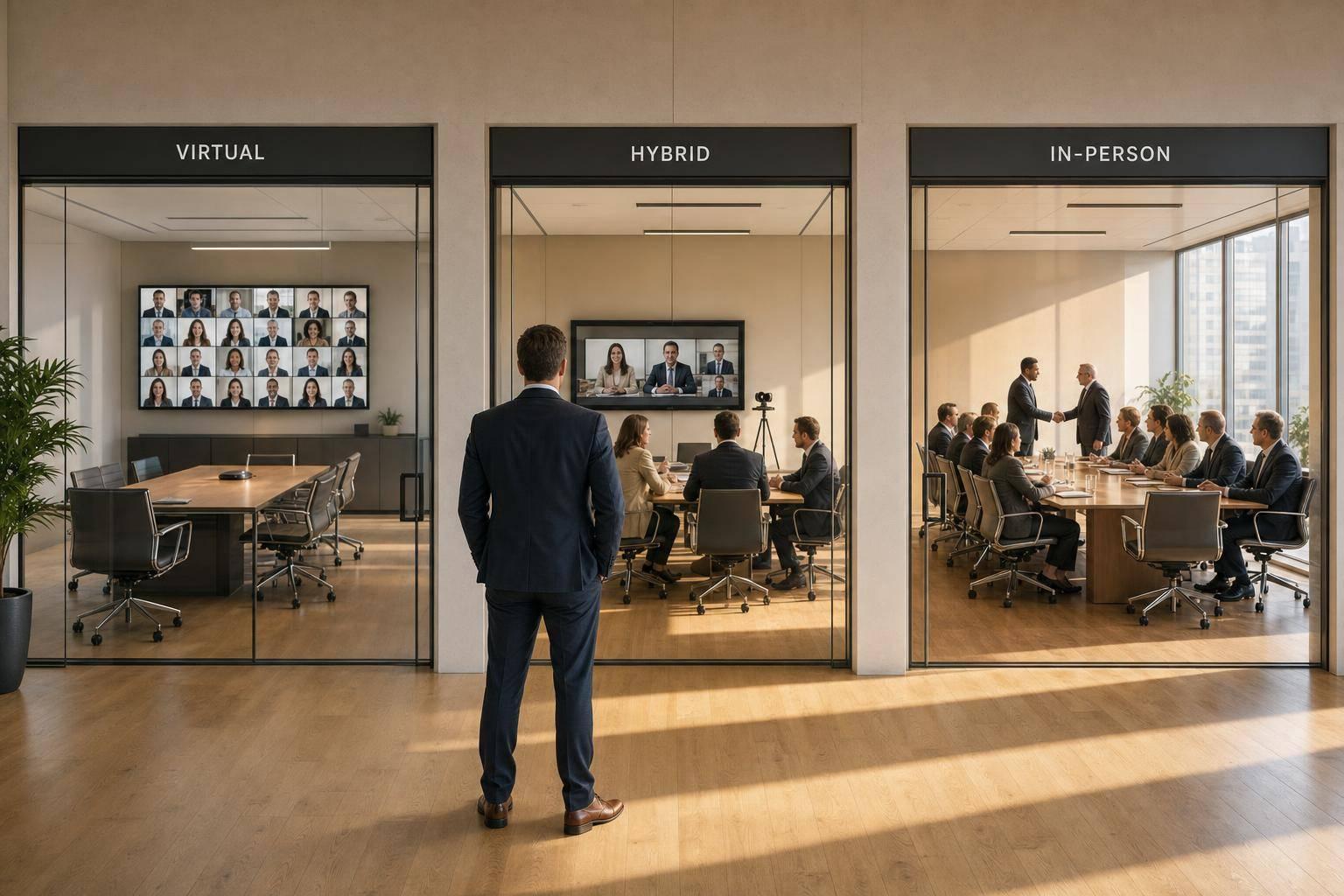
The best shareholder meeting format is the one your company can run without legal, voting, or tech problems. In 2025, 1,931 virtual shareholder meetings were tracked in the first half of the year, and 93% included live questions. But the most used format is not always the right one for you.
If I had to boil this down, I’d put it like this:
- Choose virtual if your shareholders are spread out, turnout is low, and you want lower venue costs.
- Choose hybrid if you need both in-room presence and remote access, and you can handle more moving parts by following hybrid meeting planning best practices.
- Choose in-person if face-to-face board visibility matters most and your shareholders are close enough to attend.
What I’d check first:
- State law, bylaws, and board approval
- Shareholder location and expected turnout
- Budget, including platform, venue, staffing, AV, captioning, and backup plans
- Voting setup, including how votes are collected and checked
- Security, both online and on-site
- Q&A and engagement goals
Bottom line: virtual is often the simplest to scale, hybrid is the hardest to run, and in-person puts the most pressure on venue logistics.

Virtual vs. Hybrid vs. In-Person Shareholder Meetings: Key Tradeoffs at a Glance
How Do You Plan An Effective Shareholder Meeting? - Event Management Pro Tips
You can also learn from top companies for annual shareholder meetings that have successfully modernized their event formats.
sbb-itb-ae35a94
Quick Comparison
| Format | Best fit | Main upside | Main limit |
|---|---|---|---|
| Virtual | Dispersed shareholders, routine agenda | Lower travel burden and lower physical event cost | Less face-to-face interaction |
| Hybrid | Companies that want both room access and remote access | Gives shareholders two ways to join | Highest setup and coordination load |
| In-person | Local shareholder base, high-touch board presence | Direct interaction in the room | Travel burden and venue cost |
One more point matters: once notice goes out, changing course gets much harder. So I’d lock the format early, then build the meeting plan around access, voting, records, and backup steps.
2. Virtual vs. Hybrid vs. In-Person: Format-by-Format Comparison
Pick the format that fits your shareholder base, your team's bandwidth, and how much execution risk you're willing to carry.
Virtual Shareholder Meetings
Virtual meetings make the most sense when shareholders are spread out and the agenda is mainly procedural - director elections, auditor ratification, and say-on-pay votes. A Harvard Law School Forum on Corporate Governance analysis found 1,931 virtual shareholder meetings in the first half of 2025, with 93% offering a live-question feature and 81% open for viewing by non-shareholders. In 2025, virtual meetings stayed common and heavily used for shareholder voting and Q&A.
What turns a virtual meeting into a compliant meeting, instead of just a webcast, is the layer underneath it. The platform has to authenticate each participant, usually with a unique control number from the proxy materials. It also has to let shareholders hear the proceedings in real time, submit questions, and vote online. That's the standard that matters: actual participation, not just a livestream.
This format works best when access and cost matter more than having people in the room.
The downside is engagement. Virtual meetings are efficient, but they cut down on the kind of unscripted interaction you get when people are face to face. They also reduce the visibility that comes with an in-room audience. Companies can help close that gap by posting question rules ahead of time, setting aside enough time for shareholder Q&A, offering live captioning, and keeping tech support available during the full meeting.
So virtual is strongest on reach and efficiency, and weakest on spontaneous interaction.
Hybrid Shareholder Meetings
Hybrid meetings fit companies that want physical presence - board visibility, in-person investor relations, or a tough governance discussion - without shutting out shareholders who can't travel. You keep the live meeting and add remote access. Sounds simple on paper. In practice, you're running two meetings at once, and both groups need the same chance to hear the proceedings, ask questions, and vote.
That's where the complexity comes in. The venue needs microphones, cameras, an encoder, and projection. The online side needs authentication, moderated question submission, electronic voting, and a separate technical operator. Vote reconciliation has to combine proxy instructions, in-room ballots or electronic terminals, and remote votes without double-counting, with cut-off times spelled out in advance. If a camera fails or the internet drops, one audience may be affected while the other isn't. That's why backup connectivity and a written fallback plan should be built into the meeting setup.
This is the right format when the company needs both reach and visible board presence.
Hybrid can deliver the broadest participation, but only if both channels are managed with the same level of care.
In-Person Shareholder Meetings
In-person meetings still make sense when shareholders are clustered near a workable venue, when the agenda covers sensitive governance matters, or when the company's culture puts real weight on direct executive and board visibility. The format can make interaction feel more immediate, and sometimes that matters more than convenience.
The setup is straightforward, but it takes people, time, and money. The company needs a venue with enough capacity, accessible entrances, controlled check-in, identity and quorum verification, microphones, projection, ballot handling, and an inspector of elections. Physical security adds another layer - badge checks, bag screening, and coordination with the venue team. Costs shift toward venue rental, travel, catering, registration staffing, and printed materials.
This is the right format when direct attendance is part of the point of the meeting.
In-person works best when the meeting gets its value from being there in person, not from remote access.
| Criteria | Virtual | Hybrid | In-Person |
|---|---|---|---|
| Shareholder access | Strong for dispersed or mobility-limited holders | Broadest potential reach if remote access is genuinely equivalent | Best for shareholders near the venue; weakest for dispersed holders |
| Voting administration | Streamlined electronic voting; depends on platform reliability | Most complex - must reconcile proxy, in-room, and remote votes | Familiar paper or electronic ballots; manual handling increases staffing |
| Technology and AV | Platform, authentication, webcast, captioning, backup connectivity | All virtual requirements plus room mics, cameras, encoding, and projection | Room sound, projection, assistive listening systems; lower tech overhead overall |
| Security | Cybersecurity, access controls, authentication, incident response | Must manage both cybersecurity and physical venue security simultaneously | Venue access, credential checks, physical disruption planning |
| Engagement | Efficient; limited spontaneous interaction | Preserves in-room dynamic while extending remote access | Highest potential for direct interaction and visible board accountability |
| Cost drivers | Platform fees, cybersecurity, accessibility services, tech staffing | Greatest AV and staffing burden; combines costs from both other formats | Venue, travel, catering, registration staff, printed materials, physical security |
3. Side-by-Side Tradeoffs by Decision Factor
Use this table to compare formats based on the factors that shape the choice.
Comparison Table: Accessibility, Cost, Complexity, Voting, Security, and Engagement
The table below shows where each format gives you more room to work with and where it brings added risk.
| Decision Factor | Virtual | Hybrid | In-Person |
|---|---|---|---|
| Accessibility | Lowest travel burden; widest geographic reach. Requires reliable internet, compatible devices, and accessible digital design. | Most flexible: shareholders can attend physically or remotely. Remote access must support questions and voting, not just viewing. | Highest travel burden. Works best when shareholders are concentrated near the venue. |
| Legal eligibility | Must be authorized by state law, charter, and bylaws. | Same remote-participation authorization required as virtual, plus coordination of in-room and online rights. | Simplest legal structure, but proxy, notice, quorum, and inspector-of-election rules still apply. |
| Venue and staffing load | No shareholder venue needed. Requires a virtual producer, moderators, technical support, and cybersecurity oversight. | Venue plus virtual platform, with AV crew, moderators, and staff coordinating both audiences simultaneously. | Requires venue, registration, seating, signage, accessibility accommodations, security, and AV staff. |
| AV demands | Streaming quality, speaker connectivity, captions, screen sharing, voting integration, and platform uptime. | Highest production demand: room sound, cameras, presentation feeds, and online questions must all be synchronized. | AV contained within the venue. Lower broadcast complexity, though microphones and accessibility services remain essential. |
| Shareholder authentication | Digital authentication typically uses a unique control number from proxy materials. Credentials must be protected against duplicate or unauthorized access. | Requires both physical registration and digital authentication, with procedures to prevent duplicate voting. | Physical registration and proxy verification are more visible and familiar, though identity and voting authority still require controls. |
| Voting logistics | Online voting can be efficient and auditable. Requires tested systems, clear poll timing, and outage procedures. | Must reconcile proxy, in-room, and remote votes accurately. | Paper, handheld devices, or on-site electronic systems. Administration is tangible but can be slower and more labor-intensive. |
| Question management | Written questions make moderation and recordkeeping easier, but shareholders may perceive filtering. Transparent rules and a record of questions and responses help preserve trust. | Must handle questions from both the room and online queue fairly, without privileging one audience. | Direct, live questions are easiest to manage in the room. |
| Cybersecurity and physical security | Highest dependence on digital resilience, authentication, privacy controls, and incident response. Minimal physical security requirement. | Must manage both cybersecurity risks and physical venue security simultaneously. | Reduces dependence on an online platform. Physical security, accurate registration, and protection of voting materials remain essential. |
| Cost predictability | Usually the lowest physical cost. Platform fees, production, accessibility services, and contingency planning are the primary variables. | Least predictable budget: combines venue and on-site costs with digital production, streaming, redundancy, and additional technical staff. | Cost structure is easier to model but rises with attendance. Venue, travel, catering, staffing, and printing are the main drivers. |
| Execution risk | Risk concentrated in digital infrastructure: platform outages, connectivity loss, authentication failures, and streaming quality. | Highest simultaneous production complexity: must serve two audiences without compromising either one. One audience may be disrupted without affecting the other. | Risk concentrated in physical logistics: venue access, AV reliability, ballot handling, and registration. |
| Executive engagement | Efficient and organized, but less personal. | Preserves the in-room dynamic for physical attendees while extending access to remote shareholders. Moderating both channels adds complexity. | Strongest face-to-face interaction. Executives can read the room and shareholders can ask questions directly. |
Read the table as a set of tradeoffs, not a scorecard.
How to Read the Tradeoffs
No format comes out ahead on every factor. Start by ruling out any option that doesn't meet legal or bylaw requirements. After that, compare the issues that tend to matter most in practice: accessibility, voting integrity, cost, and execution risk. Pick the format your team can run well. A lower top-line cost by itself isn't enough.
From there, line up these tradeoffs against your shareholder base, budget, and risk tolerance. Once you know which tradeoffs matter most, move to the decision steps in the next section.
4. A Step-by-Step Guide to Choosing the Right Format
The tradeoffs in the previous section show what each meeting format asks of your company. Now the job is to turn that into a choice your team can actually use.
Step 1: Confirm Legal Eligibility and Shareholder Rights
Start with legal authority. Review state law, the charter, bylaws, board approvals, shareholder agreements, and any exchange or securities rules to confirm which formats are allowed.
Delaware law, for example, allows meetings held solely by remote communication when the board authorizes that format, as long as the company can verify participants, give them a reasonable chance to hear, take part, and vote at about the same time as the meeting, and keep a record of votes and other actions. That point matters. A platform might offer online voting, but if your governing documents or state law do not allow that meeting format, you cannot use it.
For public companies, the proxy process adds one more layer. The SEC expects timely notice and clear instructions for virtual and hybrid meetings, including how shareholders can access, take part in, and vote at the meeting. Delaware's general statutory notice window runs no fewer than 10 and no more than 60 days before the meeting date. If you are using the SEC's notice-and-access model, the notice of internet availability of proxy materials generally must be sent at least 40 calendar days before the shareholder meeting.
So lock in the format before notice goes out. Have corporate counsel and the transfer agent or proxy solicitor review the final process.
It also helps to ask counsel a plain question: what is legally required, and what is just hard to run? Those are not the same thing. A format may be lawful on paper and still be a poor fit if your team cannot reliably authenticate shareholders, handle live questions, or recover from a platform outage.
Once timing and legal limits are clear, test the format against your shareholder base and your team's capacity.
Step 2: Match the Format to Your Shareholder Mix, Budget, and Risk Tolerance
After you know what is allowed, look at who your shareholders are and what they need in practice. Review shareholder location, investor mix, ownership concentration, time zones, accessibility and language needs, internet access, and proposal sensitivity. Then use prior attendance, voting patterns, questions, and accessibility requests to estimate turnout.
Before you commit, build a full budget in U.S. dollars. Include costs for:
- Venue
- Staffing
- Travel
- Catering
- Security
- Registration
- AV
- Webcast hosting
- Captioning
- Interpretation
- Proxy support
- Ballot processing
- Rehearsals
- Cybersecurity
- Contingencies
Hybrid meetings often carry the broadest cost range because you are running a physical event and a remote experience at the same time. In plain English, you are building two paths into one meeting. That usually means more coordination, more staffing, and more backup planning.
Risk tolerance matters too. A company with limited tech capacity is dealing with a very different set of limits than one that can reliably support remote participation. Executive preference counts, of course, but it should not outweigh format choices that better protect shareholder rights or cut avoidable risk.
Once you've mapped the legal and operating limits, the choice usually becomes a lot less abstract. It comes down to what your company can run well.
Step 3: Decision Guide for Common Scenarios
Choose virtual when shareholders are spread out, expected in-person attendance is low, and your team can support secure authentication, live participation, reliable voting, and tech support.
Choose hybrid when shareholders need a real choice between showing up in person or joining remotely, or when stakeholder expectations favor both access options. But hybrid only works if you can staff and fund two full participation paths, with equal voting and Q&A access.
Choose in-person when face-to-face interaction, control of the physical meeting room, or relationship-building matters most, and your shareholder base can attend without an unfair travel burden.
A few examples make this easier to picture:
- A dispersed Delaware issuer with low turnout may choose virtual.
- A contentious director election may support a hybrid format.
- A closely held company with local shareholders may prefer in-person.
If state law, governing documents, a contested election, special voting rights, or shareholder agreements create any uncertainty, get legal advice before you move ahead. That is not the place to guess.
Once the format is set, document the decision and move into planning: AV, access control, voting workflow, staffing, rehearsals, and contingencies. After the board selects a format, the next step is building the meeting plan that makes it work.
5. Turning the Chosen Format Into an Executable Meeting Plan
Once you’ve picked the format, the work changes. You’re no longer deciding what the meeting should look like. You’re figuring out how to run it without confusion, delays, or breakdowns.
What Changes by Format: Virtual, Hybrid, and In-Person
Each format puts strain on a different part of the operation.
Virtual meetings live or die by the platform. You need to confirm shareholder authentication, remote speaker control, live voting, moderated Q&A, captioning, and a direct line to the technical director. The main risk is digital failure: platform outages, lost connections, or authentication problems in the middle of the meeting.
In-person meetings shift the load to the venue. That means registration flow, ballot distribution, accessible routes, security screening, room acoustics, and stage management all need to work in sync. The main risk is physical logistics, like AV issues, registration backups, or ballot-handling mistakes.
Hybrid meetings ask you to do both at once. The moderation rules should apply the same way to questions from the room and questions from remote attendees. Remote participants need clean audio, and the camera setup has to give them a clear view of the chair and presenters. You also need a fallback process for each channel on its own, because a problem in one setting may leave the other untouched.
That’s when broad planning turns into an actual operating plan: a minute-by-minute run-of-show, clear owners for each task, and backup steps for when something goes sideways.
Where Corporate Optics Supports Execution
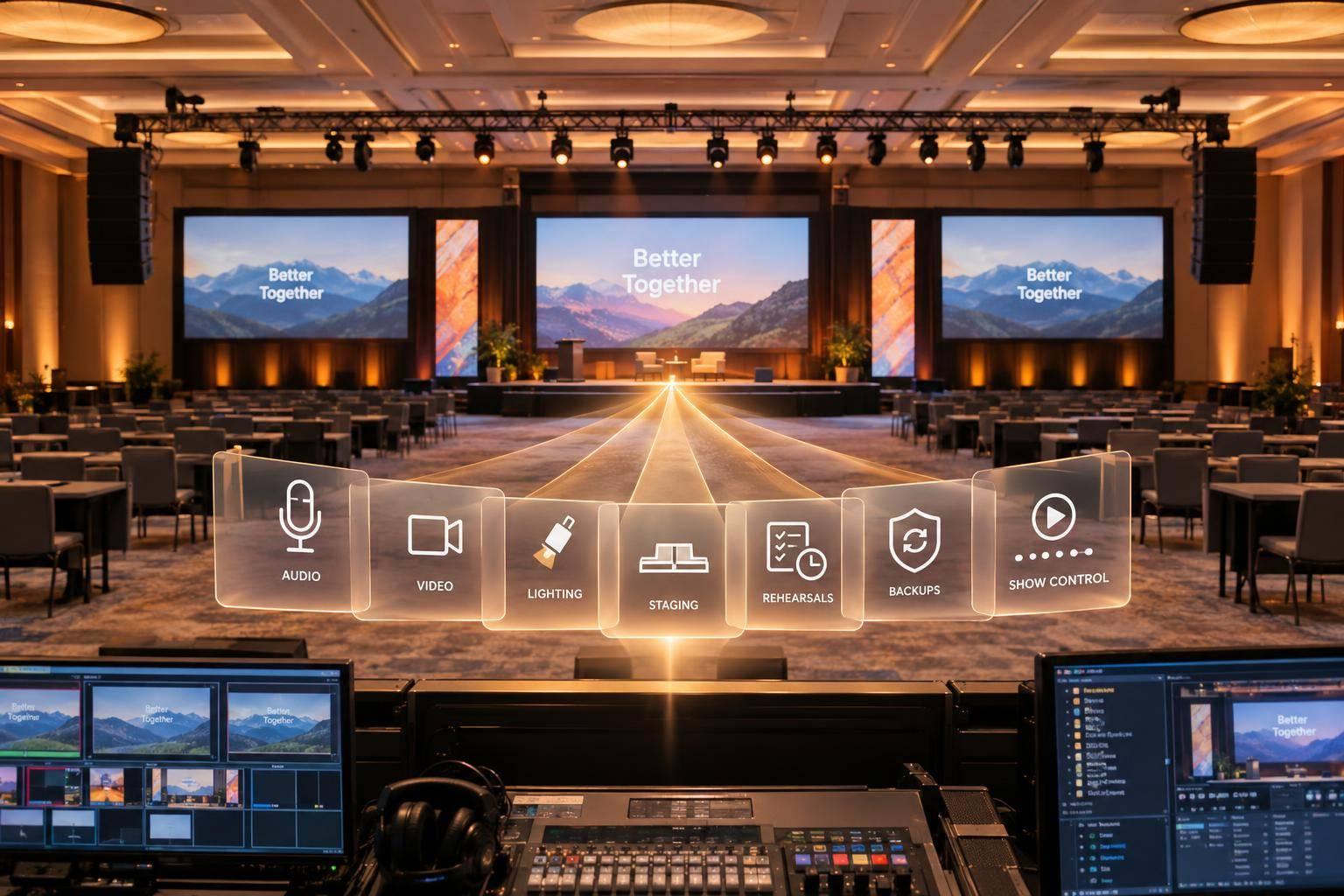
Run a full technical rehearsal before the meeting. For virtual and hybrid formats, test shareholder login, audio, camera switching, voting, captions, and backup procedures in one end-to-end run. For hybrid, do a separate venue systems test before the full dress rehearsal.
Every cue and every decision in the run-of-show should have one named owner. No gray areas. No “someone will handle it.”
After the meeting, archive the recording, keep the required meeting records, and post approved materials through the proper investor-relations channels.
Key Takeaways
The right format is the one your company can run cleanly.
- Virtual extends reach, but it depends on a stable platform and real remote participation.
- In-person allows direct interaction, but it brings more venue, staffing, and physical-security demands.
- Hybrid gives shareholders both access options, but it also means running two synchronized production tracks at the same time.
Before notice goes out, confirm that state law, your governing documents, and board approvals allow the format you chose. Then build the plan around accessibility, voting integrity, and security so the meeting works for the shareholder mix your company actually has.
FAQs
How early should we choose the meeting format?
Choose the meeting format as early as you can in the planning process. That choice affects your tech setup, security steps, and legal requirements, so it should be locked in before production starts.
For smaller, single-day meetings, try to finalize the format 4 to 8 weeks ahead of time. For larger events, you may need to book production partners 4 to 6 months in advance.
What makes a virtual meeting legally valid?
A virtual or hybrid shareholder meeting is legally valid if your governing documents allow it and if it follows your state’s incorporation laws.
That’s the starting point. From there, the meeting also needs to meet a few practical and legal standards. You need to give shareholders clear advance notice, follow SEC disclosure and voting rules, verify participant identities, support secure voting, and track attendance with care so you can maintain a quorum.
Miss any of those pieces, and the meeting can get messy fast.
How do we know if hybrid is worth the extra complexity?
Hybrid is worth the extra complexity only if it meaningfully expands participation and you can reliably meet governance and day-to-day requirements.
Start by checking that your bylaws, state law, and SEC rules support clear notice, record dates, identity checks, and secure voting. Then weigh the tradeoff: do equal access, engagement tools, tech support, and backup systems justify the added cost and risk?
Related Blog Posts



Streamline your workflow, achieve more

Lorem ipsum dolor sit amet, consectetur adipiscing elit. Maecenas ac velit pellentesque, feugiat justo sed, aliquet felis.



Lorem ipsum dolor sit amet, consectetur adipiscing elit. Maecenas ac velit pellentesque, feugiat justo sed, aliquet felis.