Why Corporate Optics Is A Great Event Production Company To Work With In Miami, Florida.

Chief Executive Officer
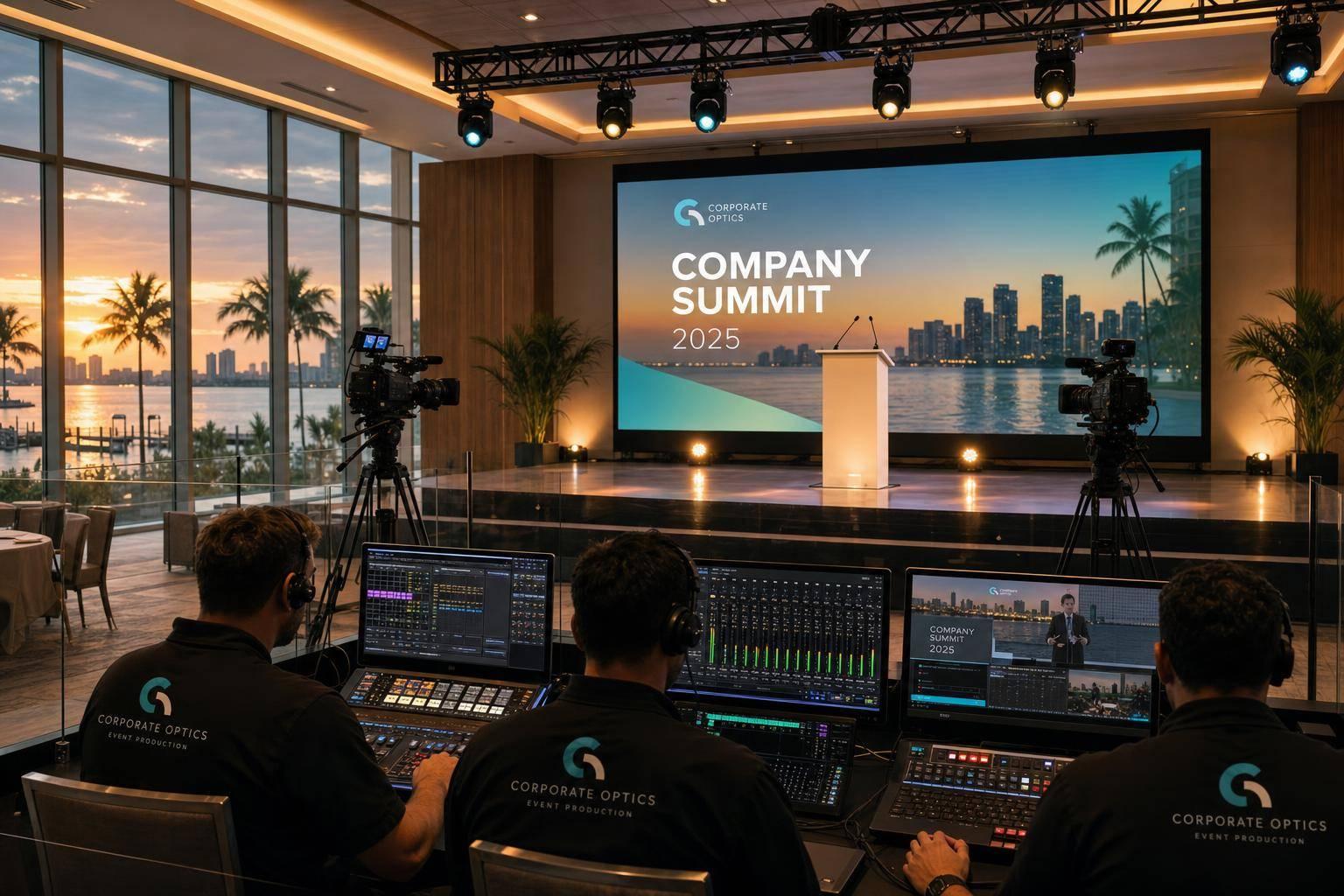
If you’re planning a corporate event in Miami, the main reason to work with Corporate Optics is simple: they handle the hard technical parts under one plan, which helps lower day-of problems.
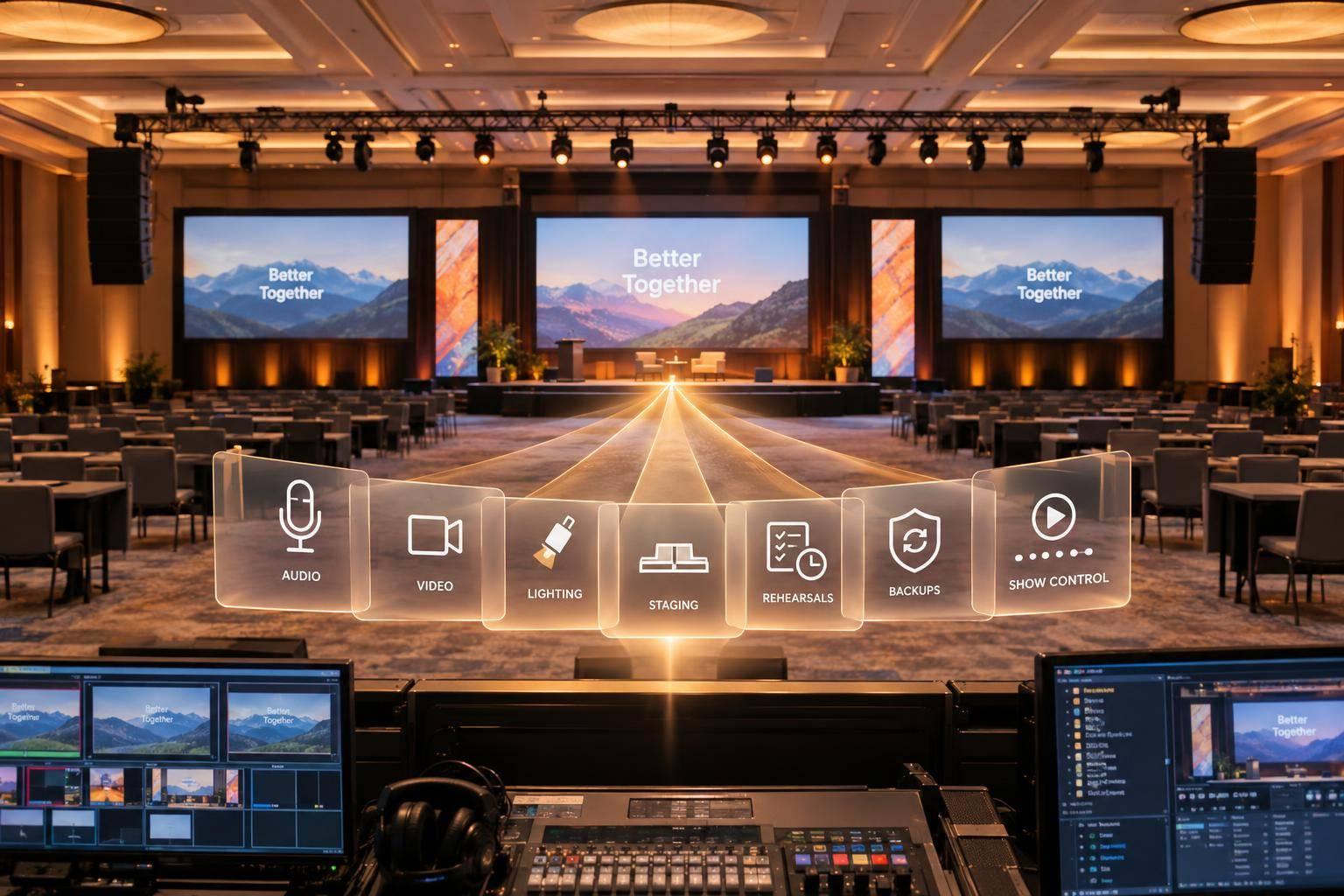
I’d sum it up like this: Miami events often deal with tight venue schedules, hard room layouts, hybrid streaming needs, and high pressure from executives and stakeholders. Corporate Optics stands out here because it brings 20+ years of experience, local venue knowledge, presenter support, live streaming, staging, lighting, audio, video, and on-site show control into one setup.
Here’s the short version of what matters most:
- One team oversees the production plan
- They support in-person, hybrid, and streamed events
- They help with speaker prep, rehearsals, and teleprompters
- They build in backup paths for live streaming
- They know Miami venue limits and setup issues
- They handled the January 2026 CREFC event in South Beach
What this means for you: fewer vendor gaps, tighter show flow, and less risk by following conference production best practices during board meetings, leadership events, shareholder sessions, and awards programs.
I see Corporate Optics as a strong fit for Miami because corporate events there don’t give you much room for error, and this company is built around control, planning, and live execution.
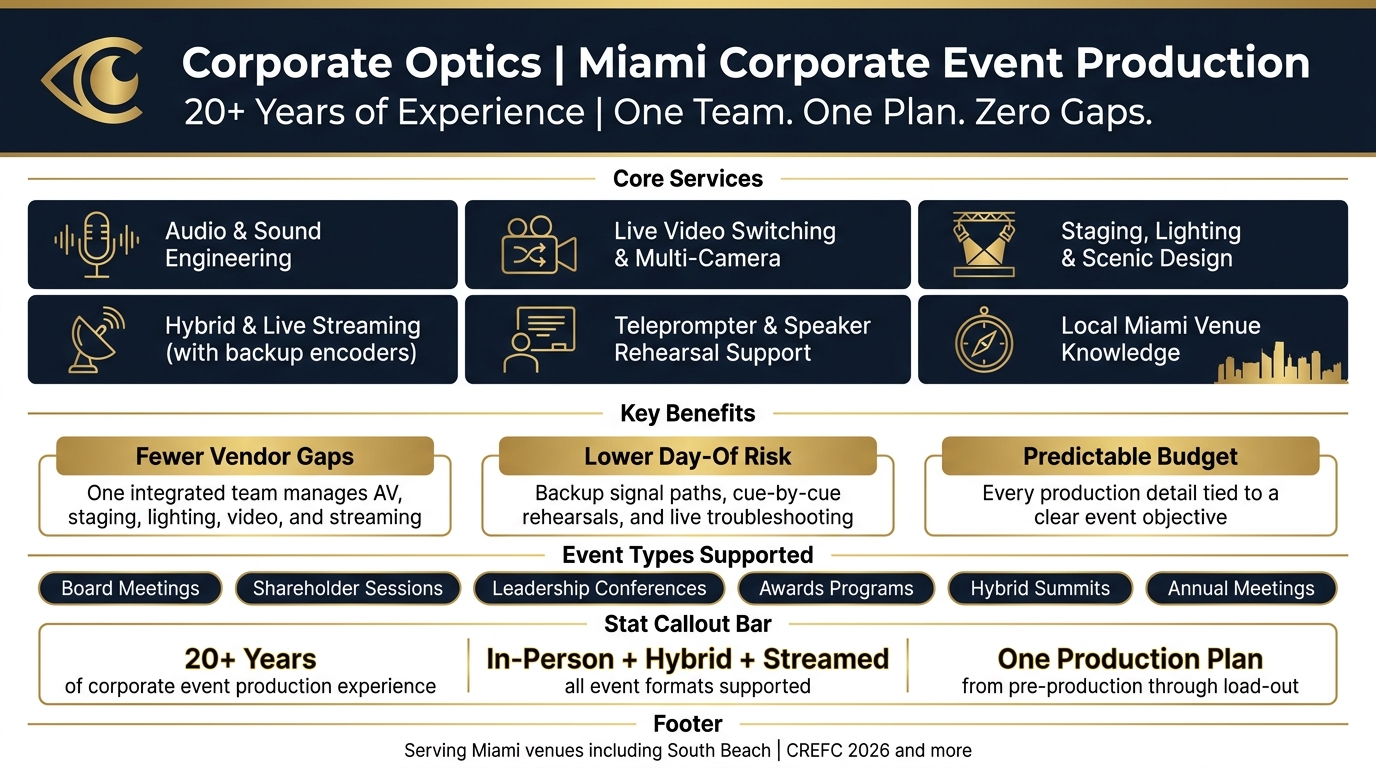
Corporate Optics Miami Event Production: Key Services & Benefits
The Production Problems Event Planners Face In Miami
Miami events can get technically messy fast, and corporate audiences spot those issues right away. A venue may look polished on the surface, but behind the scenes, coordination can get complicated. And when the client is a corporate team, even a small miss can stand out.
Venue Constraints and Technical Coordination
A lot of Miami venues were not designed for corporate production. Big ballrooms can create poor sightlines for guests seated along the sides. Nontraditional spaces often need custom production plans because they may not have standard AV infrastructure, which makes setup, testing, and cueing harder for production teams.
One program may need audio, video, lighting, staging, streaming, and presenter support to work together at the same time. If different vendors or teams handle those pieces separately, miscommunication becomes much more likely. As Corporate Optics puts it: "We have consistently demonstrated our ability to navigate logistical challenges, delivering seamless experiences that align perfectly with our clients' goals."
That’s why centralized technical leadership matters so much in this kind of setup.
Hybrid Event Demands and Executive-Level Risk
Hybrid events have to work for the in-room crowd and the remote audience at the same time. That means broadcast-quality video, clean audio feeds, stable internet with backup streams, and content routing that keeps remote viewers involved instead of treating them like an afterthought.
A delayed slide. A dropped audio feed. A speaker who looks dim on camera. Any one of those can hurt the session right away.
"The first 10 seconds of an executive introduction can set the tone for the entire session. Before the audience arrives, our team is already in cue-by-cue rehearsal... to make sure every moment is seamless." - Corporate Optics
Board meetings make the job even tougher. Sensitive shareholder and executive conversations call for secure AV and tight privacy protocols.
For planners, the pressure is simple: one failure can hurt the attendee experience and the executive’s credibility at the same time.
Budget Pressure, Time Limits, and Planner Stress
Most in-house event teams are juggling speakers, stakeholders, branding, catering, and logistics all at once. Technical production is only one part of that workload, but it’s usually the part everyone notices when something goes wrong.
Budget pressure adds another headache. Every line item gets checked, and there’s not much room for waste. At the same time, timelines are often tight. Annual meetings, leadership conferences, and shareholder events don’t get pushed back just because production got tricky. The show still has to be ready on time. Corporate Optics addresses this directly: "Every detail in our planning has a clear purpose, ensuring that each investment aligns with our clients' core mission objectives."
To deal with that, Corporate Optics uses one plan to keep AV, staging, lighting, video, and streaming on the same track.
sbb-itb-ae35a94
How Corporate Optics Addresses These Production Challenges
Corporate Optics runs production under one plan, from pre-production through load-out. That helps planners avoid gaps between vendors and keeps each technical detail tied to the event goal.
One Production Plan Covering All Moving Parts
Missed cues and weak handoffs tend to happen when audio, video, lighting, staging, and streaming are split across separate teams. Corporate Optics keeps the creative direction, technical specs, and live show logistics moving together. The same team that builds the pre-production diagrams and cue sheets also runs the show on event day, which means tighter timing and fewer surprises.
AV, Staging, Lighting, Video, and Live Streaming
Corporate Optics manages audio, confidence monitors, scenic design, lighting, live switching, and hybrid streaming as one coordinated production. That matters because these pieces don't work in isolation. If one side slips, the whole show can feel off.
For virtual and hybrid parts of the event, the company uses professional video switching and backup signal paths to help keep the stream steady and remote viewers tuned in. That extra backup is a big deal during multi-day programs, where a dropped feed in the middle of an executive session can hurt the event's credibility.
Local Venue Knowledge and On-Site Technical Leadership
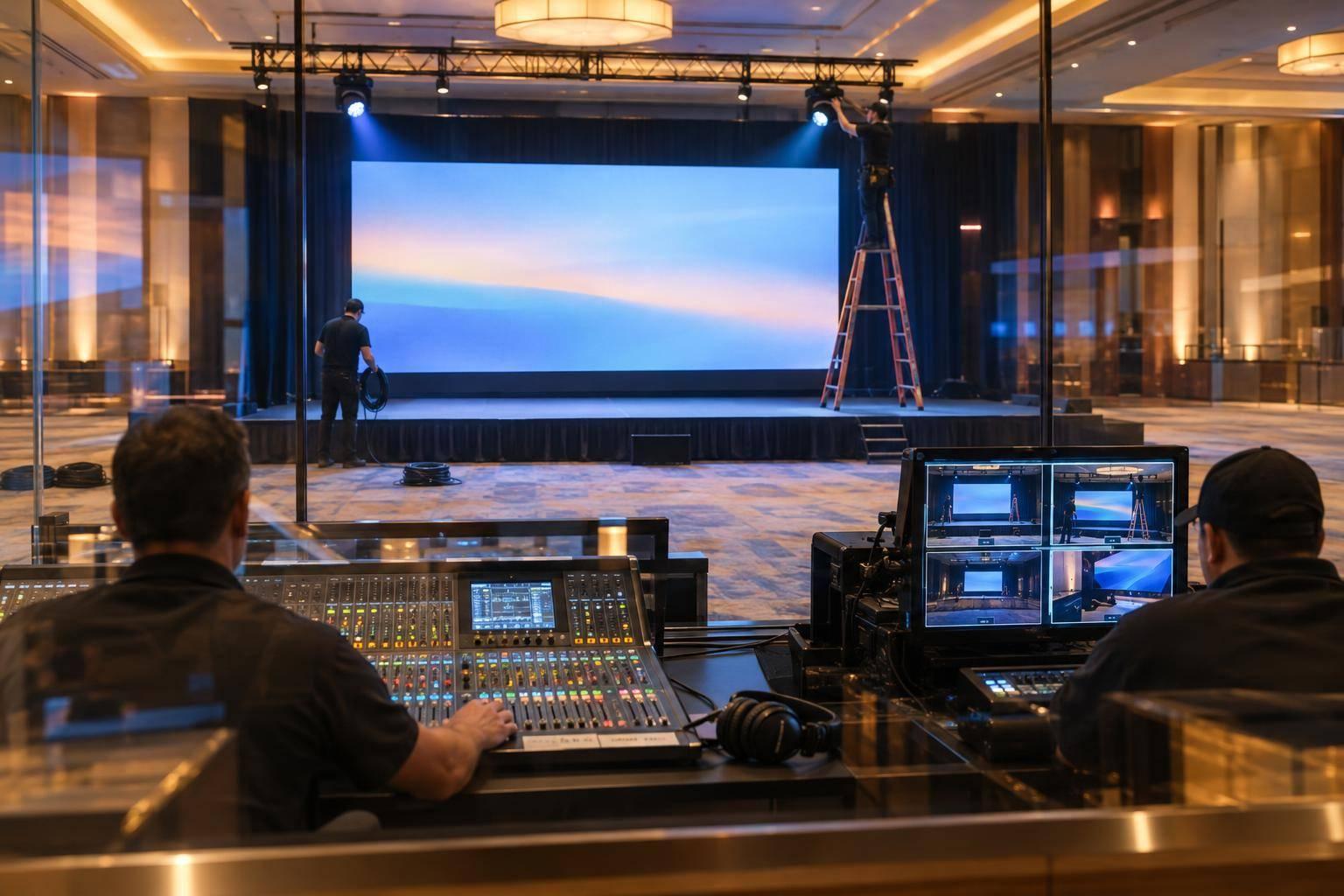
Corporate Optics matches equipment, rigging, power, and load-in plans to the limits of each Miami venue. That kind of venue know-how speeds up setup, cuts down on on-site issues, and keeps coordination with venue staff clean.
On-site, the team handles show calling, cue management, sound checks, video checks, and live troubleshooting. During a hybrid executive meeting, one technical lead may be watching microphones, slides, backup feeds, and camera shots at the same time while staying synced with the emcee and venue staff. The result is faster problem-solving and a smoother experience for people in the room and online.
For executive presenters, teleprompter services, script support, and rehearsals help cut on-stage mistakes and protect delivery quality, even when last-minute speaker changes call for fast cue updates.
That level of control also helps the attendee experience and makes event value easier to measure.
Business Value Beyond the Equipment
Once the technical plan is locked in, the payoff goes far beyond gear. At Miami corporate events, production changes how people take in information, how confident speakers feel on stage, and how leadership sizes up the event.
A Better Experience for In-Person and Remote Attendees
Clear audio, easy-to-read visuals, and focused lighting make a big difference during long sessions. When those pieces line up with a well-run show flow, people stay with the program longer and leave with a better grasp of the message.
Remote attendees depend on the feed itself. If the audio is clean, the camera framing stays steady, and the stream holds up, they’re far more likely to stick around. And when the virtual experience is built for remote viewers instead of tacked on at the last minute, participation tends to improve, including Q&A involvement.
AI-Supported Planning and Post-Event Insight
That same setup can also produce useful data before and after the event. Corporate Optics uses prompts.ai to support agenda development, event strategy, and audience engagement analysis.
This helps before the event starts and after it wraps. It also supports post-event reporting by showing where engagement stayed steady and where it fell off. For communications teams sharing results with a C-suite, that makes spend easier to explain and future programming easier to refine.
More Predictable Value for Planners and Stakeholders
For planners, the upside is better risk control and a budget they can defend with less friction. Full-service event production gives them one owner for specs, backup plans, and execution. That means fewer surprises and costs that are easier to explain.
For stakeholders, production spend is easier to support when it has a direct effect on message delivery, timing, and risk control.
Conclusion: Why Corporate Optics Is a Strong Choice for Miami Events
Miami events don’t leave much margin for technical mistakes. In that kind of setting, working with one production partner makes a lot of sense.
Corporate Optics handles venue review, execution, and post-event review through one coordinated production plan. That approach cuts down day-of risk and gives planners a cleaner path from concept to execution. It matters even more in Miami venues where technical limits can be tight.
Local venue knowledge helps teams avoid last-minute layout changes, surprise fees, and schedule overruns. The same steady approach shows up when leading AV teams for virtual town halls and hybrid events too.
For hybrid and streamed events, Corporate Optics builds in redundancy with backup streaming encoders, clean audio capture tuned for remote listeners, and multi-camera setups with live switching. That added backup helps protect both in-room and remote audiences throughout the program.
For planners running complex programs in Miami, the biggest advantage is predictability: one partner, one plan, and fewer unknowns on event day.
FAQs
What types of Miami events does Corporate Optics handle?
Corporate Optics supports a wide range of events in Miami and across the United States, including in-person, hybrid, and virtual formats.
The team produces conferences, board meetings, annual meetings, awards ceremonies, product launches, town halls, sales kickoffs, all-hands meetings, and custom events. They manage the full production process, from technical execution and staging to audience engagement.
How early should I involve Corporate Optics in planning?
As early as possible. For most events, the sweet spot is 3 to 6 months ahead.
Bigger or more involved conferences should usually start 6 to 12 months in advance. Smaller meetings can often come together in 6 to 10 weeks.
Bringing in Corporate Optics early gives the team time to review your goals, look at venue needs, spot technical issues like power or rigging limits, and put together a full plan.
What backup plans are included for hybrid events?
Corporate Optics builds backup plans into the technical design to help prevent downtime. That means redundant signal paths, duplicate feeds, fallback recording options, and pre-event rehearsals.
The team also keeps spare gear on-site, including backup microphones, redundant playback machines, hot-swappable cables, and other equipment checks so they can fix problems before the audience notices.
Related Blog Posts


Streamline your workflow, achieve more

Lorem ipsum dolor sit amet, consectetur adipiscing elit. Maecenas ac velit pellentesque, feugiat justo sed, aliquet felis.



Lorem ipsum dolor sit amet, consectetur adipiscing elit. Maecenas ac velit pellentesque, feugiat justo sed, aliquet felis.