Why Corporate Optics Is A Great Event Production Company To Work With In New York City.

Chief Executive Officer
If I had to sum it up in one line: Corporate Optics fits New York City corporate events because one team handles the AV plan, venue rules, show flow, and hybrid feed from start to finish.
In NYC, common mistakes in corporate AV production often come from tight load-in windows, union labor limits, freight elevator delays, and last-minute speaker changes. This article says Corporate Optics lowers that risk by keeping audio, video, lighting, staging, streaming, and on-site cue calling under one group instead of splitting the work across multiple vendors.
What stands out most:
- One team manages planning and show day
- Venue logistics are checked early, including power, dock access, and rigging
- Cue calling stays under one technical lead during the event
- Hybrid support includes multi-camera switching, clean audio feeds, and backup paths
- Client teams face fewer handoff issues, which matters when the audience includes executives, investors, and remote viewers
A few points matter more in New York than in many other cities. Load-in can be limited to just a few hours. Missing a dock slot can push setup back by hours. Overtime labor costs can climb fast. And one bad handoff between vendors can affect slides, microphones, lighting, and live stream timing all at once.
Here’s the short version:
| Area | What the article says Corporate Optics does |
|---|---|
| Planning | Checks venue limits before show day |
| AV | Handles audio, video, lighting, and staging together |
| Show control | Uses one show caller and one technical team |
| Hybrid | Builds streaming into the plan from the start |
| Client impact | Cuts confusion, delays, and pressure on internal staff |
My takeaway: this article presents Corporate Optics as a good fit for companies that need a clean, controlled event in New York City, especially when there is little margin for error.
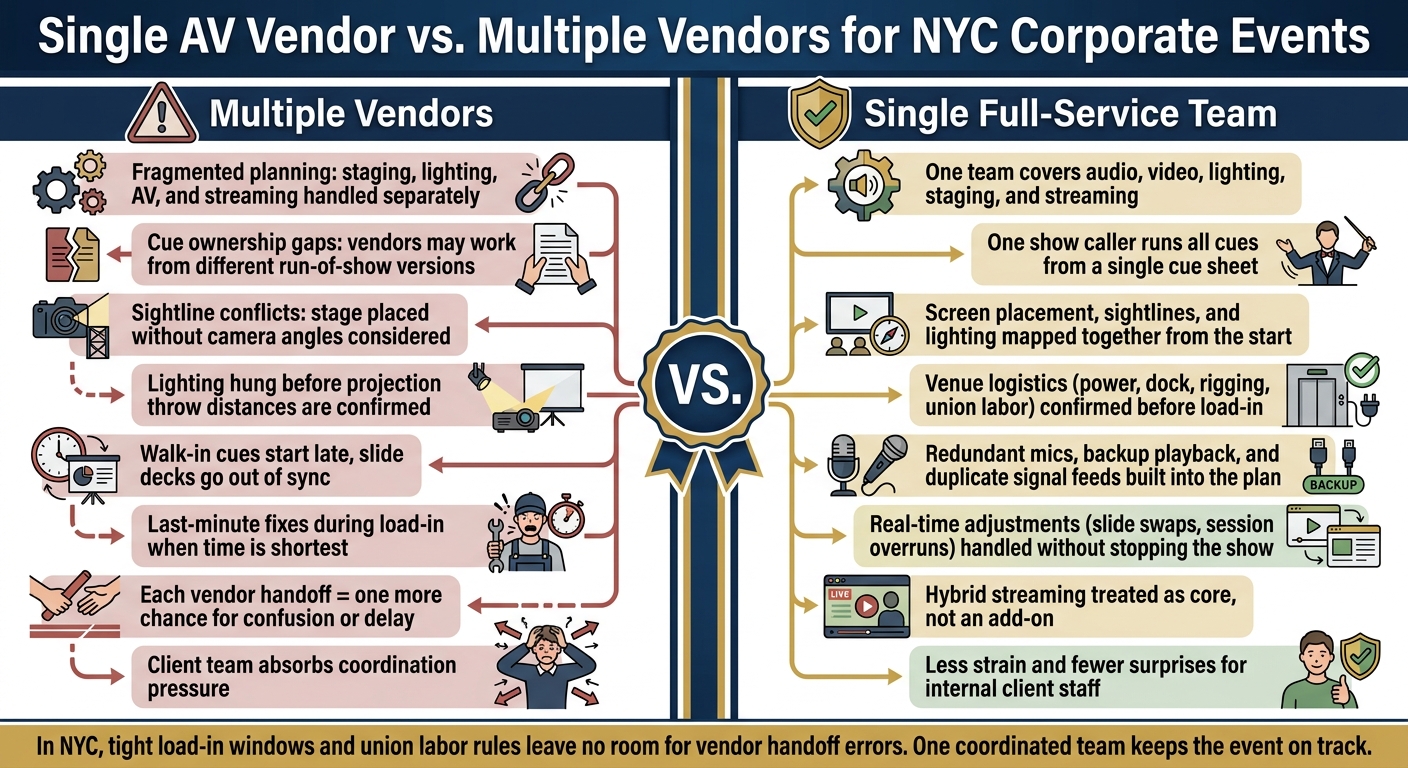
Single AV Vendor vs. Multiple Vendors for NYC Corporate Events
The Real Challenges of Producing Events in New York City
In New York City, venue rules and tight timelines can turn technical coordination into one of the hardest parts of an event. Corporate Optics works to ease that strain by planning around venue requirements before show day, not during the scramble of load-in.
Venue Rules, Tight Schedules, and High Execution Pressure
In Manhattan, load-ins are often measured in hours, not days. Many venues manage freight dock access through a dock manager and require production teams to stick to set time slots. At The Glasshouse, load-in and load-out schedules must be submitted ahead of time and sent again to venue operations before load-in. Miss that freight dock window, and setup can get pushed back by hours. When that happens, rehearsal time shrinks fast.
Freight elevators can slow things down even more. In many Manhattan buildings, those elevators are shared with hotel staff or event operations, so AV gear doesn't always move when the production schedule needs it to. Older properties can make things even harder with limited power and tighter elevator access.
Union labor rules at larger venues leave little room for guesswork. Labor categories are set. Break schedules are fixed. Overtime costs add up fast when the timeline slips. So every production call matters, from when the stage is built to when power is distributed to when the sound system is flown. Those choices need to be mapped to building rules before anyone even reaches the loading dock. Once those venue limits are in play, split-up technical planning becomes much harder to fix on the spot.
Why Using Multiple Vendors Increases Execution Risk
Using several vendors can create gaps that don't show up until it's almost too late. A staging crew may place the stage without thinking through camera sightlines. A lighting vendor may hang fixtures before projection throw distances are locked in, which can leave wash spilling onto the screens. Without one technical lead pulling those pieces together, the problems often don't appear until load-in, when time is short and fixes are harder.
Cue ownership is another weak spot. If no one person is calling the show, vendors may work from different run-of-show versions. That's how walk-in cues start late, lighting looks miss the moment, or slide decks move out of sync with the speaker. Corporate Optics says it focuses on logistics, vendor coordination, technical rehearsals, and contingency planning to keep execution clean. For that to work, those calls need to happen early, with one team managing the full technical plan. And once load-in starts and cues begin to run, that same team needs to stay in control.
How Corporate Optics Delivers Full-Service AV Production
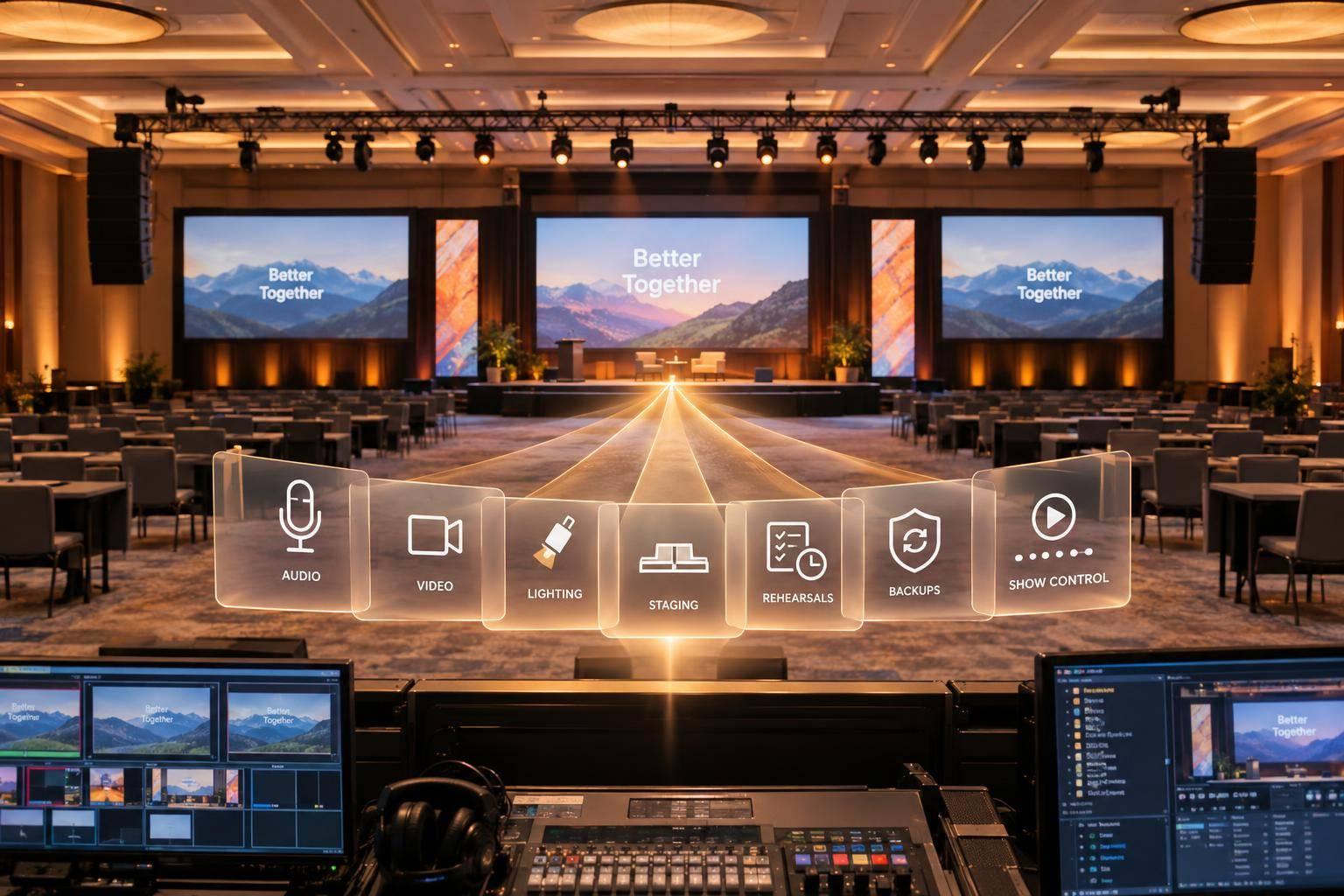
Corporate Optics handles audio, video, lighting, staging, and scenic support under one full-service event production plan. That setup matters even more in NYC venues, where load-in windows are short and one technical choice can throw off the entire schedule.
Coordinated Audio, Video, Lighting, and Staging
In New York City, tight coordination helps stop small technical decisions from turning into expensive load-in issues. It keeps screens, sightlines, lighting, and sound lined up from the start.
Screen placement is planned around the venue and the agenda. Lighting positions are mapped for both presentations and camera needs. Stage dimensions match the program. A keynote-heavy event may need a larger center stage with clean monitor placement, while sound coverage is built around the room’s acoustics and audience size, not tacked on after the stage is already in place.
Proper front-facing lighting keeps presenters visible without washing out slides or other on-screen content. The end result feels polished and deliberate. And once the room is built this way, that same setup can support live, hybrid, and speaker-led programs.
One Technical Team From Planning Through Show Day
Corporate Optics follows a Discover, Design, Develop, Deliver process to keep production aligned from the first idea through show day. Because the same team stays in charge the whole time, changes can happen without disrupting the run of show.
If a presenter shows up with a different slide format, or a session runs long, that team can adjust transitions, camera shots, or lighting cues on the fly without stopping the event.
That continuity helps the team make fast decisions and keep execution clean. It also gives clients more confidence on show day, especially when the event needs to work for both in-room and remote audiences. Following hybrid meeting planning best practices ensures that technical cues translate effectively to both environments.
sbb-itb-ae35a94
Venue Coordination and On-Site Technical Management
That planning pays off when the team has to make the design work inside an actual venue.
AV design only works when it fits the room. In New York City, space limits can force a full room rethink, and Corporate Optics treats venue coordination as a core part of the technical plan, not something left for later.
Managing Venue Logistics Before Doors Open
Corporate Optics starts with a site visit to check ceiling heights, columns, power, freight access, and dock distance before locking the room plan.
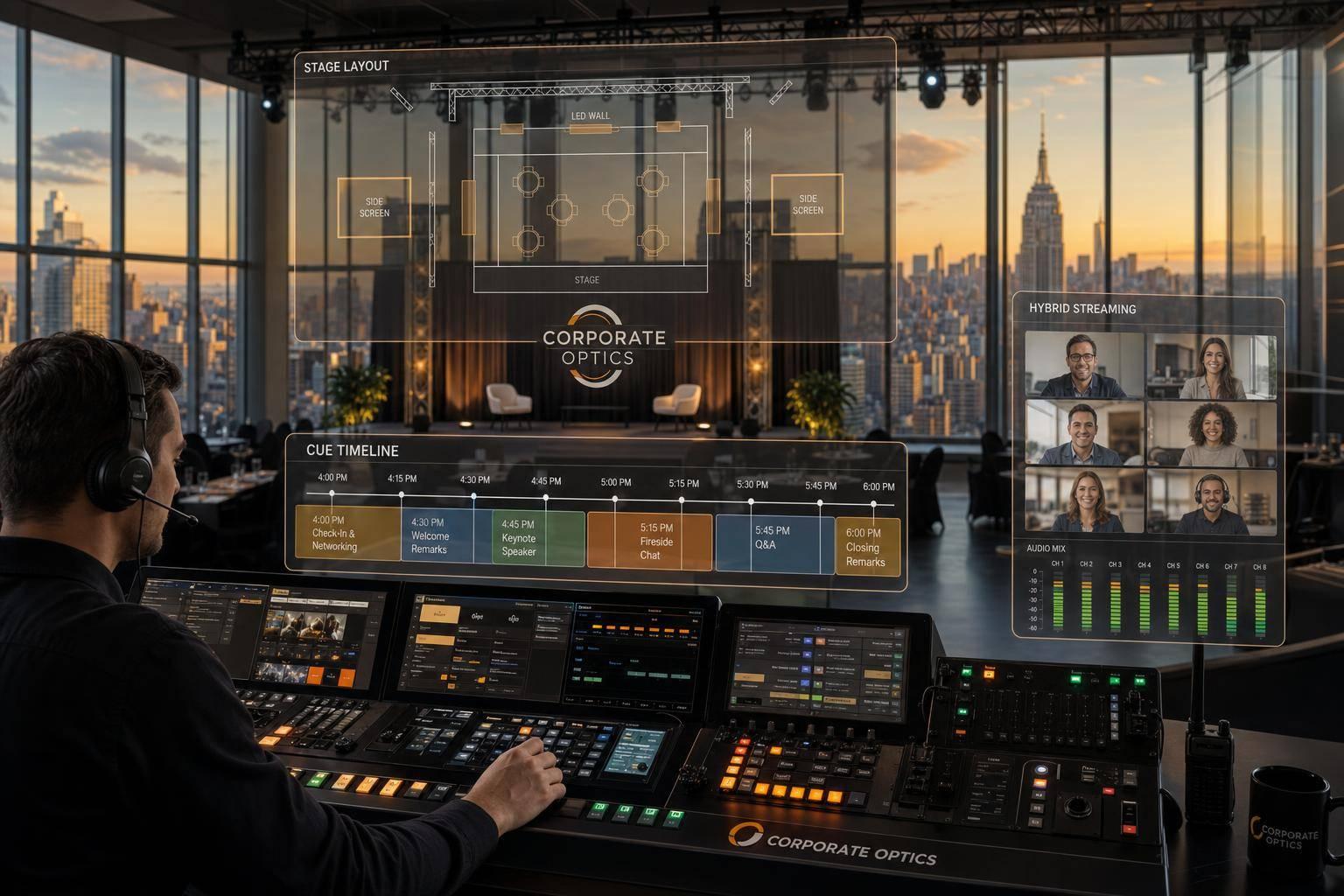
From there, they build a layout that shows where the stage, seating, screen surfaces, camera positions, and control areas can physically fit while keeping sightlines clean and walkways open. They confirm power needs with venue engineering so audio has dedicated circuits, LED walls or projection have enough capacity, and cable paths stay safe. They also verify rigging points for weight loads and trim heights before anything goes overhead.
Corporate Optics works directly with venue operations on freight elevator access and union labor call times so setup happens in the right order. Critical path items like the stage, PA, projection, and control positions go in first.
Once the room is built, that same team stays on headset and manages the show as it happens.
Running the Show in Real Time
Once the room is built and tested, a dedicated show caller takes over. That person runs the event against the cue sheet, calling transitions like house lights down, walk-in music, slide advances, video rolls, and mic cues to the right operators over headset. The technical director tracks the run of show and passes changes straight to the client's event lead.
That setup matters when things change without warning. If a panel runs long, a speaker swaps slides at the last minute, or a microphone needs to be replaced, the team handles the shift without stopping the show. Redundant mics, backup playback machines, and duplicate signal feeds are built into the plan from the start, not figured out under pressure.
That same on-site control also supports leading AV teams for virtual town halls and speaker-ready programs without disrupting the audience experience.
Hybrid Support, Audience Experience, and Final Takeaways
Support for Live, Hybrid, and Speaker-Ready Events
Once the room is built and the cues are locked, the last step is making sure the experience works just as well for people in the room as it does for people watching remotely. Corporate Optics treats hybrid production as a core part of the job, not an add-on.
That means the plan includes multi-camera switching, clean audio feeds, and redundant signal paths from the start, so one hardware problem doesn't knock the stream offline in the middle of a session. The team also rehearses the details that can make or break a live show: slide compatibility, teleprompter timing, confidence-monitor references, microphone cues, and stream pacing. The goal is simple: keep in-room and remote audiences aligned from start to finish.
How Production Quality Affects Audience Engagement
Once playback and timing are under control, attention moves to what the audience actually sees, hears, and remembers. Scenic design gives the room shape. Lighting points attention to the speaker at the right time. Clean sound helps the message come through clearly, whether someone is sitting in the back row or listening through a laptop speaker on a remote feed.
Corporate Optics also brings in audience engagement tools that work for both in-room and virtual attendees, including:
- Live polls
- Moderated Q&A
- Branded screen content
These tools keep people involved and help them retain the message. When sound, visuals, pacing, and interactivity all stay aligned, the content is easier to follow and easier to remember.
Key Takeaways for Corporate Event Teams
New York City events come with real logistical pressure. Setup windows are tight. Venue rules can be strict. And audiences expect a polished experience.
When that work is split across several vendors, each handoff creates one more chance for confusion or delay. Corporate Optics keeps AV, staging, venue coordination, speaker prep, hybrid streaming, and on-site management under one technical team. That means fewer gaps, fewer surprises, and less strain on the client team.
For corporate teams in New York City, that kind of dependability helps keep events on track and takes pressure off internal staff. It turns technical control into a smoother event with more impact.
FAQs
What types of corporate events does Corporate Optics support in NYC?
Corporate Optics supports a wide range of corporate events in New York City, including:
- Executive meetings
- Conferences and general sessions
- Hybrid programs, live-streamed events, virtual meetings, and webinars
- Product launches, press conferences, and awards ceremonies
- Dealer meetings, leadership conferences, board meetings, town halls, and investor-facing events
- Custom and specialized events
How early should we involve Corporate Optics in event planning?
Bring in Corporate Optics as early as you can. For most events, 3 to 6 months is the sweet spot. If you're planning a larger or more complex conference, start 6 to 12 months in advance.
Smaller meetings can sometimes come together in 6 to 10 weeks. But starting earlier gives you more time to confirm goals, handle venue requirements, and lock in technical needs.
What happens if speakers or schedules change at the last minute?
If a speaker changes or the schedule shifts at the last minute, Corporate Optics keeps the program moving with minute-by-minute run-of-show documentation and live show calling. That means lighting, audio, video, and graphics stay in sync in real time.
Speakers also get backstage support that helps things feel calm instead of chaotic. That includes greenroom coordination, teleprompting, mic checks, and confidence monitors. And when slides or other content need an update, everything runs through a dedicated stage manager to help prevent the wrong version from going live.
Related Blog Posts


Streamline your workflow, achieve more

Lorem ipsum dolor sit amet, consectetur adipiscing elit. Maecenas ac velit pellentesque, feugiat justo sed, aliquet felis.



Lorem ipsum dolor sit amet, consectetur adipiscing elit. Maecenas ac velit pellentesque, feugiat justo sed, aliquet felis.