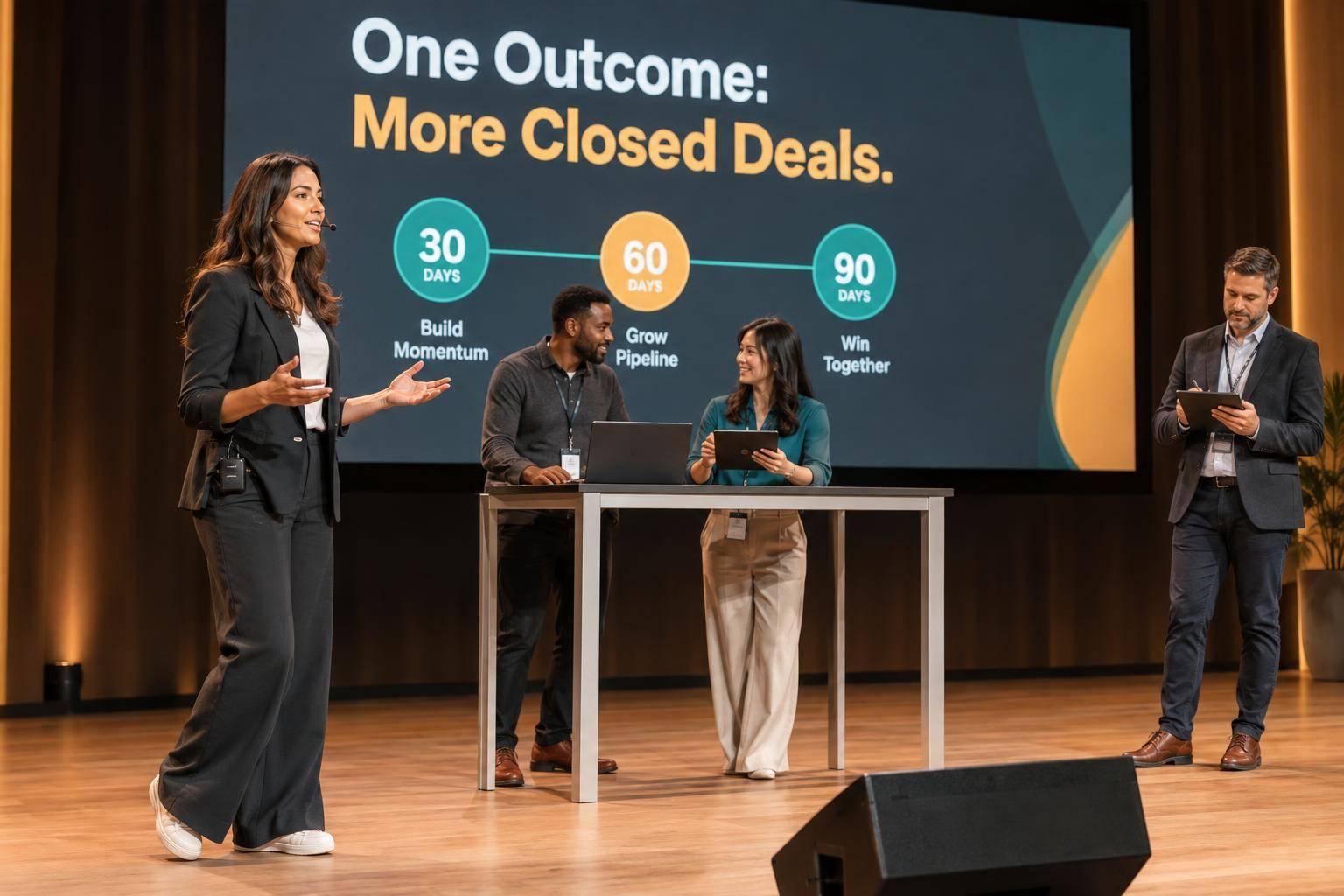
6 Reasons By Leadership Conferences Positively Impact Employee Retention And Morale

Chief Executive Officer

Leadership conferences can help your company lower employee turnover, boost morale, and improve workplace culture. They equip managers with critical skills, align teams, and create growth opportunities that keep employees motivated and engaged. Plus, they reduce burnout among leaders and cut the costs of replacing employees, which can range from 50% to 200% of an annual salary.
Here’s why leadership conferences matter:
- Skill Development: Managers learn emotional intelligence, conflict resolution, and active listening, leading to better team dynamics.
- Career Growth: Employees are more likely to stay when they see clear paths for advancement.
- Connection: Conferences build stronger workplace relationships and a sense of belonging.
- Recognition: Employees feel valued when their efforts are acknowledged, improving engagement.
- Alignment: Leaders return with shared goals and strategies, creating a unified workplace.
- Motivation: These events help leaders recharge and reconnect with their purpose.
Leadership conferences are not just a one-time fix. To maximize their impact, organizations should implement post-event strategies like peer coaching, follow-ups, and knowledge-sharing to embed the lessons into daily operations. This investment leads to higher retention, happier employees, and long-term savings.

6 Ways Leadership Conferences Impact Employee Retention and Morale
[Webinar] Creating a Happy Workplace: Leadership Strategies for Retention and Growth
sbb-itb-ae35a94
1. Better Leadership Through Skill Development
Leadership conferences play a vital role in helping managers develop essential soft skills like emotional intelligence, active listening, and conflict resolution. These abilities directly influence the workplace atmosphere, enabling leaders to handle stress, demonstrate empathy, and address challenges effectively. The result? A healthier work environment that encourages employees to stay. Let’s dive into how these skills translate into measurable gains in retention.
Impact on Employee Retention
When leaders are emotionally intelligent, employees are 30% more likely to report high job satisfaction. Companies that implement formal coaching programs enjoy 22% higher retention rates, and teams led by managers skilled in conflict resolution see a 15% drop in turnover. A great example is Starbucks, where leadership training focused on emotional intelligence and communication has led to a 70% retention rate.
Influence on Employee Morale
Leadership training that emphasizes coaching and mentorship empowers managers to recognize team strengths and support individual growth. This fosters a sense of value among employees. Take Google’s G2G mentorship program: by incorporating problem-solving and communication courses, it has maintained high engagement levels while keeping turnover low. In fact, 71% of employees report increased job satisfaction thanks to job training and development opportunities.
Practical Application in Workplace Culture
Leadership conferences also help unify management by promoting consistent messaging and strategies across all levels. For example, a healthcare organization’s annual leadership institute for 2,000 leaders includes training on psychological safety and peer coaching circles. This approach not only reinforces key concepts but also drives meaningful cultural changes.
Cost-Effectiveness in Reducing Turnover Costs
Replacing an employee can cost anywhere from 50% to 200% of their salary, with senior leadership replacements exceeding 200%. Structured leadership programs have the potential to cut turnover by 25%. Since managers account for at least 70% of the variance in employee engagement scores, investing in leadership development stands out as one of the most effective ways to reduce turnover costs while boosting overall team performance.
2. Creating Career Growth Opportunities
Leadership conferences provide managers with tools to recognize and develop employee potential. By learning coaching techniques, leaders become more adept at identifying individual strengths and advocating for promotions or specialized training opportunities. This approach helps employees envision a clear path forward, reducing feelings of stagnation in their current roles. These pathways to growth play a key role in boosting employee loyalty and retention.
Impact on Employee Retention
When companies invest in employee development, the results speak for themselves: 94% of employees are more likely to stay longer. Additionally, 73% report higher commitment when they see genuine opportunities for growth. Leadership conferences help fulfill this need by introducing structured career development pathways and leadership models that outline advancement opportunities. Programs like mentorship pair emerging talent with experienced leaders, offering guidance and support that consistently lead to higher retention rates.
Influence on Employee Morale
Clear career paths do more than retain employees - they also uplift morale. 71% of workers report greater job satisfaction thanks to training and development opportunities, while 61% cite upskilling as a key reason to stay at their current job. Leadership conferences encourage initiatives like peer coaching circles and mentorship programs, which provide ongoing support for employees aiming to grow. These events also foster strong professional networks, which have a proven impact on reducing turnover.
"By providing leaders with the tools to identify and support their team members' career goals, organisations create an environment where employees feel valued and see a future within the company." - Horton International
Practical Application in Workplace Culture
The benefits of leadership conferences extend beyond the event itself. Many organizations implement post-conference strategies to share key takeaways across the company. For example, they may evaluate knowledge gaps and offer tailored benefits like certifications or specialized courses that align with employees' career aspirations. These conferences also promote cross-department collaboration, helping employees expand their internal networks and discover new growth opportunities. By embedding these practices into the workplace culture, companies strengthen both individual commitment and overall team success.
Cost-Effectiveness in Reducing Turnover Costs
Replacing employees is expensive - around 20% of a mid-level employee's salary and over 200% for senior leaders. Structured leadership development programs that focus on career advancement reduce turnover by 25%, as they keep employees engaged through clear progression opportunities. And with 61% of workers prioritizing upskilling opportunities, investing in leadership conferences is a smart move. These events not only create growth pathways but also deliver measurable returns by retaining top talent.
3. Building Connection and Belonging
Leadership conferences provide a refreshing change from the daily grind, creating opportunities for meaningful connections. These in-person gatherings help rebuild a sense of community, which plays a key role in fostering a loyal and engaged workforce.
Impact on Employee Retention
The bonds formed during leadership conferences can directly influence employee retention. Research shows that having a "best friend at work" is closely linked to higher engagement levels and a reduced likelihood of leaving the organization. These events naturally encourage professional friendships, while interdepartmental interactions highlight how individual roles contribute to the bigger picture. When employees understand the value they bring to the organization through these connections, their commitment often strengthens.
Influence on Employee Morale
Strong connections also boost employee morale in ways that formal training alone cannot match. Many employees return from conferences energized and inspired by the relationships they’ve built. Leadership summits often convey consistent messages that align teams and reinforce a shared purpose. This sense of alignment helps employees feel they’re part of something larger than their specific roles. As Rachel Semple from FlashPoint explains:
"Leadership development institutes that leave space for informal connection and conversation are places where these relationships can blossom or grow".
Practical Application in Workplace Culture
To maximize the benefits of these conferences, organizations can implement strategies like peer coaching circles, where leaders collaborate to address challenges and share advice. For example, a healthcare organization hosts an annual leadership development institute for over 2,000 leaders, using these peer circles to cultivate a culture rooted in purpose. Similarly, a financial services firm organizes an annual leadership summit for more than 300 leaders, incorporating networking sessions and cross-functional simulations to encourage collaboration.
Attending these events as a team, rather than as individuals, ensures everyone gains the same insights and can collectively spark fresh ideas upon returning to work. This team approach amplifies creativity and strengthens the shared knowledge base throughout the organization.
4. Improving Employee Recognition and Engagement
Leadership conferences create a space to celebrate the contributions of leaders while reinforcing the values that define a company. These events give senior executives a chance to deliver consistent messages and openly acknowledge the hard work of managers. Studies reveal that 70% of employees feel better about their work when their boss expresses gratitude, and 81% say they’d work harder if they felt more appreciated by leadership. This kind of recognition not only boosts morale but also strengthens employee loyalty by making them feel truly valued.
Impact on Employee Retention
Leadership conferences often include training sessions that help managers develop coaching techniques. These techniques focus on identifying team strengths and providing authentic recognition. Since managers account for 70% of the variance in employee engagement scores, improving their ability to acknowledge and support their teams can have a big impact on retention. When employees feel genuinely seen and appreciated, they’re more likely to stay committed to their roles and the organization.
Influence on Employee Morale
These conferences also serve as a refreshing break from the daily grind, helping leaders reconnect with the company’s mission. The effect on morale is clear: 71% of workers report increased job satisfaction from training and development opportunities. Additionally, companies with highly engaged employees see 21% higher profitability. These numbers highlight how investing in leadership development can pay off in both employee happiness and business outcomes.
Practical Application in Workplace Culture
The benefits of leadership conferences don’t have to end when the event wraps up. Many organizations integrate what they’ve learned into everyday practices. Initiatives like peer coaching circles, follow-up reinforcement programs, and executive roundtables help ensure that the lessons from the conference translate into meaningful, ongoing recognition in the workplace. These efforts help embed a culture of appreciation and engagement into daily operations.
5. Strengthening Company Culture
Leadership conferences play a key role in creating a unified company culture by building on recognition and engagement efforts. These events provide a platform for organizations to align their values, goals, and expectations across all levels. When executives deliver key messages to the entire leadership team at once, it ensures that everyone receives the same strategic vision without any miscommunication or mixed interpretations. This clear and consistent communication eliminates potential confusion and ensures leaders return to their teams with a shared understanding of the company’s direction. This shared clarity not only sharpens focus on strategic objectives but also contributes to longer employee retention.
Impact on Employee Retention
A cohesive company culture significantly influences employee retention. By standardizing communication and promoting fairness, leadership conferences help create an environment where employees feel valued and understood. These events establish uniform frameworks for feedback, recognition, and communication, reducing the perception of favoritism and reinforcing a sense of equity. When employees observe consistent behaviors and values from leadership across the organization, trust grows, and they are more likely to remain committed to the company for the long haul.
Influence on Employee Morale
Breaking down departmental silos is another benefit of leadership conferences. These events encourage leaders to engage in cross-functional collaboration, helping them understand how their roles intersect with and impact other teams. This shift from competition to mutual support fosters a more cooperative atmosphere. Additionally, training sessions focusing on empathy, active listening, and DEI (diversity, equity, and inclusion) equip managers to create environments where employees feel psychologically safe - free to share ideas or admit mistakes without fear of judgment. Considering that managers influence at least 70% of the variance in employee engagement scores, enhancing their interpersonal skills directly boosts team morale.
Practical Application in Workplace Culture
The benefits of these conferences extend well beyond the event itself. Follow-up strategies, such as reinforcement packages and peer coaching circles, help embed the lessons learned into daily operations, spreading positive practices across departments and strengthening interdepartmental bonds. Networking opportunities during these summits also foster meaningful professional connections. These relationships are closely tied to higher employee engagement and lower turnover rates, making them a critical component of a thriving workplace culture.
6. Increasing Motivation and Lowering Turnover Costs
Leadership conferences go beyond skill development and networking - they play a key role in boosting motivation and cutting down turnover costs. By addressing these areas, they contribute to better employee retention, improved morale, and a stronger sense of purpose within organizations.
Attending leadership events helps leaders reconnect with their organization's mission and rediscover the deeper purpose behind their work. This renewed focus is crucial, especially when considering that 51% of workers feel exhausted by the end of the day, and 45% report emotional fatigue. These conferences provide a much-needed break from daily routines and offer insights from industry experts, which 71% of employees say increases their job satisfaction.
Impact on Employee Retention
The connection between leadership development and employee retention is clear. Companies with structured leadership programs see a 25% drop in turnover and a 50% improvement in retention rates. Sending leaders to conferences signals that their growth and development matter, which strengthens their commitment to the organization.
Cost-Effectiveness in Reducing Turnover Costs
The financial implications of turnover are significant. Replacing a mid-level employee costs about 20% of their annual salary, while replacing senior-level roles can exceed 200%. On the flip side, companies with high employee engagement see 21% higher profitability. Investing in leadership development not only helps retain employees but also offsets the costs associated with turnover, making it a financially sound strategy.
Practical Application in Workplace Culture
To sustain the benefits of leadership conferences, organizations can introduce peer coaching circles where leaders share challenges and apply new skills collaboratively. Reinforcement packages can be developed for leaders to pass on insights to their teams, amplifying the conference's impact across the organization. Follow-up assessments can also identify areas where additional support is needed, ensuring that the knowledge gained becomes part of everyday practices. These ongoing efforts create a workplace culture where employees feel valued and motivated to stay for the long term.
Conclusion
Leadership conferences are a smart way to boost both employee retention and morale. Research shows that strong leadership development directly ties to higher retention rates, with managers influencing 70% of the variance in employee engagement scores. These events provide leaders with the tools, networks, and renewed sense of purpose to create teams that are motivated to stay.
The financial upside is hard to ignore. Companies that prioritize leadership development typically see a $7 return for every $1 invested and can reduce turnover by 25%. Given the steep costs associated with employee turnover, putting resources into leadership training delivers benefits far beyond the conference itself.
To make the most of these events, start by choosing conferences that address your organization’s specific needs - whether it’s improving emotional intelligence, refining conflict resolution, or encouraging better cross-department collaboration. Set clear, measurable goals for participants before they attend. During the event, promote team participation to encourage shared learning, and facilitate discussions where leaders can exchange ideas and strategies. Afterward, focus on embedding what was learned: create peer coaching groups, use reinforcement tools, and conduct follow-up evaluations to address any lingering gaps.
The best organizations don’t see leadership conferences as one-and-done events. Instead, they weave them into a larger culture of ongoing growth and recognition. When leaders return with fresh energy, sharpened skills, and stronger connections, that momentum can inspire and uplift the entire organization.
FAQs
Which leaders should attend?
Leadership conferences offer a fantastic opportunity for managers, executives, and rising leaders to refine their ability to drive employee engagement, improve retention, and shape a positive workplace culture. Strengthening leadership skills has a direct impact on these critical aspects, making participation in such events incredibly worthwhile.
How do we measure ROI after the event?
To measure ROI, look at shifts in employee retention, engagement, and morale. Also, keep an eye on how leadership development efforts impact organizational results, like better performance or stronger team dynamics. Make sure to focus on metrics that directly connect to your event's objectives for a clear evaluation of its success.
What should we do after the conference?
After the conference, it’s important to keep the momentum going. Share the most important takeaways with your team and start applying the strategies or ideas that were discussed. Consider organizing follow-up activities to build on what you’ve learned. Stay in touch with the contacts you made during the event, as these relationships could prove valuable over time. Finally, take the time to evaluate how the changes you’ve implemented are working. If needed, tweak your approach to ensure the conference translates into real improvements in employee morale and retention.
Related Blog Posts



Streamline your workflow, achieve more

Lorem ipsum dolor sit amet, consectetur adipiscing elit. Maecenas ac velit pellentesque, feugiat justo sed, aliquet felis.



Lorem ipsum dolor sit amet, consectetur adipiscing elit. Maecenas ac velit pellentesque, feugiat justo sed, aliquet felis.