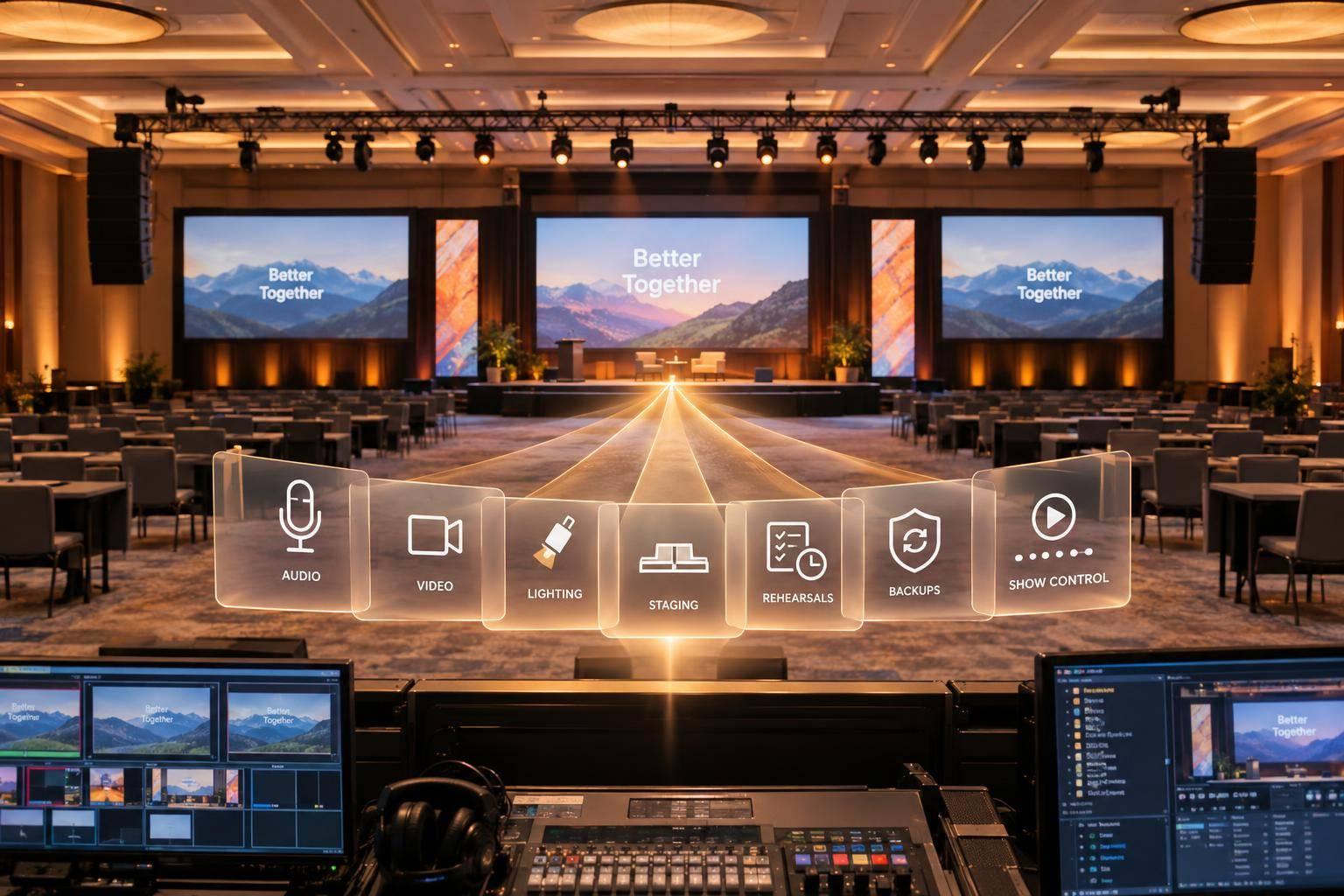
Why Corporate Optics Is A Great Event Production Company To Work With In Atlanta, Georgia.

Chief Executive Officer
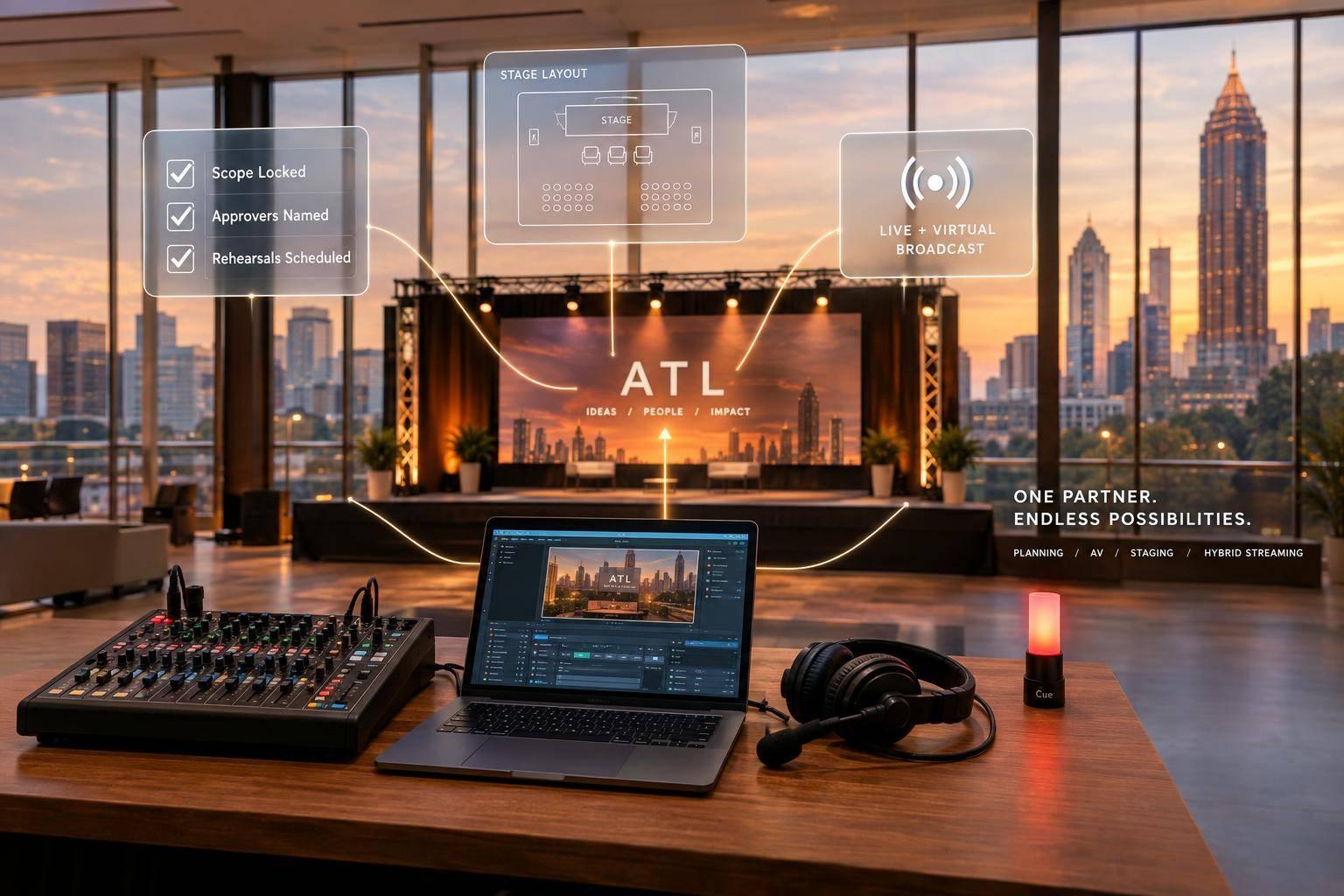
I’d consider Corporate Optics for an Atlanta corporate event when I need one team to handle planning, production, and streaming. Before booking, I’d ask for a written scope that lists costs, responsibilities, and rehearsal time - not just equipment.
Its February 2026 OPmobility town hall served nearly 750 in-person and virtual attendees, showing how the team supports both audiences. For your event, I’d focus on:
- Planning: Budget, venue rules, vendor roles, and approval deadlines.
- Production: Audio, video, lighting, stage design, and branding.
- Speaker support: Teleprompters, cue sheets, and rehearsals.
- Hybrid delivery: Streaming, remote participation, backup feeds, and recordings.
My takeaway: one production partner means fewer handoffs, but <u>clear scope and named decision-makers</u> still matter.

Atlanta Corporate Event Production Checklist
Event Planning, Budgets, and Venue Logistics
Venue Needs and Vendor Roles
Once the program goals are set, focus on venue logistics. Corporate Optics supports venue selection, vendor coordination, and board-meeting catering, matching technical needs to the site’s limits.
For Atlanta planners, this means confirming load-in access, room layouts, and venue rules early. Technical rehearsals and backup plans help prevent surprises before doors open and keep the show on schedule. Board meetings can also include secure AV setups and assigned workspaces. Working through these details ahead of time helps avoid day-of venue problems.
Production Scope and Budget Planning
Tie the budget to deliverables, not just equipment. Corporate Optics helps plan annual meetings and guides organizers through equipment and agenda decisions. This defines the production scope before the schedule is set.
A recent conference shows what that scope looks like in practice.
In January 2026, Corporate Optics served as the full-production partner for Hilb Group’s National Leadership Meeting in Orlando, Florida. Its scope included general sessions and breakouts, AV, lighting, scenic design, camera operations for image magnification (IMAG), and full-program recording across a two-day conference.
Use that scope as a proposal checklist. Specify each room, session, and recording need to simplify production approvals and reduce missed deliverables.
sbb-itb-ae35a94
AV Production, Stage Design, and Speaker Support
With the scope set, the next step is to make the room’s look, sound, and flow work together.
Audio, Video, Lighting, and Scenic Design
Treat the stage as one system. Corporate Optics coordinates audio, video, lighting, and scenic design so the room is easy to follow and reflects the brand. For Atlanta planners, that means one production plan covering clear speech, screen visibility, and consistent branding.
Corporate Optics uses tuned audio for speech clarity, LED walls and IMAG camera feeds for sightlines, and custom motion graphics and scenic sets to carry the brand through the room. In larger rooms, delay projection systems and IMAG camera feeds help keep content visible and readable.
At the CRE Finance Council’s January 2026 conference in South Beach, Corporate Optics used a dynamic LED wall, the Zero Set scenic system, delay projection for sightlines, and show motion graphics for forums and keynote introductions.
Speaker Preparation and Show Cues
Corporate Optics supports presenters with teleprompters, cue sheets, stage management, and on-site technical staff. Downstage monitors with program timers, along with presenter prep, help keep sessions on schedule.
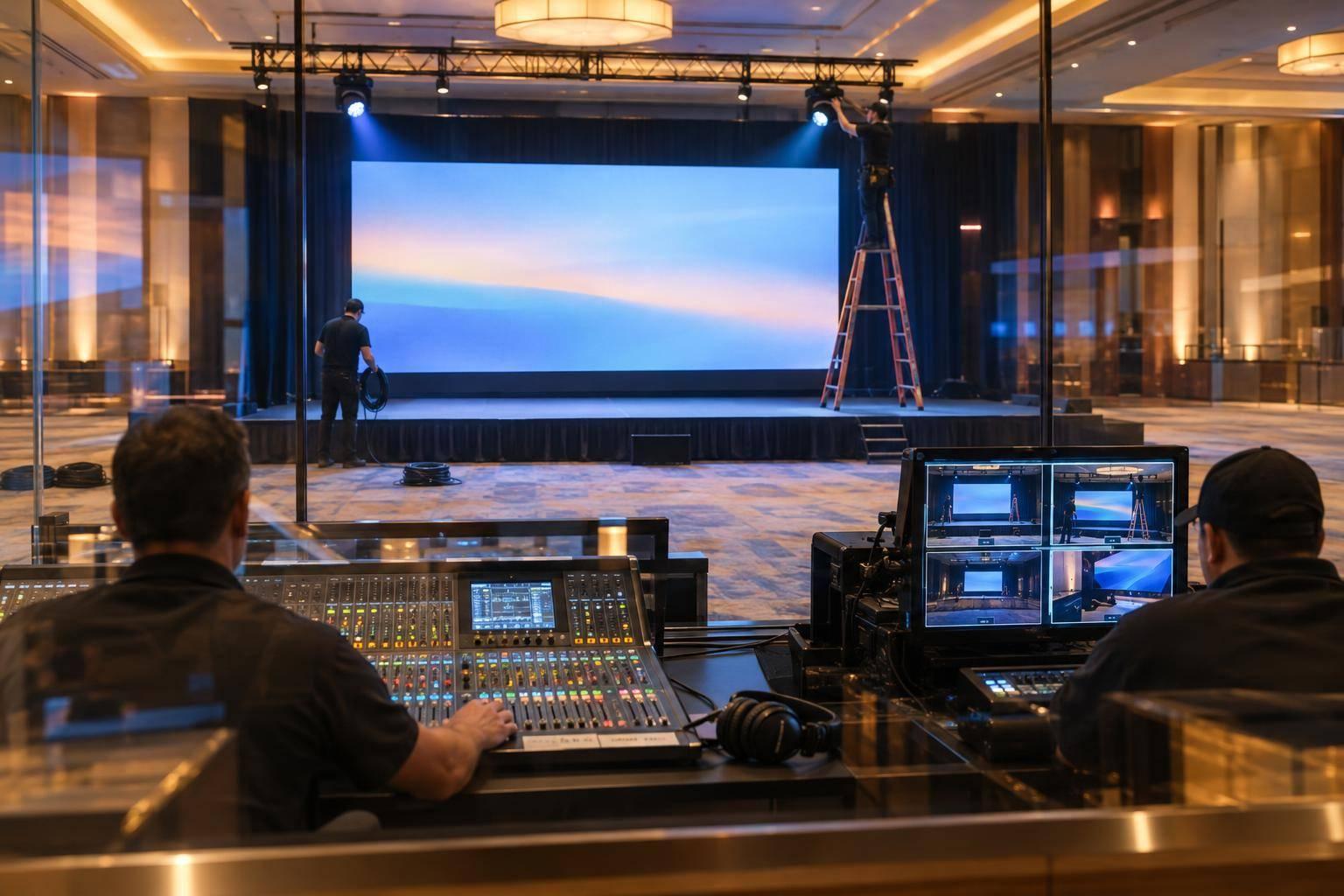
Corporate Optics recommends cue-by-cue rehearsals before the audience arrives. These bring lighting scenes, audio, music, playback, stage management, and speaker timing into sync. Use one approved run-of-show document so everyone follows the same cues through each transition.
Those cues also help teams manage live-stream handoffs and remote participation.
Hybrid Events and Team Collaboration
Live Streaming and Remote Participation
Cue-by-cue show discipline matters just as much in hybrid delivery. Remote viewers need the same clarity, show flow, signal control, and speaker timing as guests in the room.
Corporate Optics provides live streaming and broadcast services for remote audiences. These services include pre-production, delivery and archiving, switching systems, redundant signal feeds, interactive Q&A, live polls, and video-content integration.
Follow hybrid meeting planning best practices to plan for remote viewers from the start. Confirm speaker connections, rehearsal access, audio checks, handoff owners, playback files, stream monitoring, venue internet, and backup connectivity.
Decide ahead of time who can approve a program change if a remote speaker disconnects or playback fails.
Brand Approvals and Post-Event Review
Hybrid programs need the same approval discipline as in-room production. Corporate Optics’ Discover, Design, Develop, Deliver process aligns objectives, technical needs, leadership input, and execution.
Use that process to establish written approval checkpoints, name one final approver, and set a pre-event content deadline. These steps help prevent last-minute conflicts over messaging, graphics, presenter content, and run-of-show timing.
Before the event, confirm recording access, archive delivery, and any reporting deliverables in writing. Afterward, review the recording and production notes to document what to improve for the next program.
Conclusion: Why Atlanta Planners Choose Corporate Optics
Corporate Optics brings planning, AV, scenic production, and speaker support together under one team. That gives planners a clear point of accountability and keeps scope, budget, and execution aligned.
At Bosch’s January 2026 CES press conference, Corporate Optics turned an empty room into a broadcast-ready space with custom scenic fabrication, an LED wall, teleprompter support, and global live streaming - the same discipline Atlanta corporate events require.
For Atlanta planners, that discipline starts with locking in scope before show day. Request a written scope that connects every production element to its cost and the person responsible for it. Include global conference broadcast equipment and rehearsal time - not just the stage and screens. These details help keep budgets clear and execution on schedule while preparing speakers and supporting the attendee experience.
FAQs
How far ahead should I book Corporate Optics in Atlanta?
Bring Corporate Optics into planning as early as possible. Aim for these lead times:
- Most corporate events: 3 to 6 months
- Larger or more complex conferences: 6 to 12 months
- Smaller meetings: 6 to 10 weeks is typically enough
Starting early gives the team time to assess the venue, plan technical needs, and align with your goals so production runs smoothly.
What affects my event production cost?
Your event production cost depends on your event’s scope, goals, and technical requirements. Rather than fixed packages, pricing reflects the labor, equipment, and scale needed to bring your vision to life.
Working with one production partner helps control costs by reducing duplicate work and communication gaps. Corporate Optics also uses AI-supported workflows to simplify planning, optimize expenses, and keep your investment aligned with your core mission objectives.
How does Corporate Optics handle technical failures?
Corporate Optics uses contingency plans and redundant systems to keep events on track. Before each event, the team runs stress tests, surveys the site, and holds rehearsals to spot and fix potential problems.
On-site, a Rapid Response Kit holds spare gear, including backup microphones and playback machines. Redundant signal paths, backup streaming encoders, and fallback recording options let the team handle disruptions in real time without interrupting the event.
Related Blog Posts



Streamline your workflow, achieve more

Lorem ipsum dolor sit amet, consectetur adipiscing elit. Maecenas ac velit pellentesque, feugiat justo sed, aliquet felis.



Lorem ipsum dolor sit amet, consectetur adipiscing elit. Maecenas ac velit pellentesque, feugiat justo sed, aliquet felis.