Why Corporate Optics Is A Great Event Production Company To Work With In Las Vegas, Nevada.

Chief Executive Officer
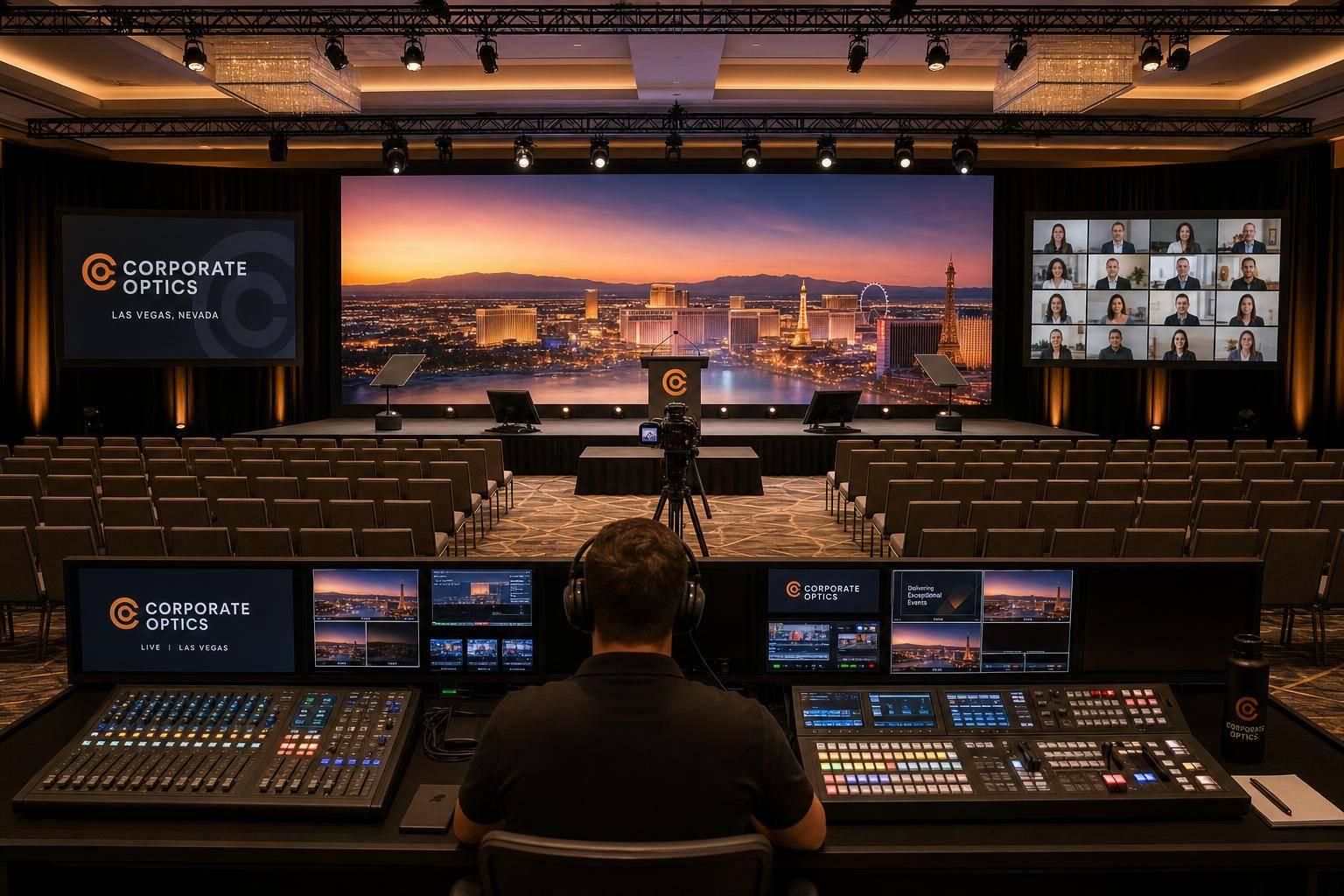
Las Vegas events move fast, and small production mistakes can get expensive. I’d sum this up in one line: Corporate Optics stands out because it handles the parts that often break shows in Las Vegas - venue rules, AV setup, streaming, speaker support, and show-day control - under one team.
Here’s the short version:
- Las Vegas had about 6 million convention attendees in 2023, which puts pressure on rooms, crews, and schedules.
- Many venues have tight load-in windows, labor rules, rigging deadlines, and house AV limits.
- Corporate Optics helps by planning the show before move-in, running one clear production workflow, and staying on site to keep cues, media, and timing in line.
- That matters for corporate meetings, conferences, executive presentations, awards shows, and hybrid events where one audio or video miss can affect both the room and the stream.
- The company also supports the audience side of the event with stage layout, lighting, teleprompter help, confidence monitors, polling, Q&A, and post-event reporting.
If I were choosing a Las Vegas production partner, I’d focus on four things: tech dependability, venue experience, clean budgeting, and one point of contact. This article shows why Corporate Optics fits that checklist without adding extra friction.
The main point is simple: in Las Vegas, good event production is less about flashy gear and more about planning, control, and fewer mistakes on show day.
📡 Behind the Scenes: Pro AV Setup for 3-Day Corporate Conference #AxientDigital #YamahaDM7
sbb-itb-ae35a94
Common Event Production Problems Companies Face In Las Vegas
Las Vegas drew about 6 million convention participants in 2023, which puts steady pressure on venues, labor, and logistics. For corporate planners, that pressure shows up in very practical ways.
Complex Venues, Tight Schedules, And House Rules
Las Vegas ballrooms and convention halls often come with venue-specific rules that can slow production down. At the Las Vegas Convention Center, final rigging plans must be submitted 14 days before move-in. Some venues also require an in-house supervisor for production, staging, and rigging. And larger crew calls can bring added union oversight.
Then there’s everything around the room itself. Planners may need to work within floor load limits, restricted access points, dock schedules, and fire-code or material rules. On paper, that might sound manageable. In practice, it can turn a simple setup into a tight, high-pressure operation.
A room flip is a good example. If a team has to change a space from a general session to a breakout session, the crew may have only a short window to tear one setup down and build the next one. That cuts into rehearsal time, final checks, and backup planning. And when the setup window gets squeezed, even a small technical miss can turn into a costly problem.
AV Failures, Streaming Risk, And Last-Minute Show Changes
Poor audio, playback issues, and backup media that hasn’t been tested can throw off a keynote or awards segment fast. It doesn’t take much. One bad video file or one mic issue at the wrong moment can shift the whole room.
Hybrid sessions add even more pressure. If the event depends on one internet line, one encoder, or one shared audio feed, a single failure can affect both the in-room experience and the live stream at the same time. That’s a rough spot to be in.
Last-minute slide edits or agenda changes make things harder too. If those updates don’t reach every technical role right away, cues get missed. And once timing starts to slip, the show can feel shaky even if the audience doesn’t know why.
Too Many Vendors And Not Enough Centralized Control
When AV, staging, scenic, streaming, and décor are split across separate vendors, no single team owns the whole picture. That’s where gaps start to show.
One vendor may assume someone else is handling power drops or floor cable protection. A schedule change may get passed along verbally, but never make it into the latest run-of-show. It’s the kind of thing that sounds minor until show day, when small misses stack up.
A single production team helps keep scripts, cues, media, and crew aligned. Without that central control, the problems are usually easy to spot: missed cues, confused crews, duplicate work, or a show that feels slightly off even when nothing has flat-out broken.
For award programs, investor presentations, or executive town halls, there isn’t much room for that kind of drift. These are the problems a single production team needs to control before show day.
How Corporate Optics Addresses Technical And Logistical Challenges
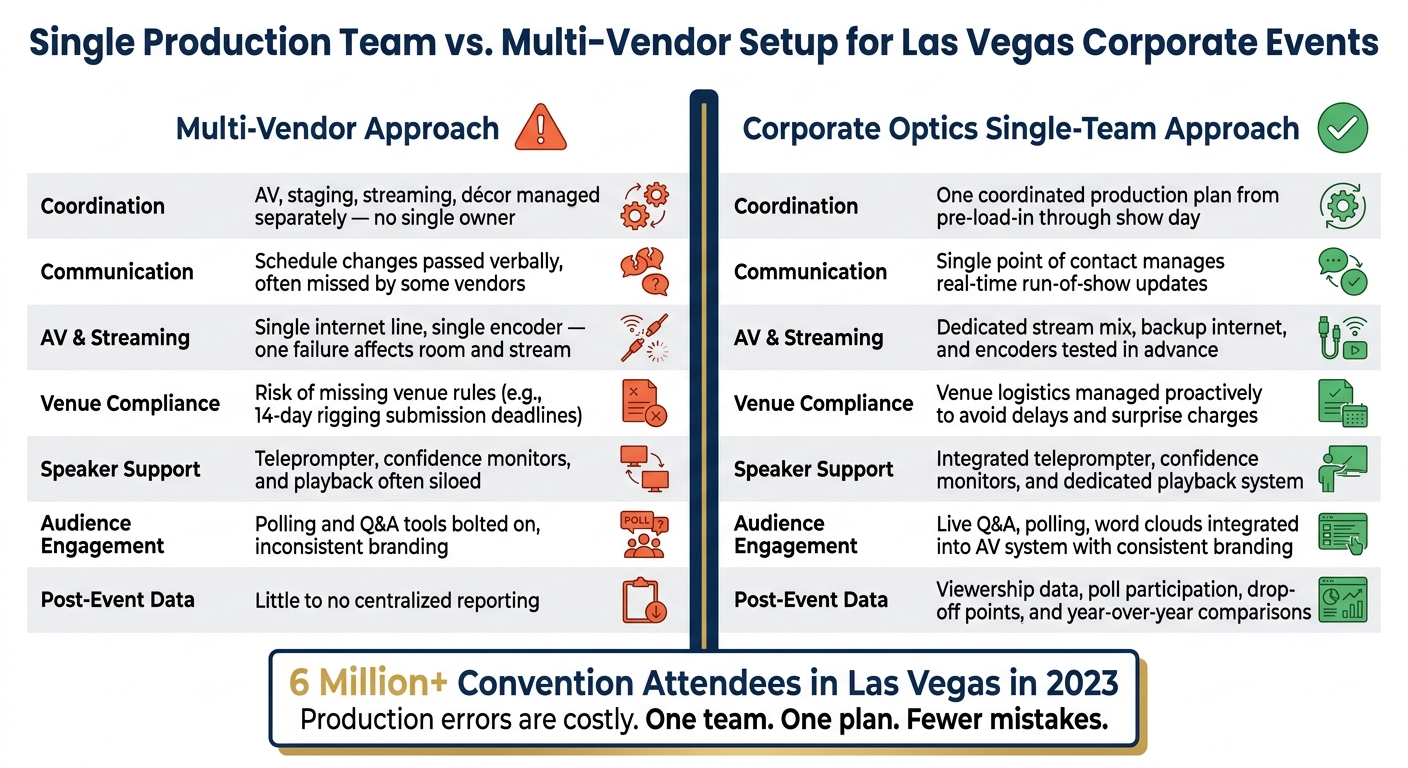
Corporate Optics vs. Multi-Vendor Event Production in Las Vegas
Corporate Optics handles venue, AV, and vendor issues with one coordinated production plan built before load-in and managed on site. That structure matters because it turns venue limits into a clear production plan instead of a last-minute scramble.
Program Management, Run-Of-Show Planning, And Technical Direction
Corporate Optics creates a detailed run-of-show and assigns one person to manage updates in real time, so late changes don't throw the event off track. With cues under control, the production team can stay focused on steady sound, clean visuals, and the right pacing.
Integrated AV, Staging, Lighting, And Video Production
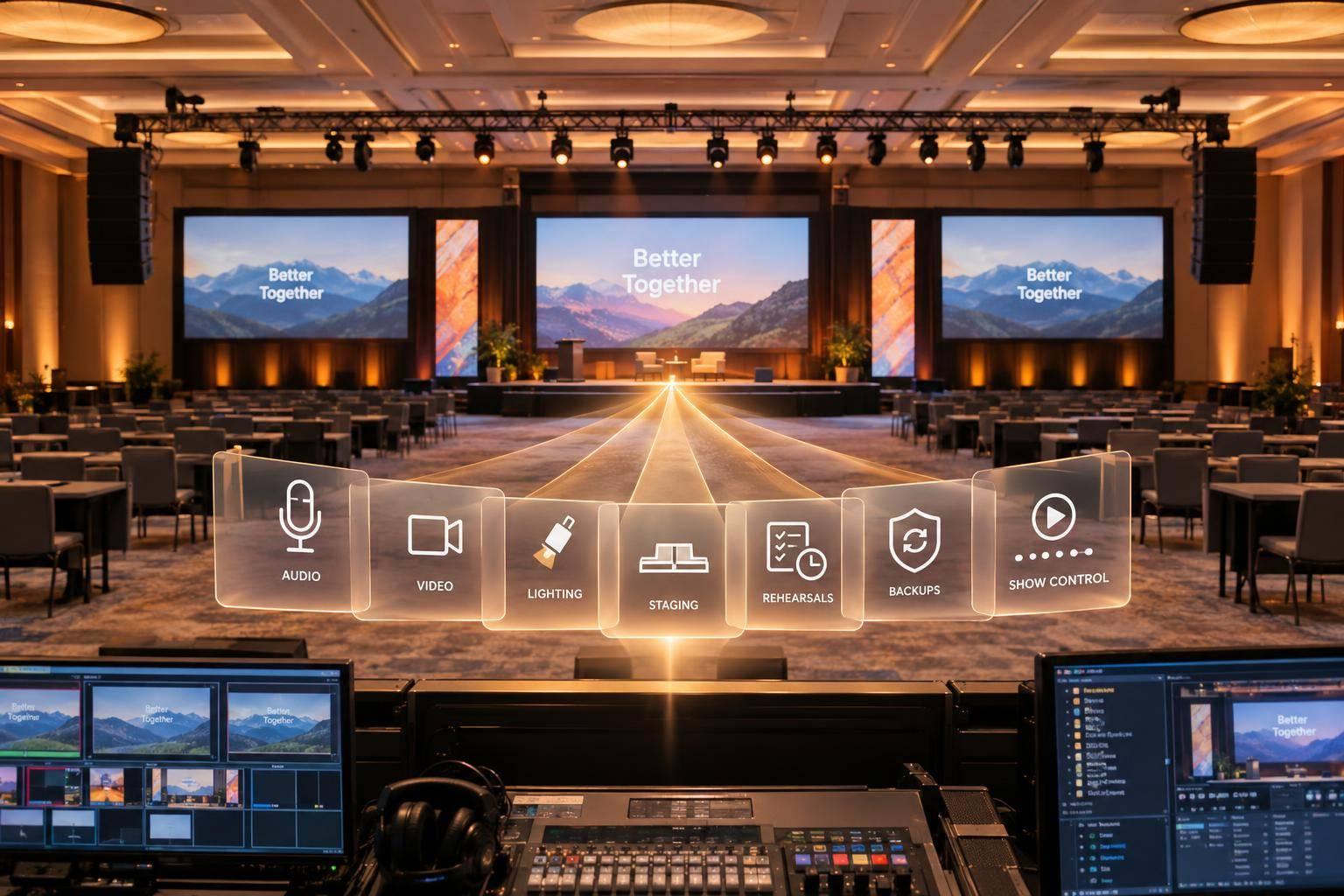
Corporate Optics brings AV, staging, lighting, and video together under one plan, which helps cut mismatches, feedback, and screen problems. When everything runs from the same design, signal routing and backup systems are set up from the start. That lowers the chance of black screens or mismatched looks that often show up when several vendors work from separate plans.
Hybrid Event Support And Las Vegas Venue Coordination
For hybrid productions, Corporate Optics sets up a hybrid event streaming workflow that runs alongside the in-room show. That includes a separate stream mix for remote viewers, backup internet, and encoders set for the chosen platform. The venue's network team gets involved ahead of time to test bandwidth and catch buffering issues before the event goes live. That kind of stability protects the stream and the in-room experience at the same time.
On the venue side, Corporate Optics manages venue logistics to avoid delays and surprise charges. For multi-room events, they work with the venue to keep breakout rooms consistent for attendees. That helps lower compliance risk and lets the client stay focused on content and stakeholders instead of back-of-house logistics.
With logistics handled, the next focus is how the stage, speakers, and message connect with the audience.
How Corporate Optics Improves Audience Experience And Speaker Delivery
Stage Design And Lighting That Support The Message
Once the show is stable from a tech standpoint, the next job is simple: make it look right and feel right in the room. A well-built stage pulls attention where it should go. Corporate Optics shapes the stage around the message and the brand, using elevated platforms, wide-format LED walls or screens, and branded scenic elements that support the presentation without pulling focus from the speaker.
That matters even more in Las Vegas ballrooms and theaters, where room layouts can be all over the map. Sightlines from front-row VIPs to attendees in the back aren't always easy to handle. Corporate Optics plans for those issues early, not at the last minute. Lighting is set with key, fill, and accent levels so speakers look natural both in person and on camera. During award segments, follow spots track winners as they move, and celebratory lighting cues bring energy to the moment without blowing out the screens. Those looks are programmed and rehearsed before doors open.
Speaker Support For High-Stakes Corporate Presentations
That same level of control carries over to the speaker experience. For CEO keynotes and leadership remarks, experienced technicians run the teleprompter at the speaker's pace. That's a big deal during investor updates or shareholder meetings, where exact wording matters. Confidence monitors display slides, timers, or notes at the right height and angle, helping executives stay locked in on the audience instead of glancing around for information.
Slide management runs through a dedicated playback system. The content team checks every deck, video, and media file ahead of time, so the right version is loaded and ready for each presenter. Rehearsals cover entrances, mic handling, and show cues to cut down on hesitation and visible mistakes. For panels, shared monitors, clear audio reinforcement, and backup microphones help keep the discussion easy to follow both in the room and online.
Audience Engagement Tools And Post-Event Data
Once the speaker setup is in place, Corporate Optics uses that same AV system to support audience interaction. The team integrates live Q&A, mobile polling, word clouds, and upvoting directly into the event setup. Poll results and Q&A feeds appear on LED walls or projection screens with consistent branding and correct aspect ratios, not as a clunky screen share that interrupts the visual flow. For hybrid events, those same tools also work inside the stream, so remote attendees can join in without leaving the broadcast. Moderators handle incoming questions to keep the session on track and aligned with leadership goals.
After the event, Corporate Optics shares viewership and engagement data, including peak viewers, attendance, drop-off points, poll participation, and Q&A volume. For recurring Las Vegas events, planners can compare that data year over year to see which sessions drew the most participation and where the agenda may need work. That gives leaders a clear way to measure impact with an audience engagement scorecard and shape the next program.
Why Corporate Optics Works Well As A Long-Term Las Vegas Partner
Consistency Across Recurring Meetings, Conferences, And Broadcasts
For recurring Las Vegas programs, the return keeps showing up after the first event. A strong first show can become the model for the ones that come next. Once room diagrams, stage layouts, mic counts, walk-on music cues, and graphic templates are documented, the team can fine-tune them year after year. That gives the next event a repeatable production starting point.
Keeping the same technical director or project manager on the account helps a lot. That person already understands the approval chain and presentation standards. In Las Vegas, where load-in windows are tight and schedules leave very little room for error, that kind of carryover can cut down on on-site risk.
Scalable Support For Different Event Sizes And Budgets
Corporate Optics can scale support for a wide range of events, from lean AV coverage to fully managed production. A small executive off-site may need a compact PA system, wireless mics, and a two-person crew. A full general session may call for multi-camera IMAG, redundant streaming, LED walls, and full show-calling over several days. The scope is shaped around what the event actually needs.
Pricing is based on labor, equipment, and scope rather than fixed packages. That gives Corporate Optics room to size the solution to the budget without trimming the parts that matter most for the program.
Key Takeaways For Decision-Makers
For repeat Las Vegas events, consistency can lower planning time, keep budgets steadier, and lead to smoother execution. For repeat clients, the value comes down to day-to-day continuity. Corporate Optics can track metrics such as pre-production hours, technical issue frequency, and stream uptime across events, giving decision-makers clear data to judge the partnership over time.
FAQs
What types of Las Vegas events can Corporate Optics support?
Corporate Optics supports a wide range of Las Vegas event types, including leadership conferences, summits, shareholder meetings, board meetings, awards ceremonies, annual meetings, product launches, brand activations, and trade shows.
The team handles end-to-end production for both small private sessions and large-scale events with 5,000+ attendees. That includes in-person, virtual, and hybrid event formats.
How early should I book event production in Las Vegas?
Book as early as you can. For large or multi-day conferences, that usually means planning 3 to 6 months in advance. If the event is more complex or much bigger in scale, aim for 12 months. Smaller meetings tend to need about 6 to 10 weeks.
It also helps to bring in your technical production team while you're still choosing the venue. That way, you can spot issues like power access, rigging limits, or ceiling height before you sign anything.
Does Corporate Optics handle both in-person and hybrid events?
Yes. Corporate Optics handles both in-person and hybrid events with end-to-end production that brings the physical and virtual sides together.
From day one, their team plans for both audiences, not just the people in the room. That includes streaming support, backup signal paths, and hands-on technical management for on-site and remote presenters, so the event stays aligned and in sync.
Related Blog Posts


Streamline your workflow, achieve more

Lorem ipsum dolor sit amet, consectetur adipiscing elit. Maecenas ac velit pellentesque, feugiat justo sed, aliquet felis.



Lorem ipsum dolor sit amet, consectetur adipiscing elit. Maecenas ac velit pellentesque, feugiat justo sed, aliquet felis.