Need Help Producing A Company Virtual Meeting? Reach Out To These Top-Rated Production Teams For Virtual Conferences.

Chief Executive Officer

If your virtual meeting has high stakes, I’d look at a full-service team first. One stream failure or bad speaker handoff can hurt attendance fast, and this market is not small: virtual corporate events in North America are projected to grow from $132.45 billion in 2022 to $578.55 billion by 2032.
Here’s the short version: I’d group these five teams by what they handle best.
- Corporate Optics: best for high-stakes executive and investor events
- Encore: best for repeat programs, hotel-linked events, and multi-country meetings
- Freeman: best for large company conferences and hybrid formats (following conference production best practices)
- PRA: best for schedule control, cueing, and discussion-led internal events
- ON Services: best for webcast-style meetings with strong pre-event setup
If I were choosing, I’d compare them on just four things:
- Production scope
- Platform control
- Broadcast polish
- Speaker and audience support

Top Virtual Meeting Production Teams Compared: Which One Is Right for You?
Virtual Event Production Team: What Does It Look Like?
sbb-itb-ae35a94
Quick Comparison
| Provider | Best For | Main Focus | Watch-Out |
|---|---|---|---|
| Corporate Optics | Town halls, shareholder meetings, leadership events | End-to-end production and polished live delivery | May be too much for small internal meetings |
| Encore | Sales kickoffs, hybrid events, venue-based programs | Repeatable workflows, platform tools, global venue reach | Can feel heavy for smaller budgets |
| Freeman | Multi-day conferences, enterprise events | One team for production, AV, and live management | May require more internal event support |
| PRA | Roundtables, internal meetings, team programs | Tight run-of-show control and cue-based execution | Less suited for high-polish broadcast formats |
| ON Services | Investor webcasts, launches, streaming-led meetings | Pre-event setup, design, registration, streaming support | May add more planning time than simple meetings need |
My takeaway: if your event involves executives, investors, or a large live audience, I’d lean toward a team that can run planning, rehearsal, streaming, and speaker support in one place. If it’s a routine internal meeting, lighter support is often enough.
Below, I’d break down where each team fits and how to match production level to event risk.
1. Corporate Optics

Corporate Optics is a good fit for teams that want one production partner to run a virtual meeting from early planning all the way to replay. It works best when the event needs to feel tight, polished, and ready for a live audience, like executive town halls, shareholder meetings, and large virtual conferences.
Production Scope
Corporate Optics manages virtual meetings from planning through post-event reporting. Their work covers executive town halls, sales kickoffs, shareholder meetings, and large-scale virtual conferences, with one team handling each stage of production.
Platform Operations
On the platform side, Corporate Optics handles configuration, registration, permissions, and technical integrations. They don't just hand over a platform and step back. They stay involved throughout the event, managing registration, permissions, and technical integrations so the backend stays organized and the attendee experience feels steady from start to finish. That kind of oversight helps the live program stay stable once things go live.
Broadcast Quality
Their Emmy Award-winning team brings broadcast-level AV, scenic design, lighting, and sound to virtual events. For executive communications, that level of production can help the presentation feel more polished and more credible.
Speaker & Engagement Support
They prepare speakers early and build contingency plans for schedule changes. They coach C-suite speakers, plan for last-minute changes, and add Q&A and polling to keep attendees engaged. Post-event analytics help teams review participation and content performance. This matters most when executive speakers are on the agenda and large audiences need a smooth, interactive run of show.
2. Encore
Encore works across 20+ countries and supports 2,100+ hotels and venues around the world. That makes it a practical option when your virtual meeting is tied to a hotel or convention center.
Production Scope
Encore is a strong match for recurring corporate meetings that need the same process every time. It handles planning, creative development, show production, stage management, and post-event reporting for corporate virtual meetings. For repeat programs like quarterly town halls or regional virtual meetings, its program management helps standardize templates, workflows, and technical setups across each event.
Platform Operations
Its platform setup is designed to keep audiences separate and live sessions under control. Chime Live supports registration, secure access, role-based permissions, session scheduling, speaker links, virtual green rooms, and live switching in one interface. That matters when a company needs to split internal employee content from external investor sessions.
Broadcast Quality
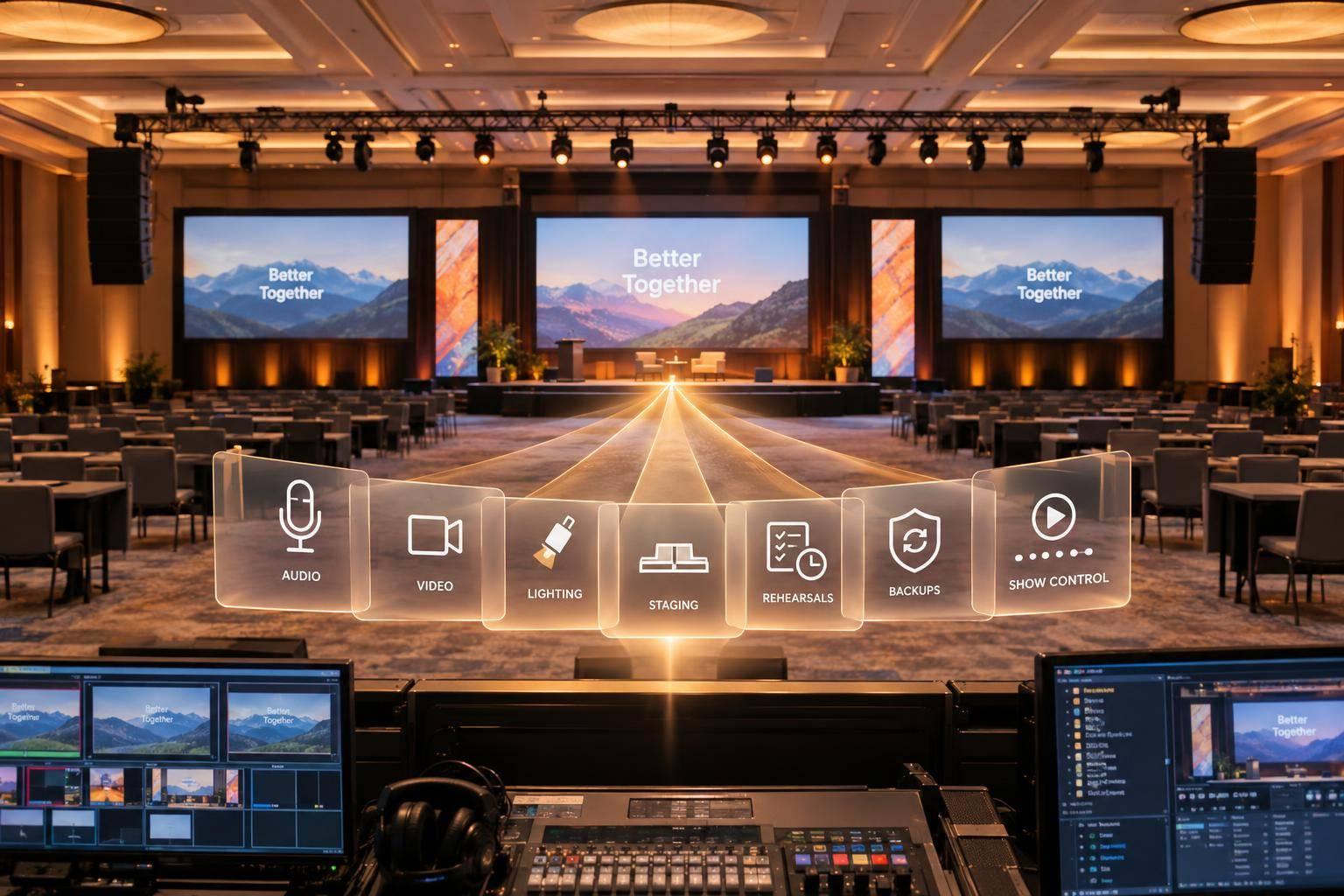
Encore provides audio, video, lighting, staging, and broadcast systems. Its Presentation Stages™ portable studios include green screen and broadcast gear, and they can be deployed at U.S. venues and connected to the virtual platform through secure streaming workflows. For executive town halls and investor updates, that kind of setup can make the event feel much more polished.
Speaker & Engagement Support
Encore helps speakers get ready before they go live. The team coaches presenters on camera setup, audio, lighting, slide management, and platform navigation, then runs full rehearsals that mirror live conditions.
On the audience side, Chime Live includes:
- Live polls
- Q&A
- Surveys
- Content rating features
For sales kickoffs or training events, the platform can also support gamified experiences like points-based challenges and quizzes. After the event, Encore shares analytics on session attendance, view time, interaction counts, and content downloads, which teams can use to improve the next event. That kind of consistency tends to matter most for recurring town halls and investor updates.
3. Freeman
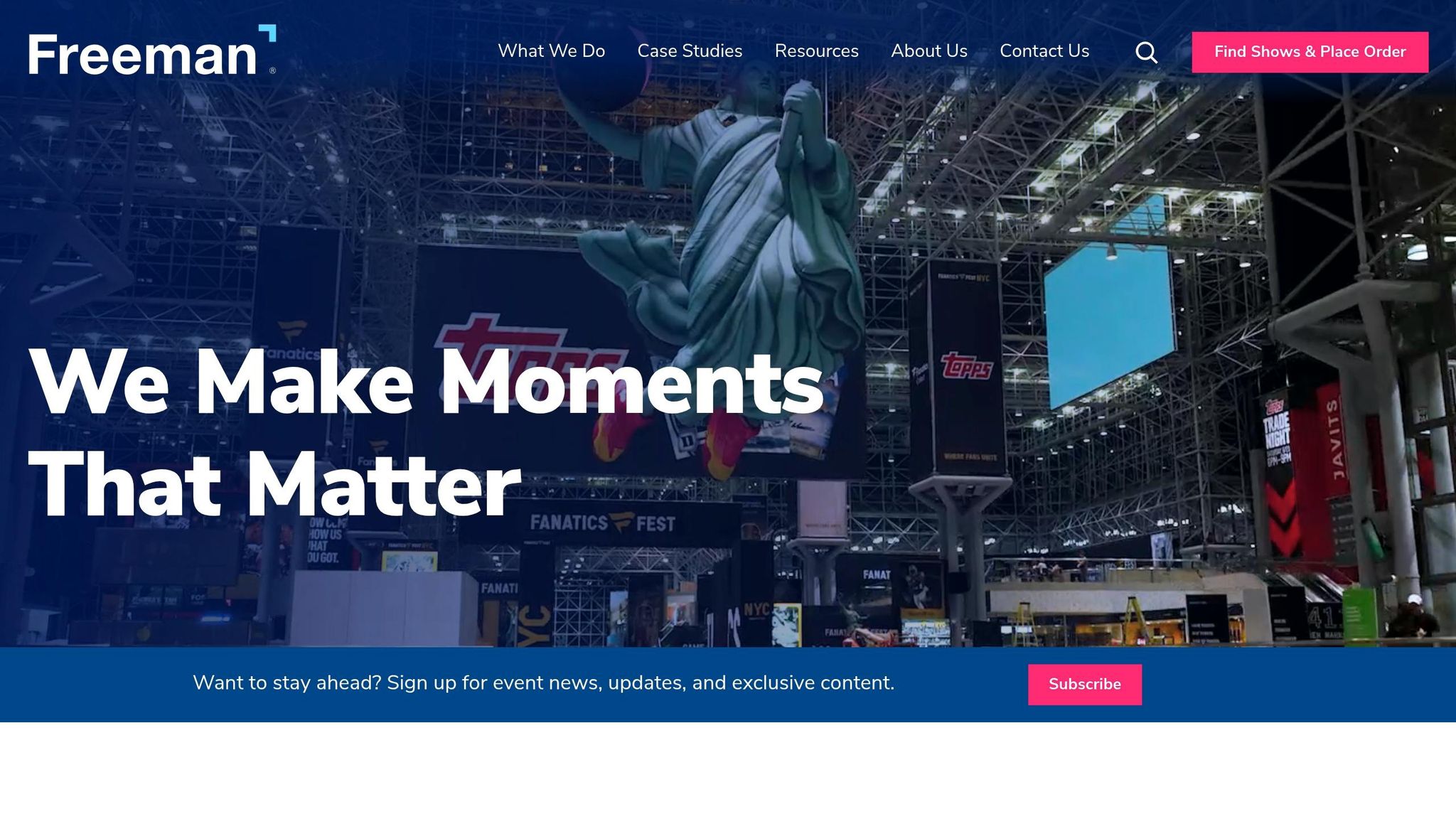
Freeman is a good fit for organizations that need one team to run production for virtual meetings and big corporate events. That includes executive town halls, sales kickoffs, and large virtual conferences. Instead of splitting the work across multiple vendors, Freeman keeps production planning, AV coordination, and live event management under one roof.
Its main virtual meeting services include platform management, live streaming, speaker coordination, audiovisual support, audience engagement tools, and oversight for technical rehearsals. Freeman also works across both virtual and hybrid event formats, which helps when an event needs the same level of technical handling no matter how people attend. PRA, covered next, takes a different angle by putting more focus on attendee experience and program design alongside production support.
4. PRA
PRA keeps virtual meetings on time and on cue with clear technical direction and a tightly mapped run of show.
Platform Operations
PRA uses a Technical Director (TD) to watch the schedule as it unfolds and send direct communication to stage management, audio, video, and lighting teams through private cues.
Run-of-Show Execution
A detailed run of show maps out each segment, presenter, cue, and transition so the crew can run the live event cleanly. This matters most when a virtual meeting includes multiple speakers, live cues, or tight handoffs.
The payoff is simple: fewer disruptions for viewers and a smoother live program for presenters. It’s a strong fit for successful corporate town halls, investor updates, and other programs where timing matters. That level of control helps stop missed cues and keeps complex virtual meetings moving smoothly.
5. ON Services
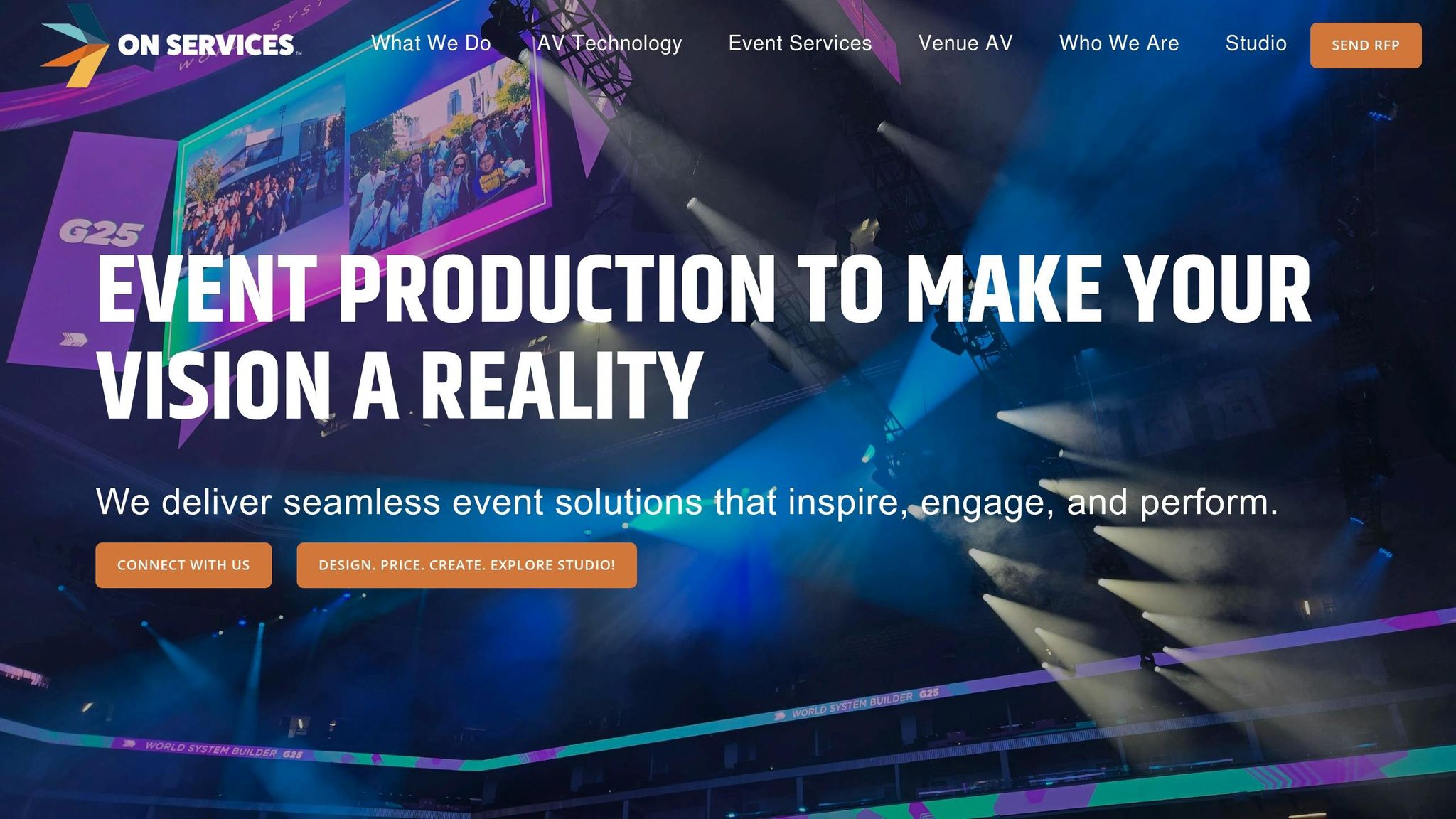
ON Services supports corporate events that need production, design, and registration help, especially when a virtual meeting calls for solid pre-production to get off the ground without a hitch.
Production Scope
Pre-event support includes consultation, creative design, custom fabrication for event sets and displays, and setup of registration portals. That early work helps the event start smoothly and keeps attendee flow organized from the moment people sign up through the start of the live program.
How These Teams Compare Across Key Virtual Meeting Needs
Once you look at each provider on its own, the next step is simple: compare them on the four areas that shape a smooth virtual meeting most - Production Scope, Platform Operations, Broadcast Quality, and Speaker & Engagement Support.
Production Scope
The right scope depends on how complex the event is and how much work your internal team can take on. Some providers run the whole show, from early planning to post-event reporting. Others focus more on the technical side and step in mainly for execution, not deep content planning.
Here’s the quick view of where each provider fits best.
| Provider | Scope Level | Best Fit |
|---|---|---|
| Corporate Optics | Full-service | Executive town halls, investor events, leadership conferences |
| Encore | Full-service | Large-scale virtual conferences, hybrid programs, multinational events |
| Freeman | Full-service | Multi-day conferences, enterprises and associations |
| PRA | Standard to full-service | Internal culture events, incentive programs, regional meetings |
| ON Services | Technical-focused | Webcasts and streaming-led meetings |
Platform Operations
Platform stability can make or break attendance. If people hit login issues, lag, or access problems, they leave fast.
What sets these providers apart isn’t just setup. It’s how much live troubleshooting, backstage support, and attendee access control they handle while the event is happening.
Broadcast Quality
Production quality shapes how polished and trustworthy the event feels. That matters even more for executive and investor-facing meetings, where small issues can stand out in a big way.
In practice, that means:
- Clean audio
- Tuned lighting
- Steady delivery without single points of failure
Speaker & Engagement Support
Good speaker prep helps cut down on mistakes once the event goes live. Live producer support helps speakers stay on track, hit timing, and move through transitions without awkward pauses. On the audience side, engagement tools help people stay involved instead of drifting away to another tab.
The table below shows how each provider lines up with those needs.
| Provider | Speaker Prep | Engagement Tools | Best Fit Objective |
|---|---|---|---|
| Corporate Optics | Script review, rehearsals, live producer cueing | Moderated Q&A, polling, chat management | Executive alignment and investor clarity |
| Encore | Green rooms, multi-timezone rehearsals | Polling, Q&A with upvoting, networking, social walls | Sales kickoffs and larger conferences |
| Freeman | Structured briefings, run-of-show coordination | Integrated surveys, breakout discussions | Multi-day conferences and industry events |
| PRA | Agenda-focused prep | Gamified challenges, team-building activities | Culture events and incentive programs |
| ON Services | Technical confidence coaching | Platform-enabled Q&A, polls, chat | Investor webcasts and executive town halls |
The next section breaks these differences down into strengths and trade-offs.
Pros and Cons of Each Production Team
Use the table below to compare each team by fit, strengths, and trade-offs across the same needs outlined above.
Here’s the side-by-side view. It shows where each team fits best, where it shines, and where it may be more than you need.
| Provider | Best-Fit Use Cases | Main Strengths | Potential Limitations |
|---|---|---|---|
| Corporate Optics | Board meetings, leadership conferences, awards ceremonies, and shareholder meetings | Best for high-stakes events that need secure, polished production; redundant signal feeds and professional switching for virtual reliability | Full-service production is overbuilt for small internal meetings |
| Encore | Large-scale virtual conferences, hybrid programs, sales kickoffs, and multi-site corporate events | Venue-scale reach across U.S. hotel and convention center partnerships | Its enterprise workflow can be too heavy for smaller budgets |
| Freeman | Multi-day conferences, industry associations, enterprise events, and hybrid programs | High-definition multi-camera production with structured rehearsals | Broad scope adds complexity for smaller teams; best for organizations with dedicated event staff |
| PRA | Internal culture events, executive roundtables, incentive programs, regional meetings, and seminars | Strong fit for discussion-heavy internal events over broadcast-heavy productions | Less suited to broadcast-grade virtual summits or high-production-value formats |
| ON Services | Virtual conferences, trade show-style events, investor webcasts, and product launches | Broadcast-quality streaming and interactive audience tools | Can add planning time and budget beyond what a straightforward internal briefing needs |
The conclusion below narrows these differences into a simple choice framework.
Conclusion
After looking at scope, platform control, and speaker support, the choice usually comes down to four things: event risk, agenda complexity, stream polish, and presenter readiness.
When two or more of those are high, a full-service partner like Corporate Optics is often the safer move. Executive town halls, investor events, national sales kickoffs, and shareholder meetings all come with real business risk if something goes wrong on camera.
For lower-stakes meetings, lighter support usually does the job. Routine department updates, recurring training sessions, and simple partner briefings can often be handled without broadcast-level production.
Use full-service support for high-visibility events, and lighter support for routine meetings. The goal is simple: match the level of production to the level of risk.
FAQs
How do I know if my virtual meeting needs full-service production?
Consider full-service production for high-stakes virtual meetings like executive town halls, investor-facing broadcasts, or company-wide updates where a single mistake can cost time, money, and trust.
You’ll likely want a production team if your event calls for:
- High reliability, with backup systems in place
- Advanced AV support for sound, video, and live switching
- Complex speaker coordination, plus rehearsals to keep everything on track
- Hybrid delivery for both in-room and remote audiences
What should I look for in speaker rehearsal and live support?
Look for a production partner that does more than roll in gear and leave. You want a team that stays involved from prep through showtime.
Put 1:1 speaker prep near the top of your checklist. That should include technical checks, teleprompter support, and stage blocking so speakers know where to stand, when to move, and what to expect.
During the event, make sure they also provide:
- A dedicated show caller to run the flow of the program
- Live troubleshooting if something goes sideways
- Managed green room access for remote presenters
- Clear communication for last-minute requests or issues like dropped feeds
That kind of hands-on help can make the difference between a smooth show and a stressful one.
How much production support is enough for an internal meeting?
It depends on the stakes of the meeting. There’s no one-rule-fits-all answer.
For a standard internal meeting, light support is often enough. But for high-stakes events like executive town halls or leadership broadcasts, professional production support usually makes a lot of sense.
If your event has multiple presenters, live graphics, complex audience interaction, or hybrid parts, a production team can bring more reliability, tighter coordination, and a more polished end result.
Related Blog Posts
- 4 Meeting Production Companies That Excel At Seamless AV (audio/video), Lighting, and Stage Design for Corporate Conferences, and events
- End-To-End Annual Meeting Production Companies For Your Next Company Conference
- Leading Production Companies Who Support Global Virtual Broadcasts And Livestreaming With Zoom Or Microsoft Team Platforms
- Leading Companies To Work With For Full Conference Production


Streamline your workflow, achieve more

Lorem ipsum dolor sit amet, consectetur adipiscing elit. Maecenas ac velit pellentesque, feugiat justo sed, aliquet felis.



Lorem ipsum dolor sit amet, consectetur adipiscing elit. Maecenas ac velit pellentesque, feugiat justo sed, aliquet felis.