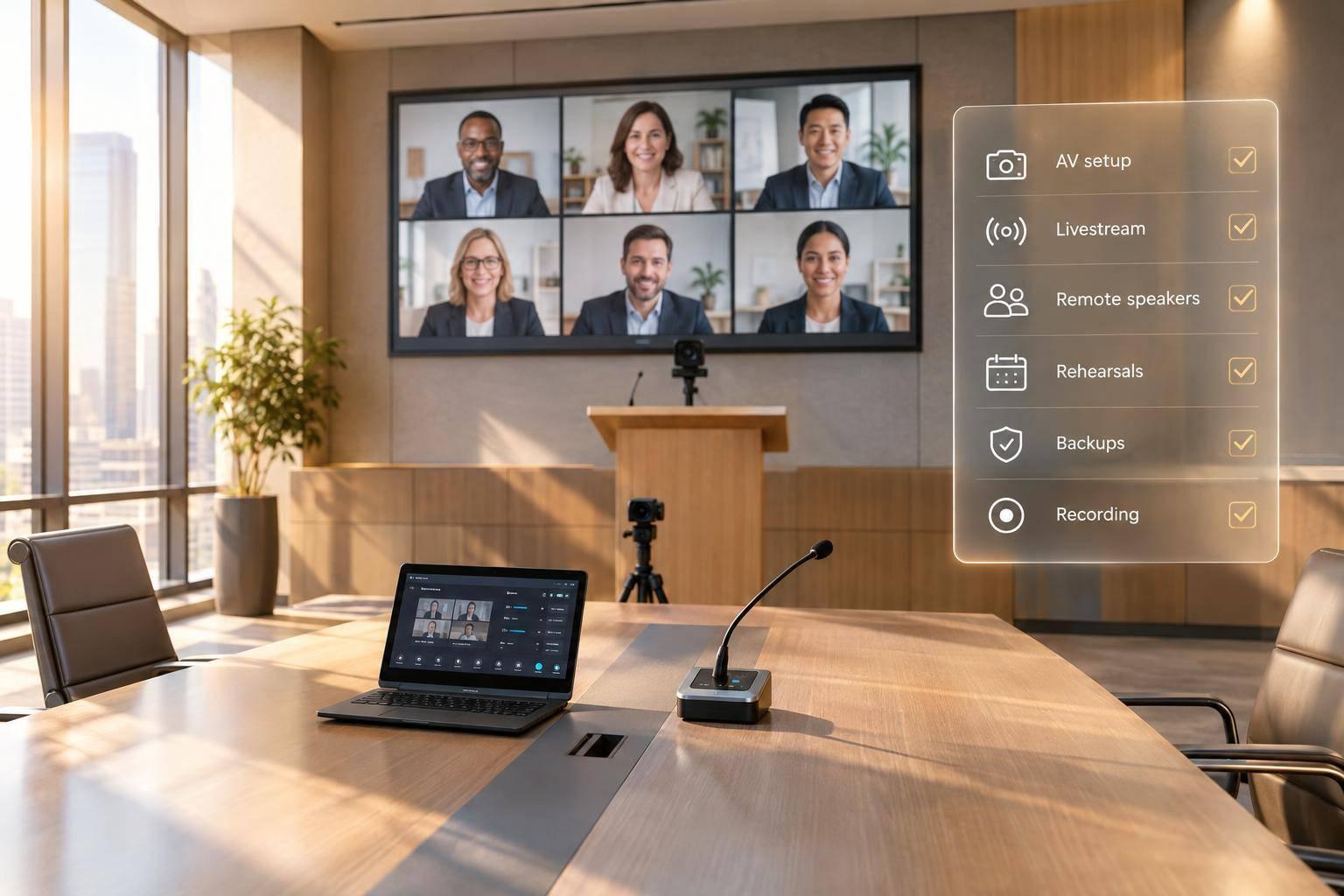
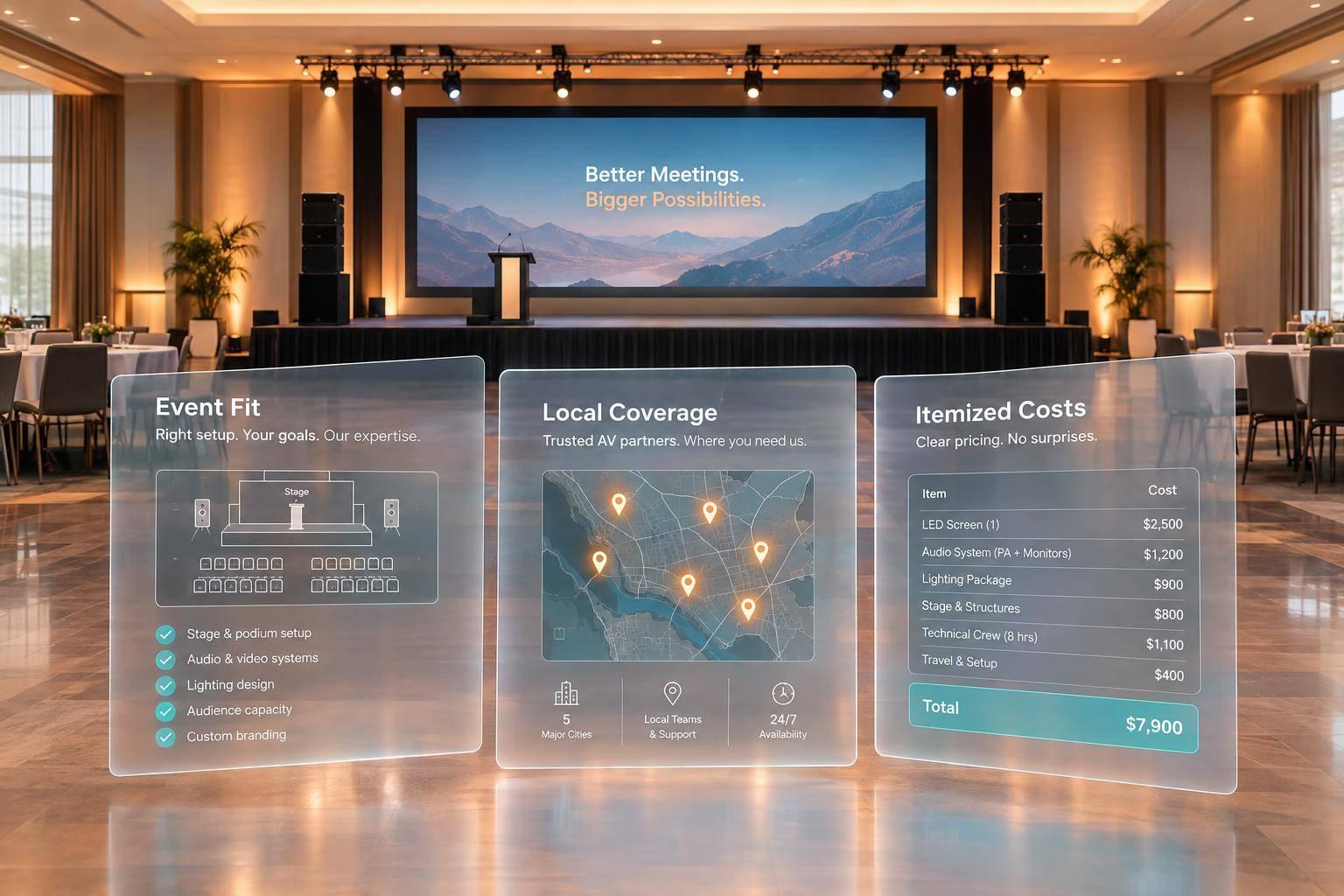
Corporate Meeting Production Company vs. AV Rental Company: What’s The Difference?

Chief Executive Officer
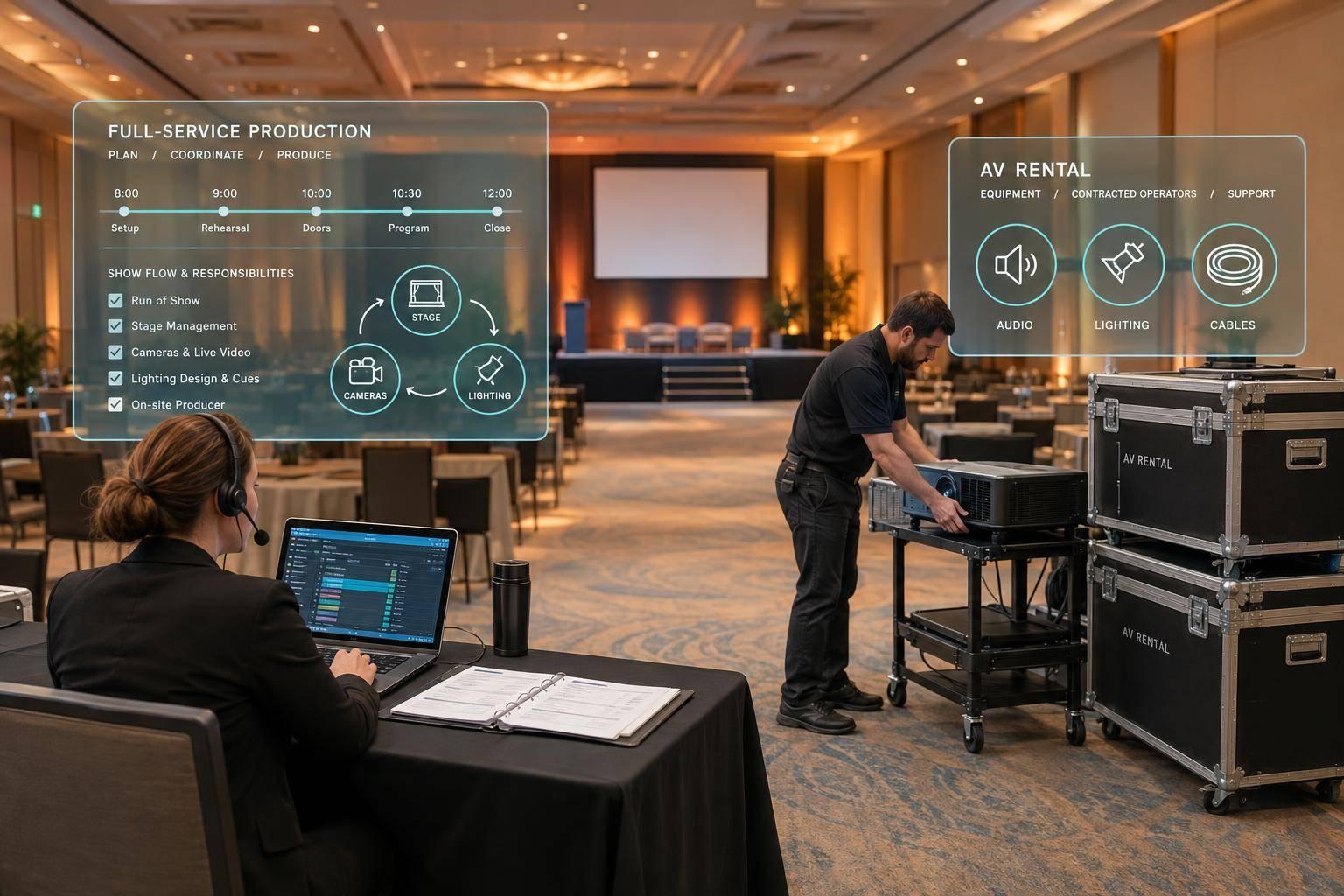
A corporate meeting production company plans and runs the show. An AV rental company supplies equipment and any labor listed in the contract. Choose professional production support when the meeting needs someone to manage speakers, rehearsals, and live cues. Choose rental-focused support when an internal team can handle those tasks.
The difference is who owns each task - not who owns the gear. Before booking, compare planning, equipment, staffing, speaker support, rehearsals, live execution, hybrid delivery, wrap-up, and total cost.
Quick Comparison
| Area | Full-service meeting production | Rental-focused AV support |
|---|---|---|
| Planning | Builds the technical plan and run of show | Confirms equipment and setup needs |
| Equipment and crew | Coordinates systems and production staff | Supplies contracted gear and technicians |
| Speakers and rehearsals | Coordinates presenters, files, and rehearsals | Tests equipment; other support depends on scope |
| Live and hybrid delivery | Manages cues, transitions, and streaming | Runs specified systems during contracted hours |
| Wrap-up | Coordinates teardown, recordings, and closeout | Removes equipment or arranges returns |
| Client workload and cost | Includes more production management | Leaves unassigned tasks with the client; staff time adds to total cost |
Setup does not mean show-day support. Put task owners, crew hours, rehearsal time, overtime, backup plans, and final decision authority in writing before comparing prices.
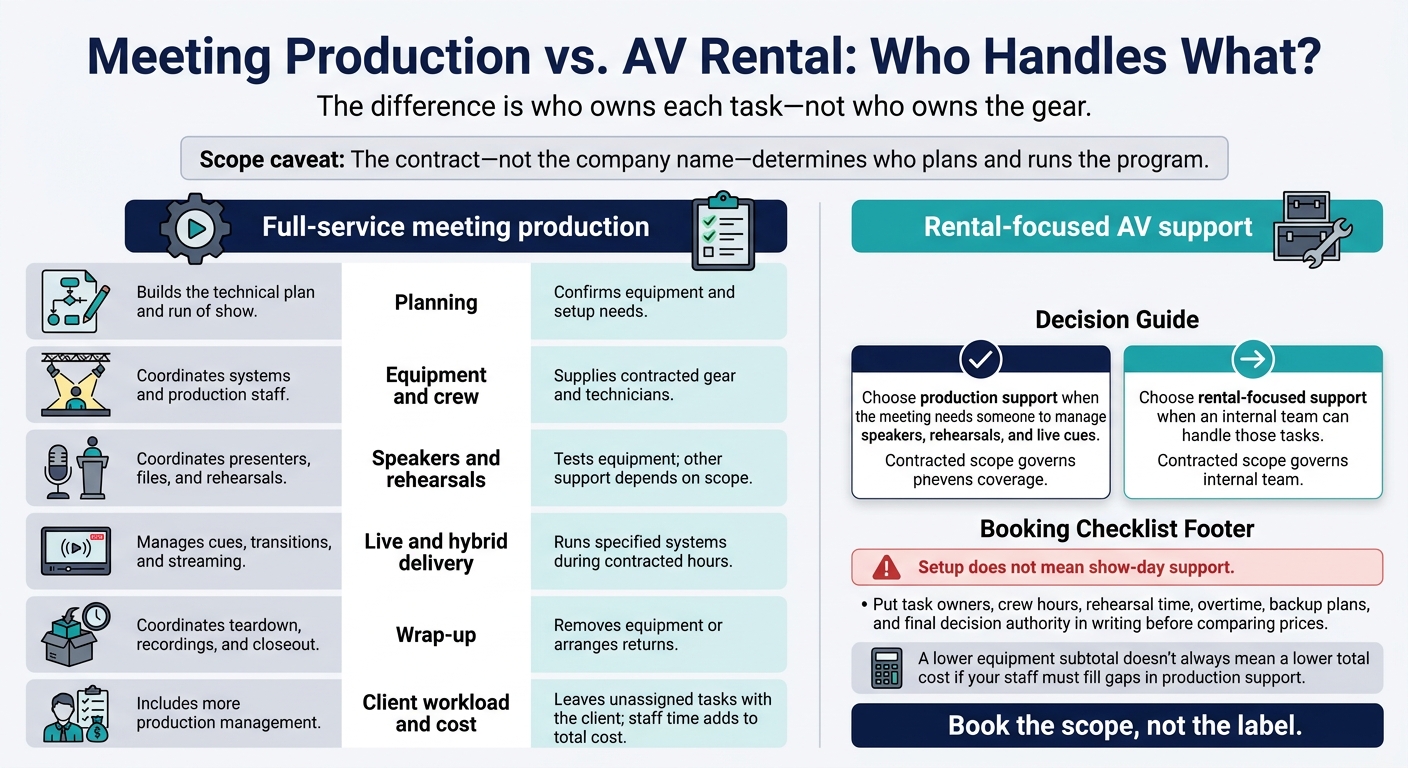
Meeting Production vs. AV Rental: Who Handles What?
What a Corporate Meeting Production Company Handles
Planning for the Agenda, Venue, and Equipment
Planning starts by connecting the agenda, audience, speakers, budget, and success criteria to a technical plan. A site survey checks room dimensions, sightlines, stage and screen placement, rigging, power, internet, access, noise limits, house AV rules, and labor requirements. The team also confirms who handles staging, recording, and streaming. These checks turn the meeting brief into a technical design and flag constraints before equipment arrives for setup.
The agenda determines what equipment and support the meeting needs. Panels need microphone and seating plans. Video-heavy segments need reliable playback and rehearsal time. The plan spells out equipment quantities, content formats, crew schedules, and backups. The production team remains responsible for managing all meeting production services to ensure the systems work together.
Assigning Crew and Leading Rehearsals
Crew assignments and rehearsals follow the technical plan and the program’s needs. A production manager oversees delivery. Audio, video, and lighting technicians handle their systems, a stage manager prepares speakers, and a show caller coordinates cues.
Rehearsals should test microphones, slides, video playback, lighting changes, speaker movement, and transitions. After rehearsal, update the run of show and cue sheets, then give every unresolved item an owner and a deadline.
For hybrid meetings, the run-through should also test remote connections, return audio, screen sharing, and transitions between in-room and remote speakers.
Running the Show and Closing Out
During the meeting, the show caller calls standby and go cues. Technical leads monitor systems while the stage manager prepares presenters. If segments run long, files change, or equipment fails, the team follows the backup plan.
Set recording responsibilities before the event, including storage, editing, and captions. Afterward, the team tears down equipment, returns rented gear, delivers recordings on schedule, and reviews technical issues.
sbb-itb-ae35a94
What an AV Rental Company Provides
AV rental can mean equipment alone or equipment plus labor. The contract - not the company name - determines who plans and runs the program. It should state exactly where rental support ends and production management begins.
Equipment Rental, Setup, and Operators
Gear-only rental provides equipment to the client, venue, or client’s production team. Delivery and technical labor aren’t automatically included. List delivery, installation, configuration, testing, and show operation separately in the contract.
Define each technician’s role and coverage. An audio operator isn’t automatically a presentation operator or show caller. Support might cover setup and soundcheck, selected sessions, or the entire program through strike. Make those hours and duties explicit.
Production Tasks the Client May Keep
In a rental model, the client often keeps control of the show. Unless these duties are assigned elsewhere, the client may handle agenda coordination, speaker management, content approvals, run-of-show development, rehearsal leadership, cueing, and show calling.
Use a written responsibility matrix to give each task one accountable owner: the internal team, an appointed production lead, or the AV provider. Name one owner for approvals and last-minute changes, too.
Support Hours, Handoff, and Equipment Return
Before handoff, check connections and give internal staff the operating instructions and access credentials they need to run the equipment. Put support hours, overtime, backup coverage, escalation contacts, sign-off time, and return deadlines in writing. Document strike and return terms before the first delivery.
Compare Scope, Meeting Needs, and Total Cost
Compare scope, not just gear. Weigh each proposal against your meeting’s complexity, your team’s capacity, and the total cost.
| Scope area | Full-service production | Rental-focused support |
|---|---|---|
| Planning | May lead technical design and run-of-show development. | Recommends equipment; the client manages the program. |
| Equipment | Combines owned, rented, or subcontracted gear. | Supplies specified gear for an agreed rental period. |
| Technical staffing | Coordinates a technical director, show caller, operators, and room techs. | Provides setup staff and selected operators as contracted. |
| Rehearsals | Leads speaker checks, cue rehearsals, and remote-presenter tests. | May cover equipment testing only; confirm whether full rehearsal support is included. |
| Live execution | Manages cues, transitions, streaming, and troubleshooting. | Operates specified systems while the client retains show control. |
Require a written scope that assigns gear, crew roles, hours, overtime, content duties, backup coverage, and final show authority. Make clear who controls technical decisions and who approves content.
The examples below show how meeting complexity and internal staffing can guide your choice.
When to Choose Full-Service Production
Hypothetical leadership meeting: A plenary session, several breakout rooms, frequent executive transitions, and livestreamed remarks favor full-service production - especially without an internal production team. Request a production manager, show caller, room technicians, speaker rehearsals, remote-presenter testing, and streaming support. Confirm backup connectivity and who can authorize a live technical change. The value is coordinated coverage across rooms and transitions, not simply more equipment.
When to Choose Rental-Focused Support
Rental-focused support can fit a simple agenda when your team has the time and skills to run the show.
Hypothetical small-business presentation: Two wireless microphones, speakers, a projector, a confidence monitor, cables, and basic setup may be enough when internal staff already manage the agenda, content, speakers, rehearsals, and live program. Rental-focused support fits that division of work. Before choosing it, check that staff can also handle slide advancement, audience questions, timing, and troubleshooting without pulling presenters away from their roles.
Compare Full Proposals, Not Just Equipment Prices
Compare proposals on the same basis: equipment, labor, transportation, setup and strike, rehearsal time, operator hours, overtime, venue requirements, backup coverage, and on-site support.
Price rehearsals separately. They can require the same equipment, operators, and venue access as the show. Also include your team’s time for collecting files, preparing speakers, supervising setup, and handling live issues. A lower equipment subtotal doesn’t always mean a lower total cost if your staff must fill gaps in production support.
Conclusion: Confirm Who Handles What Before Booking
Choose full-service production when a complex meeting needs one team to plan and run the show. Make sure the contract covers the scope, crew, and support hours your meeting needs. Choose rental-focused support when your team can manage production and only needs specified gear and operator support. Book the scope, not the label.
Booking Checklist: Roles, Hours, and Backup Plans
Before signing, assign owners for the technical plan, run of show, rehearsals, and cues. State who supplies, delivers, installs, tests, operates, strikes, packs, and returns the gear. For speaker support, specify who collects decks, checks compatibility, approves versions, and handles the handoff.
Confirm exact setup, rehearsal, operating, and strike windows, along with overtime terms. Spell out whether support is on-site, remote, or both, when it ends, and whom your team should contact after handoff.
Put backup procedures in writing for critical systems. Identify who troubleshoots issues, approves substitutions and last-minute changes, and authorizes the switch to backup systems. Keep that technical authority separate from final content approval so the crew knows whose direction to follow.
FAQs
Can a production team work with my venue’s required AV provider?
Yes - your production team can work with your venue’s required AV provider. But responsibilities and approvals need to be clear and in writing.
Confirm the venue’s in-house or exclusive AV rules, outside-vendor fees, and labor requirements. Require a venue walkthrough and a responsibility matrix that spells out who orders, pays for, tests, and approves each service.
Name the on-site technical lead and confirm how the teams will handle handoffs. This helps prevent rehearsals, cue calling, and live troubleshooting from being split between teams by mistake.
How early should I book meeting production support?
Book your production partner early - ideally before you finalize venue contracts. This gives them time to assess the space, confirm technical requirements, coordinate logistics, and help prevent last-minute problems.
How far ahead should you book? Typical timelines depend on the event:
- Large-scale events: 12 months or more
- Large conferences: 4 to 6 months
- Executive summits or custom-built spaces: 8 to 16 weeks
- Smaller meetings: 6 to 10 weeks
Can I add production support after booking AV rentals?
Yes, you can often add production support after booking AV rentals, but you’ll need to expand the scope in writing and assign responsibilities. Rentals may cover delivery, with setup or operator support available as options. That doesn’t mean they include production planning or show management.
Ask for a written add-on that spells out who handles presenter communications, leads rehearsals, calls the show, manages audio/video/lighting/streaming cues, and oversees on-site execution and backup plans for each session.
Related Blog Posts
- Ultimate Guide To Understanding What Services Are Included In Meeting Production
- End-To-End Annual Meeting Production Companies For Your Next Company Conference
- Highly Recommended Full-Service Corporate Event Production Companies To Work With Today.
- Meeting Planner Vs. Meeting Production Company: Who Does What, And Do You Need Both?


Streamline your workflow, achieve more

Lorem ipsum dolor sit amet, consectetur adipiscing elit. Maecenas ac velit pellentesque, feugiat justo sed, aliquet felis.



Lorem ipsum dolor sit amet, consectetur adipiscing elit. Maecenas ac velit pellentesque, feugiat justo sed, aliquet felis.