Full‑Scale Event AV Companies With Lighting, Audio, Stage Scenic, Creative & Experienced Staff.

Chief Executive Officer
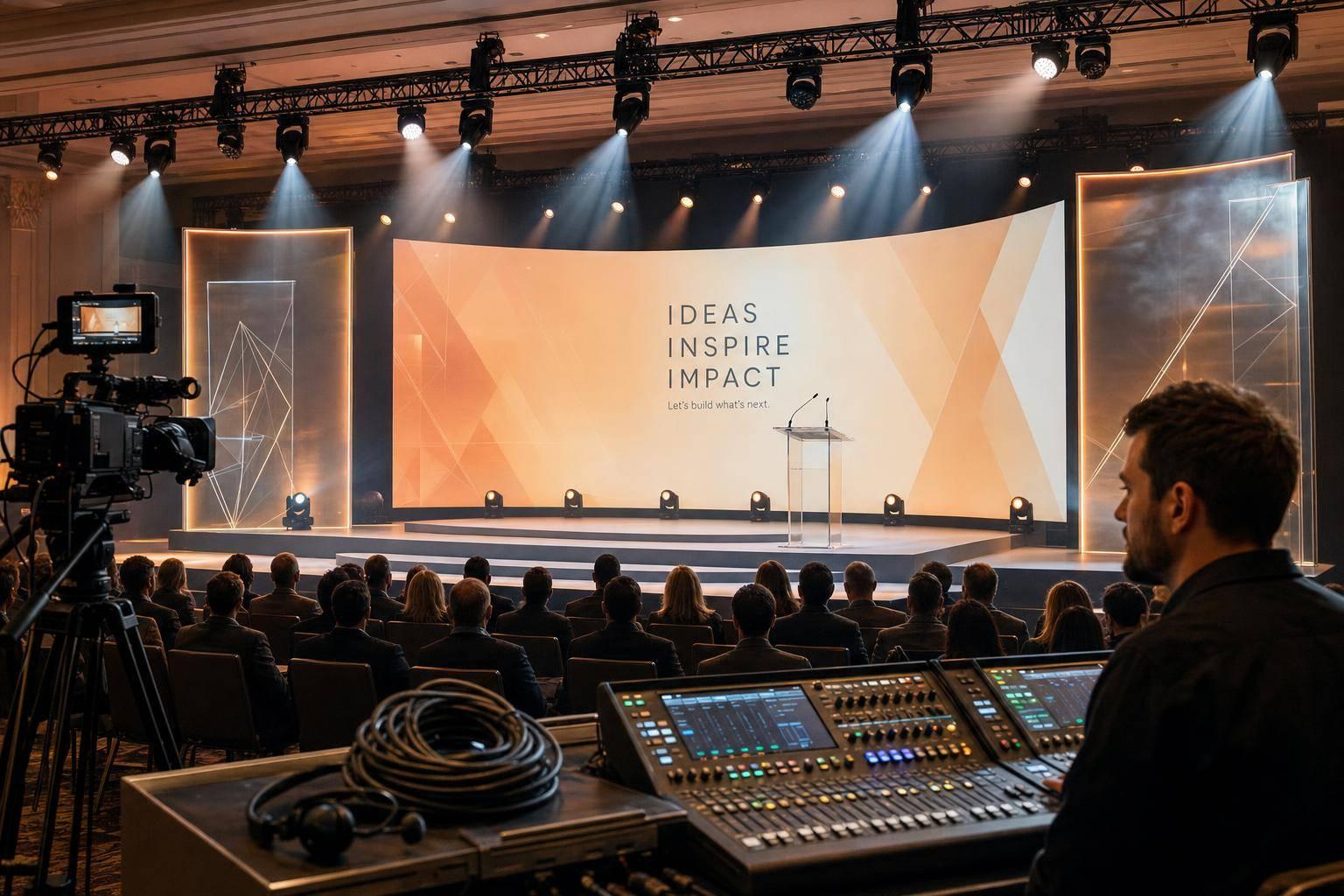
If your event has a live audience, presenters, video, and a fixed schedule, you need more than gear. You need one AV team to plan the room, build the stage, run rehearsals, manage cues, and fix issues fast on show day.
Here’s the short version:
- Equipment-only support means gear delivery and setup.
- Full-scale AV production means planning, stage scenic, audio, lighting, video, staffing, rehearsals, and live show control.
- This matters most for conferences, awards shows, board meetings, hybrid events, and government meetings.
- The main parts are stage scenic, audio, lighting, video, and show production.
- The crew often includes a Technical Director, show caller, A1 audio engineer, video engineer, stage manager, and production assistants.
- Most events should start AV planning 12 to 16 weeks out.
- Budgets often start in the low five figures and can move into the high five figures or $100,000+ for multi-day, hybrid, or custom stage builds.
A good full-scale AV partner helps you avoid three common problems: vendor handoff gaps, show-day cue mistakes, and late budget drift. That’s the main point.
| Need | Equipment Rental | Full-Scale AV Company |
|---|---|---|
| Gear | Yes | Yes |
| Room plans and renderings | No | Yes |
| Stage scenic and branding | Limited | Yes |
| Audio, lighting, and video design | Limited | Yes |
| Rehearsals and cue planning | No | Yes |
| Live show calling and crew coordination | No | Yes |
In simple terms: if your event cannot afford dead air, bad audio, missed cues, or a weak stage look, full-scale AV support is usually the better fit.
📡 Behind the Scenes: Pro AV Setup for 3-Day Corporate Conference #AxientDigital #YamahaDM7
sbb-itb-ae35a94
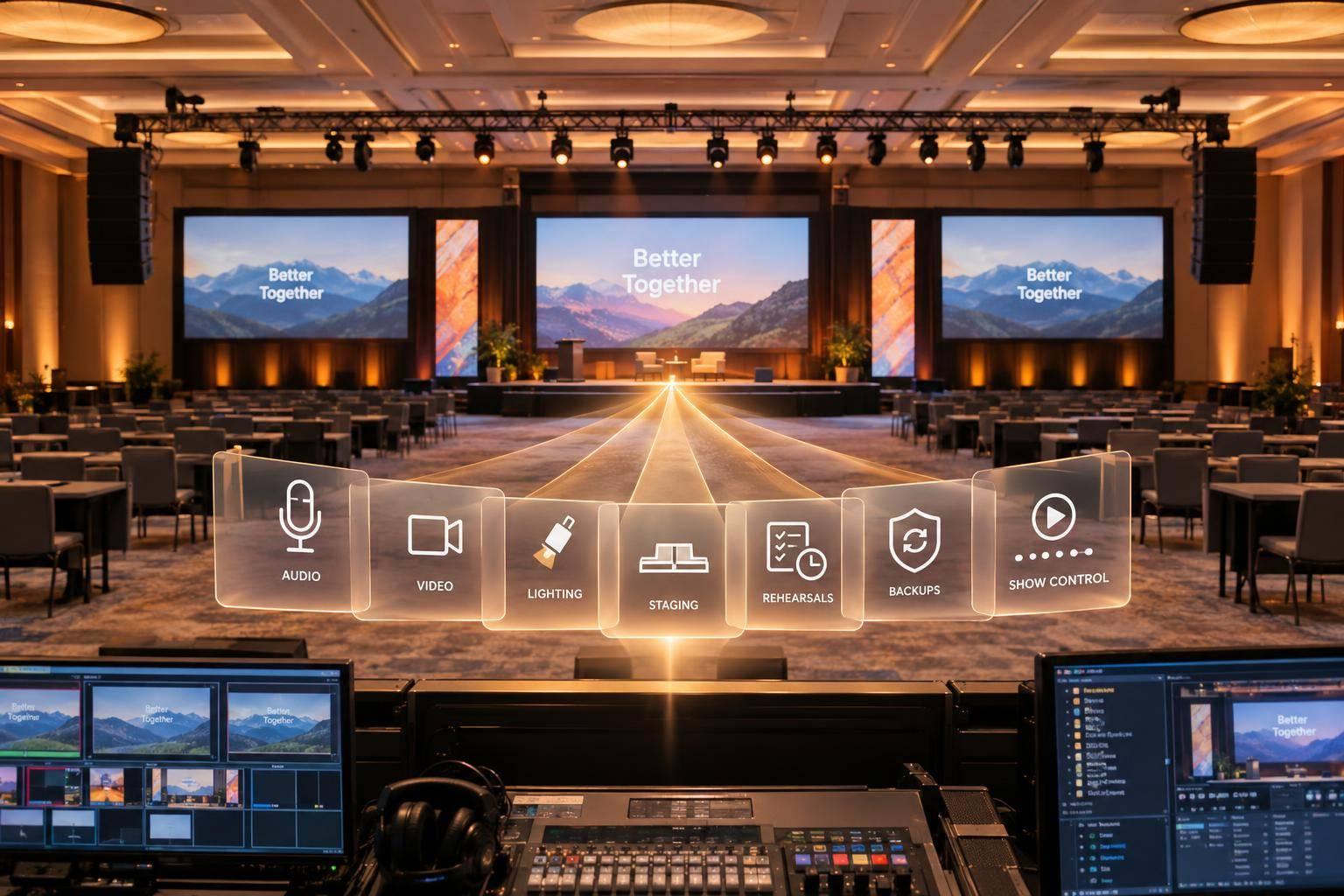
Core Services: Lighting, Audio, Scenic, Video, and Production
This is what integrated production looks like on the ground.
These services are built to work together in the same room, on the same schedule, and for the same show.
| Service | What It Includes | Corporate Outcome |
|---|---|---|
| Stage Scenic | Modular decking, branded panels, ADA-compliant ramps, custom fabrication, 3D CAD layouts | Polished brand environment with professional stage presence |
| Audio | Wireless mics, PA tuned to the room, digital consoles, speech-clear reinforcement | Audience clarity and presenter confidence without technical distractions |
| Lighting | Camera-friendly stage wash, moving heads, audience lighting, remote follow spots | Camera-ready visuals and stronger energy for key moments |
| Video | LED walls, IMAG, 4K switching, confidence monitors, live streaming | Strong visuals for in-room and remote audiences |
| Show Production | Run-of-show development, cue sheets, rehearsal planning | Fewer live errors and smoother transitions |
Stage Scenic and Branded Environments
Corporate Optics builds custom stage environments with modular decking, branded panels, LED walls, and fabricated set pieces sized for the venue. Room layouts are drawn in CAD and rendered in 3D before load-in, so sightlines and ADA-compliant ramp access are checked in feet and inches before show day.
A large LED wall behind a multi-level stage gives the brand a stronger presence on camera. That scenic work shows up in photos and video too, keeping the brand front and center.
Audio, Lighting, and Video Systems Built for the Room
Audio is set up so a keynote speaker's voice reaches the back row cleanly, without feedback or dead spots. In practice, that means line array systems tuned to the room's acoustics, wireless microphone systems built for steady RF performance, and digital consoles that can handle high input counts.
Lighting works the same way. Camera-friendly stage washes keep presenters clear on camera, while moving heads add energy during awards moments.
For video, LED walls are often chosen over projection because they keep color and contrast even in bright room lighting.
Show Design and Production Planning
Production planning is where the technical pieces connect to the agenda. Using a corporate event checklist helps organize these logistics early. Corporate Optics builds a detailed run-of-show document that maps every cue and transition before rehearsal starts.
That leads to a tighter run-of-show with fewer gaps between cues. Scripts, media, and cues are lined up before show time, and that plan becomes the cue map the show caller and technical team use on site.
Experienced Staff and On-Site Execution
Once the plan is locked, the crew turns it into a live show. What sets a full-scale AV company apart is the on-site team that puts that plan into motion, keeps every department in sync, and fixes issues quietly before the audience notices a thing.
Technical Direction, Show Calling, and Department Coordination
At a live event, every department - audio, lighting, video, scenic - runs on its own timing. That matters most during keynotes, awards, and presenter handoffs, where even a small miss can throw off the room. The show caller keeps every cue lined up in real time once the program begins.
The Technical Director (TD) runs the visual side of the show from the video switcher, moving between camera angles, graphics, and video playback on cue. The Engineer in Charge (EIC) watches over hardware stability, signal routing, and power distribution across the event. Professional intercom systems keep these roles connected, so the team can hand off cues cleanly and react to last-minute changes without interrupting the audience experience.
Crew Roles and Rehearsal Support
A full-scale crew includes specialist roles that support both the show itself and the people on stage. The A1 lead audio engineer manages the main audio mix, handles mic placement, coordinates wireless mic frequencies, and manages comms. The video engineer (V1/shader) matches exposure and color across cameras in real time so the image stays even on screen. Stage managers and production assistants work backstage, cueing speakers, checking mic placement, and guiding presenters on and off stage.
Rehearsal is where all of that coordination starts to pay off. Line checks, presenter run-throughs, monitor checks, and timer tests happen before doors open, giving the crew time to catch problems early and helping speakers feel more at ease before the first live moment. Critical backups are also checked, so high-stakes segments have a fail-safe ready to go.
Clear roles and solid rehearsal habits keep the show on schedule and presenters calm. They also shape the timeline and logistics that come next.
Planning, Budget, and Logistics With One AV Partner
Full-Scale Event AV Planning Timeline: From Discovery to Show Day
Once show roles are set, the next job is to lock the budget, logistics, and approvals. The work that makes an event run well usually happens long before load-in. That means making budget, scenic, and staffing calls weeks in advance.
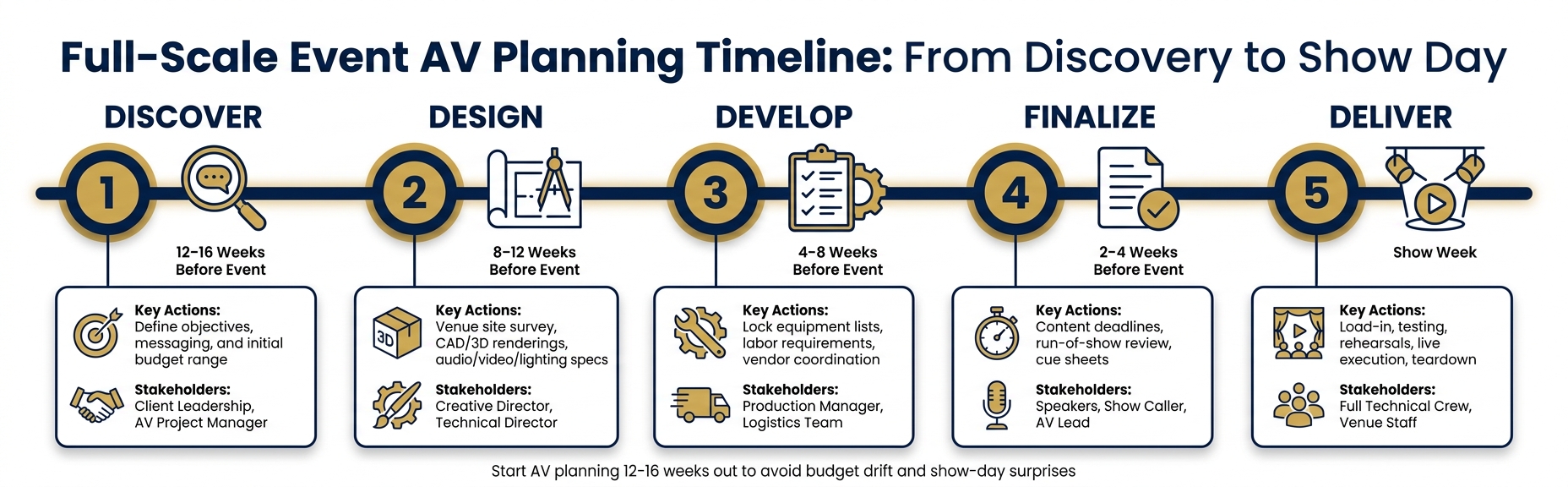
Most full-scale AV partners follow a pretty clear path: discovery, design, then build-out and delivery.
Project Timeline From Discovery to Show Day
Bringing in Corporate Optics 12 to 16 weeks before the event gives the team time to help shape venue selection, tech integration, and show flow before contracts are signed.
| Weeks Before Event | Key AV Actions | Stakeholders Involved |
|---|---|---|
| 12–16 Weeks | Discover: define objectives, messaging, and initial budget range | Client Leadership, AV Project Manager |
| 8–12 Weeks | Design: venue site survey, CAD/Vectorworks 3D renderings, and audio, video, and lighting specs | Creative Director, Technical Director |
| 4–8 Weeks | Develop: lock equipment lists, labor requirements, and vendor coordination | Production Manager, Logistics Team |
| 2–4 Weeks | Finalize: content deadlines, run-of-show review, and cue sheets | Speakers, Show Caller, AV Lead |
| Show Week | Deliver: load-in, testing, rehearsals, live execution, and teardown | Full Technical Crew, Venue Staff |
During the Design phase, scenic design and 3D renderings should be approved before fabrication starts. That helps keep the production tied to the approved budget instead of drifting after the fact.
By this point, slides, videos, and graphics should also be locked so the cue sheet can be built. Those deadlines matter because they help control the biggest cost drivers.
Budget Ranges and the Biggest Cost Drivers
Once the timeline is in place, the budget picture gets easier to read. Small meetings often fall into the low five figures. Multi-day, hybrid, or custom-scenic events can land in the high five figures or six figures.
| Cost Driver | Impact on Budget | Optimization Approach |
|---|---|---|
| Visual Display | High: LED walls are premium; projection is more budget-friendly but needs light control | Use LED for high-impact general sessions; use projection or standard displays for smaller breakout rooms |
| Labor & Staffing | High: specialized roles such as Technical Directors, Engineers in Charge, and A1 audio leads scale with complexity | Use an integrated in-house team to reduce multi-vendor coordination fees |
| Scenic Complexity | Moderate to High: custom fabrication and branded environments add cost | Use modular scenic elements or digital branding on LED walls for tighter budgets |
| In-House AV Markups | High: venue-provided AV can add significant markups | Use an outside production partner when venue rules allow to help bypass in-house pricing |
| Internet & Connectivity | Moderate: venue Wi-Fi often carries daily bandwidth fees | Use dedicated event internet to reduce venue bandwidth charges |
The biggest factor in cost predictability is using one integrated team. Fewer vendors usually means fewer handoff gaps, fewer change orders, and a cleaner final invoice.
What Clients Get by Working With Corporate Optics End to End
When Corporate Optics runs a production from kickoff through load-out, one production manager oversees the full process: site surveys, equipment specs, scenic approvals, staffing, and streaming setup.
Corporate Optics also uses planning tools to speed approvals, tighten budgets, and coordinate logistics. For the client, that creates one clear point of accountability from discovery to load-out.
Conclusion: What to Expect From a Full-Scale Event AV Company
Once planning, staffing, and budget are locked in, the real test starts: execution.
A full-scale AV company brings lighting, audio, scenic, creative planning, and crew together under one production lead who owns the show. That changes what people see in the room. The stage looks polished. Cues land cleanly. Problems get handled quietly, often before the audience has any clue something was off.
Key Takeaways for Corporate Event Decision-Makers
For corporate event decision-makers, the takeaway is pretty simple: the most important production choices happen before load-in.
Pick one partner to run lighting, audio, scenic, video, and crew so every part of the show stays aligned. When there are fewer handoff gaps, cues tend to run smoother and presenters feel more at ease.
Experienced crews keep the show moving and help presenters stay calm under pressure. For high-stakes events - large conferences, shareholder meetings, leadership summits - that kind of reliability matters. For Corporate Optics clients, it means one point of accountability from planning through load-out.
FAQs
How do I know if my event needs full-scale AV support?
You likely need full-scale AV support when you want one partner to run the whole show - from pre-production planning and stage scenic design to rigging, lighting, audio, video, hybrid or virtual integration, backup workflows, and on-site staffing.
This matters most when your event includes lots of cues, live presenter or content changes, remote audiences, multi-camera streaming, or a need for polished branding and a smooth presenter experience.
What should I prepare before the AV planning process starts?
Before AV planning starts, get clear on what the event needs to do. Define the purpose, set the goals, and spell out the outcomes you want.
It also helps to have the basics ready from the start:
- Preferred dates
- Venue details
- Estimated attendee count
- Presenter needs
- A rough budget, plus a contingency
You should also be ready to talk through the full scope of the event, including any hybrid or virtual elements. That gives your production partner what they need to check power, rigging, and internet needs early, before small issues turn into big ones.
How can I keep a full-scale AV budget under control?
Work with one full-service production company from the start. When audio, lighting, staging, and creative all sit with the same team, you can often cut costs by 10%–20%. Why? You avoid duplicate gear, make load-in and strike smoother, and trim venue-related costs.
It also pays to set your event goals and budget before the first planning call. Include a contingency amount from the beginning. Early planning gives your team a clear record of power needs, rigging, and logistics from day one, which helps you dodge expensive last-minute problems.
Related Blog Posts
- 4 Meeting Production Companies That Excel At Seamless AV (audio/video), Lighting, and Stage Design for Corporate Conferences, and events
- Top-Tier Event Production Teams Specializing In Full AV, Lighting, Staging, and Production
- Top Event Producers For Audio Visual Production And Stage Design Management
- Event‑Management Firms With Strong Technical Production Services


Streamline your workflow, achieve more

Lorem ipsum dolor sit amet, consectetur adipiscing elit. Maecenas ac velit pellentesque, feugiat justo sed, aliquet felis.



Lorem ipsum dolor sit amet, consectetur adipiscing elit. Maecenas ac velit pellentesque, feugiat justo sed, aliquet felis.