Technical Production Companies Who Help You Select Venue & Produced Your Conference

Chief Executive Officer
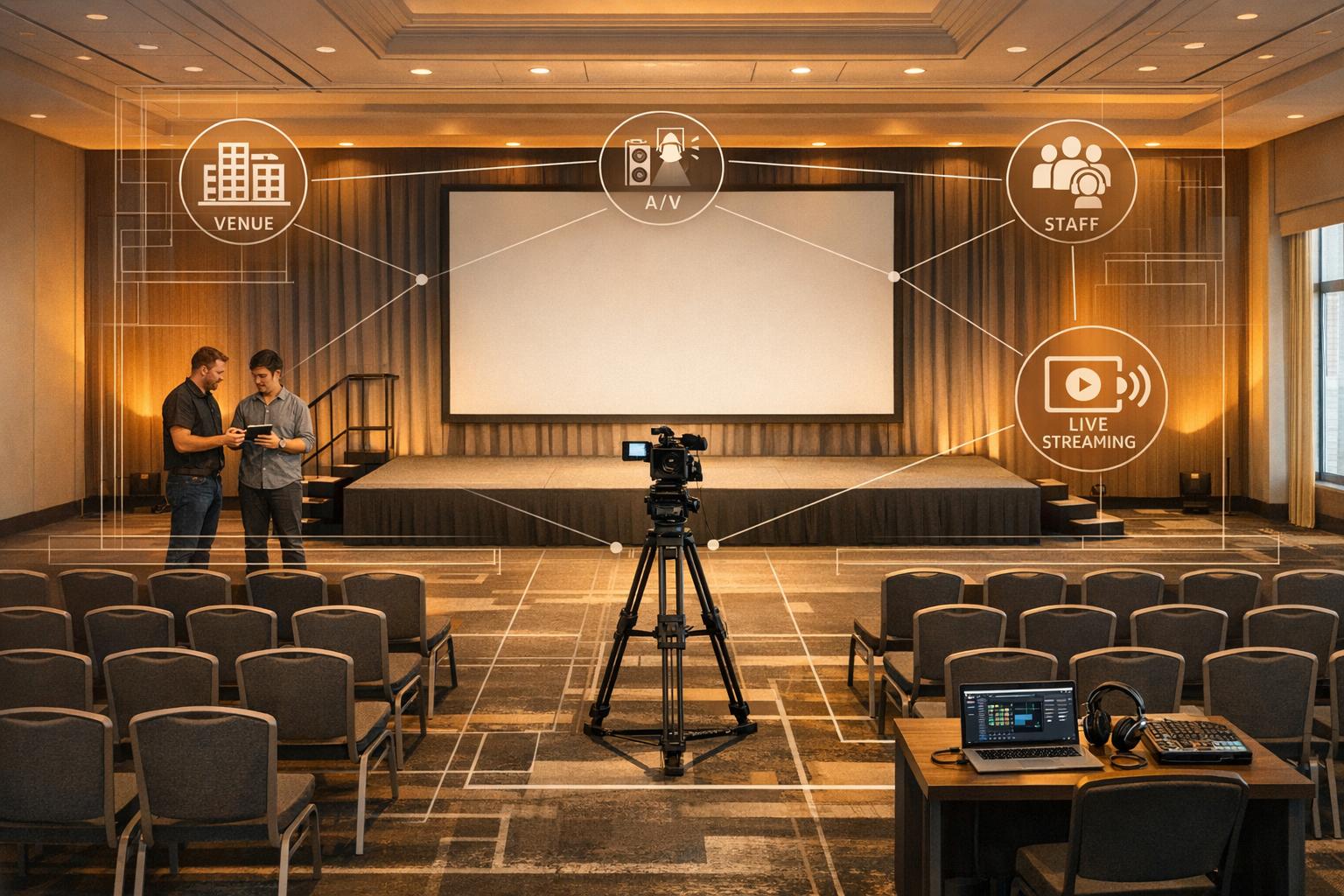
Organizing a corporate conference isn’t just about booking a venue - it’s about creating an impactful experience. With 73% of attendees expecting advanced event technology, technical production companies streamline the process by managing venue selection, AV production best practices, and event logistics.
Key Takeaways:
- They assess venues for technical compatibility (e.g., power, acoustics, accessibility).
- Handle audiovisual needs like sound, lighting, and live streaming.
- Offer tools for audience engagement, including Q&A platforms and mobile apps.
- Provide on-site execution, staffing, and real-time troubleshooting.
Example: Corporate Optics transformed events like the McAfee/Intel Security Conference with massive HD displays and seamless AV setups, impressing over 39,000 attendees.
The right partner ensures your conference delivers results while reducing stress. Read on to learn how they manage every detail, from venue feasibility to post-event analytics.

How Technical Production Companies Support Conference Planning: 5-Step Process
How Technical Production Companies Help Select Conference Venues
Picking a venue for a conference isn’t just about fitting the guest list; it’s about matching the venue’s technical capabilities with the event’s demands. Production companies dive deep into the details - like power setups and acoustics - before you commit to a space. Here’s how they approach venue selection to ensure everything runs smoothly.
Venue Feasibility Analysis
Technical production teams evaluate whether a venue can bring your vision to life. They look at critical factors like space layout, power availability, rigging options, AV systems, and acoustics.
"Your vision comes to life as we guide you through the technical needs, venue logistics, speaker requirements, leadership team coordination, and the guest experience." - Corporate Optics
It’s not just about whether the venue is big enough. For example, a space might have plenty of room but lack the rigging points needed for intricate lighting designs. Or, stunning architecture might create audio challenges like dead zones. By identifying these potential issues during the design phase, production companies help you avoid headaches or costly adjustments after contracts are signed.
Capacity and Accessibility Requirements
A venue’s accessibility is just as important as its size. Production teams check for practical details like equipment access, parking, and smooth guest flow. They also consider presenter needs, ensuring there are green rooms, proper stage setups, and space for tools like teleprompters and confidence monitors. Even sight-line issues are addressed to make sure every attendee has a clear view.
These checks ensure the venue supports not just the event’s logistics but also its ability to deliver your message effectively.
Logistics and Technical Compatibility
Another critical step is confirming that the venue’s in-house systems can work seamlessly with any specialized equipment your event requires. Production teams handle the nitty-gritty, like syncing equipment schedules, coordinating with on-site vendors, and testing all technical setups before the event begins. For hybrid meeting planning, this includes evaluating the venue’s ability to handle multi-camera setups, live broadcast encoding, and the bandwidth needed for high-quality streaming.
"Our team transforms plans into reality with flawless execution, from managing logistics, coordinating with vendors, technical rehearsals and contingency planning - no surprises, just results." - Corporate Optics
sbb-itb-ae35a94
Technical Production Services for Corporate Conferences
Once you've secured the venue, the real transformation begins - turning an empty space into a dynamic conference environment. This is where technical production companies step in, handling everything from meeting production services like sound and lighting to stage design and audience interaction tools. Their goal? To keep attendees engaged while ensuring your message comes through loud and clear. For Corporate Optics, this means crafting an impeccable audiovisual experience that leaves no detail overlooked.
Audiovisual Setup and Integration
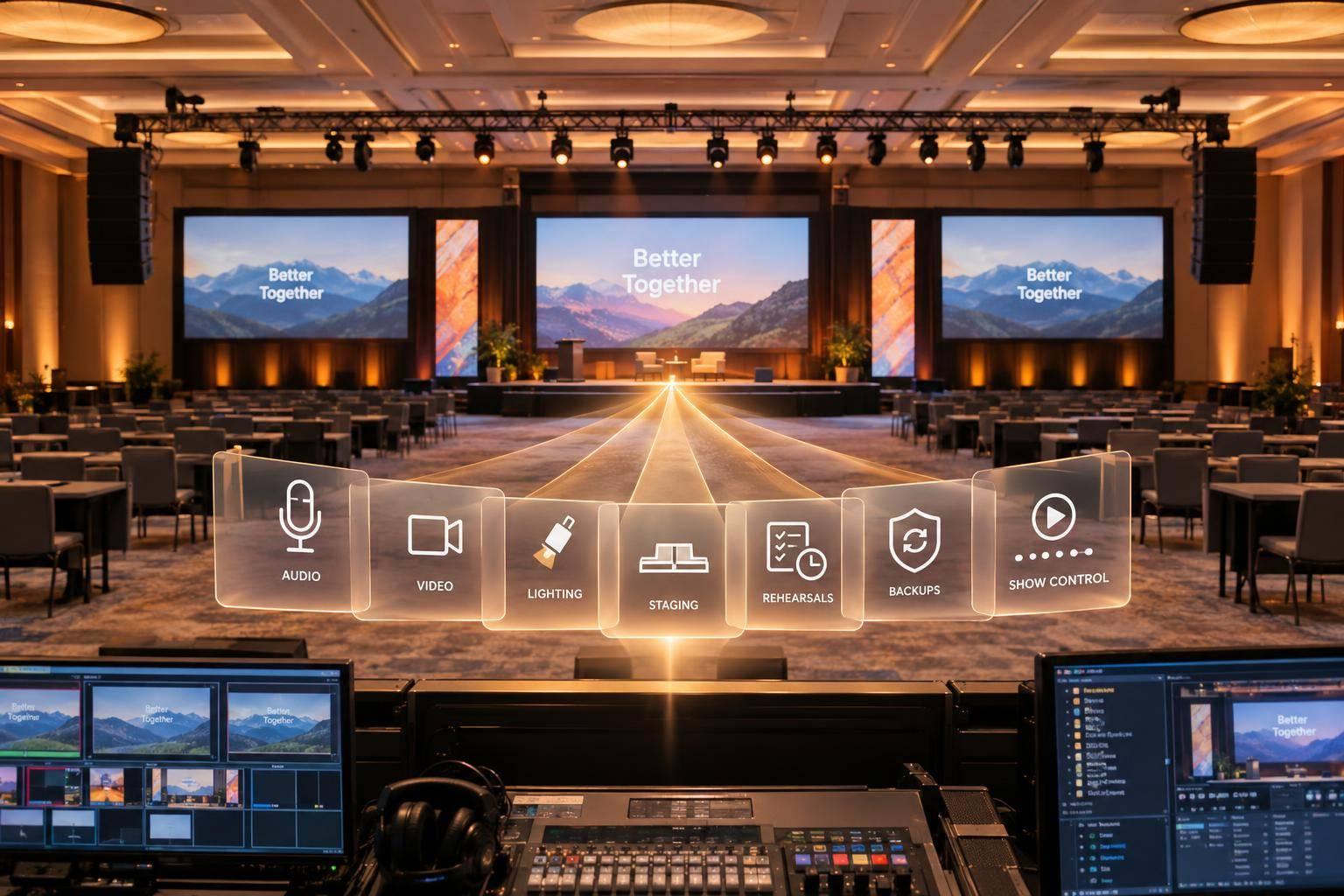
Creating a seamless AV experience goes far beyond setting up speakers and screens. Production teams design and implement systems tailored to the venue, including high-quality microphones for speakers, mixers and amplifiers adjusted to the room's acoustics, and large-format displays like LED walls or panoramic HD screens. A standout example is the McAfee/Intel Focus Security Conference, held in Las Vegas from 2012 to 2024. Corporate Optics installed massive 18'×70' panoramic HD screens and LED environments with over 13 million pixels to support presentations for more than 39,000 attendees. High-profile speakers like President Bill Clinton and Sir Richard Branson headlined this event, underscoring the importance of flawless AV execution.
To prevent technical hiccups, production teams build redundant power and signal systems, ensuring reliability during critical moments. They also manage the content pipeline, syncing video playback, speaker confidence monitors, and multi-camera setups for live streaming. For hybrid events, this includes encoding for live broadcasts and ensuring the venue's internet bandwidth can handle high-quality streaming without interruptions.
Stage Design and Scenic Production
A well-designed stage can elevate the conference experience, making your brand and message resonate. Production companies craft custom backdrops, scenic walls, and branded installations, all designed to reflect your company’s identity while enhancing the overall atmosphere. They also consider sightlines and seating arrangements to ensure every attendee has a clear view, seamlessly blending scenic elements with digital content for a cohesive experience.
Lighting is another essential component. From stage lights to moving and accent lighting, production teams use these tools to set the mood and direct attention. For events like award ceremonies, they often create dramatic entrances with dynamic lighting to energize the room. Through early planning sessions, every design element is aligned with your event’s objectives.
Audience Engagement Tools
Keeping attendees engaged requires more than just captivating speakers. Production companies bring in tools like interactive Q&A platforms, live polling systems, and mobile event apps to encourage real-time participation. For hybrid events, they integrate technologies that connect in-person and virtual audiences, creating a unified experience.
Advanced visuals, such as 4K hologram projections and 3D animated media, can take presentations to the next level. During the National Achievers Congress tour, Corporate Optics used 4K hologram technology to virtually bring speakers to the stage across two cities, captivating an audience of 11,000. Virtual breakout spaces also allow for more focused discussions, keeping energy levels high throughout multi-day events. With 67% of event organizers citing technology as a major challenge, having a production partner who understands these tools is essential for smooth operations.
Event Logistics and On-Site Execution
Successful conferences hinge on production teams managing a maze of details that often go unnoticed by attendees. Whether it’s coordinating union labor schedules or fixing a microphone seconds before a keynote, on-site execution is what transforms a standard event into a standout experience. Technical production companies handle these complexities with meticulous planning, skilled teams, and proactive systems that help avoid problems before they arise. This approach ensures every logistical and technical detail works together seamlessly.
Staffing and Vendor Coordination
When multiple vendors fail to communicate, the burden of coordination often falls on planners. For example, if audiovisual teams don’t sync with scenic crews or venue labor staff, it can lead to major disruptions. Full-service production companies bridge these gaps by managing audiovisual, scenic, staging, and labor elements under one umbrella, ensuring smooth coordination across the board.
On-site execution depends on specialized roles working together seamlessly. Key team members include:
- Technical Producers: Oversee the entire production.
- Show Callers: Manage live event flow and cue transitions.
- Stage Managers: Handle talent and backstage logistics.
- Deck Leads: Organize equipment placement.
- Video Directors: Control camera operations.
- Communications Leads: Keep the crew connected.
Strategic staffing plans are tailored to each event’s needs, determining when to deploy full crews versus lean teams based on the production schedule and venue constraints.
A vendor responsibility matrix often comes into play, clearly outlining who is responsible for what and when. This tool ensures accountability among third-party providers - such as caterers, furniture rental companies, and security teams - while addressing venue-specific challenges like union labor requirements, power distribution limits, and access schedules. This level of planning helps avoid last-minute surprises.
Once staffing is aligned, the focus shifts to managing risks and troubleshooting in real time.
Contingency Planning and Real-Time Troubleshooting
Live events come with their own set of challenges, so anticipating issues is key. Production teams build redundancy into critical components - backup systems for signal paths, playback devices, switchers, power sources, and communications - ensuring that if one system fails, another is ready to step in immediately. Technical directors also design power distribution plans that work within venue limitations to prevent infrastructure-related failures.
Rehearsals focus on managing risk rather than achieving perfection. Teams practice high-stakes moments, such as complex transitions and tight timing cues, to ensure everyone feels prepared. As one expert put it:
"Rehearsals aren't about perfection, they're about confidence. We focus on the moments that carry risk (timing, transitions, tech handoffs) so presenters and crew feel steady, and the show feels effortless." - Tech Event Pro
During the event, real-time monitoring allows production leads to track technical systems, manage cues, and make quick adjustments without disrupting the audience's experience. Stage Managers and Technical Directors maintain a calm, problem-solving mindset, while rigorous pre-event testing of equipment - like microphones, presentation decks, and video playback - reduces the chance of interruptions.
Post-Event Analytics and Reporting
An event isn’t truly over until the post-show analysis is complete. Production teams conduct debriefs to document successes and areas for improvement, creating "lessons learned" reports that help refine future events. These debriefs assess everything from the effectiveness of redundancy systems to staffing levels and power distribution. The insights gathered not only evaluate technical performance but also improve strategies for upcoming conferences.
Another crucial step is the asset handoff. Production teams deliver recordings, media files, and technical documentation that can be repurposed for marketing or training. Many companies also offer post-production services to transform raw event footage into polished videos for ongoing use.
Some production partners go a step further by analyzing the ROI from your conference production company. For instance, a long-term collaboration in the security sector demonstrated a strong return on investment by driving new and incremental business. With 78% of organizers viewing in-person conferences as their most effective marketing channel, post-event analytics play a vital role in measuring success and shaping future budget decisions.
Corporate Optics Case Studies
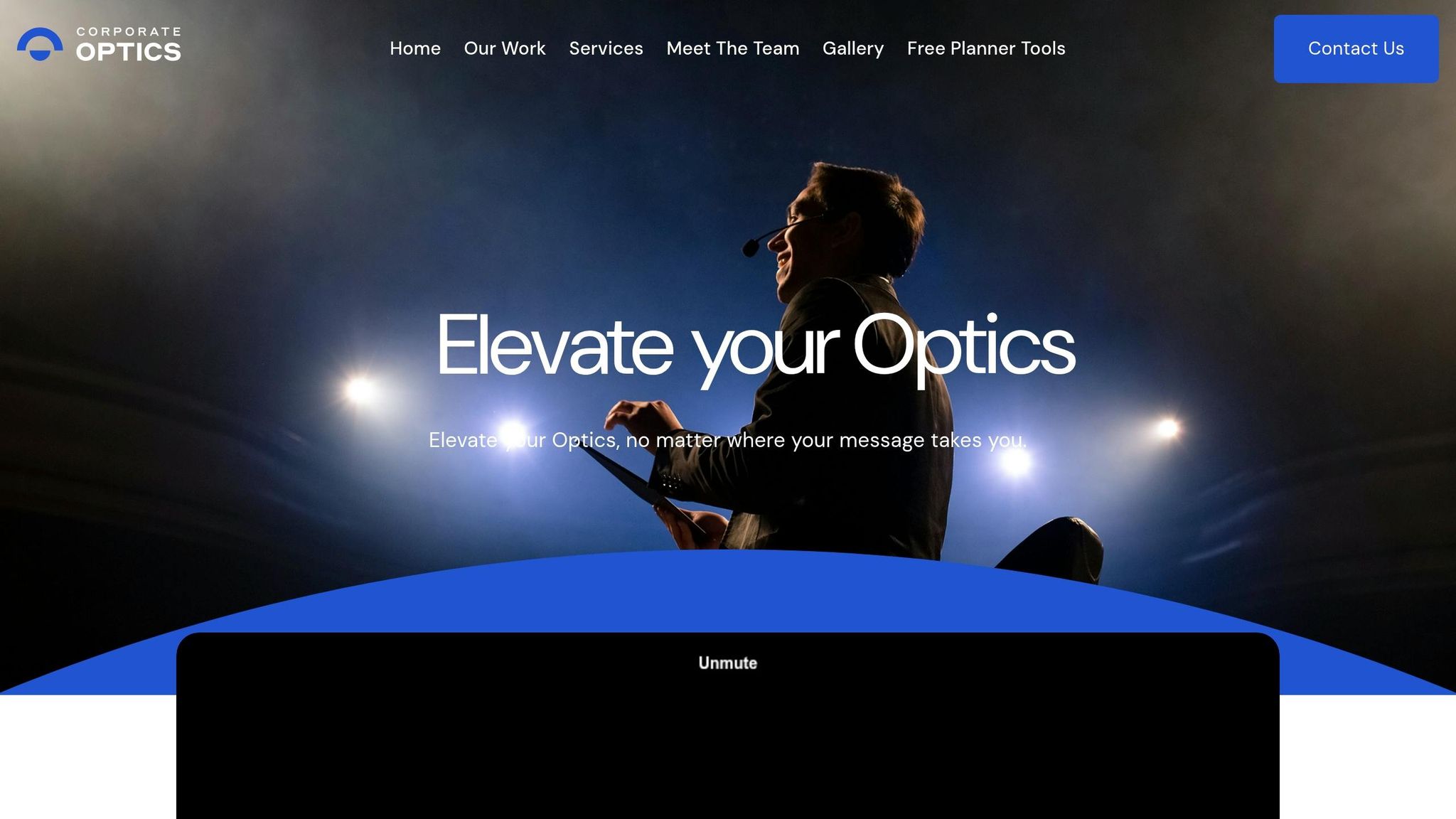
These examples show how Corporate Optics expertly handles the challenges of venue selection and technical production. From multi-day leadership conferences to shareholder meetings and award ceremonies, their work demonstrates an impressive ability to create seamless, memorable events.
Leadership Conference Production
For multi-day leadership conferences, Corporate Optics combines venue selection with technical production to craft environments that captivate attendees. They carefully assess technical needs and logistics, turning ordinary spaces into dynamic settings with modular stage designs. One client shared:
"Corporate Optics took our event to the next level. Their creativity, professionalism, and attention to detail are top-notch. They brought vision to life flawlessly." – Nikki D., Vice President of Sales
Their expertise in leadership events naturally extends to the precision required for hybrid shareholder meetings.
Shareholder Meetings with Hybrid Capabilities
Shareholder and annual meetings demand meticulous planning, especially when catering to both in-person and virtual audiences. Corporate Optics ensures flawless execution with professional streaming solutions and redundant systems, offering remote participants a smooth experience. Their services cover everything from coordinated presentations and teleprompter support to scriptwriting and detailed rehearsals. This approach guarantees clear, impactful communication during high-stakes events. From here, their skillset transitions seamlessly into the creative demands of award ceremonies.
Award Ceremonies with Scenic Design
Award ceremonies come with their own set of challenges, requiring the coordination of scripts, multimedia, and physical awards within tight schedules. Corporate Optics meets these demands by delivering creative solutions like custom lighting, walk-up music, nominee video production, and polished slide presentations. Whether in traditional conference spaces or unconventional venues, their technical expertise shines. As one senior director reflected:
"Corporate Optics made our national dealer meeting unforgettable. Their professionalism and creativity set a new standard for our events!" – Bill G., Senior Director
These case studies highlight how Corporate Optics turns logistical hurdles into extraordinary event experiences.
What to Look for in a Technical Production Partner
Choosing the right technical production partner can make all the difference in ensuring your conference runs smoothly and achieves its goals.
Experience in Corporate Events
The best production partners don’t just dive into equipment lists - they start with strategy. They’ll ask about your mission, audience, and goals during a Discovery phase before discussing technical details. This approach builds trust and ensures that their solutions align with your business objectives. Make sure your partner has a solid track record with a variety of corporate events, like divisional meetings, shareholder gatherings, public events, and even government conventions. A structured process - Discovery, Design, Development, and Delivery - is a good sign they know what they’re doing and can handle the complexities of your event.
Customizable Services and Pricing
Transparency is key when it comes to pricing. Look for a partner who provides detailed, line-item proposals that clearly separate agency fees from third-party costs, such as venue, catering, and AV equipment. Independent production companies often offer more competitive pricing by avoiding inflated venue markups and creating tailored packages. Whether you’re planning a small 50-person executive retreat or a large-scale event with 1,300 attendees, your partner should be able to adapt.
For example, full-service production for a large event typically costs between $750,000 and $1,000,000, while more complex enterprise events involving custom setups and multiple venues often exceed this range. Keep timelines in mind, too: larger conferences usually require 6 to 12 months of preparation, while smaller events might only need 3 to 4 months. A partner who plans ahead and adjusts to your needs ensures a seamless experience.
Scalability and Advanced Technology
Beyond strategy and pricing, advanced technology is crucial for scaling your event without hiccups. Your partner should handle everything from intimate boardroom setups to massive conferences with equal expertise. This includes managing scenic design, lighting, audio, visual coordination, and hybrid streaming infrastructure.
Top-tier partners also stand out by integrating advanced tools. For instance, Corporate Optics uses prompts.ai, an AI platform that streamlines event planning and execution, ensuring efficiency from start to finish. Be sure to ask how much of the work is handled internally versus subcontracted. When too many vendors are involved, it can create unnecessary stress for your team. A reliable partner will act as the central point of contact, coordinating all vendors to prevent disruptions and maintain a smooth event flow.
Conclusion
Pulling off a successful corporate conference involves much more than booking a venue and setting up equipment. Technical production companies take the heavy lifting off your plate - handling everything from assessing venue suitability and capacity to managing audiovisual setups, stage design, and on-the-spot troubleshooting. This allows you to focus on what truly matters: connecting with your audience and delivering your message effectively.
The right partner brings expertise that reduces risks and amplifies results. For instance, Corporate Optics has achieved over 10.9 billion positive media impressions. Their work on hybrid shareholder meetings showcases how tools like AI-driven planning and professional streaming can expand your reach and deepen audience engagement through advanced audiovisual setups and seamless event coordination.
By managing staffing, vendor coordination, and contingency planning, these experts eliminate the need to juggle multiple vendors. From scenic design to analytics, they ensure every detail is covered. As one client, Pete L., SVP of Marketing, shared:
"They always remain calm (with a smile), have our back, and are prepared for anything. I cannot tell you how appreciated it is to have a partner that creates a stress-free and engaging experience." - Pete L., SVP, Marketing
Whether you're organizing a small executive retreat or a large-scale leadership summit, scalability and modern technology are essential. Look for partners who provide clear, customizable packages that align with your budget and ensure your event scales effortlessly to meet your objectives.
Take your next conference to the next level by partnering with experienced professionals who deliver results through cutting-edge technology and proven strategies. Reach out to Corporate Optics for a consultation today.
FAQs
When should I hire a technical production company for my conference?
Hiring a technical production company early - preferably during the venue selection process - can make a world of difference for your event. Getting them involved right from the start ensures that essential elements like audiovisual setup, lighting, and stage design are factored into your venue choice. This forward-thinking approach minimizes the risk of last-minute problems, guarantees the right equipment and staff are in place, and keeps the technical aspects aligned with your event’s overall vision. It’s a key step toward running a seamless, successful conference.
What venue details should I confirm before signing a contract?
Before committing to a venue contract, it's crucial to double-check a few important details to make sure the space fits your event's needs. Start with the capacity and layout - does it comfortably accommodate your audience? Next, assess the audiovisual and technical infrastructure to ensure it supports your equipment. Don’t overlook loading access for easy setup and teardown, and confirm the location's accessibility so attendees can get there without hassle. You'll also need to verify utilities and power sources to meet any technical demands and review the venue's safety compliance to align with local regulations. Covering these bases will help ensure the venue matches your event's logistical and technical needs.
How do production teams prevent AV or livestream failures on event day?
Production teams sidestep AV or livestream hiccups by focusing on thorough planning, rigorous testing, and built-in redundancy. They draft detailed schedules, run equipment tests, and conduct rehearsals with speakers to iron out potential issues. To prepare for the unexpected, teams rely on redundancy measures like backup power sources, spare microphones, and additional cables, ensuring problems can be resolved quickly. Starting preparations early, working closely with technical teams, and strategically placing equipment all play a role in minimizing risks and keeping events running smoothly.
Related Blog Posts


Streamline your workflow, achieve more

Lorem ipsum dolor sit amet, consectetur adipiscing elit. Maecenas ac velit pellentesque, feugiat justo sed, aliquet felis.



Lorem ipsum dolor sit amet, consectetur adipiscing elit. Maecenas ac velit pellentesque, feugiat justo sed, aliquet felis.