Why Corporate Optics Is A Great Event Production Company To Work With In Chicago, Illinois.

Chief Executive Officer
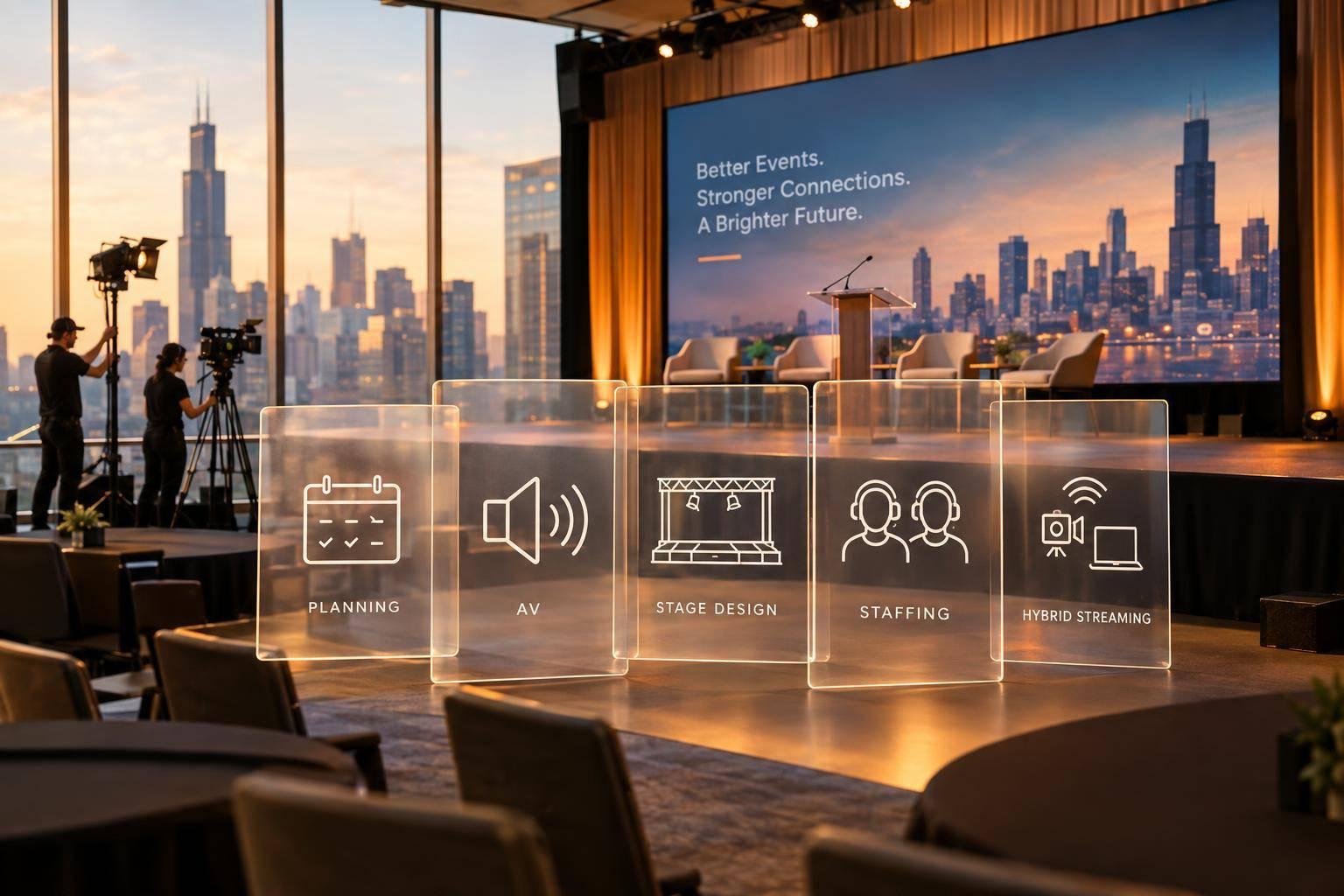
I’d consider Corporate Optics for a Chicago corporate event that needs one team for planning, AV, staging, staffing, and hybrid delivery. Before booking, I’d ask for a written scope covering venue rules, rehearsals, backup plans, and reporting.
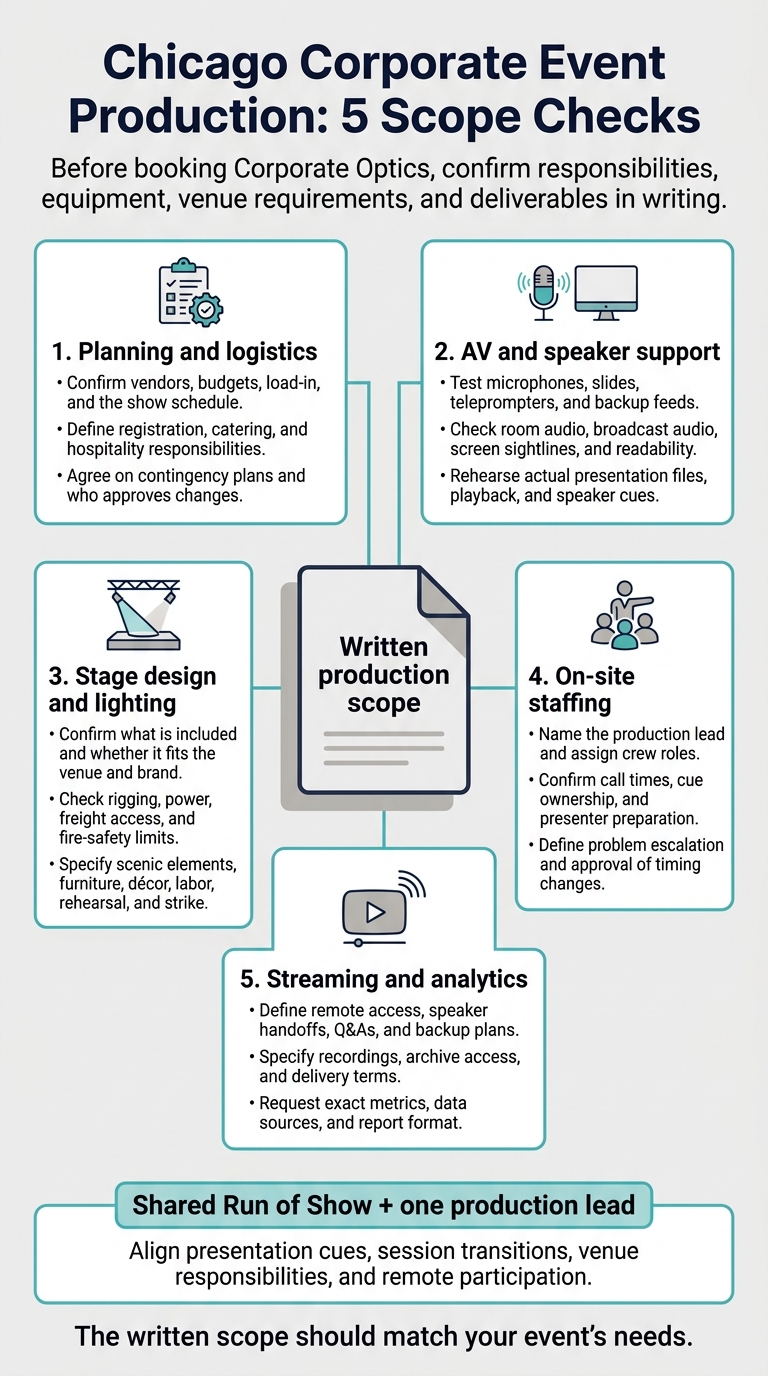
Here’s what I’d check across its five service areas:
- Planning and logistics: Who handles vendors, budgets, load-in, and the show schedule?
- AV and speaker support: How will the team test microphones, slides, teleprompters, and backup feeds?
- Stage design and lighting: What’s included, and does it fit your venue and brand?
- On-site staffing: Who leads the crew, calls cues, and handles problems?
- Hybrid streaming and analytics: How will remote attendees join, ask questions, access recordings, and appear in reports?
One example: Corporate Optics reports producing a September 2026 town hall for 70 in-person attendees and more than 1,000 virtual attendees - though it wasn’t identified as a Chicago event.
My takeaway: the service list is a starting point. <u>The written scope should match your event’s needs.</u>
Chicago Corporate Event Production: 5 Scope Checks
What Chicago Corporate Events Need From a Production Partner
Chicago venues need separate checks for room audio, broadcast audio, and screen sightlines. Ask your production partner to plan redundant signal feeds and clear speaker close-ups for remote attendees - not just a wide shot of the stage.
In September 2026, Corporate Optics produced a North American Town Hall for 70 in-person attendees and more than 1,000 virtual attendees. The setup included two cameras, 85-inch in-room displays, broadcast lighting, and downstage monitors with program timers. This documented project shows how room and remote presentation needs can be addressed together; it was not identified as a Chicago event.
Once the AV package is set, focus on presenter rehearsal. Speakers need cue-by-cue rehearsal to check entrances, lighting, walk-up music, playback, and timing. Assign clear responsibility for presenter preparation, teleprompters, and timing cues. Corporate Optics documents these capabilities.
Ask for a venue-specific plan that covers load-in, venue requirements, vendor responsibilities, and rehearsal timing. Corporate Optics describes working with venues and their in-house AV teams, along with load-in and contingency planning.
Put those responsibilities in a shared Run of Show, with one production lead. Include presentation cues, session transitions, and remote participation requirements so the client team, venue, and production crew work from the same schedule. Corporate Optics emphasizes a single point of contact. These details feed into the end-to-end planning and logistics covered next.
sbb-itb-ae35a94
1. End-to-End Planning Coordinates Event Logistics
Documented services
For Chicago corporate events, planning keeps the program on schedule and the production team working from the same plan. Corporate Optics lists agenda and program development, venue sourcing, vendor coordination, budget planning, registration, hospitality, and contingency planning among its end-to-end services, often starting with a corporate event checklist. Its Run of Show support brings scripts, awards, and multimedia cues into one schedule.
Its four-stage process - Discover, Design, Develop, and Deliver - begins with goals and requirements, then shapes the technical plan around venue needs and budget. For Chicago events, request a written budget tied to the agreed production scope and identify who approves changes.
Corporate event needs
Confirm the full scope before approving the plan. Specify which registration, attendee management, catering, and hospitality responsibilities are included. Make contingency planning concrete: decide who can authorize agenda changes, which items can move, and how vendors will receive updates.
Once logistics are set, focus on clear audio, video, and speaker support.
2. Audiovisual Production and Speaker Support Help Deliver Clear Presentations
Documented services
Corporate Optics lists audio production, presentation displays, slide-deck review and cleanup, script writing, and teleprompter services. It also documents video switching systems and redundant signal feeds. Confirm the final equipment list in the production scope.
Corporate event needs
Once logistics are set, focus on presentation details that help the audience see and hear clearly - and give speakers control. Chicago meeting rooms often need separate checks for stage audio, room audio, and screen visibility.
Plan reliable slide playback and teleprompter placement, and assign microphones to every speaker. Check stage sightlines and screen readability from the back of the room. Specify display sizes, playback formats, switching equipment, and backup signal paths.
Use a technical rehearsal to test the actual presentation files, backup playback, and speaker cues. Assign who advances slides, calls transitions, rolls video, and handles playback issues.
If you plan to use motion graphics or branded visuals, approve their scope and timing before production so they match the program. These checks help keep prompting discreet, panel audio consistent, and content readable. Once AV and cueing are set, stage design and lighting can reinforce the program’s brand.
3. Stage Design and Lighting Reflect Your Brand
Once audio and cueing are set, stage design and lighting shape how polished the room feels.
Documented services
Corporate Optics offers stage design, custom fabrication, and lighting production. Designs can include immersive sets, signage, and theming that support your message. Confirm LED scenic elements, furniture, and décor in the proposal - they aren’t standard inclusions.
Corporate event needs
Review brand guidelines, the event’s purpose, venue constraints, audience sightlines, stage size, lighting goals, and camera positions. Before fabrication begins, confirm ceiling height, rigging rules, union labor, freight access, power, and fire-safety limits with the Chicago venue and production team.
Spell out what the proposal covers: equipment and labor, artwork deadlines, furniture and décor, rigging, power, rehearsal time, strike, and contingency plans.
Presenter and attendee benefits
Use lighting to spotlight presenters, support camera coverage, and mark key moments in the program.
For awards ceremonies, Corporate Optics documents dynamic lighting coordinated with walk-up music and transitions.
Place branded scenic elements where they support the program rather than distract from it. Bringing that design to life depends on precise load-in, setup, and show-call execution.
4. On-Site Staffing Supports Event Execution
Documented services
Once the stage and AV plan are set, on-site staff keep the program running. Corporate Optics lists on-site staffing and technical support, with crews handling setup, operation, and troubleshooting. Its presenter services include technical rehearsals, teleprompter support, and scriptwriting assistance. Check which staff roles and services your proposal includes. Reviewing these details ensures you follow best practices for conference event production to maintain high audiovisual quality.
Corporate event needs
Before your Chicago event, assign responsibility for presenter preparation, audio checks, and session timing. Work with the on-site crew to confirm call times, who gives each cue, and how to handle last-minute changes. Make sure everyone knows who approves timing changes and who relays them to speakers and the production crew.
Corporate Optics documents real-time troubleshooting during events. Request a named production contact to coordinate with the venue and vendors on show day. Clarify how to report technical problems, who resolves them, and which contingency plans apply. In complex venues, a clear on-site lead helps venue staff, presenters, and the production crew stay aligned.
Service or client evidence
Corporate Optics publishes company-hosted testimonials describing how its team responds to challenges.
"Every time we work with Corporate Optics, we know we’re in good hands. Their attention to detail and ability to adapt to challenges is unmatched." - Ed D., Senior Managing Director, Chief Operating Officer
That coordination also supports streaming and hybrid production, covered next.
5. Streaming, Hybrid Production, and Analytics Support Remote Access and Event Review
Documented services
Corporate Optics lists live streaming and hybrid production services, including pre-production support, switching systems, redundant signal feeds, interactive Q&As, and live polls. These services let employees and stakeholders join a Chicago event when they can’t attend in person. The scope should cover speaker access, audience questions, and rehearsal timing.
Corporate event needs
Define remote participation before approving the plan. How will speakers join and hand off? How will questions reach presenters? How will slides and video appear to remote attendees?
Confirm internet connectivity, rehearsals, audience interaction, and backup plans - don’t assume delivery will run without interruption. These decisions also shape what gets recorded and how you can use the content afterward.
Presenter and attendee benefits
Corporate Optics documents recording and archive access. Specify which sessions will be recorded, who can access them, and how they’ll be delivered. Distributed teams can then revisit sessions under the agreed access terms.
Service or client evidence
Corporate Optics lists post-event analytics. Request the exact metrics, data sources, and report format in writing. If the reports include attendance and session-viewing data, compare those results with your goals to measure conference ROI to decide which content to replay or repurpose. Once those deliverables are defined, choose the production approach that fits your Chicago program.
Choosing Corporate Optics for Your Chicago Event
Corporate Optics suits Chicago corporate programs that need one partner for planning, AV, scenic fabrication, staffing, and hybrid meeting planning. During the consultation, confirm responsibilities, venue logistics, presenter needs, remote access, reporting, and deliverables. Book only when the written scope matches your venue, schedule, and technical requirements.
FAQs
How far ahead should I book Corporate Optics?
Involve Corporate Optics early in planning, ideally at project kickoff or during venue selection. That gives the team time for site surveys, technical assessments, and agreement on your goals - helping you avoid costly last-minute complications.
Plan around these general booking windows:
- Large or complex conferences: 6–12 months.
- Standard corporate events: 3–6 months.
- Smaller meetings: 6–10 weeks.
- Executive summits or custom environments: 8–16 weeks.
What affects my Chicago event production budget?
Your Chicago event production budget depends on your event’s scope, goals, and technical needs. Instead of fixed packages, costs account for labor, equipment, scenic elements, streaming, and contingency funds.
Working with one production partner helps keep costs in check by reducing communication gaps and duplicate work. Corporate Optics uses AI-supported workflows to optimize expenses and flags possible venue surcharges - including rigging, power, and union overtime - to help prevent budget surprises.
Can Corporate Optics work with my venue’s AV team?
Yes, Corporate Optics has experience working with your venue’s in-house AV team to bring all technical elements into one production plan. The venue can handle basic needs, while Corporate Optics adds advanced support, including custom staging, multi-camera streaming, and interactive hybrid event solutions. Your team and the venue crew stay coordinated throughout the event.
Related Blog Posts


Streamline your workflow, achieve more

Lorem ipsum dolor sit amet, consectetur adipiscing elit. Maecenas ac velit pellentesque, feugiat justo sed, aliquet felis.



Lorem ipsum dolor sit amet, consectetur adipiscing elit. Maecenas ac velit pellentesque, feugiat justo sed, aliquet felis.