7 Reasons Why You Should Plan A Large-Scale Conference With Professional Production Support

Chief Executive Officer
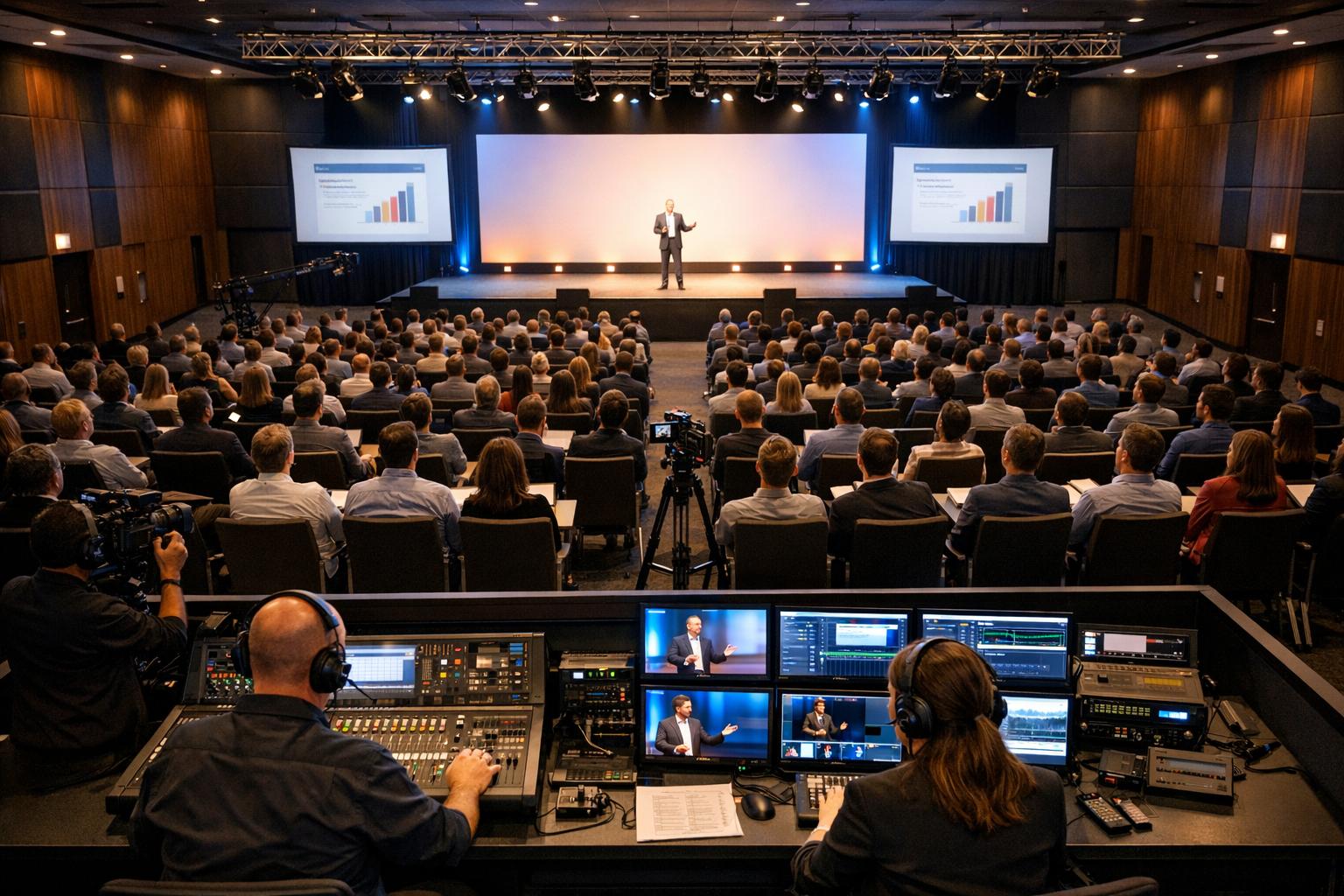
Planning successful large-scale conference elements is complex, and professional production support can make or break your event. Here’s why it’s essential:
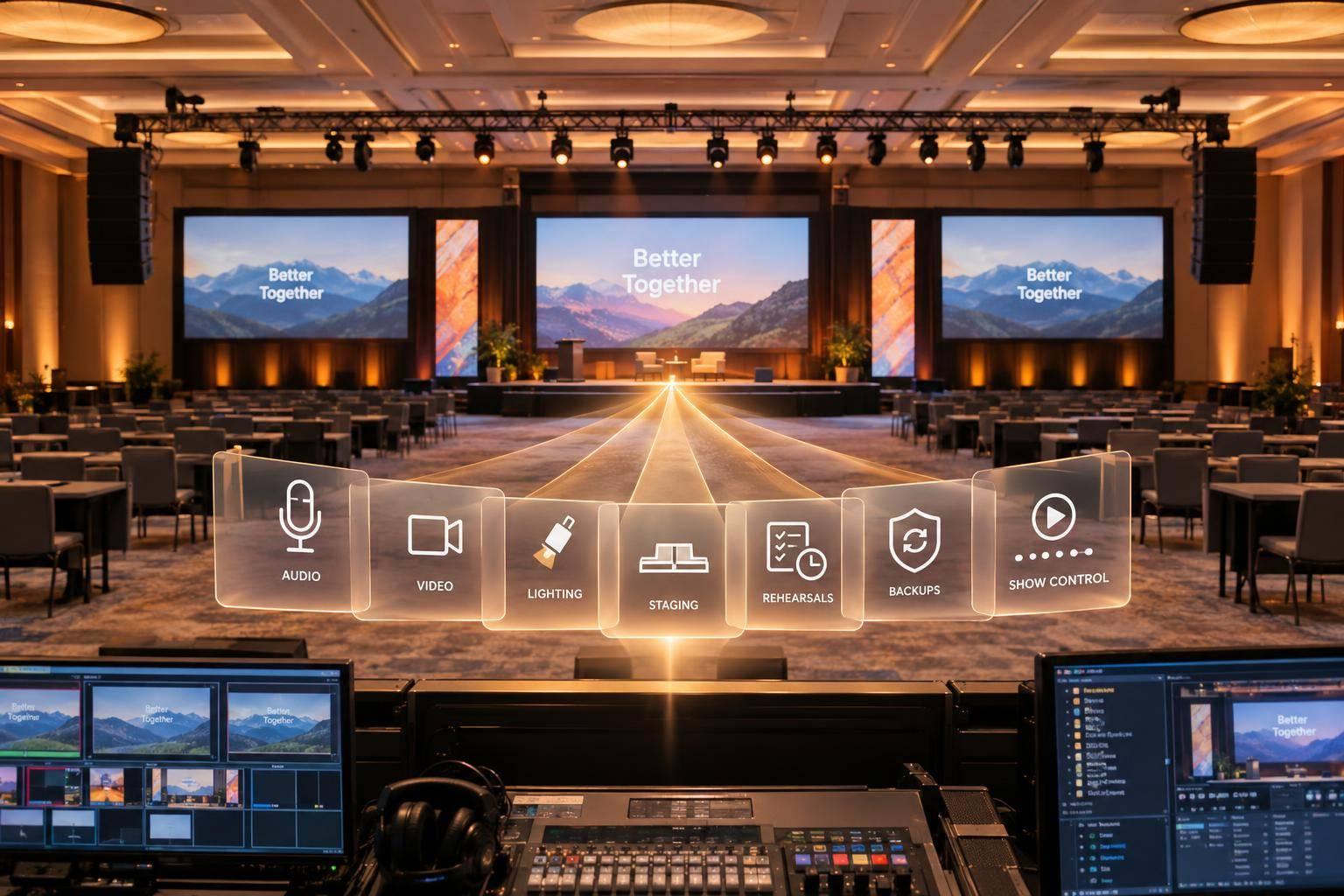
- Top-Notch Audiovisuals: Ensures clear visuals and crisp sound for an engaging experience.
- Streamlined Logistics: Simplifies managing multiple vendors and technical setups.
- Risk Management: Provides backup systems to handle unexpected issues.
- Interactive Tools: Boosts audience participation with live polls, Q&As, and real-time feedback.
- One-Stop Planning: Manages all event details under one team for smooth execution.
- Budget Control: Helps prevent overspending and identifies cost-saving opportunities.
- Live Streaming: Expands your reach and gathers actionable post-event insights.
Professional support transforms challenges into solutions, ensuring your event runs smoothly and leaves a lasting impression.

7 Benefits of Professional Production Support for Large-Scale Conferences
Why Professional Production Support Matters
Professional production support turns a simple venue into a fully immersive event space. As Guy Zwick from Highway 85 puts it:
"Corporate event production is what turns a venue into a fully functioning event environment."
Production teams create cohesive environments by incorporating stage backdrops, lighting setups, and branded installations. This attention to detail keeps attendees engaged with the event’s content, rather than distracted by technical glitches or confusing layouts. It’s this seamless design that elevates the overall experience for everyone involved.
When production crews follow AVIXA standards, they ensure that every attendee has a clear and enjoyable experience. These benchmarks cover essentials like screen size, audio clarity, and brightness, all tailored to the venue’s dimensions. This means no matter where someone is seated, they can see and hear everything perfectly. On top of that, these teams also handle signage and wayfinding, making it easy for guests to navigate large or unfamiliar venues from the moment they arrive.
Professional support isn’t just about appearances - it simplifies operations behind the scenes. Instead of juggling multiple vendors for staging, AV, and lighting, you work with one team that coordinates all these elements into a single, cohesive system. This streamlined approach reduces communication breakdowns, avoids technical conflicts, and helps keep your budget on track by eliminating unnecessary costs caused by miscommunication.
During the live event, these teams take care of the technical heavy lifting. They oversee rehearsals, test media, manage lighting, and monitor audio in real-time. The result? A polished, interruption-free event that follows best practices for conference event production to run smoothly from beginning to end.
sbb-itb-ae35a94
1. High-Quality Audiovisual Equipment Improves Attendee Experience
Audiovisual Quality and Reliability
When it comes to creating an unforgettable event, top-tier AV equipment plays a pivotal role. Imagine a 100-foot-wide screen with multi-projector blends commanding attention in a massive convention hall, or a professional line array system delivering crisp, clear sound to every corner of the venue. These aren't just technical upgrades - they're tools that transform the attendee experience, ensuring every seat feels like the best one in the house.
Take the Urban Land Institute's 2023 Spring Conference as a prime example. Held from May 12–18, 2023, at the Metro Toronto Convention Centre, this event hosted 4,800 attendees. To meet the demands of such a large audience, bb Blanc utilized cutting-edge AV technology, including a 100-foot-wide screen powered by a Barco E2 Event Master Switcher and Disguise D3 media server. The audio setup featured a d&b line array system, paired with custom curved stage designs. Supporting this intricate setup were 96 technicians for installation and 56 daily operators, who collectively put in 4,261 labor hours. The result? A meticulously crafted environment that seamlessly accommodated general sessions and breakout discussions across multiple floors.
"The positive feedback from organizers, presenters, and attendees alike underscored bb Blanc's success in creating an engaging and memorable event that not only met ULI's objectives but also elevated the overall event experience." – Malak Sidky, bb Blanc
This level of quality doesn't just enhance the experience - it sets a higher standard for what attendees expect.
Risk Mitigation and Contingency Planning
Of course, with great equipment comes the need for equally great preparation. To ensure events run smoothly, professional teams build in robust contingency plans. Backup systems are a must - redundant projectors and secondary media servers stand ready to step in without a hitch if the primary systems falter. This kind of foresight ensures that even if something goes wrong, attendees won't notice.
Energy-efficient LED lighting is another game-changer. Not only does it improve the visual appeal of an event, but it also reduces energy consumption. These lights can transform ordinary venues into branded, visually striking spaces that keep attendees engaged, even during multi-day events. In short, it's not just about having the best equipment - it's about planning for every scenario to deliver a flawless experience.
2. Technical Coordination Manages Complex Event Logistics
Logistical and Technical Coordination
Pulling off a large-scale conference is like conducting a symphony - every piece has to work together perfectly. High-quality AV equipment might grab attention, but it's the behind-the-scenes technical coordination that ensures everything runs smoothly. When you're managing 4,800 attendees spread across multiple floors, the line between success and chaos often depends on how well the logistics are handled.
Take the Urban Land Institute's 2023 Spring Conference, for example. The production team had to juggle some serious logistics: 3 tractor-trailers, 8 straight trucks, and thousands of labor hours all came together to support simultaneous sessions at the Metro Toronto Convention Centre and the adjacent Intercontinental hotel. The setup? It included thousands of feet of trussing and dozens of rigging points to hold up a massive multi-projector screen.
This kind of coordination helps avoid the dreaded "coordination tax." That's the extra hassle organizers face when separate vendors - handling AV, scenic design, and labor (often requiring custom scenic fabrication) - don’t communicate effectively. A full-service production partner takes ownership of the entire system, from the initial load-in at the venue to managing union labor rules. It's a streamlined approach that builds on the quality setup mentioned earlier.
Charles Marto, an Emmy-winning producer at VOLO Events, puts it best:
"An AV vendor fixes equipment problems. A production company fixes event problems, because they designed the system those problems exist within."
For 12 years straight (2014–2026), VOLO Events managed the MPOWER Cybersecurity Summit across multiple Las Vegas venues. They supported over 39,000 attendees with intricate setups that included panoramic HD screens and expansive LED displays. This kind of sustained coordination, year after year, shows the importance of having a team that gets both the big picture and the nitty-gritty details.
When logistics and technical planning come together seamlessly, they create the foundation for better interaction and an unforgettable event experience.
3. Risk Management and Backup Planning Prevent Problems
Risk Mitigation and Contingency Planning
When it comes to events, things don’t always go according to plan. A microphone might stop working, a projector could overheat, or a power surge could throw everything off track. These issues can turn into major disruptions during a large-scale conference. That’s where a solid risk management strategy and a well-thought-out backup plan come into play - they can mean the difference between a small hiccup and a full-on disaster.
Experienced production teams build redundancy into every aspect of an event. They’re prepared to troubleshoot technical issues on the spot and replace faulty equipment immediately. This quick response ensures that attendees remain unaware of any behind-the-scenes challenges, keeping the event running smoothly.
Backup systems act as a safety net for critical components like internet connectivity, lighting, and audio-visual setups. Professional teams are skilled at pinpointing potential failure points and implementing backup protocols to ensure everything stays on track. Their ability to identify and resolve issues before they escalate helps maintain a seamless experience for the audience.
In high-pressure situations, speed and precision are everything. For example, if a presenter’s laptop refuses to connect, an in-house team might scramble to find a solution. But a seasoned production crew? They’ve already tested a backup system and can switch over in seconds, ensuring the event stays on schedule without missing a beat. This proactive approach to risk management complements the unified technical coordination provided by professional teams.
Being this prepared not only prevents problems but also paves the way for a smoother event and a more engaged audience.
4. Interactive Tools Increase Attendee Participation
Audience Engagement and Interaction Tools
Getting attendees involved during a conference can be tricky. That’s where professional production teams come in, using specialized tools to turn passive listeners into active participants.
Tools like live polling, Q&A platforms, and real-time feedback systems allow attendees to engage directly during sessions. When integrated smoothly into the event’s setup, these tools let participants share feedback and ask questions without disrupting the flow. This requires not just technical know-how but also a clear sense of timing, ensuring the tools enhance the experience rather than interrupt it. A skilled team ensures these features work seamlessly, adding value to the presentations.
Beyond boosting engagement, these tools provide valuable insights. When attendees vote, ask questions, or take part in surveys, you’re collecting real-time data about their interests. This information can guide producing leadership conferences and help demonstrate the event’s impact to stakeholders.
Production teams play a key role in making these tools work. They handle setup, test connectivity, and even train speakers to use interactive features effectively. They monitor audience engagement during the event and tweak strategies as needed to keep things running smoothly. This level of support ensures the tools do what they’re supposed to - enhance the experience, not distract from it. Plus, seamless execution now lays the groundwork for even smoother operations in future events.
5. Full-Service Event Planning Simplifies Execution
Logistical and Technical Coordination
When it comes to large-scale events, managing countless moving parts can be overwhelming. Full-service event planning takes the stress out of the equation by streamlining all operational details under a single management team. This approach ensures every aspect of the event is aligned and running smoothly.
Take the Urban Land Institute Spring Conference in May 2023 as an example. bb Blanc handled the full-service production for this massive event, which brought together 4,800 attendees and 400 sponsors across multiple floors of the Metro Toronto Convention Centre and the Intercontinental hotel. By centralizing the coordination, bb Blanc eliminated the typical chaos of juggling multiple vendors, ensuring a seamless experience from start to finish.
One of the standout benefits of full-service teams is their ability to solve problems on the spot. With their dual-competence leadership, they can address issues immediately without relying on outside assistance. As bb Blanc explained:
"bb Blanc's technical expertise and adaptability allowed them to quickly diagnose and resolve any issues that arose, ensuring a smooth and uninterrupted experience for all participants".
This level of coordination is especially critical for complex technical setups. At the ULI conference, bb Blanc managed a 16 ft by 100 ft screen powered by a 4-projector blend with a backup system, a d&b line array sound system, and over 2,000 feet of trussing supported by more than 60 rigging points. Handling such intricate details requires centralized oversight to ensure flawless execution.
6. Better Budget Management Delivers More Value
Logistical and Technical Coordination
Professional production teams do more than just ensure smooth event execution - they also help protect your budget. By identifying hidden costs and finding ways to make your spending more efficient, they make sure every dollar counts. For example, audiovisual (AV) expenses in large-scale conferences can take up 15% to 25% of the total event budget, with labor often accounting for 40% to 60% of the AV costs.
A dedicated AV Project Manager plays a key role in keeping things on track. They oversee critical tasks like load-in, setup, and teardown, while ensuring compliance with venue-specific rules to avoid surprise charges. Additionally, bundling services such as AV, lighting, staging, and live streaming with one provider can lead to discounts and simplify logistics. This kind of financial oversight ties back to earlier discussions about efficient operations, creating a smoother and more cost-effective event process.
Risk Mitigation and Contingency Planning
Experienced teams also plan for the unexpected by building contingency funds into the budget. Experts suggest setting aside 10% to 15% of the projected AV costs to handle last-minute changes or unforeseen technical needs. This proactive approach helps prevent budget overruns caused by surprises during the event. Galina Drankovich, Head of HR at Rent For Event, explains:
"Understanding this scope helps you realize that AV rental pricing isn't just about hardware; it's about a complete technical production solution".
These professionals also identify and address potential hidden fees, such as venue rigging charges, power distribution costs, or mandatory union labor requirements. To keep costs under control, they recommend strategies like adjusting screen sizes or using equipment already available at the venue. These thoughtful, budget-friendly solutions align perfectly with the detailed planning required for a successful conference.
7. Live Streaming and Analytics Extend Event Impact
Live streaming and analytics take the benefits of audiovisual coordination and elevate them to a new level, amplifying your event's influence and reach.
Audiovisual Quality and Reliability
Live streaming turns your event into a resource that lives on, connecting with audiences far beyond the physical venue. With professional production teams handling AV production for corporate events, you can count on a stream that performs at its best. These teams also monitor for any technical hiccups, ensuring remote attendees enjoy the same polished experience as in-person participants. This attention to detail helps expand your event's audience and impact.
Logistical and Technical Coordination
Handling live streaming for large-scale events - especially those with hundreds of attendees - requires more than just setting up a camera. Professional teams step in to manage everything from speaker coordination to technical requirements like bandwidth. They also integrate tools like mobile apps to simplify session navigation and provide attendees with access to essential details. This creates a digital trail of attendee interactions, offering insights into their preferences and interests.
Risk Mitigation and Contingency Planning
Technical glitches during a live stream can harm your event’s credibility. To prevent this, production teams come prepared with backup plans. They keep physical copies of guest lists and key documents in case of Wi-Fi or app failures. If a speaker cancels unexpectedly, they quickly secure quality replacements to keep things running smoothly . By addressing potential issues proactively, these teams ensure your live stream stays on track, maintaining the event's momentum and value.
Audience Engagement and Interaction Tools
Live streaming's benefits don't end when the event does. Professional teams gather attendee feedback through targeted follow-ups, using the data to pinpoint areas for improvement. They analyze metrics like session viewership and engagement times to measure conference ROI and refine future events. This creates a cycle of continuous improvement, helping each event build on the success of the last.
Conclusion
Organizing a conference without professional production support is like trying to build a house without a solid plan - it might hold up, but it won’t truly deliver. The seven reasons outlined here show how expert production teams can turn logistical headaches into smooth, engaging experiences that leave a lasting impression.
From top-notch audiovisual equipment to efficient technical coordination, professional support ensures every challenge is met with a solution. Add in risk management strategies, interactive tools, professional production support, smarter budget control, and live streaming with analytics, and your event transforms into something unforgettable. According to industry data, events with professional AV support see attendee engagement rates increase by 25–40%. Plus, organizations that rely on expert coordination reduce budget overruns from 78% to under 10%.
Recap: The Seven Benefits of Professional Production Support
- High-Quality Audiovisual Equipment: Delivers clear visuals and crisp sound for a better attendee experience.
- Technical Coordination: Handles complex logistics with ease.
- Risk Management: Provides backup plans to address potential issues.
- Interactive Tools: Encourages real-time audience participation.
- Full-Service Event Planning: Simplifies execution by managing every detail.
- Better Budget Management: Optimizes spending and minimizes overruns.
- Live Streaming and Analytics: Expands your event’s reach and provides actionable insights.
These benefits are the building blocks of a truly exceptional conference.
Flawless execution is the hallmark of a great event. Corporate Optics specializes in delivering comprehensive technical event production and AV solutions to make that a reality. With Emmy Award-winning production quality and AI-driven event tools through their partnership with prompts.ai, they offer expertise in every aspect - from stage design to speaker support, live streaming, and post-event analytics.
Don’t leave your event’s success to chance. Partner with Corporate Optics to ensure your event achieves the impact your organization deserves. Contact them today for a consultation designed to meet your event’s specific needs - because when your reputation is at stake, flawless execution is non-negotiable.
FAQs
When should I bring in a production team?
When organizing a large-scale conference, it's crucial to bring a production team on board early in the planning stages. Start working on AV production as soon as you've outlined your event goals and identified any potential challenges with the venue. Early involvement allows for better coordination, thorough equipment testing, rehearsals, and building system backups. This proactive approach minimizes last-minute surprises and ensures that all technical details are handled smoothly.
What production deliverables should I budget for?
When planning the budget for a large-scale conference, it’s essential to account for key production elements to ensure everything runs smoothly. These include audio systems (like microphones, speakers, and mixing consoles), visual components (such as LED walls, projectors, and screens), and multi-camera setups for live streaming or recording sessions.
You’ll also need to factor in the cost of technical staff, backup equipment, and rehearsal time to troubleshoot potential issues ahead of the event. To boost attendee engagement and streamline coordination, consider incorporating interactive tools like live polling or detailed schedules that keep everyone on track.
How do I measure conference ROI with analytics?
To calculate the return on investment (ROI) for a conference, use this formula: ((Total Benefits - Total Costs) / Total Costs) x 100. This gives you a percentage that shows how much value the event generated compared to what you spent.
Tracking key metrics is essential. Focus on areas like:
- Lead quality: Are the leads you gained likely to convert into customers?
- Attendee engagement: How actively did participants interact with your content or activities?
- Revenue impact: Did the event directly or indirectly contribute to sales?
- Brand visibility: Did the event boost awareness or enhance your brand’s reputation?
Tools like customer relationship management (CRM) systems and analytics software can help gather and evaluate this data effectively.
Setting SMART objectives (Specific, Measurable, Achievable, Relevant, Time-bound) ensures your data collection aligns with your business goals. When you combine these insights, you’ll have a clear picture of the event's value and can confidently share those results with stakeholders.
Related Blog Posts


Streamline your workflow, achieve more

Lorem ipsum dolor sit amet, consectetur adipiscing elit. Maecenas ac velit pellentesque, feugiat justo sed, aliquet felis.



Lorem ipsum dolor sit amet, consectetur adipiscing elit. Maecenas ac velit pellentesque, feugiat justo sed, aliquet felis.