Top Event Production Companies For A Corporate All‑Hands Conferences And Technical Support.

Chief Executive Officer
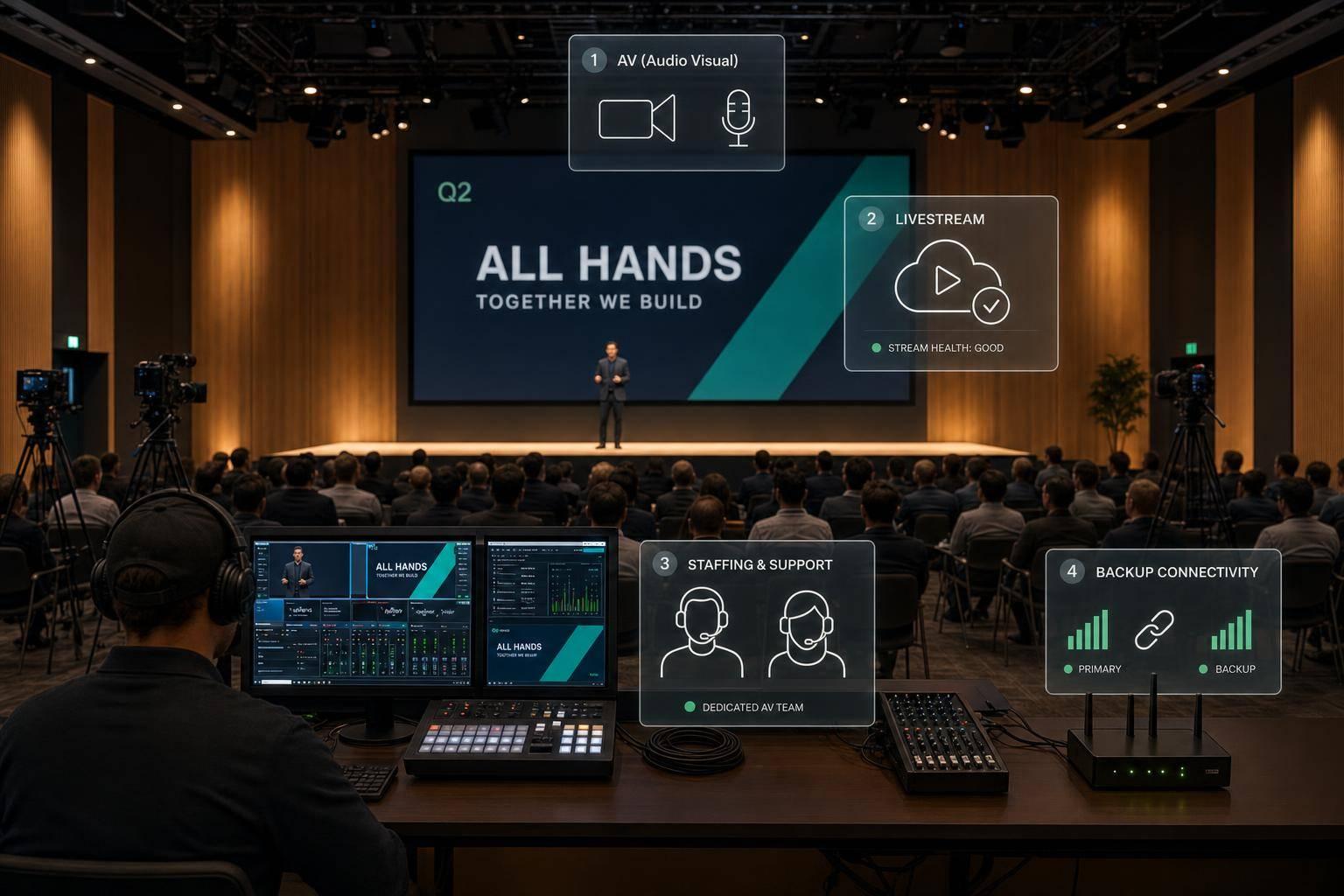
If your all-hands has executive speakers, remote viewers, and live Q&A, the tech partner matters as much as the agenda.
I’d narrow this list with four checks first:
- Can the team run the room and the livestream at the same time?
- Do they bring solid AV, staging, and camera support?
- Do they have backup internet beyond venue Wi‑Fi? and the right equipment for a global broadcast?
- Can they fix problems live without slowing the show down?
This article looks at 7 options: Corporate Optics, Encore, Freeman, AVI-SPL, Mills James, PSAV-style venue AV teams, and boutique corporate event production agencies.
Here’s the short version:
- Corporate Optics fits high-stakes all-hands, leadership events, and shareholder-style meetings.
- Encore works best when venue access and hotel-based setup are the main goal.
- Freeman is built for large conference logistics and big-room staging.
- AVI-SPL makes the most sense for companies that already use managed AV across offices.
- Mills James is a solid pick for corporate communications-focused event work.
- PSAV-style venue AV teams are fine for simpler internal meetings.
- Boutique agencies are often the middle ground for custom support without going with a giant firm.
A weak setup can derail the message fast. In many hybrid events, one stream drop, audio issue, or missed cue is enough to throw off the room and the remote audience at the same time. That’s why I’d judge providers less by sales talk and more by run-of-show control, staffing depth, and backup connectivity.
📡 Behind the Scenes: Pro AV Setup for 3-Day Corporate Conference #AxientDigital #YamahaDM7
sbb-itb-ae35a94
Quick Comparison

Top 7 Event Production Companies for Corporate All-Hands: Side-by-Side Comparison
| Provider | Best For | Main Strength | Main Watchout |
|---|---|---|---|
| Corporate Optics | High-stakes all-hands | Full technical show control | Quote needed |
| Encore | Hotel-based meetings | Already in many venues | Quality can vary by property |
| Freeman | Large conferences | Big staging and crew scale | Less tailored for executive-style events |
| AVI-SPL | Enterprise AV programs | Multi-site AV consistency | More focused on installed AV systems |
| Mills James | Corporate communications events | Broadcast-style production | Coverage may depend on region |
| PSAV-Style Venue AV Teams | Simple internal meetings | On-site convenience | Limited custom production depth |
| Boutique Agencies | Custom hybrid events | Tight crew support and backup internet | Often costs more than venue AV |
If I were choosing, I’d match the provider to the pressure level of the event: venue AV for basic meetings, boutique or specialist production for hybrid all-hands, and larger firms for multi-day or national programs. The rest of the article breaks down where each option fits and what to ask before you sign.
1. Corporate Optics
For corporate all-hands, the gap often comes down to one thing: how well a team can manage the room, the livestream, and the run of show all at once. Corporate Optics is a full-service technical event production company for corporate all-hands, board meetings, and multi-day conferences.
Corporate Scale
A production manager builds the minute-by-minute run of show and cueing team to keep executive sessions on schedule. That kind of control matters most during keynotes and plenaries, where even small timing slips can throw off the rest of the day.
AV and Staging Depth
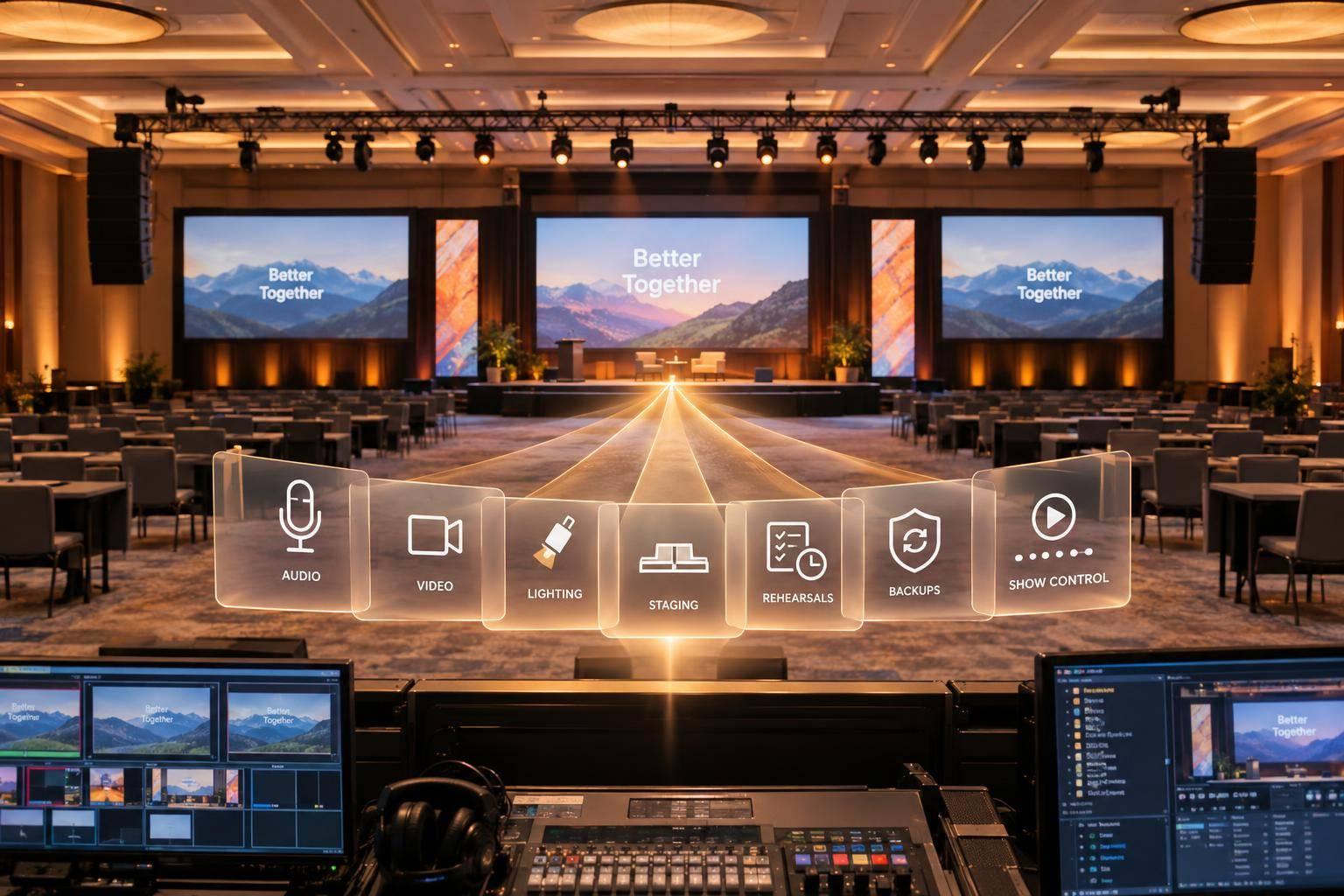
For daytime conferences, Corporate Optics uses LED video walls so content stays visible in bright rooms. The team also builds custom staging, branded podiums, and backdrops to keep the visual look aligned with company branding.
Hybrid and Livestream Reliability
Corporate Optics supports hybrid delivery with mix-minus audio for two-way remote participation. On-site, the network setup uses a fiber backbone with Starlink and 5G redundancy to handle high device counts. Multi-camera coverage, clean speaker-to-slide switching, and professional encoding help keep streams steady from start to finish.
On-Site Technical Support
Independent connectivity cuts reliance on venue Wi-Fi and keeps show-critical systems isolated from guest traffic. That separation helps the team avoid venue congestion and maintain tighter control over execution.
2. Encore
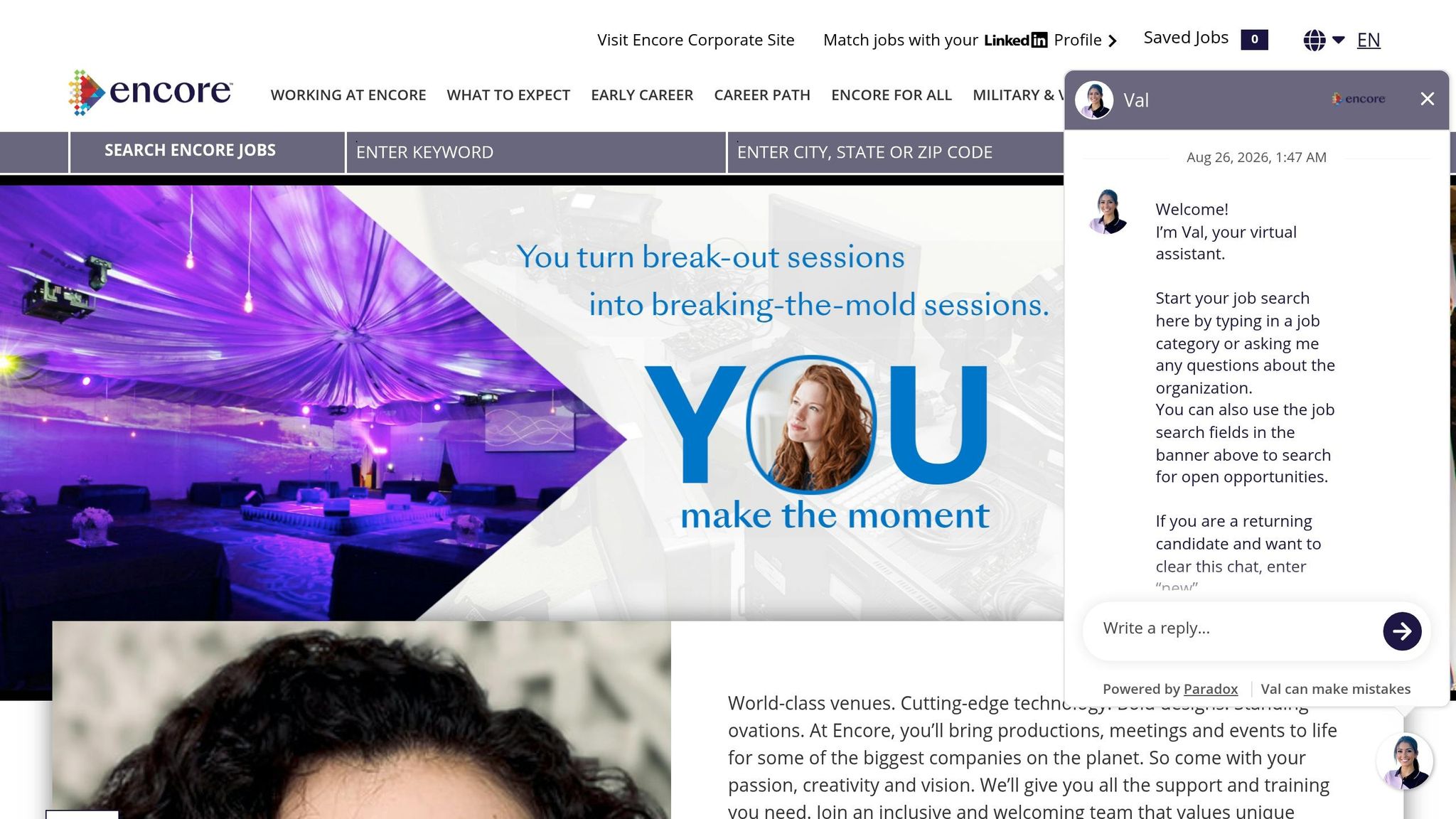
Encore works in more than 2,100 venues across 20 countries, including Marriott, Hilton, and Hyatt properties. Its biggest edge is simple: it’s already in the building. The main tradeoff is that higher-end production support can differ from one property to the next.
Corporate Scale
Because Encore is already based inside the venue, setup is usually easier. The equipment is on-site, billing is centralized, and coordination is easier across multi-city programs.
AV and Staging Depth
Encore tends to be the best fit for standard venue AV. But if you’re planning a broadcast-level all-hands, don’t assume every property can handle it the same way. Crew and gear need to be confirmed at the property level.
Before you book executive keynotes, speaker handoffs, or plenary sessions, confirm:
- the switching system
- the camera package
- crew roles on-site
- dedicated show calling
- camera operators
- switcher support
The same property-by-property differences can affect livestream quality too. In practice, the production workflow matters just as much as the gear list.
Hybrid and Livestream Reliability
Hybrid support varies by property, so it’s smart to confirm the encoding workflow and livestream crew ahead of time for remote Q&A, live company updates, and hybrid all-hands sessions.
On-Site Technical Support
Standard venue crews usually cover basic meeting-room AV. For all-hands programs, you’ll want to verify dedicated show calling, camera operators, switcher operators, and livestream engineers before you commit to a property.
The main thing to check isn’t just whether the venue is available. It’s whether the crew on-site is deep enough for the show you want to run.
3. Freeman
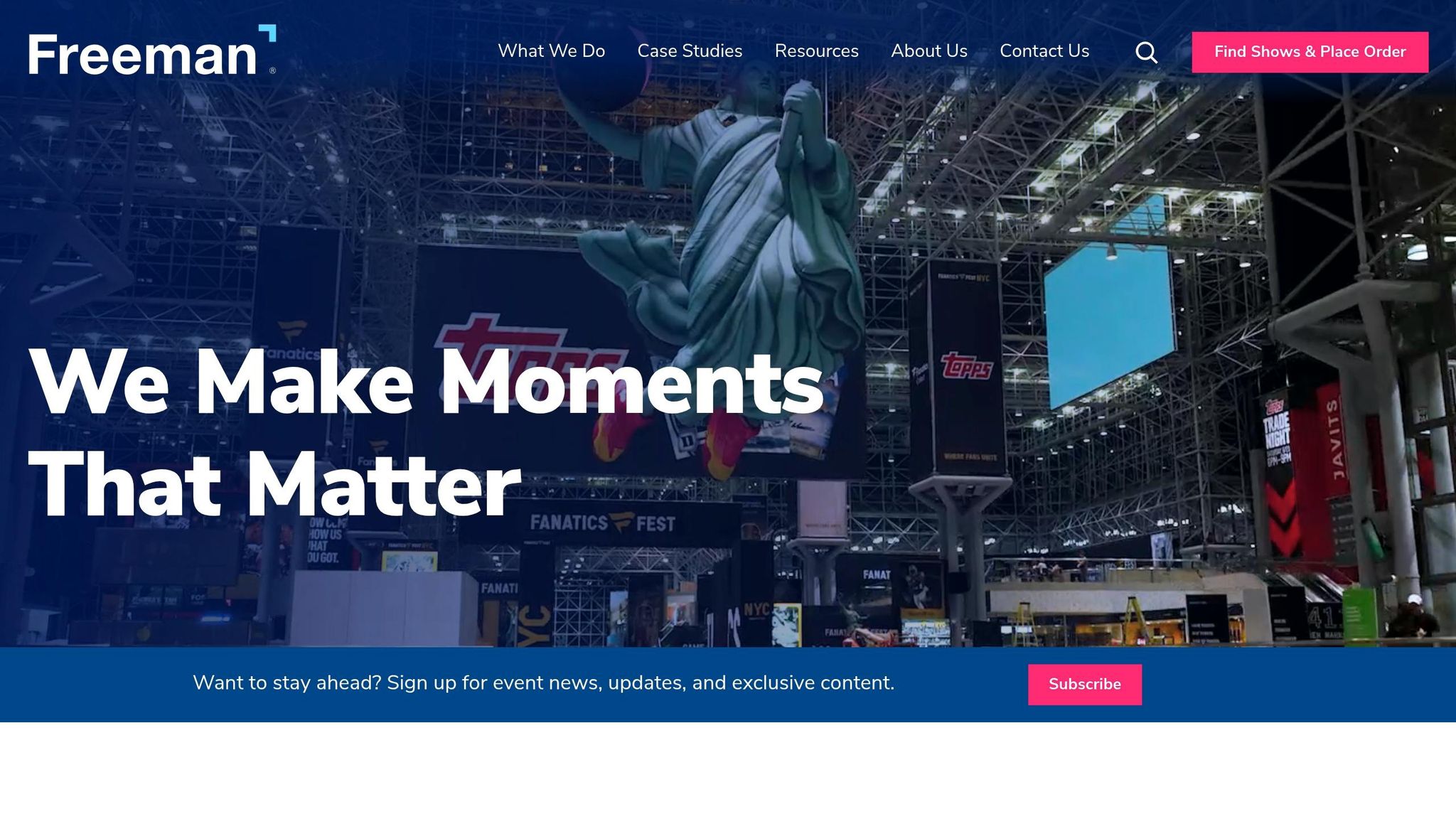
Freeman is built for large corporate all-hands and conferences where transport, labor, and venue coordination can make or break the show. You see that most in the way the team manages staging, routing, and crew coordination.
Corporate Scale
Freeman has a national and international footprint, which makes it a fit for enterprise programs that need steady load-in, labor, and schedule control across locations.
AV and Staging Depth
Freeman provides staging solutions that include custom scenic design and fabrication. Its AV package supports keynote stages, plenary rooms, and branded scenic builds.
Hybrid and Livestream Reliability
For hybrid all-hands, Freeman can use redundant fiber paths and hardware switching to keep keynote feeds, remote speakers, and slide transitions stable. That kind of setup matters when a live program has no room for dropped signals or awkward delays.
On-Site Technical Support
On-site crews handle show calling, cue changes, and live troubleshooting during sessions. In practice, that means fewer last-second scrambles when the run of show starts moving fast.
That logistics-first model leads into providers built around venue-based AV operations.
4. AVI-SPL
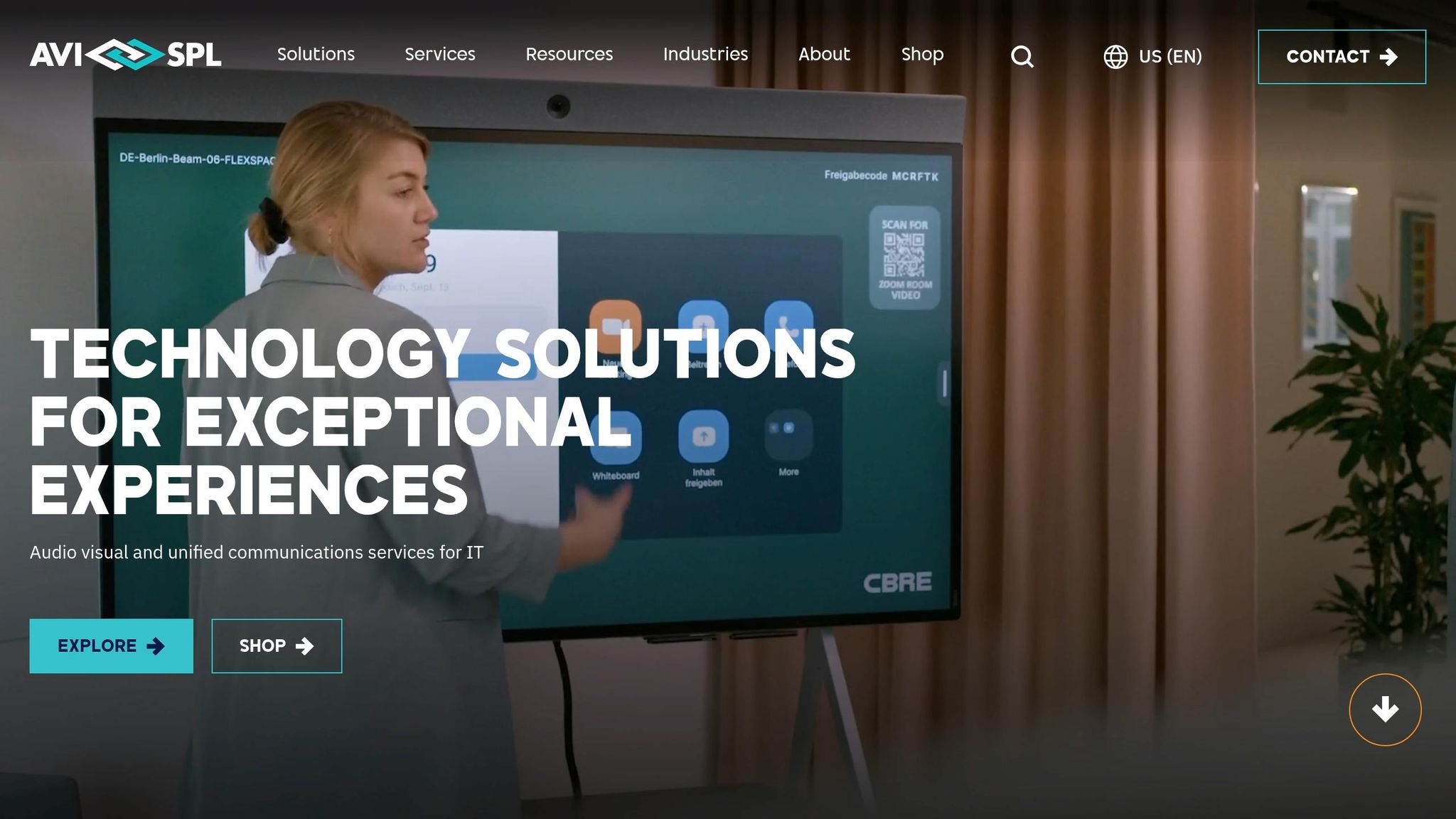
If your top goal is steady AV standards across many offices, AVI-SPL leans less toward one-off event production and more toward managed enterprise AV support.
AVI-SPL is a global audiovisual integrator with more than 60 offices and broad enterprise reach. For enterprise teams running all-hands meetings across several regional offices, that footprint helps keep technical standards aligned from site to site.
AV and Staging Depth
AVI-SPL focuses on large-scale LED video walls, audio systems, and control systems built for boardrooms, auditoriums, and experience centers. The main draw here is consistency. You can run the same all-hands format across locations with fewer setup changes, which saves time and cuts down on last-minute surprises.
Hybrid and Livestream Reliability
AVI-SPL uses its proprietary Symphony platform to monitor meeting-space health and live streams in real time. That gives technical teams one dashboard to check what’s live and what’s not during an all-hands.
It also connects deeply with Microsoft Teams, Zoom, and Cisco for hybrid sessions. Add AI-driven cameras and improved remote audio, and remote attendees get clearer sound and video instead of the usual choppy, hard-to-follow experience.
That kind of monitoring matters even more when a dedicated technician is already on-site.
On-Site Technical Support
Through Global Managed Services, AVI-SPL provides resident technicians embedded within a client’s corporate campus to handle day-to-day AV needs and support major all-hands meetings. Those resident technicians can manage show calling, speaker swaps, and live troubleshooting during executive sessions.
AVI-SPL tends to make the most sense when the event sits inside a long-term managed-services relationship.
5. Mills James
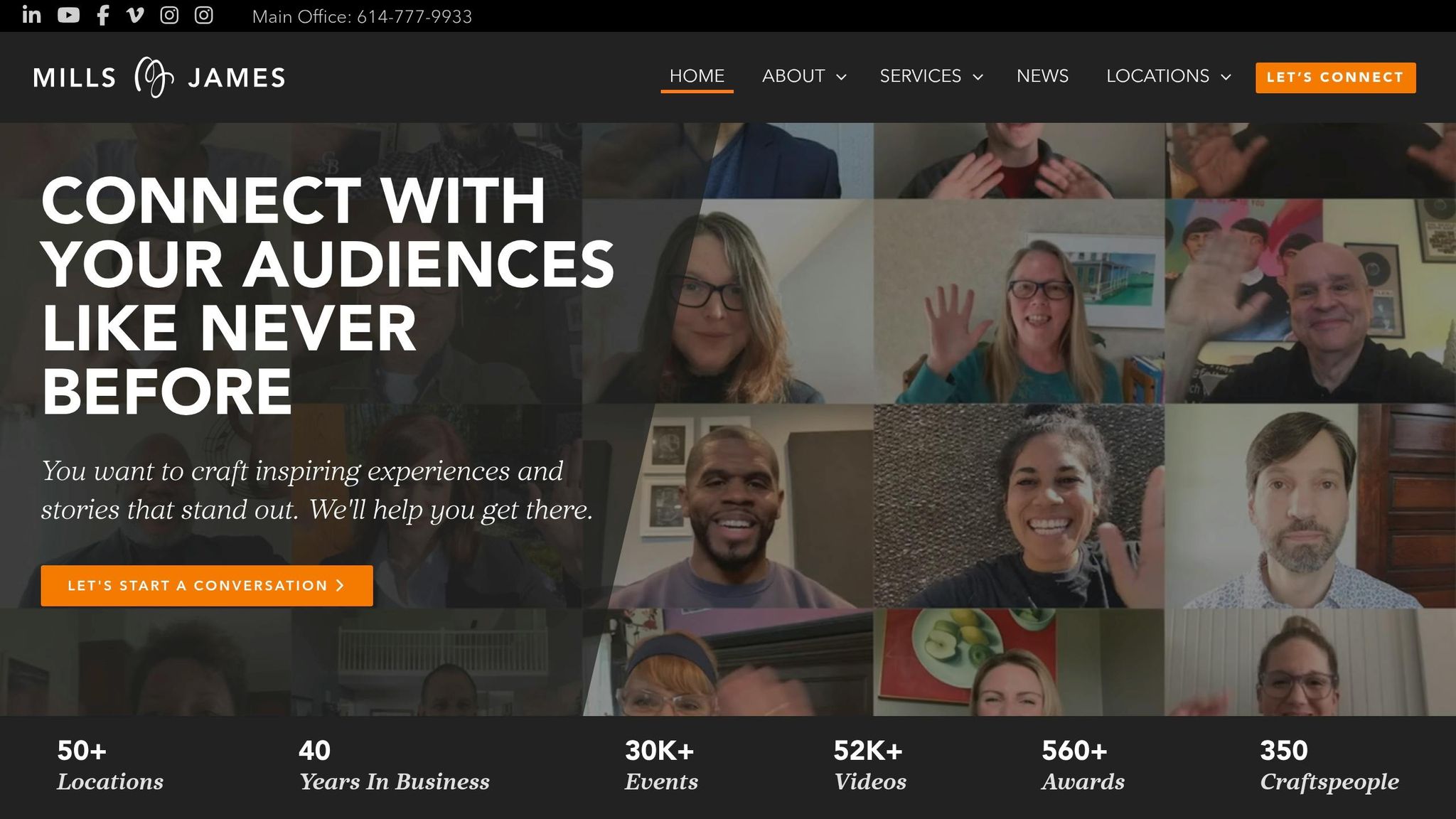
Mills James should be judged by the same yardstick as the other providers: scale, show control, hybrid reliability, and on-site support.
Corporate Scale
Mills James is a full-service event production company with deep roots in corporate communications. That includes all-hands meetings, town halls, and large internal conferences.
The team is set up for complex executive programs where run-of-show discipline and tight crew coordination aren't optional. They matter from the first cue to the last speaker handoff.
AV and Hybrid Support
Mills James brings broadcast-level AV production to corporate events. That includes LED video walls, multi-camera setups, and pro audio systems built for large rooms and plenary stages.
For hybrid all-hands, the team supports livestreaming workflows that help remote attendees stay connected to the live program with clean audio and stable video feeds. In plain English: people in the room and people watching from somewhere else can follow the same moment without things falling apart.
On-Site Technical Support
On-site crews handle show calling, live switching, and real-time troubleshooting during executive sessions. That kind of hands-on support helps keep the program moving when slide changes, speaker transitions, or remote Q&A segments put pressure on the run of show.
That crew-first model leads straight into the next provider group: venue-based AV teams that work from inside the property itself.
6. PSAV-Style Venue AV Teams
PSAV-style in-house AV teams are the default setup at many hotel ballrooms and conference centers. They’re already there, they know the room, and they can support several breakout sessions without the hassle of trucking in outside gear. That said, their packages are built for routine meetings, not custom all-hands production. The convenience is real, but it tends to work best when the agenda is straightforward and the technical load stays light.
AV and Staging Depth
Standard venue gear can handle simple meetings. But once you need a bright-room keynote, polished staging, or strong-quality recording, the cracks start to show. Projectors often look washed out under room lighting, while LED video walls hold contrast and brightness across big spaces. And it’s not just the screen. Venue packages usually come in fixed setups, which means the agenda can end up bending to the gear instead of the other way around.
Hybrid and Livestream Reliability
These limits show up even faster when the event moves from in-room AV to hybrid delivery with multi-camera streaming. Hotel and venue Wi-Fi isn’t built for the combined strain of a high-demand all-hands. Don’t count on the venue’s internet package. A dedicated fiber backbone, backed up by 5G or Starlink, gives you a much safer base to work from.
On-Site Technical Support
Venue teams usually provide generalist AV technicians, not the kind of specialized staff who can run tight show cues and live production flow. Many hotels do allow outside production teams, and that can end up costing less than in-house pricing, even after vendor fees.
When the program needs tighter show control, outside production fills the gap.
7. Boutique Corporate Event Production Agencies
Boutique corporate event production agencies sit in the middle ground between venue AV and large corporate production firms. Venue AV teams usually work inside fixed property systems. Boutique agencies bring their own crew and tighter technical control.
That matters because you get one team handling planning, load-in, rehearsals, and live show execution. Nothing gets lost between separate vendors, which is a big deal when executive messaging, hybrid delivery, and live problem-solving all have to work together.
They’re also small enough to stay hands-on. At the same time, they can support anything from a 12-person leadership summit to a multi-day national conference.
AV and Staging Depth
You can usually expect broadcast-grade LED walls, multi-camera capture, pro audio, and in-house scenic fabrication.
Many boutique firms also manage scenic design and custom fabrication themselves. That can include:
- Backdrops
- Set pieces
- Stage skirting
Keeping that work in-house means less back-and-forth with extra vendors and a faster build timeline. Before anything is built, they’ll often share Vectorworks drafting or 3D visualizations of the stage layout so you can see how the setup will look in advance.
Hybrid and Livestream Reliability
For boutique agencies, connectivity isn’t an afterthought. It’s part of the show’s core infrastructure.
Instead of leaning on venue Wi-Fi, they use dedicated event internet and control the full signal path. That often includes dedicated fiber, bonded 5G, and Starlink failover. In plain English: if one connection drops, there’s a backup ready to step in.
They also use hardware switchers to lower the chance of stream failure during high-pressure executive moments.
On-Site Technical Support
On-site support is often where these agencies stand out the most. A typical crew includes a TD, EIC, audio lead, shader, and show caller. This specialized staffing is essential when leading AV teams for virtual town halls and high-stakes broadcasts.
The agenda is usually mapped into a tight run of show, so the team isn’t scrambling or making last-second calls during the event. If gear fails, local teams can often source replacement equipment fast, which helps limit downtime.
If you’re comparing providers, staffing depth is one of the clearest signals of how much technical support you’ll actually get.
Side-by-Side Comparison by Technical Support Priority
After the individual profiles, this matrix shows how each provider stacks up against the four buying points that matter most. Pick based on four things: scale, AV depth, livestream dependability, and on-site support. Use the table below to see which option lines up best with your top priority.
| Provider | Corporate Scale | AV & Staging Depth | Hybrid & Livestream Reliability | On-Site Technical Support |
|---|---|---|---|---|
| Corporate Optics | Leadership conferences to broadcast-style all-hands | Custom scenic, LED walls, broadcast production, livestreaming | Redundant connectivity, livestream engineering | Dedicated on-site staffing, speaker support |
| Encore | Global; large hotel and convention events | Standard to high-tier inventory | Standardized global protocols | Large crews; structured oversight |
| Freeman | Large-scale U.S. conventions and expos | Deep inventory; strong rigging and staging | Robust infrastructure; consistent at scale | Large technical crews; highly structured |
| AVI-SPL | Enterprise-scale; permanent installs and hybrid rooms | High-tier AV integration; conferencing tech | Solid hybrid delivery; managed AV environments | Technical account teams; managed services |
| Mills James | Mid-sized to large corporate events | Project-specific production support | Project-specific hybrid support | Project-specific on-site crew |
| Venue AV (PSAV-Style) | Routine internal and standard meetings | Basic projection; limited custom staging | Venue Wi-Fi dependent; limited redundancy | Generalist technicians; rotating crews |
| Boutique Agencies | Executive summits to multi-day conferences | Custom LED walls, in-house scenic, branded backdrops | Dedicated fiber, bonded 5G, Starlink failover | Dedicated production manager and show caller |
How Technical Scope Moves the Price
Scale, staging, hybrid dependability, and staffing depth shape budget more than room size. In plain English: the more moving parts you add, the more the price climbs. Standard venue AV is far less expensive than a broadcast-style all-hands with LED walls, pro audio, and a dedicated production team.
At the broadcast end, labor is often the biggest cost driver. Roles like Technical Directors, Engineers in Charge, and video shaders help keep the show steady when the pressure is on. And if you can use a local crew, you can cut travel and freight costs.
Use this comparison to narrow the field, then weigh the tradeoffs in the pros-and-cons breakdown.
Pros and Cons of Each Provider
Pick the provider based on three things: event complexity, audience size, and live broadcast risk (using a corporate event checklist helps organize these variables). The snapshot below compares each option by staffing depth, signal backup, and control of the live show.
| Provider | Pros | Cons | Best Fit |
|---|---|---|---|
| Corporate Optics | End-to-end production, dedicated on-site staffing, scenic design, and speaker support | Custom pricing requires consultation | Quarterly all-hands, executive broadcasts, leadership summits, shareholder meetings |
| Encore | Already on-site with equipment; familiar with venue logistics | Shared venue infrastructure; limited customization beyond standard inventory | Small team meetings, simple internal presentations |
| Freeman | Deep staging and rigging inventory; reliable at high volume | Less flexible for custom scenic; better suited to large expos than executive events | National conventions, trade shows, large general sessions |
| AVI-SPL | Strong enterprise AV integration; solid hybrid meeting infrastructure | More oriented toward permanent installs; less agile for one-off broadcast productions | Hybrid meeting infrastructure, enterprise AV rollouts, managed conferencing rooms |
| Mills James | Broadcast-level AV production; multi-camera setups and pro audio for large rooms; dedicated on-site show calling | Regional footprint may limit availability for national programs | Mid-sized to large corporate all-hands, town halls, internal conferences |
| PSAV-Style Venue AV Teams | On-site convenience; familiar with venue power, rigging, and dock logistics | Standard venue gear, shared venue Wi-Fi, and generalist technicians limit livestream quality | Small team meetings, simple internal presentations |
| Boutique Corporate Event Production Agencies | Dedicated Technical Director and show caller; custom scenic and LED support; own fiber, Starlink, or 5G redundancy for hybrid delivery | Higher cost than in-house venue teams; require load-in coordination | High-stakes all-hands, executive retreats, branded leadership summits |
The pattern here is pretty simple: the more pressure on the event, the more control you need from the provider. A small internal meeting can often work with venue AV. But a hybrid all-hands or executive broadcast is a different beast. In that case, dedicated fiber and backup connectivity matter more than venue Wi-Fi.
The table lays out the tradeoff, but one final check tends to separate strong partners from weak ones: how tightly they can run the show. If the provider can't keep speakers, slides, cues, cameras, and stream timing lined up, the rest of the gear won't save you.
Before signing any contract, ask for a minute-by-minute run-of-show template. If a provider can’t produce one, that’s a red flag. It usually means they don’t have the coordination depth an all-hands needs.
Conclusion
After looking at scale, staging, hybrid dependability, and on-site support, one test matters most: what happens when something goes wrong live? Pick the partner that can keep the event moving when the pressure is on.
For a small internal meeting, venue AV is often enough. But when you add remote attendees, executive speakers, and a company-wide livestream, the bar gets higher. At that point, you need dedicated connectivity, live show calling, and on-site technical leadership.
That’s the standard that matters. Not polished marketing. Live control under pressure.
The right fit depends on event complexity, whether you're planning a basic in-room meeting, a hybrid all-hands, or a broadcast-grade global program. Corporate Optics is a strong fit for high-stakes all-hands, leadership summits, and shareholder meetings where clean execution matters.
Before you sign, ask the provider to walk you through their run-of-show process and explain exactly how they’d handle a stream dropout during the session. If they can explain both in plain terms, they’re ready for the job. That’s the clearest test of whether a partner can carry an all-hands from rehearsal to the final cue.
FAQs
How much technical support do I need?
It depends on your event goals, audience size, and how much is riding on the experience.
For small, simple meetings, basic AV support may be enough. But once you get into events with 50+ attendees, hybrid elements, or high-stakes executive speakers, professional production is often the safer move.
Here’s the simple way to think about it: as the event gets more complex, the margin for error gets smaller. You’re no longer just dealing with sound and screens. You also need someone to handle backups, stream uptime, room flow, and day-of coordination.
That’s where having one team matters. Instead of your internal team juggling tech issues while also trying to focus on content, speakers, and the attendee experience, a production team can keep the room running and the moving parts in sync.
What should I ask before signing a production contract?
Ask who’s on the hook for what. That means who owns the technical plan, who runs show flow on-site, and whether there’s a dedicated production manager involved from scoping all the way through the post-event debrief.
You’ll also want to confirm a few nuts-and-bolts details that can make or break the event:
- Separate audio mixes for the room and the livestream
- Dedicated internet for the broadcast
- A documented encoder and internet failover plan, with redundant signal paths
- The rehearsal process and who calls the show
- Remote presenter testing before the event
- Camera and lighting setup
- Who handles contingency planning
- Who coordinates multi-room or hybrid event logistics
If a team can answer these points clearly, you’re much less likely to get blindsided on event day.
When is venue AV enough for an all-hands?
Venue AV usually works for small, simple all-hands. Think in-room meetings without remote guests, fancy staging, or polished executive presentations.
But that setup starts to fall short once the event gets more involved.
If your all-hands has hybrid parts, remote attendees, executive speakers, multiple rooms, or 50+ attendees, venue AV is usually not enough. And if the event depends on a livestream, bringing in a production partner can make a big difference. They can help with reliable audio, streaming, backup systems, and show calling.
Related Blog Posts
- 4 Meeting Production Companies That Excel At Seamless AV (audio/video), Lighting, and Stage Design for Corporate Conferences, and events
- End-To-End Annual Meeting Production Companies For Your Next Company Conference
- Event‑Management Firms With Strong Technical Production Services
- Leading Companies To Work With For Full Conference Production



Streamline your workflow, achieve more

Lorem ipsum dolor sit amet, consectetur adipiscing elit. Maecenas ac velit pellentesque, feugiat justo sed, aliquet felis.



Lorem ipsum dolor sit amet, consectetur adipiscing elit. Maecenas ac velit pellentesque, feugiat justo sed, aliquet felis.