Why Working With A Production Partner For Your Next Conference Will Help You Be Worth It.

Chief Executive Officer
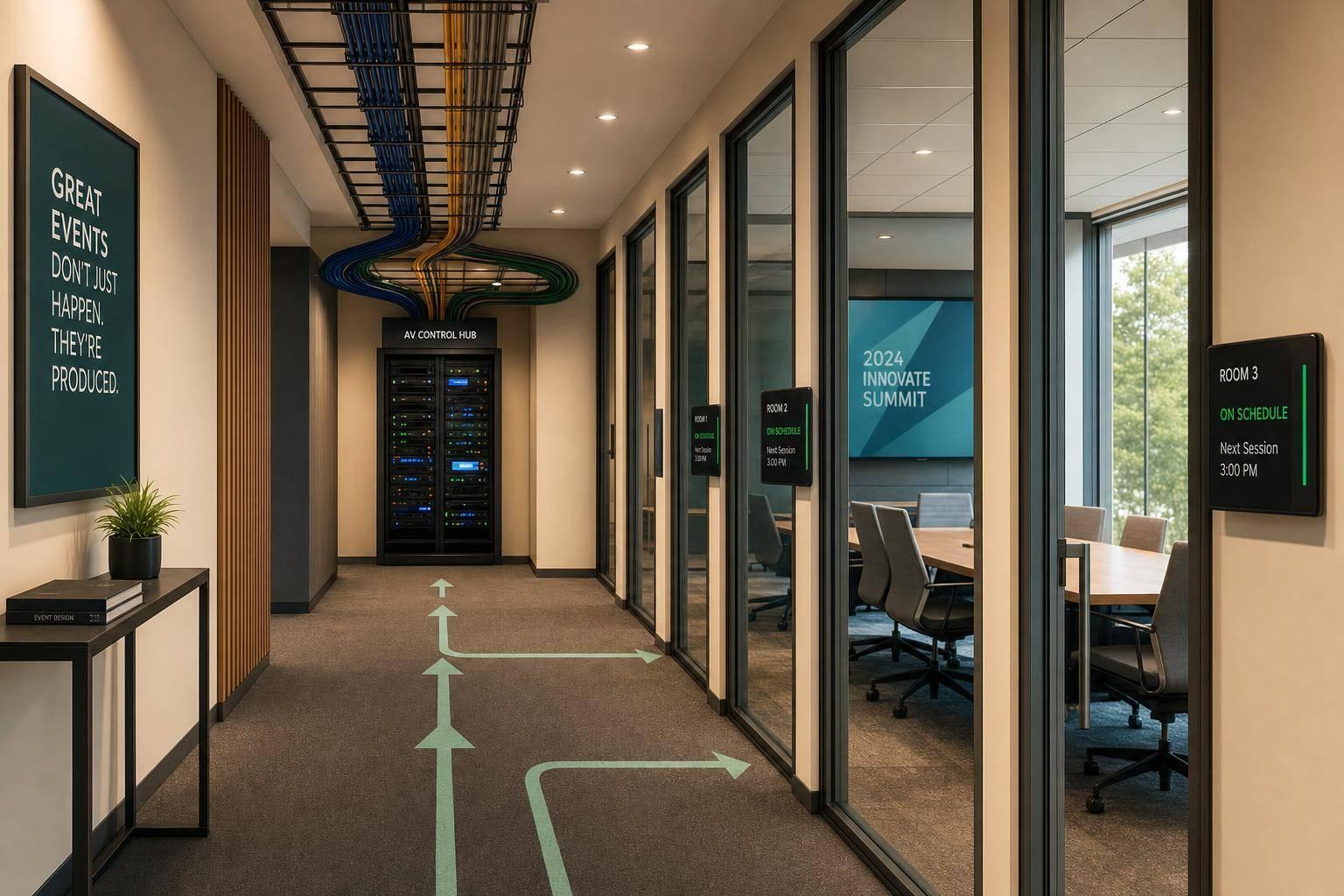
If your conference has many moving parts, one production partner can help you spend less, avoid show-day problems, and keep the program on time. With 78% of event organizers saying in-person conferences are their top marketing channel, there is a lot riding on each session, cue, and handoff.
Here’s the short version:
- Costs grow fast when AV, staging, lighting, and production teams are planned separately.
- Last-minute fixes often come from scope gaps, old floor plans, and unclear ownership.
- Run-of-show planning keeps speakers, tech cues, and room changes aligned.
- Room-by-room prep cuts on-site surprises in multi-track events.
- Rehearsals and backstage coordination help sessions start clean and stay on schedule.
- Backup plans can keep one glitch from turning into a canceled session.
- One lead owner helps control scope, labor, vendor work, and final invoices.
Put simply: when no one owns production from start to finish, the event team usually pays for it in budget drift, delays, and stress. I’d look at a production partner as the team that connects planning, tech, and live decision-making so the conference feels worth the time and money.
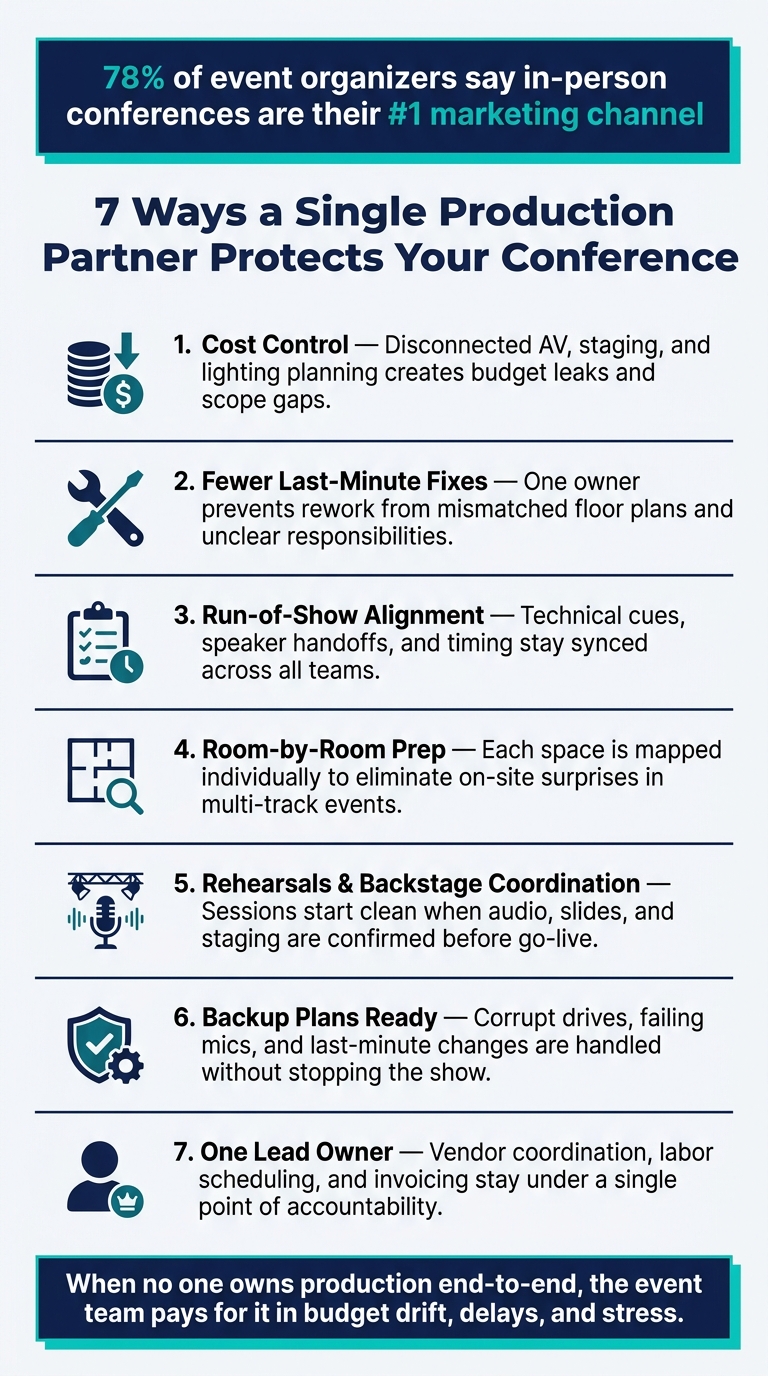
7 Ways a Conference Production Partner Saves Your Event
How to Choose AV Supplier for Your Events
sbb-itb-ae35a94
Why conference production gets more expensive without expert support
Most budget leaks come from one thing: production work that isn’t planned as one connected system. Conference production is a chain of linked tasks. AV, staging, lighting, power, and room turnovers all affect each other. When one part slips, labor, overtime, and rework climb fast.
Disconnected planning creates scope gaps and last-minute fixes
When AV, scenic design, and staging teams are all working from different versions of the plan, problems are almost guaranteed. One team finishes a build, then another team has to tear part of it down or reroute it. A fabrication crew may be using an old floor plan while the content team has already built for a screen size that changed the week before. That’s how avoidable rework shows up during load-in, followed by last-minute change orders.
Without a single production owner, small mismatches turn into rush labor, schedule resets, and higher vendor charges. In a multi-vendor setup, accountability gets blurry fast. Then the conference team is left chasing down the gaps and trying to keep everything moving.
Venue limits can also set off extra costs that no one planned for. If technical needs aren’t reviewed early, teams may get hit with rental, rigging, or custom build charges.
Those budget leaks don’t stay on the budget sheet for long. They start to affect the timeline too, especially once the live program starts.
Operational risk grows with every moving part
A delayed cue in one area can hold up the entire run of show. Power affects scenic design. Scenic design affects lighting. Lighting affects cameras. Cameras affect rehearsals. It’s a domino effect. The more involved the program gets, the more chances there are for a small timing miss or missed cue to turn into a problem attendees actually notice.
Approvals can slow things down too. When brand, legal, venue, and AV teams are all weighing in without one clear owner, time slips away while the room sits waiting. A production partner helps stop that kind of misalignment before it reaches the stage.
That is why best practices for conference event production matter before the event ever reaches the stage.
AV planning and show flow support keep the program on track
Once budget and scope are in line, the next hurdle is simple: can the program run on time? A conference agenda tells you what is happening. A run-of-show tells you when it happens and how it gets done. A production partner takes that agenda and turns it into a technical plan the crew can follow. That leads to a smoother experience for attendees, not just a neater internal checklist.
Run of show planning connects agenda timing to technical cues
The run-of-show maps every moment that needs a technical cue - walk-up music, video playback, and presenter handoffs. It’s the shared document that keeps the AV crew and stakeholders aligned in real time. And here’s the thing: a run-of-show usually doesn’t fall apart in one big moment. It drifts little by little.
A late mic check. A missed lighting cue. An awkward speaker handoff. On a tight program, those small misses add up fast. A production partner helps stop that slide by sticking to a clear start rule: AV, talent, and the stage must be ready before the session begins. That kind of discipline keeps transitions clean and deliberate instead of rushed.
Room-by-room AV planning reduces surprises on site
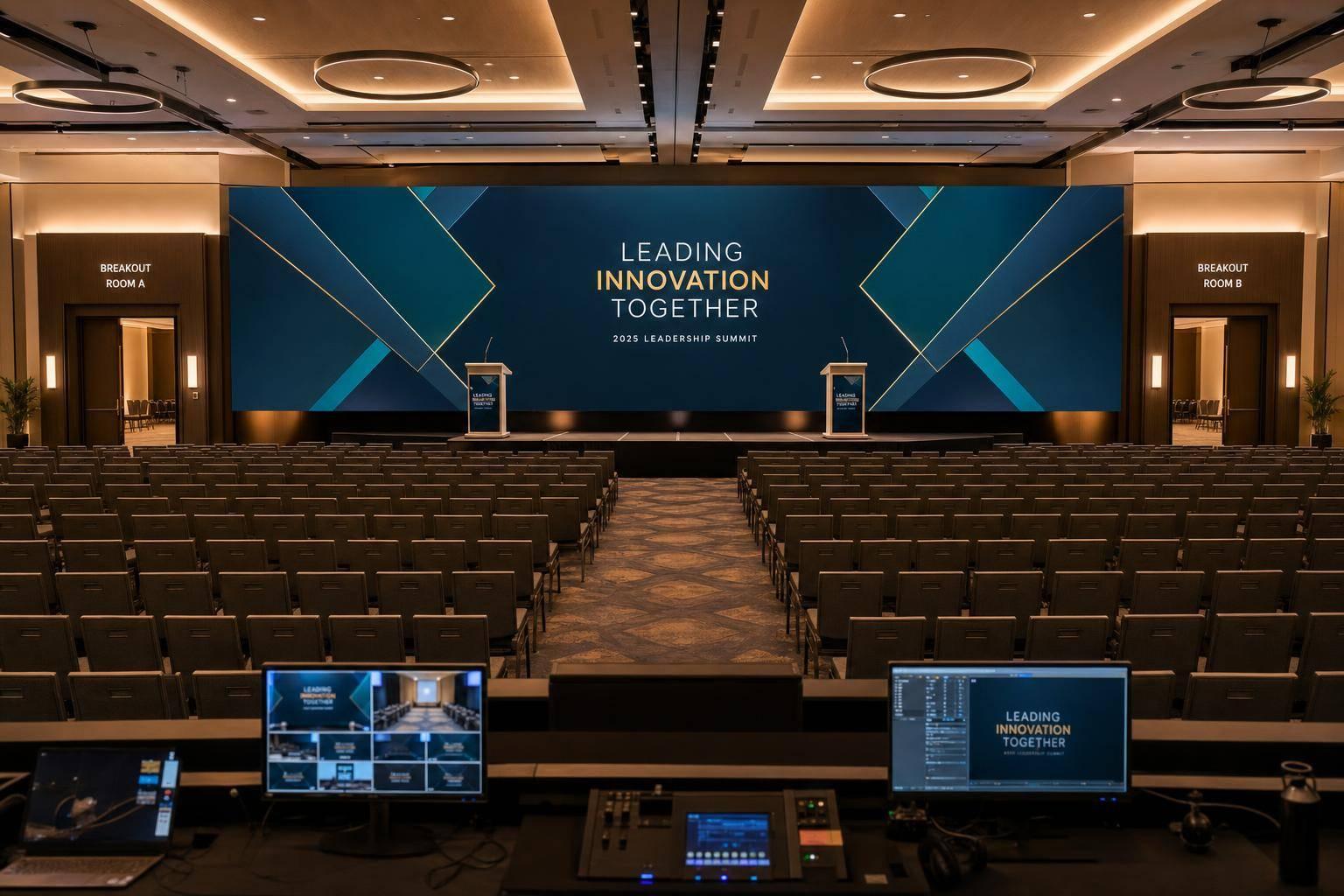
In a multi-room conference, each space comes with its own technical setup for leadership conferences. Mic counts, lighting, cameras, sightlines, and audio can change from room to room and from one session format to the next. If those details aren’t mapped ahead of time, organizers end up making tech calls on the fly.
A production partner plans each room on its own while also managing the links between rooms that affect the full program. If one breakout runs late, it shouldn’t throw off the rest of the day. That’s much easier when one team owns the full picture and keeps every room lead working from the same updated plan. The result is a polished attendee experience that feels deliberate, not improvised.
That shared plan also sets up smoother staging and stronger live execution.
Technical staging and on-site execution reduce failure points
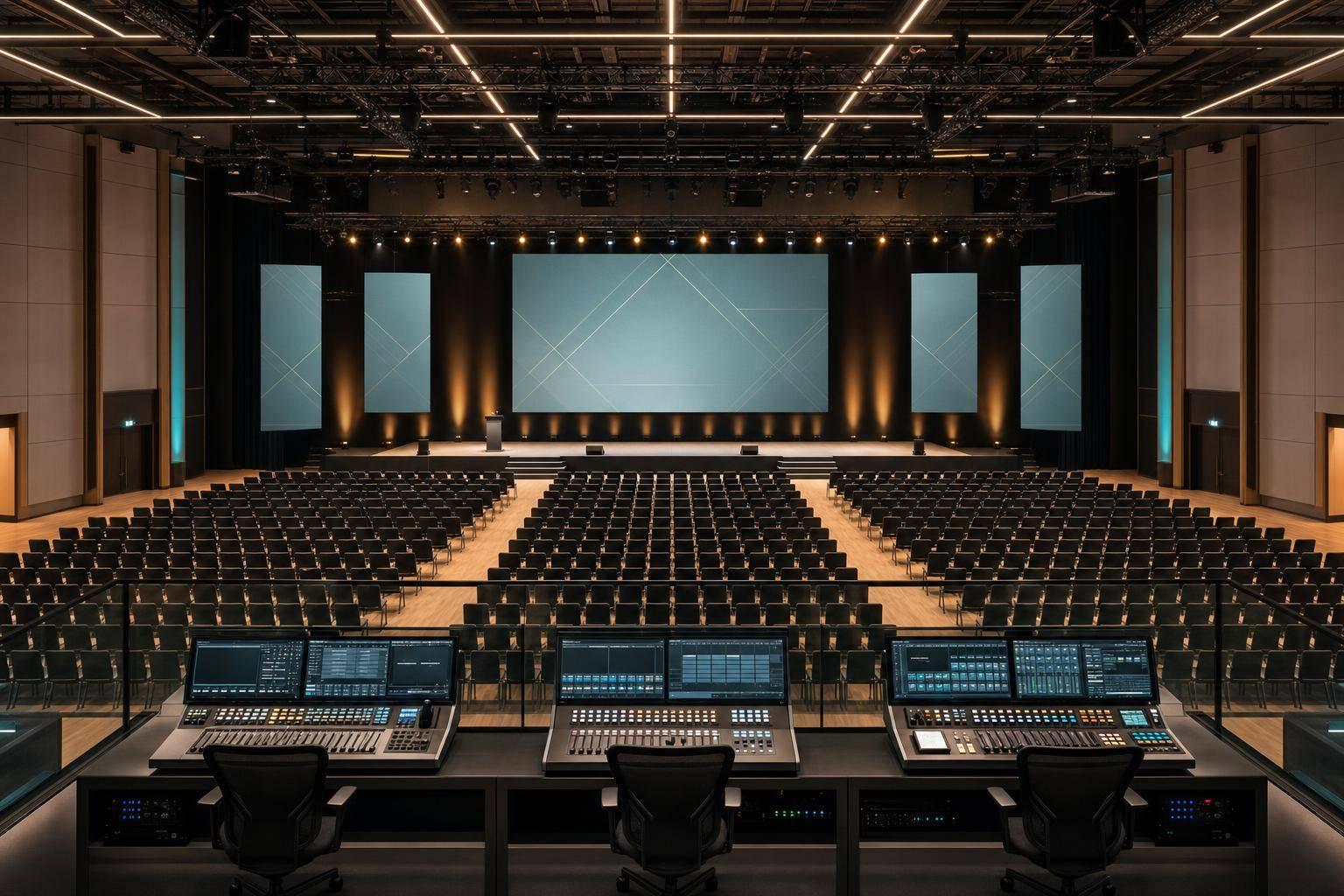
Once the AV plan is set, the next hurdle is simple: can the show run that plan without falling apart? That’s where execution takes over. A conference production team is managing a chain of dependencies all day long. Power affects scenic fabrication. Scenic affects lighting. Lighting affects camera. If one link breaks, the whole show can slow down or stop. A production partner keeps track of those moving parts and helps the chain keep moving.
Rehearsals, cueing, and backstage coordination improve delivery
Technical rehearsals make sure each department is ready before a session begins - audio check complete, slide deck loaded, stage cleared - before a single start time gets locked in. That check helps keep speakers on time and attendees tuned in.
Backstage, clear communication matters more than people think. When the crew is working from the same updated plan and changes are shared directly, transitions stay smooth. Speakers look more confident too, because the setup around them stays steady.
Live problem-solving protects the audience experience
Even with solid rehearsals, things still go sideways. What turns a problem into a minor blip instead of a full disruption is the speed of the response - and whether the team planned for that moment ahead of time.
A corrupt USB drive, a failing microphone, or a slide deck that needs a last-minute fix can throw off a session fast. A production team should already have backups in place and the authority to switch to them without stopping the program. That means fewer interruptions, less dead air, and a smoother experience for the audience.
The goal is containment. If something fails, the production lead keeps the issue limited to one part of the event while the rest of the workstreams continue moving. The audience stays focused on the content, not the glitch. That also helps cut overtime, rework, and avoidable day-of costs.
Budget control, risk planning, and business outcomes make the investment worth it
Once the show plan is locked, the last check is simple: does it protect the budget and support the business result?
One production lead helps control budget and scope
A single production lead keeps every purchase tied to the run of show. Instead of different teams making separate calls, one person connects the dots across vendors, rooms, gear, and labor. That makes it easier to match equipment to each space, schedule crew calls at the right time, and avoid overtime that can quietly push costs up.
It also keeps scope from drifting. If someone asks for a late change, that add-on gets priced and approved before it shows up on the final invoice. No surprises. No last-minute scramble.
Avoiding even one major day-of failure can protect significant event value for a 500-person conference where travel, lodging, and venue costs are already locked in.
Contingency planning supports smoother business results
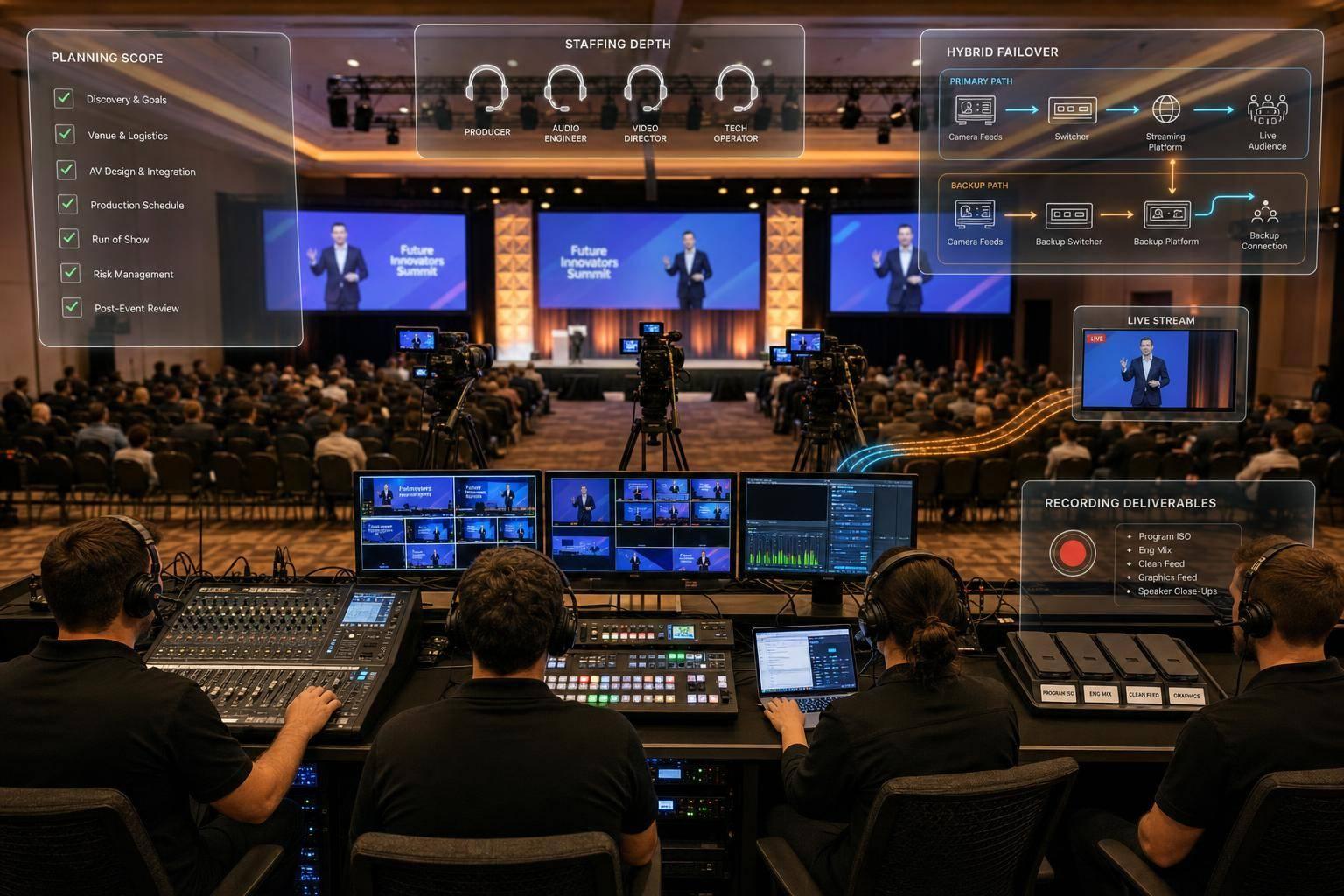
Budget discipline matters most when something goes wrong. That's where a solid contingency plan earns its keep. It covers backup gear, redundant feeds, staffing coverage, and an alternate show flow so the event can keep moving without falling apart.
These safeguards protect the message, the schedule, and the organization's credibility. For example, if a key executive can't get onstage but can still present live through a high-quality video link, the team can still deliver the planned message because that option was built into the show plan from the start.
Contingency planning is what separates a minor disruption from a session that has to be canceled or rescheduled.
Conclusion: Better planning and execution make the conference worth it
The end result is a conference that runs cleanly, protects the budget, and gives attendees and sponsors more confidence.
FAQs
When should I bring in a production partner?
Bring in a production partner early. It helps you avoid last-minute problems, confirm technical needs, and sort out logistics before small issues turn into big ones.
As a general rule, book 4–6 months in advance for large conferences, 8–16 weeks for executive summits, and at least 12 months for large-scale events. Getting a partner involved early also helps with site surveys, technical validation, and smarter budget control.
What does a production partner actually manage?
A production partner runs the full execution of your conference so every moving part stays in sync - from pre-event planning and technical site checks to AV design, stage setup, and show coordination.
They also manage content delivery, speaker handoffs, on-site technical direction, troubleshooting, and, in many cases, logistics like registration and attendee flow.
How do I know if the cost is worth it?
Compare total event costs - venue rental, catering, and production - with outcomes like sales, new partnerships, and smoother operations.
A professional partner can also help cut costs by 10% to 20% by bundling services, avoiding duplicate equipment, and reducing venue spend. Post-event analytics can show whether attendees stayed engaged and left satisfied, while skilled execution lowers technical risk and helps protect your brand reputation.
Related Blog Posts
- Leading Conference Production Companies
- Leading Companies To Work With For Full Conference Production
- Looking For A Conference Production Company To Handle Venue Logistics, Layouts, And AV Needs? Reach Out To These 3 Companies Today.
- Who To Get A Quote From For Full-Service Corporate Event Production For Your Next Conference.


Streamline your workflow, achieve more

Lorem ipsum dolor sit amet, consectetur adipiscing elit. Maecenas ac velit pellentesque, feugiat justo sed, aliquet felis.



Lorem ipsum dolor sit amet, consectetur adipiscing elit. Maecenas ac velit pellentesque, feugiat justo sed, aliquet felis.